

Balcony Garden Ideas for Apartments
If you’ve been dreaming of balcony garden ideas for apartments, you’re not alone — and you don’t need a yard to pull it off. A well-planned small balcony garden can become your best room.
Even a 6-foot slab of concrete can transform into a private green retreat. The right layout, plants, and a few smart decor choices make all the difference for apartment gardening.
Table of Contents
Why a Cozy Balcony Corner Transforms Apartment Living
A thoughtfully designed balcony garden does more than look pretty — it expands your usable living space without adding square footage. That matters a lot when you’re renting.
Studies show that access to greenery reduces stress and boosts mood. Your balcony corner can deliver that daily, right outside your door.
Renters often assume they can’t do much with a small outdoor space. But even a narrow 4×6 ft balcony fits a chair, three containers, and string lights — enough to feel like a real escape.
The key is treating your balcony like an outdoor room. Zone it, furnish it, and plant it with purpose. That shift in thinking unlocks the full potential of balcony garden ideas.
Assess Your Balcony Before You Start
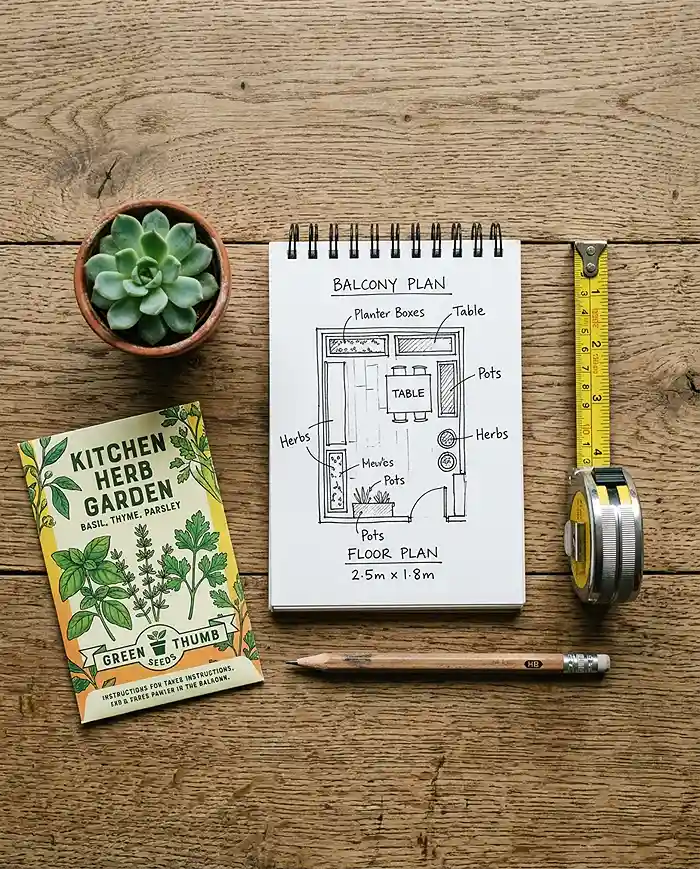
Before you buy a single pot, spend 10 minutes taking stock of what you’re working with. Measure the length, width, and any awkward juts or recesses. Write it down.
Check your lease or HOA rules. Some buildings restrict drilling, open flames, or certain plant types. Knowing this upfront saves you a headache later.
Weight limits matter more than most people realize. A large planter filled with wet soil can weigh 50+ lbs. Most balconies handle 40–60 lbs per square foot — confirm yours before loading up.
Quick assessment checklist:
- Measure total floor space and note any alcoves or railings
- Check lease rules for drilling, weights, and plant restrictions
- Track sun direction — note if it faces east, south, west, or north
- Count daily sun hours (under 3 = low light; 3–6 = partial; 6+ = full sun)
- Note wind exposure — high-rises above the 10th floor often have harsh gusts
Understanding Your Light and Wind Conditions
Quick Answer: South-facing balconies get the most sun; north-facing get the least. Wind funneling between buildings can stress or dry out plants fast.
Spend one full day watching where light hits your balcony and for how long. Do this before buying plants — it’ll save you from a lot of dead lavender.
Wind is sneaky. A sheltered ground-floor balcony and a breezy 15th-floor one need completely different plant choices and pot weights. Lightweight pots on a windy balcony tip over constantly.
Pro Tip: Hold a lit incense stick near your railing on a calm day — the smoke shows you exactly how air moves across your space.
Plan the Layout of Your Cozy Garden Corner
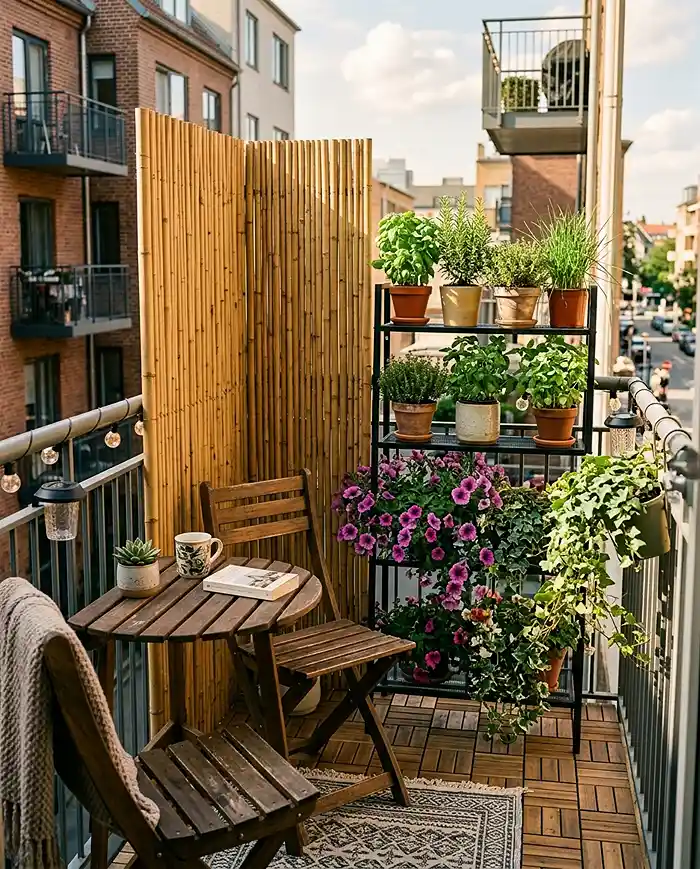
The secret to a small balcony garden that doesn’t feel cramped? Zones. Even a tiny space benefits from intentional areas: one for sitting, one for plants, one for storage.
Push large furniture against the wall and use vertical space aggressively. A tall shelf, a wall-mounted planter rail, or a freestanding trellis adds planting room without stealing floor space.
Corners are gold. A corner shelf or a wraparound planter bench uses dead space that would otherwise go to waste.
| Zone | Best Placement | What Goes Here |
|---|---|---|
| Seating | Center or corner | Chair, small bistro table, cushions |
| Greenery | Railing, back wall, floor corners | Containers, hanging pots, vertical planters |
| Storage | Against the wall | Bench with lid, slim cabinet, hooks |
Real Example: My balcony is 5×8 ft facing west. I put a folding bistro set in the center, a railing planter with trailing petunias along the edge, and a 3-tier plant stand in the back corner. It feels lush without feeling stuffed.
Pro Tip: Place your tallest plants at the back and trailing varieties at the front edge — it creates depth and makes the space look bigger.
Designing for Privacy and Coziness
Quick Answer: Use a freestanding trellis, bamboo screen, or outdoor curtain to block sightlines without permanent installation.
Climbing plants like Clematis or black-eyed Susan vine on a trellis create a living wall that adds privacy and beauty at the same time.
Outdoor curtains hung from a tension rod between two posts give instant enclosure without drilling. Pair with a bamboo roll-up blind on the railing for a full surround effect.
Pro Tip: For renters, look for freestanding privacy screens with planter bases — they block views and hold plants, doing double duty in tight spaces.
Choosing Plants for an Apartment Balcony
The best apartment gardening plants are tough, container-friendly, and earn their place. You want variety in height, texture, and color without creating a maintenance nightmare.
Mix thriller, filler, and spiller plants in each container: a tall upright plant in the center, a bushy mid-height one around it, and a trailing variety that drapes over the edge.
Stick to containers that are at least 10–12 inches wide and deep for most flowering plants. Shallow pots dry out too fast, especially on sunny, windy balconies.
Check out this beginner’s guide to container gardening for a full breakdown of soil, pot types, and planting basics before you start.
Best Plants by Light Level
Quick Answer: Match your plant list to your actual sun hours — not your wishful thinking. Most plants fail on balconies because of a light mismatch.
| Light Level | Best Plants | Avoid |
|---|---|---|
| Full sun (6+ hrs) | Lavender, geraniums, marigolds, succulents | Ferns, impatiens |
| Partial shade (3–6 hrs) | Begonias, coleus, dwarf hostas, herbs | Tomatoes, peppers |
| Low light (under 3 hrs) | Pothos, snake plant, peace lily, ferns | Most edibles |
Pro Tip: Geraniums (Pelargonium) are the most forgiving balcony plant you’ll find — they handle heat, wind, some drought, and look great all season with minimal care.
Adding Edibles and Herbs
Quick Answer: Herbs and compact veggies are perfect for balcony garden ideas for apartments — they’re useful, small, and thrive in containers.
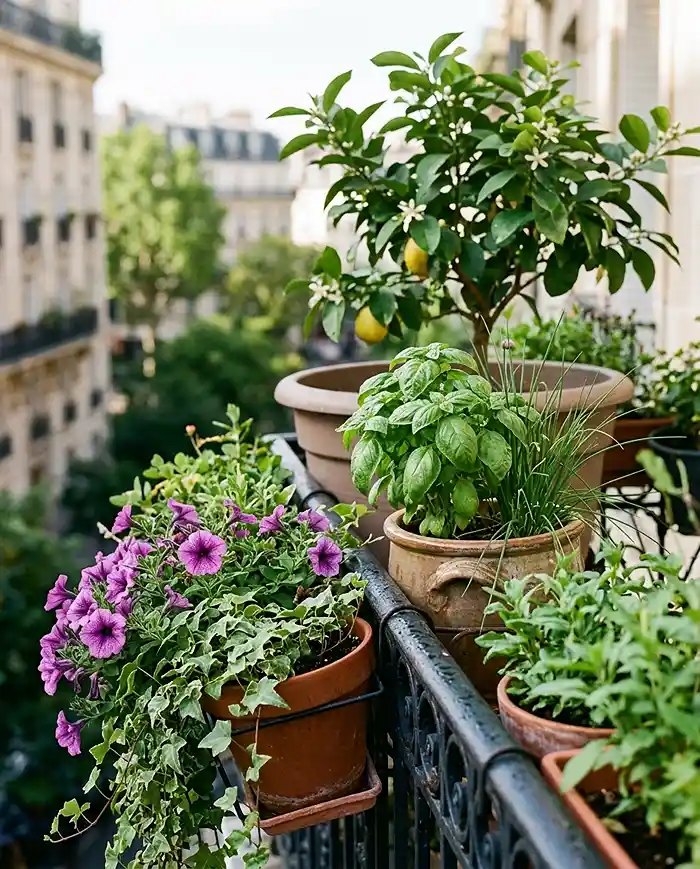
Top picks for edible small balcony gardens: basil, mint (keep it in its own pot — it spreads), chives, cherry tomatoes, lettuce, and dwarf peppers.
Dwarf citrus like ‘Calamondin’ or ‘Improved Meyer Lemon’ in a 15-gallon pot adds height, fragrance, and harvestable fruit even on a small balcony. They do need full sun though.
For more ideas on growing edibles in tight spaces, browse these 5-gallon bucket garden ideas — most work perfectly in balcony setups.
Pro Tip: Grow herbs you actually cook with — not just ones that look pretty. You’ll water them more consistently when dinner depends on it.
Furniture and Decor for a Cozy Feel
The right furniture turns a balcony garden from a plant shelf into an outdoor living room. Go small-scale, multi-functional, and weather-resistant.
A bistro set (two chairs + small round table) is the classic choice for tight spaces. Folding versions tuck away when you want to move pots around or hose things down.
Add softness with an outdoor rug, UV-resistant cushions, and a throw blanket for cooler evenings. These small touches shift the vibe from “storage area” to “retreat.”
For personal character: hang a small framed art piece rated for outdoors, use a ceramic pot you love, or add a small water feature. It doesn’t take much to make a space feel like yours.
Lighting That Sets the Mood
Quick Answer: String lights are the easiest win for apartment gardening atmosphere — no wiring, low cost, instant warmth.
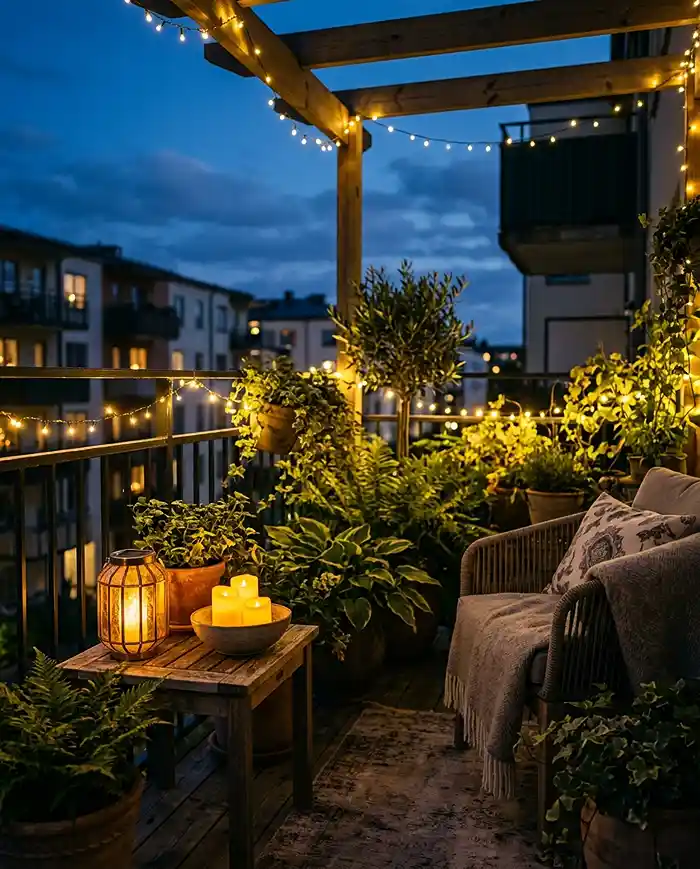
Solar string lights work well on south- or west-facing balconies with enough sun to charge. For north-facing or shaded spots, go USB-rechargeable or battery-powered instead.
- String lights: drape along railing or overhead for ambient glow
- Solar lanterns: place on tables or hang from hooks for accent lighting
- LED candles: safe, flicker-free option where open flames aren’t allowed
- Clip-on reading light: useful if you spend time out there after dark
Pro Tip: Warm white (2700K–3000K) lighting makes plants look vibrant and the whole space feel cozy — cool white makes it feel like a parking lot.
Containers, Soil, and Setup Essentials
Your container choice affects weight, water retention, durability, and cost. For balconies, lighter is usually better — especially on upper floors.
- Fabric grow bags: Lightweight, great drainage, fold flat for storage — best all-around for balconies
- Fiberglass or resin pots: Look like ceramic, weigh a fraction — good for large statement containers
- Terracotta: Heavy when wet, but excellent for herbs that prefer drier soil
- Self-watering planters: Great if you travel or forget to water
Always use a quality potting mix — never garden soil, which compacts and kills drainage in containers. Add perlite (about 20% by volume) for extra drainage and aeration.
Use saucers under every pot to catch overflow. Silicone or rubber saucers grip better and won’t scratch your floor. Elevate pots on plant stands or feet to prevent floor staining and rot.
For hot-weather watering tips that keep container plants alive, read this guide on watering container plants in hot weather — it’s especially useful for sunny balconies in summer.
Step-by-Step: Building Your Balcony Corner
Ready to actually put it together? Here’s the order that makes the process smooth and avoids the “move everything three times” frustration.
- Clear and clean: Sweep the floor, wipe down railings, remove anything you don’t need out there
- Place large items first: Furniture, tall shelves, trellises — these define the zones
- Set containers: Start with the biggest pots, then fill in with medium and small ones
- Plant and arrange: Group plants by light needs, use odd numbers for visual appeal
- Add lighting: String lights, lanterns — do this before the final decor layer
- Layer decor: Rug, cushions, small accessories — these finish the room feeling
- Step back and edit: Remove anything that makes it feel cluttered
Real Example: I set up a friend’s north-facing apartment balcony in about 3 hours. We used two folding chairs, a railing planter with trailing ivy, a 3-tier stand with ferns and peace lilies, and battery string lights. She said it felt like a completely different apartment.
Pro Tip: Group pots in clusters of 3 or 5. Odd numbers look intentional; even numbers look like you ran out of ideas.
Maintenance and Seasonal Care
A small balcony garden is low-maintenance by nature — small spaces mean less to manage. But a simple routine keeps it looking good all season.
Weekly tasks:
- Water containers (check soil moisture first — stick your finger 1 inch in)
- Deadhead spent flowers to encourage new blooms
- Remove yellowed or dead leaves
Monthly tasks:
- Feed with a balanced liquid fertilizer (every 2–4 weeks during growing season)
- Check for pests under leaves — catch them early
- Sweep and wipe down surfaces, saucers, and pot exteriors
Need help with herbs that thrive through the season? This list of herbs that handle balcony conditions covers the best picks for heat, wind, and container life.
Overwintering and Off-Season Storage
Quick Answer: Move tender plants indoors before the first frost. Store cushions, rugs, and lightweight furniture inside to extend their life.
Hardy perennials like ornamental grasses or dwarf conifers can stay outside in USDA zones 6+ if insulated with bubble wrap around pots. This prevents freeze-thaw damage to roots.
Bring in any ceramic pots before hard freezes — they crack when wet soil expands. Store fabric grow bags folded flat in a dry indoor space.
Pro Tip: Use the off-season to repot root-bound plants, refresh potting mix, and plan next year’s layout. Your spring setup will be faster and better for it.
Regional and Climate Considerations
Your climate shapes everything from plant choice to furniture material. What works in San Diego won’t automatically work in Chicago or Miami.
| Climate | Key Challenge | Best Approach |
|---|---|---|
| Hot & dry (zones 9–11) | Heat stress, rapid drying | Self-watering pots, succulents, shade cloth |
| Cold winters (zones 4–6) | Frost damage, short season | Container insulation, bring plants in early |
| Humid & wet | Root rot, mold, rust on furniture | Excellent drainage, powder-coated metal or teak |
| High wind (upper floors) | Tipping pots, leaf damage | Heavy pots, wind screens, tough plant varieties |
Pro Tip: In coastal or humid climates, skip anything iron or MDF for outdoor use — they rust and warp fast. Teak, powder-coated aluminum, and resin hold up much better.
Expert Tips for a Standout Balcony Corner
These are the small moves that separate a thoughtful balcony garden from a generic one:
- Use a mirror: A weather-resistant outdoor mirror on the wall doubles the perceived space and reflects greenery beautifully
- Layer rugs: An outdoor rug grounds the seating area and adds warmth underfoot — go for a fade-resistant polypropylene material
- Vary pot heights: Use plant stands, upturned pots, or tiered shelves to create elevation variety instead of everything at floor level
- Add scent: Jasmine, lavender, or sweet alyssum near the seating area makes the space feel luxurious
- Stick to 2–3 colors: A restrained palette (foliage greens + one accent color) looks intentional; too many colors looks chaotic in a small space
Pro Tip: One oversized statement pot looks more expensive and intentional than five mismatched small ones. Invest in one great planter and let it anchor the whole corner.
Common Problems and Solutions
Limited Space Feels Cramped and Cluttered
Quick Answer: Go vertical, go multi-functional, and edit ruthlessly. The problem is usually too much stuff, not too little space.
Wall-mounted planters, railing hooks, and vertical pocket organizers move plants off the floor and free up walking room. A storage bench replaces a table AND holds cushions.
Stick to a light, neutral color palette for furniture and pots. Dark colors in small spaces feel heavy. White, cream, or light wood tones open things up visually.
Pro Tip: Do a “one in, one out” rule — every new addition to the balcony means removing or relocating something else. It keeps clutter from creeping back.
Plants Struggling in Wind or Intense Sun
Quick Answer: If leaves are browning at the edges or plants are flopping over, wind or sun stress is usually the culprit. Fix the environment before swapping plants.
Add a bamboo screen or freestanding windbreak on the exposed side. For intense sun, a shade cloth (30–40% block) clipped to the railing reduces heat stress without cutting light too much.
If the location truly can’t be fixed, switch to tougher plants: ornamental grasses, sedums, geraniums, and agapanthus handle wind and heat far better than most.
Water Damage and Stains on Balcony Floor
Quick Answer: Saucers, plant stands, and a waterproof mat under pots protect the floor and keep landlords happy.
Use deep-lipped rubber or silicone saucers under every pot — they hold more water before overflow. Elevate containers on pot feet or a slatted plant stand so air circulates and water doesn’t pool.
Lay an outdoor interlocking tile mat or deck tile under your plant area. It protects the floor, looks intentional, and can be removed when you move out — no damage, no deposit issues.
balcony garden ideas for apartments FAQs
How do I make a small apartment balcony cozy?
Layer greenery at different heights, add soft seating with weather-resistant cushions, hang warm string lights, and use a privacy screen or trellis on the exposed side. A small outdoor rug ties it all together and makes the space feel like a room, not a ledge.
What plants are best for a low-maintenance balcony garden?
Geraniums, lavender, sedums, pothos (for shaded spots), and ornamental grasses are all tough, drought-tolerant, and container-friendly. They handle heat, some wind, and occasional missed waterings without giving up.
How can I decorate a balcony without drilling or permanent changes?
Use freestanding furniture, tension-rod curtains, clip-on railing planters, adhesive hooks rated for outdoor use, and freestanding privacy screens. All of these give you a fully styled balcony without touching the walls or railing permanently.
How do I protect my balcony floor from plant water damage?
Place rubber or silicone saucers under every pot, elevate containers on pot feet or stands, and lay an outdoor interlocking tile mat under your plant zone. This prevents staining, satisfies most landlord requirements, and is fully removable.
Key Takeaways
- The best balcony garden ideas for apartments start with measuring, checking lease rules, and tracking sun hours — before buying anything
- Zone your space into seating, greenery, and storage areas even on the smallest small balcony garden
- Match plants to your actual light level — this single step prevents most balcony plant failures
- Use vertical planters, railing hooks, and tiered stands to multiply planting space without adding floor clutter
- Warm lighting, an outdoor rug, and a privacy screen are the fastest upgrades that make apartment gardening feel like a real outdoor room