

Watering container plants in hot weather
Watering container plants in hot weather is the number one way small-space gardeners lose plants they’ve spent months growing. One brutal week can wipe out a balcony full of tomatoes if you’re not ready.
This guide gives you the exact tools, timing, and tricks to keep your containers, raised beds, and urban garden alive — even when temperatures push past 95°F for days at a stretch.
Table of Contents
Why Small Spaces Struggle Most in a Heat Wave
Container plants and small-space gardens dry out 2–3x faster than in-ground beds. There’s less soil volume to hold moisture, and every cubic inch heats up fast.
Balconies and patios make it worse. Concrete and brick walls absorb heat all day, then radiate it straight at your pots overnight. A south-facing balcony can run 15–20°F hotter than the ambient temperature.
Evaporation is the other killer. Small containers lose surface moisture within hours on a 90°F day. A 6-inch pot can go from saturated to bone dry in under 12 hours in direct sun.
For anyone doing container gardening as a beginner, summer heat is often the first real test — and containers fail it faster than anything else in the garden.
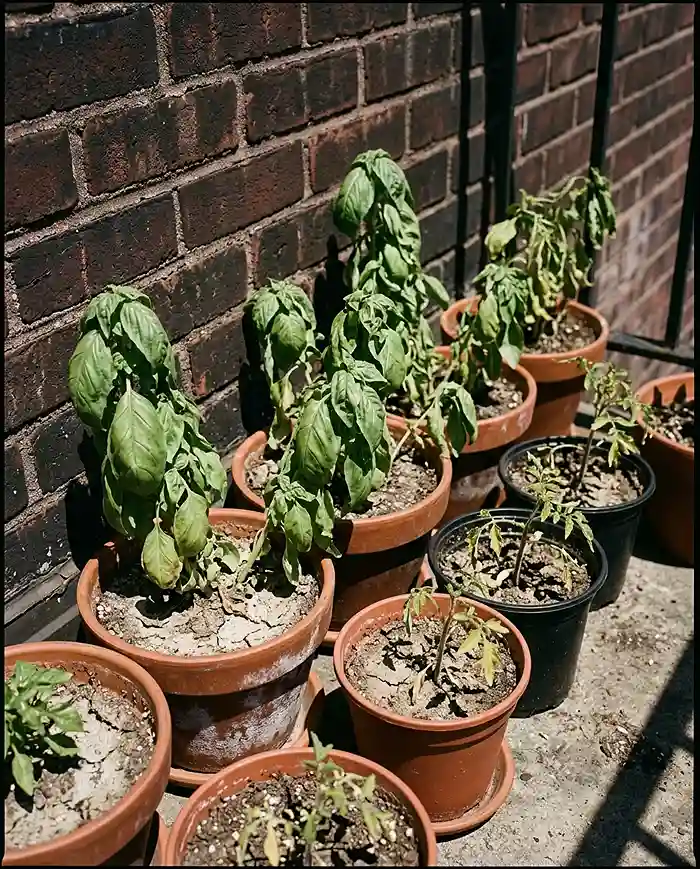
Quick-Assess Your Space Before the Heat Hits
Before a hot week arrives, walk your space and answer four questions fast.
- Sun exposure: How many hours of direct sun does each container get? Anything over 6 hours is high-risk during a heat wave.
- Container material: Terracotta and unglazed ceramic lose water through the walls. Black plastic absorbs heat and can cook roots.
- Drainage: Pots without drainage holes trap water at the bottom and suffocate roots. Pots with huge holes lose water too fast.
- Vulnerable plants: Leafy greens, basil, and lettuce wilt first. Succulents and most herbs can handle more heat without intervention.
Prioritize pots that are small, in full sun, made of terracotta, or holding thirsty plants like tomatoes and cucumbers. Those need your attention first every morning during a heat wave.
Reading the Signs of Heat Stress
Quick Answer: Wilting mid-morning means real thirst. Wilting only at 2 p.m. while the soil is still moist is temporary heat droop — normal and not an emergency.
Here’s what to look for:
- Crispy or brown leaf edges: Classic sign of underwatering or heat scorch — check soil depth, not just the surface.
- Soil pulling away from pot edges: The soil has shrunk and water will run straight down the gap without absorbing. Needs a slow soak.
- Midday collapse that recovers by evening: Likely temporary droop. Don’t overwater in response — check the soil first with your finger.
- Yellowing lower leaves: Could be overwatering or heat stress. Check drainage before adding more water.
Pro Tip: Push your finger 2 inches into the soil — if it’s still moist at that depth, skip watering and check again in 2 hours.
Tools and Materials That Make Hot-Week Watering Easier
You don’t need expensive gear. These tools solve real problems for small-space gardening in summer heat.
| Tool | Best For | Watch Out For |
|---|---|---|
| Self-watering inserts | Containers you can’t check daily | Algae in reservoir if left full too long |
| Moisture meter | Ending guesswork on large pots | Cheap ones give inconsistent readings |
| Watering globes | Weekend absences, 1–3 day coverage | Only works in loose, moist soil |
| Drip kit (basic) | Clusters of pots on a timer | Emitters clog without regular flushing |
| Ollas (clay pots) | Slow deep watering in raised beds | Crack risk if temperatures swing hard |
| Mulch (bark or straw) | Any container top, raised bed surface | Keep away from plant stems to prevent rot |
A basic $8 moisture meter pays for itself the first week by preventing both overwatering and underwatering during summer container gardening.
Core Small-Space Watering Hacks for Hot Weeks
These are the hands-on techniques that make the biggest difference when watering container plants in hot weather. They’re low-cost, take under an hour to set up, and actually work.
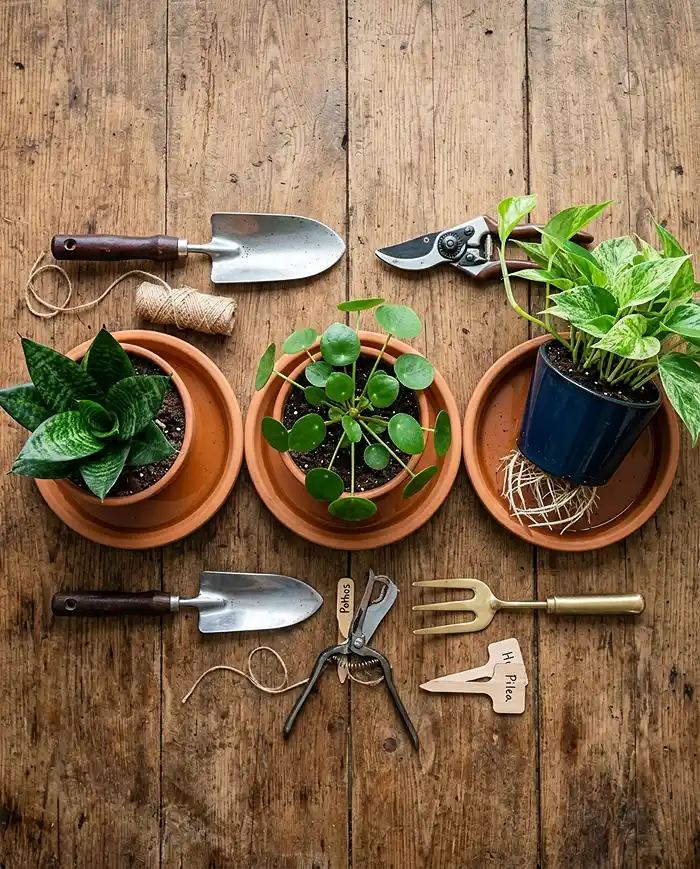
Bottom-Watering and Saucer Reservoirs
Quick Answer: Pour water into the saucer under your pot instead of from the top. Roots pull moisture upward and the soil stays hydrated longer without surface evaporation.
How to do it:
- Set your pot in a saucer or tray at least 1 inch deep.
- Pour water into the tray until it’s full.
- Let the pot sit for 20–30 minutes, then drain any leftover water.
- Repeat once the top inch of soil dries out again.
Last July, I switched a struggling pepper plant to bottom-watering during a 10-day heat wave. It not only survived — it doubled its fruit set once temps cooled. Top-watering had been letting the surface crust dry while the deeper roots stayed thirsty.
Pro Tip: For large pots, add a layer of gravel to the saucer to keep the pot above standing water — this prevents root rot while still allowing uptake.
DIY Drip and Wicking Systems
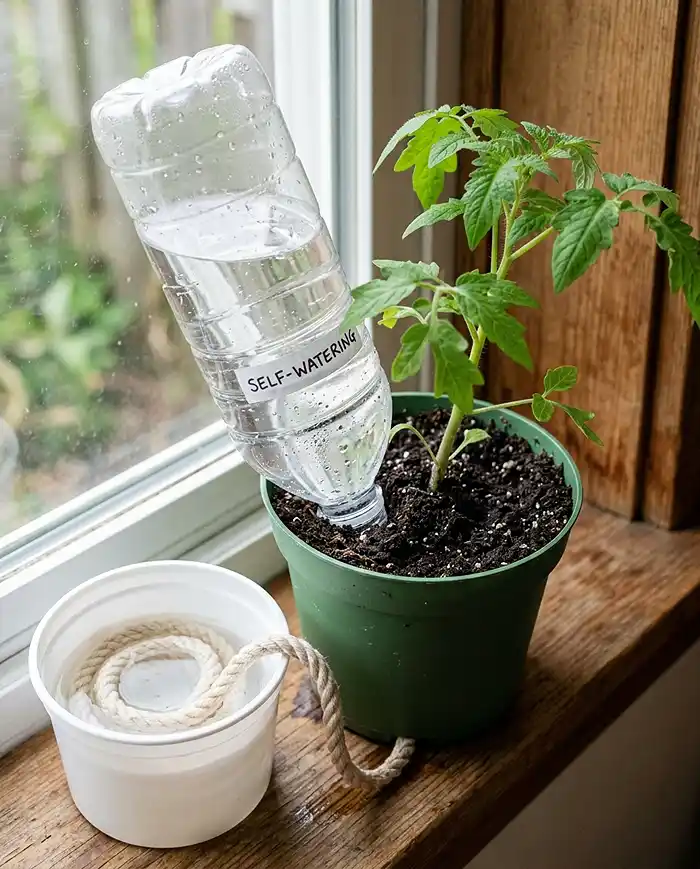
Quick Answer: A plastic bottle with a small hole, or a cotton rope wick, delivers slow steady moisture directly to roots with zero daily effort.
Plastic bottle drip setup:
- Take a 1-liter plastic bottle and poke 3–4 tiny holes in the cap with a pin.
- Fill the bottle with water.
- Invert it and push the cap 2 inches into the soil near the root zone.
- It’ll empty over 6–12 hours depending on soil moisture.
Cotton rope wicking:
- Cut a length of thick cotton rope long enough to reach from a water reservoir to the root zone.
- Thread one end through the drainage hole and coil it in the lower third of the pot before adding soil.
- Submerge the other end in a bucket of water placed higher than the pot.
These DIY setups are perfect for anyone doing 5-gallon bucket gardening — a wick through the bucket bottom with a tray reservoir below works brilliantly.
Pro Tip: Use natural cotton rope, not synthetic — synthetic won’t wick properly and breaks down into microplastics in your soil.
Mulch, Grouping, and Shade Tricks
Quick Answer: A 1-inch layer of mulch on your pot’s soil surface can cut water loss by up to 50%. Grouping pots together creates a microclimate that slows evaporation for all of them.
Three easy wins:
- Mulch containers: Add 1 inch of bark chips, straw, or even shredded newspaper to the top of each pot. Keep it away from stems by about half an inch.
- Cluster your pots: Push pots together so their leaves overlap slightly. The shared canopy shades the soil and traps humidity between plants.
- Temporary shade cloth: A 30–40% shade cloth draped over the hottest section of your balcony or patio for afternoon hours can drop ambient temperature by 10°F and dramatically cut watering needs.
Pro Tip: Light-colored pot covers or wrapping dark pots in burlap during heat waves can cut soil temperature by 5–10°F on its own.
Timing: When to Water During a Hot Week
Timing matters as much as how much you water. Water at the wrong time and you lose most of it to evaporation before roots absorb anything.
Best window: Early morning, ideally before 8 a.m. Soil is coolest, roots are active, and water has time to absorb before peak heat. This is the gold standard for summer container gardening.
Evening (after 6 p.m.) is acceptable but not ideal. Moisture sitting on leaves overnight can encourage fungal issues, especially in humid climates.
Midday is the worst time. Up to 40% of water can evaporate before it reaches roots in full sun. You’re essentially watering the air.
According to the University of Maryland Extension, early-morning watering also reduces disease pressure by allowing foliage to dry quickly once the sun rises.
Hot-Week Watering Schedule Chart
Quick Answer: The hotter it gets, the more you water — but container size matters just as much as temperature. Use this chart as your baseline, then adjust based on the finger test.
| Temperature | Small Containers (under 6″) | Medium Pots (8″–14″) | Large Pots / Raised Beds |
|---|---|---|---|
| 75–84°F | Once daily | Every 1–2 days | Every 2 days |
| 85–94°F | Twice daily | Once daily | Once daily |
| 95°F+ | Twice daily + shade | Twice daily | Once daily, deep |
Pro Tip: “Deep watering” means watering slowly until it drains from the bottom — not a quick pour. Deep watering once beats shallow watering twice every time.
Water-Saving Strategies for Tight Spaces
Small-space gardening means getting creative with water sources. These methods cut your daily watering effort and your water bill.
- AC condensate: A window AC unit can produce 1–3 gallons of distilled water per day. Catch it with a bucket under the drain line — it’s clean and plants love it.
- Rain catchment: Even a 5-gallon bucket under a downspout or set out during rain gives you free irrigation water. Add a lid to prevent mosquitoes.
- Greywater reuse: Rinsing water from vegetables or plain pasta water (unsalted) is fine for container plants. Avoid water with soap, bleach, or heavy seasoning.
- Self-watering pot upgrades: Add a self-watering insert to standard pots — they create a bottom reservoir that refills the soil by capillary action. Cuts watering frequency by half in hot weather.
These strategies matter especially in urban gardening setups where outdoor spigots may be limited or water costs are high.
Plant-Specific Hot-Week Care
Not every plant needs the same treatment. Here’s how to adjust watering container plants in hot weather by plant type.
Thirsty plants (tomatoes, cucumbers, leafy greens): These need consistent moisture — never let them fully dry out. Tomatoes especially will drop flowers and crack fruit if watering is inconsistent during a heat wave.
Moderate-need plants (peppers, beans, zucchini): Water deeply but let the top inch dry between waterings. They tolerate more stress than tomatoes.
Drought-tolerant (herbs like rosemary, thyme, lavender; succulents): These prefer to dry out between waterings. Overwatering during hot spells kills them faster than underwatering. Check out these herbs that thrive on balconies in heat for the toughest picks.
Hanging baskets: These dry out fastest of all — they have small soil volume, air exposure on all sides, and no insulation. Water them every morning without fail during any heat wave, and check again in the evening.
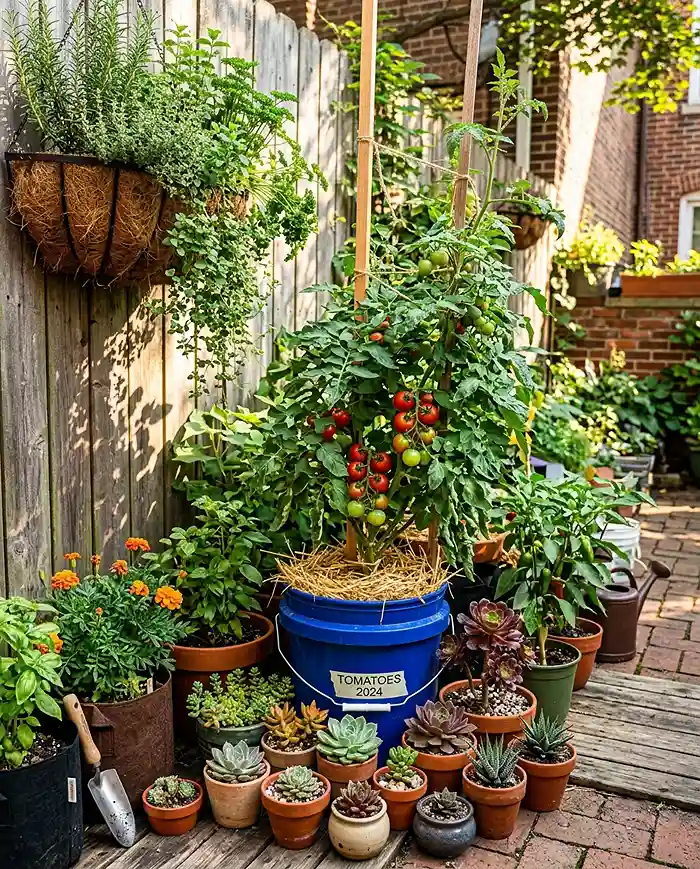
Regional and Climate Considerations
Where you live changes how aggressively you need to water container plants in hot weather.
Humid climates (Southeast US, coastal regions): Heat stress is real but evaporation is slower. Morning watering is usually enough. Watch for fungal issues from moisture sitting overnight.
Arid climates (Southwest US, Mediterranean): Evaporation is brutal. You may need to water twice daily for small containers and use every water-saving trick in this guide simultaneously.
High elevation: UV intensity is higher and temperatures swing dramatically between day and night. Plants can scorch even with adequate soil moisture — shade cloth is more important here than in humid lowlands.
For arid regions, the University of Arizona Cooperative Extension recommends using larger containers (at least 15 gallons for tomatoes) to buffer against rapid moisture loss in desert heat.
Expert Tips for Surviving Extended Heat
If you know a 7–10 day heat wave is coming, prep your containers the day before it hits.
- Pre-soak heavily: The day before the heat wave, water all containers until water runs freely from the bottom, twice. You want fully saturated soil going into the hot stretch.
- Use terracotta strategically: Terracotta breathes and cools roots — but only if you’re watering frequently. In a heat wave where you can’t check twice daily, switch vulnerable plants to glazed ceramic or plastic to reduce evaporation loss.
- Relocate pots: Move heat-sensitive containers to a north-facing wall, under a table, or inside near a bright window for the duration of the heat wave. A few feet of shade can be the difference between survival and loss.
- Delay fertilizing: Hold off on any feeding during extreme heat. Fertilizer salts concentrate in dry soil and can burn roots that are already stressed.
Common Problems and Solutions
Water Runs Straight Through and Soil Stays Dry
Quick Answer: Hydrophobic soil repels water instead of absorbing it — you need to rehydrate it slowly before normal watering works again.
How to fix it:
- Slow soak method: Set the pot in a bucket of water up to its rim for 30–60 minutes. Let the soil absorb from the bottom up.
- Dish soap trick: Add 1–2 drops of plain dish soap to a watering can and water very slowly. The soap breaks surface tension and lets water penetrate hydrophobic soil.
- Poke channels: Use a chopstick or pencil to poke 5–6 holes 3 inches deep into the soil, then water slowly over each hole.
Pro Tip: Peat-heavy potting mixes are especially prone to hydrophobia. Switch to a coco coir-based mix for next season — it rewets far more reliably after drying out.
Plants Wilting Despite Daily Watering
Quick Answer: If you’re watering daily and plants still wilt, the problem is usually root-bound pots, poor drainage, or too much direct sun — not too little water.
Diagnose fast:
- Root-bound: Tip the pot and check if roots are circling the bottom or poking out drainage holes. If so, pot up one size immediately.
- Poor drainage: Press the soil after watering — if it stays soggy for hours, the drainage is blocked. Check if holes are clogged.
- Too much sun: Move the container to a spot with afternoon shade and see if it recovers within 24 hours.
Yellowing Leaves and Overwatering in the Heat
Quick Answer: Yellow leaves combined with soggy soil means overwatering — common in summer when gardeners panic and water too frequently.
Overwatering kills roots by suffocating them. Stop watering, let the soil dry out until the top 2 inches are dry, then resume on a more spaced-out schedule.
If the pot has no drainage hole, that’s your main problem. Repot into a container with at least one drainage hole before resuming a normal watering schedule.
watering container plants in hot weather FAQs
How often should I water container plants in hot weather?
In temperatures above 85°F, small containers need water once or twice daily. Medium pots typically need water every day. Large pots and raised beds usually need water every day to every other day. Always confirm using the finger test: push your finger 2 inches into the soil — if it’s dry at that depth, water. If it’s still moist, wait.
Is it better to water in the morning or evening during a heat wave?
Early morning watering — before 8 a.m. — is the clear winner. The soil is cool, roots actively absorb, and foliage dries quickly once the sun rises. Evening watering works as a backup but leaves moisture on leaves overnight, which can encourage fungal disease in warm, humid conditions.
Can I leave my plants for a weekend during a hot spell?
Yes, with preparation. Set up DIY bottle drippers or watering globes in each container. Group all your pots together to reduce evaporation. Fill every saucer with water before you leave. For anything over 2 days in temperatures above 90°F, a basic drip timer kit from a hardware store is worth the $20 investment.
Why are my plant leaves crispy even though the soil is wet?
Crispy edges with moist soil usually means heat scorch or low humidity — not underwatering. The leaves are losing moisture faster than roots can replace it. Add temporary shade cloth for afternoon hours and mist the leaves early in the morning. Grouping pots together also raises humidity around the plants.
Key Takeaways
- Watering container plants in hot weather requires twice the attention of normal weeks — small containers can go bone dry in under 12 hours at 90°F+.
- Water early morning before 8 a.m. for maximum absorption and minimum evaporation.
- Bottom-watering, DIY bottle drippers, and cotton wicks are the most effective low-cost tools for summer container gardening.
- Mulch the top of every container and group pots together — these two free steps can cut your daily watering time in half.
- Always diagnose before you water: yellowing + soggy soil means overwatering, not underwatering — more water will make it worse.