

Renter Friendly Vertical Garden Ideas for Summer
The best renter friendly vertical garden ideas let you grow herbs, flowers, and veggies all summer without a single nail hole. If your lease feels like it’s blocking your green thumb, these no-damage setups will change that fast.
Table of Contents
Why Vertical Gardens Work So Well for Renters in Summer
Vertical gardening turns blank wall space and unused corners into productive growing areas. You’re stacking plants up instead of out, which is ideal when your outdoor space is measured in square feet, not acres.
The real win for renters? Everything stays portable. You can move containers to follow the sun, reorganize mid-season, or pack everything up at lease-end without leaving a mark.
Summer container gardening thrives in vertical setups because airflow improves around plants, heat drains faster, and you can group thirsty plants together for easier watering. It’s genuinely smarter than spreading pots across the floor.
Choose the Best Renter-Friendly Vertical Garden Style
Not every vertical format works for every space. Here’s how the main options stack up for small space gardening on a rental budget.
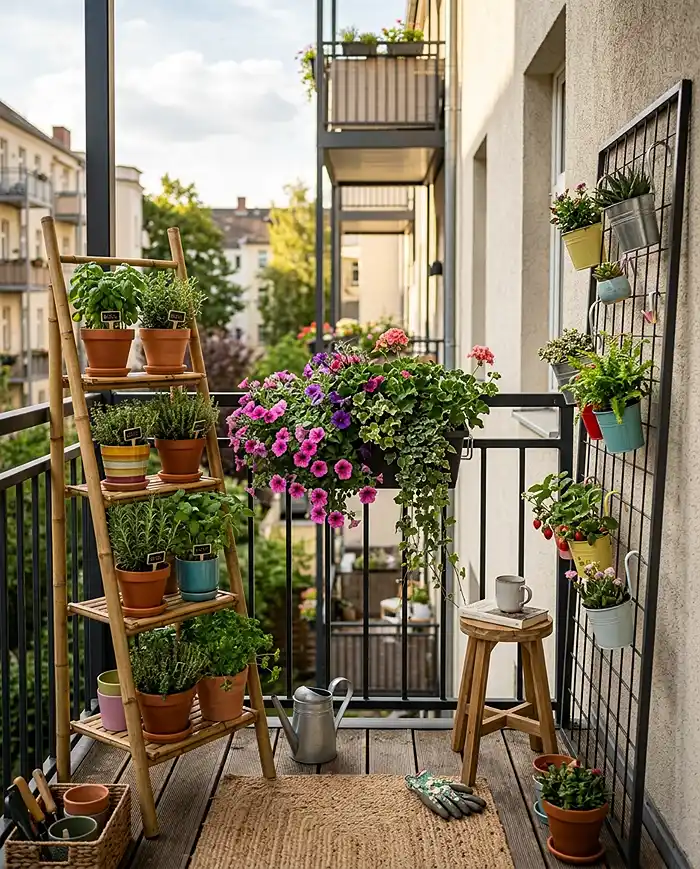
| Style | Best For | Watch Out For |
|---|---|---|
| Freestanding tiered planter | Patios, balconies, decks | Tipping in wind without anchoring |
| Railing planter system | Balconies with metal or wood rails | Weight limits and water runoff |
| Leaning trellis or grid | Wall-effect look, no damage | Must lean against a stable surface |
| Hanging baskets | Trailing plants, small herbs | Dries out faster than ground pots |
Freestanding Vertical Planters
Quick Answer: Freestanding planters like tiered stands, ladder shelves, and raised vertical beds need zero drilling. They sit on the ground and move with you at lease-end.
Tiered planters give you 3–5 growing levels in a 2-square-foot footprint. Ladder shelves hold standard 6-inch pots and look great with trailing herbs like thyme or oregano spilling over the edges.
Last summer I used a three-tier bamboo plant stand on a north-facing balcony. I kept lettuce on the top two shelves and basil on the bottom where it got the most reflected heat. Harvested every week through August.
Pro Tip: Add rubber furniture feet to the base of any ladder shelf — it stops scratching and keeps the unit from sliding on smooth concrete during watering.
Balcony Railing and Hanging Gardens
Quick Answer: Railing planters clip or hook over balcony rails without hardware. Pair them with S-hook hanging baskets for a full balcony vertical garden in an afternoon.
- Use over-rail saddle planters that balance weight on both sides of the railing
- Add drip trays under each planter to catch water before it hits downstairs neighbors
- Hang baskets from S-hooks on a tension rod stretched between two fixed points
- Check your lease — some buildings cap railing load at 10–15 lbs per attachment point
Real Example: I hung three 8-inch baskets of calibrachoa from S-hooks on a wooden pergola beam last June. They bloomed straight through September with just a weekly feed of diluted liquid fertilizer.
Pro Tip: Line wire baskets with coco liner instead of plastic — it breathes better and plants in hot balcony conditions stay healthier all summer.
Wall-Looking Gardens Without Wall Damage
Quick Answer: You don’t need screws to create a living wall effect. Leaning grid panels, modular plant racks, and tension-rod systems all deliver the look with zero damage.
- Lean a metal grid panel against a fence or exterior wall and hang small pots with S-hooks
- Use modular pocket planters that hang from a tension rod in a doorframe or between posts
- Try freestanding stackable planter columns — they hold 6–8 pots in a vertical tower
Pro Tip: Place a thin rubber mat or foam spacer between any leaning structure and the wall surface — it protects paint and stops moisture from getting trapped behind the panel.
Plan Your Summer Vertical Garden Before Buying Anything
The biggest renter mistake is buying first and measuring second. Spend 20 minutes planning and you’ll save money, avoid landlord problems, and grow a lot more food.
Start with your lease. Check clauses about balcony alterations, structural loads, and drainage. If it’s vague, a quick email to your landlord prevents headaches later.
Then map your space. Measure width, depth, and the height of any railing, fence, or overhang. Note where foot traffic needs to stay clear. You need at least 18 inches of walkway and room to pull a watering can through comfortably.
Check out these small balcony garden ideas for hot weather for layout inspiration before you finalize your plan.
Check Sunlight, Heat, Wind, and Weight Limits
Quick Answer: Track your space for one full day before placing anything. Mark where full sun (6+ hours), partial sun (3–6 hours), and shade land at 9 AM, 12 PM, and 3 PM.
| Condition | What to Do | Plant Response |
|---|---|---|
| Full afternoon sun (west-facing) | Use self-watering pots, mulch surface | Heat stress without moisture buffer |
| Consistent wind (exposed balcony) | Lower tall planters, anchor freestanding units | Dries out 2x faster than sheltered spots |
| Deep shade (north-facing, covered) | Stick to lettuce, mint, ferns | Fruiting crops won’t produce |
| Reflected heat from walls or glass | Add saucers with water to raise humidity | Leaf scorch on thin-leafed herbs |
Pro Tip: Wet soil weighs roughly 75–100 lbs per cubic foot. A large planter that looks manageable dry can become a structural concern when fully watered on an upper balcony — always check your building’s load rating.
Pick the Best Summer Plants for Vertical Gardens
Quick Answer: The best summer container gardening plants for vertical setups are compact, heat-tolerant, and productive in small pots. Here’s what actually works.
Herbs (compact, high-yield):
- Basil — loves heat, grow in 6-inch pots, pinch tops weekly to prevent bolting
- Parsley — tolerates partial shade, lasts all season with regular harvesting
- Thyme and oregano — drought-tolerant, great for sunny railings
- Mint — grows fast in shade, keep in its own pot or it’ll take over
Edibles (fruiting crops for sunny spots):
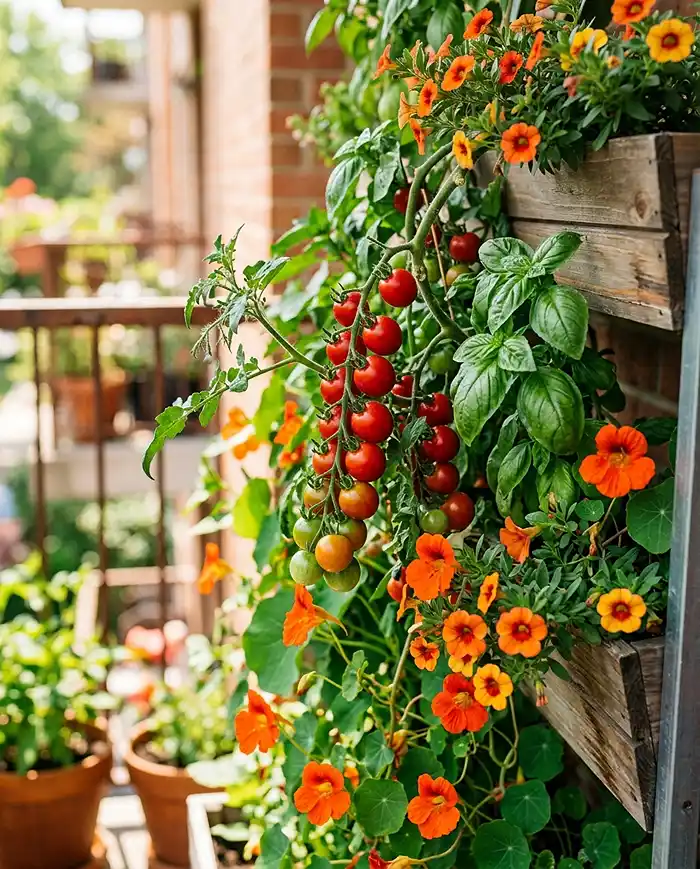
- Cherry tomatoes (Tumbling Tom, Tiny Tim) — perfect for tiered stands in full sun
- Compact peppers (Pot-a-Peno, Lunchbox) — productive in 8-inch pots
- Strawberries — ideal for hanging baskets, runners trail beautifully
- Lettuce and spinach — partial shade only, bolt quickly in direct afternoon sun
Flowers (pollinators and fillers):
- Nasturtiums — edible, trailing, thrives in poor soil, great for edges
- Petunias and calibrachoa — compact, prolific, heat-tolerant
- Succulents — filler for hot, dry spots between productive plants
Materials and Tools You’ll Need
You don’t need much to get started. Here’s the practical shopping list for a renter-friendly small space garden setup — focused on what’s actually necessary.
- Containers: 6-inch pots for herbs, 8–10 inch for peppers and tomatoes, railing planters, hanging baskets
- Potting mix: Lightweight peat- or coco-based mix, never garden soil
- Drainage: Drip trays, saucers, balcony floor trays with raised edges
- Hardware: S-hooks, zip ties, tension rod for hanging systems
- Feeding: Slow-release granular fertilizer + liquid feed for weekly use
- Tools: Watering can with long spout, pruners or scissors, gloves
- Floor protection: Rubber mats, waterproof balcony tiles, furniture feet
For pot selection tips, this guide to the best pots for balcony gardens breaks down material, weight, and drainage by plant type.
Renter-Safe Protection Supplies
Quick Answer: Protecting floors, walls, and railings is non-negotiable for renters. The right supplies prevent deposit deductions and damage that’s hard to reverse.
- Under containers: Rubber feet on all pot bases, plus saucers with at least 1-inch rim depth
- Under structures: Waterproof rubber mat or interlocking balcony tiles under any freestanding unit
- Near walls: Foam spacers between any planter and painted surfaces, changed monthly to prevent mold
- On railings: Silicone padding between railing hooks and metal or wood rail surfaces
Pro Tip: Check foam spacers and rubber mats after heavy rain. Trapped moisture in that gap is the most common cause of balcony mold behind vertical planters.
How to Build a Renter-Friendly Vertical Garden Step by Step
Here’s the full build process, from picking your spot to your first watering. Do it in this order and you’ll avoid most common setup mistakes.
- Select your location — choose where sun maps to the right plants, not just where it looks good
- Assemble the structure — build on a flat surface, then carry it into position
- Test stability — give it a firm push from each side; add bracing if it rocks
- Add floor and wall protection — mats, spacers, and saucers go in before plants
- Fill containers — add lightweight mix, leave 1 inch of space at the top
- Plant and water in — water thoroughly until it flows from drainage holes
- Check drainage — confirm saucers catch runoff without overflowing for 30 minutes
- Leave for 24 hours — come back and check for settling, shifting, or unexpected runoff
Prepare Containers and Potting Mix Correctly
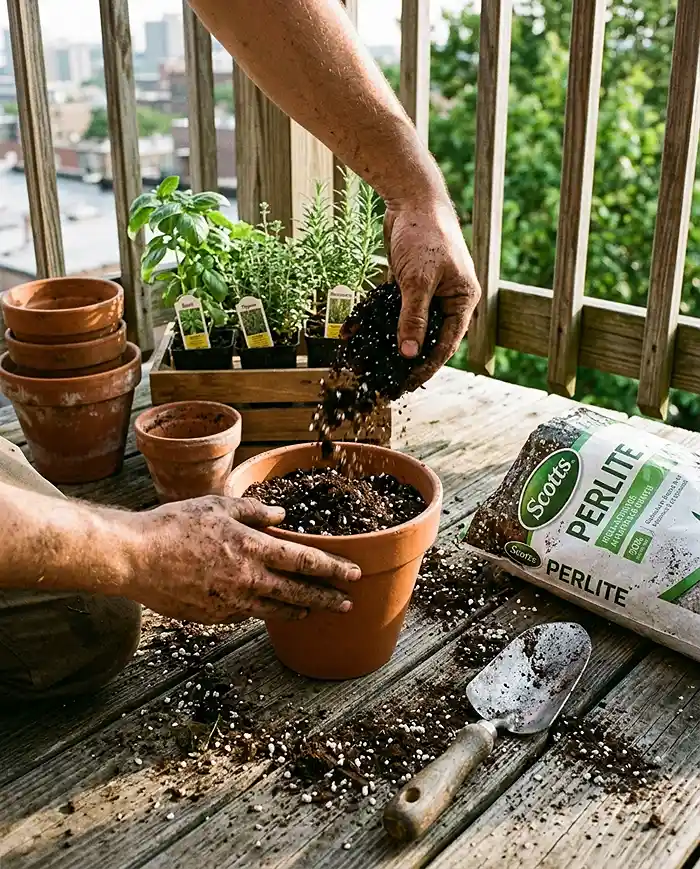
Quick Answer: Use lightweight potting mix, never garden soil. Garden soil compacts in containers, blocks drainage, and becomes heavy enough to damage balcony floors over time.
Every pot needs drainage holes. If a decorative pot doesn’t have them, use it as a cachepot and drop a smaller plastic pot with holes inside it. Remove the inner pot to water, then replace when drained.
For summer heat, mix in 10–15% perlite to improve drainage and lighten the overall weight. A moisture-retaining amendment like coconut coir helps containers hold water longer between hot days without staying soggy.
Pro Tip: Cover drainage holes with a small piece of window screen mesh before adding soil — it keeps mix from washing out while letting water drain freely.
Arrange Plants for Beauty and Easy Care
Quick Answer: Place tall plants at the back or top, trailing plants at the edges, and group plants by watering needs. Herbs stay closest to the door for easy harvesting.
- Top or back of the structure: tomatoes, tall peppers, upright herbs
- Middle tiers: compact herbs, flowering annuals, strawberries
- Front or bottom edges: trailing nasturtiums, calibrachoa, thyme
- Shadiest corner: mint, parsley, lettuce
- Sunniest rail or hook: succulents, oregano, thyme
Group thirsty plants like basil and lettuce on one side and drought-tolerant plants like thyme and succulents on the other. It makes watering much more efficient on hot days.
Pro Tip: Put the plants you harvest most often at standing height — constantly crouching to grab basil gets old fast, and plants at eye level are easier to check for pests.
Summer Maintenance for a Healthy Vertical Garden
Vertical gardens need more attention than in-ground beds. Containers dry out faster, nutrients deplete quicker, and pests spread easily between closely spaced pots. Here’s the weekly routine that keeps things on track.
Weekly checks:
- Check soil moisture by pushing your finger 1 inch into the mix — water if it’s dry
- Feed with diluted liquid fertilizer every 7–10 days from June through August
- Deadhead spent flowers to keep annuals producing
- Harvest herbs by pinching the top sets of leaves — this delays bolting
- Scout for pests: check the undersides of leaves for aphids, mites, and whiteflies
- Rotate containers a quarter turn to ensure even sun exposure on all sides
Watering and Fertilizing in Hot Weather
Quick Answer: Most small summer containers need daily moisture checks. Water in the morning, water deeply, and fertilize weekly with a diluted organic feed during peak growing season.
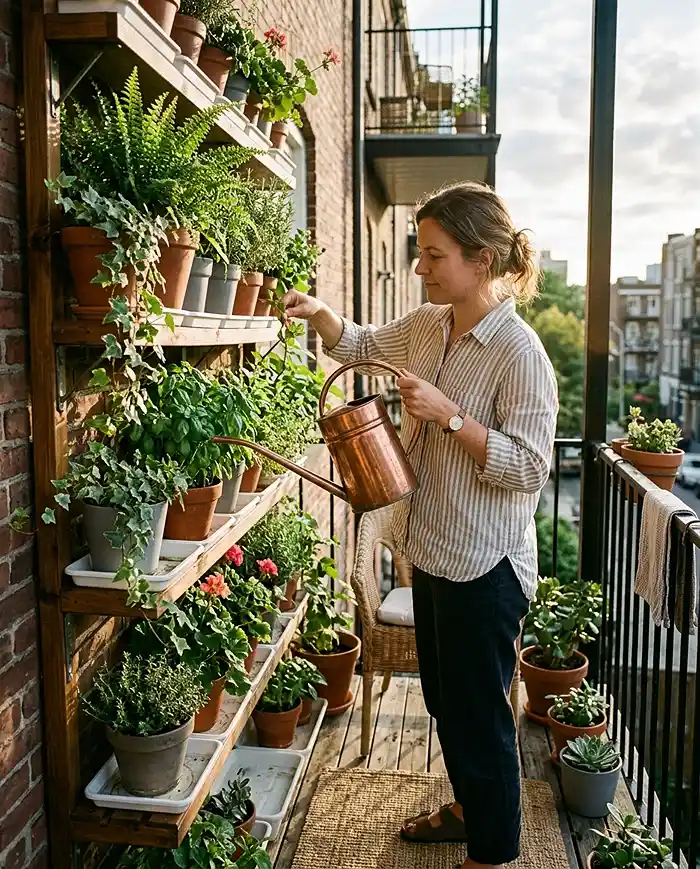
Push your finger 1 inch into the potting mix. If it’s dry, water until it flows from the drainage hole. Don’t water by schedule alone — a cloudy, cool day might mean your plants are still moist from yesterday.
During heat waves above 90°F, check pots morning and evening. Small 4–6 inch pots can dry out completely in under 12 hours in direct sun. Self-watering planters are worth the investment for these spots.
For feeding, dilute liquid fertilizer to half the recommended dose and apply every 7–10 days. Over-fertilizing in summer pushes leafy growth at the expense of fruit and flowers.
Pro Tip: Water slowly and deliberately until you see water flowing from drainage holes — quick splashes only wet the top inch and roots stay dry even though the surface looks moist.
Pruning, Harvesting, and Replanting
Quick Answer: Regular harvesting is the maintenance. Pinch herbs, remove spent flowers, and cut back leggy stems. Replace tired annuals mid-season to keep the garden looking good through fall.
- Basil: Pinch just above a leaf node when plants hit 6 inches — it branches and doubles production
- Petunias and calibrachoa: Deadhead [remove spent flowers] weekly or shear by one-third in midsummer if they get leggy
- Lettuce: Harvest outer leaves and leave the center — it regrows 2–3 times before bolting
- Tomatoes and peppers: Pinch suckers on tomatoes; harvest peppers often to keep new fruit setting
Pro Tip: Keep a few small pots of fast-growing annuals like marigolds or zinnias started from seed in a corner. When something dies back in midsummer, you’ve got an instant replacement ready.
Seasonal and Regional Adjustments for Summer Renters
Where you live changes everything about how you manage a summer vertical garden. Use these regional adjustments to keep your setup thriving.
- Hot, dry climates (Zones 9–11): Double down on self-watering planters, add perlite to every mix, and move heat-sensitive herbs like cilantro to shade by noon
- Hot, humid climates (Gulf Coast, Southeast): Improve airflow between pots, skip dense foliage fillers, and spray diluted neem oil preventatively every two weeks for fungal issues
- Coastal and windy exposures: Lower your freestanding units, use heavier terracotta on the bottom tiers, and tie structures to a fixed point with removable bungee cord
- Short-season regions (Zones 3–5): Start seeds indoors in April, use dark-colored containers to absorb heat, and get plants out as soon as nights stay above 50°F
This guide to small space garden layouts for summer heat has zone-specific plant placement strategies worth bookmarking.
Common Problems and Solutions
Most renter vertical garden problems come from four things: heat stress, poor drainage, unstable supports, and pests. Here’s how to fix each one without making changes that affect your deposit.
Plants Wilt Quickly in Afternoon Heat
Quick Answer: Afternoon wilt is usually heat stress, not drought. Move the affected pots to a spot that gets shade after 2 PM, or add a simple shade cloth over the sunniest tier.
- Water in the morning so roots are hydrated before peak heat hits
- Add a 1-inch layer of perlite or mulch on top of the soil to slow evaporation
- Upgrade small 4-inch pots to 6–8 inch — larger soil mass stays cool longer
- Swap heat-stressed herbs for heat-tolerant alternatives like basil, oregano, or thyme
Water Runoff Is Staining Floors or Bothering Neighbors
Quick Answer: Runoff problems almost always come from watering too fast or saucers that aren’t deep enough. Slow down your watering and upgrade to trays with at least a 1-inch rim.
- Use a long-spout watering can and pour in slow circles at soil level, not overhead
- Switch to moisture-retentive potting mix with coco coir — it holds water without excess runoff
- Move railing planters inward by 6 inches so drips don’t clear the balcony edge
- Check apartment rules — some buildings require enclosed drip systems on upper floors
Pests or Mildew Are Spreading Through the Garden
Quick Answer: Close spacing makes vertical gardens vulnerable to pest and disease spread. Catch problems early, remove affected leaves immediately, and treat the whole structure, not just one pot.
- Aphids: Knock off with a strong water spray, then follow with insecticidal soap spray every 3 days
- Spider mites: Yellow stippling on leaves — increase humidity around pots and use neem oil spray
- Whiteflies: Yellow sticky traps near affected plants, then weekly insecticidal soap
- Powdery mildew: Remove badly affected leaves, improve airflow by spacing pots further apart
Pro Tip: One infected plant in a vertical setup can spread to the whole structure within a week. Isolate any sick plant immediately — move it at least 3 feet away while you treat it.
The Setup Feels Unstable or Unsafe
Quick Answer: Lower your heaviest pots to the bottom tier and anchor freestanding units to a fixed point using removable bungee cord or Velcro straps.
- Move heavy terracotta pots to the lowest shelf to lower the center of gravity
- Never overload railings — respect weight limits even if the railing looks solid
- Move tall freestanding structures at least 12 inches from balcony edges in windy conditions
- Tie ladder shelves to a tension rod anchored between two fixed points if the unit sways
Renter friendly vertical garden ideas FAQs
Can I make a vertical garden in a rental without drilling?
Yes. Use freestanding tiered planters, railing saddle planters, ladder shelves, leaning grid panels, and tension-rod hanging systems. None of these require screws, nails, or adhesive wall mounts, and all move cleanly at lease-end.
What plants grow best in a summer vertical garden?
Compact herbs like basil, parsley, and thyme perform well in almost any light. For sunny balconies, try cherry tomatoes, dwarf peppers, and strawberries. In partial shade, grow lettuce, mint, and trailing nasturtiums. Heat-tolerant annuals like calibrachoa and petunias fill gaps beautifully all season.
How do I keep a vertical garden from damaging walls or floors?
Use rubber furniture feet under all containers, deep drip trays under every pot, waterproof mats under freestanding structures, and foam spacers between any planter and a wall surface. Avoid adhesive hooks or sticky products that can strip paint on removal.
How often should I water a renter-friendly vertical garden in summer?
Check soil daily by pressing your finger 1 inch into the mix. Most small containers need watering every 1 to 2 days in summer heat. During heat waves or on exposed windy balconies, small pots may need water every day. Always water until it flows from the drainage holes.
Do I need to tell my landlord about a vertical garden?
It depends on your lease and setup. If nothing touches the walls or requires structural changes, most leases allow it. If you’re adding railing planters, extra weight on a balcony, or anything that could cause drainage issues, a quick note to your landlord is always smart.
Key Takeaways
- The best renter friendly vertical garden ideas require zero drilling — freestanding planters, railing systems, and leaning grids all work without damaging your rental
- Measure your space and check your lease before buying anything — weight limits, drainage rules, and balcony restrictions vary widely
- Lightweight potting mix, deep drip trays, and rubber mats under every structure protect your deposit and keep neighbors happy
- Check soil moisture daily in summer and water deeply every 1–2 days — small containers dry out fast in heat and wind
- Harvest herbs regularly, deadhead flowers, and replace tired plants mid-season to keep your vertical garden productive and attractive all summer long