

Urban Garden Maintenance Calendar
Never guess what your container garden needs again. This urban garden maintenance calendar gives you the exact monthly tasks — bookmark it & start today.
Let’s be honest — nobody kills their balcony tomatoes on purpose. You bought the cute pot, picked out the seeds, maybe even watched a YouTube video or two. Then August rolls around and everything’s crispy, leggy, and sad. Sound familiar?
Here’s the thing most people won’t tell you: small-space gardeners don’t fail because they’re bad at growing stuff. They fail because they’re winging it without a timeline. That’s exactly why you need an urban garden maintenance calendar — a simple, month-by-month game plan that tells you what to do and when to do it so your container garden actually survives (and thrives) all year long.
Think of this as your small-space gardening checklist on steroids. Whether you’ve got a tiny patio, a fire escape that technically shouldn’t have plants on it, or just a sunny windowsill, this container garden care routine is built for you. And no, you don’t need a green thumb. You just need a schedule.
If you’re brand new to all of this, I’d honestly start with our Small-Space Gardening: The Complete Beginner Guide first — it’ll give you the foundation, and then this urban garden maintenance calendar becomes your ongoing playbook.
Table of Contents
Why Small-Space Gardens Play by Different Rules (The Biophysics You Need to Know)
Here’s something that tripped me up for years: I kept treating my container plants like they were mini versions of a backyard garden. They’re not. Not even close.
A 12-inch pot holds maybe 5 gallons of soil. That’s it. That tiny volume has basically zero ability to regulate temperature, hold onto moisture during a heat wave, or keep nutrients from washing away every time you water. A garden bed in the ground? It’s got the entire earth backing it up. Your pot on a south-facing balcony? It’s on its own. Well — it’s got you. That’s it.
The Chain Reaction Nobody Talks About
This is the single most important thing in container gardening, and I’m genuinely surprised how many articles skip it:
Hot day → you water more → water pours out the drainage holes, taking nutrients with it → your plant slowly starves unless you increase fertilizing too.
Read that again. Every single task in this urban garden maintenance calendar connects back to that loop. Once you understand it, everything else makes sense.
Indoor vs. Outdoor — Basically Two Different Hobbies
Indoor containers deal with low light, stale air, and whatever your heating system is doing to the humidity. Outdoor containers get blasted by wind, UV, and the urban heat island effect — that lovely phenomenon where concrete and asphalt radiate heat back at your plants until 10 PM.
I’ll flag the differences in every monthly section below. Don’t skip those notes.
January & February — Strategic Reset and Seed Initiation
January: Infrastructure Audit
I know, I know — January doesn’t feel like a gardening month. But this is actually when the smart work happens.
- Sanitize your tools with a 10% bleach solution. That crusty residue from last season? It’s carrying fungal and bacterial pathogens straight to your new plants. Five minutes of cleaning now saves you a disaster in April.
- Check every container for cracks. Freeze-thaw cycles are sneaky — a hairline fracture in January becomes a pot explosion in March.
- Go through your seed stash. Toss anything expired and focus on “patio,” “dwarf,” and “bush” cultivars — these are bred specifically for small-space yield, and they’re not just smaller versions of regular plants. They’re genuinely different.
- Indoor plants: Ease up on watering. Most houseplants are semi-dormant right now. And skip the fertilizer completely — they’re napping.
February: The Seed Cycle Begins
Now it gets exciting.
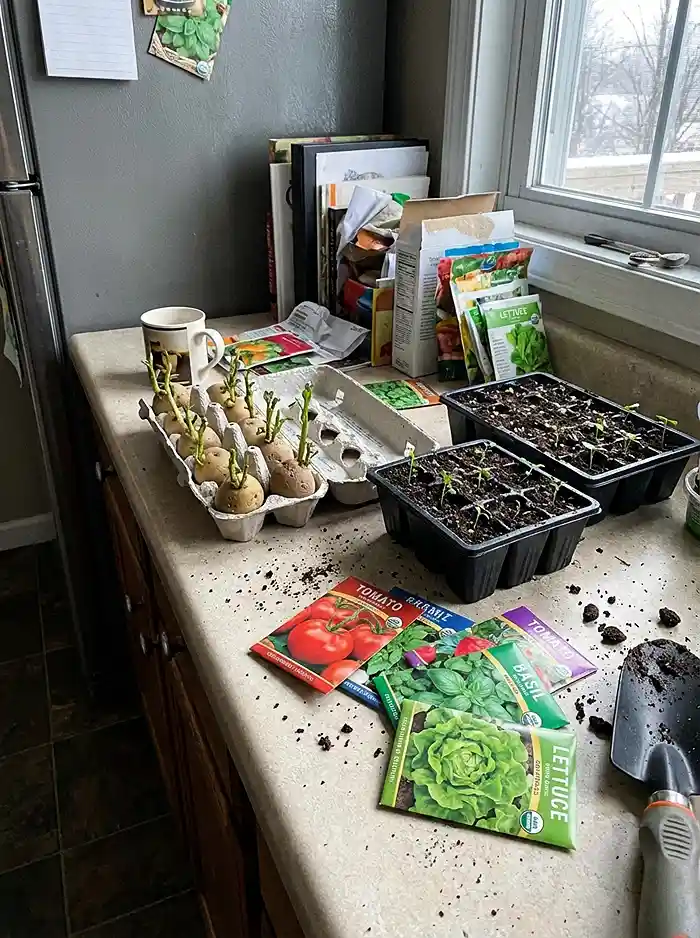
- Start peppers, eggplants, and tomatoes indoors. These slow growers need about 8 weeks of head start before your last frost date. Count backward on a calendar and sow accordingly.
- Chit your seed potatoes. Just place them eye-side up in egg cartons, stick them somewhere cool and bright (not direct sun), and let short green sprouts develop. It’s oddly satisfying to watch, and it gives them a 2–3 week advantage once they hit soil.
- Inspect indoor plants for early pests. Fungus gnats and spider mites absolutely love the dry air from winter heating. Check soil surfaces and leaf undersides — catching them now is ten times easier than battling a full infestation later.
March & April — Soil Chemistry and the Vernal Awakening
March: Soil Rejuvenation
Your container soil has been sitting there since last season, and I promise you — it’s spent. Unlike garden beds, container soil doesn’t regenerate on its own.
- Top-dress every outdoor container with 1–2 inches of quality compost. This replaces the organic matter and micronutrients that last year’s watering cycle flushed away.
- Direct sow cool-season crops — peas, radishes, spinach, lettuce — once soil temperature hits 40–45°F. And please, use a probe thermometer. “It feels warm enough” is how you lose a whole tray of seedlings.
- Indoor plants: Resume fertilizing at half-strength. Daylight hours are increasing, growth is restarting, and they’re finally ready for food again.
April: The Volatile Transition
April is where beginners lose the most plants. Almost always for the same reason.
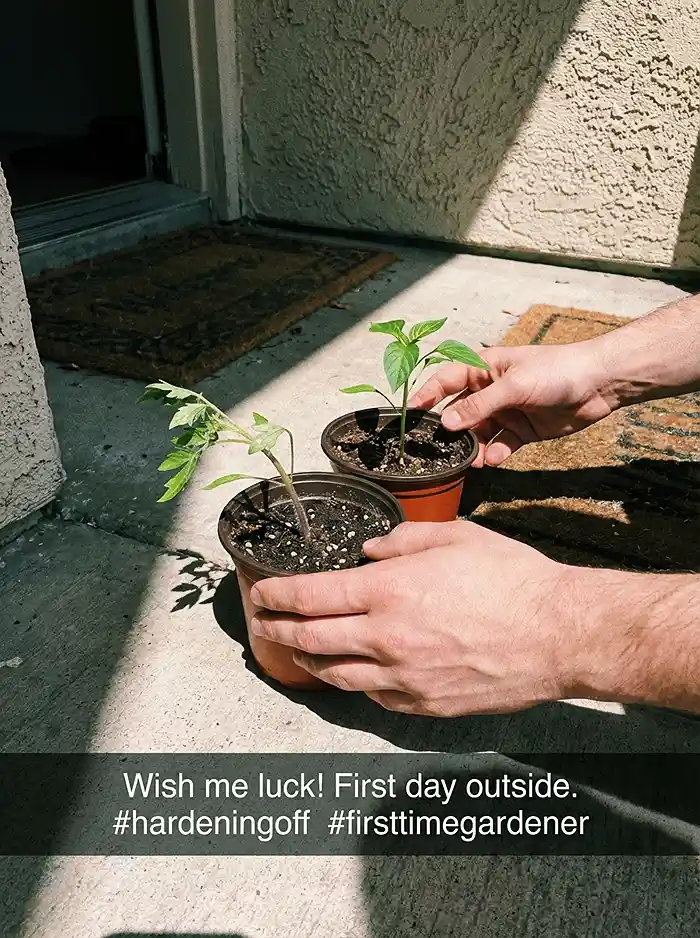
- Hardening off is non-negotiable. Move your indoor seedlings outside for 1 hour on Day 1. Add 1 hour each day over 7–10 days. I know this sounds tedious. Do it anyway. Skip it, and transplant shock will either stall your plants for weeks or outright kill them. The Old Farmer’s Almanac hardening-off guide explains it well if you want the deep dive.
- Start weekly pest scouting. I use what I call the “Scout and Blast” method — flip every leaf, look underneath, and blast any aphids off with a strong water stream before they establish camp.
- Indoor vs. outdoor note: Outdoor containers shift to a regular watering rhythm as temperatures climb. Indoor plants stay on the finger-test schedule — water only when the top inch feels dry.
May – August — Peak Season Management and Heat Island Mitigation
May: Vertical Momentum
May is go-time. This is where your urban garden maintenance calendar really starts earning its keep.
- Install supports at transplant time — trellises, cages, stakes, whatever your plants need. Jamming a stake into a container later means slicing through roots in an already cramped space. Don’t do it.
- Transplant your hardened-off seedlings (tomatoes, peppers, cucumbers, herbs) into their final outdoor containers after the last frost date. They’re ready.
- Succession-sow lettuce and radishes every 2 weeks. This is the secret to a continuous harvest instead of getting everything at once and then nothing.
June & July: Hydration Vigilance
Real talk — this is the highest-maintenance window of the entire year for container gardeners.
- Water early morning. Before 9 AM if you can swing it. Evening watering leaves moisture sitting on foliage overnight, which is basically an open invitation for powdery mildew.
- Fight the heat island effect. On days above 95°F, move dark-colored containers to afternoon shade. Throw 2 inches of mulch (straw or shredded bark) on top of every pot to insulate the root zone. Your plants will thank you.
- Fertilize every 2 weeks with a balanced liquid feed. Remember that chain reaction? It’s running at full speed now. Water in, nutrients out, every single day.
- Indoor plants: You’ll need to water more often too. Watch for leaf sunburn near south-facing windows, and rotate pots a quarter turn weekly so they grow evenly instead of leaning toward the light like they’re trying to escape.
August: The Late-Summer Pivot
Don’t coast into September — August is a pivot month.
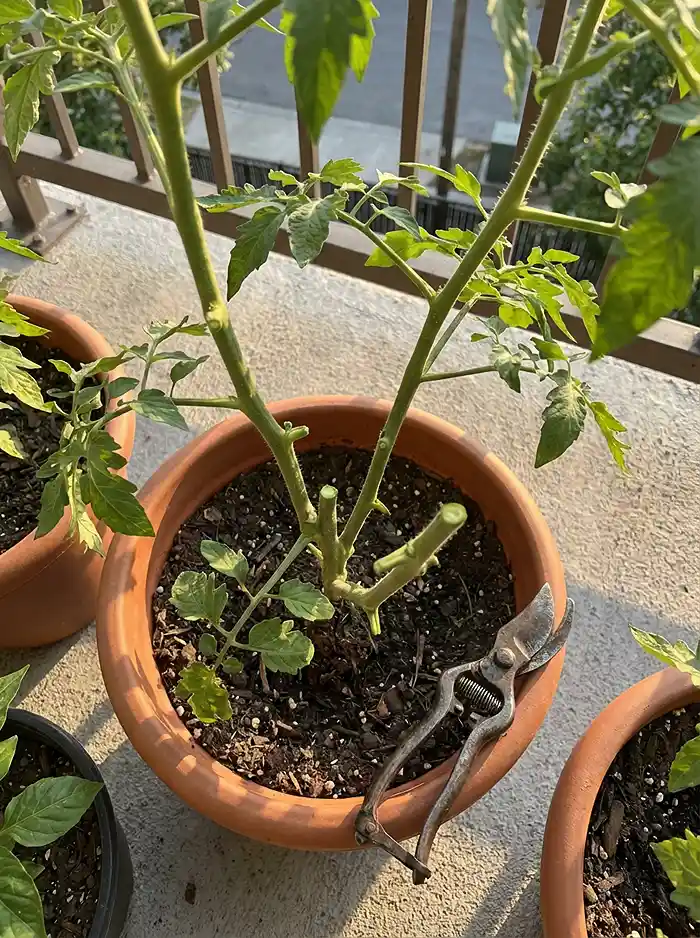
- Prune aggressively. If one plant is hogging a shared container and crowding its neighbors, cut it back. Poor airflow is the number one disease trigger in tight spaces.
- Start fall crops now. Sow kale, beets, turnips, and fall lettuce indoors or direct into containers. The timing feels weird, but it’s right.
- Harvest daily. Seriously — leaving ripe fruit on the vine sends a chemical signal that tells the plant to stop producing. Pick it, eat it, repeat.
September – December — Abundance, Division, and Winterization
September & October: Harvest and Protection
- Keep harvesting warm-season crops until frost actually threatens. Don’t pull plants early because the calendar says “fall.”
- Divide root-bound perennials. Container-grown chives, daylilies, and iris get root-bound way faster than in-ground plants. Pop them out, split the root ball, repot in fresh mix. It feels brutal but they love it.
- Build a “Frost Kit.” Row covers, cloches, old bedsheets — whatever you’ve got. Stage it near your containers so you can deploy it in minutes when a surprise cold snap shows up in the forecast.
- Indoor plants: Taper off fertilizer. Start bringing outdoor-tender herbs (basil, rosemary in cold zones) inside before nights drop below 50°F.
November & December: Shutdown and Future Planning
- Winterize outdoor containers. Wrap them in burlap or stuff chicken wire with straw around the pots — it’s an ugly but effective thermal blanket. Group containers together against a south-facing wall; shared body heat is real, even for pots.
- Empty terracotta completely. Water trapped inside will freeze, expand, and crack them. Store hollow or bring indoors.
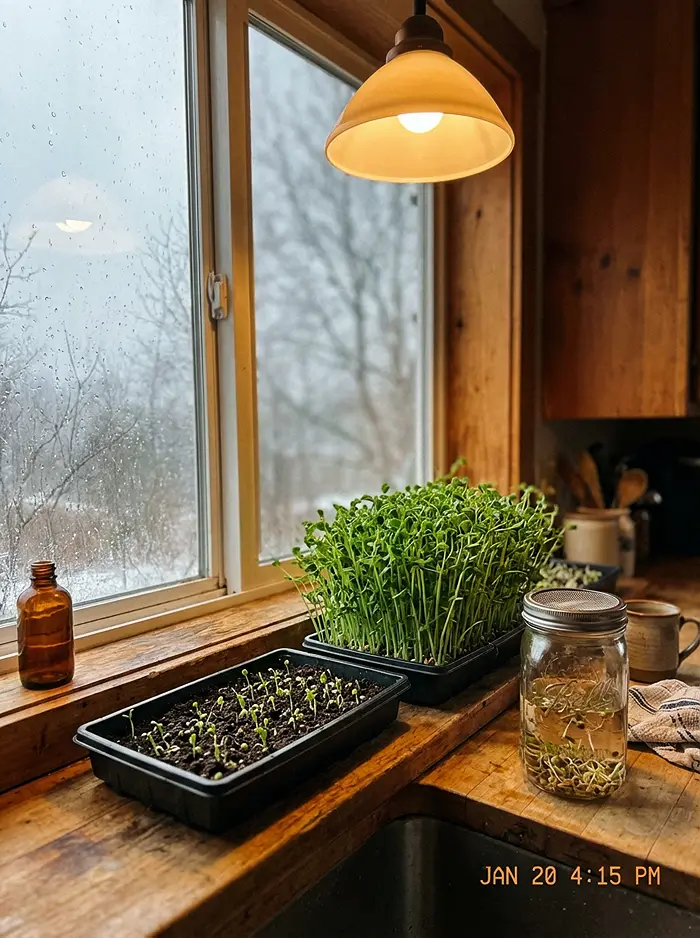
- Start microgreens and sprouts on a kitchen windowsill. They’re harvestable in 7–14 days, require zero outdoor space, and keep you in the growing mindset all winter.
- Do a year-end review. What produced? What flopped? Why? Write it down while you remember. Then order next year’s seeds in December — catalogs are freshest and the best cultivars sell out fast.
The 15-Minute Rule — Daily and Weekly Maintenance Habits
Here’s the part people never believe until they try it: 15 minutes a day is genuinely enough. You don’t need to spend your whole weekend gardening. You need consistency.
| Frequency | Task | How |
|---|---|---|
| Daily (5 min) | Moisture check | Finger test — dry 1 inch down = water |
| Stress & pest scan | Look for wilting, discoloration, insects on leaf undersides | |
| Pot rotation (indoor) | Quarter turn for even light exposure | |
| Weekly (10 min) | Deadhead spent blooms | Pinch or snip to redirect energy to new growth |
| Prune leggy or dead stems | Clean cuts with sanitized shears | |
| Liquid fertilizer | Half-strength during active growth months (Mar–Sep) | |
| Monthly | Deep container inspection | Check drainage holes, soil compaction, root crowding |
| Pest treatment (if needed) | Neem oil spray or insecticidal soap — evening application only |
Honestly? Screenshot this table. Or print it and tape it to the wall next to your watering can. It’s the compressed version of your entire container garden care routine.
Smart Urban Gardening — Leveraging Technology and AI in 2026
You absolutely don’t need gadgets to follow this urban garden maintenance calendar. But a couple of 2026-era tools are genuinely useful — not gimmicky.
AI-powered garden planners can now analyze your building’s geometry, GPS location, and solar path data to tell you exactly which crops will work on your specific balcony. Down to the hour of sunlight each corner gets. That’s pretty cool for anyone dealing with partial shade and no idea what’ll grow there.
Smart soil moisture sensors — little Bluetooth probes you stick in the pot — send alerts to your phone when moisture drops below the sweet spot. If you’re someone who forgets to do the finger test (no judgment), these pay for themselves after saving one $30 plant.
Automated micro-drip systems for 5–20 containers are finally affordable and actually beginner-friendly. Set a timer, dial in the flow, and adjust seasonally. They don’t replace paying attention to your plants, but they buy you peace of mind during vacation or a busy week.
Bottom line: technology supports this calendar. It doesn’t replace it. Your month-by-month routine is the operating system. Everything else is an accessory.
FAQs — Solving Common Urban Garden Challenges
How often should I water my apartment plants?
Only when the top inch of soil feels dry — never on a fixed schedule. In summer, outdoor containers might need daily water; indoor plants every 2–3 days. In winter, most indoor plants do fine every 3–5 days. Always check first. Always.
Can I use garden soil in my pots?
Nope. Garden soil compacts like concrete in containers, suffocates roots, and can carry urban contaminants like lead. Use a potting mix that’s specifically formulated for container use. It’s lighter, drains better, and won’t poison anything.
How do I handle pests without chemicals?
Start with a strong water blast — it physically knocks insects off and is surprisingly effective. If that doesn’t cut it, try neem oil or insecticidal soap. For outdoor containers, releasing ladybugs or lacewings works great. And caterpillars? Just pick them off by hand. Gross, effective.
What’s the easiest crop for a first-time balcony gardener?
Lettuce, radishes, and herbs — specifically basil, mint, and chives. They germinate fast, tolerate containers happily, and they’re incredibly forgiving of the timing mistakes every beginner makes. Start there, build confidence, then level up.
Do indoor and outdoor container plants need different fertilizers?
Not different products — different schedules. Outdoor containers in peak summer need feeding every 2 weeks because constant watering flushes nutrients out relentlessly. Indoor plants only need half-strength fertilizer monthly during the growing season (March through September) and absolutely nothing during winter dormancy.
That’s the complete urban garden maintenance calendar — every month, every task, every decision point mapped out so you never have to wonder “what should I be doing right now?” again. Bookmark this page, come back on the first of each month, and just follow the plan. Your balcony garden’s about to have its best year yet.
SEO Meta Description: Follow this month-by-month urban garden maintenance calendar built for small spaces — your complete container garden care routine from January through December.