

Best Plants for Small-Space Gardening by Season
The best plants for small-space gardening by season — with exact cultivars, pot sizes & a ready-to-use blueprint for every balcony. Grab your plan inside →
Small-space gardening is really just two ideas working together — yield density (getting the most from every square inch) and Z-axis optimization (growing up, not out). This guide maps the best plants for small-space gardening by season so you stop guessing and start harvesting.
Here’s the thing nobody tells you when you first Google “small-space gardening”: most advice assumes you’ve got a backyard. You don’t. You’ve got a balcony the size of a parking space, maybe a patio that catches sun for half the day, and exactly zero tolerance for wasting money on plants that die in three weeks.
I get it. I’ve been there — staring at a wilted tomato in a pot that was way too small, wondering where it all went wrong.
So let’s skip the fluff. This is your season-by-season playbook for picking the best plants for small-space gardening by season, with real cultivar names, actual container advice, and the kind of honest tips I wish someone had handed me on day one.
Table of Contents
Before You Plant Anything: Light & Container Basics for Small-Space Gardening
Every failed container garden I’ve seen (including my own early disasters) traces back to the same two blind spots: not enough light, or the wrong pot. Let’s fix both before we spend a dime on seeds.
Figure Out Your Sunlight Situation First
Grab your morning coffee and do what I call the “shadow-watch.” For three days, check your space every couple of hours and note where the shadows fall from railings, walls, and neighboring buildings. It takes five minutes each time, and it’ll save you from planting sun-hungry tomatoes in a shady corner.
Here’s the cheat sheet:
- 6+ hours of direct sun? You can grow fruiting crops — tomatoes, peppers, beans. Lucky you.
- 3–4 hours? Leafy greens, herbs, and most salad crops will be perfectly happy.
- Less than 3 hours? Stick with mint, parsley, chives, and shade-loving ornamentals.
One more thing: if you’re on a south-facing high-rise balcony, you might be sitting on a “sun trap” — a spot where heat reflects off walls and concrete, concentrating warmth. Great in spring. Potentially brutal in July. Keep that in mind.
The Container Thermal Index (Yes, Your Pot Choice Actually Matters)
I used to grab whatever pot was cheapest. Big mistake. Different materials hold heat and moisture in completely different ways — and that directly affects whether your plants thrive or cook. Think of it as container thermal dynamics in action.
Here’s my simple breakdown:
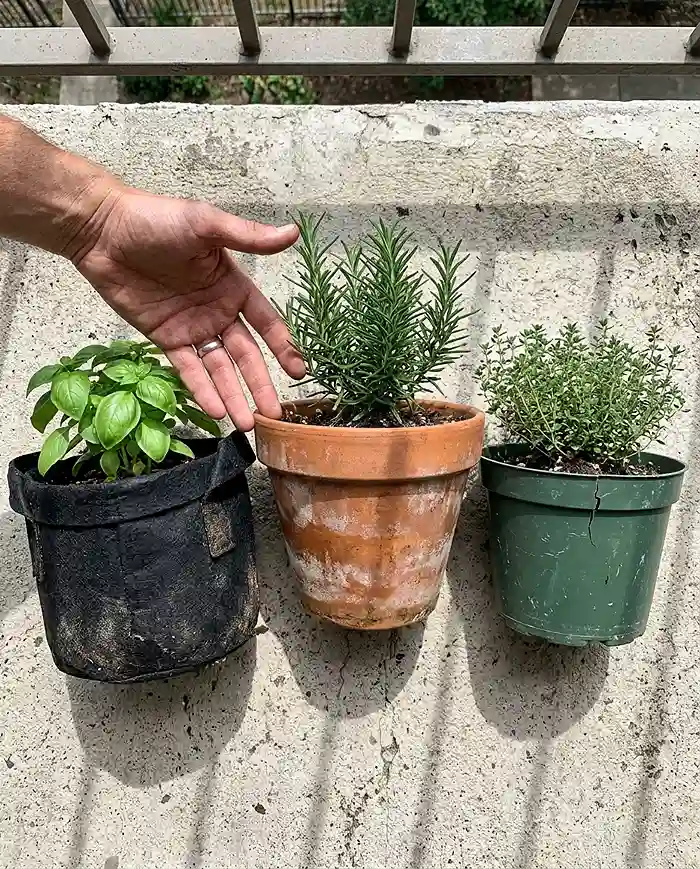
- Fabric Grow Bags — The all-rounder. They prevent root circling, drain fast, and don’t overheat. If you’re picking one type for the best plants for small-space gardening by season, start here.
- Terracotta — Breathes beautifully. Perfect for Mediterranean herbs (rosemary, thyme, lavender) that hate wet roots. Just know they dry out fast, so you’ll water more.
- Dark Plastic/Resin — Cheap? Absolutely. But they absorb serious heat in summer. I’ve measured root-zone temps above 110°F in black pots on a sunny patio. Use with caution.
Sizing rule of thumb: 5-gallon minimum for tomatoes and peppers. 2–3 gallons for herbs and greens. Anything smaller and you’re basically asking plants to live in a shoebox.
If you’re just getting started and want a deeper dive into choosing your first setup, check out our guide to the best beginner plants for small-space gardening — it’s designed specifically for first-timers.
Best Plants for Small-Space Gardening in Spring: Start Forgiving, Finish Strong
Spring is where most beginners either build momentum or quietly give up. The trick? Pick plants that forgive your mistakes while the weather’s still moody.
Cold-Hardy Flowers That Won’t Bail on You
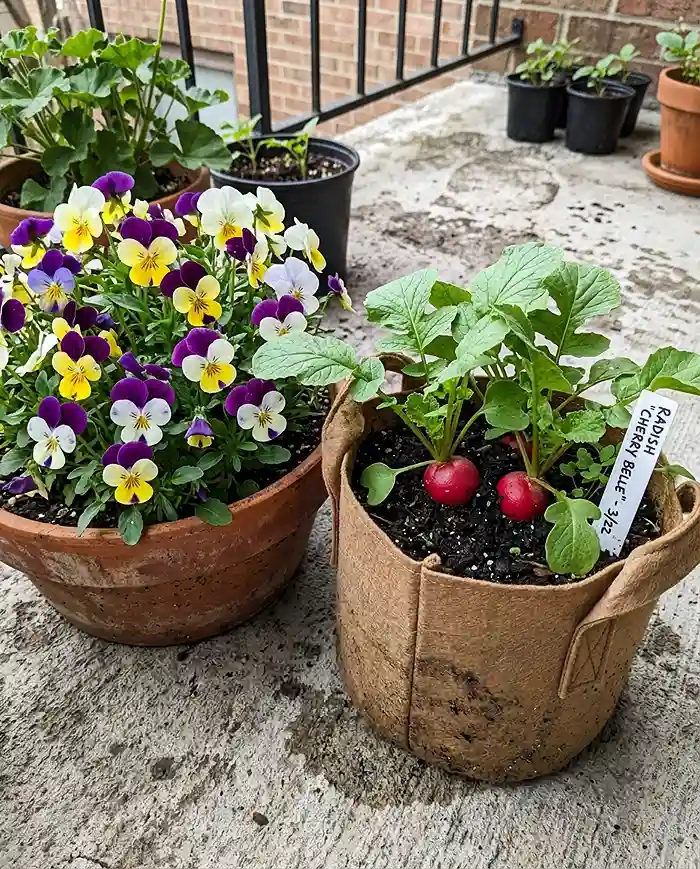
Pansies and Violas are basically the golden retrievers of the plant world — loyal, cheerful, and nearly impossible to kill. They survive below 32°F, which means a surprise late frost won’t ruin your weekend.
Snapdragons give you vertical color in a shallow pot and attract early pollinators. If you’re planning to grow tomatoes or peppers later, having pollinators already visiting your space is a sneaky head start.
Fast-Turnover Edibles (a.k.a. Instant Gratification)
- Radishes go from seed to salad in 24–28 days. Seriously. They’re the confidence-builder every new gardener needs.
- Lettuce, spinach, and arugula keep giving if you use the “Cut-and-Come-Again” method — harvest leaves an inch above the crown, and they’ll regrow 3–4 times.
- Spring onions regrow from kitchen scraps in a glass of water on your windowsill. It’s almost too easy.
The Lasagna Planting Trick
Here’s a pro move: layer spring bulbs at different depths in one pot — tulips at 8 inches, crocus at 3 — then plant summer annuals on the surface. Spring color fades out, summer blooms fade in. One container, zero replanting. You’re welcome.
Best Plants for Small-Space Gardening in Summer: This Is Where It Gets Productive
Summer is when containers really earn their rent. This is the season to focus on high-yield patio cultivars — compact varieties bred to produce heavily in tight quarters.
Compact Cultivars That Actually Produce
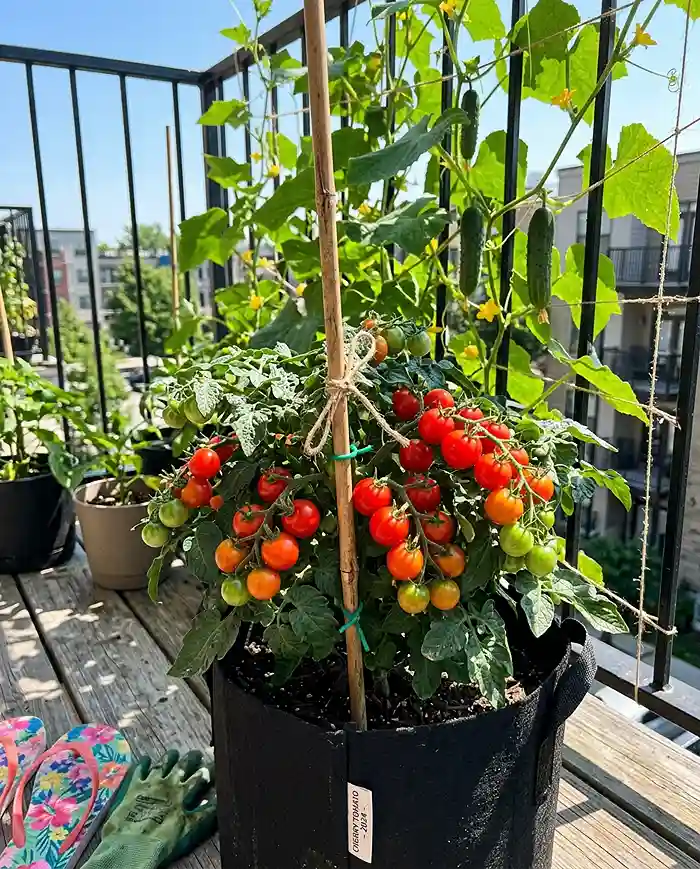
- ‘Patio Choice’ Red Cherry Tomato — Determinate (meaning it stops growing at a manageable height), heavy-fruiting, and perfectly content in a 5-gallon pot.
- ‘Snackabelle’ Red Pepper — Sweet, compact, and productive in just a 3-gallon container. Kids love picking these.
- Dwarf Basil (‘Spicy Globe’) — Tuck this next to your tomato in the same large pot. Companion planting that actually works and saves space.
Think of it as yield density — how many grams of food you’re pulling from each square foot of container real estate. These varieties maximize that number.
Go Vertical: The Z-Axis Strategy
If you’re not growing upward, you’re leaving half your space unused. Vertical gardening is the single biggest unlock for small patios and balconies.
- Pole Beans trained up a simple obelisk or string trellis produce roughly 3× the yield of bush types in the same footprint.
- Cucumbers (‘Spacemaster’ or ‘Patio Snacker’) love arch trellises and keep fruit clean, off the ground, and easy to spot.
Here’s my weekly habit that makes a noticeable difference: the “Prune & Tie” protocol. Every seven days, pinch off tomato suckers and cucumber side shoots. This redirects the plant’s energy from making more leaves to making more fruit. Five minutes of work, measurably more harvest.
According to the University of Maryland Extension’s container gardening guide, choosing compact, disease-resistant cultivars and providing consistent moisture are the two biggest factors in container vegetable success — and that tracks exactly with my experience.
Don’t Let Summer Heat Kill Your Momentum
Containers dry out 2–3× faster than ground beds. A self-watering insert or a simple drip irrigation stake takes the guesswork out and prevents the most common summer disaster: inconsistent watering.
Got dark pots in a sun trap? Either move them out of direct afternoon sun or wrap the sides with burlap. Root-zone heat stress kills plants faster than forgetting to water for a day.
Best Plants for Small-Space Gardening in Fall: Swap, Don’t Stop
Here’s where most people make a mistake — they let their containers sit empty after summer crops fade. In small-space gardening, an empty pot is wasted real estate. The moment you pull a spent tomato vine, replant that same day.
Quick Ornamental Refresh
Swap fading summer annuals for Chrysanthemums (Mums) and Asters — instant fall vibes with almost zero effort. Throw in a dwarf Fountain Grass for texture and movement that catches low autumn light beautifully.
Edible Ornamentals (Yes, That’s a Real Thing)
These plants look gorgeous and end up on your plate:
- Swiss Chard (‘Bright Lights’) — Rainbow stems that actually get more vibrant as temps drop.
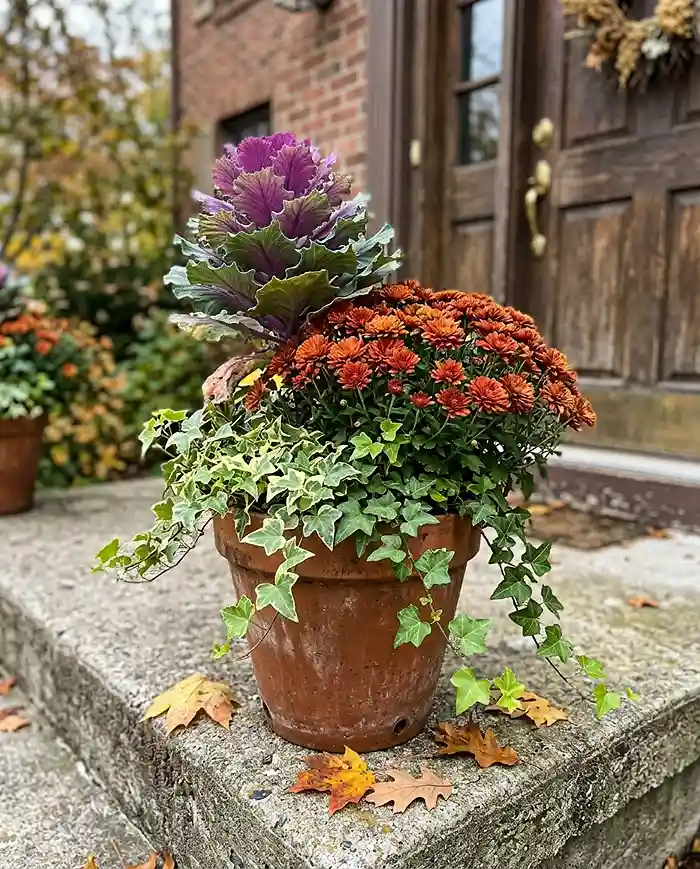
- Ornamental Kale & Cabbage — Those ruffled rosettes deepen in color after the first frost. Edible and stunning.
- Red Mustard (‘Red Giant’) — Peppery, deep burgundy leaves that are beautiful in a pot and delicious in a salad.
When every container must pull double duty, plants that are both pretty and productive are your best friends.
Best Plants for Small-Space Gardening in Winter: The Quiet Powerhouses
Winter reveals the bones of your garden. This is when smart structural choices — made months ago — really pay off.
Evergreen Anchors That Never Leave
- ‘Green Gem’ Boxwood — Slow-growing, naturally pyramidal, and holds its deep green color through the coldest months. This stays in the pot year-round while everything else rotates around it.
- ‘Sky Pencil’ Holly — Takes up just inches of width. Perfect for flanking a door or anchoring a balcony corner.
Late-Winter Color When You Need It Most
- Winterberry Holly — Technically deciduous, but those bright red berries persist into February and look incredible against snow.
- Hellebores (Lenten Rose) — Bloom January through March when literally nothing else bothers. Shade-tolerant, cold-hardy, and honestly a little magical.
- Heather (Erica carnea) — Low, mounding, evergreen, and flowering in late winter. Thrives in pots.
Winter Container Survival Tips
Use frost-proof pots — fiberglass, heavy resin, or stone. Standard terracotta cracks below 20°F (learned that one the expensive way). Group containers together against a south-facing wall for shared warmth, and wrap them with bubble insulation during deep freezes.
The Frameworks That Tie It All Together
“Thriller, Filler, Spiller” — One Formula, Four Seasons
Every container gets three roles. Here’s how I rotate mine through the year:
| Season | Thriller (Height) | Filler (Mass) | Spiller (Cascade) |
|---|---|---|---|
| Spring | Snapdragon | Pansies | Creeping Jenny |
| Summer | Cherry Tomato | Basil & Peppers | Sweet Potato Vine |
| Fall | Ornamental Kale | Mums | Trailing Ivy |
| Winter | Sky Pencil Holly | Heather | Hellebore foliage |
Soil: The Thing Everyone Ignores
Never use garden soil in containers. It compacts, suffocates roots, and turns your pot into a brick. Use a soilless mix — peat or coco coir with perlite and vermiculite.
Fertilization rhythm: Slow-release granular at planting → half-strength liquid feed every 14–21 days during growth → stop feeding 6 weeks before first frost. Refresh your soil every 2–3 years to prevent salt buildup.
The Beginner’s “Don’t Panic” Checklist
- One thriller per 12–14″ pot. That’s it. Resist the urge to cram.
- Water when the top inch of soil is dry — not every Tuesday at 4pm.
- Start with 3–5 pots your first year. You can always add more next season.
Frequently Asked Questions About Small-Space Gardening by Season
What’s the #1 mistake that kills container gardens?
Overcrowding. Too many plants in one pot restricts airflow, raises humidity at the leaf surface, and creates a breeding ground for disease. Give plants room to breathe.
Can I grow tomatoes indoors?
You can, but they need 12+ hours of light daily (a grow light helps) and a genetic dwarf variety like ‘Micro Tom’ or ‘Red Robin’ in a 3–5 gallon pot with soilless mix.
Which crops regrow after harvest?
Lettuce, kale, Swiss chard, green onions, basil, cilantro, and parsley all regrow from cut stems or crowns — making them the ultimate small-space crops.
What’s the best starter pot size?
A 5-gallon fabric grow bag (roughly 12″ diameter). Big enough for a tomato or pepper, versatile enough for a mixed herb planter.
How do I stop pots from overheating?
Light-colored containers, afternoon shade, grouping pots together, and fabric grow bags (which cool through evaporation) all help keep root-zone temperatures in a safe range.
You don’t need a yard. You need a plan. Start with one season, one pot, one plant that makes you proud — and let it grow from there.