

What to Grow on a Balcony
Not sure what to grow on a balcony? Here’s the exact soil formula, plant picks, and rookie mistakes that kill most pots before week two. Read before you buy.
Ever stared at your empty balcony and thought, “I could totally grow something out here”? You absolutely can — and honestly, it’s way easier than most people make it sound. The secret isn’t having a green thumb.
It’s something I call “success-proofing”: picking plants that already want to thrive in your exact conditions. Match the right plant to your right pot in the right position, and you’ve basically rigged the game in your favor — even if you’ve never grown a thing in your life.
Here’s something most guides won’t tell you about what to grow on a balcony: grow value, not volume. A single rosemary plant from a $3 seedling gives you over $30 worth of fresh herbs per season. A potato in the same pot? About $0.50. When space is limited, every square centimeter needs to earn its keep. I call this “Urban ROI,” and it should drive every planting decision you make.
Step 0 — What to Grow on a Balcony Starts With Knowing Your Balcony
Here’s the part nobody wants to do but everyone needs to. Before you buy a single plant, audit your space. Skipping this step is the number one reason beginners fail — and then blame themselves instead of their south-facing concrete oven of a balcony.
Understanding Your Microclimate (Sun, Wind, and Heat)
Your balcony isn’t a garden. It’s a microclimate with its own quirks, and two invisible forces are running the show.
First, the Venturi Effect. That’s the fancy term for what happens when wind squeezes between buildings — it speeds up, sometimes doubling in intensity. On higher floors, this dries out soil in hours and snaps stems like toothpicks. If your balcony faces a gap between towers, you’ll feel it.
Second, reflected heat. Your glass doors and concrete walls bounce sunlight right back onto your plants. It’s basically a furnace effect that can push temperatures 5–10°C above what the weather app says. Bad news for ferns. Great news for tomatoes.
Here’s how to figure out what you’re working with: Grab a compass app, point it at your balcony, and note the direction. Then track your sunlight for 2–3 days — check at 8 AM, noon, and 4 PM. That’s it. Three days of paying attention saves you months of dead plants.
This table breaks it down for figuring out what to grow on a balcony based on direction:
| Category | Direct Sun Hours | Balcony Direction (Northern Hemisphere) | Best-Fit Plants |
|---|---|---|---|
| Full Sun | 6+ hours | South-facing / West-facing | Tomatoes, Peppers, Rosemary, Geraniums |
| Partial Sun | 3–6 hours | East-facing | Leafy greens, Herbs, Marigolds |
| Full Shade | < 3 hours | North-facing | Ferns, Hostas, Mint, Impatiens |
Weight Restrictions — The Thing Nobody Thinks About
Let’s talk about something unsexy but important. A single 40 cm ceramic pot filled with wet soil weighs 25–30 kg. Now imagine ten of those lined up. On an older balcony, that’s a real structural concern.
The fix is easy: switch to fabric grow bags or lightweight resin pots. They perform identically at 60–70% less weight. And if you’re going big — more than 5–6 large containers — just check with your building management first. Better safe than sorry (or falling through the floor).
The Potting Soil Rule You Can’t Break
Never, ever use garden soil in containers. I know it’s free. I know it’s right there. But it compacts, drains terribly, and brings pests along for the ride.
Instead, use what I call the Success Formula (by volume):
- 40% Coco peat — holds moisture, stays light
- 30% Compost — your main nutrition source
- 20% Perlite — keeps everything draining and breathing
- 10% Vermicompost — slow-release fertility that feeds plants for weeks
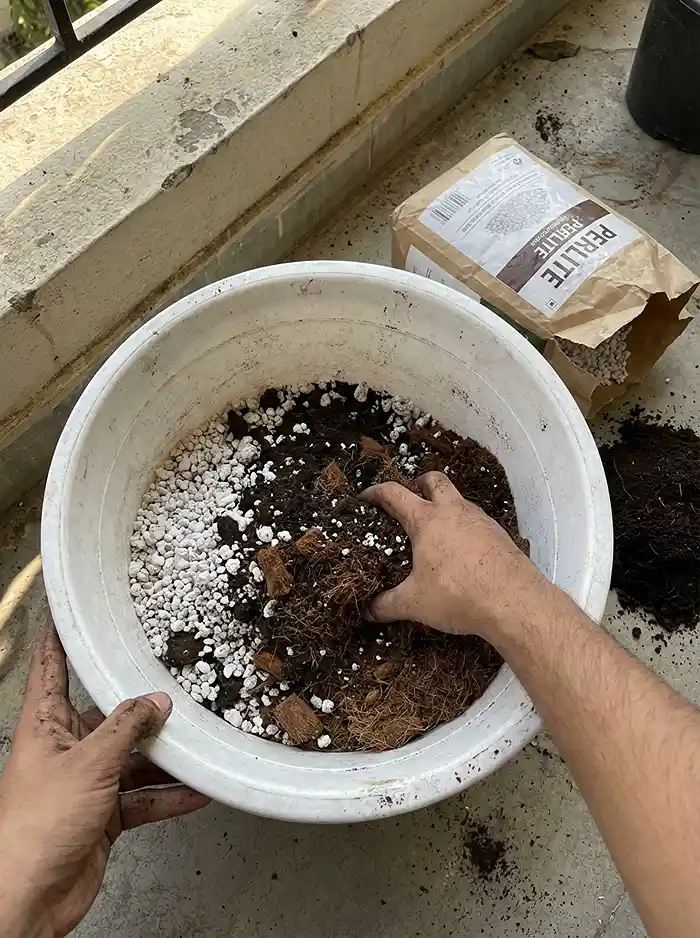
Balcony pots heat up fast and dry out fast. This mix handles both problems without waterlogging — which, trust me, kills more container plants than drought ever will. If you’re just getting started with containers, check out our guide on best beginner plants for small-space gardening for even more foundational tips.
What to Grow on a Balcony: High-Reward Edibles That Actually Produce
Alright, now for the fun part. Every plant below passes two filters: beginner-proof and space-efficient. If it doesn’t meet both, it’s not on this list.
The “Dwarf” Advantage — Tomatoes and Peppers
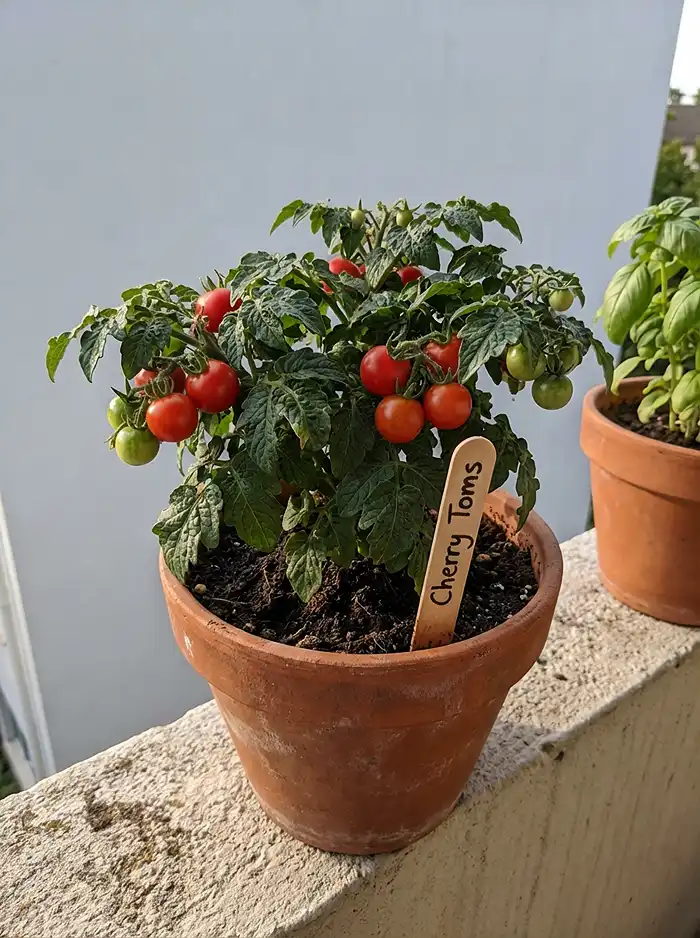
Standard tomato plants are divas. They sprawl, need staking, and demand giant pots. Dwarf determinate varieties skip all that drama.
Here’s your shortlist:
- “Tiny Tim” Tomato — tops out at 30 cm, fruits in a 25 cm pot, zero staking required.
- “Red Robin” Tomato — compact, loaded with fruit, ready in about 55 days.
- “Lunchbox” Mini Peppers — sweet, prolific, and happy in a 7-liter container.
Stick them against the warmest wall. That reflected heat we talked about? It’s their best friend. Water daily in summer and you’re golden.
Fast-Cycle Crops — Radishes and Leafy Greens
Here’s a psychological trick: start with something fast. If your first harvest takes 90 days, there’s a solid chance you’ll lose interest by day 40. But pull your first radish out of the soil in three weeks? Now you’re hooked.
“Cherry Belle” Radishes go from seed to plate in just 21 days. Any container at least 15 cm deep works. Sow a new batch every two weeks and you’ll never run out.
Cut-and-come-again lettuce (like “Salad Bowl”) lets you snip outer leaves and keep harvesting. Just avoid south-facing spots in summer — the heat makes it bolt and turn bitter. Baby spinach finishes in 25–30 days and loves the gentler morning light of east-facing balconies.
The “Invincible” Herb Garden
If you can only grow three things, grow these. They tolerate drought, wind, and — let’s be honest — neglect.
- Mint — almost impossible to kill. But always give it its own pot. It’s the friend who takes over your entire apartment if you give it a drawer.
- Rosemary — loves heat, loves reflected light, and only wants water when the soil is bone dry. Overwater it and it’ll sulk.
- Thyme — low-growing, wind-resistant, and actually prefers poor-ish soil. Perfect for windy upper floors.
The math: Rosemary replaces ~$30/year in store-bought herbs. Mint: ~$20. Thyme: ~$15. Total startup cost? Under $10. That’s an Urban ROI you won’t find on Wall Street.
What to Grow on a Balcony for Beauty and Privacy
Not everything needs to be edible. Sometimes you just want your balcony to look good and feel private.
Forgiving Flowers — Geraniums and Marigolds
Geraniums are the balcony gold standard, and for good reason: drought-resistant, blooming for months, and they bounce back from neglect like nothing happened. Deadhead the spent flowers and they just keep going.
Marigolds pull double duty — gorgeous color plus they’re natural pest fighters (more on that later). Both thrive in standard 20–25 cm pots with the Success Formula mix. Easy wins.
Living Privacy Screens — Clumping Bamboo and Star Jasmine
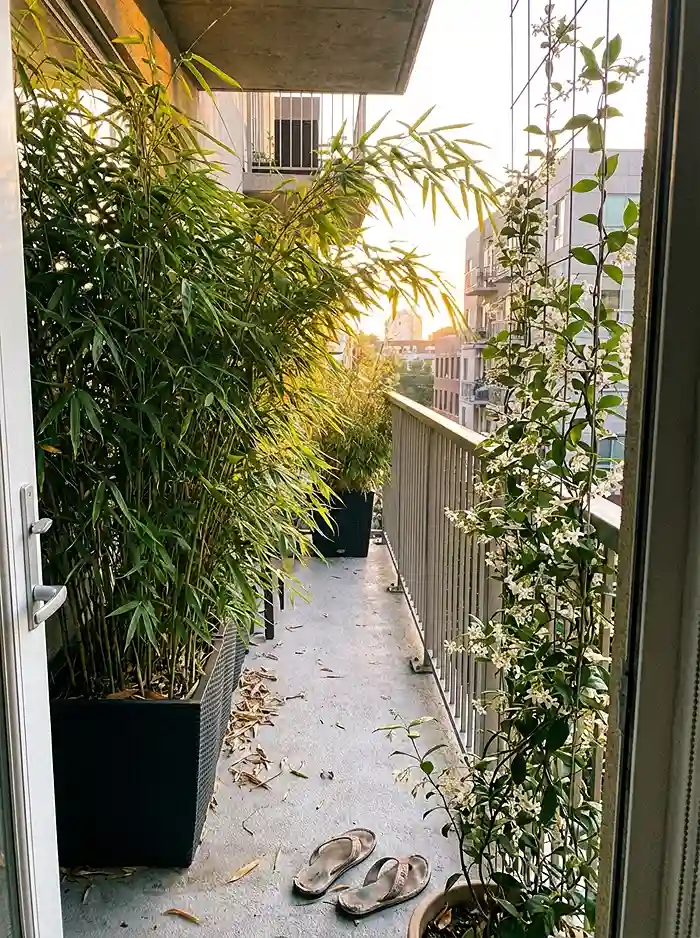
Want to block the neighbor’s view without hanging a tarp? Plants can do that. But here’s a critical distinction that’ll save you a massive headache:
- Running bamboo = invasive nightmare. Roots escape every container eventually. Hard pass on balconies.
- Clumping bamboo (Bambusa varieties) = stays put. Grows upright and dense, hits 1.5–2.5 m in a large pot. Beautiful living wall.
Star Jasmine (Trachelospermum jasminoides) is another winner — evergreen, fragrant white flowers, and it climbs a simple trellis or railing without getting out of control. Both need 40+ liter containers minimum, so factor that into your weight calculations.
The 7-Day “Eden” Implementation Plan
One week. That’s all it takes to go from bare concrete to a functioning balcony garden. Here’s exactly how to do it:
- Day 1 — Orientation audit. Compass app. Confirm your direction. Note any overhangs or obstructions from upper floors.
- Day 2 — Sunlight tracking. Check at 8 AM, 12 PM, and 4 PM. Record which zones get direct light and for how long. Snap photos of the shadows.
- Day 3 — Wind and weight assessment. Note wind intensity throughout the day. Call your building about load limits. Pick your pot type.
- Day 4 — Soil and supply prep. Mix the Success Formula (40/30/20/10). Buy pots with drainage holes. Grab saucers for your flooring.
- Day 5 — Planting day. Plant in early morning or late afternoon — midday heat shock is real. Water thoroughly. Position pots in their tracked light zones.
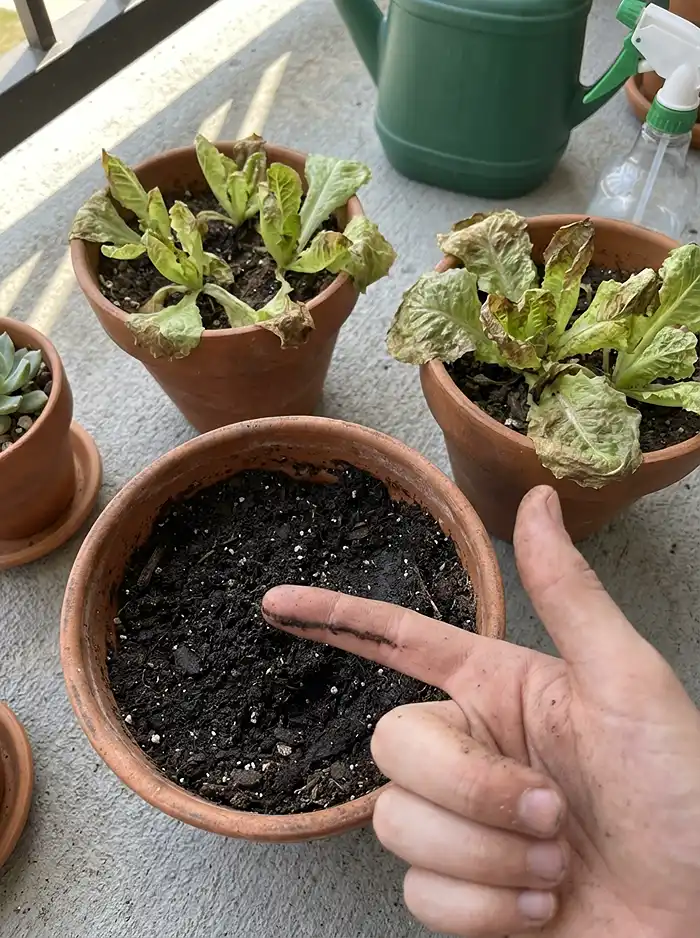
- Day 6 — Establish your watering routine. Finger test: stick your finger 3–5 cm into the soil. Dry? Water. Damp? Walk away. Make this a morning habit.
- Day 7 — Set your rotation schedule. Plan succession sowing every 2 weeks for radishes and greens. Set a monthly calendar reminder for liquid fertilizer. Take a “Day 1” photo — future you will love looking back at it.
Troubleshooting — What to Grow on a Balcony (and What’ll Die If You’re Not Careful)
Real-World Failure Points
The Lavender Trap: Everyone wants lavender on their balcony. And almost everyone kills it. The problem? Standard potting mix plus saucers that hold water. Lavender demands sharp drainage — add 30% extra perlite or coarse sand — and absolutely zero standing water. If that sounds like too much work, honestly, just skip it. No shame.
Lettuce Scorching: Leafy greens on a south-facing balcony in summer will bolt, turn bitter, and give up on life. Move your lettuce to the shadiest corner, or only grow it in spring and autumn.
The Overwatering Spiral: This kills more balcony plants than anything else. According to the Royal Horticultural Society’s container gardening guide, overwatering is consistently the top cause of container plant death. If the soil is still damp, just walk away. Your plants will thank you.
Companion Planting to Outsmart Urban Pests
Balconies attract aphids, whiteflies, and the occasional beetle. Instead of reaching for chemicals — which concentrate in an enclosed balcony space — use plants to fight plants’ battles.
Marigolds planted next to vegetables release compounds that repel beetles and nematodes. Basil next to tomatoes deters aphids and whiteflies — and you get to harvest both together for dinner. If things get serious, neem oil spray or insecticidal soap will handle it without the toxic fumes.
Frequently Asked Questions About What to Grow on a Balcony
What are the easiest plants for a north-facing balcony?
Ferns, hostas, mint, and impatiens all thrive with less than 3 hours of direct sun. Stick to foliage plants and shade-tolerant herbs. Fruiting crops that demand full sun? They’ll just disappoint you here.
How do I stop my pots from blowing over in wind?
Add a heavy drainage layer — clay pebbles or gravel — in the bottom 5 cm. Position pots against the wall, not the railing edge. For tall plants, secure pots to the railing with bungee cords or heavy-duty zip ties.
How often should I water balcony plants?
There’s no magic number. It depends on pot size, material, sun exposure, and wind. The finger test is your best friend: push your finger 3–5 cm into the soil. Dry means water. Damp means wait. In peak summer, small pots might need water twice a day.
Can I grow fruit on a balcony?
You bet. Strawberries love hanging baskets, dwarf blueberries do well in acidic potting mix, and dwarf citrus like Citrus mitis produce beautifully in 40+ liter pots. Yields will be smaller than a ground garden, but the satisfaction-per-square-meter is unbeatable.
Here’s the honest truth: you don’t need to grow everything on this list. Pick three plants that match your balcony’s light and space, and start this weekend. A productive balcony garden isn’t about doing it all — it’s about doing the right things, in the right containers, in the right spot. Your balcony’s been waiting. Go give it something to do.