

Indoor Gardening for Small Spaces
No yard? No problem. This 2025 guide shows you exactly how to grow food, herbs & lush greenery in under 400 sq ft—even with zero natural light. Start here
The best way to garden in a small apartment is through vertical spatial engineering—using wall-mounted hydroponics, hanging pocket gardens, and ladder shelves to maximize vertical space. Combine compact, high-yield plants like microgreens and Pothos with full-spectrum LED lighting to grow food and greenery without sacrificing floor space.
Here’s a truth nobody tells you when you sign that lease: your tiny apartment can grow more food and greenery than most suburban backyards.
Seriously. Indoor gardening for small spaces isn’t some compromise you settle for because you don’t have a yard—it’s actually an advantage once you know the tricks. And in 2025, the tools are better, the plants are more forgiving, and the tech is borderline sci-fi.
I’ve spent years testing every vertical planter, LED panel, and AI smart garden I could get my hands on in apartments smaller than some people’s garages. This guide is everything I’ve learned—no filler, no recycled Pinterest tips—just the stuff that actually works for indoor gardening for small spaces. Whether you want a wall of trailing vines, a kitchen full of fresh basil, or a micro-farm that cuts your grocery bill, you’re in the right place.
Let’s dig in. (Pun absolutely intended.)
Why Indoor Gardening Is the Ideal Solution for Small Spaces
The Shift from Backyard Gardening to Apartment-Scale Cultivation
Here’s what’s driving the urban horticulture 2025 movement: more of us live in cities than ever, and our apartments keep getting smaller while our desire for fresh food and green living keeps getting bigger.
The old dream of a backyard vegetable garden? It’s been replaced by something honestly cooler—vertical adaptation, where every blank wall, empty corner, and unused ceiling hook becomes a potential growing zone.
And it’s not just about aesthetics. There’s a real self-sufficiency wave happening in high-density housing. People want to grow their own herbs instead of buying that sad $4 plastic clamshell of basil that wilts in two days. They want lettuce that didn’t ride in a refrigerated truck for a week. Indoor gardening for small spaces makes all of that possible—even if your entire kitchen is six feet wide.
Nature Therapy & Psychological Benefits
Okay, let’s talk about something that doesn’t get enough credit: plants genuinely make you feel better. This isn’t woo-woo stuff—studies consistently link indoor greenery to lower cortisol levels, better focus, and what researchers call “emotional restoration.” Translation? A few well-placed plants can make your apartment feel less like a box and more like a place you actually want to be.
There’s a practical angle too. Species like Peace Lilies and Boston Ferns release moisture through their leaves, naturally humidifying the Sahara-dry air that apartment radiators create every winter. Even three or four plants in a small space can noticeably improve air quality and humidity. Your skin, your sinuses, and your mood will all thank you.
Spatial Engineering — Maximizing the Z-Axis in 400 Square Feet
Vertical Spatial Engineering Strategies
Here’s the golden rule of indoor gardening for small spaces: when you run out of floor, go up. Vertical spatial engineering sounds fancy, but it really just means treating your walls and ceilings like they’re garden beds waiting to happen. Once you start thinking in three dimensions, even a studio apartment has surprising potential.
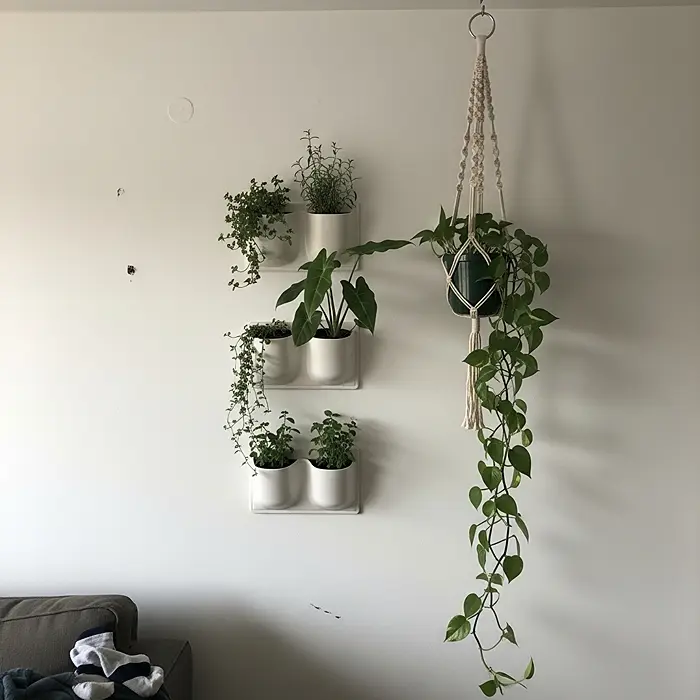
The strategies that actually deliver results:
- Wall-mounted planters: Modular pocket systems or mounted ceramic pots turn a blank wall into a living herb garden. I’ve fit 12 plants on a wall that’s only four feet wide.
- Hanging pocket gardens: Felt or fabric pocket organizers hung from hooks or tension rods. Cheap, lightweight, and weirdly effective for trailing herbs.
- Ladder shelves: A leaning ladder shelf gives you three to five tiers of growing surface in under two square feet of floor space. It’s the best space-to-plant ratio you’ll find.
- Ceiling hooks: Macramé hangers and pulley baskets use the overhead space you’re currently wasting. This is prime real estate for trailing plants.
- Reclaimed-material shelving: Old wooden crates, pallet boards, or industrial pipe shelves add personality and growing room.
- Narrow balcony railing systems: Clip-on or hook-over railing planters extend your growing space outward without eating into your balcony floor area.
Trailing vs. Structural Species (Volume Without Footprint)
Picking the right plant shape is honestly half the battle when you’re working with indoor gardening for small spaces. You’ve got two main strategies, and smart growers use both.
Trailing plants like Pothos, Philodendron, and String of Hearts cascade downward from shelves and hooks, creating this gorgeous waterfall of green that takes up zero floor space and zero shelf depth. One Pothos in a hanging planter can throw out six feet of vines within a year. That’s a lot of visual impact for something that occupies the space of a coffee mug.
Structural upright plants like ZZ Plants and Snake Plants are your vertical soldiers. They grow straight up in narrow columns, fitting perfectly into corners and tight gaps beside furniture. Their footprint is smaller than a dinner plate, but they deliver serious height and presence. Look for species with compact root systems—they’ll stay happy in smaller pots and won’t demand repotting every few months.
Lighting Logic — Solving the Indoor Dark Nook Problem
Natural Light Constraints
Let’s be honest: most apartments aren’t exactly greenhouses. North-facing windows get the least direct light (sorry, north-facing apartment dwellers—I’ve been there). South-facing windows in the Northern Hemisphere are the gold standard. East gives gentle morning rays that most houseplants love, and west delivers intense afternoon sun that can actually scorch delicate leaves.
Here’s a myth that needs to die: “bright indirect light.” Every plant care tag says it, and almost nobody knows what it actually means. What feels bright to your eyes might only register 150–200 foot-candles—way too dim for many plants.
Grab a free light meter app on your phone and check. You’ll probably be surprised (and a little horrified). Also remember that seasonal daylight shifts are real—a window that’s glorious in June might be barely adequate by December.
LED Grow Light Systems (2025 Standard)
If your apartment’s natural light situation is underwhelming, full-spectrum LED grow lights are the fix—and they’ve gotten really good. We’re talking about the standard tool for serious indoor gardening for small spaces in 2025. Unlike the buzzy fluorescent tubes your grandma used, modern LEDs deliver exactly the red and blue wavelengths plants crave while sipping only 20 to 45 watts of power.
Here’s what you need to know:
- Full-spectrum LEDs vs. white LEDs: Full-spectrum panels tuned for plant growth will outperform regular white LEDs, especially if you’re growing anything that flowers or fruits.
- Long-day plants: Most vegetables and herbs need 14 to 18 hours of light daily. A $10 plug-in timer makes this brainless.
- Light intensity and distance: Keep LEDs 6 to 12 inches above seedlings and leafy greens, 12 to 24 inches for mature houseplants. Too close burns leaves; too far creates leggy, sad-looking stems.
- Energy cost: A quality LED panel running 16 hours a day adds roughly $3 to $5 to your monthly electric bill. That’s less than one latte.
Soil, Substrates & Containers
Choosing the Right Soil Mix
Don’t make the rookie mistake of scooping dirt from outside and putting it in a pot. (I did this once. It went badly.) Outdoor garden soil is too dense and drains too poorly for containers. What you want is an indoor-specific potting mix that balances moisture retention with airflow.
The coconut coir vs. peat moss debate matters if you care about sustainability—and you probably should. Coconut coir is a renewable byproduct of coconut processing, holds moisture beautifully, and has a near-neutral pH.
Peat moss works fine functionally, but it’s harvested from bogs that take centuries to regenerate. For eco-conscious growers tackling indoor gardening for small spaces, coir is the move. Mix in some perlite or orchid bark for drainage, and your soil health will be solid.
The Drainage Debate — Stop Using Gravel Layers
I’m going to save you from a mistake that about 90% of new indoor gardeners make: putting gravel at the bottom of your pots. I know, I know—it seems logical. Rocks at the bottom = better drainage, right? Nope.
The science is clear on this one. A gravel layer creates what’s called a perched water table—a zone of completely saturated soil sitting right above the rocks. Water won’t move from fine-textured soil into coarse gravel until the soil is fully waterlogged. So you’re actually making the root zone wetter, not drier. It’s the exact opposite of what you want.
The real solution? Use pots with actual drainage holes. Period. If you’re worried about soil escaping, lay a small piece of mesh screen over the holes. For pot materials, terracotta breathes and dries quickly (great for drought-tolerant species), plastic holds moisture longer (good for tropical plants), and fabric pots promote air pruning and exceptional drainage.
Smart Indoor Gardening Systems (AI vs. Manual Care)
Overview of AI Smart Gardens (2025 Models)
This is where indoor gardening for small spaces gets genuinely futuristic. AI smart gardens have gone from glorified timers to legitimately intelligent growing systems. The best ones in 2025 use cameras, environmental sensors, and machine learning to babysit your plants so you don’t have to.
Take the Gardyn Home Kit 4.0—its AI assistant “Kelby” literally watches your plants through a camera, identifies growth stages, and sends you notifications like, “Your Thai Basil in slot 12 is ready to harvest. Pinch the top two inches to encourage bushy growth.” That’s not a timer with a fancy label. That’s an actual AI managing your garden.
On the more affordable end, systems like the AeroGarden Bounty and LetPot LPH-SE handle automated lighting and watering reminders without the AI brain—perfectly solid for anyone who wants smart features without the premium price tag.
Benchmark Comparison Table
| Feature | Gardyn Home 4.0 | AeroGarden Bounty | Click & Grow 9 | LetPot LPH-SE |
|---|---|---|---|---|
| Water Consumption | Auto-managed reservoir | Manual refill w/ alerts | Passive float system | Auto pump |
| Electricity Usage | ~$8–10/month | ~$3–5/month | ~$2–3/month | ~$3–4/month |
| Yield (Pods) | 30 plants | 9 plants | 9 plants | 12 plants |
| Maintenance Time/Week | <10 min | 15–20 min | <10 min | 15 min |
| Year 1 Cost (Approx.) | ~$1,300 (w/ subscription) | ~$280 | ~$260 | ~$130 |
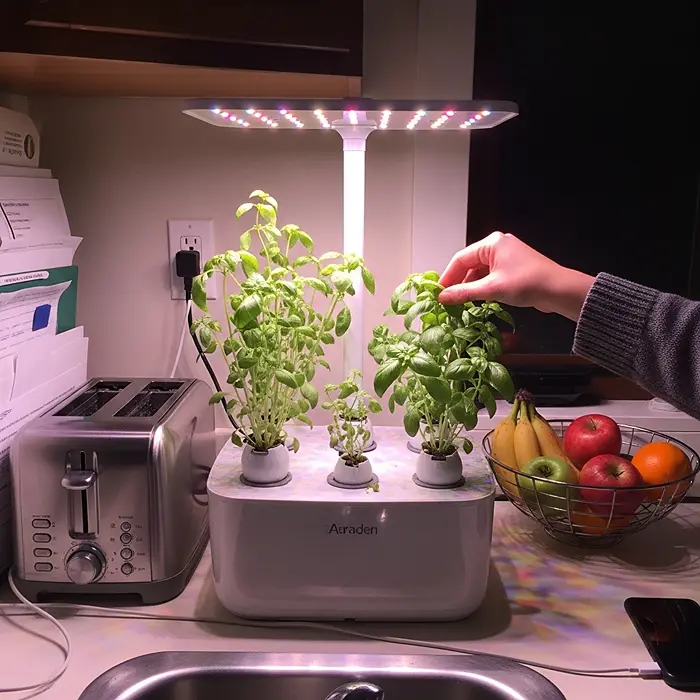
My honest recommendation for most people? Start with the AeroGarden Bounty (~$230). It hits the sweet spot of smart features, reliable growing performance, and price. Once you’ve confirmed that indoor gardening for small spaces fits your lifestyle, then consider upgrading to something AI-powered.
Best Plants for Indoor Gardening in Small Spaces (2025 Curated List)
Trailing Plants (Zero Floor Space)
- Pothos: The cockroach of houseplants—and I mean that as the highest compliment. Nearly indestructible, tolerates low light, and produces cascading vines that can reach 10 feet. Perfect for high shelves and hanging baskets where you need drama without floor sacrifice.
- Philodendron (Heartleaf): Similar vibe to Pothos but with softer, heart-shaped leaves that look a bit more refined. Thrives in moderate indirect light and forgives the occasional forgotten watering.
- String of Hearts: Delicate trailing succulent with these gorgeous patterned leaves that look almost hand-painted. Best in bright windows and hanging displays.
Structural / Vertical Plants
- ZZ Plant: Those glossy, architectural leaves look expensive—and the plant requires almost nothing from you. Tolerates low light, infrequent watering, and general neglect. Grows upright in a narrow form.
- Snake Plant (Sansevieria): The ultimate set-it-and-forget-it plant. Sword-shaped leaves grow straight up, the footprint is tiny, and it’s one of the most drought-tolerant indoor species on the planet.
- Rubber Plant (compact varieties): Bold, dark leaves on a vertical stem that makes a real statement. “Burgundy” and “Tineke” cultivars stay manageable in smaller containers.
Edible Indoor Plants
- Microgreens: Here’s the best-kept secret in indoor gardening for small spaces—microgreens are harvestable in 7 to 21 days and contain up to 40 times more nutrients than their mature counterparts. One 10×20-inch tray yields 4 to 8 ounces per harvest. That’s absurd ROI.
Sprouts vs Microgreens: Which Fast-Harvest Crop Belongs in Your Kitchen?
If that microgreens stat above got your attention—and honestly, 40x more nutrients should—you’re probably wondering how they compare to sprouts. Because here’s the thing: most people lump them together, but they’re actually completely different growing methods with very different space requirements and results.
Sprouts are your zero-infrastructure option. Just seeds, water, and a mason jar. They’re ready to eat in 2-7 days, need zero light, and you can stack multiple jars vertically on a tiny counter. Think of them as the “instant ramen” of indoor gardening for small spaces—fast, simple, and surprisingly nutritious.
Microgreens need a bit more setup—shallow trays, growing medium, and some form of light—but they deliver that insane vitamin density I mentioned earlier. Plus they’re significantly safer to eat raw and last longer in your fridge.
The economics are pretty wild for both. You’re looking at potential savings of $400-800+ annually just by growing your own instead of buying those overpriced grocery store containers. When you break down the time investment (maybe 5 minutes daily), you’re essentially earning $30-140 per hour for plant maintenance. Not bad for a hobby that also feeds you.
But which one actually fits your space and lifestyle? That depends on your light situation, safety priorities, and whether you want the fastest possible harvest (sprouts win) or maximum nutritional density (microgreens take the crown).
The decision matrix gets pretty detailed—there are specific varieties that work better for each method, different equipment needs, and even some safety considerations most people don’t know about. Rather than turn this into a novel, I pulled all the nitty-gritty details into a dedicated comparison:
👉 Read next: Sprouts vs Microgreens: Differences, Benefits, and Which One to Grow
That guide walks you through the real biological differences, safety protocols, exact cost breakdowns, and step-by-step growing methods for both. Plus a decision framework to help you choose which one (or both) makes sense for your specific apartment setup.
If you want your indoor garden to actually contribute to your grocery budget instead of just looking pretty, that comparison is your next stop.
Go Deeper: Build a Complete Microgreens System in Your Apartment
Honestly, if the microgreens stat above made you do a double-take — 40 times more nutrients, harvestable in a week, fits on your countertop — I don’t blame you. It sounds too good. But it’s real, and it’s probably the single highest-ROI project in all of indoor gardening for small spaces.
The catch? There’s a right way and a very wrong way to set one up. Seed density, blackout timing, bottom watering versus top misting, choosing between soil trays and passive hydroponic systems — these details are the difference between a lush tray of radish microgreens and a moldy disappointment.
We built an entire dedicated guide that walks you through the full setup from first seed to first harvest, including equipment costs, the exact growing cycle day by day, a variety comparison table, and the five optimization levers that separate okay yields from genuinely impressive ones.
👉 Read our complete Microgreens Growing System for Small Apartments guide — it covers everything you need to go from zero to harvesting your own nutrient-dense greens in under two weeks.
- Dwarf Cherry Tomatoes: Varieties like “Tiny Tim” and “Red Robin” actually fruit in deep containers with 14+ hours of LED lighting. Yes, real tomatoes. In your apartment.
- Basil & Parsley: Fast-growing kitchen staples that practically leap out of the soil under grow lights. Harvest regularly and they’ll just keep bushing out.
- Lettuce (cut-and-come-again): Loose-leaf varieties like “Salad Bowl” let you harvest the outer leaves while the plant keeps producing from the center. It’s like a subscription service for salad.
Low-Light Survivors
- Cast Iron Plant (Aspidistra): Lives up to its name. You could put this in a closet and it would probably find a way to survive. Perfect for dim corners.
- Snake Plant: Yep, it shows up twice because it’s that versatile—low-light champion and structural accent in one.
- ZZ Plant: Another dual-threat. Thrives in offices and interior rooms where natural light is more of a suggestion than a reality.
| Plant | Category | Light Needs | Care Level | Space Footprint |
|---|---|---|---|---|
| Pothos | Trailing | Low–Medium | Easy | Minimal (hanging) |
| Philodendron | Trailing | Medium | Easy | Minimal (hanging) |
| String of Hearts | Trailing | Medium–Bright | Moderate | Minimal (hanging) |
| ZZ Plant | Structural | Low–Medium | Easy | Small (narrow pot) |
| Snake Plant | Structural | Low–Bright | Easy | Small (narrow pot) |
| Microgreens | Edible | Medium (LED) | Easy | 1 tray (~1.5 sq ft) |
| Dwarf Cherry Tomato | Edible | Bright (LED 14+ hrs) | Moderate | Medium (deep pot) |
| Basil | Edible | Bright (LED 12+ hrs) | Easy | Small (4–6″ pot) |
| Cast Iron Plant | Low-Light | Low | Easy | Small–Medium |
Take Your Kitchen Herbs to the Next Level
Speaking of growing fresh herbs in small spaces—if you’ve got a sunny window, you’ve got everything you need for a dedicated windowsill herb garden that delivers fresh basil, mint, and parsley on demand.
Seriously, forget those sad $4 grocery store herb packets that wilt before you even get them home. A simple windowsill setup costs less to maintain, tastes infinitely better, and takes about five minutes of care per week.
We put together a complete guide covering everything from which window direction actually matters (spoiler: it’s not what you’d think) to the exact soil mix that prevents the dreaded “wet feet” problem that kills most indoor rosemary.
👉 Read our full Windowsill Herb Garden guide and start harvesting kitchen herbs within weeks—no green thumb required.
Edible Landscapes — High Yield in Small Apartments
Nutritional Density Strategy
If you could only grow one thing in your apartment, I’d tell you to grow microgreens every single time. A $5 packet of broccoli or radish seeds produces dozens of harvests, each loaded with concentrated vitamins C, K, and E. In fact, research led by the USDA Agricultural Research Service found that microgreens contain up to five times higher concentrations of vitamins and carotenoids than their mature counterparts—with red cabbage, cilantro, and green daikon radish ranking among the most nutrient-dense varieties tested.
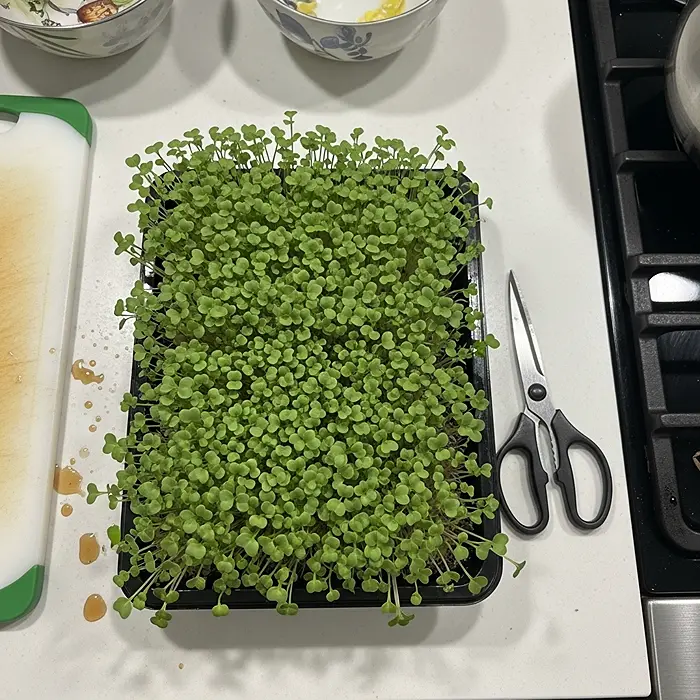
While a tomato plant takes months to fruit, microgreens go from seed to plate in under three weeks. For pure nutritional bang-for-your-buck, nothing else comes close.
Herbs are your next-best bet. A single basil plant produces continuously for months and replaces those $3–4 grocery store bunches that wilt by Thursday. For the ambitious grower, dwarf cherry tomatoes in 5-gallon deep pots under strong LED lighting deliver vine-ripened fruit that’ll make your store-bought tomatoes taste like cardboard by comparison.
Sustainable Substrates & Circular Gardening
Sustainability and indoor gardening for small spaces are natural partners—and you don’t need to go full homesteader to make a difference. Swap peat moss for coconut coir. Toss eggshells, coffee grounds, and veggie peels into a small countertop vermicomposting bin instead of the trash. Upcycle yogurt containers, tin cans, and mason jars as planters. Collect drainage water and reuse it on other plants.
These aren’t grand gestures. They’re tiny loops you close every day, and they add up to a genuinely more sustainable way of living—even in 400 square feet.
Advanced Maintenance & Biological Pest Control
Preventing Root Rot
Root rot is the number one killer of indoor plants, and here’s the frustrating part: it’s almost always self-inflicted. Overwatering kills way more plants than underwatering ever has. So forget whatever watering schedule you read on the internet and use the finger moisture test instead.
Stick your finger two inches into the soil. Dry? Water thoroughly until liquid flows from the drainage holes. Still moist? Walk away and check again in a few days. It’s that simple, and it’ll save more plants than any fancy moisture meter.
Airflow matters more than people realize too. Stagnant air around wet soil is basically a welcome mat for fungus. A small oscillating fan on low speed improves circulation, prevents mold, and even strengthens stems. Win-win-win.
Natural Pest Management Indoors
Fungus gnats are the most annoying uninvited guests in indoor gardening for small spaces. Those tiny flies breeding in your moist topsoil? Let the top inch of soil dry completely between waterings and place yellow sticky traps near affected plants. Problem solved within a week.
For soft-bodied pests like aphids and spider mites, neem oil diluted to label instructions works as both prevention and treatment. Apply in the evening so leaves don’t burn under your grow lights.
Here’s a fun one: small carnivorous plants like sundews (Drosera) placed near your growing area will passively trap fungus gnats and fruit flies. They’re natural pest control that doubles as a conversation piece. If any plant does get infested, isolate it immediately—move it to a separate room and treat it before returning it to your collection. Pests spread fast in close quarters.
Strategic Space Utilization Ideas
Window Gardens
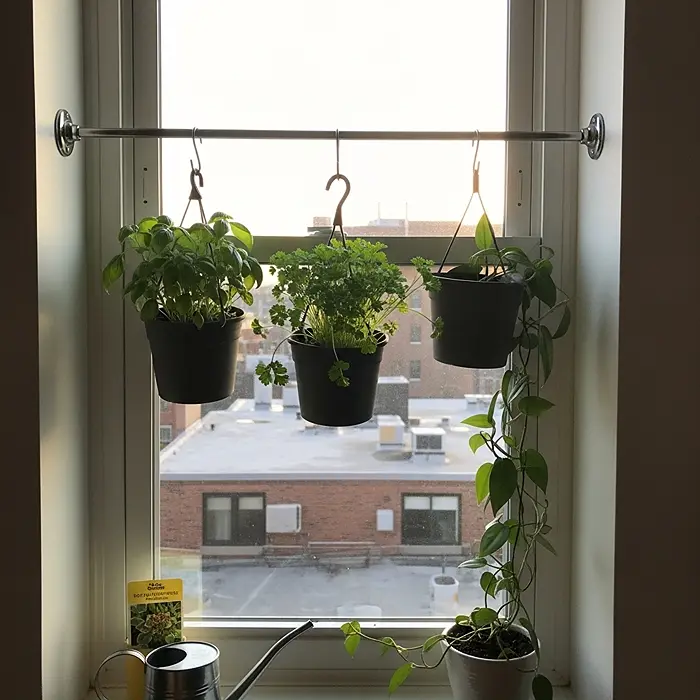
A tension rod across a window frame plus some S-hooks creates an instant hanging herb garden in about five minutes. Narrow ledge planters designed specifically for windowsills hold herbs and small succulents without blocking your light. South- and east-facing windows are ideal for this setup.
Balcony Micro-Farms
Even a narrow balcony becomes a productive growing zone with vertical racks and tiered shelving. Use weather-resistant materials, secure everything against wind (one gusty night can ruin weeks of growth), and check your building’s weight limits—soil and water are heavier than most people expect.
Kitchen Herb Stations
Magnetic planters that attach directly to your refrigerator door or a metal backsplash are a brilliant space hack. Pair them with under-cabinet LED grow lights, and you’ve got fresh basil, mint, and chives growing inches from where you actually cook. It doesn’t get more convenient than that.
Shelf Gardens
Tiered shelving with LED strip lights mounted behind and above each level creates a self-contained indoor gardening for small spaces setup that looks great and grows even better. Back-lighting ensures even coverage so plants don’t lean awkwardly toward a single light source.
The Plant Parent Personality Framework
The Busy Professional
Your schedule is packed, and you need plants that won’t guilt-trip you for skipping a watering. Lean into AI smart gardens that handle watering and lighting automatically—the Gardyn system is practically a plant nanny. Pair it with Snake Plants and ZZ Plants that tolerate weeks of benign neglect, and you’ll have a thriving indoor garden that asks almost nothing of you.
The Creative Decorator
You’re here for the aesthetics, and there’s zero shame in that. Trailing vines like Pothos and String of Pearls create dramatic cascading displays from wall hooks and elevated shelves. Pair them with handmade ceramic pots, macramé hangers, and interesting textures. Your apartment becomes a curated living art installation that just happens to photosynthesize.
The Self-Sufficiency Seeker
Your goal is food independence, even on a small scale. Focus on microgreens (fastest harvest cycle you’ll find), compact vegetables like dwarf tomatoes and peppers, and a countertop hydroponic system. A Lettuce Grow Farmstand with 24 to 36 pods can genuinely dent your weekly grocery bill. That’s indoor gardening for small spaces paying for itself in real dollars.
Urban Foraging & Sustainability in 2025
The One-in-Ten Rule
If you forage from community green spaces or urban areas—and more people are doing this than you’d think—follow the one-in-ten rule: never take more than 10% of any plant population. Leave the rest to regenerate. Always check local regulations first, because many cities have specific rules about foraging in parks and public land. Getting fined for picking dandelions is not the flex you think it is.
Circular Urban Gardening
True sustainability means closing loops wherever you can. Compost your kitchen waste to feed your indoor soil. Collect dehumidifier water or air conditioner condensate for watering. Grow balcony pollinator plants like lavender and marigolds to support local bees and butterflies. Even from a small apartment, you’re contributing to urban biodiversity—and that matters more than most people realize.
Frequently Asked Questions
Do I need grow lights for indoor vegetables?
Yes—there’s really no way around this one. Most vegetables are long-day plants that need 14 to 18 hours of light daily. Full-spectrum LEDs are your best option for consistent growth in apartments without direct sunlight. A decent panel runs $25 to $60 and adds only a few dollars per month to your electric bill.
How do I prevent root rot in pots?
Use pots with real drainage holes (not decorative ones without), skip the gravel layer at the bottom (it creates a perched water table that keeps soil wetter), and water only when the top two inches of soil feel dry to the touch. Good airflow around your plants helps too.
What are the best low-maintenance plants for small spaces?
Snake Plants and ZZ Plants are the gold standard. They grow upright and narrow (perfect for tight spots), tolerate low to medium light, and only need watering every two to three weeks. They’re basically the “set it and forget it” of the plant world.
Can I grow tomatoes indoors in an apartment?
You absolutely can. Dwarf cherry tomato varieties like “Tiny Tim” grow happily in deep containers (at least 5 gallons) with 14+ hours of daily LED lighting. You’ll need to hand-pollinate flowers with a small brush or gentle shaking since there aren’t any bees in your living room—but it works.
Are AI smart gardens worth the investment?
For herbs and leafy greens, most systems pay for themselves within one to two years through grocery savings alone. The best starting point is the AeroGarden Bounty (~$230) for a reliable all-rounder, or the LetPot LPH-SE (~$80–100) if you’re watching your budget.
Conclusion — Precision Technology Meets Botanical Soul
Here’s what I want you to take away from this entire guide: indoor gardening for small spaces isn’t about limitation. It’s about precision. In 2025, apartment growers have access to AI smart gardens that automate the boring stuff, full-spectrum LEDs that outperform half the windowsills in America, and vertical spatial engineering techniques that turn a 400-square-foot studio into a legitimate growing operation.
But—and this is important—the tech only takes you so far. The best indoor gardens combine smart systems with old-fashioned plant intuition: understanding soil health, reading what your plants are telling you about light and water, and picking species that match your actual lifestyle instead of your Pinterest board.
Whether you’re a busy professional who wants a hands-off herb garden, a decorator curating a living wall, or a self-sufficiency seeker harvesting microgreens every two weeks, the path is the same: start small, grow vertically, and let the quiet rhythm of plant care become part of your day.
The future of sustainable apartment cultivation isn’t coming. It’s already growing on your windowsill—and honestly, it’s about time you joined in.