

Vertical Herb Wall Ideas for Transitional Seasons
These vertical herb wall ideas turn a narrow balcony rail into a real herb garden that shrugs off spring frost snaps and fall cold spells without missing a harvest.
I grow a vertical thyme-and-sage wall on a north-facing fire escape in zone 6b Philadelphia, and transitional months are honestly my favorite time to run it. No spider mites, no wilting basil by 2pm, just steady growth.
Table of Contents
The Benefits of a Transitional Vertical Herb Wall
A vertical herb wall is one of the best space-saving garden ideas for anyone working with a balcony, fire escape, or narrow side yard. You stack six or eight herbs into the footprint of a single planter.
Spring and fall are the sweet spot. Cool nights knock back most pests and fungal pressure that plague summer herb gardens, and cool-loving culinary herbs actually taste better when they’re not baking in July sun.
If you’ve been putting off herb garden ideas because your space is tiny, a transitional-season wall is the lowest-risk way to start.
Planning Your Vertical Wall for Spring and Fall
Vertical gardening exposes roots and foliage to wind, cold, and sun in a way that ground beds never experience. That exposure is exactly what makes transitional months tricky.
Before you mount a single pocket, walk your space at three different times of day. You’re looking for two things: where the wall traps heat, and where the sun actually lands once it’s low in the sky.
Managing Unpredictable Temperature Swings
Quick Answer: Mount your vertical herb wall against a south- or west-facing brick, stucco, or concrete surface. These materials absorb daytime heat and release it slowly overnight, buffering the wall against sudden frost.
Brick and concrete are thermal sinks — they soak up heat all day and give it back after sunset. A wood fence or vinyl siding does almost none of that, which matters when temperatures drop fast.
I lost an entire pocket of basil overnight in early October two years ago because I’d mounted it on a vinyl-sided wall with zero thermal mass. A 38°F night turned to black mush by 7am. The thyme two feet away, on brick, was fine.
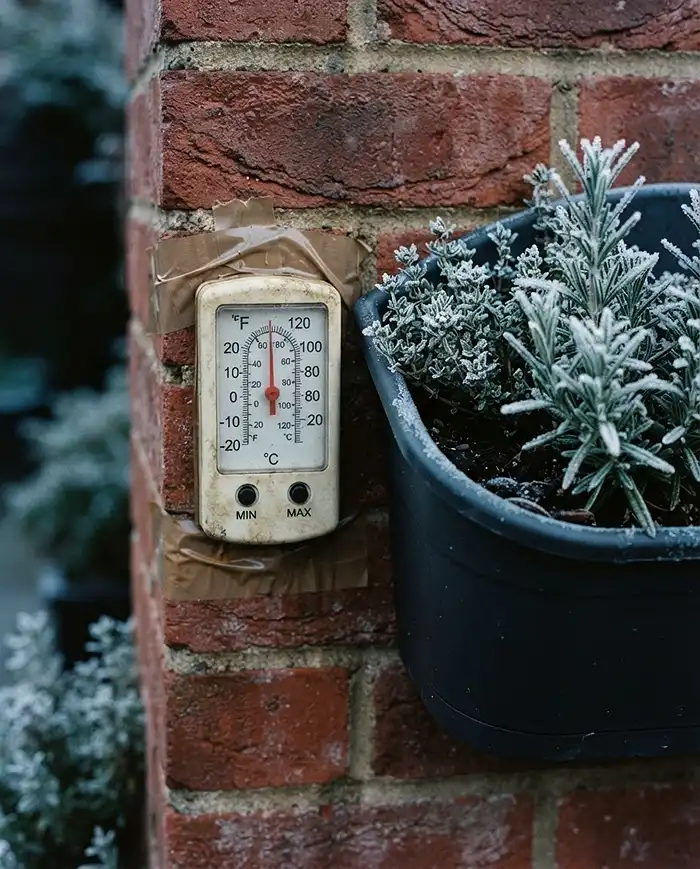
Pro Tip: Tape an outdoor min/max thermometer to your wall for one week before planting — it’ll tell you the real overnight low, which is often 3 to 5°F colder than your weather app’s forecast.
Auditing Shifting Sunlight Angles
Quick Answer: Track your wall’s light for a full week in late September or early March. Herbs need 4 to 6 hours of direct sun, and the sun sits much lower in transitional months than it does in summer.
A wall that gets full sun in July can fall into shadow by October as the sun’s angle drops and nearby buildings or railings cast longer shade. Don’t rely on your summer memory of the space.
- Check light at 9am, noon, and 3pm on the same day
- Note any new shadows from bare-branch trees, since deciduous trees drop less shade in fall than you’d expect
- Recheck in early spring — the angle in March is nearly identical to October, so one audit covers both seasons
Top Herb Varieties for Transitional Weather
Summer’s basil and tender annuals need to come out. In their place, cold-hardy perennials and fast-growing cool-season annuals turn transitional months into some of the most productive weeks of the year.
Cold-Hardy Herbs for Early Spring and Late Fall
Quick Answer: Thyme, sage, rosemary, and parsley are the backbone of a cold-hardy vertical herb wall. All four tolerate light frost and several develop stronger flavor once nights turn cool.
| Herb | Cultivar to Try | Cold Tolerance |
|---|---|---|
| Thyme | Thymus vulgaris ‘English Winter’ | Hardy to zone 4, light frost fine |
| Sage | Salvia officinalis ‘Berggarten’ | Hardy to zone 5, sweetens after frost |
| Rosemary | Rosmarinus ‘Arp’ | Hardy to zone 6, most others need zone 8+ |
| Parsley | Petroselinum ‘Giant Italian’ | Biennial, survives light frost easily |
These four aren’t just tough — thyme and sage in particular concentrate more essential oils when they’re grown in cool soil, so the flavor gets noticeably more intense once nighttime temps drop into the 40s.
Real Example: Last October my ‘Arp’ rosemary pushed through a 29°F night unprotected, right up against the brick wall I mentioned above. Same plant on an exposed east rail would not have survived that.
Fast-Growing Annuals for Short Transition Windows
Quick Answer: Cilantro and chervil are the two best fast-yielding annuals for transitional vertical gardening. Both bolt (go to seed) almost instantly in summer heat, so spring and fall are really their only window.
Coriandrum sativum ‘Calypso’ is a slower-bolting cilantro variety bred specifically for cool-season growing, and it’s the one I reach for every September planting.
Chervil, sometimes called French parsley, grows fast in 50 to 65°F weather and adds a mild anise note that basil can’t replicate once it’s gone for the season.
Essential Hardware and Insulation Tools
Elevated pockets have less soil mass than ground beds, so roots freeze faster and dry out faster. A short checklist of the right hardware solves most of that.
- Rigid, double-walled modular wall planters (not thin felt pockets) for the outer edges of the wall
- A waterproof backing board to protect your siding or brick from moisture transfer
- Heavy-duty wall anchors rated for wet, loaded planters — not standard drywall anchors
- Horticultural fleece or frost cloth sized to drape the entire wall
Choosing Thermal-Resistant Wall Pockets and Planters
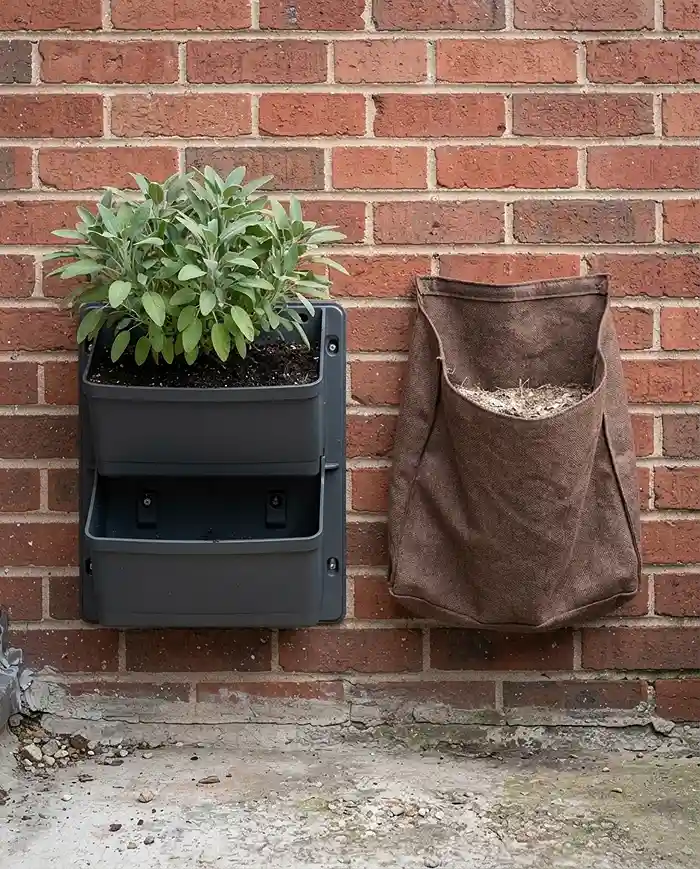
Quick Answer: Use rigid, double-walled plastic modular planters during transitional months instead of breathable felt pockets. Felt dries out and chills fast in cold wind, which can desiccate exposed roots overnight.
| Planter Type | Best For | Watch Out For |
|---|---|---|
| Rigid double-walled plastic | Fall and spring, windy sites | Heavier, needs sturdy anchors |
| Breathable felt pockets | Peak summer only | Freezes and dries roots fast in cold |
If you’re comparing options before you buy, this roundup of vertical wall planters for herbs breaks down sizing and material differences in more depth.
Soil Recipes for Cool Weather Moisture Control
Quick Answer: Mix premium organic potting soil with extra perlite and a handful of worm castings per pocket. Cool weather slows evaporation, so vertical soil needs to drain faster than it would in summer.
My go-to ratio is 3 parts potting mix to 1 part perlite, plus about a half-cup of worm castings per 6-inch pocket. That extra perlite is non-negotiable in fall — without it, cool soil stays soggy and roots rot before frost even hits.
Worm castings add a slow trickle of nutrients without the nitrogen spike that pushes tender new growth right before a freeze.
Step-by-Step Installation Guide
Quick Answer: Anchor a waterproof backing board first, mount planters from top to bottom, fill with aerated soil, then place your most cold-hardy herbs on the exposed outer edges where temperature swings hit hardest.
- Mount a waterproof backing board to protect siding and add a thermal buffer
- Attach modular planters using anchors rated for the loaded, wet weight of soil and herbs
- Fill each pocket with your perlite-heavy soil mix, leaving a half-inch gap below the rim
- Plant cold-hardy thyme, sage, and rosemary on the outer, most exposed rows
- Reserve the warmer, more sheltered center pockets for tender annuals like chervil
- Water in thoroughly and let the wall settle for 48 hours before checking for sag
If you’re renting and can’t drill into a wall or railing, this guide to a no-drill balcony garden covers tension-mount and weighted-base alternatives that work just as well.
Care and Maintenance During Seasonal Shifts
Plants slow their metabolism as temperatures drop, so the daily habits that worked in July will actually hurt your herbs in October. Watering and feeding both need to change.
Adjusting the Watering Schedule for Cool Air
Quick Answer: Switch from daily summer watering to a finger-test method — only water when the top inch of soil is dry — and water exclusively in the morning so soil isn’t sitting wet overnight.
Overnight moisture in cold soil is one of the fastest ways to kill vertical herbs in fall. Wet roots freeze at a higher temperature than dry ones, so morning watering gives soil hours to drain before the cold sets in.
Using Frost Covers and Cloches on Vertical Walls
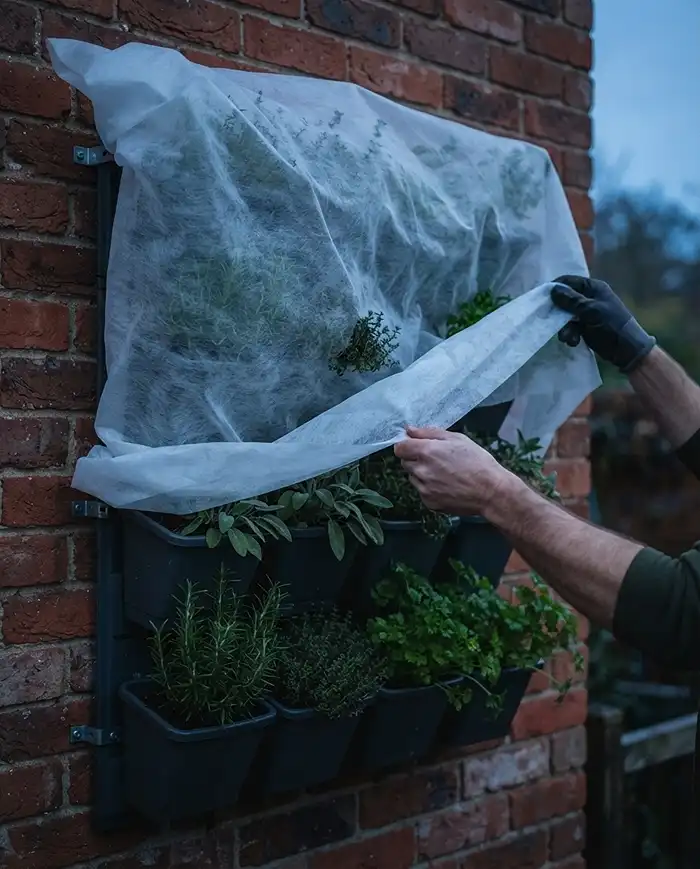
Quick Answer: Drape a horticultural fleece blanket over your entire wall when a frost warning hits, or use small plastic cloches over individual pockets to trap heat around single plants.
Fleece is the better call for a whole-wall event like a surprise April frost — it’s fast to throw on and pull off the next morning. Cloches work better for protecting one prized rosemary or a newly planted cilantro pocket.
Either way, remove the cover as soon as temperatures climb back above freezing. Leaving fleece on all day traps moisture and invites the mildew problems covered below.
Common Problems and Solutions
Two issues show up again and again on cool-weather vertical walls: frozen roots and damp-weather mildew. Both are preventable once you know what to look for.
Root Freeze in Exposed Containers
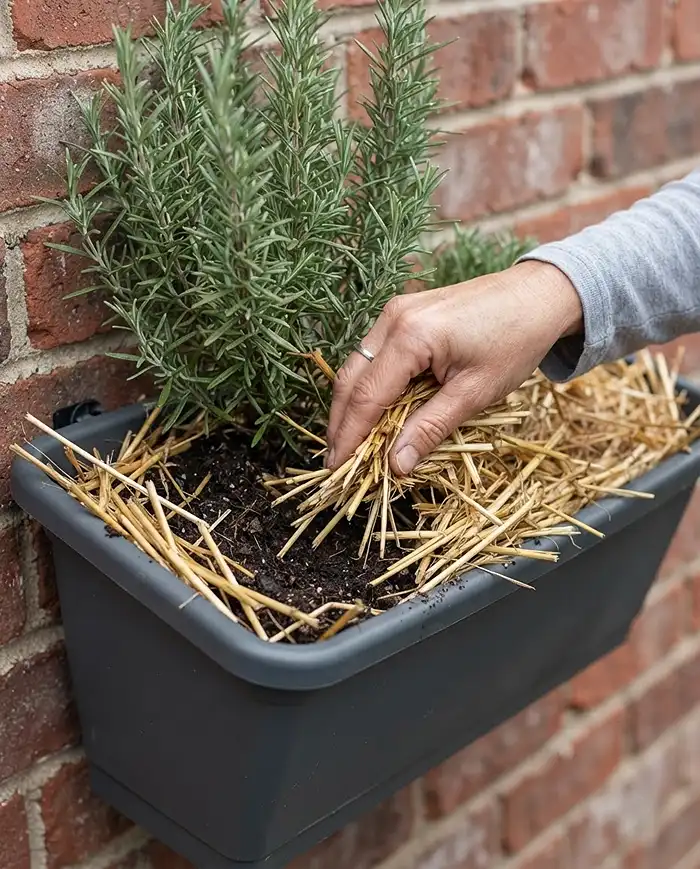
Quick Answer: Mulch the top of every vertical pocket with straw or cocoa coir before your first hard frost. Above-ground roots lack the earth’s natural insulation, so they freeze much faster than in-ground roots.
A one-inch layer of mulch traps radiant heat rising from the soil and can be the difference between a rosemary that limps into November and one that dies overnight.
Penn State Extension’s guide to overwintering plants in containers is a solid reference if you want the science behind why container roots run colder than garden-bed roots.
Mildew and Rot from Damp Autumn Air
Quick Answer: Thin your herb canopy aggressively once fall rains start. Cool, damp air combined with dense foliage is exactly the environment powdery mildew needs to take hold.
Snip back any leaves touching neighboring plants and space new transplants a bit wider than you would in summer. Airflow matters more than crowding more herbs into the wall.
A diluted milk spray (one part milk to nine parts water, applied weekly) is an organic option that works well as a preventative on sage and oregano specifically.
vertical herb wall Ideas FAQs
When should I swap out my summer herbs for a fall wall?
Start the transition in late August or early September, about six weeks before your area’s average first frost date. Pull exhausted basil and other tender annuals, then plant thyme, sage, and cilantro transplants so their roots have time to establish before deep cold arrives.
Do I need to fertilize my herb wall in the fall?
Avoid fast-acting, high-nitrogen liquid fertilizers in fall since they push tender new growth that frost will damage. Rely on the slow-release compost or worm castings mixed into your soil at planting instead.
Can my vertical herb wall stay outside all winter?
Unless you’re in USDA Zone 8 or warmer, even cold-hardy herbs in exposed vertical pockets will suffer fatal root freeze during deep winter. Plan to dismantle the wall or treat your fall herbs as temporary annuals once hard freezes set in.
How much sun does a vertical herb wall need in spring and fall?
Aim for 4 to 6 hours of direct sun. Because the sun sits lower in the sky during transitional months, a spot that was full sun in summer may need to move to catch enough light in October or March.
What’s the biggest mistake beginners make with vertical gardening in cool weather?
Overwatering is the most common mistake. Cool air slows evaporation, so soil that needed daily water in July can stay wet for days in October, leading to root rot if you don’t switch to a finger-test watering schedule.
Conclusion
The best vertical herb wall ideas for transitional seasons come down to three things: thermal mass behind the wall, rigid planters over felt, and cold-hardy varieties on the exposed edges.
Get those right, as of this fall’s growing season, and you’ll have thyme, sage, and rosemary thriving right through the shoulder months when most gardens are going dormant. If you’re still deciding on a layout, this vertical herb ladder for a small balcony is a good low-commitment starting point.
Key Takeaways
- Transitional-season vertical herb wall ideas work best mounted on brick, stucco, or concrete for thermal buffering against frost
- Swap tender summer annuals for cold-hardy thyme, sage, rosemary, and parsley by early September
- Use rigid double-walled planters over felt pockets, plus a perlite-heavy soil mix, for reliable drainage in cool weather
- Mulch pocket tops with straw or cocoa coir and switch to morning-only finger-test watering once nights turn cold
- Outside USDA Zone 8, plan to dismantle or replant your wall before deep winter sets in