

Balcony Plants by Direction
Choosing the right balcony plants by direction is the single most important decision you’ll make before buying anything at the nursery. Get it wrong and you’re replacing dead plants by July. Get it right and your small balcony garden practically grows itself.
Table of Contents
The Impact of Balcony Orientation on Plant Health
I grow vegetables on a north-facing balcony in zone 6b, and I’ve killed more sun-lovers than I care to admit before figuring this out. The cardinal direction your balcony faces isn’t just about light — it controls everything.
A south-facing balcony in peak summer can hit soil temperatures above 100°F, evaporating moisture in hours. A north-facing one in the same city might stay 15 degrees cooler. That’s not the same garden. That’s two completely different microclimates that demand entirely different plant genetics.
Urban gardening makes this even more complicated. High-rises, overhangs, and neighboring walls all warp your actual light exposure. Understanding light and space in small-space gardening is essential before you spend a dollar on plants.
How to Accurately Determine Your Balcony’s Direction
Before you touch a seed packet or pot, figure out exactly what you’re working with. Guessing your balcony’s orientation is how gardeners end up with dead rosemary on a north-facing wall.
The good news: diagnosing your space takes one weekend and zero special equipment.
Using Compass Apps and Shadow Tracking
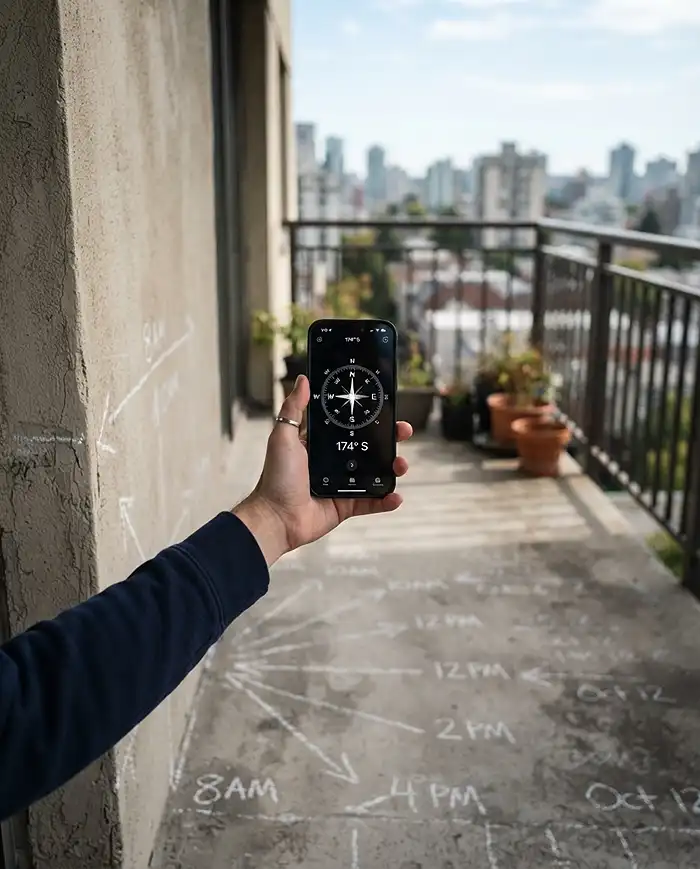
Open your phone’s built-in compass app. Stand with your back flat against the apartment wall that your balcony extends from. The direction you’re facing is your balcony’s orientation.
A reading of 170–190 degrees? South-facing. Around 0 or 360? North-facing. Around 90? East. Around 270? West. Most balconies land somewhere in between — southeast or northwest — so note the exact number.
Don’t stop there. Spend a weekend tracking shadow movement every two hours from 8 AM to 6 PM. Measuring actual sunlight hours in a small space gives you real data that a compass alone can’t provide.
Mark where shadows fall at each interval with tape or chalk. This tells you your true usable light window — which is often shorter than you’d expect once nearby buildings are factored in.
Factoring in Seasonal Sun Shifts and Obstructions
Here’s what most balcony guides skip: a south-facing balcony in December gets far less light than the same balcony in June. The sun sits lower in winter, meaning overhanging rooflines or the floor of the balcony above can completely block it.
In dense urban environments, a neighboring high-rise to the south can effectively convert a south-facing balcony into a north-facing microclimate for most of the day. The real differences between south and north-facing balconies covers this in detail.
Track shadows in both June and October if you can. That two-weekend investment saves you from planting full-sun tomatoes in what turns out to be a shaded slot.
The South-Facing Balcony: Full Sun Champions
A south-facing balcony is the powerhouse of small space gardening. You’re looking at 6 to 8+ hours of direct sunlight daily from spring through fall — intense, sustained, and hot. This is the orientation most plants dream about, and a few actually need.
It’s also the most demanding to manage. That heat is relentless.
Microclimate Conditions and Watering Needs
Expect soil in small containers to dry out completely within 24 hours during July and August. I’ve had 6-inch terracotta pots become bone dry by noon on a hot day. This is normal — and manageable — but you need a system.
Switch to large containers: 15-gallon fabric pots or 18-inch resin planters minimum for fruiting crops. Mix in 25% coco coir by volume to boost moisture retention without compacting.
Water deeply every morning. In peak summer, a second light watering at 5 PM isn’t excessive — it’s often necessary. Self-watering containers with built-in reservoirs are worth every penny on a south-facing balcony.
Best Plants: Mediterranean Herbs and Fruiting Veggies
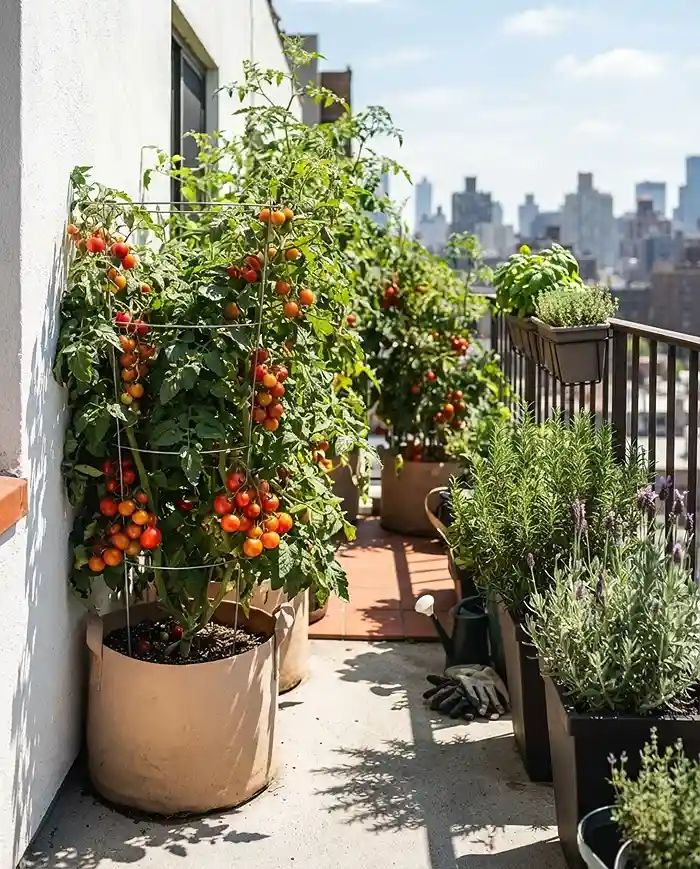
These are your south-facing workhorses. They evolved for heat and sun, and they’ll reward you generously.
- Rosemary ‘Tuscan Blue’: drought-tolerant, loves reflected heat from walls, nearly unkillable in zones 7–10
- Lavender ‘Hidcote’: thrives in poor, dry soil — perfect for the baking conditions of southern exposures
- Indeterminate tomatoes (‘Sungold’, ‘Black Krim’): need 8+ hours of sun to fruit well; south is their only real option in containers
- Sweet peppers and eggplants: heavy feeders that convert intense solar energy directly into yield
- Basil: bolts fast, but on a south balcony it grows thick and lush before it does
In summer 2023, I moved a container ‘Sungold’ tomato from my east-facing fire escape to a friend’s south-facing rooftop in zone 7a. Yield nearly tripled in the same season. That’s what direction does.
Pro tip: Paint south-facing walls white to reflect light back onto lower foliage and reduce radiant heat absorption by up to 30%.
The North-Facing Balcony: Shade-Loving Specialists
A north-facing balcony rarely sees direct sun. It stays cooler, stays damper, and demands a completely different planting strategy. Trying to grow tomatoes here is how you end up with a tall, leafy plant and zero fruit by September.
But shade-tolerant plants thrive here — and many actually prefer it.
Microclimate Conditions and Moisture Retention
Without direct sun to dry the soil, north-facing containers stay wet for days. This is the leading cause of root rot in urban gardening — overwatering a plant that’s already sitting in poorly draining, slow-drying mix.
Switch to porous terracotta pots over plastic. Add 20–25% extra perlite to your potting mix to boost drainage. Always elevate pots on rubber feet or pot feet — even a half-inch of airflow under the container dramatically improves drainage and prevents standing moisture from wicking back up.
Use the finger test: push your index finger 2 inches into the soil. Water only when it comes out dry. On a north balcony, that might mean watering every 3–4 days instead of daily.
Best Plants: Lush Ferns and Leafy Greens
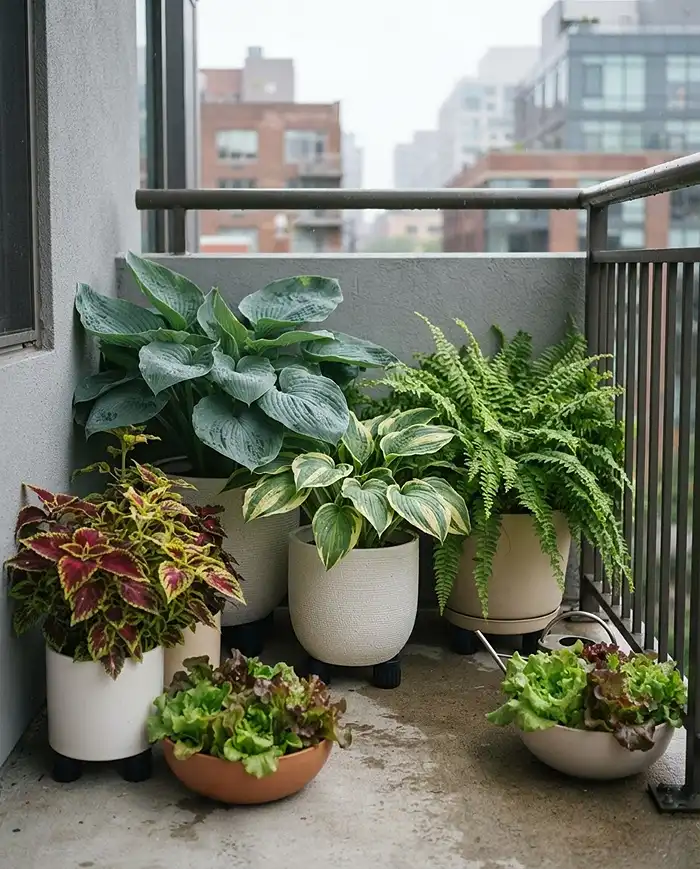
North balconies are where shade specialists shine. Lean into what this light actually supports rather than fighting it.
- Boston Fern: thrives in indirect light, loves the cooler, damper north microclimate
- Hostas (‘Sum and Substance’, ‘Halcyon’): bold foliage, almost zero maintenance in shade
- Coleus: spectacular leaf color without needing a single hour of direct sun
- Loose-leaf lettuce (‘Black Seeded Simpson’, ‘Red Sails’): prefers cool temps and indirect light — bolts immediately on south balconies
- Spinach and mint: cool-season edibles that produce consistently in low-light conditions
Tiny garden ideas don’t always mean sun-drenched herbs. Some of the most dramatic container displays I’ve seen were built entirely on north-facing balconies — massive hostas, trailing ivy, and coleus in every shade of burgundy and gold.
Pro tip: Use white or light-colored containers on north balconies to reflect ambient light back onto foliage and brighten the space without adding artificial lighting.
The East-Facing Balcony: Gentle Morning Sun
East-facing balconies are the most forgiving orientation for beginners. You get 4 to 5 hours of cool, gentle morning sun before the plants shift into protective afternoon shade. It’s a natural rhythm that suits an enormous range of plants.
This is the sweet spot for small space gardening with mixed plantings — edibles alongside ornamentals without constant micromanagement.
Microclimate Conditions and Dew Evaporation
Morning sun on an east-facing balcony does something valuable: it dries overnight dew from leaves before midday. This natural drying cycle is your first line of defense against fungal diseases like powdery mildew and botrytis.
Plants that would suffer from heat scorch on a south or west balcony are perfectly protected here. The afternoon shade arrives just as temperatures peak, keeping foliage cool and root zones from overheating.
Watering needs fall somewhere between south and north: typically every 1–2 days in summer. Soil dries moderately — not the bone-dry rush of a south exposure, not the persistent dampness of north.
Best Plants: Cool-Season Veggies and Tender Florals
East balconies support a beautiful mix of ornamentals and edibles that struggle in more extreme exposures.
- Fuchsia: demands cool roots and indirect afternoon light — east is ideal, south will kill it
- Begonias (Wax and Tuberous): love morning light, collapse in intense afternoon heat
- Hydrangeas: need morning sun to bloom but scorch badly in afternoon direct light
- Sugar snap peas and radishes: cool-season crops that produce heavily before summer heat hits
- Cilantro: bolts immediately in hot southern exposures; produces steadily with east light
For urban gardening on a budget, east-facing balconies are forgiving of beginner mistakes. Even inconsistent watering or slightly wrong container sizes tend to produce decent results here.
Pro tip: Plant taller edibles like peas on the west side of the balcony so they don’t shade smaller plants during the morning light window.
The West-Facing Balcony: Intense Afternoon Heat
West-facing balconies are the most challenging orientation for new gardeners. Your space sits in cool shade all morning, then gets blasted by the hottest, most intense direct sunlight from roughly 2 PM until sunset. That’s not the same as south-facing heat — it’s concentrated and late, arriving when air temperatures are already at their peak.
Microclimate Conditions and Thermal Protection
Late afternoon western sun heats containers from the side and top simultaneously. Thin plastic pots can push root-zone temperatures above 95°F — a threshold that kills fine feeder roots even in heat-tolerant plants.
Use double-walled resin planters or wrap terracotta pots in burlap to insulate root zones. Top-dress all containers with a 2-inch layer of straw mulch. This single step can reduce soil temperature by 10–15°F at peak afternoon heat.
Group containers together so they shade each other’s sides. Strategic placement near a north- or east-facing wall section reduces radiant heat reflection during the worst hours.
Best Plants: Succulents and Resilient Ornamentals
West balconies demand plants that genuinely don’t care about intense heat. Anything delicate will struggle.
| Plant | Why It Works | Watch Out For |
|---|---|---|
| Agave | Stores water in thick leaves; thrives in dry heat | Needs excellent drainage or crown rots |
| Portulaca (Moss Rose) | Trailing habit; closes flowers in shade, explodes in sun | Self-seeds aggressively — deadhead if needed |
| Zinnias | Vibrant color, drought-tolerant once established | Needs deadheading to keep blooming |
| Ornamental Grasses (Blue Oat Grass) | Structural texture; nearly indestructible in heat | Can look ratty if not divided every 2–3 years |
| Sedum ‘Autumn Joy’ | Succulent foliage handles dry heat; long bloom season | Flops if overfed — keep fertilizer minimal |
Pro tip: The RHS guide to plants for sunny exposed sites includes dozens of verified cultivars that handle western exposure in containers — useful for expanding beyond the basics.
Common Problems and Solutions
Even with the right plants, orientation-specific problems will show up. Here’s how to spot and fix the most common ones fast.
Scorched Leaves on West and South Balconies
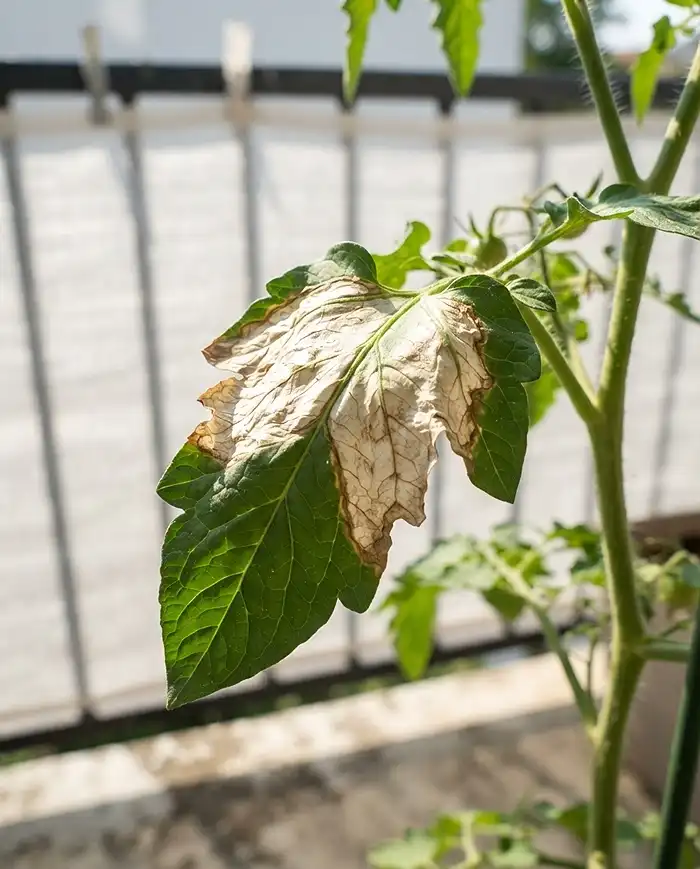
Sunburn shows up as crispy, bleached white or tan patches on leaves — usually on the side facing direct afternoon light. Unlike pest damage, sunburn patches don’t spread and don’t have irregular edges. They’re flat, dry, and often appear suddenly after a heat wave.
Immediate fix: hang a 30% UV shade cloth on the railing during peak August heat waves, roughly 1–3 PM. This reduces light intensity without blocking the morning or evening sun your plants still need.
Don’t remove scorched leaves immediately — they still photosynthesize and protect the tissue beneath. Remove them once new healthy growth fills in.
Root Rot in North and East Containers
Root rot in shaded orientations announces itself with yellowing lower leaves, mushy stems near the soil line, and soil that smells sour or swampy even days after watering. By the time you see symptoms, root damage is already serious.
Act immediately: unpot the plant, shake off wet soil, trim black or mushy roots with sterile scissors, and repot into fresh dry mix with added perlite. Elevate the pot on rubber feet for airflow.
Going forward, implement the finger test strictly — 2 inches into the soil, water only when dry. This single habit prevents nearly all overwatering damage in north and east exposures.
balcony plants by direction FAQs
What if my balcony is heavily shaded by other buildings?
If neighboring high-rises block your technically south-facing balcony for most of the day, treat it as a north-facing microclimate. Plant shade-tolerant varieties — ferns, hostas, leafy greens — rather than fighting the actual light conditions you have. Your orientation on a compass matters less than your real hourly light exposure.
Can I change my balcony’s light conditions?
You can’t add sunlight to a dark north-facing balcony, but you can reduce harsh light on south and west exposures. Tall bamboo privacy screens, railing planters with bushy foliage, and patio umbrellas all create custom dappled shade. Reflective white walls and light-colored containers can amplify available light in shaded spots.
Which direction is best for growing tomatoes?
South-facing is unequivocally best for fruiting tomatoes in containers. Indeterminate varieties like Sungold or Cherokee Purple need 8+ hours of direct daily sun to fuel blossom production and ripen fruit properly. East-facing balconies can produce cherry tomatoes with 5 hours of morning sun, but yield and sweetness will be significantly lower.
Can I grow herbs on any balcony direction?
It depends on the herb. Mediterranean herbs like rosemary, thyme, and lavender demand south or west exposure with full sun. Mint, parsley, chives, and cilantro do well on east or even north balconies in indirect light. Basil needs at least 6 hours of sun — south or west only for reliable harvests.
How do I handle a balcony that faces southeast or northwest?
Southeast balconies are close to east — expect 5 to 6 hours of morning to midday sun. They support a wide range of plants including many fruiting crops. Northwest balconies lean toward north — mostly indirect light with brief late afternoon sun. Treat northwest as north-facing and plant accordingly, with shade-tolerant selections.
Key Takeaways
- Choosing balcony plants by direction — not by what looks nice at the nursery — is the foundational rule of successful urban gardening.
- Use a compass app plus weekend shadow tracking together; compass alone doesn’t account for real obstructions in dense cities.
- South-facing balconies need large moisture-retentive containers and daily deep watering; north-facing ones need excellent drainage and the finger test before every watering session.
- East-facing is the most forgiving for beginners; west-facing is the most demanding and rewards structural, heat-tough plants over delicate ornamentals.
- Your real microclimate — shaped by neighboring buildings, overhangs, and seasonal sun shifts — often matters more than your compass reading alone.