
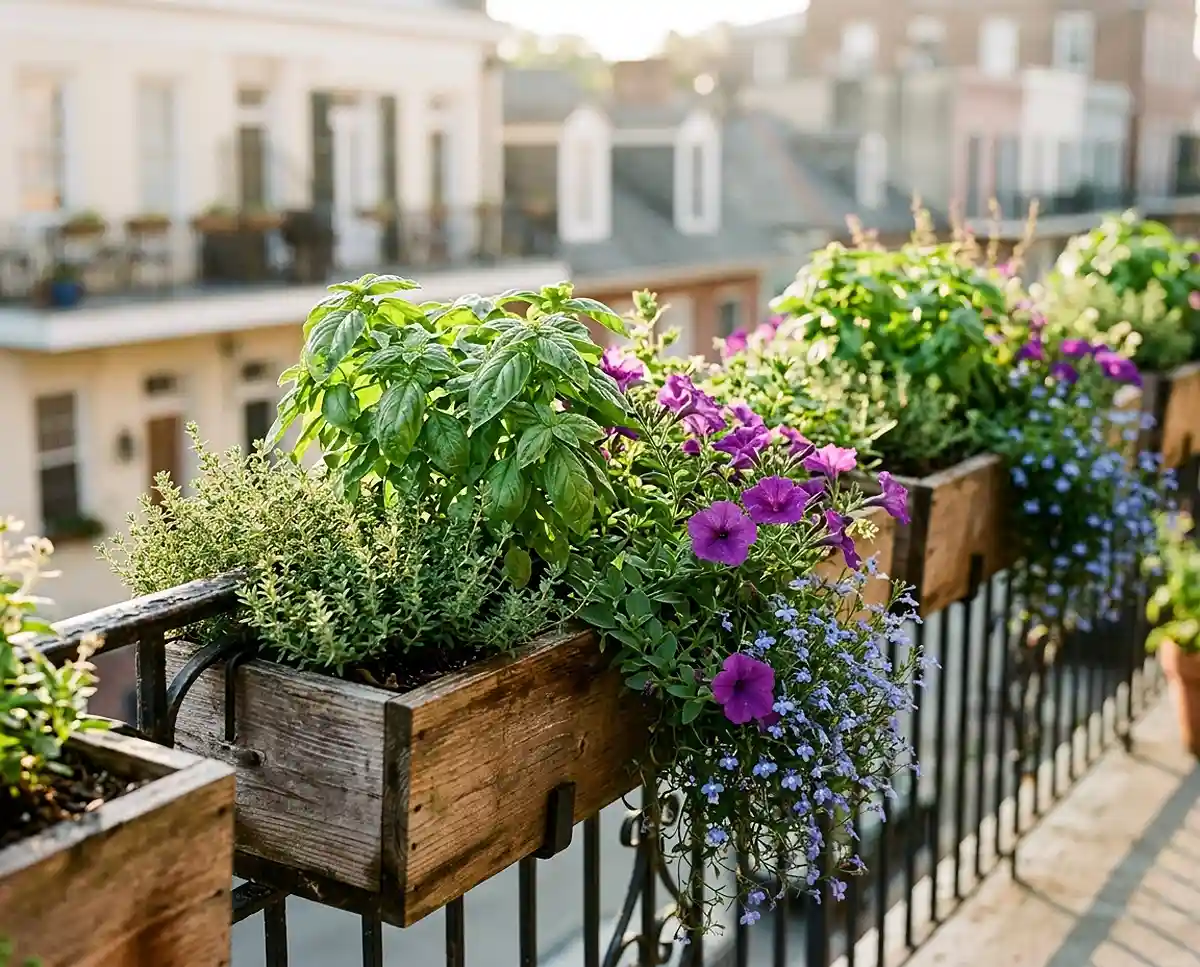
Stylish Railing Planter Ideas for Herbs and Flowers
Railing planter ideas can transform a bare balcony rail into a productive, beautiful growing space — without sacrificing a single square foot of floor. If you’re short on room but big on ambition, this guide covers everything.
Table of Contents
Why Railing Planters Are Perfect for Herbs and Flowers
Most balconies and decks have one seriously underused asset: the railing. It runs the full perimeter of your outdoor space and just sits there doing nothing.
Railing planters hook right onto that wasted rail and pull greenery up to eye level, where you actually see and enjoy it. That’s a big deal in apartment gardening where every visual inch counts.
They’re also practical for both herbs and flowers. Herbs stay within arm’s reach for cooking. Flowers draw pollinators in close and make your outdoor space feel lush even when it’s only six feet wide.
I grow basil, trailing lobelia, and thyme on my fourth-floor east-facing rail in zone 6b. First morning light hits those boxes by 7 a.m. — plants are thriving, floor is clear, and neighbors below can’t tell I’m running a small balcony garden up here.
Plan Your Railing Planter Setup
Before you order a single planter, spend 20 minutes assessing your railing. Skipping this step leads to wobbly boxes, wrong sizes, and a lot of returns.
Two things matter most upfront: your railing’s physical specs and the environmental conditions plants will actually face out there.
Measuring Railing Width and Checking Stability
Grab a tape measure and note your railing’s top width, outer width, and the gap between rail posts. Most residential rails run 1.5 to 2 inches wide for wood and 1 to 2 inches for round metal.
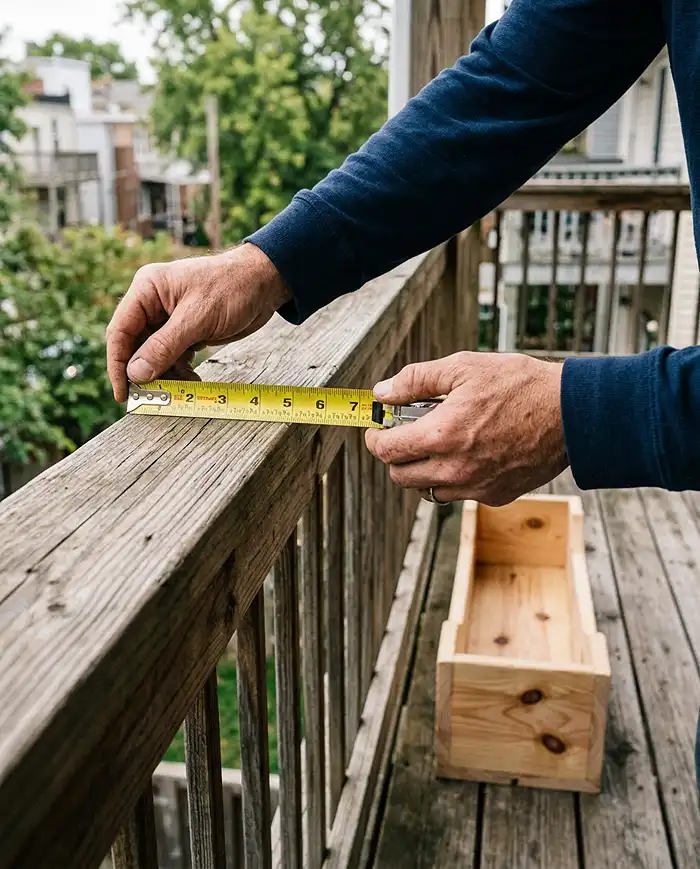
Saddle-style planters straddle the rail and need that measurement to fit snugly. Hook systems usually adjust from 1 to 3 inches but confirm before buying.
Shake your railing firmly. If it flexes more than half an inch, consult your building manager before loading it with soil and plants. A full rail box with wet soil can weigh 15 to 25 lbs.
Assessing Sun, Wind, and Safety
Track how much direct sun your rail gets over a full day. South and west-facing rails usually get 6+ hours — great for basil and petunias. North-facing rails may only get 2 to 3 hours, so stick with mint, parsley, and lobelia.
Higher floors mean stronger wind. Above the third floor, expect gusts that dry out soil fast and can knock lightweight planters loose. Self-watering models with locking brackets are worth the extra cost up there.
Check your building’s rules too. Many apartments restrict what you can mount on exterior railings, especially anything that overhangs the edge.
Types of Railing Planters to Choose From
Not all railing planters work the same way. The right style depends on your rail type, how much weight you’re comfortable adding, and whether you want a permanent setup or something you can easily remove seasonally.
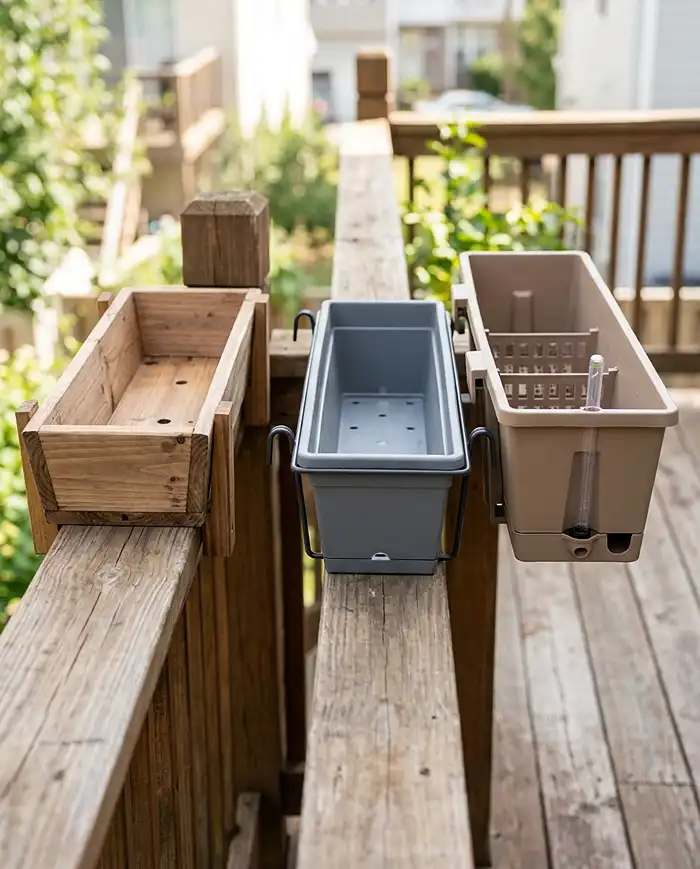
Saddle and Straddle-Style Planters
Quick Answer: Saddle planters drape over the top of the rail with weight balanced on both sides — inner and outer. They’re secure, stable, and don’t require tools to install.
These are the most popular choice for wood deck railings. Look for models with drainage holes on the inner section so water drains away from your flooring, not straight down to the neighbor below.
Novelty Garden and Classic Home make solid saddle boxes in 18-inch and 24-inch lengths that fit rails up to 2 inches wide.
Hook-On and Bracket-Mounted Planters
Quick Answer: Hook-on planters use adjustable metal hooks or brackets to grip the top rail. They work on round, square, and flat rails and are easy to reposition.
Bracket systems from brands like Bloem and Gardener’s Supply adjust to fit a wider range of rail widths than saddle planters. Most handle 1 to 3 inches.
The trade-off: they hang on the outside of the rail, which looks great but adds wind exposure. Use locking brackets or zip ties through the drainage holes if you’re above the second floor.
Deck Rail Boxes and Self-Watering Options
Quick Answer: Deck rail boxes are longer rectangular containers (24 to 36 inches) that sit in a mounted bracket system along the rail. Self-watering versions include a built-in reservoir that extends time between waterings.
Self-watering rail boxes are worth the premium if you travel, forget to water, or grow thirsty herbs like basil. The Bloem Deck Rail Planter and HC Companies TrueBloom series both hold about 1.5 liters of water in the reservoir.
For a pollinator container garden, longer rail boxes give you enough room to mix trailing flowers with upright blooms — more visual range and more forage for bees.
Best Herbs and Flowers for Railing Planters
Most railing boxes are 6 to 8 inches deep. That limits your options — but the right plants absolutely thrive in those constraints. The key is choosing compact or trailing varieties, not sprawling ones.
Compact Herbs That Thrive in Rail Boxes
Quick Answer: Basil, thyme, chives, and parsley are the top four herbs for railing planters. All stay compact, tolerate shallow soil, and produce all season with regular harvesting.
- Basil ‘Spicy Globe’ — stays under 12 inches, bushier than standard Genovese, perfect for 6-inch-deep boxes
- Thyme (common or lemon) — drought-tolerant, spreads nicely, handles wind better than most herbs
- Chives — nearly indestructible, regrow after cutting, great filler between other plants
- Parsley ‘Forest Green’ — compact curled type, slower to bolt than flat-leaf in heat
Avoid mint unless it’s in its own box — it will crowd out everything else within a month. I learned that the hard way in summer 2023 when my chives disappeared under a spearmint takeover.
For more herb garden ideas in tight spaces, check out our guide on small patio garden layouts for vegetables and herbs.
Trailing and Compact Flowers
Quick Answer: Petunias, calibrachoa, lobelia, and nasturtium are the best flowers for railing planters. They trail beautifully over the edge, bloom all season, and don’t need deep root space.
- Petunias ‘Supertunia Vista’ — vigorous, self-cleaning, cascades 18 to 24 inches over the rail edge
- Calibrachoa ‘Superbells’ — miniature petunia look, more disease-resistant, great for pollinators
- Lobelia ‘Regatta’ — deep blue cascading type, thrives in partial shade, stunning on north-facing rails
- Nasturtium ‘Jewel Mix’ — edible flowers, grows fast, handles poor soil better than most
For more ideas on summer flowers that spill beautifully over container edges, we’ve put together a dedicated roundup.
Tools and Materials You’ll Need
Getting set up doesn’t require much, but a few smart choices upfront save you headaches later.
- Railing planters — sized to your rail width (measure first)
- Brackets or saddle mounts — confirm they fit your rail profile before buying
- Lightweight potting mix — never use garden soil in containers; it compacts and suffocates roots
- Perlite — mix in at a 20% ratio to improve drainage in shallow boxes
- Drip trays or liners — essential if you’re above neighbors or a walkway
- Slow-release granular fertilizer — mix into soil at planting, reduces feeding chores
- Zip ties or S-hooks — secondary security on hook-style planters in windy spots
Skip coco coir as a standalone mix — it dries out too fast in shallow, sun-exposed rail boxes. A quality peat-based mix like FoxFarm Ocean Forest or Pro-Mix BX works better here.
How to Install and Plant Railing Planters
Installation takes 15 to 30 minutes per box. Taking it slow and checking stability at each step is what separates a safe setup from a dangerous one.
Securing Planters Safely to the Railing
Quick Answer: Attach brackets or saddle hooks to the rail before adding any soil or plants. Add weight gradually and check that the planter doesn’t shift or tilt under load.
For bracket systems, hand-tighten first, then check that the planter hangs level. Add a small amount of dry soil and push down on the planter front. It should not lift off the rail or tilt forward.
Once you’re satisfied with stability, tighten hardware fully. On windy balconies above the third floor, run a zip tie through the planter’s drainage hole and loop it around the rail post. That keeps boxes in place during summer storms.
Check weight limits printed on the planter packaging. A 24-inch box filled with wet soil and plants can reach 20 lbs — that matters for older railings.
Planting Herbs and Flowers in Rail Boxes
Quick Answer: Fill boxes to within 1 inch of the top, place taller plants toward the back (inner side), and trailers at the front edge. Water immediately after planting to settle the soil.
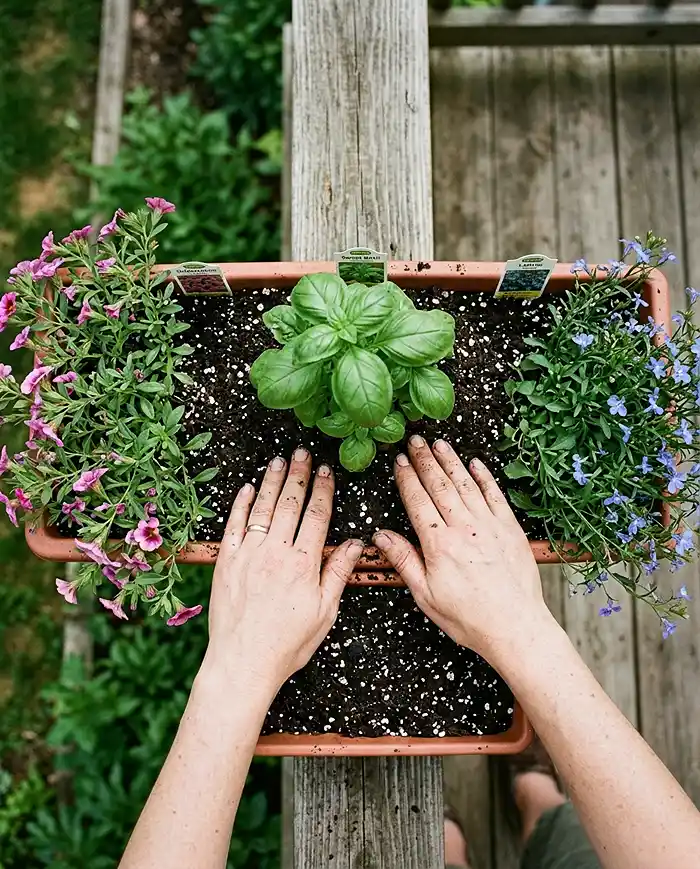
Layer your box: add an inch of perlite at the bottom, then fill with potting mix. Work in a tablespoon of slow-release fertilizer per 6 inches of box length.
For a mixed herb and flower box, plant one upright herb (basil or chives) in the center, flanked by trailing flowers at each end. It looks intentional and gives you something to cook with all season.
See our guide on companion planting in containers for smart plant combos that also deter pests.
Watering and Caring for Railing Planters
Shallow boxes in full sun dry out faster than any other container setup. In summer heat, you may need to water daily. Building a simple routine around that reality keeps plants healthy without constant stress.
Watering Without Drips on Neighbors Below
Quick Answer: Use a drip tray or liner inside every railing planter. Water slowly and only until you see water just reaching the tray — don’t flood the box.
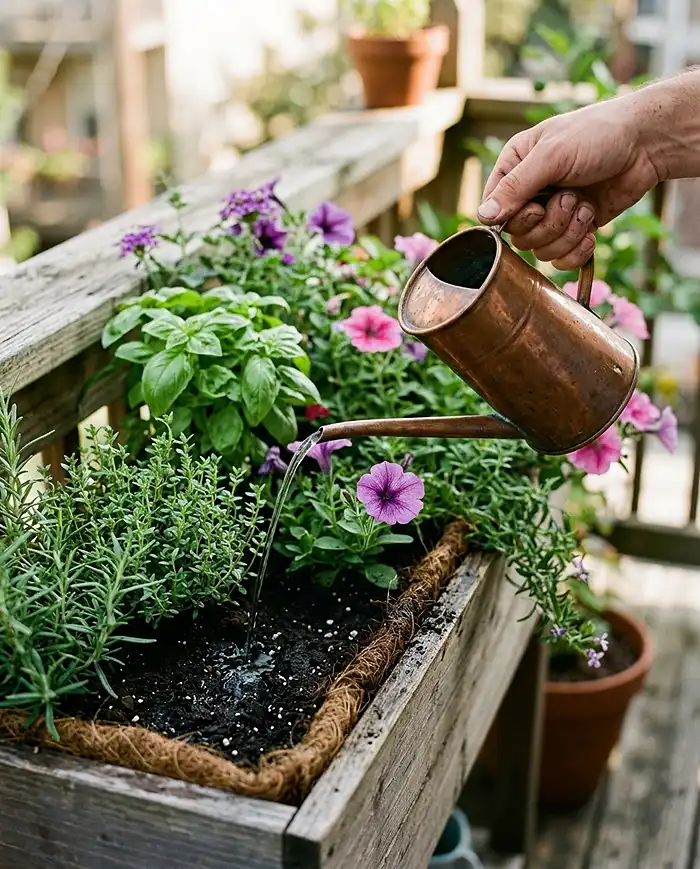
Coconut fiber liners or plastic inserts catch runoff inside the box before it reaches the drainage holes. Pair these with a narrow-spout watering can for controlled delivery.
Water in the morning if possible. Midday watering on a hot rail evaporates before it reaches roots. Morning watering also gives foliage time to dry, reducing fungal issues.
If you’re in a building where drips could reach a lower balcony, self-watering boxes with sealed reservoirs are the cleanest solution — water goes into the reservoir, not over the edge.
Feeding, Pruning, and Harvesting
Quick Answer: Feed railing planters every two weeks with a balanced liquid fertilizer. Deadhead flowers regularly and harvest herbs frequently — both keep plants producing longer.
Deadheading [removing spent flowers] is the single best thing you can do for petunias and calibrachoa. Snip the whole stem back to a leaf node every 10 to 14 days and blooms stay dense all season.
Harvest herbs by cutting stems back by one-third, never more. Cutting basil at the first node below the flower bud prevents bolting and keeps leaves large and flavorful through late summer.
For more on keeping containers lush all season, see our roundup of apartment balcony garden ideas that work in tight spaces.
Seasonal Care for Railing Planters
Railing planters are exposed on all sides — no insulation from building mass or ground warmth. That means seasons hit harder here than in ground-level containers.
Swapping Plants and Winter Protection
In spring (after last frost), swap out winter pansies for warm-season herbs and trailing annuals. In zones 5 to 7, that’s typically mid-May. In zones 8 to 10, you can start in early March.
Before the first hard frost, remove any tender herbs you want to overwinter indoors. Basil dies at 50°F — bring it in before nights drop near that mark.
Take planters down ahead of major storms. A planter full of wet soil hitting a lower balcony or a pedestrian is a serious liability. Empty boxes can usually stay up through winter if brackets are solid.
Wrap empty rail boxes in burlap or move them indoors if temps will drop below 10°F — freeze-thaw cycles crack resin and terracotta planters. Fiberglass and metal hold up better through winter without protection.
Common Problems and Solutions
Even a well-planned railing setup runs into issues. Here are the most common ones and exactly how to fix them.
Planters Drying Out Too Quickly
Quick Answer: Shallow rail boxes lose moisture fast in sun and wind. Switch to self-watering planters or top-dress with a thin layer of fine mulch to slow evaporation.
If you’re using standard boxes, add 20% perlite to the potting mix — counterintuitively, this improves moisture retention by keeping soil from compacting into a hard block that repels water.
Wind Loosening or Toppling Planters
Quick Answer: Tighten all brackets monthly and add zip-tie backup anchors on windy sites. Choose heavier resin or metal boxes over lightweight plastic on exposed upper-floor railings.
Wind-resistant plants help too. Thyme, calibrachoa, and lobelia handle wind far better than tall basil or large-leafed nasturtiums. On very exposed rails, keep plants trimmed to reduce wind resistance.
Water Dripping on Neighbors Below
Quick Answer: Install a coconut fiber liner or plastic insert inside the planter to catch excess water. Water slowly and use the saucer method — stop when the tray fills, don’t let it overflow.
Self-watering planters with sealed bases eliminate this problem entirely. If neighbors have complained, upgrading to self-watering models is the cleanest fix with no ongoing effort required.
Frequently Asked Questions
What plants grow best in railing planters?
Compact herbs like basil, thyme, chives, and parsley thrive in shallow railing boxes. Trailing flowers including petunias, calibrachoa, lobelia, and nasturtium are ideal for cascading over the edge. Avoid large root vegetables or sprawling plants like mint in shared boxes.
How do I keep railing planters from falling?
Use locking brackets rated for your planter weight, tighten hardware monthly, and add zip-tie anchors on exposed upper-floor railings. Always check the planter for forward tilt before adding plants — if it lifts or rocks, reposition before loading with soil.
How do I water railing planters without dripping below?
Use a drip tray or coconut fiber liner inside the box to catch runoff before it reaches drainage holes. Water slowly with a narrow-spout can and stop when the liner is just damp. Self-watering planters with sealed reservoirs eliminate drip risk entirely.
Can I grow a pollinator container garden in railing planters?
Yes. Calibrachoa, lobelia, and nasturtium all attract bees and butterflies and grow well in shallow railing boxes. Mix trailing flowers with compact herbs like thyme — both support pollinators and give you usable herbs all season.
How deep do railing planters need to be for herbs?
Most compact herbs grow well in 6 to 8 inches of soil depth, which covers standard rail boxes. Parsley and basil prefer the deeper end. Thyme and chives do fine in 5 to 6 inches. Avoid deep-rooted herbs like dill or fennel in railing containers.
Key Takeaways
- Railing planter ideas work best when you measure your rail first and match the planter style to your rail type — saddle for flat wood rails, adjustable brackets for round metal ones
- Compact herbs like basil ‘Spicy Globe’ and thyme, plus trailing flowers like calibrachoa and lobelia, are the top performers in shallow 6 to 8-inch rail boxes
- Self-watering planters with sealed bases solve two problems at once: slow-drying soil and runoff dripping on neighbors below
- Deadhead flowers and harvest herbs regularly — both practices dramatically extend the productive season for railing containers
- Take planters down before major storms and before hard freezes in zones 5 to 7 to protect both the boxes and the people below