
Layered Balcony Planters
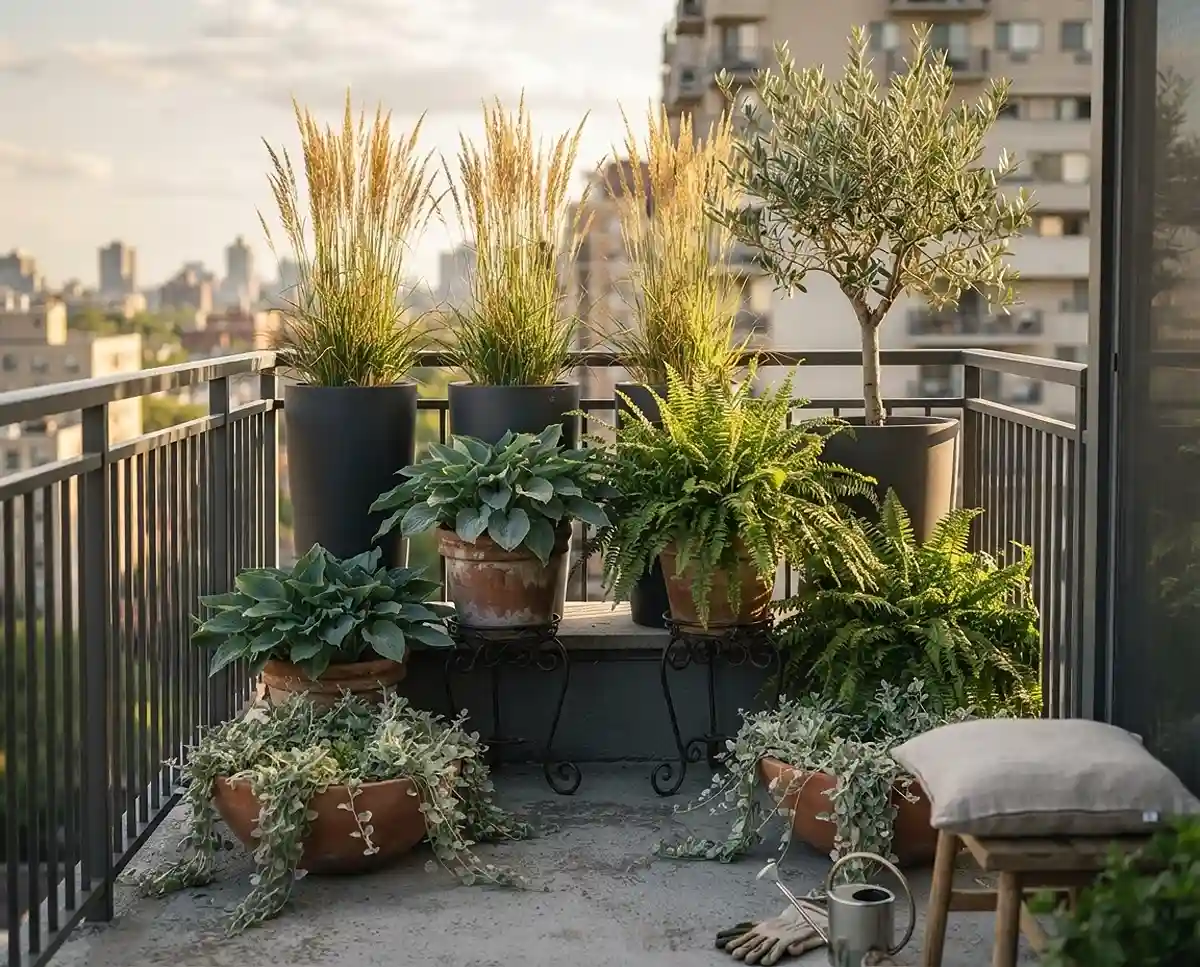
Layered balcony planters turn a cluttered small balcony garden into a lush, magazine-worthy space using height, texture, and smart container choices.
Table of Contents
The Secret to Elegant Balcony Gardens: Layering Planters and Textures
I grow container plants on a west-facing balcony in Denver, zone 5b, and for years mine looked like a plant sale that lost an argument with a windstorm. Pots everywhere, no order, nothing worked.
The fix wasn’t buying prettier plants. It was layering: setting containers at different heights and mixing leaf textures so the eye moves through the space instead of tripping over it.
That’s the whole trick behind every elegant apartment balcony garden idea you’ve admired on Pinterest. Tall pots in back, medium ones stepped up on stands, low trailing bowls in front. Add contrasting foliage, and a ten-pot jumble reads as one intentional composition.
This guide walks through the planning, the containers, the plants, and the maintenance that keeps a layered small balcony garden looking sharp all season, not just on install day.
Planning Your Layered Balcony Layout and Microclimate
Before you buy a single pot, audit your space. A layered design only works if it’s safe to walk around, structurally sound for your building, and matched to how sun and wind actually move across your specific balcony.
Skip this step and you’ll end up rearranging heavy, soil-filled containers twice, which I’ve done, and it is not fun on a 90-degree July afternoon.
Measuring Floor Space and Vertical Clearances
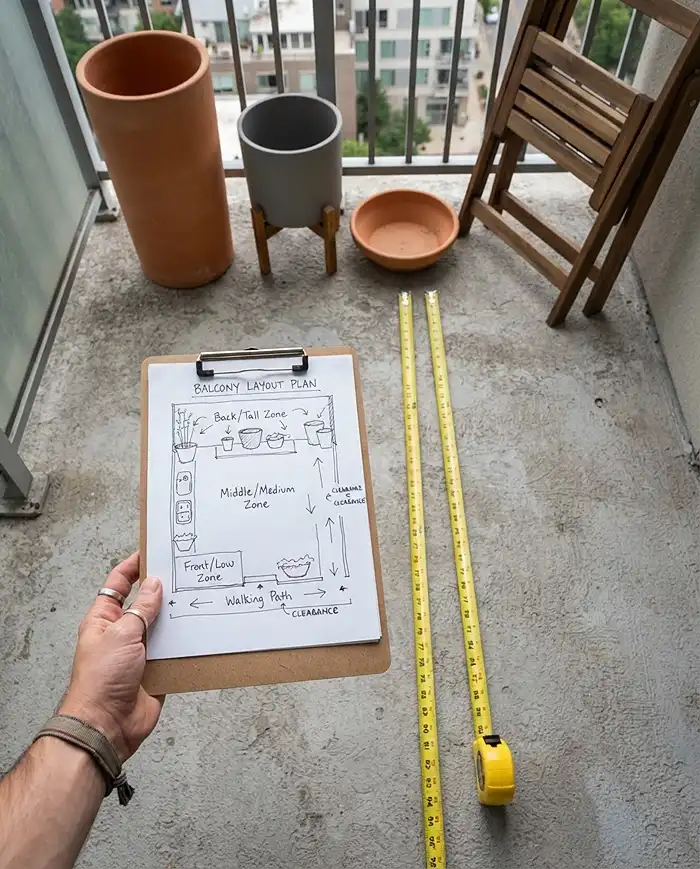
Grab a tape measure and record your usable floor footprint, not the whole balcony. Subtract room for a chair, a door swing, and at least 24 inches of clear walking path.
Then look up. Note your railing height, any overhead sightlines from windows above, and where a 5-foot background plant would start blocking a view or a neighbor’s light.
Sketch three zones on paper: foreground (0 to 12 inches tall), middle ground (12 to 30 inches), and background (30 inches and up). This three-zone map is the backbone of every layered design.
Auditing Sunlight and Wind Exposure for Multi-Level Growth
Track your balcony’s light for a full day if you can, morning, noon, and evening. Elevated background pots on plant stands sit closer to reflected heat off walls and dry out noticeably faster than floor-level containers.
High-rise wind is the other sneaky variable. Above the third floor, gusts increase, and tall, top-heavy pots can act like sails. Check your USDA Plant Hardiness Zone map too, since exposed balconies often run a half-zone colder than street level in winter.
Watch shadow patterns as the season shifts. A tall grass that casts no shade in April can plunge your front-row ferns into darkness by July.
Selecting the Right Planters for a Tiered Aesthetic
Your containers are the scaffolding of the whole look. Curate a small, cohesive set of planters, in a range of heights, rather than grabbing whatever’s on sale at the garden center.
Too many planter styles competing at once is the fastest way to make a small balcony garden feel busy instead of designed. Three heights and two materials is plenty.
Mixing Heights: Floor Pots, Plant Stands, and Railing Boxes
Anchor the back row with tall column planters, 24 to 36 inches, that hold your structural plants without a stand. These need to be your heaviest, most stable pieces since they take the most wind.
Middle ground comes from wrought-iron or wooden plant stands, typically 12 to 18 inches, holding standard 10- to 14-inch nursery pots. This is where I lost a stand to a July storm my first year; now every stand gets zip-tied to the railing.
Finish the front row with low bowls, window boxes, or railing planters under 10 inches tall, right where your trailing plants can spill toward the floor.
Harmonizing Materials: Terracotta, Fiberglass, and Metal
Pick one or two materials and stick with them across the whole balcony. My own layout pairs matte charcoal fiberglass in the background with aged, unglazed terracotta up front.
That restraint is what makes a mixed-height display read as elegant instead of a garage sale. The plants get to be the visual interest; the pots stay quiet.
| Layer | Height Range | Best Material | Watch Out For |
|---|---|---|---|
| Background | 24 to 36 in | Fiberglass, glazed ceramic | Needs the most weight for wind stability |
| Middle | 12 to 18 in (on stand) | Terracotta, matte metal | Dries out fastest; check daily in summer |
| Foreground | Under 10 in | Terracotta, railing boxes | Catches drip from tiers above |
Curating Elegant Plant Textures for Depth and Contrast
The real design principle borrowed from landscape architecture isn’t color, it’s texture. Contrasting spiky, broad, and trailing foliage does more for a sense of depth than any number of bright flowers.
Think of it as three jobs: something that draws the eye up, something that fills the middle with weight, and something that softens every hard edge.
Structural Thrillers: Tall Grasses and Dwarf Trees
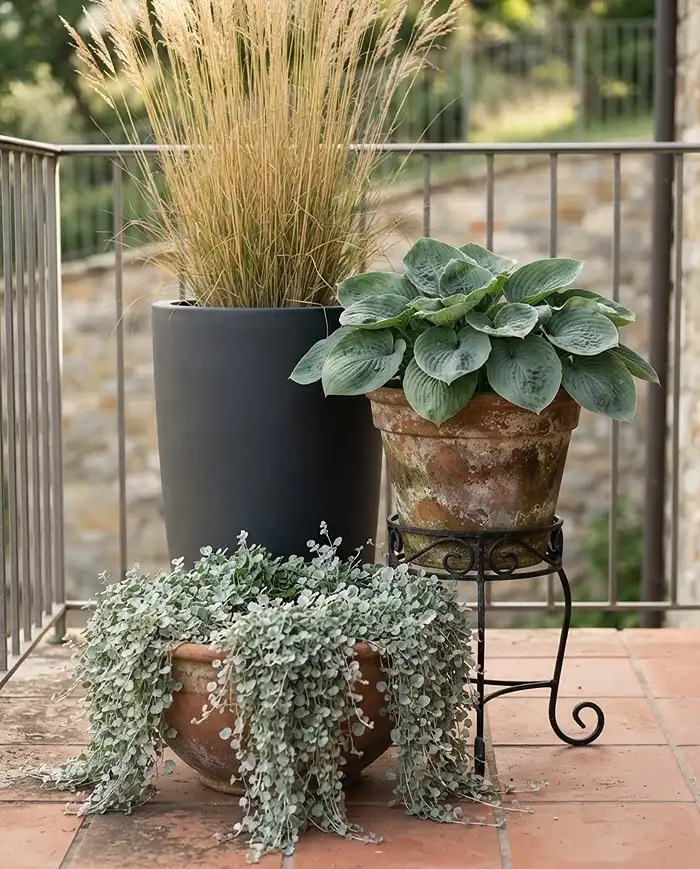
Fine, upright texture in the background gives your whole balcony garden a permanent skeleton. ‘Karl Foerster’ feather reed grass is my go-to; it holds its vertical form through wind and rain without flopping.
A dwarf olive tree or a Japanese maple like ‘Bloodgood’ works the same way in a bigger container, and both tolerate the drier conditions that come with elevated, wind-exposed spots.
These are your thrillers, the pieces that make people look up before they notice anything else on the balcony.
Softening Fillers: Broad-Leaf Tropicals and Ferns
Middle-layer plants need visual weight to bridge fine grasses above and delicate trailers below. Broad, glossy leaves do that job better than more flowers ever could.
- Hostas like ‘Blue Angel’ for cool, matte blue-green mass in part shade
- Caladiums for bold, patterned leaves in a hot, humid summer spot
- Boston ferns for a dense, arching texture that softens straight planter edges
I lost my first round of Caladiums to a cold snap in early May, zone 5b gardeners, don’t rush them outside before nights hold steady above 60°F.
Cascading Spillers: Trailing Vines and Creeping Flowers
Foreground containers exist to spill. This is what breaks up the hard, straight lines of concrete flooring and boxy planters.
- Silver Falls Dichondra for fast, silvery trails that can hit 3 feet by midsummer
- Creeping wire vine for a tighter, more structured cascade
- Trailing ivy for reliable, low-maintenance year-round green
Give spillers their own bowl rather than crowding them into a mixed pot with upright plants; they’ll drape further and look far more deliberate.
Step-by-Step Guide to Assembling Your Layered Display
Order matters here. Doing this out of sequence is exactly how I ended up dragging a full 30-inch fiberglass pot across the balcony twice in one afternoon.
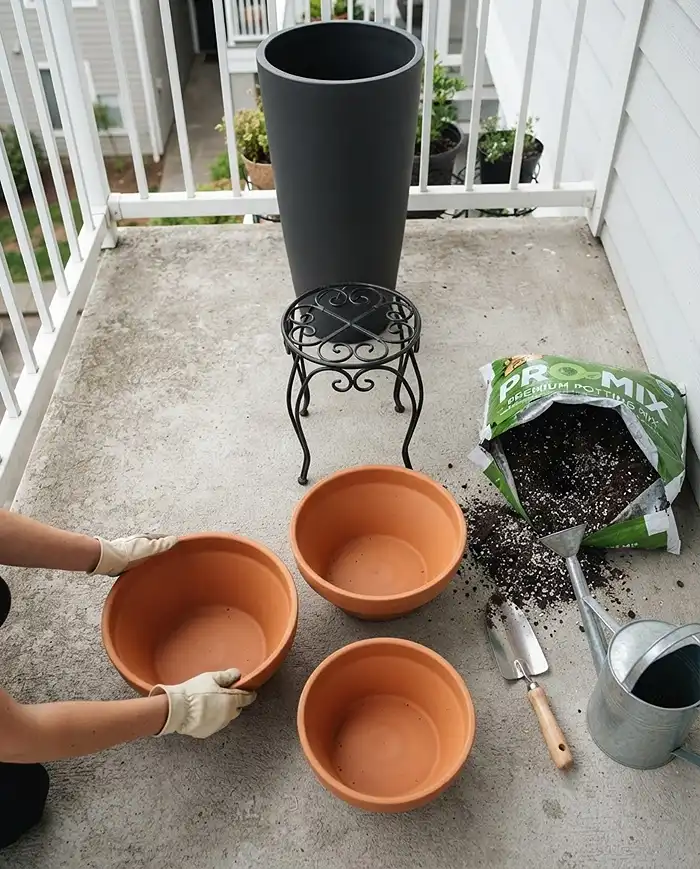
- Place empty background pots and plant stands first, while they’re light enough to shift and adjust for spacing and sightlines
- Fill containers with a lightweight, perlite-rich potting mix, never garden soil, which compacts and drowns roots in containers
- Plant structural thrillers in the background pots and let them settle for a day before moving on
- Add middle-layer fillers on the stands, then foreground spillers in the low bowls
- Pack plants closer than the tag suggests for instant fullness; container gardens can handle tighter spacing than in-ground beds
For more layout inspiration matched to your square footage, this guide on apartment balcony garden ideas is worth a look before you buy pots.
Seasonal Maintenance for Layered Balcony Gardens
A tightly packed, multi-level display needs a slightly different maintenance rhythm than a few scattered pots. The goal is keeping every tier healthy without turning your balcony floor into a muddy mess.
Targeted Watering Strategies for Tiered Planters
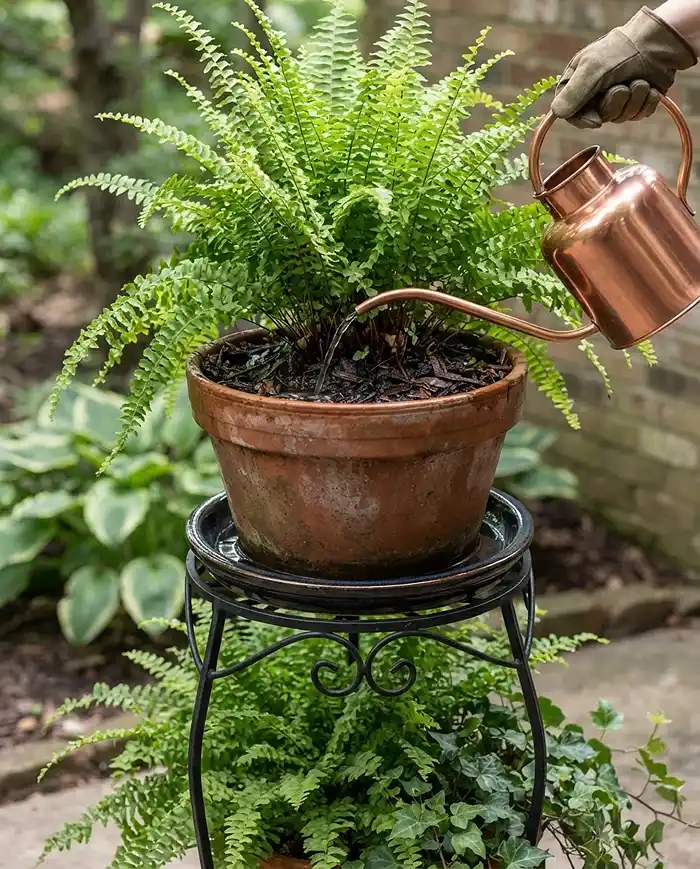
A long-spout indoor watering can is non-negotiable once you’ve got plants on stands above head-height access. It lets you hit the soil directly instead of soaking foliage on the tier below.
Fit every elevated pot with a snug, glazed drip tray. Without one, runoff from a background planter stains the terracotta and concrete underneath it, and mine did exactly that the first summer.
Water background and middle tiers first, since they dry fastest, then finish with foreground bowls last. As seasons shift, this guide to late-summer balcony garden ideas covers how watering needs change as temperatures climb.
Aesthetic Pruning to Maintain Distinct Textural Layers
Vigorous spillers like Dichondra will happily climb into the middle tier if you let them. Pinch back any runner that starts reaching upward instead of down.
On background shrubs and grasses, remove crossing or inward-growing branches so the silhouette stays clean. This is less about plant health and more about keeping each layer visually distinct.
Do a five-minute edit pass weekly. Skip it for a month and your three clean tiers blur into one tangled mass, which is the single fastest way to lose the elegant look.
Common Problems and Solutions
Two issues account for most layered balcony failures: plants going pale from lack of light, and a design that just feels cluttered instead of curated.
Sun-Blocking and Etiolation in Lower Layers
When a background plant grows faster than expected, it can throw the entire foreground into shade. Foreground plants respond by stretching toward light and losing color, a stress response called etiolation.
Rotate pots a quarter turn weekly so no single plant faces away from the sun for too long, and confirm your whole tiered arrangement faces your main light source, not sideways to it.
If a plant’s already stretched and pale, move it up a tier temporarily rather than pruning hard right away; let it recover in better light first.
Clashing Aesthetics and Visual Clutter
If your balcony feels messy rather than elegant, the fix is usually subtraction, not addition. Start by pulling every plastic nursery pot out of view.
Limit your entire palette to three colors, green, white, and terracotta is a reliable formula, and group any small leftover pots onto a single unified tray instead of scattering them.
Renters juggling temporary setups may find this roundup of balcony garden ideas for renters useful for lightweight, non-damaging ways to tidy up a tiered display.
layered balcony planters FAQs
How do I layer planters on a very narrow balcony?
Use the railing and walls for your mid and background layers with saddle planters and wall-mounted sconces, keeping the floor free for one or two tall, narrow column planters tucked into the corners.
What is the best color palette for an elegant balcony garden?
A monochromatic white-and-green palette, favored in high-end landscape design, instantly makes a small balcony garden feel serene and expensive by leaning on varied foliage shades and crisp white blooms.
Do tiered plant stands need to be secured to the balcony?
Yes. Secure any tall or top-heavy metal plant stand to the railing with heavy-duty, UV-resistant zip ties, since high-rise crosswinds can topple an unsecured, leaf-heavy stand during a summer storm.
How many layers should a small balcony garden have?
Three layers, background, middle, and foreground, is the sweet spot for most apartment balconies. More than that on a limited footprint usually starts to feel cluttered rather than intentional.
What is the fastest way to make container plants look full right away?
Plant closer together than the nursery tag recommends. Containers can handle tighter spacing than garden beds, and dense planting gives you an instant, lush look instead of waiting a full season to fill in.
Conclusion
Layered balcony planters aren’t about buying more plants, they’re about arranging what you have with intention. Height, material restraint, and textural contrast do the heavy lifting.
Start with three zones, pick a tight material palette, and layer thrillers, fillers, and spillers from back to front. Small adjustments each week keep the look sharp all season.
Whatever balcony garden ideas you’re drawing inspiration from, the layering principle scales down to even the smallest apartment footprint.
Key Takeaways
- Layered balcony planters rely on three height zones: background, middle, and foreground
- A restrained material and color palette, two materials, three colors, keeps a tiered display looking elegant instead of cluttered
- Pair fine-textured thrillers with broad-leaf fillers and trailing spillers for real visual depth
- Secure elevated plant stands to the railing and use drip trays to prevent water staining lower tiers
- Weekly rotation and pruning keep each layer visually distinct as the season progresses