
Hydrozoning Balcony Plants: Group Pots by Water Needs
Hydrozoning balcony plants means grouping pots by water needs instead of looks. It’s the one change that saved my small balcony garden from root rot and crispy basil.
Table of Contents
Understanding Hydrozoning for Balcony Gardens
Landscapers have used hydrozoning for decades on full-size properties, clustering thirsty lawns away from drought-tolerant beds so irrigation lines don’t fight each other. The same logic shrinks down perfectly for a balcony.
I grow container tomatoes, rosemary, and a stubborn fern on a south-facing balcony in zone 6b, and for two summers I watered everything on the same schedule. The fern rotted. The rosemary got leggy from too much moisture. Once I split pots into water-need groups, I stopped guessing and started saving actual water.
Hydrozoning also protects your time. Instead of testing soil in twelve separate pots every morning, you check three zones. That’s the real payoff for anyone doing small space gardening on a tight schedule.
Auditing Your Balcony’s Microclimates
Before you move a single pot, walk your balcony at three different times of day. A plant’s actual thirst depends less on the species tag and more on wind, sun, and heat radiating off nearby surfaces.
Mapping Wind Corridors and Evaporation Rates
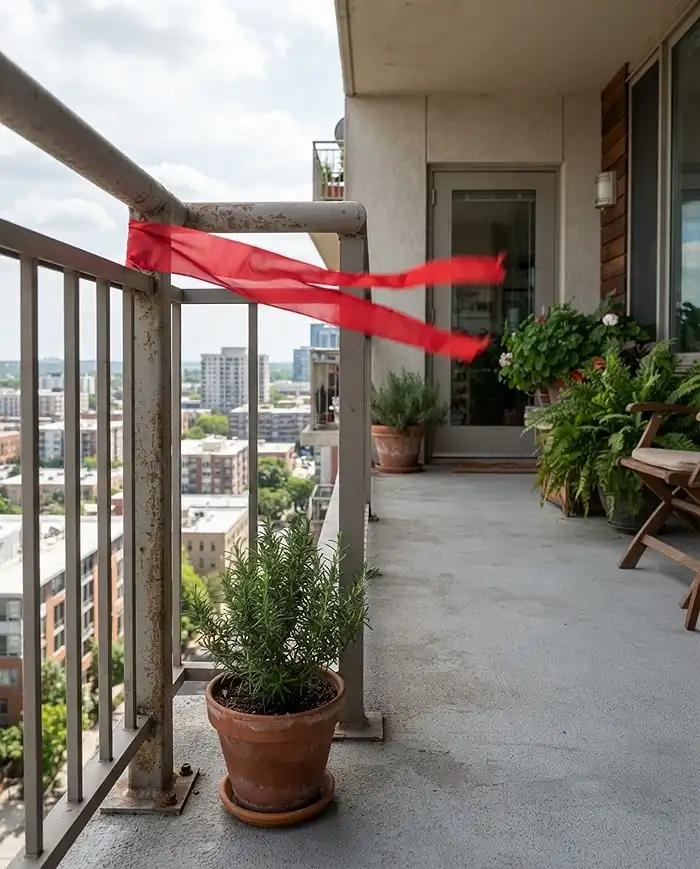
Outer railings and open corners are almost always your windiest spots. Moving air pulls moisture out of potting mix fast, sometimes drying a 6-inch pot in half the time of a sheltered one just three feet away.
On my own balcony, the railing edge dries out roughly twice as fast as the wall-side corner in July. I learned this the hard way after losing a tray of seedlings that looked shaded but sat in a constant crosswind.
Pro Tip: Tie a strip of ribbon to your railing for a day. If it’s moving more than occasionally, that spot belongs to your drought-tolerant plants, not your thirsty ones.
Tracking Sun Exposure and Heat Traps
Brick, glass, and dark railings absorb heat and radiate it back for hours after direct sun leaves. A pot sitting against a sun-warmed brick wall can run 10 to 15 degrees hotter than one just a few feet out.
Watch your balcony from 10 a.m. to 4 p.m. for a few days. Note which spots get full sun, which get dappled light, and which stay in shade. Match your heaviest drinkers to spots with steady light but away from radiant heat traps.
Defining Your Container Watering Zones
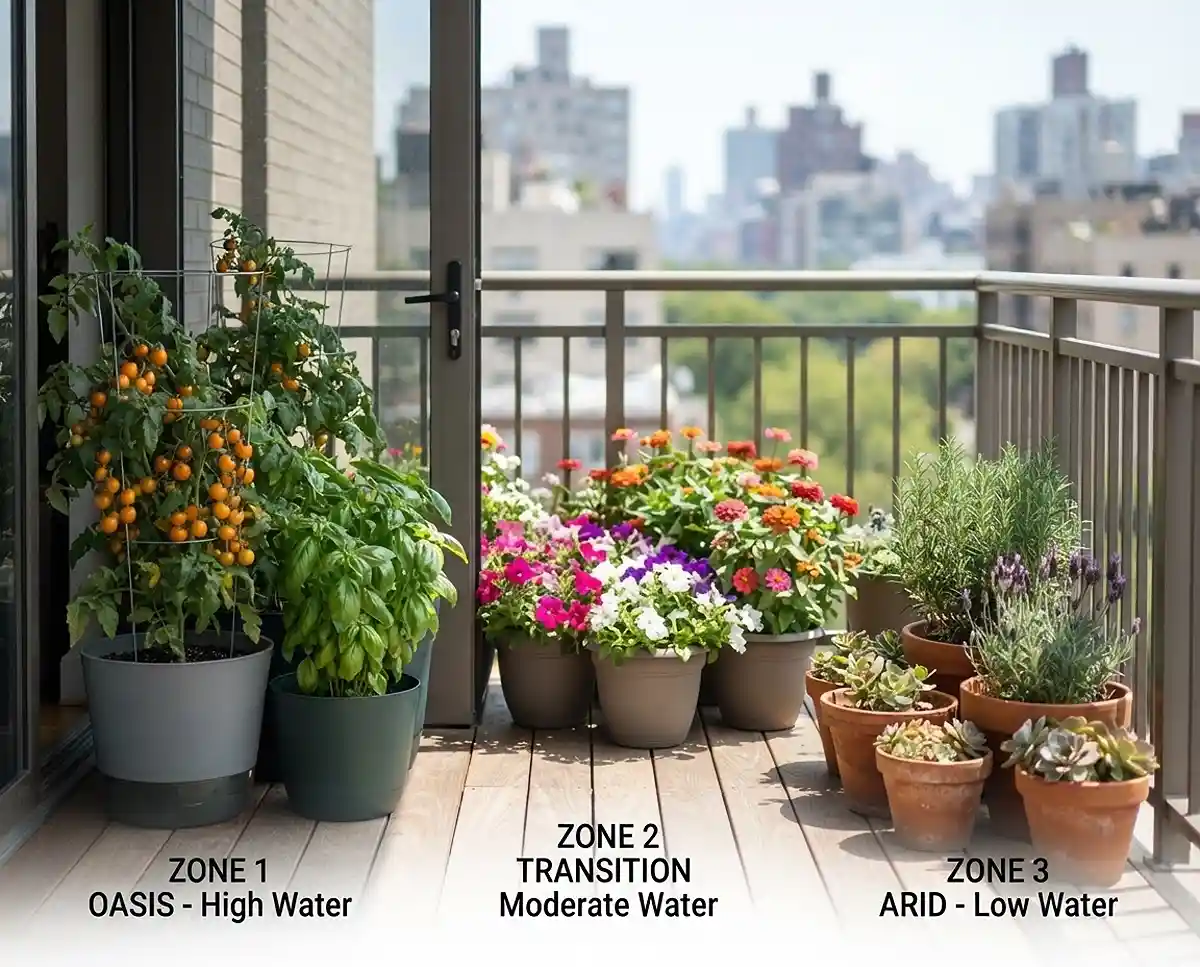
Once you know your microclimates, sort every plant you own (or plan to buy) into one of three tiers. This structural layout is the backbone of hydrozoning balcony plants, and it works whether you have five pots or fifty.
The Oasis Zone: High-Water Edibles and Tropicals
Quick Answer: The Oasis Zone holds daily-watering plants like tomatoes, cucumbers, basil, and ferns. Place this group closest to your door or spigot since you’ll visit it every single day.
These plants have large leaves and shallow, active roots that pull moisture fast. A ‘Sun Gold’ cherry tomato in an 18-inch pot can drink a full quart of water on a 90-degree afternoon.
- Tomatoes and cucumbers in containers 16 inches or larger
- Basil, mint, and parsley, which wilt within hours of drying out
- Ferns and other tropicals that want consistently damp, never soggy, soil
Real Example: My ‘Genovese’ basil in a 10-inch terracotta pot needed water twice a day in August. Moving it into the Oasis Zone next to a resin self-watering planter fixed the problem overnight.
The Transition Zone: Moderate-Water Ornamentals
Quick Answer: The Transition Zone covers plants you water only when the top inch of soil is dry, roughly every 2 to 4 days in summer. This is usually your largest group.
Standard annuals, most root vegetables, and many perennials fall here. Place this zone in the center of your balcony, where light and wind are balanced instead of extreme.
| Plant | Watering Trigger | Notes |
|---|---|---|
| Petunias | Top inch dry | Deadhead (remove spent blooms) weekly for more flowers |
| Zinnias | Top inch dry | Tolerates brief missed waterings |
| Carrots, radishes | Top inch dry | Uneven watering causes split roots |
This tier answers the common question of how often to water container plants: most moderate-water ornamentals want checking every other day, not a rigid daily habit.
The Arid Zone: Low-Water Succulents and Mediterranean Herbs
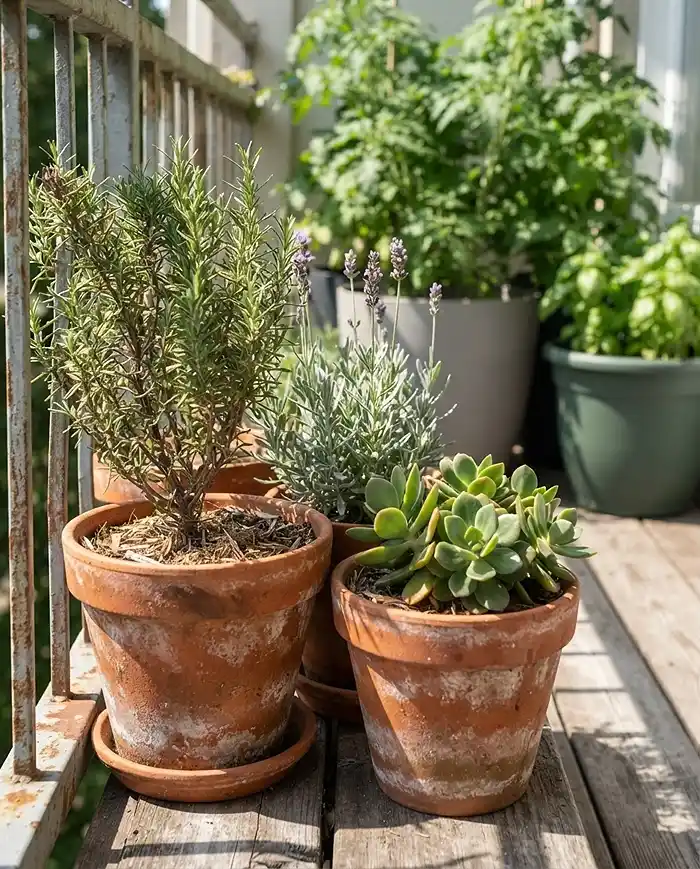
Quick Answer: The Arid Zone is for rosemary, lavender, sedum, and agave. Water only when the soil is completely dry, often just once every 10 to 14 days.
These plants evolved in rocky, fast-draining ground, and constant moisture kills them faster than neglect ever will. Group them together at the hottest, windiest perimeter spots.
- Rosemary and lavender, which rot quickly in damp soil
- Sedum and other stonecrops, ideal for tiny garden ideas on a bright railing
- Agave and other succulents needing full sun and sharp drainage
Real Example: I once kept rosemary next to my basil out of habit. It turned brown and dropped needles within three weeks. Moving it 4 feet to the railing, away from the daily watering can, brought it back within a month.
Choosing the Right Pot Materials for Each Zone
Hydrozoning isn’t only about where a pot sits. The material it’s made from either helps or fights your watering plan, so match container to zone deliberately.
Terracotta for the Arid Zone
Quick Answer: Use unglazed terracotta for every Arid Zone plant. The porous clay wicks moisture out through its walls, which is exactly what drought-tolerant roots need.
Glazed or plastic pots trap moisture against the roots, and for rosemary or lavender that trapped moisture is often what triggers fungal rot. Unglazed clay dries evenly from the sides as well as the top, so even if you’re inconsistent with watering, the soil rarely stays soggy long enough to cause harm.
Resin and Self-Watering Pots for the Oasis Zone
Quick Answer: Glazed ceramic, insulated resin, or self-watering pots belong in the Oasis Zone. They hold moisture longer, cutting daily watering chores in peak summer.
A self-watering resin planter with a built-in reservoir can stretch a tomato’s watering interval from once a day to once every two or three days. For anyone managing a small balcony garden solo through a heat wave, that difference matters.
Step-by-Step Guide to Arranging Your Watering Zones
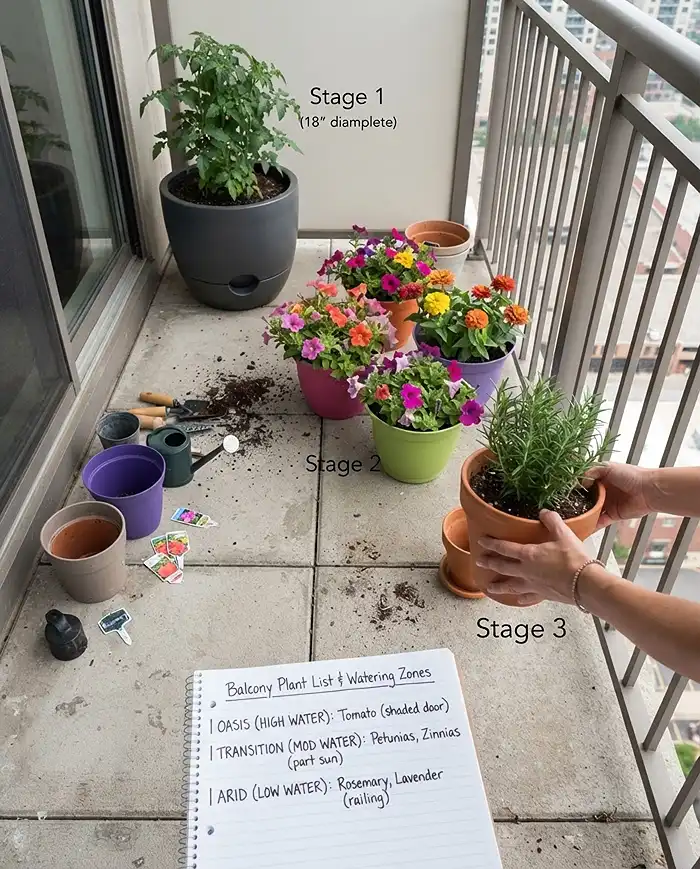
- List every plant on paper and sort each one into Oasis, Transition, or Arid based on the sections above.
- Place heavy self-watering or ceramic pots from the Oasis Zone closest to your door or water source first.
- Arrange Transition Zone pots in a loose semi-circle around the center, where sun and wind are moderate.
- Move lightweight terracotta Arid Zone pots to the outer railing, where wind and heat are strongest.
- Walk the layout for a week and adjust any pot that’s drying faster or slower than its neighbors.
Smart Irrigation Tools and Maintenance for Zoned Pots
Once your zones exist physically, you can automate around them instead of hand-watering every pot from a can each morning.
Setting Up a Zoned Micro-Drip Irrigation System
A battery-operated micro-drip kit with adjustable emitter heads lets you dial up flow for the Oasis Zone and restrict it to a slow trickle for the Arid Zone, all from one timer. Most kits run $40 to $80 as of 2026 and install in under an hour.
Run separate drip lines per zone rather than one line for the whole balcony. That way a timer change for tomatoes never accidentally drowns your rosemary.
Seasonal Adjustments for Changing Evaporation Rates
As summer heat fades into fall, your three zones start to blur. By the time nighttime temperatures drop into the 40s, nearly everything, even Oasis Zone plants, shifts toward Arid Zone watering frequency.
Check soil moisture weekly through fall instead of daily, and dial your drip timer down zone by zone as growth slows. Come winter, dormant perennials in every zone often need water only every few weeks.
Common Problems and Solutions
Even a well-planned layout runs into snags. Here are the two mistakes I see (and have made) most often.
Conflicting Water Needs in Mixed Planters
Planting mint and rosemary in the same container is a classic fatal error. Mint wants constant moisture; rosemary wants to dry out completely. Within weeks, one plant is always struggling.
If you spot this in an existing planter, act fast. Gently remove both plants, rinse the roots, and repot them separately into their correct zone’s container and soil mix before root rot sets in on the drought-tolerant one.
Hydrophobic Soil in the Arid Zone
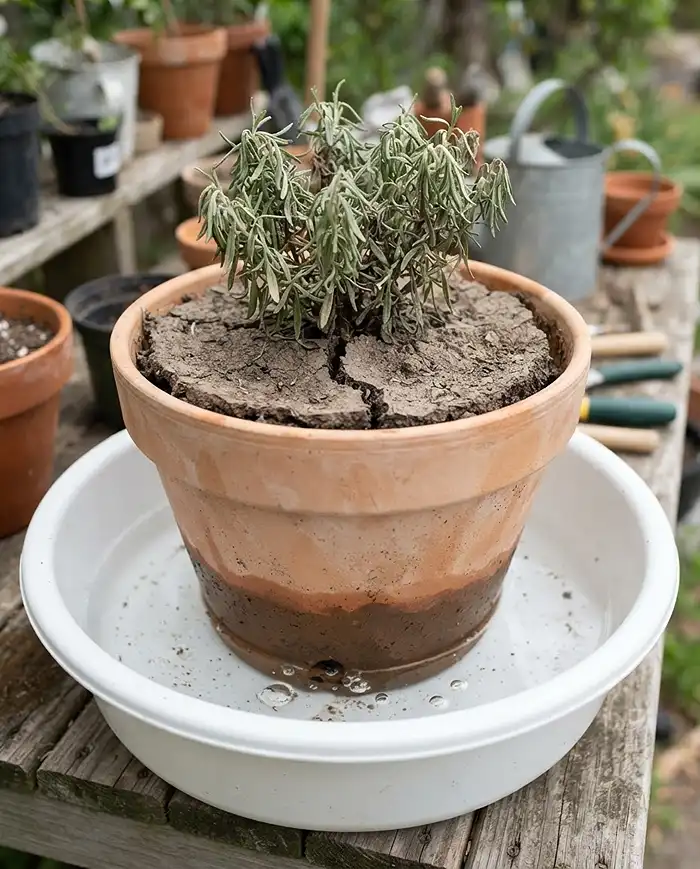
Neglected Arid Zone pots sometimes develop hydrophobic soil, where water runs straight down the inside of the pot and out the drainage hole without soaking in at all.
Fix it with a bottom-soak: set the whole pot in a basin of water for 30 minutes so the dried-out peat moss can rehydrate from below. Let it drain fully before returning it to the railing.
Frequently Asked Questions
Can I place my high-water zone in full sun?
Yes. High-water crops like tomatoes need full sun to fruit well. Hydrozoning simply groups them with self-watering or moisture-retentive containers so they can handle the faster evaporation that comes with strong sun.
How does pot size affect my watering zones?
Small pots dry out much faster than large ones. A high-water plant in a 4-inch pot may need watering twice a day in summer, so keep small containers in the shadiest part of their zone to slow evaporation.
Do I group plants by watering frequency or soil moisture preference?
Group by soil moisture preference, not a fixed schedule. Whether a plant wants consistently damp, moderately moist, or fully dry soil naturally determines how often you’ll water that whole group.
How many watering zones does a small balcony actually need?
Three zones, Oasis, Transition, and Arid, cover nearly every balcony plant. Adding more zones usually just splits the Transition group without changing your daily routine.
Can I hydrozone a balcony with only a few pots?
Yes. Even five pots benefit from separating the one thirsty tomato from the drought-tolerant lavender next to it. Hydrozoning scales down to tiny garden ideas just as well as it scales up.
Conclusion
Hydrozoning balcony plants turns a chaotic watering routine into three simple checks a week instead of twelve daily guesses. Start with an honest microclimate audit, then let that map decide where each pot lives.
Once your zones are set, the pot material and irrigation setup do most of the remaining work. For more on grouping strategy, see our guide to grouping plants by water needs.
If you’re just starting out, our rundown of apartment gardening mistakes for beginners pairs well with this layout. You can also browse our apartment gardening tips for beginners for setup basics.
For research-backed watering fundamentals, the University of Maryland Extension guide to container vegetables is a solid outside reference.
Key Takeaways
- Hydrozoning balcony plants means grouping pots by moisture needs, not by species or appearance alone.
- Audit wind, sun, and heat traps before moving a single container.
- Sort plants into Oasis, Transition, and Arid zones, then match pot material to each zone.
- Zoned micro-drip irrigation and seasonal check-ins keep a small balcony garden thriving with far less daily effort.