

Best Balcony Plants by Sun Direction
Picking the best balcony plants by sun direction is the single fix that stops container gardens from dying. I’ve killed enough basil on the wrong balcony to know.
Table of Contents
Cracking the Code: Why Sun Direction Dictates Balcony Success
Sunlight is the one variable you can’t fake in a small balcony garden. You can fix soil, fertilizer, and watering mistakes. You can’t fix a sun-loving tomato stuck in three hours of shade.
I garden on a 6-foot by 3-foot balcony in USDA zone 6b, and my first year I lost four pepper plants before I figured out my “sunny” spot was actually east-facing with just 4 hours of direct light. Matching plant genetics to your exact compass direction is the only guaranteed way to stop wasting money on plants that were never going to make it in the first place.
How to Accurately Determine Your Balcony’s Sun Exposure
Quick Answer: Use your phone’s compass app to find true north, then track how many hours of direct (not just bright) light your balcony floor gets over a full day. Guessing by eye almost always overestimates light, since your eyes adjust to shade far better than a leaf can.
Using Smartphone Compasses and Sun-Tracking Apps
Stand with your back flat against the apartment wall, facing out over the railing. Open your phone’s built-in compass app and note the direction the needle points — that’s your balcony’s true orientation.
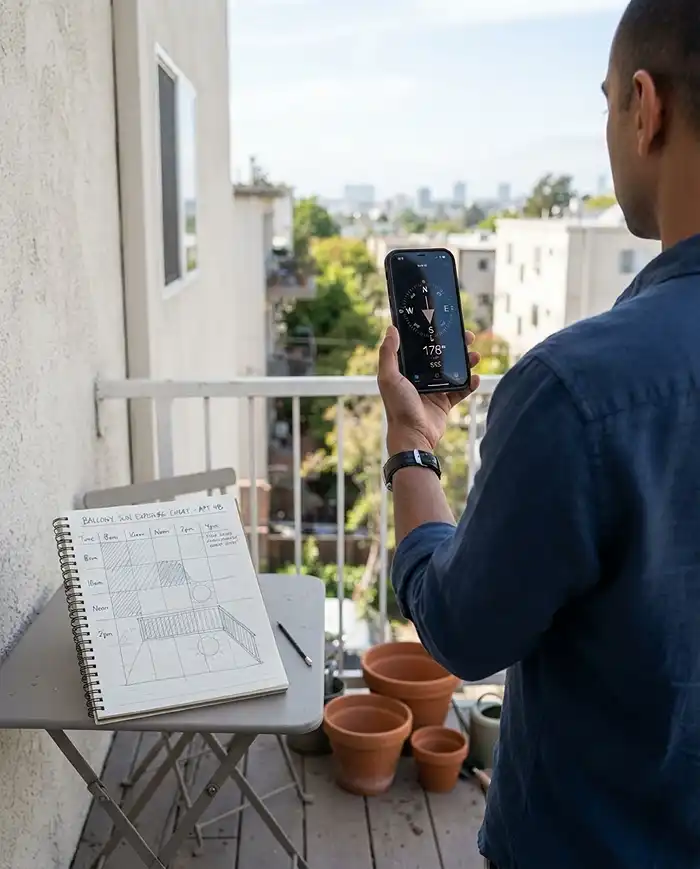
For a deeper read on how the sun moves across your specific spot through the seasons, an app like Suncalc overlays a sun path directly onto a map of your building. I use it every spring to double-check whether my “south-facing” balcony is still getting full sun after the neighbor’s tree leafed out.
Creating a Daily Shadow Chart
Pick one clear weekend and check your balcony every two hours, from 8 a.m. to 6 p.m. Write down whether the floor is in full sun, dappled shade, or full shade at each check.
- 8 a.m., 10 a.m., 12 p.m., 2 p.m., 4 p.m., 6 p.m. — six checkpoints is enough
- Note when overhangs, railings, or neighboring high-rises start casting shadows
- Repeat once in early summer, since sun angles shift noticeably by June
This chart is more reliable than any compass reading alone, because it accounts for the actual obstructions around your building, not just theoretical direction.
The South-Facing Balcony: High Heat and Full Sun
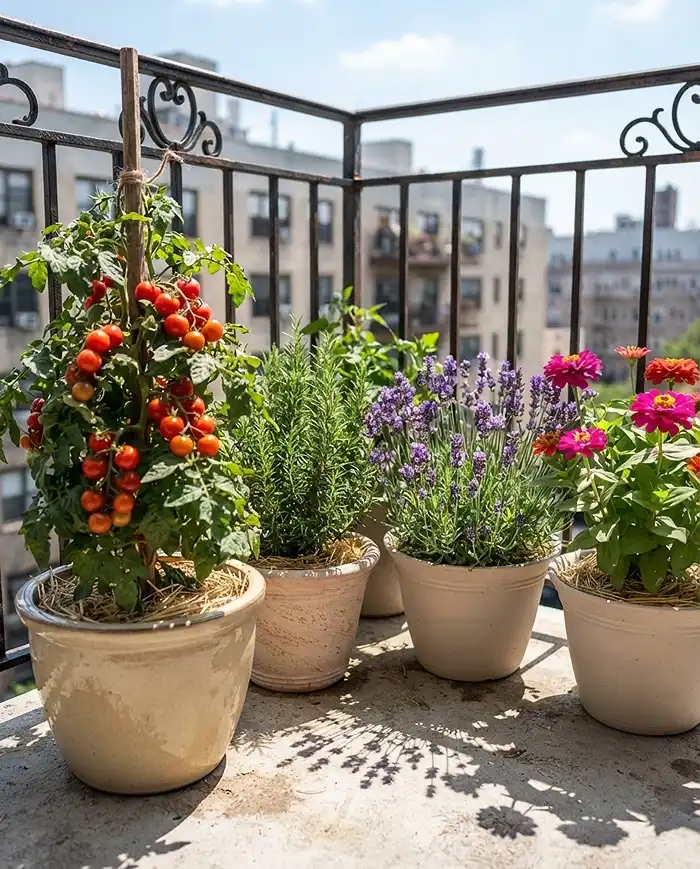
Quick Answer: South-facing balconies get 6 to 8+ hours of intense, direct sunlight and run hot. Plants here need serious heat tolerance and soil that won’t dry out by 2 p.m.
This is the most punishing exposure and also the most productive, if you pick the right plants and keep water consistent.
Best Plants for South-Facing Balconies
| Plant | Best For | Watch Out For |
|---|---|---|
| Rosemary, thyme, lavender | Mediterranean herbs, low water needs | Root rot if soil stays wet |
| Cherry tomatoes (‘Sun Gold’) | Reliable summer fruit in containers | Needs daily watering above 85°F |
| Peppers (bell, jalapeño) | Heat-loving fruiting crops | Blossom drop above 95°F |
| Portulaca, zinnias | Drought-tolerant, nonstop color | Leggy stems if underwatered too long |
| Bougainvillea | Vertical color, thrives on neglect | Not frost-hardy below zone 9 |
Essential Gear: Large Pots and Moisture Control
Go big on containers here. Small pots on a south balcony can dry out in a single afternoon once temperatures climb past 85°F.
- Light-colored resin or insulated fiberglass planters, 16 inches or wider, to buffer root temperature
- Mix in coco coir at 20-30% of your potting volume to hold moisture longer
- Top every pot with 2 inches of organic mulch to slow evaporation
Pro Tip: Group pots close together on a south balcony — the shared shade and humidity between containers noticeably cuts down how fast they dry out.
The North-Facing Balcony: Cool Shade and Ambient Light
Quick Answer: North-facing balconies get no direct sun, just cool, indirect light all day. You can’t grow fruiting vegetables here, but it’s ideal for lush, shade-loving foliage.
Don’t think of this as a losing hand. A north balcony is genuinely the easiest exposure to keep alive, once you accept what it can’t do.
Best Plants for North-Facing Balconies
- Hostas — reliable, textured foliage that never asks for direct sun
- Boston ferns — thrive in the humidity a shaded balcony naturally holds
- Astilbe — feathery blooms that scorch in full sun but love ambient light
- Tuberous begonias — showy flowers without any direct-light requirement
- Spinach, arugula, mint — leafy edibles that actually prefer this cooler exposure
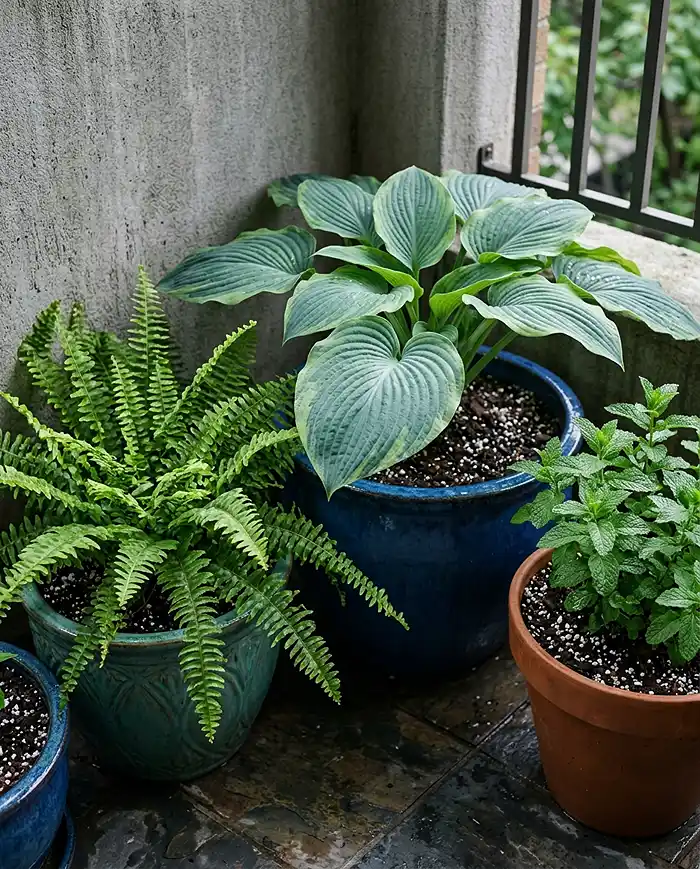
My north-facing spot is where my mint has lived undisturbed for three years — I’ve never once had to worry about it scorching or drying out.
Essential Gear: Fast-Draining Soil and Wind Protection
The biggest killer on a north balcony isn’t lack of light — it’s root rot from soil that never dries out. Amend your potting mix with 30% perlite to keep drainage fast.
Standard garden topsoil holds water far too long in low-evaporation conditions and will suffocate roots within weeks. Stick to a light, well-draining mix built for containers, not garden beds.
The East-Facing Balcony: Gentle Morning Sun
Quick Answer: East-facing balconies get cool, direct morning sun and shade once afternoon heat peaks. It’s the most forgiving exposure for beginners.
This is the balcony I’d recommend to anyone new to small space gardening — the light is strong enough to grow real flowers and vegetables, but gentle enough to forgive a missed watering.
Best Plants for East-Facing Balconies
| Plant | Best For | Watch Out For |
|---|---|---|
| Fuchsias | Hanging baskets, cool-morning color | Wilts fast if afternoon sun sneaks in |
| Impatiens | Continuous shade-tolerant blooms | Needs consistent moisture |
| Hydrangeas (dwarf varieties) | Big color payoff in a container | Large pots needed as they mature |
| Sugar snap peas | Cool-season edible, quick harvest | Bolts if summer heat arrives early |
| Radishes, cilantro | Fast-growing, forgiving edibles | Cilantro bolts fast once it’s warm |
Pro Tip: If your east balcony gets even an hour of hot afternoon sun bouncing off a nearby wall, move fuchsias and impatiens to the shadiest corner — they scorch faster than almost anything else on this list.
The West-Facing Balcony: Sizzling Afternoon Rays
Quick Answer: West-facing balconies stay shaded all morning, then get hit with intense, magnifying afternoon sun during the hottest part of the day. It’s the trickiest exposure to plant for.
The temperature swing here is brutal — plants sit cool and calm until 1 p.m., then get blasted for the next five hours. Choose for the extreme, not the average.
Best Plants for West-Facing Balconies
- Agaves — built for exactly this kind of thermal shock, structural and low-maintenance
- Lantana — trailing color that shrugs off intense afternoon heat
- Zonal geraniums (Pelargonium) — tough, reliable bloomers in punishing light
- Ornamental grasses (blue fescue, feather reed grass) — deep roots handle rapid drying
I moved a west-facing tray of impatiens once, thinking “more sun is just more sun.” They were crispy by 3 p.m. the same day. Lesson learned: west sun isn’t just intense, it’s fast.
Seasonal Adjustments and Maintenance Strategies
Sun exposure isn’t static — it shifts as the seasons change, even though your balcony’s compass direction never does. A spot that’s brutal in July can be gentle by October.
Adjusting Watering Routines by Orientation
| Orientation | Peak Summer Watering | Fall/Winter Watering |
|---|---|---|
| South | Daily deep-soak, sometimes twice on 90°F+ days | Every 2-3 days |
| West | Daily, focused before the afternoon heat hits | Every 3-4 days |
| East | Every 1-2 days | Every 5-7 days |
| North | Strict finger-test, roughly every 7-10 days | Every 10-14 days |
The finger test just means pushing a finger 2 inches into the soil — if it’s dry at that depth, water; if not, wait. It’s more reliable than a fixed schedule, especially on shaded pots that hide moisture longer than they show it.
Common Problems and Solutions
Most balcony plant failures trace back to one root cause: a plant living on the wrong side of the building. Here’s how to catch it early.
Crispy Edges and Sun-Scorched Leaves
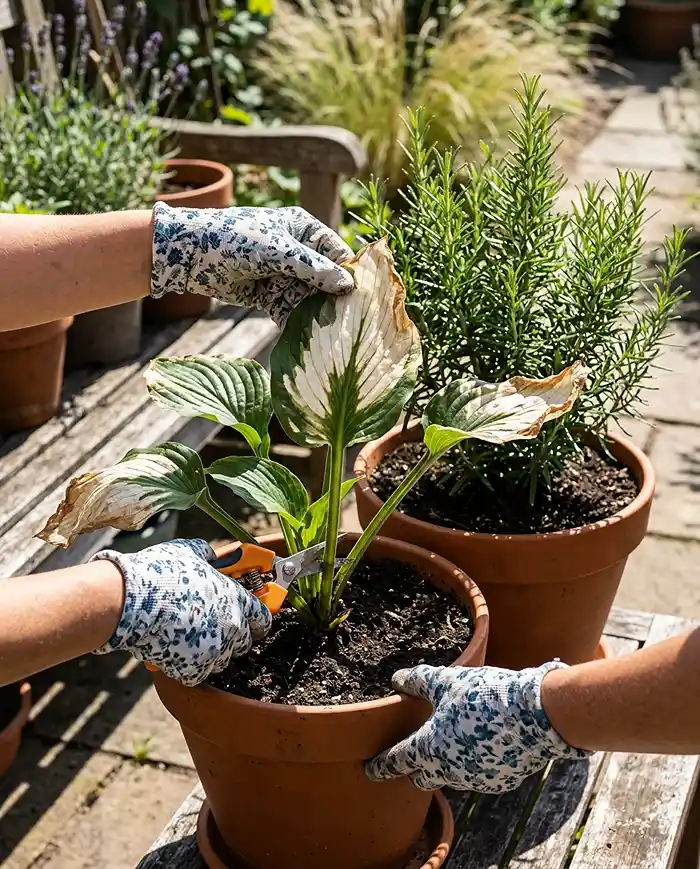
Sunburn shows up as bleached, papery-white patches on leaves, usually on a shade-loving plant that ended up on a south or west balcony by mistake.
The fix is immediate: prune the damaged leaves so the plant can redirect energy, then relocate the pot behind a taller, sun-tolerant plant that can act as a living shade screen.
Leggy Growth and Failure to Bloom
Etiolation — stretched, pale, weak stems reaching toward any light source — happens when sun-loving plants land on a north balcony without enough direct light to fuel normal growth.
There’s no fixing this in place. Swap the struggling plant for a shade-tolerant foliage variety and move the sun-lover to a brighter exposure, or accept it as an indoor windowsill plant instead.
If you’re just getting your small balcony garden off the ground, it helps to sidestep the setup mistakes that cause most of these problems in the first place — this rundown of common apartment gardening mistakes covers the ones I see most often. For a broader foundation, our guide to small space gardening for beginners is a solid next stop, and these apartment gardening tips round out the basics on soil, containers, and watering. For sun-hour guidance backed by horticultural research, the University of Maryland Extension’s container gardening guide is worth bookmarking too.
best balcony plants by sun direction FAQs
What if another tall building blocks my south-facing balcony?
If a neighboring high-rise fully blocks direct sunlight, your balcony functions as a north-facing environment biologically, regardless of its actual compass direction. Plant strictly shade-tolerant varieties in that case, not sun-lovers.
Does reflected light from glass buildings count as direct sun?
Reflected glare from glass or metal buildings raises ambient heat and can scorch delicate leaves, but it usually lacks the full light spectrum of true direct sun. Monitor plant growth closely and adjust watering and placement if you notice stress.
Can I use grow lights outside on a shady north-facing balcony?
No, avoid electrical grow lights outdoors due to serious electrocution risk from rain and humidity. Instead, choose shade-loving outdoor plants for the balcony and save sun-hungry herbs for a bright indoor windowsill.
How many hours of direct sun counts as full sun for balcony plants?
Full sun means 6 or more hours of direct, unobstructed sunlight daily. Partial sun is 3 to 6 hours, and shade is less than 3 hours of direct light.
Can I grow tomatoes on an east-facing balcony?
Yes, but stick to compact or cherry varieties, since east exposure typically provides 4 to 6 hours of morning sun rather than the full 8 hours larger tomatoes prefer. Expect a smaller harvest than a south-facing spot would produce.
Conclusion
The best balcony plants by sun direction all come down to one habit: track your light before you buy a single plant. A cheap compass app and a weekend of shadow-charting will save you more money than any fancy fertilizer.
Whether you’re working with a blazing south balcony or a cool north one, there’s a genuinely thriving small balcony garden waiting on the other side of matching your plants to your real light conditions, not your guess about them.
Key Takeaways
- Measure your balcony’s actual sun hours with a compass app and a two-hour shadow chart before choosing any plants
- South and west balconies need heat-tolerant, drought-resistant plants and fast-draining, well-mulched soil
- North and shaded east balconies favor foliage plants and cool-season greens over fruiting vegetables
- The best balcony plants by sun direction depend on your true exposure, not just your building’s compass orientation
- Adjust watering frequency seasonally — a south-facing pot in July needs daily water, the same pot in November needs far less