
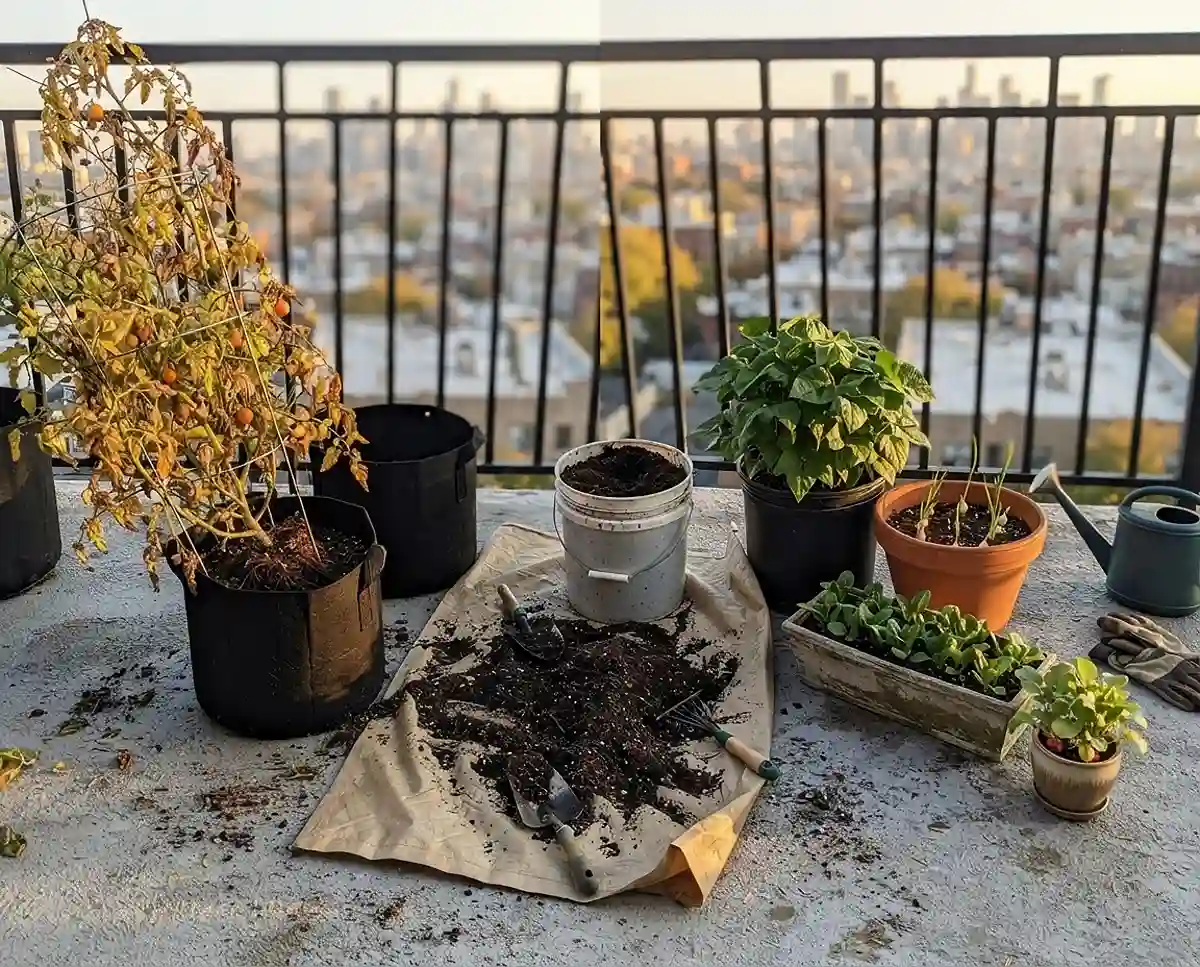
What to Plant After Tomatoes in Containers
What to plant after tomatoes in containers? Skip nightshades, grow beans, garlic, or greens, and use crop rotation in containers to keep your soil healthy. Get this wrong and your next crop fails before it starts.
I grow about 30 containers on a south-facing balcony in zone 6b. Every September I face the same question: what goes into the pot where my ‘Sungold’ tomato just finished? Here’s what has worked for me, as of fall 2026.
Table of Contents
The Importance of Crop Rotation in Container Gardens
Quick Answer: Crop rotation in containers matters because tomatoes drain nitrogen, potassium, and calcium while leaving disease spores and pests in a small pot. Following them with a different plant family breaks that cycle and protects your next crop.
People assume fresh potting mix each year makes rotation optional. But a 5-gallon pot holds roughly 15 to 20 pounds of soil, so pathogens have nowhere to go. In container vegetable gardening, that closed system is the whole problem.
Tomatoes are heavy feeders and magnets for hornworms, aphids, and soil fungi. Iowa State University Extension’s crop rotation guide advises keeping a plant family out of the same spot for two to three years. In pots, I rotate families every season.
Evaluating and Refreshing Post-Tomato Soil
Before you sow anything, spend ten minutes on soil care in pots. Tip the container onto a tarp, then look, smell, and feel. Healthy mix is dark, crumbly, and earthy.
Trouble looks like knotted roots, a sour smell, or a hard brick of root mass. Your job is to decide whether to keep it, amend it, or toss it.
Checking for Soil-Borne Diseases (Blight and Wilt)
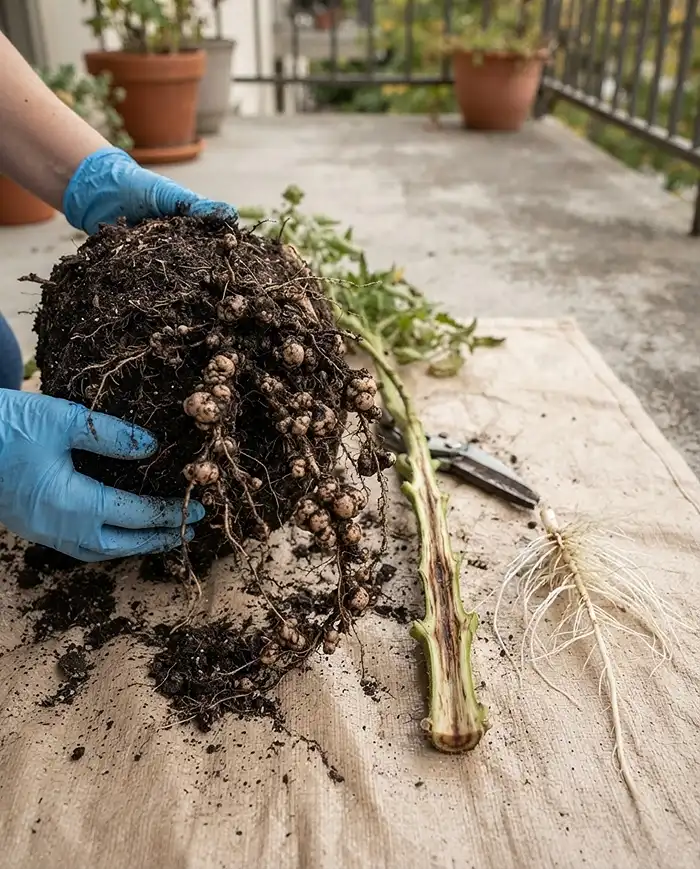
Quick Answer: Before reusing tomato soil, inspect the roots and lower stem. Knobby galls mean root-knot nematodes, and brown streaks inside the stem point to wilt. If you find either, discard the soil instead of replanting.
- Root-knot nematodes: swollen, knotted galls fused to the roots. Bean nodules rub off; galls don’t.
- Fusarium or Verticillium wilt: one-sided yellowing and brown streaks inside a lengthwise-cut stem.
- Early blight: dark, ringed spots on lower leaves, with infected debris left in the mix.
Two summers ago, my ‘Celebrity’ tomato wilted in July. I ignored the brown stem streaks and replanted a pepper in that pot. The pepper wilted within three weeks, and I lost both plants plus a month of growing time.
Pro Tip: Bag diseased soil for the trash, not the compost pile, then scrub the empty pot with a 1:9 bleach-water mix.
Replenishing Depleted Nitrogen and Calcium
Quick Answer: Tomatoes drain nitrogen and calcium fast. For healthy soil, mix in 1 cup of worm castings and 2 tablespoons of bone meal per 5 gallons before the next crop goes in.
Worm castings supply gentle nitrogen and beneficial microbes. Bone meal adds calcium and phosphorus slowly, so mix it in early rather than at sowing time.
The Golden Rule: What NOT to Plant After Tomatoes
Don’t put anything from the nightshade family into old tomato mix. These plants share diseases, pests, and an appetite for the same nutrients, so one mistake can wipe out a whole season.
Avoiding the Nightshade Family (Solanaceae)
Quick Answer: Never plant peppers, eggplants, or potatoes right after tomatoes in the same container. All belong to the nightshade family (Solanaceae), so they catch the same wilts, blights, and nematodes and compete for the same nutrients.
- Peppers: susceptible to Verticillium wilt and share hornworm and aphid pressure.
- Eggplants: catch the same wilts, plus flea beetles.
- Potatoes: vulnerable to early and late blight from tomato debris.
- Tomatillos and ground cherries: also Solanaceae, so they’re off the list too.
Pro Tip: Wait two to three seasons before any nightshade returns to the same soil.
Best Crops: What to Plant After Tomatoes in Containers
These plant families either repair what tomatoes took or ask for little in return. Timing below fits zone 6b, with a first frost around mid-October. Shift dates for your zone. Most also make succession planting easy: one crop finishes, the next goes in.
| Crop (Variety) | Sow Timing | Days to Harvest |
|---|---|---|
| Bush beans (‘Provider’) | 8-10 weeks before first frost | 50-55 |
| Snap peas (‘Sugar Ann’) | 8 weeks before first frost | 55-60 |
| Garlic (‘Music’) | 4-6 weeks before ground freezes | About 9 months |
| Spinach (‘Bloomsdale’) | 6-8 weeks before first frost | 40-45 |
| Swiss chard (‘Bright Lights’) | 8-10 weeks before first frost | 55 |
| Radish (‘Cherry Belle’) | 4-6 weeks before first frost | 25 |
| Carrot (‘Short ‘n Sweet’) | 10 weeks before first frost | 68 |
Legumes: Nitrogen Fixers for Soil Recovery (Beans and Peas)
Quick Answer: Bush beans and snap peas are the best crops to follow tomatoes. Their roots host bacteria that convert nitrogen from the air into a form plants can use. Cut plants at the soil line afterward and leave the roots to decompose.
Honestly, the nitrogen gain in a pot is modest, since most goes to the bean itself. But legumes need little fertilizer and don’t share tomato diseases, so they’re a safe reset.
In early August 2024, I followed a ‘Sungold’ with ‘Provider’ bush beans in a 7-gallon pot. I picked about a pound by late September, then cut the vines at the soil and left the roots to feed the pot.
Pro Tip: Skip high-nitrogen fertilizer on beans, which gives you lush leaves and few pods.
Alliums: Natural Pest Deterrents (Garlic and Onions)
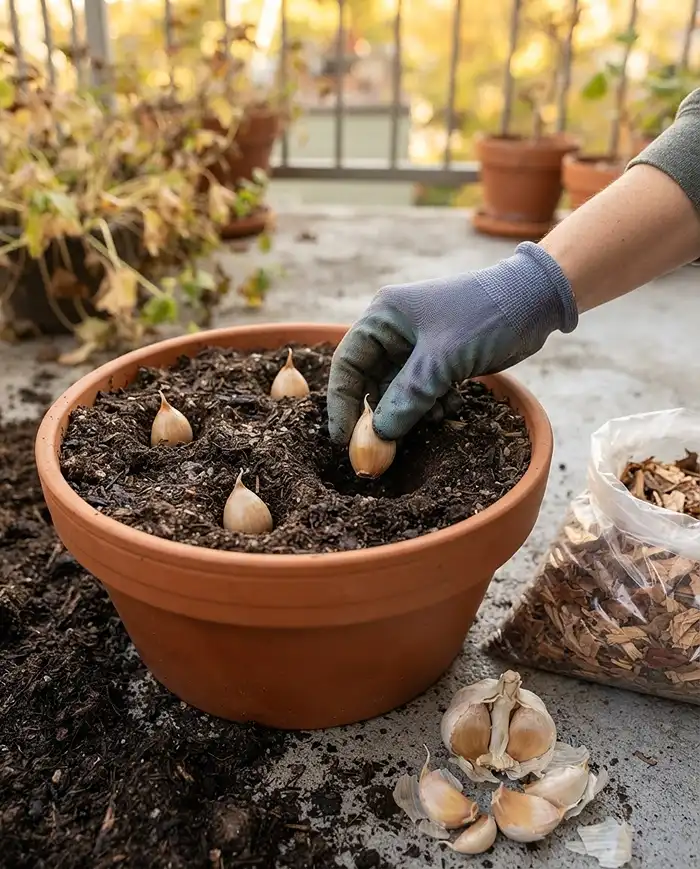
Quick Answer: Garlic and onions make strong successors because they don’t share tomato diseases, and their sulfur compounds may discourage some soil pests. Plant hardneck garlic 4 to 6 weeks before the ground freezes, roughly mid-October in zone 6b.
Set cloves pointed-end up, 2 inches deep and 4 inches apart. A 12-inch pot fits about five. Treat the pest deterrent effect as a bonus, not a cure.
I plant ‘Music’ garlic every October after my last tomatoes come out, then mulch with 2 inches of shredded leaves. By next July, I’m pulling fat bulbs.
Pro Tip: Pots freeze harder than ground, so group them against a wall in zone 6 and colder.
Leafy Greens: Light Feeders for Quick Fall Harvests (Spinach and Lettuce)
Quick Answer: Spinach, Swiss chard, and lettuce are quick, cool-season crops that need less fertilizer than tomatoes. Sow them 6 to 10 weeks before first frost for harvest in 40 to 55 days.
Try ‘Bloomsdale’ spinach, ‘Bright Lights’ chard, and ‘Black Seeded Simpson’ lettuce. Chard tolerates leftover summer heat; spinach doesn’t. This best soil mix for leafy greens in containers keeps them happy.
I once sowed spinach on August 15 in a sun-baked pot and got three seedlings. Spinach germinates poorly above about 75 degrees F. Now I shade the pot with a board or wait for September.
Root Crops: Breaking Up Compacted Soil (Carrots and Radishes)
Quick Answer: Radishes and short carrots help loosen soil compacted by thick tomato roots. Sow ‘Cherry Belle’ radishes 4 to 6 weeks before first frost for a 25-day harvest. Pots need at least 10 inches of depth.
Their roots punch channels through hard-packed mix. Remove big tomato root chunks first, though, since leftovers make carrots fork. Here’s a guide to the best soil for root vegetables in containers.
Pro Tip: Go easy on nitrogen with carrots, which turns them hairy and forked.
Step-by-Step Guide to Transitioning Your Containers
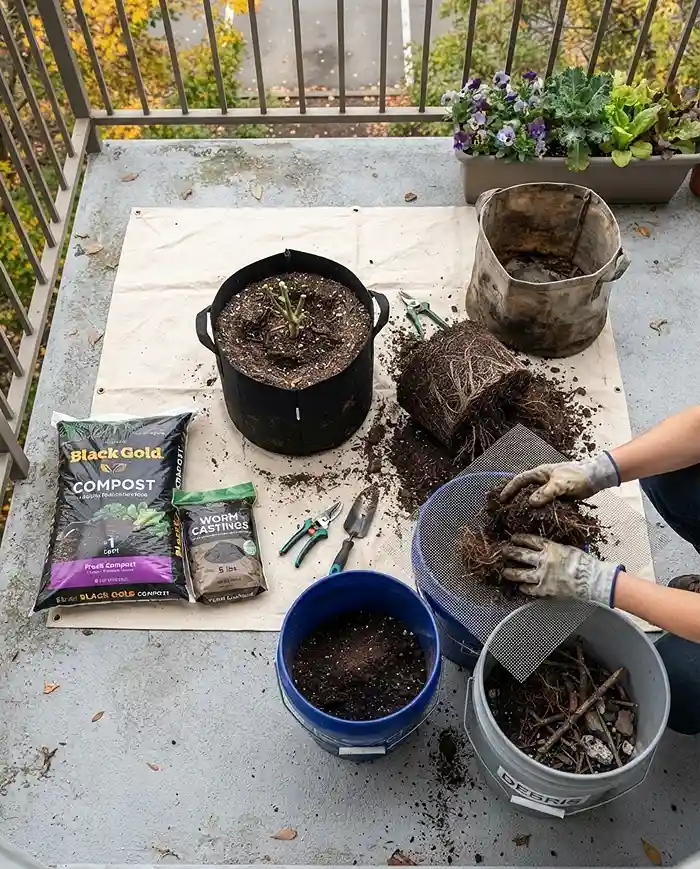
Switching a pot takes about 30 minutes. You’ll pull the old plant, sort the roots, and rebuild the soil. Work on a tarp and keep two buckets handy: one for healthy soil, one for anything diseased.
Removing Tomato Roots and Debris
- Cut the main stem 1 inch above the soil, then tip the pot onto the tarp.
- Pull the root ball and any roots thicker than a pencil.
- Crumble the top half of the soil by hand or through 1/2-inch hardware cloth.
- Pick out fine root pieces, pupae, and debris. Leave the bottom half intact for structure.
Healthy vines can go in a hot compost pile. Diseased ones go in the trash.
Amending the Soil with Compost and Fertilizers
Quick Answer: Spread a 2-inch layer of fresh compost over the sifted soil. Add an all-purpose organic fertilizer at the label rate, then mix both into the top 6 inches. Water well and wait a few days before sowing.
- Compost: 2 inches on top, worked into the top 6 inches.
- Organic fertilizer (a 4-4-4 blend works): usually about 2 tablespoons per 5 gallons.
- Worm castings and bone meal, as covered earlier.
Pro Tip: Give amended soil 3 to 4 days to settle before sowing small seeds like carrots, so they don’t sink too deep.
Common Problems & Solutions
Troubleshooting a succession crop in old tomato soil comes down to two things: leftover pests and hungry soil. Both are fixable if you catch them early.
Lingering Tomato Hornworms or Aphids
Quick Answer: Hornworm pupae overwinter in soil, and aphids can hitchhike on debris. Before planting, dig the top 4 inches for brown pupae, then treat the surface with neem oil or a light hydrogen peroxide drench.
Pupae are glossy, brown, and about 2 inches long. Apply neem per the label, away from midday sun. For the drench, mix 1 part 3% hydrogen peroxide with 4 parts water, soak the top 2 inches, and wait 24 hours.
Successor Crops Stunting Due to Nutrient Lockout
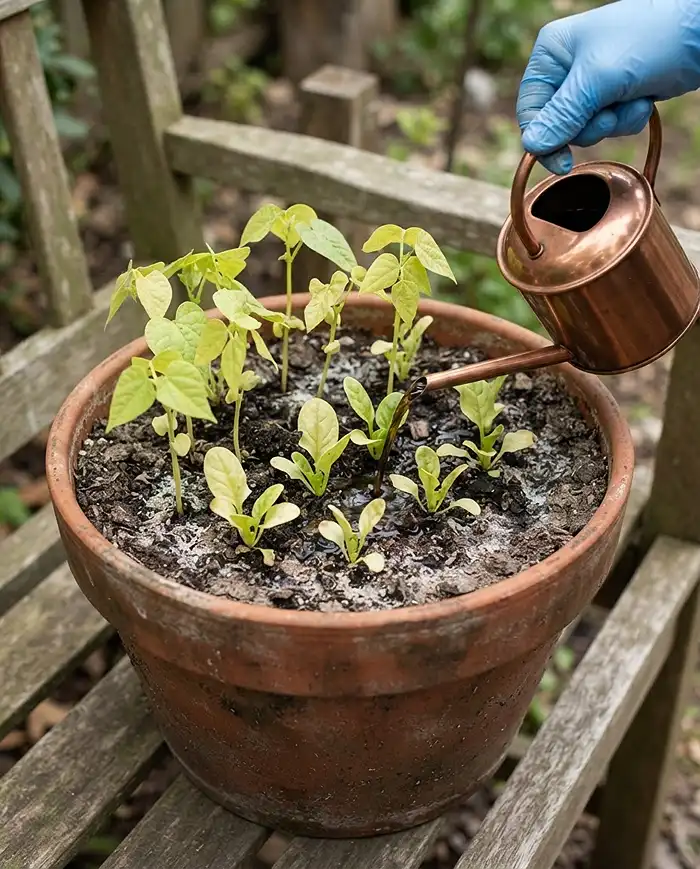
Quick Answer: Pale, stunted seedlings in old tomato soil usually signal low nitrogen or salt buildup. Flush the pot with plain water, then feed with liquid kelp or fish emulsion at label strength every two weeks until growth greens up.
Liquid feeds work in days, while compost takes weeks. If seedlings still lag after two feedings, pull one and check the roots for galls.
Frequently Asked Questions
Can I plant cucumbers after tomatoes in a container?
Yes, but only after heavy soil rebuilding. Cucumbers aren’t nightshades, but they’re heavy feeders like tomatoes. Replace 20% to 30% of the soil with fresh compost and add an all-purpose organic fertilizer. Skip this plan if the tomatoes had wilt or blight.
Do I have to throw away the soil if my tomatoes had blight?
Yes. Early blight and wilt fungi survive winter in soil and plant debris and will infect future susceptible crops. Bag the soil for the trash, not the compost pile, and sanitize the pot before refilling.
How much compost should I add before planting the next crop?
Replace about 20% to 30% of the container’s volume with fresh, high-quality compost. In a 5-gallon pot, that’s roughly 1 to 1.5 gallons. This restores microbial life and keeps the mix airy for the next crop.
Can I reuse tomato potting soil if the plants were healthy?
Yes. Remove root chunks, then refresh the mix with compost, worm castings, and organic fertilizer. Plant a non-nightshade crop such as beans, garlic, or spinach, and rotate plant families each season.
How long should I wait before growing tomatoes in the same pot again?
Wait two to three years before tomatoes or any other nightshade return to the same soil, or replace the mix entirely. Rotating other plant families through the pot in between keeps disease levels down.
Key Takeaways
- For what to plant after tomatoes in containers, pick beans, peas, garlic, onions, greens, or root crops. Never pick peppers, eggplants, or potatoes.
- Inspect roots first. If you see galls, wilt streaks, or blight, discard the soil.
- Rebuild healthy soil with 20% to 30% fresh compost, worm castings, bone meal, and organic fertilizer.
- Time sowing to your first frost date, and note what each pot grew so next year’s rotation is easy.