

12 Balcony Watering System
Vacation watering balcony plants is easy once you trial a balcony watering system a week early. Here’s how to test one without flooding the neighbors.
I grow tomatoes, peppers, and herbs on a 4×10 foot balcony in zone 6b, and I’ve lost plants to bad setups. Below are 12 systems that work with no outdoor spigot, plus the trial run that catches problems while you’re still home.
Table of Contents
Planning Your Travel Hydration Strategy: Trip Length, Water Volume, and No-Spigot Constraints
Quick Answer: Apartment balconies need a closed-loop setup that pulls from a bucket or tote, not a hose bib. Match the system to your trip: wicks and spikes cover 3 to 5 days, while pumps and sensor cones handle 7 to 21 days.
A reservoir you control caps the worst case at the water in the tank. A pressurized hose running above your neighbors has no such limit.
Calculating Your Balcony’s Total Daily Water Budget Before Sizing a Reservoir
Use this formula: pots x daily ounces x trip days x 1.25 safety buffer, divided by 128, equals gallons needed. These are my rough heatwave numbers for July, so test your own.
| Plant | Container | Heatwave use per day |
|---|---|---|
| Herbs (basil, thyme) | 8 to 10 inch pot | about 12 oz |
| Peppers (Jimmy Nardello) | 10-gallon grow bag | about 32 oz |
| Fruiting tomatoes (Sungold) | 5-gallon container | about 48 oz |
My balcony has 6 herb pots and 2 tomatoes, or about 170 ounces a day. That’s 1.3 gallons, so a 5-gallon bucket ran dry on Day 4.
For 14 days I’d need about 23 gallons untreated, or roughly 12 gallons after the prep steps below. A 15-gallon tote covers it.
Assessing Downstairs Leak Risks, Siphon Physics, and Balcony Weight Limits
Water weighs about 8.3 pounds per gallon, so a 10-gallon tote adds roughly 83 pounds before the tote itself. Stage heavy totes against the load-bearing wall, never mid-slab or on the railing. Check your lease or building manager for the posted load limit.
Gravity can also work against you. A bucket sitting higher than the pots can siphon its entire contents across the floor in about an hour. Read the guide to balcony planters leaking downstairs before you set anything up.
Essential Prep: Pre-Trip Soil Conditioning, Reservoir Totes, and Anti-Evaporation Gear
Prep matters more than hardware. In my experience, soil conditioning and mulch can cut daily water use by about half before any watering system even turns on.
- Deep-soak every pot 48 hours before you leave.
- Seal the soil surface with mulch.
- Use a dark, lidded reservoir so algae can’t grow.
- Add check valves and deep catch trays.
Pre-Trip Soil Prep: Surfactant Deep-Soaking, Coco Coir Top-Dressing, and 2-Inch Bark Mulch
Dry potting mix repels water and leaves hydrophobic pockets that no watering system can reach. Two days before departure, bottom-soak each pot for 30 minutes in a tub with a few drops of liquid castile soap per gallon. Let it drain fully.
Then seal the surface. Add a thin layer of coco coir, then 2 inches of pine bark fines. On shaded pots, pressing in living moss works too.
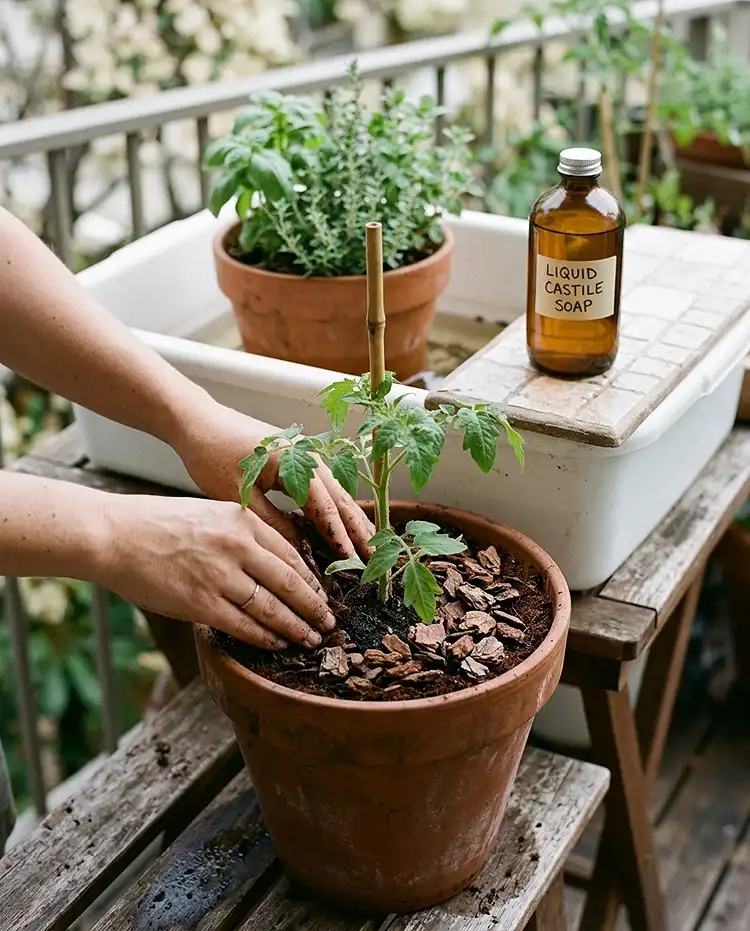
Choosing Opaque Algae-Proof Reservoirs, Check Valves, and Deep Catch Saucers
Use dark, UV-resistant 5-to-15-gallon lidded storage totes. Blocking light stops green algae from clogging your emitters. Add an anti-siphon backflow valve on any pump line, and set pots in 3-inch-deep vinyl containment trays.
Renting? These renter-friendly balcony planter solutions pair well with a tote setup.
12 Balcony Watering System Ideas to Trial Before You Travel
Here are twelve options for automatic balcony watering, sorted roughly by trip length and tech level. Zero-power capillary setups cover short trips. Solar and battery pumps handle two weeks or more.
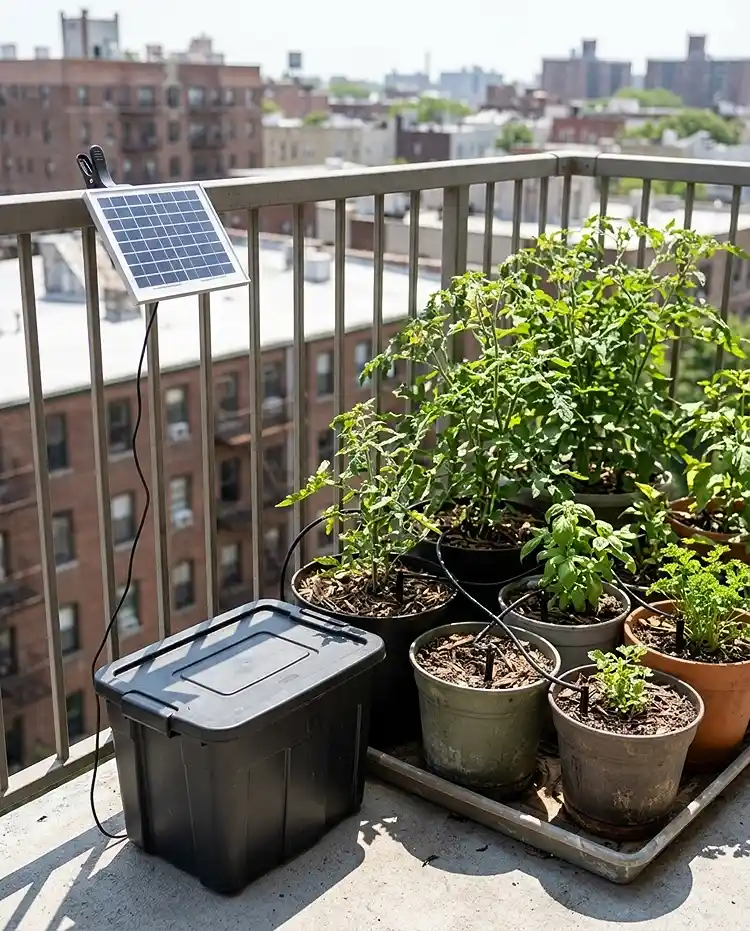
System 1: Solar-Powered Bucket-Pump Micro-Drip Kit (Best for 7-14 Day Trips with No Spigot)
A $35 solar panel wired to a submersible micro-pump draws water from a 10-gallon lidded tote. It feeds up to 15 pots through 1/4-inch tubing on a built-in interval timer. Keep the tote lower than the pots so it can’t siphon when the pump stops.
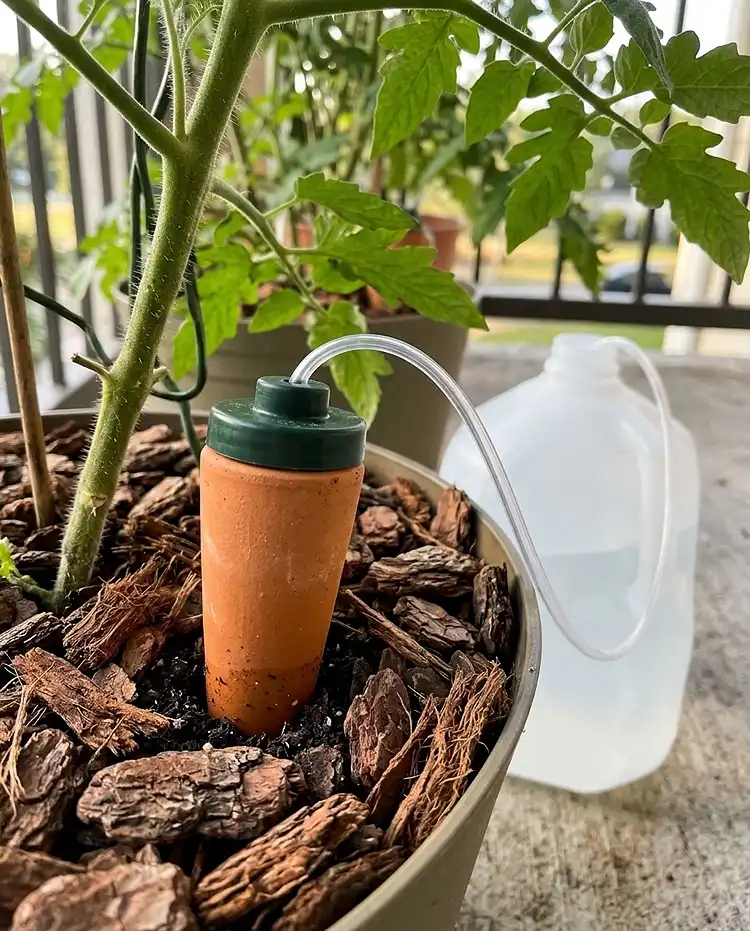
System 2: Blumat Classic Ceramic Sensor Cones with Gravity Tubes (Best for Custom Plant Thirst)
Porous terracotta cones buried in the root zone create a vacuum as soil dries. That pulls water on demand through thin silicone tubes from a nearby jug. No electricity or timers, and each cone adapts to its own plant’s thirst.
System 3: Tropf-Blumat Gravity-Fed Elevated Tank System for Large Veggie Tubs
Raise a 5-gallon reservoir 3 feet up on a plant stand. It feeds adjustable carrot-shaped ceramic valves that open and close with soil moisture tension. This suits big vegetable tubs. Dial each valve in at home first, because settings that work in spring may need adjusting for summer heat.
System 4: Braided Cotton Capillary Rope Wicks From a Central 5-Gallon Bucket (Best for 4-7 Days)
This foolproof $8 DIY starts with 1/4-inch braided cotton macrame cord. Use a knitting needle to push one end 4 inches deep into each pot. Drop the other end into a central bucket, with the water line above the pots, for steady capillary transfer.

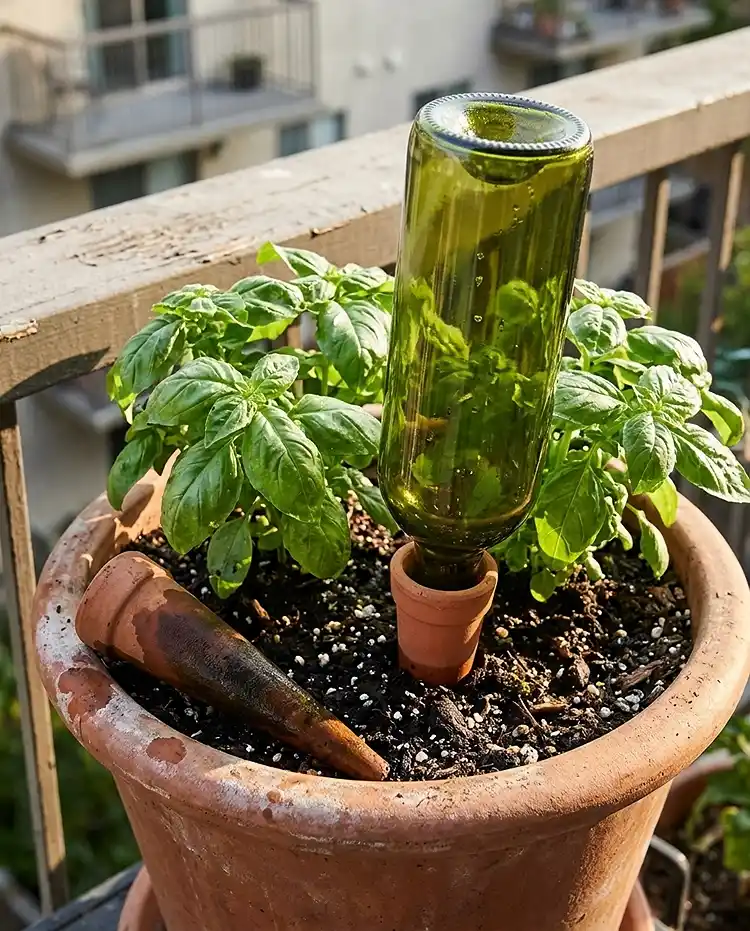
System 5: Inverted Wine Bottles with Adjustable Terracotta Watering Spikes (Best for Weekend Trips)
Soak porous clay spikes for 20 minutes, then press them into 12-inch pots you’ve already watered. Invert a filled 1-liter glass bottle into each spike. Expect 3 to 5 days of slow seepage, which fits a long weekend but not a two-week trip.
System 6: Buried Unglazed Clay Olla Pots Inside Thirsty Tomato and Pepper Grow Bags
Bury a bulb-shaped unglazed terracotta olla up to its neck in the center of a 10-gallon pot. Roots wrap around the clay wall and drink directly through its microscopic pores, which can sustain a plant for about a week.
Last July, a Jimmy Nardello pepper in a 10-gallon grow bag survived 8 days of 88-degree highs on a single olla. It dropped a few flowers but kept its fruit.

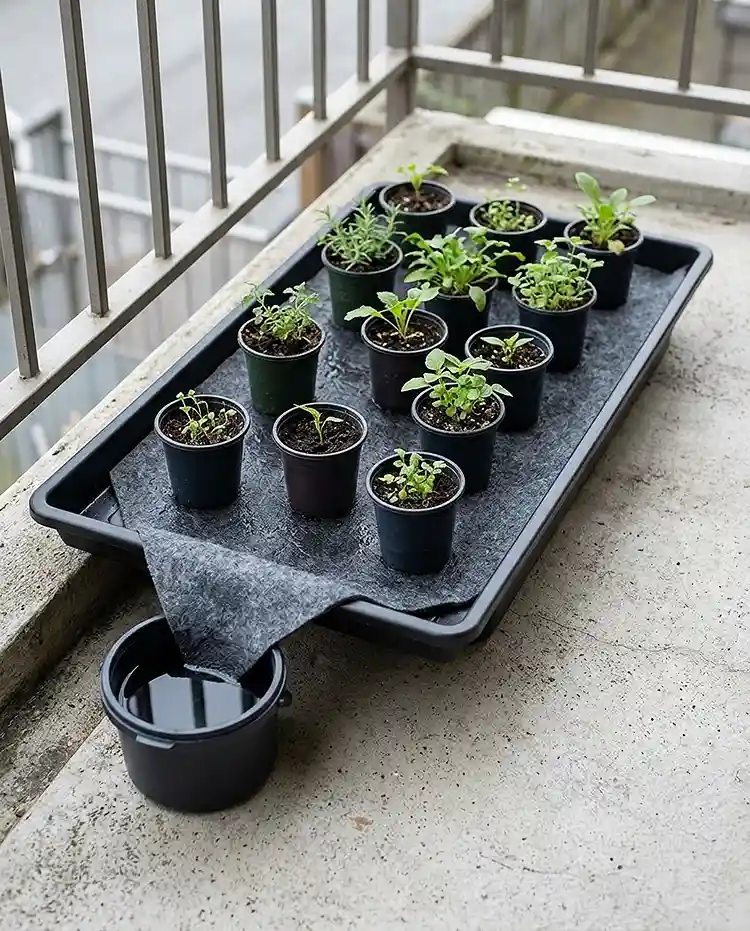
System 7: Capillary Matting Inside Oversized Boot Trays for Small Herb & Seedling Pots
Line a flat plastic boot tray with thick acrylic capillary felt. Drape one end into a lidded water basin beside the tray. Ten small nursery pots then bottom-water continuously. It works for herbs and seedlings, not for big thirsty plants.
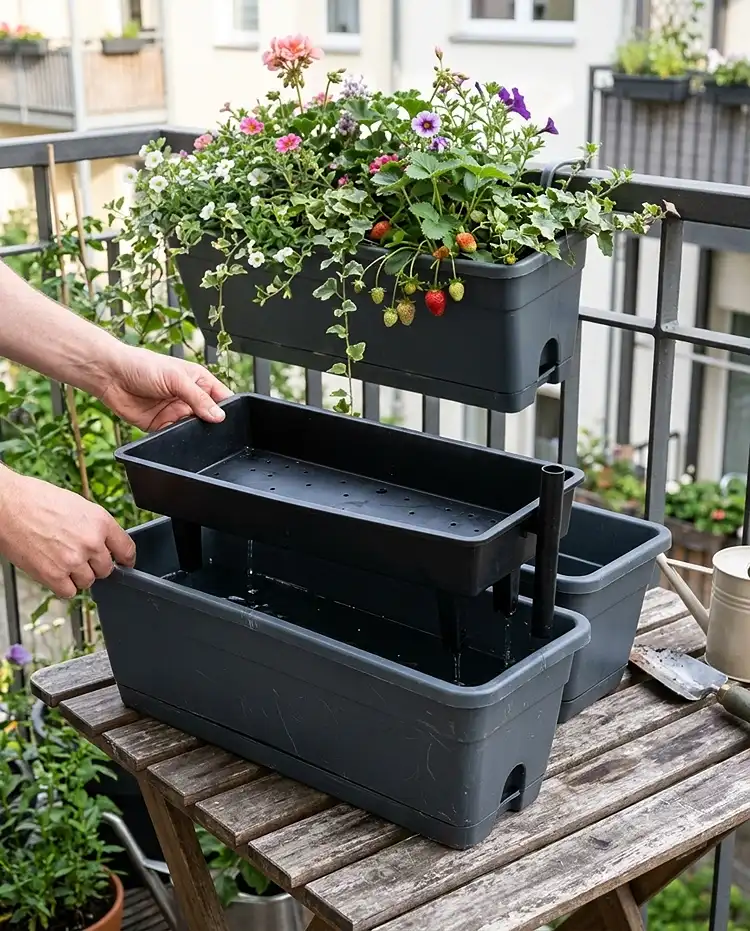
System 8: Sub-Irrigated Self-Watering Planter Conversion Inserts (Best for Railing Boxes)
Drop false-bottom wicking reservoir trays into standard balcony railing troughs. They create a hidden 1-gallon water bank right below fibrous flower and strawberry roots. Plug the old drainage holes so the reservoir doesn’t leak out the bottom.
System 9: USB-Rechargeable Indoor/Outdoor Pump Timer Tucked Inside a Weatherproof Box
On a shady north-facing balcony, solar panels can’t charge. Use a battery-powered digital micro-pump instead and program 60-second morning pulses from a covered water bin. Test the battery under real load before you leave.
System 10: Kitchen-Sink Faucet Diverter Connected to a Battery Hose Timer (For Long Trips)
Unscrew your kitchen or bathroom faucet aerator and attach a brass garden-hose diverter. Run micro-tubing out through a cracked sliding door lock-bar. A battery hose timer then draws unlimited municipal water.
This is the riskiest option. Pressurized lines can fail while you’re gone, so add a leak sensor and a timer that fully closes the valve. A cracked door is also a security gap, so seal it well.
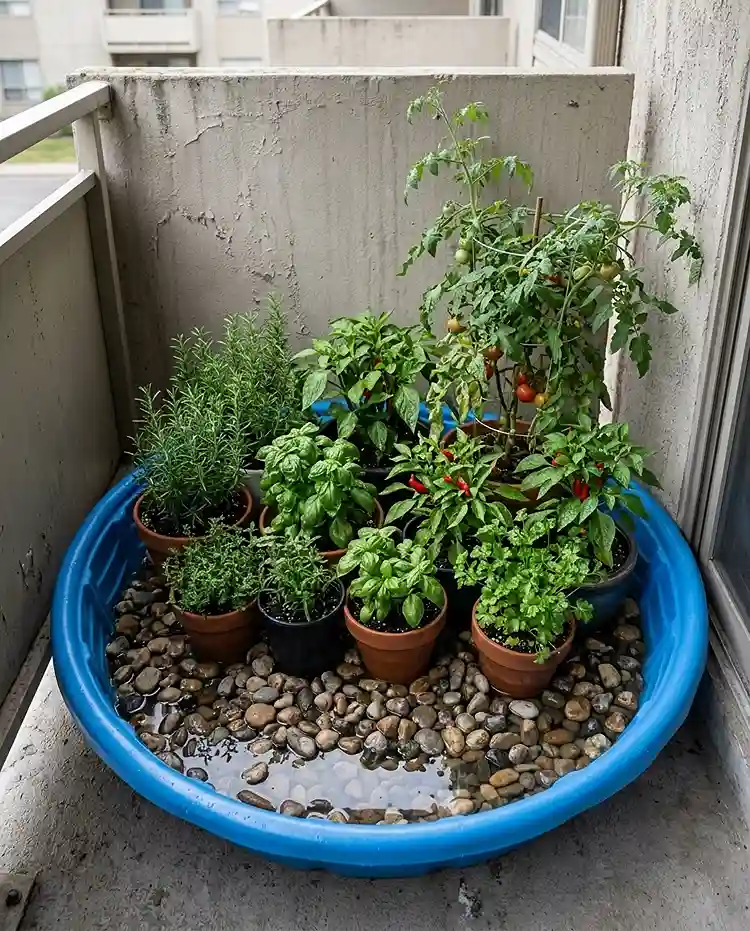
System 11: The “Kiddie Pool & Pebble Island” Grouping Method for Shaded Balcony Floors
Cluster 8 to 12 drainage pots inside a rigid plastic dog pool or washing-machine drain pan. Add 1 inch of water and river stones for bottom-wicking and higher humidity. UF/IFAS Gardening Solutions also advises grouping containers on longer trips.
System 12: DIY Upcycled 2-Liter Soda Bottle Slow-Drip Emitter with a Felt-Tip Pin Hole
Poke a pinhole in a 2-liter bottle cap, fill the bottle, and invert it with the neck buried in soil. Mud clogs bare pinholes fast. Stuff a small piece of sponge or landscape felt inside the cap first, and the flow stays steady.
The 7-Day Pre-Travel Trial Run Protocol and Seasonal Adjustments
Run a dress rehearsal one week before you leave. Any empty reservoir or overflowing saucer shows up while you’re still home to fix it. In cooler seasons plants drink less, so recalibrate your numbers instead of reusing summer ones.
How to Run a 72-Hour Calibration Test and Measure Saucer Runoff Before Leaving
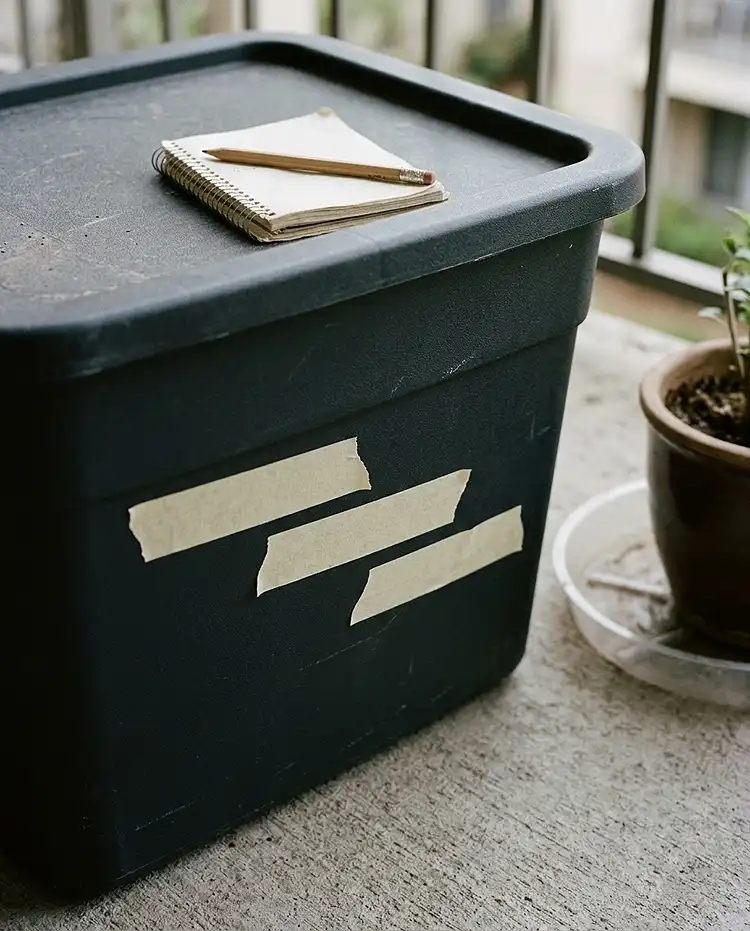
Set up the full system a week early. Every 24 hours, mark the reservoir water line with masking tape and note how far it dropped.
Adjust drip stakes until saucers stay 100 percent dry. Then multiply the daily drop by your trip days. If the total exceeds your tank, size up.
Pre-Departure Relocation Checklist: Moving Pots Off Railings Into Shaded Micro-Clusters
On the morning you fly, work through this list:
- Move hanging baskets and railing boxes onto the shaded balcony floor against the apartment wall.
- Pack pots into tight micro-clusters.
- Pinch off open flowers and ripe fruit to lower transpiration.
- Top off every reservoir and check tubing clips.
- Confirm all saucers are empty.
Common Problems & Solutions
Three failures cause most vacation disasters. Catch each one during your trial run.
The “Runaway Siphon” Effect Emptying Your Entire 5-Gallon Bucket Onto the Floor in 1 Hour
Forward siphoning happens when your bucket sits higher than the pots on a pump system. When the pump stops, gravity keeps pulling water through the line. Keep the water level below the first emitter, or install an anti-siphon air-gap valve at the top of the supply line.
I learned this the hard way when a bucket on a plant stand emptied 5 gallons in about an hour. My 3-inch tray caught most of it, which is why I never skip the tray.
Airlocks in Blumat Tubes and Mud-Clogged Terracotta Spikes Stopping Water Flow
Air bubbles trapped inside Blumat cones halt suction. Assemble the caps fully submerged underwater so no air gets in.
Clay spikes fail the opposite way. Dry soil pulls water out too fast on Day 1, so saturate the potting soil thoroughly before inserting any spike.
Vapor Lock in Inverted Bottles and Collapsed Tubing Kinks in Afternoon Sun
Sealed plastic bottles create a vacuum that stops dripping. Poke a tiny needle air-vent hole in the bottle bottom to fix it.
Black vinyl 1/4-inch tubing also softens and kinks on hot balcony railings. Clip it with rigid elbow joints so it holds its shape.
Frequently Asked Questions
How do I keep my balcony plants watered for 2 weeks on vacation without an outdoor faucet?
Move all pots off windy railings into a tight, shaded cluster on the floor and mulch bare soil with 2 inches of bark. Then connect a solar-powered micro-drip pump or Blumat ceramic sensor cones to a covered 10-to-15-gallon plastic storage tote filled with water.
Should the water bucket be placed higher or lower than my balcony plants?
It depends on the system. Passive gravity setups like Tropf-Blumat and cotton rope wicks need the water line above the pots. Electric or solar pump kits need the bucket below the pots to prevent accidental siphoning when the pump turns off.
Can I mix liquid fertilizer into my vacation watering reservoir bucket?
No. Organic liquid fertilizers like fish emulsion or kelp ferment in standing water and form a slimy biofilm that can clog emitters within 48 hours. Apply slow-release granules to the soil before leaving and keep only clean water in the tank.
Do water globes and upside-down wine bottles actually work on a hot sunny balcony?
Only for short trips. Glass globes can empty in under 24 hours in dry, hot soil. They last 3 to 5 days if you drench the pot first, wrap the spike tip in landscape fabric to slow the flow, and move the pot out of direct afternoon sun.
How far in advance should I test a balcony watering system before a trip?
Start the trial run 7 days before you leave and let it run for at least 72 hours. Mark the reservoir water line every 24 hours so you can size the tank and fix leaks while you’re still home.
Key Takeaways
- Match your balcony watering system to trip length: wicks and spikes for 3 to 5 days, pumps and sensor cones for 7 to 21.
- Size the reservoir with the formula, and expect to need about half the water after mulching and a surfactant soak.
- Keep pump reservoirs below the pots and gravity reservoirs above them to avoid runaway siphons.
- Run a 72-hour trial a week early, marking the water line every 24 hours.