
17 Balcony Flower Ideas: Color From Floor to Railing
Tired of a balcony that blooms for three weeks, then sulks? These balcony flower ideas build a long flowering balcony from the floor up to the railing.
I grow on a sunny rooftop terrace in zone 7a, in everything from 8-inch pots to 16-inch tubs. After 12 years coaching renters and first-timers, I’ve killed enough plants to know what actually works.
Table of Contents
Planning Your Multi-Level Balcony Flower Garden: Light, Wind, and Color Layering
Short Answer: Map your light first, check wind second, then stack three tiers: railing, mid-level stands, and floor. Fill each tier with a “thriller, filler, spiller” [tall center plant, mounding middle, trailing edge] trio. Limit yourself to three colors so the whole display feels planned.
Light changes by the foot. A railing might get six hours of direct sun while the floor behind a solid half-wall gets two. Wind dries pots fast and snaps tall stems, so plan for both before you buy a single plant.
Matching Sun-Loving Railing Blooms vs. Shade-Tolerant Floor Flowers
Railings and upper trellises bake in direct sun, so they suit heat lovers like petunias, portulaca, and lantana. The floor behind a solid half-wall stays cooler and shadier. Put impatiens, begonias, and astilbe down there, and they’ll thank you by not frying.
Balancing Structural Weight Limits, Wind-Resistant Stems, and Color Palettes
Wet soil is heavy. A 16-inch tub can top 60 pounds, so park big pots against load-bearing walls and ask your landlord about limits. Choose trailing or short, flexible stems that bend instead of snap in gusts.
Then pick a three-color palette: warm sunset (red, orange, gold) or cool pastel (blue, lavender, white). Small spaces look lush with three colors and chaotic with ten.
Essential Prep: Tiered Containers, Bloom-Boosting Soil Mix, and Deadheading Tools
Short Answer: Gather tiered planters, a moisture-holding potting mix, and snips for deadheading [removing spent flowers] before you plant anything. Multi-level containers give you vertical color. The right soil feeds months of buds, and sharp snips keep plants producing from spring through frost.
Good balcony container arrangements mix pot heights and sizes, so grab at least three. Here’s my kit:
- One or two 24-inch railing saddle boxes with drainage holes
- Hanging baskets plus ceiling hooks rated for 25 pounds or more
- An A-frame ladder shelf or tiered plant stand
- Two or three 14- to 16-inch floor tubs
- A narrow wall trellis or a 5-foot obelisk
- Sharp snips and a watering can with a gentle rose
The “Nonstop-Bloom” Potting Soil Recipe for Heavy-Flowering Containers
Heavy bloomers are hungry and thirsty. Mix this by volume in a bucket:
- 6 parts peat-free coco coir
- 2 parts perlite (about 20 percent)
- 1 part fine vermiculite
- 1 part worm castings
- Slow-release organic high-potassium flower food, such as 3-8-6, at the label rate
Coir holds water, perlite keeps air around the roots, and castings feed gently. Lower nitrogen means more buds and fewer floppy leaves.
17 Balcony Flower Ideas From Railing Down to the Floor
Short Answer: These 17 balcony flower ideas run from railing boxes and wall trellises to mid-tier stands and floor groupings. Each pairs specific cultivars with a pot size and light level. Copy a combo, plant it, and enjoy color from April through frost.
As of 2026, I plant tender annuals on April 20, about five days after our average last frost.
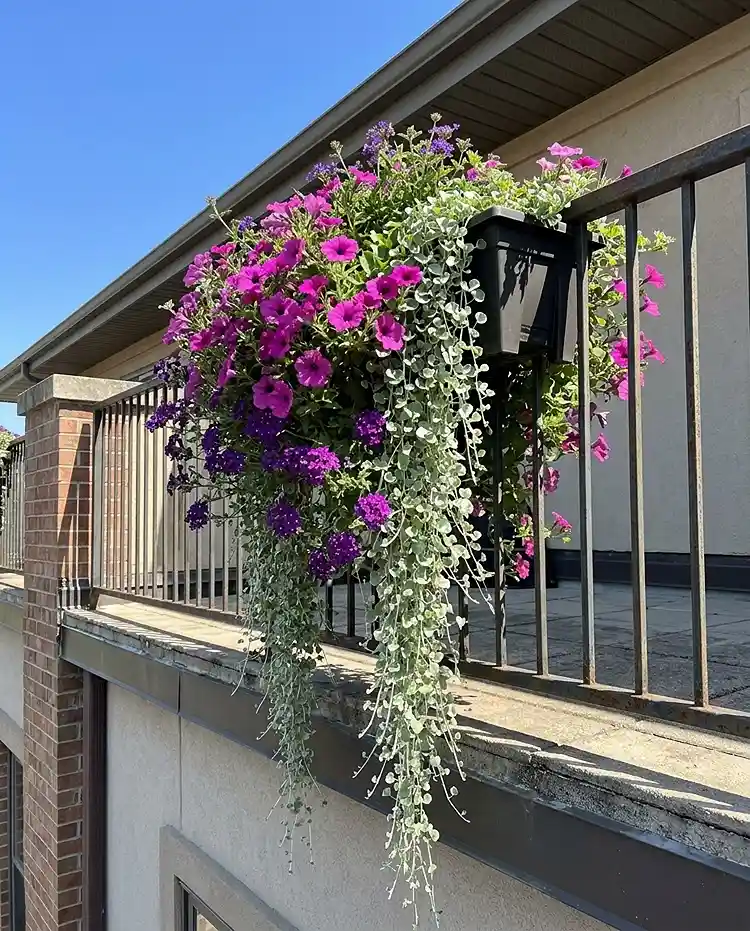
Idea 1: The “Waterfall of Petunias” Over-the-Rail Saddle Box with Supertunias and Verbena
Hang a 24-inch saddle box over the rail. Plant magenta Supertunia Vista Fuchsia, purple trailing verbena, and silver dichondra. The self-cleaning [drops spent blooms on its own] petunias spill into a three-foot curtain down the railing’s outer face.
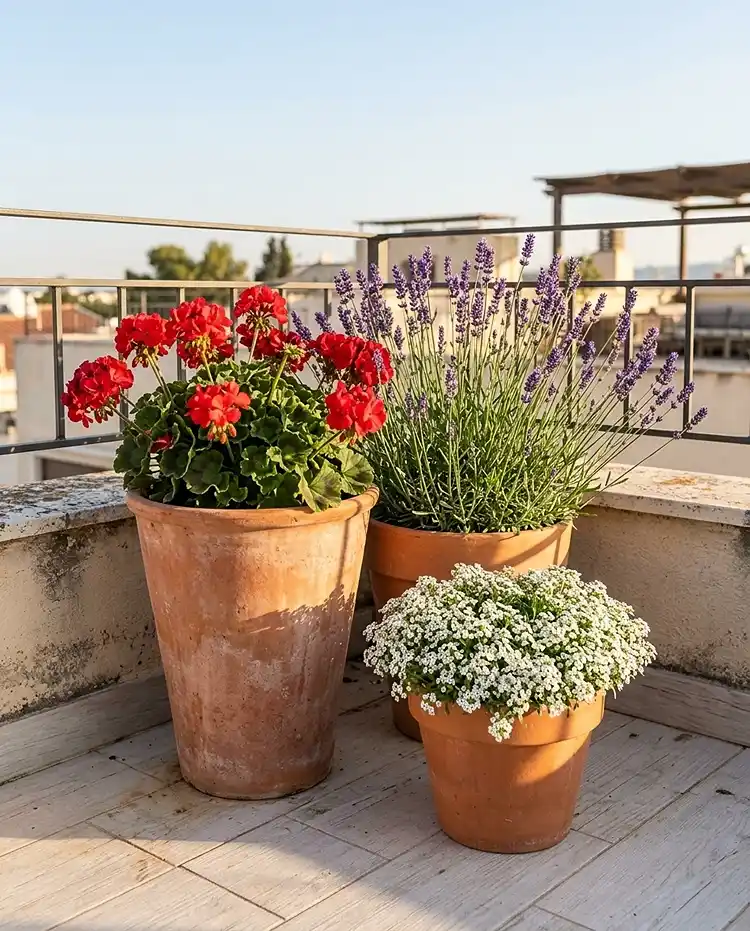
Idea 2: Mediterranean Terracotta Floor Grouping of Zonal Geraniums, Lavender, and Alyssum
Cluster three graduated clay pots in a sunny corner: scarlet zonal geranium (Pelargonium), ‘Munstead’ English lavender, and white sweet alyssum. Terracotta breathes, so the lavender stays happy. The alyssum smells like honey every time you walk past.
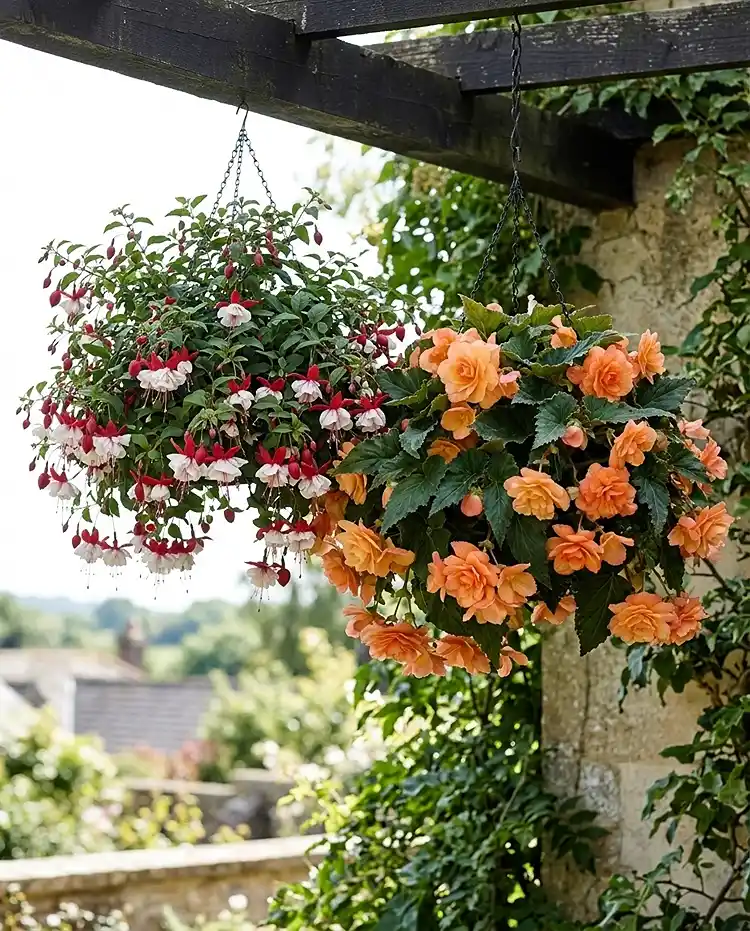
Idea 3: Shady North-Balcony Hanging Baskets of Trailing Fuchsias and Tuberous Begonias
Short on sun? Suspend ‘Swingtime’ fuchsias and cascading apricot tuberous begonias from ceiling hooks. Both thrive in bright shade, and the fuchsia blooms swing like tiny ballerinas. Keep each basket light enough for your hooks.
Idea 4: Corner Obelisk Planter of Boulevard Patio Clematis and Million Bells (Calibrachoa)
Plant compact ‘Piilu’ or ‘Bijou’ clematis in a 14-inch pot with a 5-foot wooden obelisk. It climbs toward the ceiling and bridges floor and overhead. Apricot calibrachoa (Million Bells) spills over the rim and shades the clematis roots.
Idea 5: High-Heat Desert Railing Trough of Neon Portulaca (Moss Rose) and Blue Scaevola
Fill a railing trough with neon portulaca (moss rose) and purple fan flower (Scaevola aemula). Both shrug off scorching west or south sun. Portulaca’s succulent leaves store water, so midday wilting stays off your to-do list.
Idea 6: Romantic Cottagecore Rose and Catmint (Nepeta) Tub
Plant a repeat-blooming compact rose, such as ‘Peach Drift’ or ‘Earth Angel’, in a 16-inch floor tub. Underplant it with billowy ‘Cat’s Pajamas’ catmint (Nepeta). The blue haze hides bare rose stems, and the bees will happily move in.
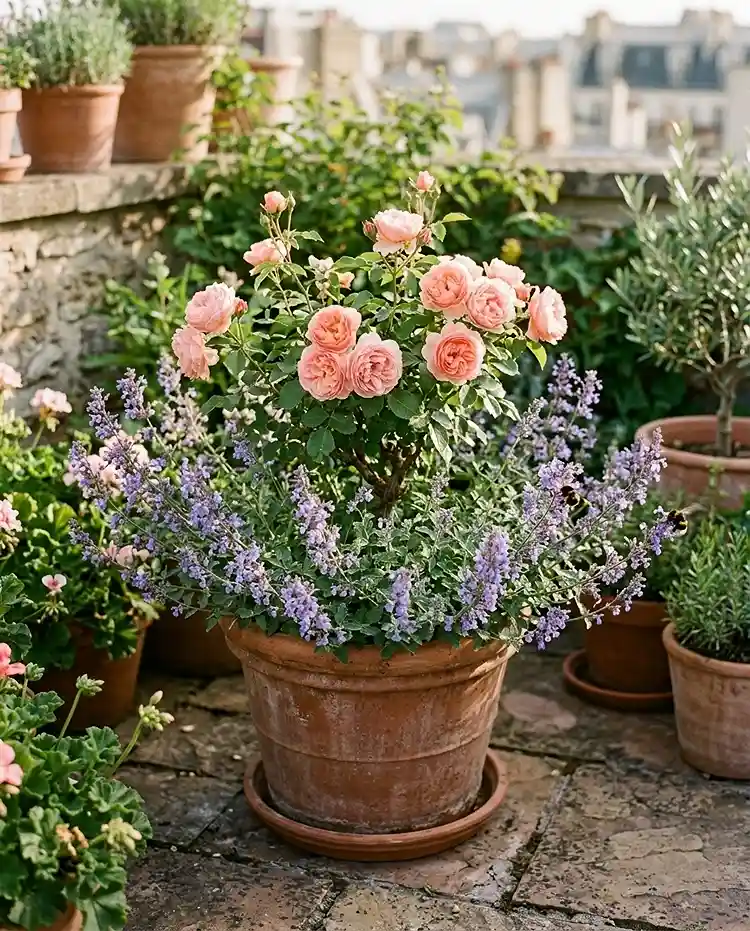
Idea 7: Vertical Wall Trellis of Black-Eyed Susan Vine and Mandevilla
Train crimson mandevilla and golden black-eyed Susan vine (Thunbergia alata) up a narrow wall lattice. You need only about 8 inches of floor depth. The result is a flowering privacy screen at eye level. Treat both as annuals in zone 7a.
Idea 8: Pollinator Magnet Floor Trio of Dwarf Butterfly Bush, Salvia, and Lantana
Group sterile ‘Pugster Blue’ butterfly bush, deep purple ‘Amistad’ salvia, and sunset-toned lantana in one corner. Pugster Blue won’t self-seed. Bees and butterflies will treat your balcony like a diner, and a hummingbird may drop by.
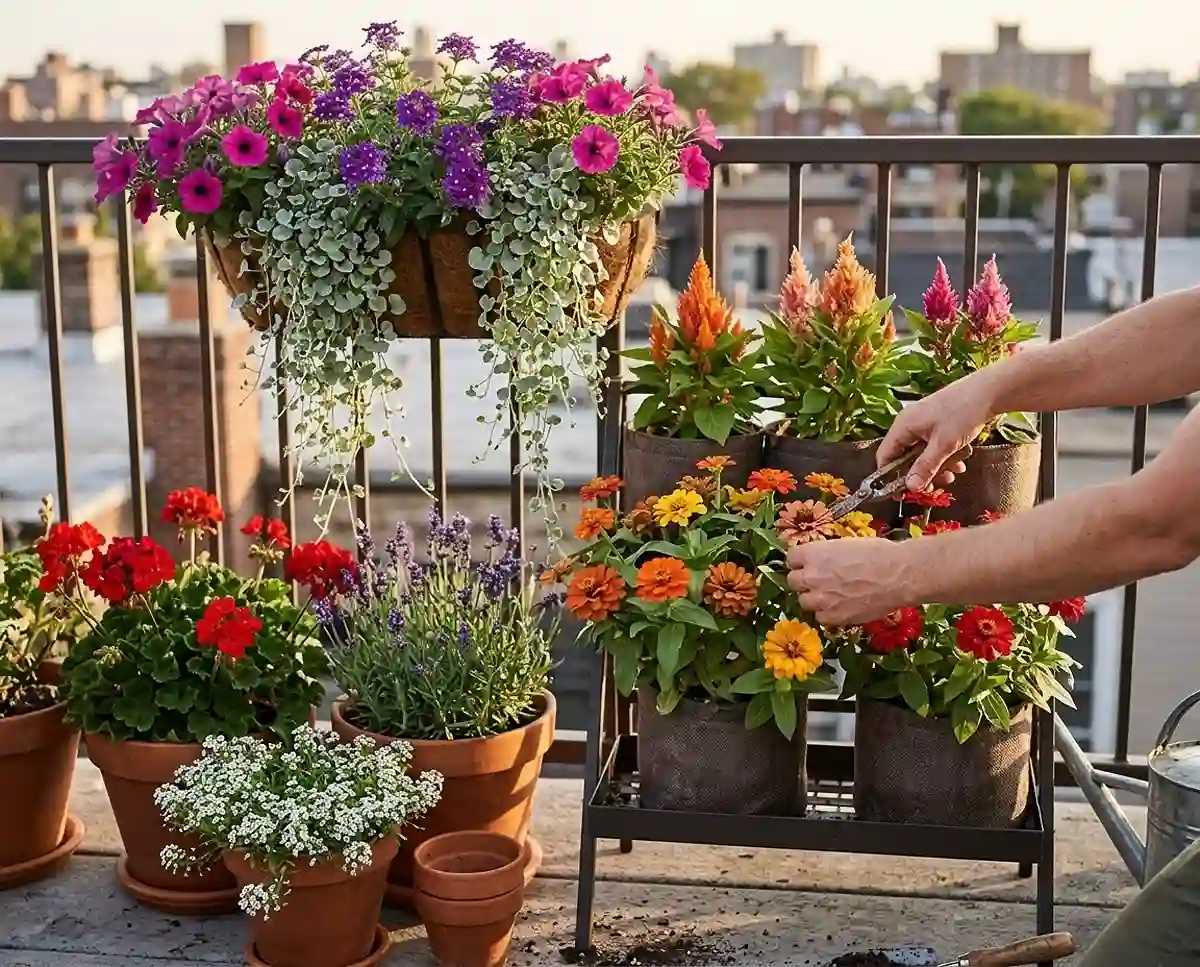
Idea 9: Stepped 3-Tier Ladder Shelf of Cut-Flower Zinnias, Cosmos, and Celosia
Stage breathable fabric pots on an A-frame ladder shelf. Fill them with dwarf ‘Profusion’ zinnias, ‘Sonata’ cosmos, and plumed celosia. Snip stems weekly for table bouquets, and the plants simply make more.
Idea 10: Woodland Shade Floor Sanctuary of Astilbe Plumes, Impatiens, and Torenia
Brighten a dim floor with feathery pink astilbe, New Guinea impatiens, and purple-and-gold wishbone flower (Torenia fournieri). Astilbe sends up plumes in early summer. The other two bloom until frost. Keep the soil evenly moist.
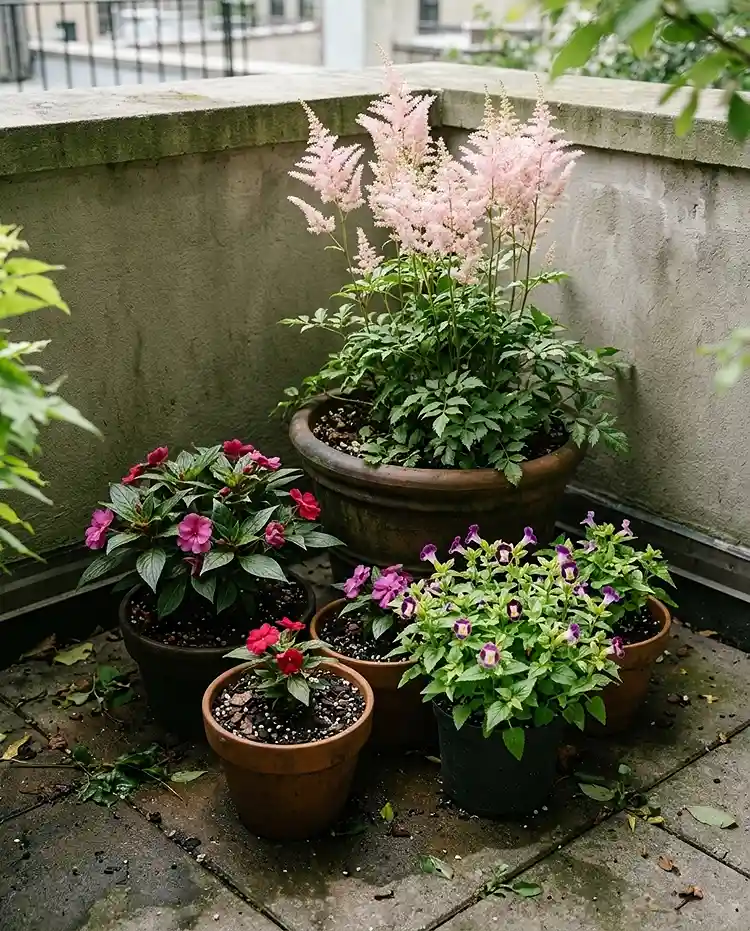
Idea 11: Scented Evening Bistro Corner with Star Jasmine, Heliotrope, and Night-Scented Stock
Build a twilight nook with star jasmine (Trachelospermum jasminoides), vanilla-scented heliotrope, and night-scented stock (Matthiola longipetala). The perfume peaks at dusk, right when you sit down with a drink. In zone 7a, shelter the jasmine against a wall for winter.
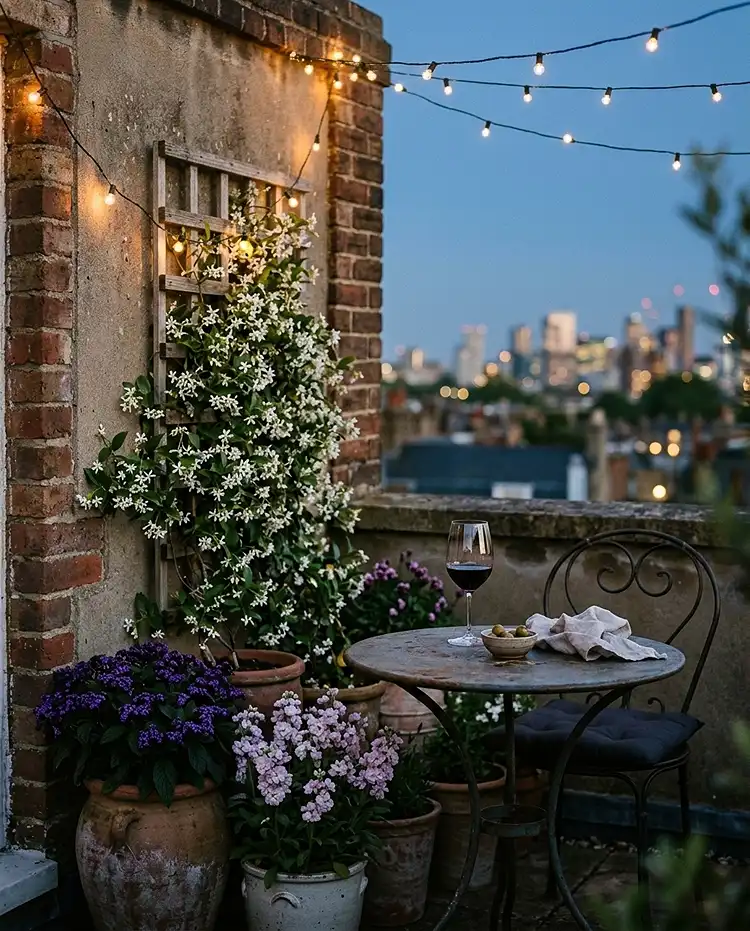
Idea 12: Four-Season Bulb Lasagna Floor Pot (Tulips and Daffodils Under Summer Dahlias)
In autumn, layer tulips and daffodils at the bottom of a deep 16-inch pot, a bulb lasagna [bulbs stacked in layers]. Cover with soil. In May, top-plant compact ‘Gallery’ dahlias. One pot then blooms for most of the growing year.
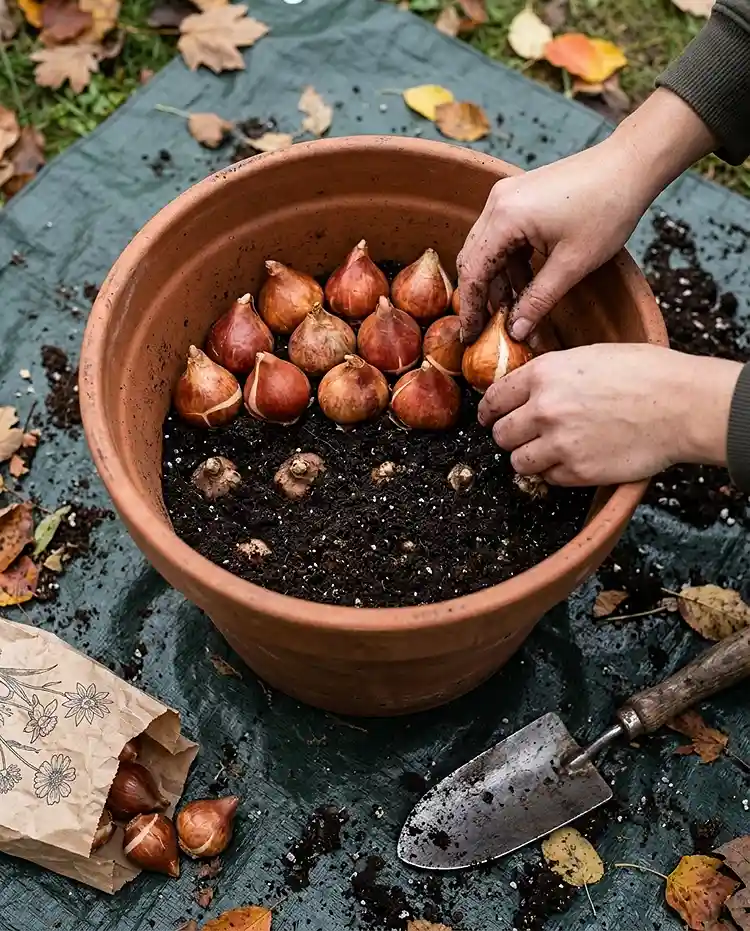
Idea 13: Tropical Resort Floor-to-Railing Grouping with Dwarf Canna Lilies and Hibiscus
Anchor the floor with bronze-leaved dwarf canna lilies, such as ‘Cannova Bronze Scarlet’, and a braided patio hibiscus. Let orange nasturtiums trail from the railing above. It looks like a resort, minus the resort prices.
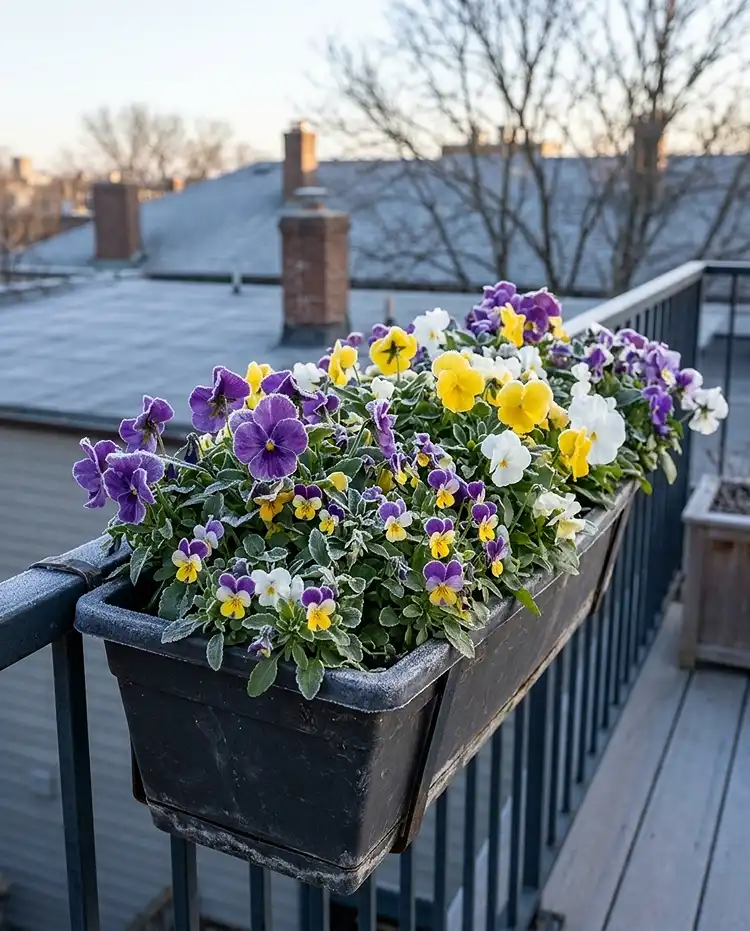
Idea 14: Frosted Early-Spring and Late-Fall Railing Box of ‘Cool Wave’ Pansies and Violas
I planted ‘Cool Wave’ pansies and Johnny-jump-ups in a 24-inch railing box on October 1, 2025. They bloomed through 35°F (1.7°C) nights and kept going until December 20, about 11 weeks. Use them to fill the shoulder seasons.
Idea 15: Edible Flower Window Box of Calendula, Borage, and Trailing Nasturtiums
Pack a kitchen-side window box with golden calendula, blue borage, and ‘Empress of India’ nasturtiums. Nasturtium seeds sprout best in 60 to 70°F soil. Snip blooms for salads, but eat only flowers grown without pesticides.
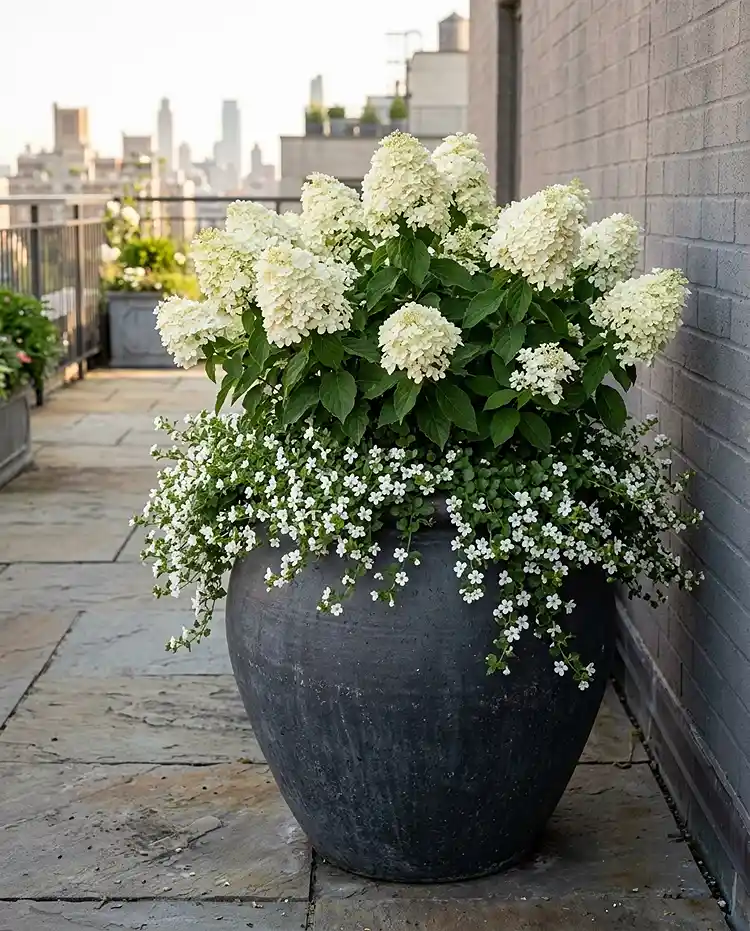
Idea 16: Compact Hydrangea (‘Bobo’ or ‘Little Lime’) and White Bacopa Floor Statement Urn
Plant a dwarf panicle hydrangea, such as ‘Bobo’ or ‘Little Lime’, in a big floor urn. Edge it with white bacopa (Sutera cordata). ‘Bobo’ tops out near three feet. Give both morning sun, afternoon shade, and deep drinks, because hydrangeas get dramatic about thirst.
Idea 17: Upcycled Hanging Colander Cascade of Lobelia, Nemesia, and Creeping Jenny
Hang painted vintage colanders at staggered heights from a corner tension pole. Fill them with electric-blue lobelia (Lobelia erinus), vanilla-scented nemesia, and creeping Jenny. The holes already drain, but line them with coir to hold the soil.
Mastering Balcony Flower Maintenance: Deadheading, Feeding, and Seasonal Swaps
Short Answer: Pinch off spent blooms weekly and feed with low-nitrogen bloom food every 14 days. Give leggy plants a one-third haircut in mid-July. That routine keeps stems compact and bud-heavy into autumn. Swap in pansies and mums as seasons change, and your long flowering balcony keeps rolling.
Want more swaps? Browse these seasonal balcony garden ideas for plants that take over when summer petunias tire.
Deadheading vs. “Self-Cleaning” Varieties and the Mid-July Rejuvenation Haircut
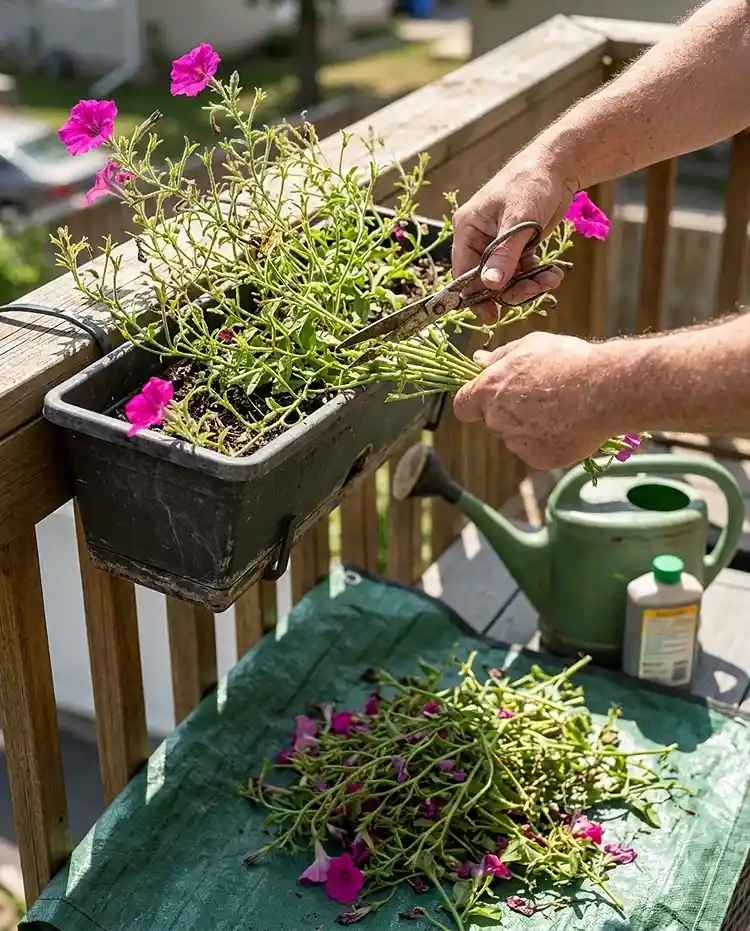
Zinnias, geraniums, and dahlias need deadheading. Pinch each spent stem just above the first full set of leaves so the plant doesn’t set seed. Self-cleaning varieties like Supertunia and calibrachoa can skip this chore.
My petunias taught me the haircut. On July 15, 2025, my Supertunia Vista Fuchsia went leggy. I sheared it back by one-third and fed it. Eighteen days later, it was smothered in fresh buds. Do the same to leggy lobelia.
Bi-Weekly High-Potash Liquid Feeding Chart and Overwintering Perennial Bulbs and Shrubs
Use a liquid bloom food high in phosphorus and potassium and low in nitrogen. Here’s my zone 7a schedule:
| Window | Task | Notes |
|---|---|---|
| April 20 to May 31 | Plant and mix in slow-release 3-8-6 | No liquid feed yet |
| June to mid-July | Liquid bloom food every 14 days | Deadhead weekly |
| Mid-July | Shear one-third, then feed | Fresh buds in about 2.5 weeks |
| August to first frost | Liquid bloom food every 14 days | Water at 7:00 AM |
| After first frost | Lift dahlia tubers, wrap pots | Group pots against a wall |
Once frost blackens dahlia foliage, lift the tubers and store them dry. Wrap rose and hydrangea pots in burlap or bubble wrap. Not sure of your zone? Check the USDA Plant Hardiness Zone Map.
Common Problems & Solutions
Short Answer: Most balcony flower failures have three causes. Too much nitrogen or too little light, afternoon heat that drops buds, and pests or mildew in crowded pots. Each has a quick fix, and none means starting over. Here’s how I handle each one on my rooftop.
Lush Green Leaves With Zero Flowers (“Nitrogen Overload” and Shade Stretching)
In June 2024, I fed my Supertunia Vista Fuchsia petunias a 20-20-20 all-purpose food. They grew huge, green, and flowerless for five weeks. Nitrogen pushes leaves at the expense of buds.
I flushed the pots with plain water and moved them to the railing edge for more sun. Then I switched to a high-potassium tomato and rose liquid feed. Three weeks later, I counted over 40 blooms.
Bud Drop and Crispy Scorched Petals During Afternoon Balcony Heatwaves
Radiant heat off brick walls and dry wind make fuchsias, begonias, and roses drop unopened buds. Water deeply at 7:00 AM, before the heat builds. Add a 2-inch layer of pine bark mulch to slow evaporation.
If your pots are dark plastic, double-pot them inside a lighter container. The air gap keeps roots cooler, and the petals stop crisping.
Powdery Mildew, Aphids, and Budworms Attacking Dense Floral Containers
White powdery fungus loves crowded, damp leaves on zinnias and petunias. Water at the base in the morning and spray potassium bicarbonate. Tiny green aphids and tobacco budworms chew buds next.
At dusk, when pollinators are tucked in, spray aphids with insecticidal soap. Treat budworms with Bt [Bacillus thuringiensis, a bacterium that targets caterpillars].
Frequently Asked Questions
What balcony flowers bloom all summer long with the least maintenance?
Self-cleaning bloomers win here. Supertunia Vista petunias, calibrachoa (Million Bells), Scaevola, lantana, and portulaca drop spent flowers on their own, and New Guinea impatiens do the same in shade. Feed them every 14 days and they’ll bloom through frost.
How many flower plants should I put in a 12-inch balcony pot or 24-inch railing box?
Use the 3-to-5 plant rule for a 12-inch round pot: one upright thriller, one or two mounding fillers, and one or two trailing spillers. A standard 24-inch railing trough holds 4 to 6 plants spaced 4 to 5 inches apart. That leaves roots room to keep growing past July.
How do I keep hanging baskets and railing flower boxes from drying out every day?
Switch to self-watering railing troughs, which are sub-irrigated [watered from a reservoir below]. Line porous coco-fiber baskets with a perforated plastic saucer to hold a water reserve. Mix about 20 percent coarse vermiculite or wool pellets into your coir potting soil.
Are there perennial balcony flowers that come back every year in pots?
Yes. Coneflowers (Echinacea), catmint (Nepeta), Salvia nemorosa, astilbe, hellebores, lavender, and dwarf hydrangeas return reliably. Choose varieties rated two USDA zones colder than yours, since pots freeze harder than ground. In zone 7a, that means shopping for zone 5 plants.
What flowers grow best on a shady north-facing balcony?
Fuchsias, tuberous begonias, New Guinea impatiens, torenia, astilbe, and bacopa handle low light well. They want bright shade, not a dark cave. Hang baskets at eye level or higher to catch the most light.
When can I plant balcony flowers outside in zone 7a?
In zone 7a, I plant tender annuals around April 20, about five days after our average last frost near April 15. Pansies and violas can go out in early spring because they handle 35°F nights. Keep an old bedsheet handy for late cold snaps.
Quick Recap
- Map your light and wind, then plant three tiers: railing, mid-level stands, and floor.
- Match balcony flower ideas to each spot: petunias and portulaca on hot railings, fuchsias and astilbe in shade.
- Fill containers with a coir, perlite, and castings mix plus slow-release 3-8-6 food.
- Deadhead weekly, feed every 14 days, and shear leggy plants by one-third in mid-July.
- Swap in pansies and violas for fall color, and wrap tender pots before the first hard freeze.