
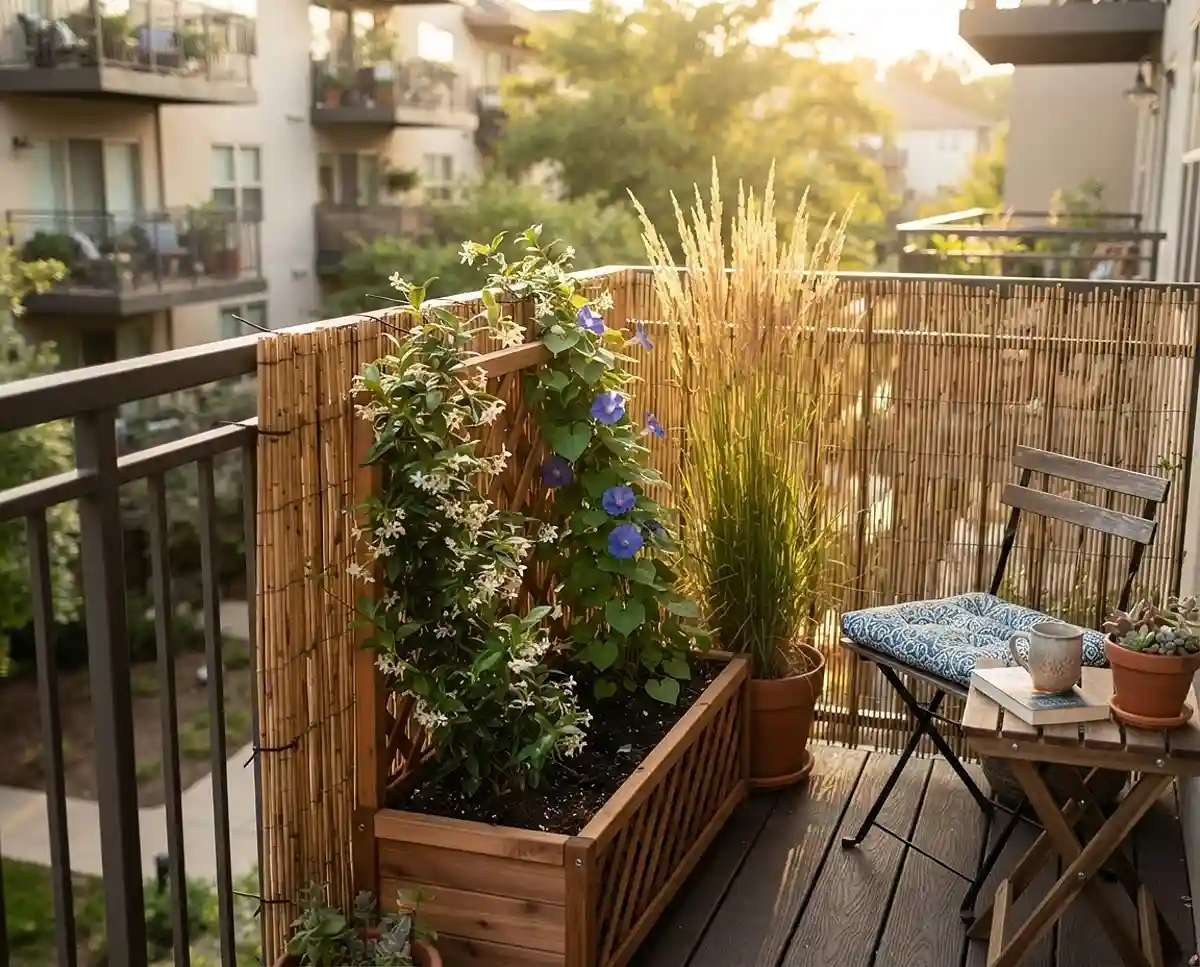
Balcony Privacy Fence Ideas for Renters
Want balcony privacy without drilling? A balcony privacy fence plus climbing plants blocks nosy neighbors fast, and it’s renter-friendly. Here’s exactly how.
I’ve grown tomatoes, jasmine, and a stubborn pot of mint on a north-facing, third-floor balcony in zone 6b for eight years. For the first three, my neighbor across the courtyard could read my mail. These are the fixes that finally worked.
Table of Contents
The Need for Privacy: Transforming Your Exposed Balcony
You don’t need a backyard to feel secluded outdoors. A few feet of small fencing for garden use, paired with climbing container plants, turns an exposed, windy balcony into a lush, private nook.
The pairing works because each half covers the other’s weakness. Fencing gives instant cover while plants grow in. Plants soften the hard edges and filter wind instead of fighting it.
Most apartment balcony garden ideas skip privacy, yet it’s what makes you actually use the space. If you want plant-only options, browse these climbing plants for privacy too.
Assessing Your Balcony’s Structural and Legal Constraints
Before you spend a dollar, audit two things: what your building allows and what your balcony can physically carry. Skip this step and you risk a fine, a dented railing, or a screen sailing onto the street below.
Checking HOA Rules and Lease Agreements
Quick Answer: Check your lease or HOA rules for exterior appearance, railing attachments, and height limits. Choose zero-drill, temporary options that never hang over the outer edge or permanently alter the facade.
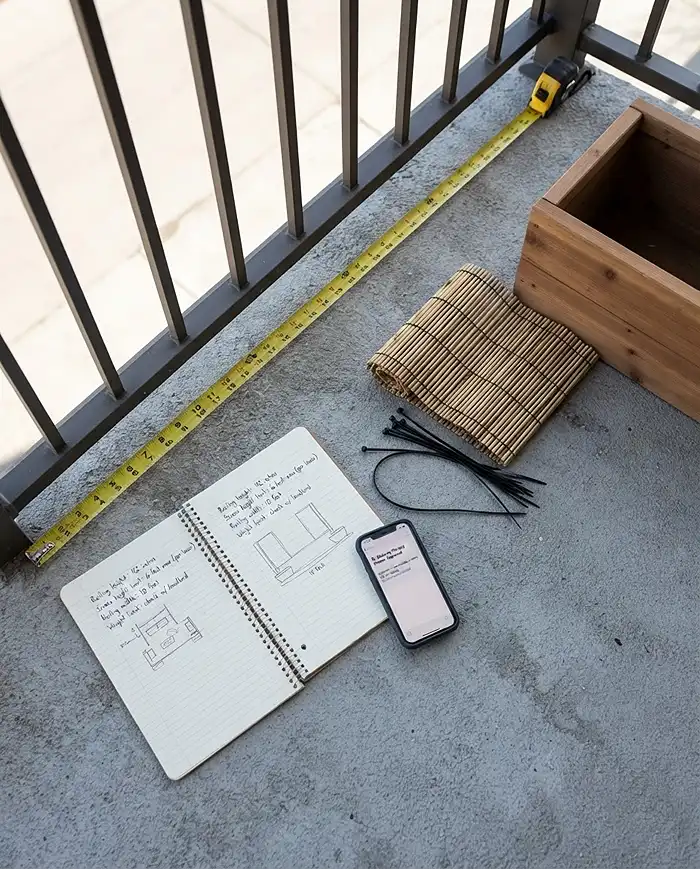
Look for clauses on “alterations” and “exterior appearance.” Zip-tied screens and freestanding planters usually count as removable. Still, email your landlord a photo of the plan and keep the reply on file.
Calculating Wind Load and Weight Capacity
Quick Answer: Solid fencing catches wind like a sail. Use permeable screens that let some air through, and anchor freestanding pieces with heavy, soil-filled planters so nothing tips over or strains your railing.
Wind speeds climb with height, and corner balconies funnel gusts. Ask your landlord for the floor load rating. Many residential balconies are designed for about 60 pounds per square foot, and a wet 20-gallon planter weighs roughly 80 to 120 pounds.
Real Example: My first solid acrylic panel survived exactly one October storm. A 40 mph gust at 2 a.m. knocked it into the railing and cracked a ceramic pot. I switched to mesh and haven’t had a repeat.
Top Small Fencing Materials for Urban Balconies
The best options are light, weather-proof, and slim enough for a tight concrete footprint. As of fall 2026, all four below are easy to find online and at big-box garden centers.
| Material | Best For | Watch Out For |
|---|---|---|
| Rolled bamboo or reed | Natural look, airflow, metal railings | Rots in damp shade; needs winter care |
| Cedar or acacia lattice planter | Climbers and privacy in one piece | Heavy; check floor load first |
| UV-stabilized mesh netting | Tight budgets, windy balconies | Utilitarian look; fades after a few seasons |
| Faux ivy rolls | Zero-maintenance greenery | Can look plasticky up close |
Bamboo and Reed Screens for Organic Texture
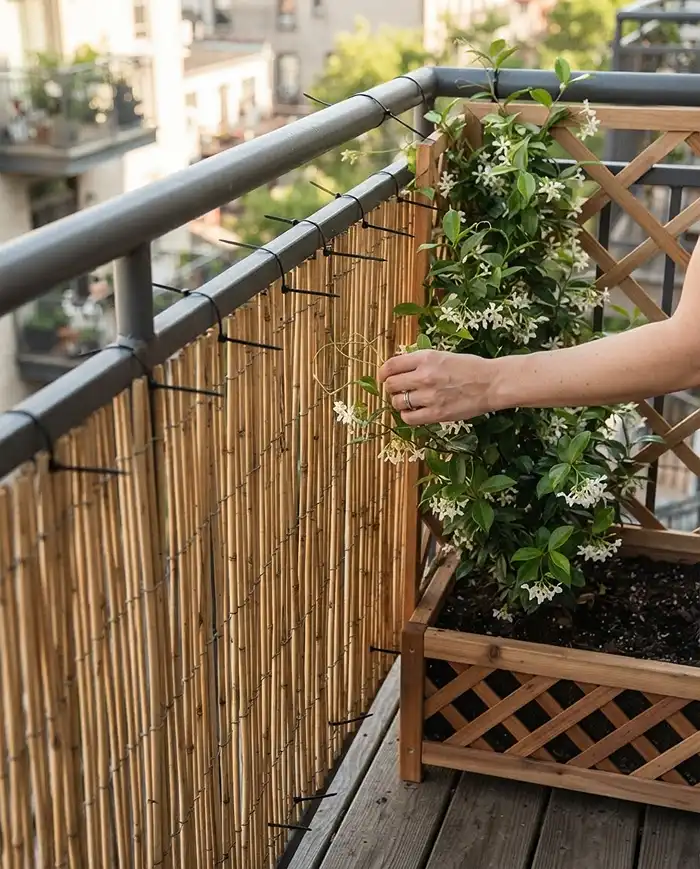
Rolled bamboo and reed fencing is the cheapest way to get a tropical look. It unrolls like a rug, attaches straight to an existing metal railing, and blocks sightlines while letting air through.
Buy split bamboo or willow-style rolls, 4 to 6 feet tall, with sturdy 3/4-inch canes. Skip thin, loosely wired versions, which fray by spring.
Pro Tip: Mount it on the inside of the railing so wind pushes the screen against the bars instead of pulling it away.
Freestanding Wooden Lattice and Trellises
Invest in a rot-resistant cedar or acacia lattice panel that’s built into a deep planter box. This design combines the privacy wall and the growing space, which saves precious floor area.
Cedar resists rot naturally, and acacia weathers to a silvery grey. Expect 40 to 60 pounds empty and far more once filled. Our guide to tall balcony planters for privacy compares sizes.
Fabric Privacy Nets and Faux Ivy Rolls
UV-stabilized mesh privacy netting and artificial ivy rolls are the lightest budget fix. Both block street views the day you install them and need zero watering or pruning.
Pick HDPE mesh rated around 80 to 90 percent shade, which still lets wind through. Cheap ivy fades to yellow-green within two summers, so buy panels labeled UV-resistant.
Add a few pots and you’ve got one of the easiest balcony garden ideas for renters on a tight budget.
Pairing Living Plants with Your Balcony Fence
Raw fencing looks harsh and sterile by itself. Layer live plants in front of it and you get a living wall that hides you, cools the concrete, and smells better too.
Fast-Growing Climbing Vines (Jasmine and Morning Glory)
Quick Answer: Star Jasmine gives perennial fragrance, while Morning Glory covers a lattice in one season. Plant either at the base of a wooden lattice and weave the tendrils through the holes by hand.
- Star Jasmine (Trachelospermum jasminoides): evergreen, scented, and hardy in zones 8-10. In zone 6b, mine winters in my living room.
- Morning Glory ‘Heavenly Blue’: an annual that climbs 8 to 10 feet. Soak seeds overnight and sow after your last frost.
Guide new shoots sideways every few days. Left alone, twining vines race upward and leave the lower lattice bare. Check your zone on the USDA Plant Hardiness Zone Map before buying any perennial.
Real Example: I sowed ‘Heavenly Blue’ in 12-inch pots on May 10. By mid-July, the lattice was solid green and the courtyard view was gone.
Tall Ornamental Grasses for Living Screens
Place tall, clumping grasses directly in front of solid fabric screens. ‘Karl Foerster’ feather reed grass grows 4 to 5 feet tall, thrives in zones 4-9, and rustles softly, adding natural white noise.
Clumping bamboo like Fargesia ‘Rufa’ stays put and won’t run like invasive types. Use 15 to 20 gallon pots so roots have room, and expect deep visual texture by the second summer.
Step-by-Step Guide to Installing a Renter-Friendly Balcony Privacy Fence
Here’s the order I follow every spring. Doing the heavy lifting first makes the rest almost effortless.
- Measure the railing length and height, and note door swings and furniture.
- Cut rolled fencing to size with heavy shears, then trim loose strands.
- Position your heavy anchor planters in the corners before attaching anything.
- Attach the screen to the railing with zip ties on the inside face.
- String twine or wire along the new grid so vines have a path to climb.
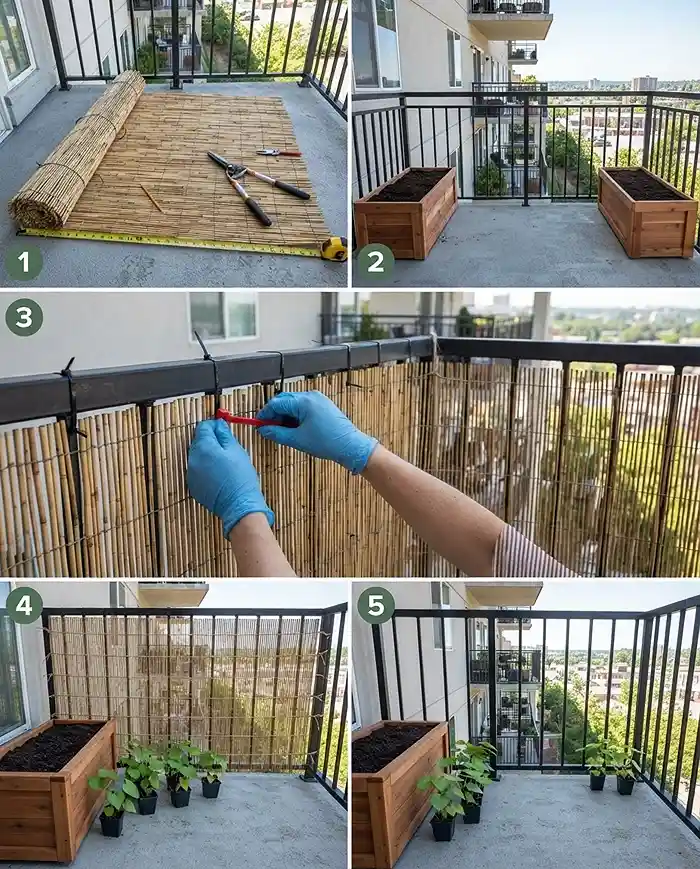
Vines then turn a flat screen into one green wall. New to containers? Start with this beginner small-space gardening guide.
Securing Screens with UV-Resistant Zip Ties
Use black, UV-stabilized, heavy-duty zip ties, spaced every 12 inches along the railing. Standard white nylon turns brittle in sunlight and snaps within a season.
Pull each tie snug and snip the tail flush. Tight screens can’t flap, and flapping is what lets winter gales shred bamboo and fabric.
Pro Tip: Double up your ties at the top corners, where wind stress is highest.
Using Heavy Planter Boxes as Gravity Anchors
Deep, 20-gallon rectangular planter boxes make excellent gravity weights. Fill each with a 2-inch layer of drainage gravel, then wet potting soil, and it will hold a tall screen upright without drilling into the concrete.
Place one box at each end, with the frame’s base pressed against its back. Set them on pot feet so water drains away from the balcony floor.
Seasonal Maintenance for Fences and Climbing Plants
Both your plants and your fencing take a beating from shifting weather. A little scheduled care keeps them looking good for years instead of one season.
Winterizing Wooden and Bamboo Materials
Apply a clear, water-based, plant-safe marine sealant to wooden lattices once a year in early fall, on a dry day above 50 degrees F. This keeps freezing rain from soaking into the grain.
Take cheap bamboo rolls down during deep freezes, since frozen moisture cracks the canes. Store them flat and dry, and cut annual vines to the base after the first hard frost.
Common Problems & Solutions
Elevated, fenced balconies share a few predictable headaches. Most are easy to catch early if you know the signs.
Wind Damage and Fraying Privacy Screens
Constant wind friction weakens zip ties and tears natural reed screens. Do a monthly shake test: grab the screen and tug firmly. Replace brittle ties and trim frayed, rotting reeds right away so damage doesn’t spread.
Real Example: In my second winter, cheap white ties snapped in January and half my reed roll flapped loose. Switching to black UV ties fixed it.
Mildew and Rot on Natural Bamboo Fencing
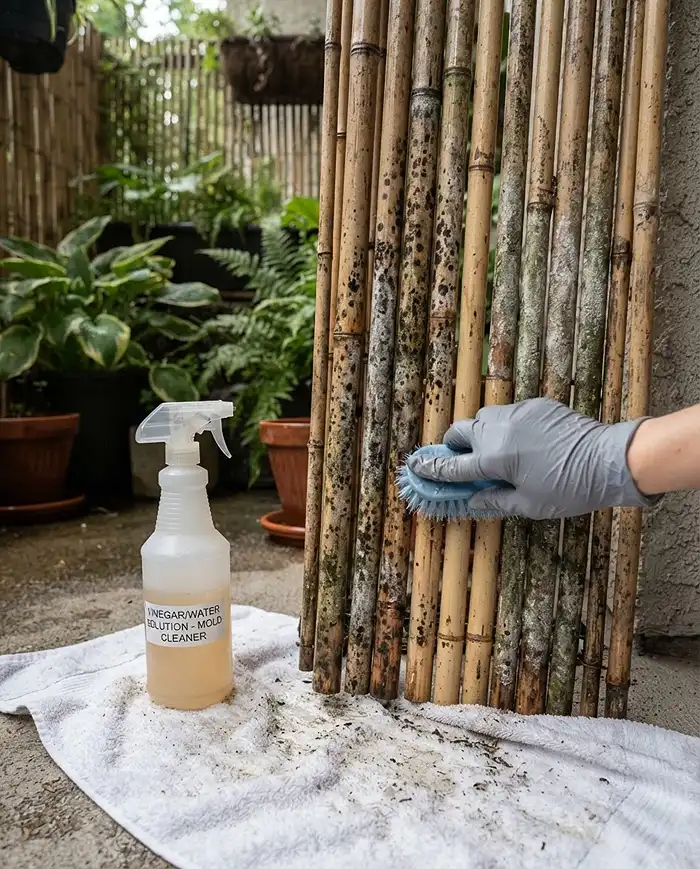
Black or white patches on bamboo usually mean too little sun and stagnant, humid air. Scrub with one part white vinegar to four parts water using a soft brush, then rinse and let it dry in sunlight.
Lay a towel or tray under the screen so runoff doesn’t reach plant roots. Leave a 2-inch gap between screen and wall to keep air moving. Skip bleach, which can harm nearby plants.
balcony privacy fence FAQs
How high can I build a privacy fence on an apartment balcony?
Most fire codes and HOA rules limit temporary balcony fencing to the height of the existing railing or a maximum of about 6 feet. This keeps emergency rescue access clear and preserves neighborhood sightlines. Confirm the exact limit with your building manager.
Will climbing vines destroy my bamboo privacy screen?
Lightweight annual vines like sweet peas are safe on bamboo. Aggressive woody climbers like wisteria or heavy ivy can warp, crush, and destroy thin bamboo over time. Give those plants a sturdy steel or thick cedar trellis instead.
What is the best zero-drill way to secure a wooden lattice?
Buy a lattice panel that is permanently built into the back of a large, heavy-duty planter trough. The weight of wet potting soil and the plant root mass holds the wooden wall upright against high winds, with no drilling needed.
Which plants give balcony privacy the fastest?
Morning glory, scarlet runner beans, and sweet peas grown from seed can cover a lattice in roughly 8 to 10 weeks. They are annuals, so replant each spring. For year-round cover, add an evergreen like star jasmine in zones 8-10.
Will a privacy screen make my balcony too dark for plants?
Choose mesh or reed with about 70 to 85 percent shade and leave a small gap at the top. That blocks views while keeping light and airflow for your plants. Dense, solid panels can leave container plants leggy and cause mildew.
Key Takeaways
- A balcony privacy fence works best when it’s permeable, removable, and anchored by heavy planters instead of drills.
- Check your lease or HOA rules first, and keep screens at railing height or under about 6 feet.
- Secure bamboo or mesh with black, UV-stabilized zip ties every 12 inches.
- Pair screens with Star Jasmine, Morning Glory, or ‘Karl Foerster’ grass for a living wall.
- Do a monthly shake test and seal wooden lattices once a year to avoid winter damage.