
Self Watering vs Regular Pots: What Actually Changes
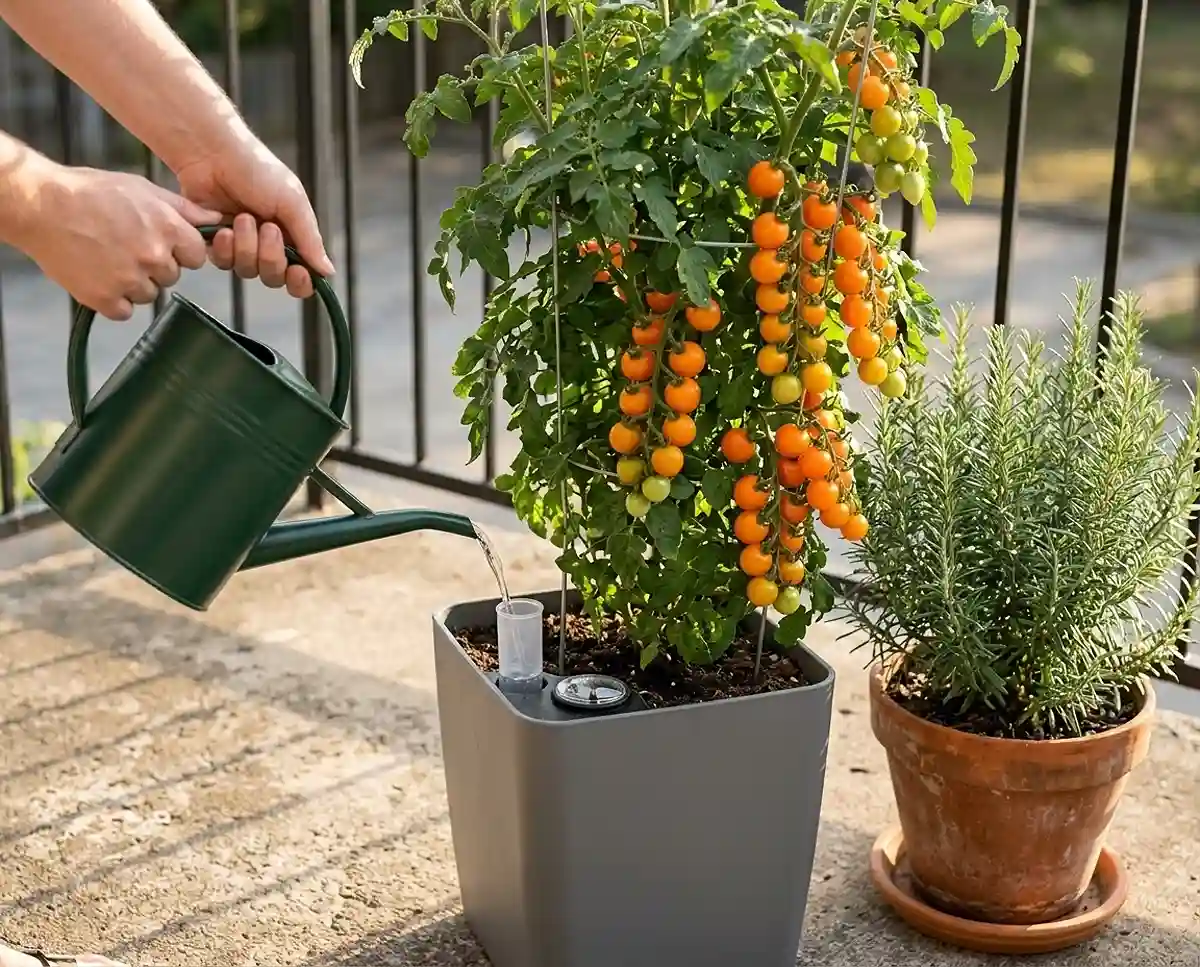
Self watering vs regular pots wasn’t close. Self watering balcony planters cut my July refills from daily to every five days, with zero midday wilting.
Test setup: zone 8b, south-facing concrete patio, 12 containers, March to October 2026. Six were sub-irrigated, six were standard drainage pots. All held 7 to 10 gallons.
Self-watering didn’t win everywhere, though. Rosemary died in one. Below is what changes in soil, weight, feeding and routine, so you can match each plant to the right pot.
Table of Contents
How Self-Watering and Regular Pots Work
Verdict: Regular pots drain downward. Self-watering pots pull water upward from a reservoir. That single difference drives every other change in this article.
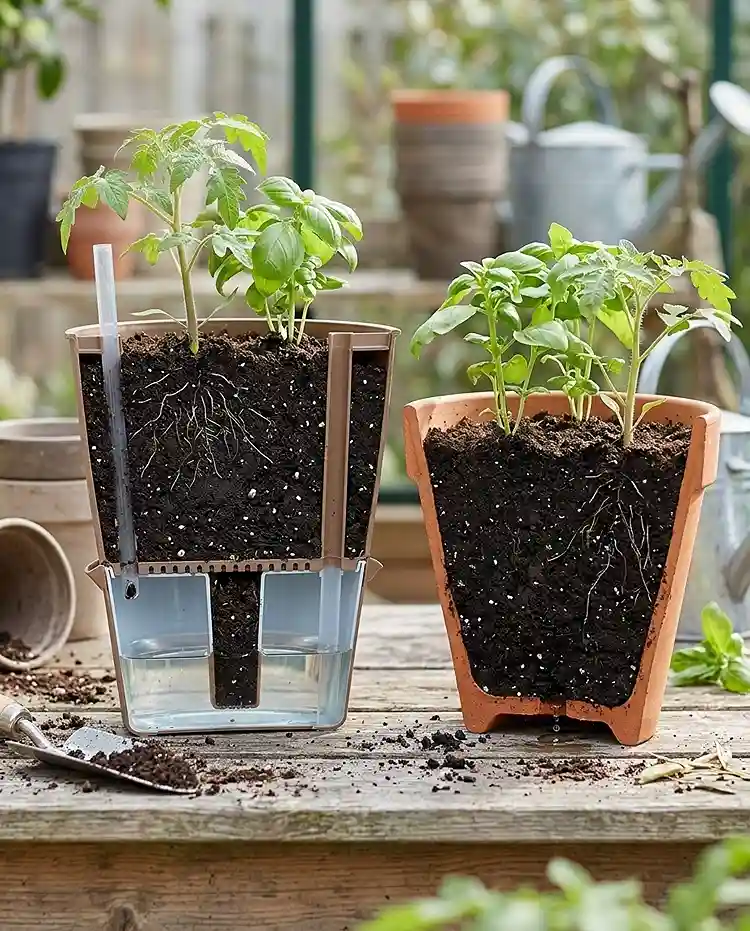
A regular pot lets gravity drag water through the soil and out the drain hole. A sub-irrigated planter (SIP) stores water under a false bottom. Capillary wicking [soil pulling water upward like a sponge] feeds the roots, and an overflow spout prevents flooding.
Self Watering vs Regular Pots: Quick-Glance Scorecard
| Factor | Self-watering | Regular |
|---|---|---|
| Days between refills (85°F+) | 4 to 7 | 1 |
| Downstairs drips | Overflow spout only | Drain holes, needs saucer |
| Upfront cost per pot | $25 to $60 | $8 to $25 |
| Winter frost survival | Cracks if left full | Fine if frost-rated |
| Weight when full | Heavier by reservoir water | Lighter |
| Root rot risk | Higher with wrong soil | Lower |
Fabric is a third option. I compared it in pots vs grow bags for balconies.
Wind, Sun and Shade Change the Winner
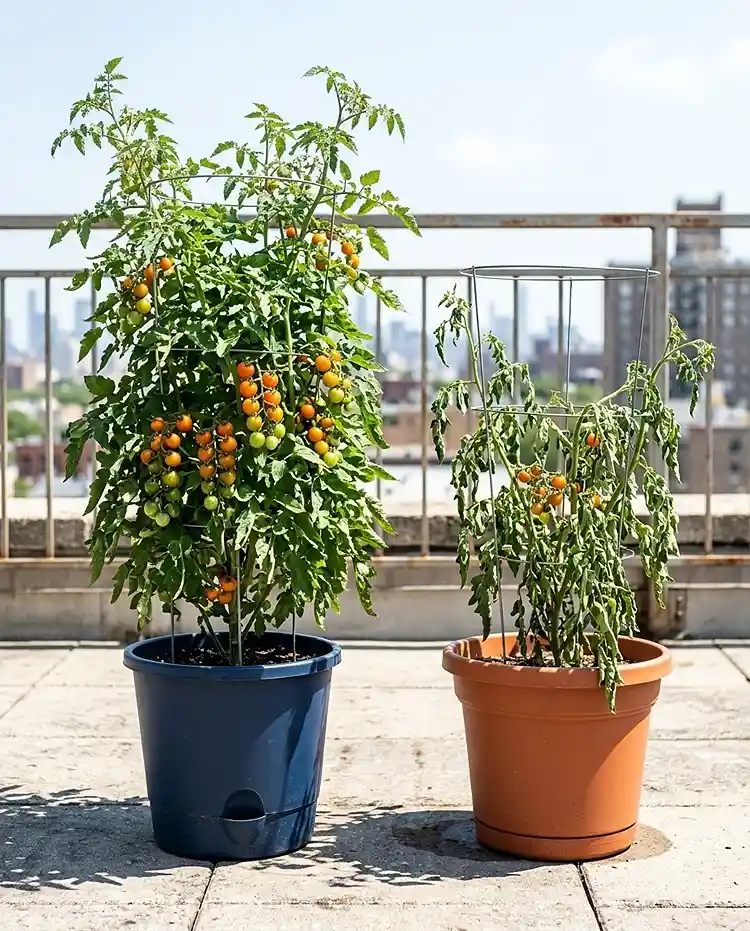
Windy, south- or west-facing spots favor closed reservoirs. They resist surface evaporation. My regular-pot tomatoes wilted by 2 p.m. in July. The sub-irrigated ones didn’t.
Damp north-facing shade flips the result. The soil stays too wet in a SIP there. Breathable regular pots perform better.
What Actually Changes in Your Setup
Verdict: Three things change: soil, weight and feeding. Skip any one and roots suffocate or the planter cracks.
Potting Soil: Wicking Mix vs Moisture-Holding Mix
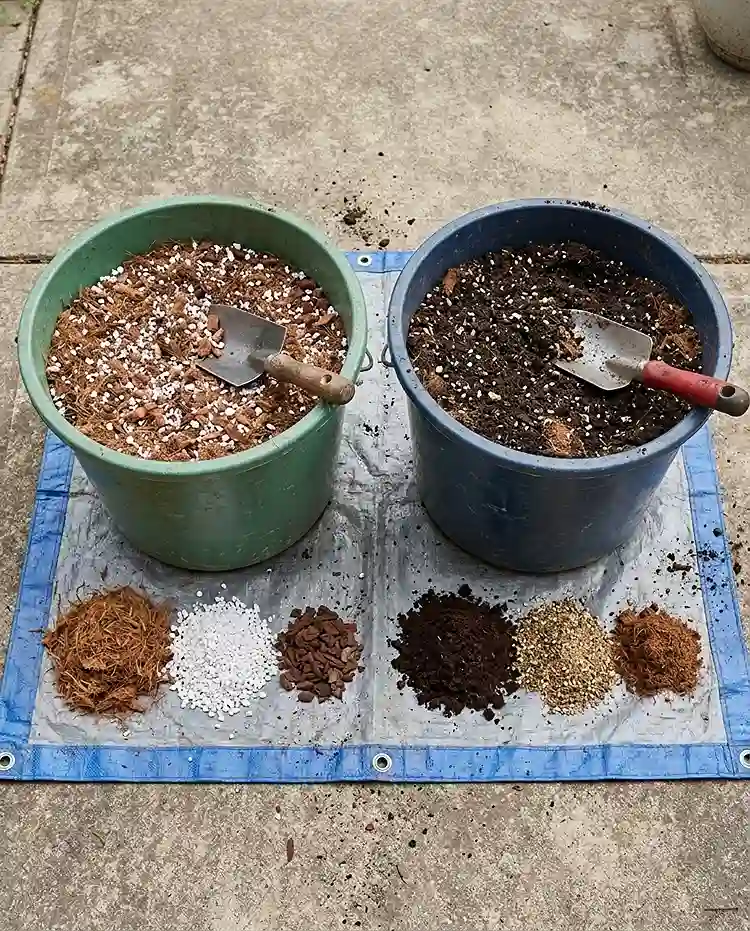
Dense compost goes sour and anaerobic [starved of oxygen] in a SIP. Use a different mix for each system.
- SIP wicking mix: 50% coco coir, 30% perlite, 20% fine pine bark. Aim for pH 6.0 to 6.5.
- Regular pot mix: 50% compost, 30% vermiculite, 20% coco coir. It holds moisture between waterings.
Weight: Reservoir Plus Wet Soil
One gallon of water weighs 8.34 lbs (3.78 kg). A 4-gallon reservoir adds over 33 lbs (15 kg) of permanent load before the soil even gets wet.
Check your balcony’s load limit first. If weight is a problem, start with these lightweight balcony planters.
Feeding: Top Dress, Don’t Pour
Capillary action pushes dissolved salts to the top inch of soil. Top-dress SIPs with slow-release 14-14-14 granules, about 1 tablespoon per gallon of soil. Regular pots leach nutrients out the drain hole, so feed them half-strength liquid fertilizer every two weeks.
Plant-by-Plant Matchup
Verdict: Thirsty heavy feeders belong in SIPs. Drought-hardy Mediterranean plants belong in regular pots. Mixing them up is the most common mistake I see.
Plants That Love Self-Watering Planters
Test notes, 2026 season: ‘Sungold’ cherry tomatoes in 10-gallon SIPs reached 5 feet by July 1. The regular-pot plants hit 3.8 feet. Yield was 11.4 lbs against 8.1 lbs per plant, and blossom end rot dropped from 9 fruits to 1.
- Do: tomatoes, patio eggplant, cucumbers, lettuce, Boston ferns, Supertunias.
- Skip: anything that wants a dry spell between drinks.
Plants That Demand Regular Drainage Pots
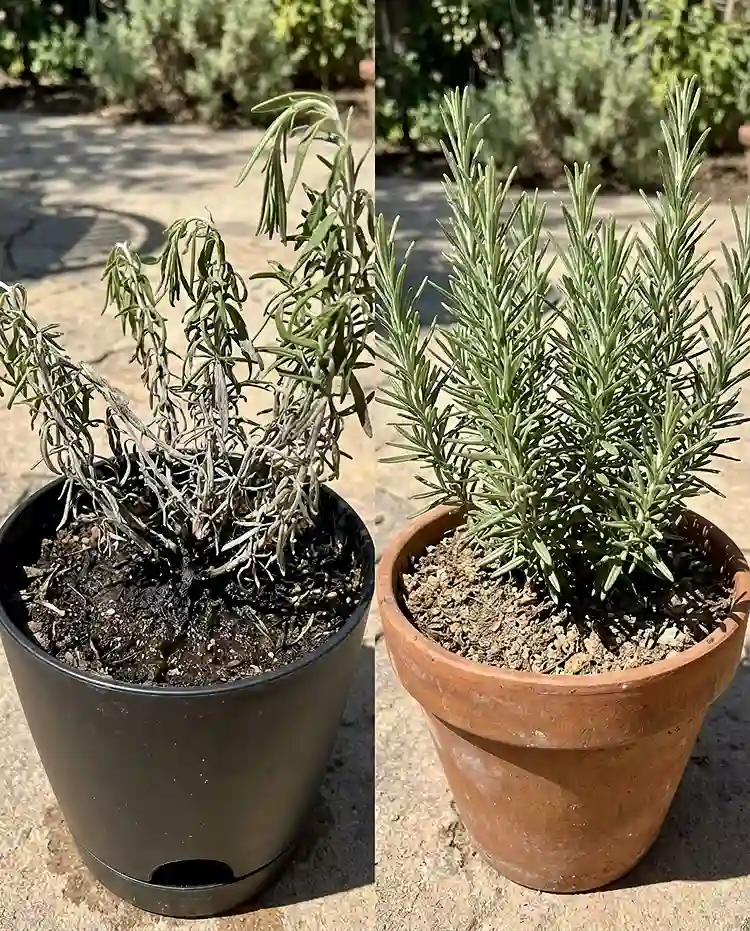
Failure note: I planted ‘Tuscan Blue’ rosemary in a SIP in April. Crown rot killed it in six weeks. It needs a full wet-to-dry cycle, and a constant reservoir never lets the roots breathe.
Lavender, agave, sedum and dwarf Meyer lemon follow the same rule. Give them regular pots.
Railing Boxes and Hanging Baskets
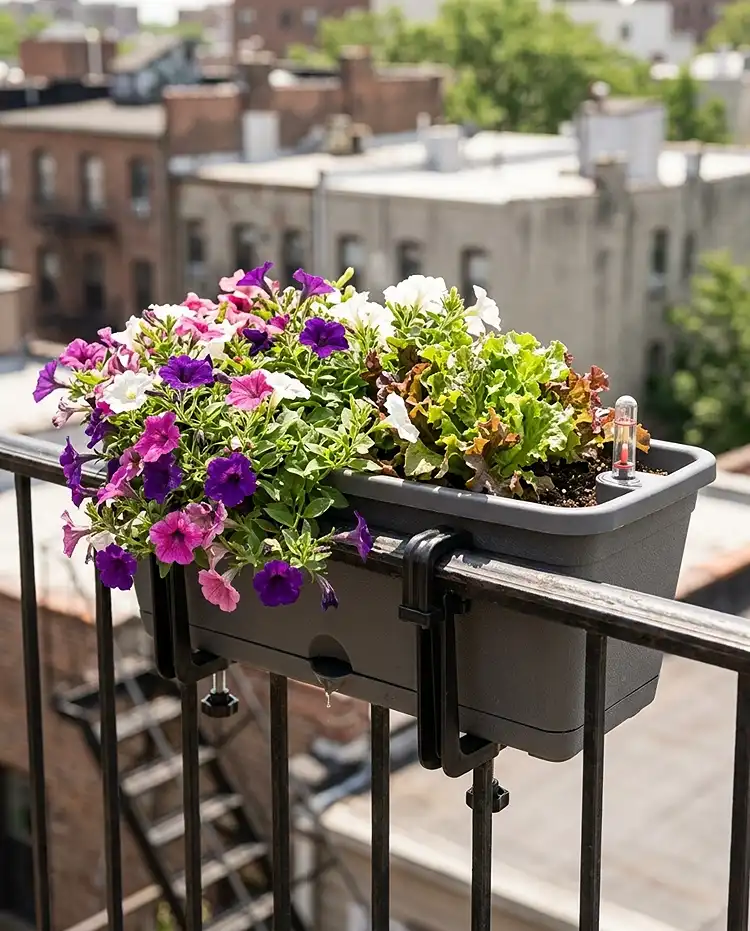
Shallow 6 to 8 inch troughs and hanging baskets dry out in hours. Switching to sub-irrigated boxes ended my twice-daily summer watering. Browse these balcony railing planters for self-watering options.
How Your Watering Routine Changes
Verdict: Water new transplants from the top for two weeks. Then let every reservoir run dry before refilling. Skipping either rule drowns seedlings.
The 2-Week Top-Watering Rule
Seedling roots are too short to reach the wicking zone. Leave the reservoir empty and water from the top for 10 to 14 days, like a regular pot.
The 24-Hour Dry-Down Between Refills
Let the reservoir sit dry for 24 to 48 hours before refilling. Fresh oxygen gets pulled into the root chamber. For regular pots, use the knuckle test: push a finger 2 inches down and water only if dry.
DIY Retrofit for About $5
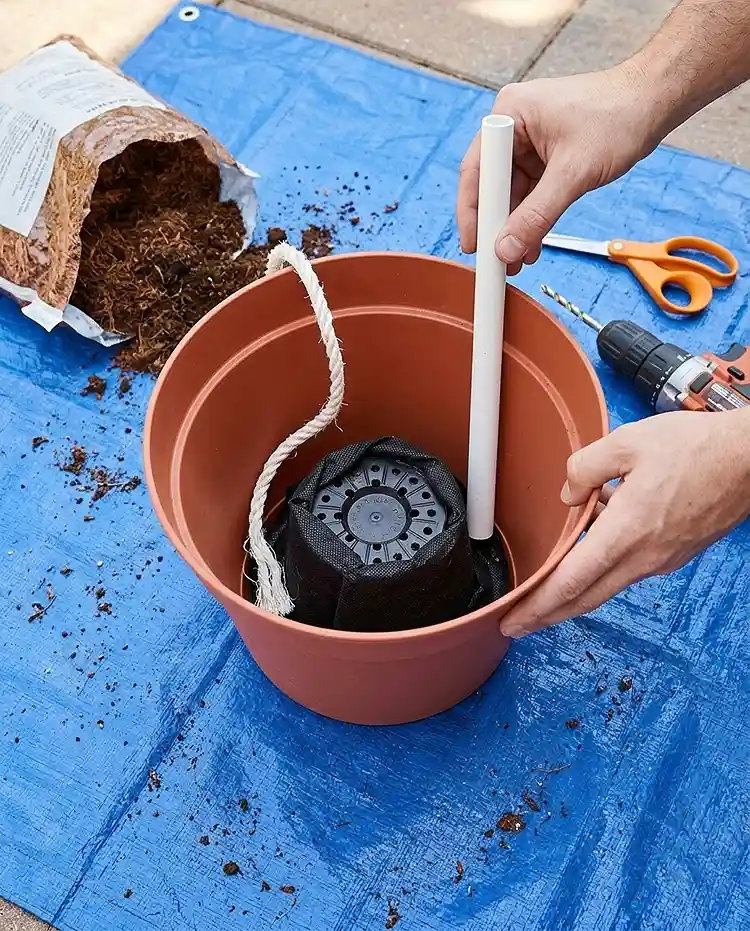
Turn any regular pot into a SIP. Set an inverted perforated nursery pot wrapped in landscape fabric in the base. Add a 1-inch PVC fill pipe and a nylon rope wick. Renters will like this trick, and more are in these renter-friendly planter solutions.
Seasonal Maintenance, Rain and Winterizing
Verdict: Flush both systems with clean water each spring. Watch overflow in summer storms. Drain every SIP reservoir before the first hard freeze.
Rainstorms and Overflow Spouts
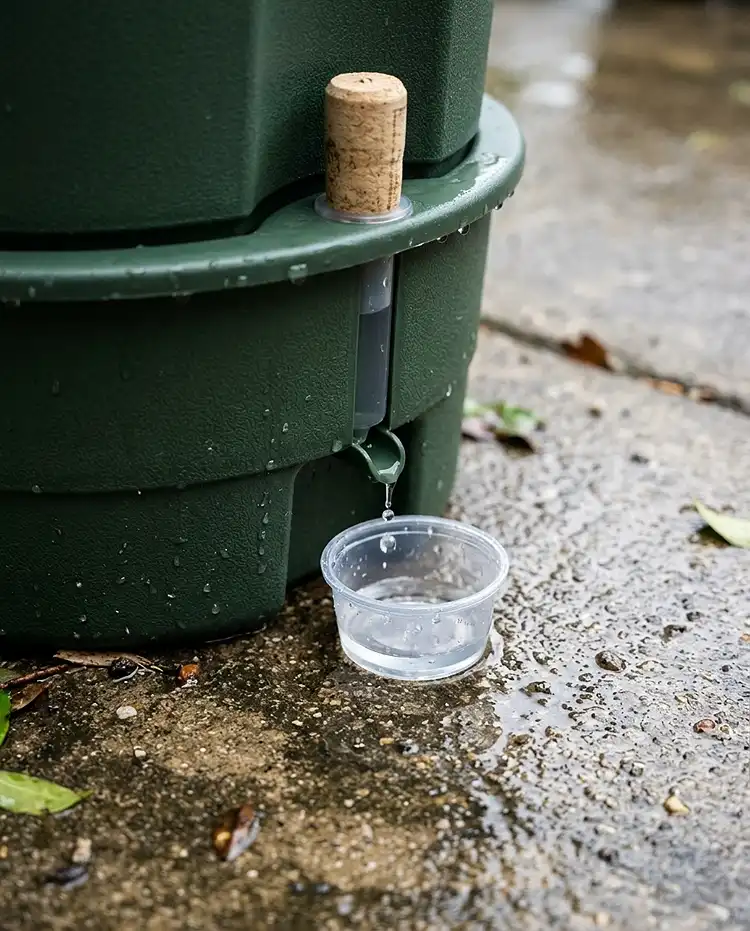
Overflow holes let extra rain escape. Set a small catch cup under the spout so water doesn’t drip on your downstairs neighbors. During week-long rain, pull the bottom drain plug.
For regular pots, a saucer does the same job, as this University of Maryland Extension guide notes.
Winterizing Reservoirs
Water expands about 9% when it freezes. That cracks plastic bases and turns the lower root ball into ice. In zones 3 to 7, drain reservoirs completely by October. My zone 8b freezes arrive in late November, so I drain then. Regular pots only need insulation, like bubble wrap or a move against a wall.
Common Problems and Fixes
Verdict: Most failures come from stagnant water or salt buildup. All three fixes below take under 15 minutes.
Swamp Smell and Rotten Roots
Fine soil washing through the false bottom creates black anaerobic sludge. Flush the fill tube with a 3% hydrogen peroxide solution. Siphon out stagnant water. Line the wicking feet with geotextile mesh.
Mosquitoes in Fill Tubes and Saucers
Adult mosquitoes slip down open fill pipes to lay eggs in the dark. Cap the tube with fine mesh or a wine cork. Or drop a few Bt israelensis granules (Mosquito Bits) down the pipe. Empty regular-pot saucers weekly.
White Salt Crust on the Soil
Constant upward evaporation leaves a mineral crust that burns stem collars. Mid-summer, scrape off the top half inch. Then flush the pot top-down with clean water in the bathtub.
People Also Ask
Can you still overwater a plant in a self-watering balcony pot?
Yes. Overwatering happens if you top-water while the reservoir is full, use dense soil without perlite, or refill daily. Let the reservoir empty for 24 hours between refills.
How long do self-watering planters last while I’m on vacation?
In 85°F (29.4°C) summer heat, a quality planter keeps plants hydrated for 4 to 7 days. In mild spring weather it stretches to 10 to 14 days. That’s roughly triple a regular pot.
Why is the top soil in my self-watering pot dry when the reservoir is full?
That’s normal. The top 1 to 2 inches dry out from sun and wind, which also discourages fungus gnats and weed seeds. Check moisture 3 inches down, where the active roots sit.
Do self-watering planters stop drips onto downstairs neighbors?
Mostly. The overflow spout releases extra water in one spot, so a catch cup solves it. A regular pot drips from every drain hole unless you add a saucer.
Which is better for a beginner balcony gardener?
Self-watering planters, for thirsty crops like tomatoes, greens and basil. They prevent midday wilting and reduce leaks. Keep a few cheap regular pots with saucers for rosemary and succulents
The Short Version
- Self watering vs regular pots is a plant-matching decision, not a quality contest.
- Use SIPs for tomatoes, greens, cucumbers and railing boxes in sun and wind.
- Use regular drainage pots for rosemary, lavender, succulents and citrus.
- Switch soil, top-water new transplants for two weeks, and drain reservoirs before freezing.