
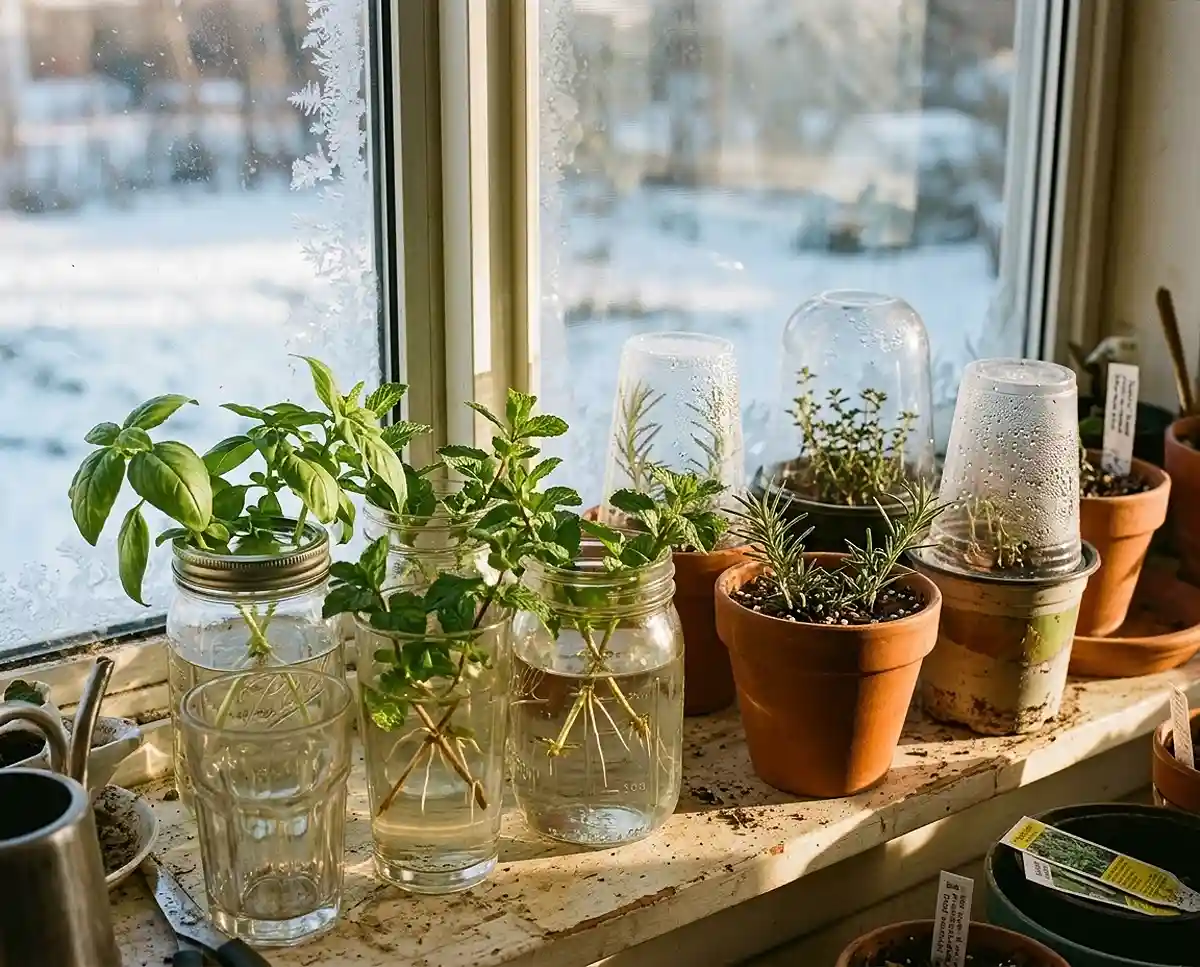
Rooting Herb Cuttings Indoors Before Winter Frost
Frost is coming and your basil is still outside. Rooting herb cuttings indoors builds a winter indoor herb garden for pennies. Here’s how to do it this week.
I grow on a sunny rooftop terrace in zone 7a, in fabric pots, 5-gallon buckets, and a few cedar planters. After 12 years of coaching renters and first-timers, I’ve rescued herbs from every cold snap. Cuttings are my favorite fix.
Propagating herbs is cheaper than buying winter starts. If you’re new to tight spaces, my beginner small-space gardening guide covers the basics.
Table of Contents
The Lifesaving Art of Rooting Herb Cuttings Indoors Before Frost
Short Answer: Rooting herb cuttings indoors means snipping healthy stems before frost, growing roots in water or soil, and potting them for winter. It costs almost nothing, takes little space, and keeps fresh basil, thyme, and rosemary on your counter all winter.
A cutting is a clone of the plant it came from. Same flavor, same vigor, no nursery price tag. Purdue Extension horticulture specialists note that cuttings suit herbs too big to dig up and haul inside.
On my terrace, that’s a 5-gallon bucket of sage I can’t carry downstairs without a crane. A few snips beat a heavy lift every time.
Add it to your fall garden tasks list, right between pulling tomato vines and covering your kale. Twenty minutes now buys you months of fresh leaves.
Choosing the Best Herbs to Propagate Indoors
Short Answer: Match the method to the stem. Soft-stemmed herbs like basil, mint, and lemon balm root fast in water. Woody herbs like rosemary, thyme, and sage prefer a sterile soil mix. Parsley, cilantro, and dill rarely root from cuttings, so start those from seed.
| Herb | Stem type | Best medium | Typical time to roots |
|---|---|---|---|
| Basil | Soft | Water | 5 to 10 days |
| Mint | Soft | Water | 5 to 7 days |
| Lemon balm | Soft | Water | 7 to 14 days |
| Oregano | Soft to semi-woody | Water | 10 to 14 days |
| Thyme | Woody | Sterile mix | 3 to 4 weeks |
| Rosemary and lavender | Woody | Sterile mix | 3 to 5 weeks |
| Sage | Woody | Sterile mix | 3 to 5 weeks |
Soft-Stemmed Herbs: Basil, Mint, and Oregano
Short Answer: Soft-stemmed herbs grow fast and hold lots of moisture, so they root eagerly in a glass of water. Basil, mint, and oregano are the easiest wins. Clip a few tips, set them in a jar, and you’ll often see white roots within a week.
Last October, I snipped six 5-inch Genovese basil tips two weeks before a 31°F night. Five rooted in jars on a south window in 8 days. I harvested my first handful 35 days after cutting.
Basil sulks in the cold. Keep jars above 50°F, ideally 65 to 75°F, or the leaves blacken.
Woody-Stemmed Herbs: Rosemary, Thyme, and Sage
Short Answer: Woody Mediterranean herbs rot quickly when their stems sit in water. Rosemary, thyme, and sage root far more reliably in a sterile, gritty mix. Expect patience: it takes three to five weeks, and the cuttings look unchanged until roots suddenly appear.
My first fall on the roof, I dunked eight ‘Arp’ rosemary cuttings in jars. All eight turned to brown mush in 10 days. The next year I used a 50/50 peat and perlite mix with rooting hormone. Six of eight rooted in four weeks.
Timing Your Cuttings for Maximum Success
Short Answer: Take cuttings in late summer or early fall, while the plant is still growing strongly. Aim for three to four weeks before your first hard freeze. Cuttings from tired, stressed plants root slowly, and cuttings from frozen plants don’t root at all.
Pots living on a balcony or patio? My balcony gardening for beginners guide shows how to track the cold spots where frost arrives first.
Beating the First Fall Frost Window
Short Answer: Check your local first-frost date, then count back three to four weeks. That’s your cutting window. In zone 7a, average first frost falls between late October and mid-November, so mid-September through mid-October is the sweet spot. Frost-damaged stems turn black and won’t root.
As of fall 2026, confirm your date with your county extension office, since averages shift. My rooftop runs a few degrees warmer than the street, but I never bet on it.
| Weeks before first frost | What to do |
|---|---|
| 4 weeks | Take rosemary, thyme, and sage cuttings and set them in sterile mix |
| 3 weeks | Take basil, mint, and oregano cuttings and start the water jars |
| 2 weeks | Check roots and inspect everything for aphids and whiteflies |
| 1 week | Move all pots and jars inside before the first cold night |
Selecting Healthy, Non-Flowering Stems
Short Answer: Choose vigorous, green, non-flowering shoots from the top of the plant. Stems that have bloomed or gone to seed put their energy into flowers, not roots. Pinch off any buds, and skip stems that look speckled, curled, or chewed by bugs.
- Firm, bright green stems about 4 to 6 inches long
- At least two nodes [the bumps where leaves join the stem]
- No flower buds, or pinch them off first
- No spots, curled leaves, or aphids
Essential Tools for Indoor Herb Propagation
Short Answer: You need less than you think. Grab bypass pruners [scissor-style cutters], rubbing alcohol, clear jars, rooting hormone [a powder that triggers roots], and sterile seed-starting mix. Total cost runs roughly $25 to $35 as of fall 2026, and nearly everything gets reused every fall. It all fits in one shoebox.
- Bypass pruners and rubbing alcohol with a clean cloth
- Four to six clear glass jars
- Powdered rooting hormone
- Sterile seed-starting mix, such as peat and perlite
- 4-inch pots with drainage holes
- A clear dome or produce bag
Sterilized Pruners and Clean Glass Jars
Short Answer: Wipe your pruner blades with rubbing alcohol before every cut. Dirty blades carry fungus and bacteria into fresh wounds. Collect clear glass jars, too, so you can watch roots form and spot cloudy water early. Jam jars and olive jars work fine.
Rooting Hormone and Sterile Seed-Starting Mix
Short Answer: Woody cuttings need help. Dip each stem in rooting hormone powder, then plant it in sterile, soilless mix. My blend is half peat and half perlite [white volcanic glass pebbles that keep mix airy]. Garden soil holds too much water and bacteria, so skip it for rooting.
Pour a pinch of powder into a bottle cap and dip from that. Dipping into the container contaminates the whole supply.
Step-by-Step Guide to Rooting Herbs in Water
Short Answer: Cut a 4 to 6 inch stem below a node, strip the lower leaves, and stand it in room-temperature water. Place the jar in bright, indirect light. Change the water every three days. Soft herbs like basil, mint, and lemon balm usually root in one to two weeks.
Taking the Perfect 4-to-6-Inch Cutting
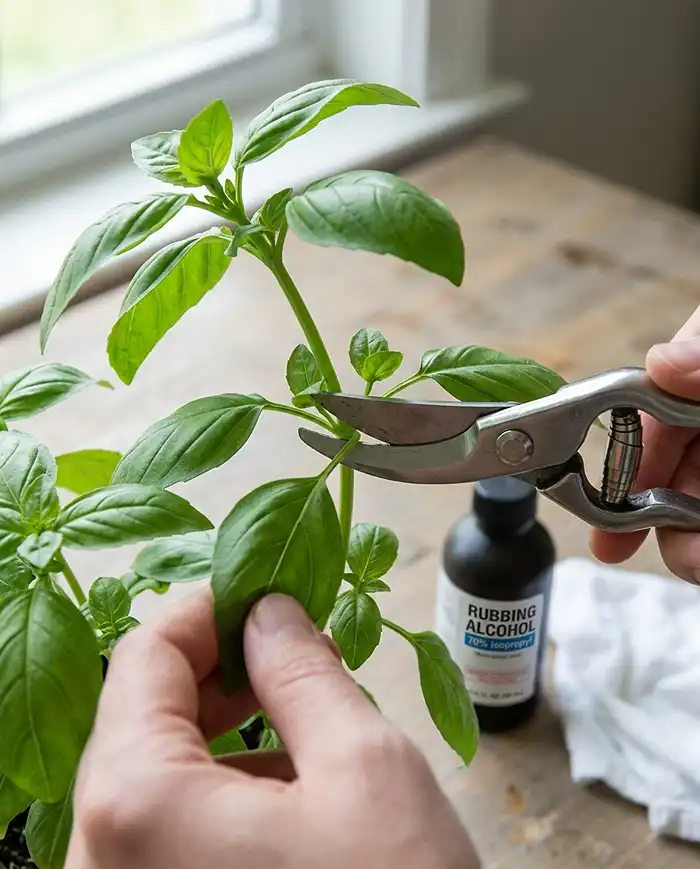
Short Answer: Snip a 4 to 6 inch piece at a 45-degree angle, just below a node. That joint is where active growth cells gather, so roots start there. Cut above a leaf pair on the parent plant, too, and it’ll branch into two new stems.
Use sterile pruners, and get the stem into water within a minute or two.
Stripping Foliage and Changing the Water
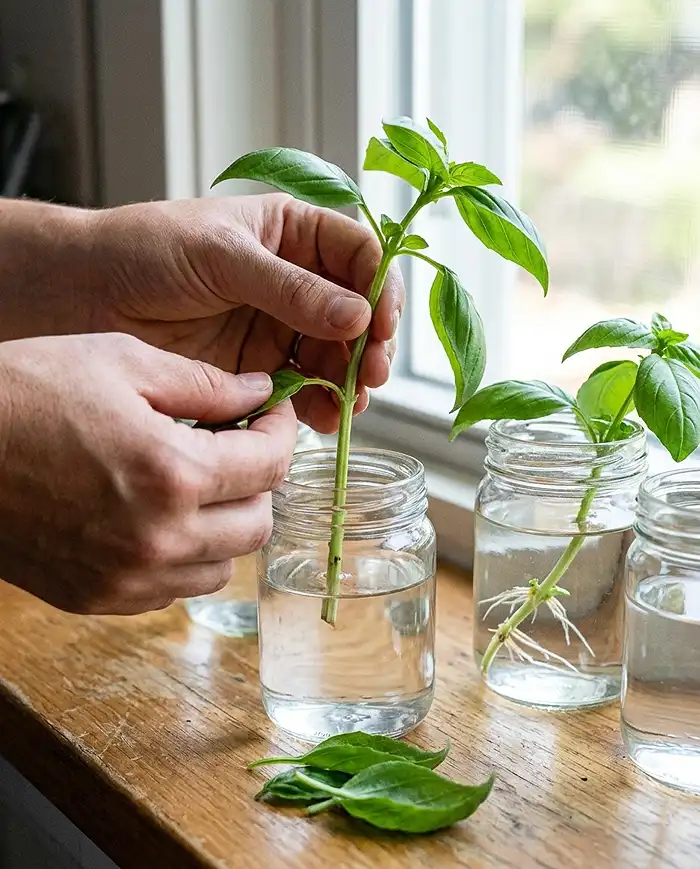
Short Answer: Pull off every leaf that would sit underwater. Submerged leaves rot and turn the water slimy. Leave two or three leaves up top to keep the cutting feeding itself. Then swap in fresh room-temperature water every three days. Cloudy water means bacteria are winning, so don’t wait for the schedule.
Set a phone reminder. Your future self, juggling pesto and laundry, will thank you.
Step-by-Step Guide to Rooting Woody Herbs in Soil
Short Answer: Strip the lower leaves, dip the stem in water, then in hormone powder. Plant it in a pre-poked hole in moist, sterile mix. Cover the pot with a clear bag. Rosemary, lavender, thyme, and sage usually need three to five weeks.
Applying Rooting Hormone and Planting
Short Answer: Wet the stripped stem tip so the powder sticks, then dip it in hormone and tap off the excess. Poke a hole with a pencil first. Otherwise, you’ll scrape the powder off on the way in. Firm the mix around the stem and water lightly.
Use a 4-inch pot and plant three cuttings around the edge, about an inch deep. A seedling heat mat holding the mix near 70°F speeds rooting in a cool room.
Creating a High-Humidity Greenhouse Dome
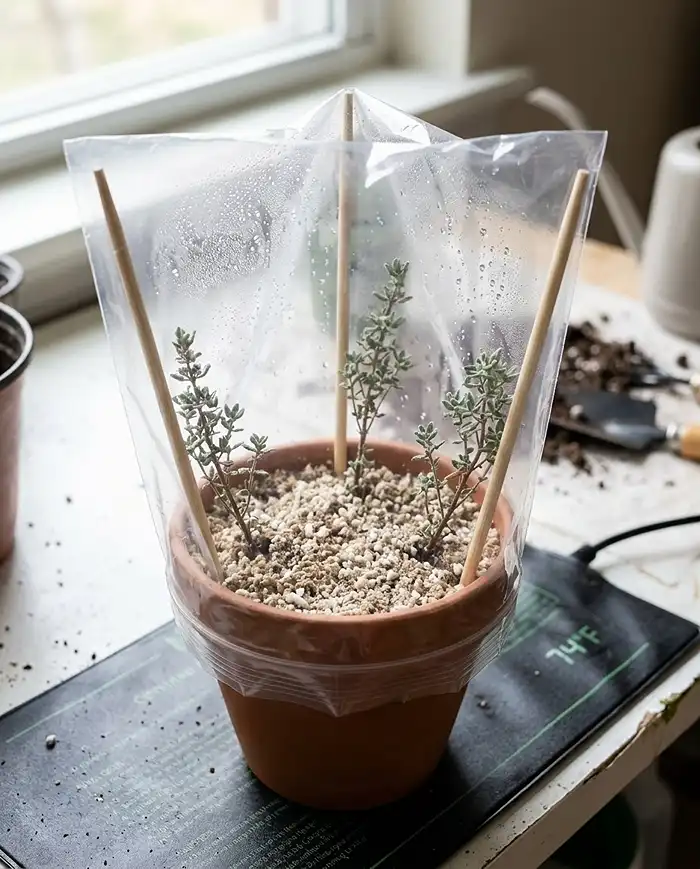
Short Answer: Cuttings have no roots to drink with, so they lose water faster than they gain it. Cover the pot with a clear dome or loose plastic bag to trap humidity. Prop it up with chopsticks so leaves don’t touch the plastic. Vent it for a few minutes daily.
One November, I rooted six English thyme cuttings in a 4-inch pot under a bread-bag dome. Five rooted in 26 days. The sixth touched the plastic and molded.
Transitioning Rooted Cuttings to Winter Pots
Short Answer: Wait until water roots reach about two inches or soil cuttings resist a gentle tug. Then pot them up in 4-inch containers with fresh mix. Rushing causes transplant shock [wilting after roots get disturbed], so be patient. Then give them bright light.
Knowing When the Roots Are Ready to Transplant
Short Answer: Water-grown roots are ready at about two inches long. Anything shorter snaps easily. For soil cuttings, tug gently after three weeks. Resistance means roots are gripping. New leaf growth at the tip is the other good sign. If it slides out, tuck it back and wait another week.
Potting Up and Managing Winter Grow Lights
Short Answer: Plant rooted cuttings in rich indoor potting mix, then park them under full-spectrum LED grow lights for 12 to 14 hours daily. Keep lights 6 to 12 inches above the leaves. A south window alone won’t cut it in December. Daylight fades too fast.
Start in 4-inch pots, and move rosemary to a 1-gallon pot by spring. My container gardening for beginners guide covers drainage and sizing.
Common Problems & Solutions
Short Answer: Most failed cuttings die from one of two things: rot or dehydration. Brown, mushy stems and cloudy water signal bacteria. Drooping leaves signal moisture loss. Both are fixable if you catch them early, so check your cuttings every day or two.
Stem Rot and Murky Propagation Water
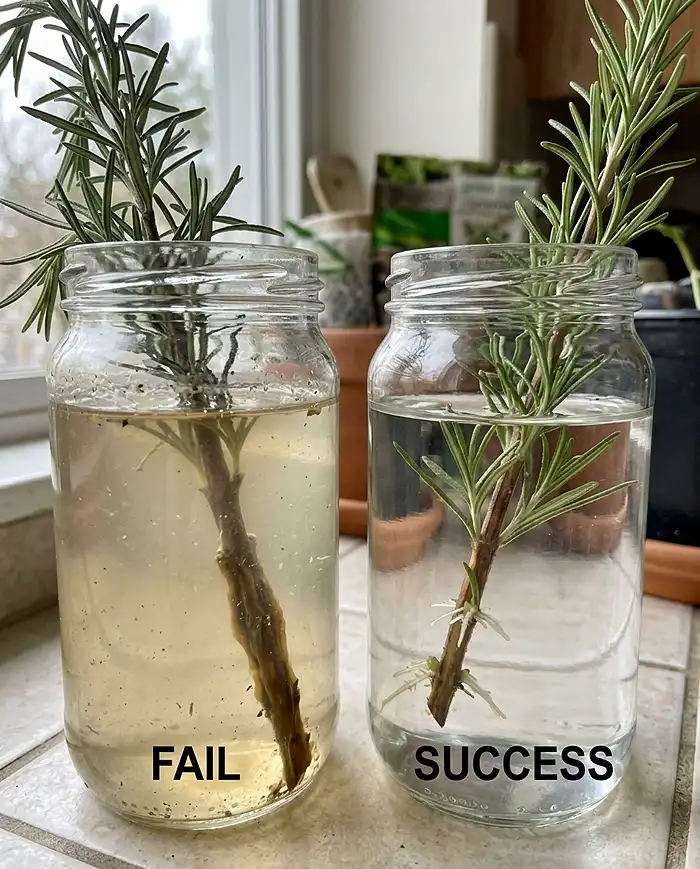
Short Answer: Brown, mushy stems and cloudy, smelly water mean bacterial rot. Toss the rotted stem, scrub the jar with hot soapy water, and start over with a fresh cutting. Change water more often next time, every two days in a warm room.
If only the bottom inch is mushy, recut above it with clean pruners and try again.
Wilting Cuttings in Dry Indoor Air
Short Answer: Wilting means the leaves are losing moisture faster than the stem can replace it. Winter heating makes it worse. Mist the foliage, then cover the cutting with a clear bag or dome to raise humidity. Perky leaves should return within a day.
- Move jars and pots away from heat vents
- Mist leaves each morning
- Keep cuttings out of direct afternoon sun
Frequently Asked Questions
Do I need grow lights to root herb cuttings in winter?
Not for rooting. Cuttings root fine in bright, indirect window light, and harsh direct sun can cook them. Once they’re potted, though, mature herbs need full-spectrum LED grow lights to survive the dark winter months.
How long does it take for herb cuttings to grow roots?
Soft herbs like mint can show roots in 5 to 7 days. Basil takes about one to two weeks. Woody herbs like rosemary take 3 to 5 weeks in soil, and they look unchanged until roots appear.
Can I keep herb cuttings growing in water all winter?
The roots will survive for months, but plain water has no nutrients, so growth turns thin and flavor fades. Move the cutting to potting mix once roots reach two inches. Soil is what gives you a bushy, flavorful harvest.
Which herbs can’t be propagated from cuttings?
Parsley, cilantro, and dill rarely root from stem cuttings because they grow from a taproot [one thick main root]. Start those from seed indoors instead. Chives do better when you divide a clump and pot it up.
Do I need rooting hormone for basil and mint?
No. Basil, mint, and lemon balm root easily in water without help. Save the powder for woody herbs like rosemary, thyme, and sage, where it noticeably improves your odds.
What temperature is best for rooting herb cuttings indoors?
Aim for 65 to 75°F in the room. For woody cuttings in soil, a seedling heat mat holding the mix near 70°F speeds things up. Keep jars away from cold windowsills and heating vents.
Quick Recap
- Take 4 to 6 inch cuttings from healthy, non-flowering tips three to four weeks before your first hard freeze.
- Root soft herbs in water and woody herbs in sterile mix with rooting hormone.
- Sanitize your pruners, strip the lower leaves, and change jar water every three days.
- Cover soil cuttings with a humidity dome until roots grip.
- Pot up at two inches of root and add LED lights, because rooting herb cuttings indoors now means fresh herbs all winter.