
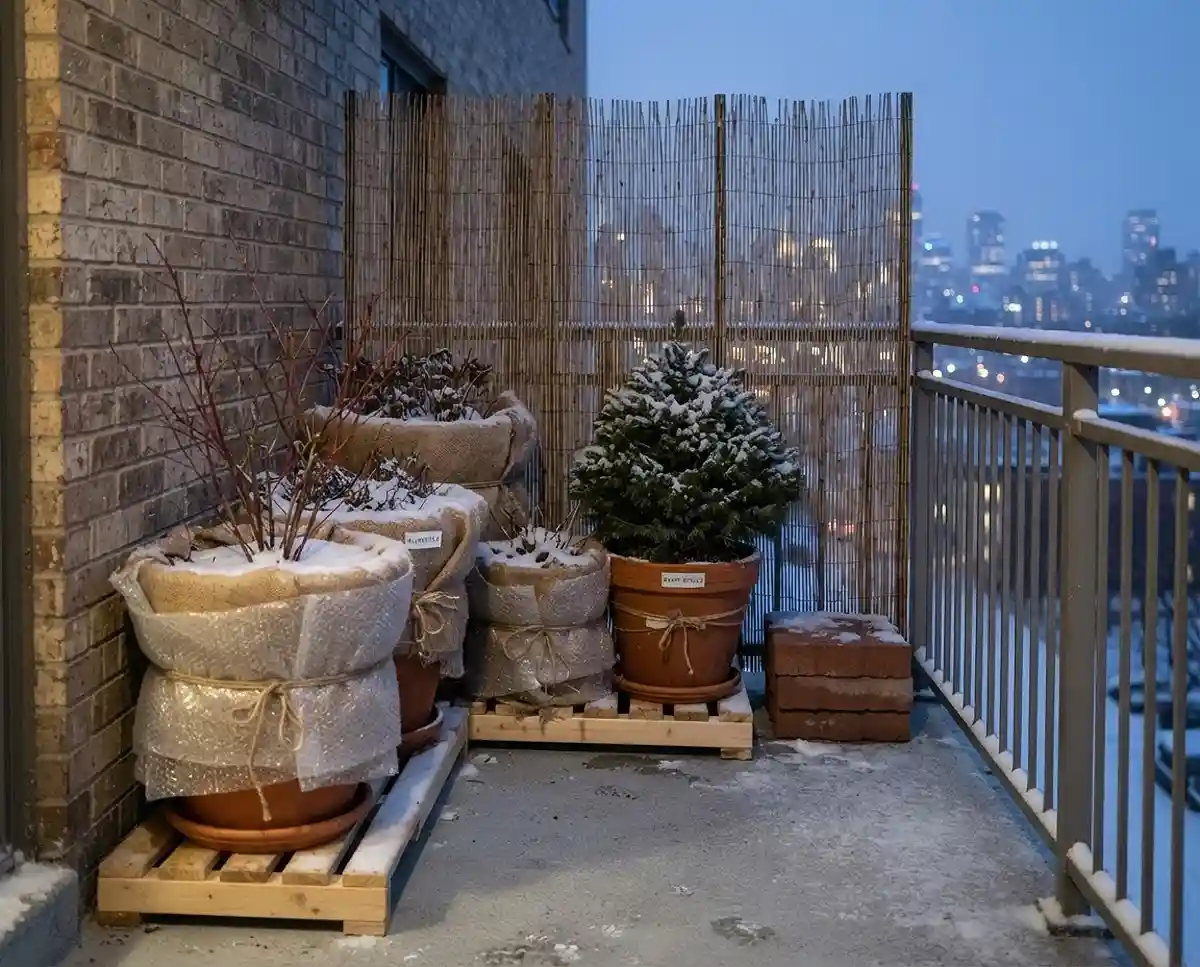
Winterize Balcony Garden
Need to winterize balcony garden pots without drilling into your landlord’s walls? These renter friendly garden tricks keep your perennials alive until spring, as of winter 2026.
I grow on a fourth-floor, west-facing balcony in zone 6b, where January crosswinds can push the feels-like temperature below 0°F. Everything below is freestanding and removable. I’ve tested it for five winters.
Table of Contents
The Renter’s Guide to Winter-Proofing a Balcony Garden
A high-rise balcony is the harshest spot in your building. Wind hits from every side, and the concrete floor holds cold like a slab of ice. Your lease probably bans drilling, so tarps on screwed-in hooks are out.
Zero-drill insulation solves this. Wraps, foam boards, and weighted screens keep potted perennials alive until spring, and they come off without leaving a mark.
Pre-Winter Preparation: How to Winterize a Balcony Garden
Audit your balcony two to three weeks before your area’s first hard freeze (28°F or below). Look up your zone on the USDA Plant Hardiness Zone Map, then walk the space with a notebook. You need to know which pots need action first.
Need ideas for the seasons leading into this? My roundup of renter-friendly fall balcony ideas pairs well with this audit.
Identifying What to Save, Store, or Toss
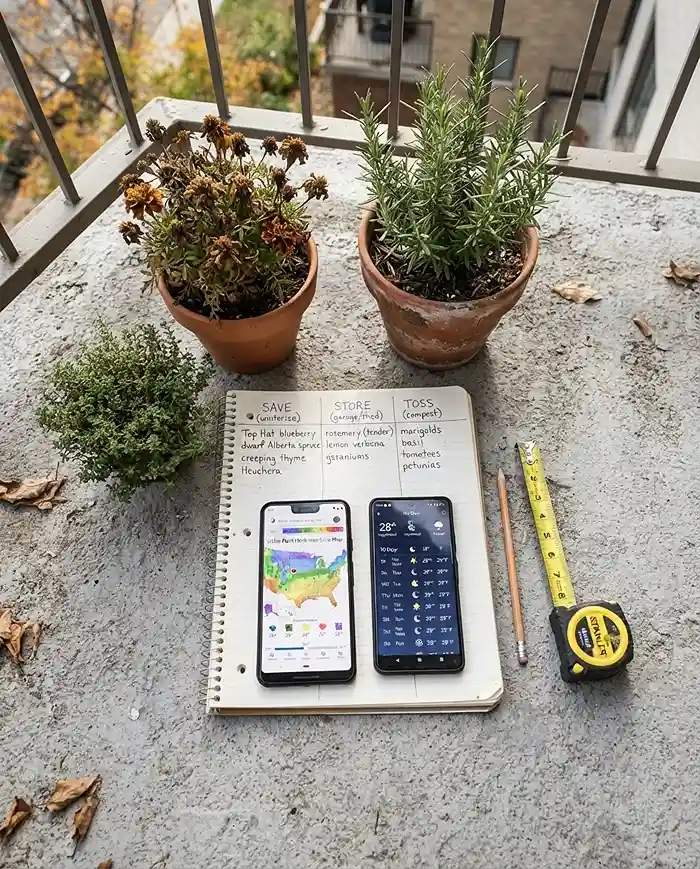
Quick Answer: Toss spent summer annuals, bring tender tropicals indoors before nights hit 45°F, and leave only cold-hardy perennials and evergreens outside. Triage once, early, and be ruthless. Every pot you keep costs wrapping time and floor space.
| Plant Type | Examples | Action |
|---|---|---|
| Exhausted annuals | Petunias, marigolds, basil | Compost or toss |
| Tender tropicals | Meyer lemon, hibiscus, rosemary ‘Tuscan Blue’ | Move indoors before 45°F nights |
| Cold-hardy perennials | Hosta ‘Halcyon’, blueberry ‘Top Hat’, creeping thyme | Wrap and keep outside |
| Evergreens | Dwarf Alberta spruce, Blue Star juniper | Keep outside, shield from wind |
I learned this the hard way. In November 2022, I left a potted Meyer lemon outside for “one more week.” A 26°F night killed every leaf, and the tree never recovered.
Now my tropicals move inside the day the forecast shows a 45°F low.
Understanding Renter Restrictions for Winterizing
Quick Answer: Read your lease for clauses on exterior appearance and structural changes before buying anything. Skip drilled hooks, adhesive strips on masonry, and anything bolted to the railing. Freestanding, removable materials protect both your plants and your deposit.
Most leases ban drilling and visible clutter, not plant covers. Burlap in earth tones looks tidy from the street, while a bright blue tarp draws complaints. If your lease is vague, email your landlord your plan and keep the reply.
- Safe: freestanding trellises, foam boards, jute twine, fleece clipped to your own stakes
- Risky: screwed-in hooks, adhesive hooks on brick, tarps tied to railings
- Ask first: anything that changes how the balcony looks from the street
For more lease-safe setups, see my guide to balcony garden ideas for renters. The same logic applies to a small balcony garden in winter.
Zero-Drill Insulation for Vulnerable Container Roots
Here’s the part most renters miss. Roots are far less cold-hardy than the stems and leaves above them. In the ground, soil insulates them. In a pot, cold hits from the sides and the bottom.
Container plants are effectively one to two zones less hardy than the same plant in the ground. Insulating the pot is the most important step in balcony winterization.
Wrapping Pots in Burlap and Bubble Wrap
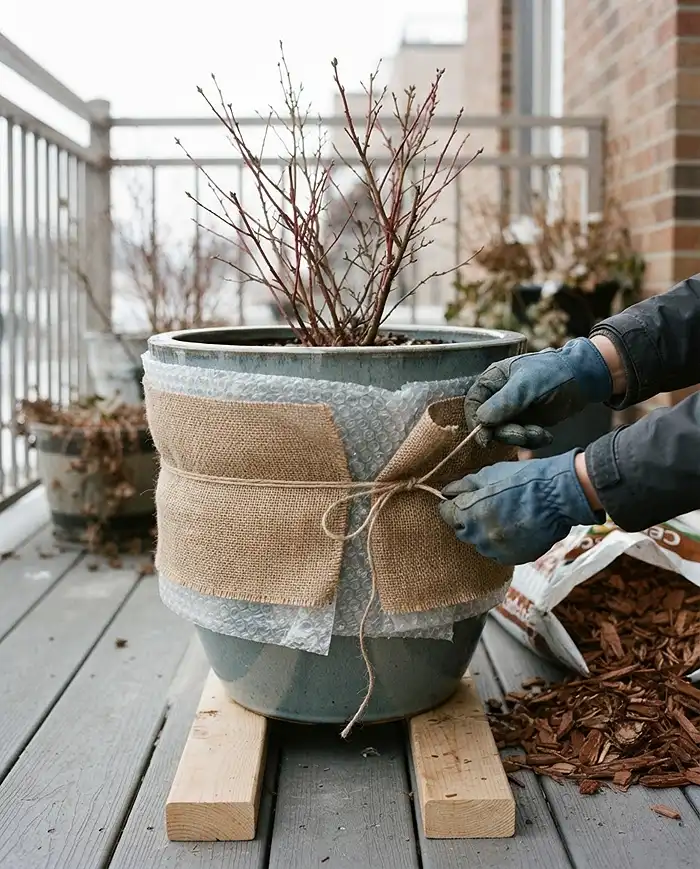
Quick Answer: Wrap each large planter in two layers of horticultural bubble wrap, bubbles facing the pot, then cover with burlap. Tie it with natural jute twine, never adhesive. Keep the drainage holes uncovered.
Use 1/2-inch bubble wrap on pots 14 inches or wider, and overlap the seams by 2 inches. Add 2 inches of shredded bark on the soil surface to slow freezing from above.
My 16-inch glazed pot holding a ‘Top Hat’ blueberry took ten minutes to wrap. During a 9°F night in January 2024, a cheap probe thermometer showed the root zone holding near 24°F.
Utilizing Foam Boards and Pallet Elevators
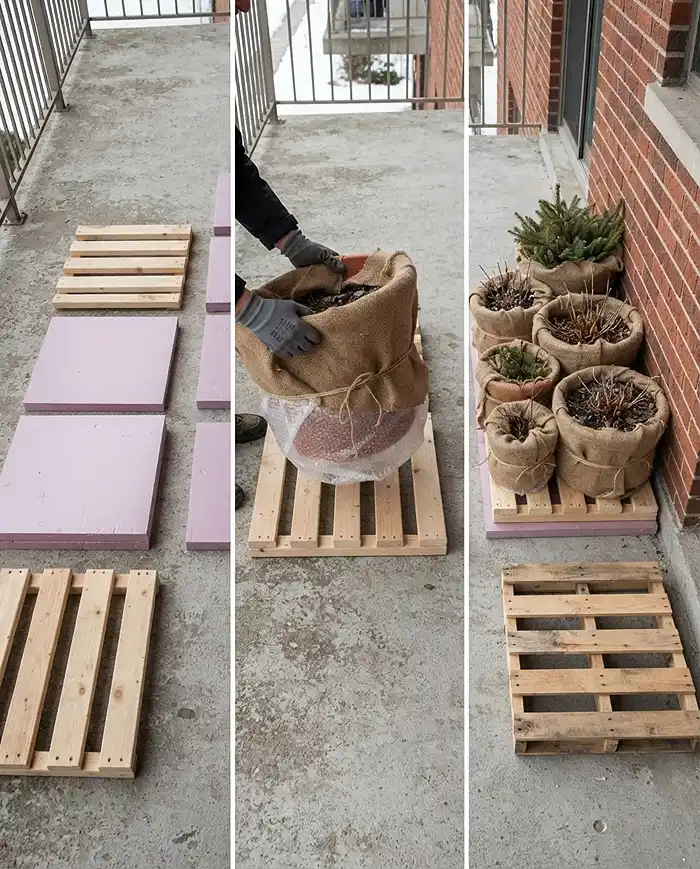
Quick Answer: Concrete pulls heat out of pots through direct contact. Lift every wintering pot onto wooden slats, a small upcycled pallet, or 1-inch rigid foam board. Even a 1.5-inch air gap breaks that cold path.
Cut foam board squares an inch wider than each pot base. Pink or blue extruded polystyrene works best because it doesn’t soak up water.
Pro Tip: Cluster pots tightly against the building wall. That side stays several degrees warmer, and touching pots shelter each other’s sides.
Creating Temporary Windbreaks and Canopy Covers
Winter wind strips moisture from dormant foliage faster than frozen roots can replace it. You can block it without anchoring anything to the building’s masonry. Weight and shape do the work instead of screws.
Freestanding Trellises as Wind Barriers
Quick Answer: Place a heavy-bottomed, freestanding trellis on the windward side of your balcony and weave faux ivy or reed screening through it. It breaks gusts before they reach dormant foliage, with zero drilling.
Pick a trellis about 4 feet tall and weigh the base with pavers. Check your balcony’s load limit first, since wet pots and stone add up fast.
On my west side, a reed-screened trellis cut the browning on my dwarf Alberta spruce noticeably in the winter of 2023-24, compared with the unprotected year before.
Tenting with Breathable Horticultural Fleece
Quick Answer: During severe cold snaps, drape spun-bound horticultural fleece over plant canopies and clip it down. Fleece lets moisture escape. Plastic garbage bags trap condensation, which freezes against leaves and suffocates them.
- Use 1.5 oz fleece, which adds roughly 4 to 8°F of protection
- Clip it to freestanding stakes or tomato cages, not to the railing or wall
- Pull it off on days above 40°F so plants can breathe
- Weigh the hem with small stones so wind can’t lift it
For more ways to cover and dress up an outdoor space without permanent changes, browse these renter-friendly patio garden ideas.
Protecting Renter-Friendly Hardware and Empty Pots
Winter destroys more containers and trellises than pests ever will. A few minutes of storage work in fall protects your investment. Replacing a cracked pot or a flattened trellis costs far more than the effort.
Storing Terracotta to Prevent Frost Heave
Unglazed terracotta is porous. It soaks up autumn moisture, and when that water freezes and expands, the pot shatters from the inside. I lost two 12-inch pots this way in my first winter.
Empty them completely, scrub off old soil, let them dry, and stack them indoors or in a weatherproof deck box.
Securing Furniture Against Winter Gales
Winter storms can turn loose balcony items into projectiles that shatter windows below. Take down tall, top-heavy tension poles and store them. Zip-tie lightweight bistro chairs and tables to the railing with UV-resistant cable ties.
Cable ties cut off cleanly in spring and leave no marks. Check your lease first if you’re unsure about railing rules.
Winter Maintenance for Dormant Balcony Plants
Good winter balcony care looks nothing like summer care. Dormant plants barely use water, so your routine has to change. Most of the job is restraint, plus a quick weekly check.
The Dangers of Winter Overwatering
Quick Answer: Water dormant balcony plants only on mild, sunny days above 40°F (4°C), and only when the top 2 inches of soil are dry. This keeps roots from sitting in frozen mud while still preventing total dryness.
| Condition | Watering Action |
|---|---|
| Daytime above 40°F, soil dry 2 inches down | Water lightly in the morning |
| Daytime below 40°F | Don’t water |
| Soil still damp | Skip and recheck in a week |
Common Problems & Solutions
Wrapped containers create their own small problems. Most are easy to spot if you check on them every few weeks. Here are the two I see most often.
Pests Hiding in Winter Wraps
The cozy gap between pot and burlap attracts overwintering spiders and mealybugs. Untie the wraps every few weeks on a mild day and look at the pot sides and soil surface.
If you find pests, spray dormant horticultural oil once, following the label, then rewrap. Skip the oil when temperatures are below freezing.
Evergreens Drying Out from Freezing Winds
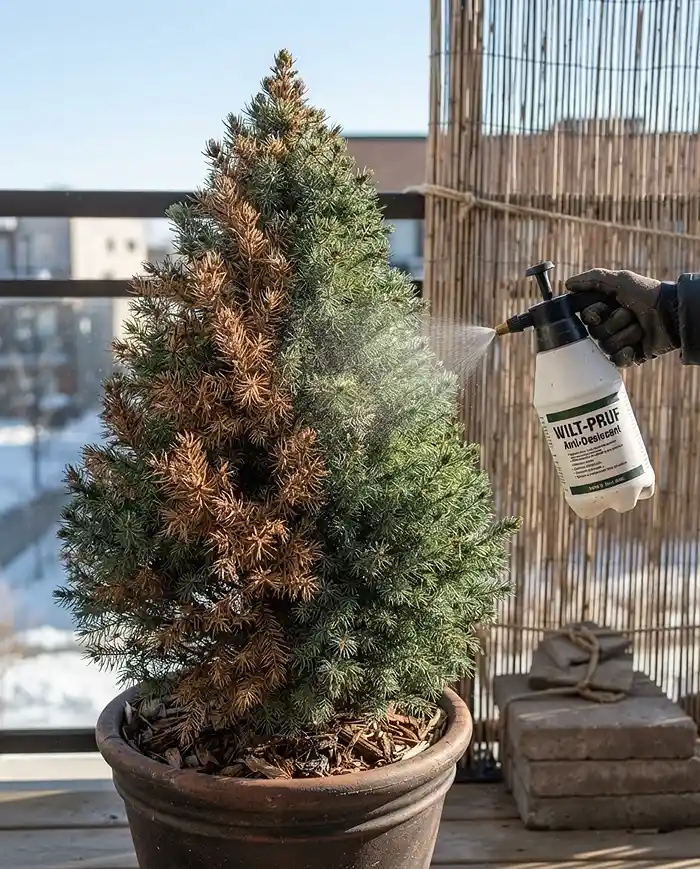
Winter burn shows up as brown, crispy needles. Frozen roots can’t replace the moisture that wind strips from the needles, so the foliage dries out.
Prevent it by spraying an anti-desiccant (such as Wilt-Pruf) on evergreens in late autumn, on a day above 40°F. Reapply in midwinter during a mild spell.
winterize balcony garden FAQs
Can I bring my outdoor balcony plants inside for the winter?
Only tender tropicals like citrus and hibiscus should come indoors. Temperate perennials such as hostas, blueberries, and creeping thyme need a cold dormancy period, and a heated 70°F apartment will disrupt their life cycle and can kill them.
Do wrapped winter pots still need drainage?
Yes. Never block the bottom drainage holes when wrapping pots. Winter rain and melting snow must escape, or the whole root ball can freeze into a solid block of ice.
What is the best cold-hardy plant for a winter balcony?
Dwarf evergreen conifers like Alberta spruce and Blue Star juniper are the most reliable. Cold-hardy perennials like hellebores and heuchera also hold their foliage through snow and keep a bare balcony looking alive.
When should I start to winterize a balcony garden?
Start two to three weeks before your area’s average first hard freeze (28°F or below). In zone 6b, that usually means late October. Check your local frost date and work backward.
When do I take winter wraps off in spring?
Remove wraps in stages once nighttime lows stay above 32°F, usually after your average last frost date. Take off fleece first, then bubble wrap a week or two later so plants can adjust.
Key Takeaways
- To winterize balcony garden containers without drilling, rely on wraps, foam boards, and weighted freestanding screens.
- Insulate pots first. Container roots freeze long before the foliage does.
- Elevate every pot off the concrete and never block drainage holes.
- Use breathable fleece, not plastic, and water only above 40°F (4°C).
- Empty and store terracotta, and zip-tie loose furniture before the first storm.