

Fall Vertical Herb Garden Ideas That Actually Thrive
A fall vertical herb garden stretches your fresh harvest into November and turns a plain balcony wall into a cozy, textured focal point. I run a five-pocket felt planter on my zone 6b balcony, and the switch to cold-hardy herbs each September is the single biggest upgrade I make all year.
You get two wins at once here. First, herbs like thyme and parsley actually improve in flavor once nights cool down. Second, rustic pots and warm lighting make that same wall look like an autumn feature instead of a leftover summer setup.
Table of Contents
Assessing Your Fall Microclimate for Vertical Gardens
A vertical wall behaves nothing like a raised bed once autumn hits. The sun angle drops, wind funnels along building faces, and shallow pockets lose heat fast. I learned this the hard way in year one, when I assumed my south wall would stay warm through October. It didn’t, and I lost half a tray of basil to a surprise cold snap.
Before you swap a single plant, walk outside at 9 a.m., noon, and 4 p.m. and actually watch where shadows fall on your vertical ladder garden structure. Conditions shift fast between September and November, so don’t rely on your summer notes.
Tracking Shifting Autumn Sun Exposure
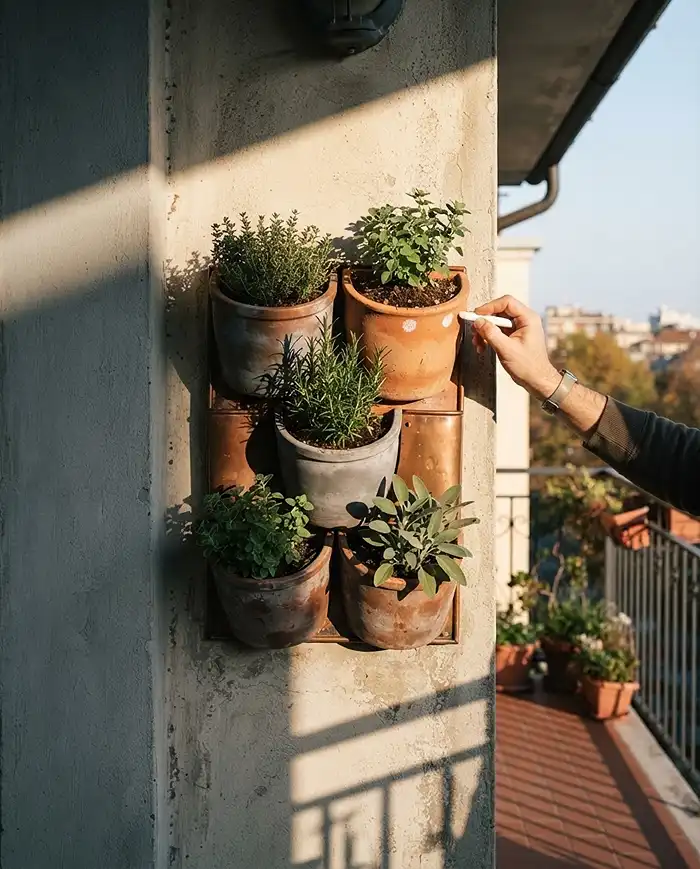
Quick Answer: Fall sun sits lower in the sky, so a wall that got full sun in July can fall into shade by October. Most culinary herbs still need 4 to 6 hours of direct light daily to avoid leggy, weak growth.
Watch for these autumn light shifts on any vertical wall planters setup:
- South-facing walls often gain hours of afternoon light as the sun angle drops, since fall sun clears fewer obstructions
- East-facing structures lose morning intensity faster than you’d expect after the equinox in late September
- Nearby trees losing leaves can suddenly open up new light, so recheck exposure in late October
- Rosemary and thyme tolerate the lower end of that range; parsley and chives want the full 6 hours if you can give it
Real Example: My east wall in Denver dropped from 7 hours of light in August to barely 4 by mid-October 2025. I moved my rosemary pot two pockets higher on the grid, and it kept producing through Thanksgiving.
Pro Tip: Mark your best-lit pockets with a small paint dot in September so you’re not guessing again next fall.
Wind Protection and Temperature Swings
Quick Answer: Elevated pockets have almost no thermal mass, so wind and overnight frost hit them harder and faster than ground-level soil. A single windy night can dry out roots that a raised bed would shrug off.
A few fixes that make a real difference:
- Angle the wall or add a burlap panel on the windward side once nights drop below 45°F
- Group pots tighter together in cold snaps; they insulate each other slightly
- Check soil moisture the morning after any wind event above 15 mph, since pockets dry out fast
Real Example: A late-October windstorm in 2025 dried out my top-row sage pocket completely overnight, even though the bottom row was still moist. Now I water the top row separately whenever wind is in the forecast.
Pro Tip: Cheap clip-on wind screens made from clear vinyl work better than fabric, since they block wind without cutting your remaining light.
Best Cold-Hardy Herbs for a Fall Vertical Wall
By mid-September, tender summer annuals like basil and cilantro-in-heat start bolting or blackening at the first cool snap. Swap them for herbs that actually prefer crisp air, and your cool weather herbs will outproduce your summer crop.
Aromatic Evergreens: Thyme, Sage, and Rosemary
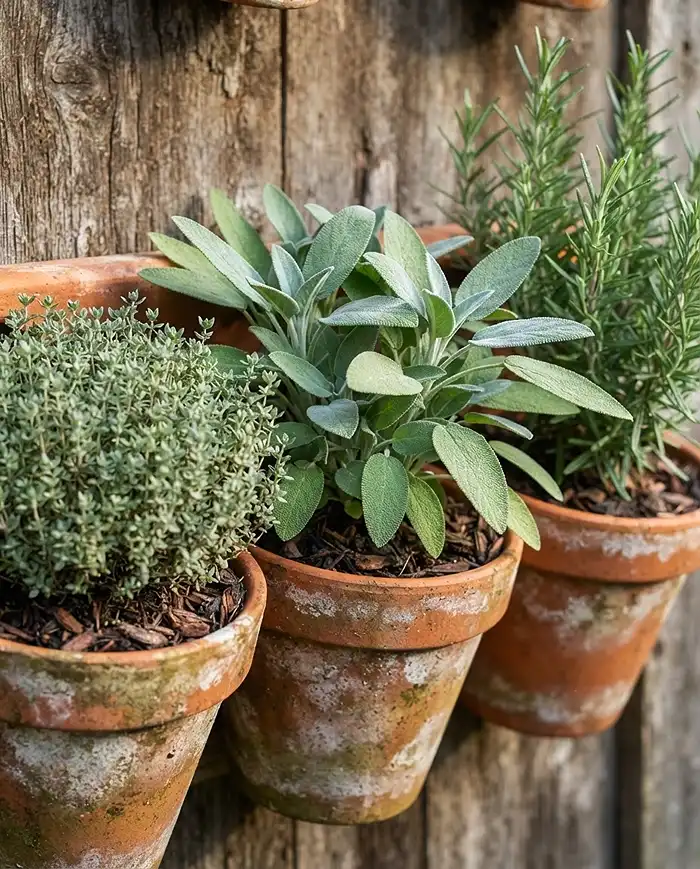
Quick Answer: Mediterranean woody herbs like thyme, sage, and rosemary handle light frost without flinching and bring silvery-green and dusty-blue foliage that reads as classic autumn styling.
| Herb | Cold Tolerance | Watch Out For |
|---|---|---|
| Common Thyme | Down to 20°F once established | Root rot if pockets stay soggy |
| Berggarten Sage | Handles light frost, mid-20s°F | Powdery mildew in damp, still air |
| Rosemary ‘Arp’ | Hardy to about 10°F, more cold-tolerant than most cultivars | Needs excellent drainage in shallow pockets |
Real Example: My ‘Arp’ rosemary survived a 22°F night last November in an unprotected top pocket, while a standard rosemary cultivar two pots away lost its tips. Cultivar choice matters more than people think.
Pro Tip: Snip sage stems for cooking right before a hard freeze; the flavor concentrates once temperatures drop, making late-fall sage noticeably better than August sage.
Cool-Season Leafy Herbs: Parsley, Cilantro, and Chives
Quick Answer: Flat-leaf parsley, cilantro, and chives grow best in cool air and often bolt less in fall than they do in summer heat, giving you heavier, longer harvests through October and into November.
A few specifics from my own plantings:
- Flat-leaf ‘Giant of Italy’ parsley kept producing through three light frosts on my wall last fall
- Cilantro that bolted within three weeks in July lasted nearly two months once I replanted it in late September
- Garlic chives tolerate more cold than common chives and keep a milder onion flavor into late fall
Real Example: I direct-sowed cilantro into a wall pocket on September 12, 2025, and was still harvesting full stems on Halloween, something that never happens with a summer sowing in zone 6b.
Pro Tip: Sow a second cilantro batch two weeks after the first; staggered sowing beats bolting better than any variety choice.
Styling Your Autumn Vertical Herb Wall
Once the plants are sorted, the container herb garden itself becomes the design layer. Warm materials and low, ambient light do more for the autumn balcony garden ideas mood than any single plant choice.
Incorporating Rustic Planter Materials and Colors
Quick Answer: Swap bright plastic pockets for copper, aged terracotta, or dark stained wood, then tuck in trailing bronze Heuchera or ornamental sweet potato vine to deepen the color palette without crowding the herbs.
- Copper-finish pockets develop a natural patina within one season outdoors, which only improves the look
- Terracotta insulates roots slightly better than thin plastic during cold snaps, a nice bonus
- Bronze Heuchera ‘Caramel’ trails nicely from top pockets without competing for root space
Real Example: I replaced three plastic pockets with unglazed terracotta cups last October, and the whole wall read as “intentional” instead of “leftover summer setup” within a weekend.
Pro Tip: Rub a little olive oil on new terracotta to speed up that weathered look if you don’t want to wait a full season.
Ambient Lighting for Earlier Sunsets
Quick Answer: Weave waterproof warm-white LED fairy lights or thin copper wire lights through the grid structure so the wall stays a cozy focal point once sunset creeps to 6 p.m. or earlier.
Stick to warm-white (2700K) rather than cool-white bulbs for that autumn feel, and always confirm an IP65 rating before mounting lights outdoors for the season.
Pro Tip: Run lights on a cheap outdoor timer set for dusk to dawn; it saves you from remembering to flip a switch every evening as sunset times shift through fall.
Step-by-Step Guide to Transitioning Your Wall
Quick Answer: Transitioning a vertical wall for fall means removing spent summer plants, refreshing the soil, planting cold-hardy herbs, then adding your seasonal styling touches, all in one afternoon.
- Pull any exhausted basil, tender cilantro, or leggy summer annuals, roots and all
- Refresh each pocket with a couple inches of compost mixed into the existing soil for insulation and nutrients
- Plant cold-hardy transplants at the same depth they were growing in their nursery pots, firming soil gently around the base
- Water deeply right after planting so roots make good contact with the refreshed soil
- Add rustic pots, trailing foliage, and lighting last, once the plants themselves are settled
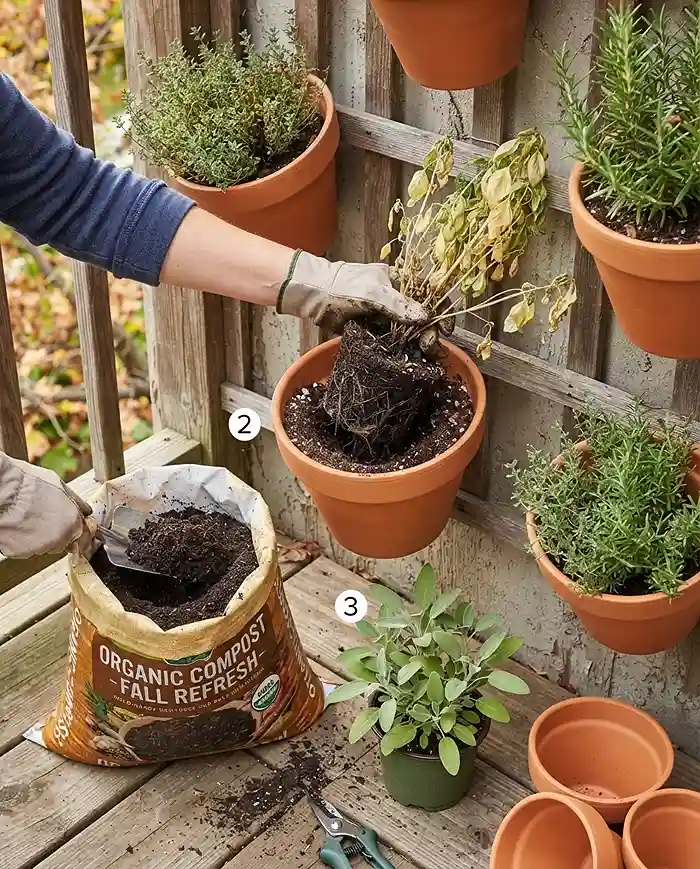
Real Example: I do this exact swap every year on the first weekend after Labor Day, and it takes about 90 minutes for a five-pocket wall including cleanup.
Fall Maintenance for Vertical Gardens
Herbs slow their metabolism as days shorten, and your watering and feeding routine needs to slow down right along with them, or you’ll invite root rot and weak growth.
Adjusting Watering for Cool, Slow-Drying Soil
Quick Answer: Cool fall air dramatically slows evaporation, so watering on a fixed summer schedule almost always overwaters vertical wall pockets. Use the finger test before every watering, not the calendar.
Push a finger an inch into the soil. If it’s still damp, wait another day or two before watering again, even if that stretches your interval well past your summer routine.
Real Example: I overwatered a thyme pocket in October 2024 by sticking to my July every-other-day schedule, and the roots rotted within two weeks. Now I check with a finger every single time.
Pro Tip: Water in the morning rather than evening in fall, so any excess moisture on foliage dries before the cold night sets in.
Tapering Off Fertilizers
Quick Answer: Stop high-nitrogen liquid fertilizer by mid-autumn, since it pushes soft new growth that frost damages almost immediately, weakening the whole plant right before winter.
Switch to a diluted, balanced feed at half strength if you fertilize at all after early October, and stop entirely once nighttime temperatures regularly dip below 40°F.
Pro Tip: If you must feed cold-hardy perennials in fall, choose a low-nitrogen, higher-potassium formula, since potassium supports cold hardiness rather than lush new growth.
Common Problems & Solutions
Two issues account for most fall vertical wall failures: frozen shallow roots and powdery mildew from damp, stagnant air.
Root Freeze in Shallow Wall Pockets
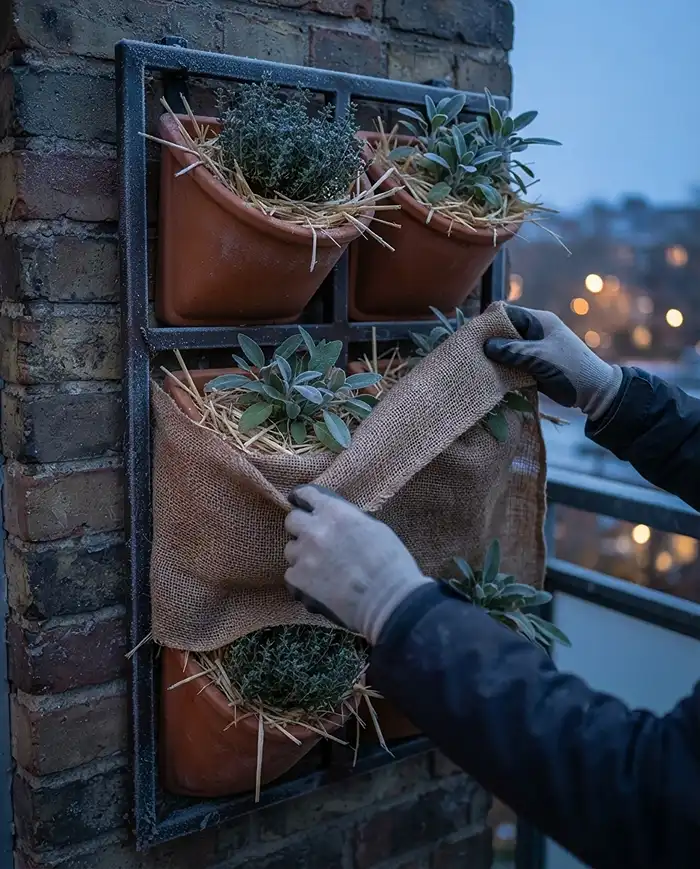
Quick Answer: Wall pockets hold far less soil than ground beds, so they freeze solid much faster in a hard frost, often killing roots that would survive fine at ground level.
Layer a thick top-dressing of straw mulch inside each pocket once nights regularly drop below 32°F, and drape a burlap cover over the whole wall structure during any forecasted deep freeze.
Real Example: A burlap cover saved my sage and thyme through an unexpected 18°F night in December 2025, while an uncovered rosemary two feet away lost most of its foliage.
Pro Tip: Remove the burlap cover during the day even in freezing weather; trapped moisture underneath causes more damage than the cold itself.
Powdery Mildew in Damp Autumn Air
Quick Answer: Powdery mildew shows up as white, dusty patches on leaves and thrives in the cool, humid, stagnant air common on enclosed balconies in fall. Good spacing and an early spray prevent most outbreaks.
Give plants a little breathing room between pockets rather than jamming every slot full, and apply a preventative organic potassium bicarbonate spray at the first sign of humid, still weather.
Pro Tip: Spray in the morning so leaves dry fully before evening, since damp foliage overnight is exactly what mildew spores need to establish.
fall vertical herb garden FAQs
How late into fall can I plant new herbs on my wall?
Plant established nursery transplants at least four to six weeks before your first hard frost date. This gives root systems enough time to anchor firmly into the vertical pockets before extreme cold halts their growth entirely.
Should I dismantle my vertical herb garden for winter?
In harsh winter climates, USDA Zone 6 and below, shallow wall planters typically freeze solid, so perennial herbs either need to come indoors or get treated strictly as seasonal annuals. Milder zones can often leave hardy herbs in place with mulch protection.
Can I add ornamental gourds or pumpkins to the wall?
Yes, lightweight mini-pumpkins or dried ornamental gourds rest safely in the empty spaces of sturdy, rigid modular pocket planters. This boosts the autumn look without crushing delicate herb foliage nearby.
Do vertical wall herbs need more water or less in fall compared to summer?
Fall vertical wall herbs typically need less frequent watering than in summer, since cooler air slows evaporation from shallow pockets. Always check soil moisture with a finger test rather than following a fixed summer schedule.
What is the best small-space setup for a fall vertical herb garden?
A modular pocket planter or ladder-style vertical wall works well for vertical gardening for small spaces, since it fits balconies and patios without taking up floor area. Choose a sturdy structure that can hold rustic terracotta or copper containers for autumn styling.
Conclusion
A fall vertical herb garden rewards a little extra attention with weeks of extra harvest and genuinely better flavor from herbs like sage, thyme, and parsley.
Check your light and wind exposure first, swap in cold-hardy cultivars, then layer in rustic pots and warm lighting for the styling win. For more on protecting perennial herbs through the colder months ahead, see NC State Extension’s guide to winterizing the herb garden. You can also check out these fall railing planter ideas if your space includes a railing alongside the wall.
Key Takeaways
- A fall vertical herb garden needs 4 to 6 hours of direct light; recheck exposure in September and October since sun angle drops fast
- Swap tender annuals for cold-hardy thyme, sage, rosemary, parsley, cilantro, and chives by mid-September
- Water with the finger test, not a summer schedule, since cool air dramatically slows evaporation in shallow pockets
- Stop high-nitrogen fertilizer by mid-autumn to avoid soft growth that frost damages immediately
- Rustic containers, trailing Heuchera, and warm LED lighting turn the same structure into a genuine autumn feature