

Herbs to Grow With Lettuce in Containers
Mixing herbs to grow with lettuce in containers turns one small pot into a mini salad bar that fights its own pests. Here’s exactly which herbs work, which ones will wreck your lettuce, and how I set mine up on a shaded Zone 6b patio.
Table of Contents
Why Mixing Herbs and Lettuce in One Pot Works
A container herb garden built around lettuce isn’t just about saving space, though that’s a real perk if you’re working with a balcony. The bigger win is the micro-ecosystem you create.
Upright herbs like chives cast a little shade that keeps soil from baking in afternoon sun. Their strong scent also throws off aphids and other pests hunting for tender lettuce leaves by smell. Meanwhile, a trailing herb along the rim covers exposed soil, which cuts down on splash-back fungal issues.
I’ve run a mixed bowl like this on my north-facing balcony for three seasons now, and the pest pressure is noticeably lower than in my single-crop lettuce pots.
Matching Microclimates for Container Companions
Before you plant anything, the plants you combine need to share the same basic needs. That means similar sunlight tolerance, similar temperature preference, and similar root depth.
Lettuce wants 4 to 6 hours of light, cool air below 75°F, and shallow, evenly moist soil. Any herb sharing the pot has to want the same thing, or one of you is going to struggle.
Shallow Root Systems and Ideal Container Depth
Quick Answer: Use a wide, shallow bowl planter or window box that’s 6 to 8 inches deep. Lettuce and its best herb companions all have fibrous, shallow roots, so they need surface area more than depth.
A 16-inch-wide bowl at 7 inches deep gives you room for a lettuce cluster in the middle and a herb border around the edge without anyone’s roots fighting for the same soil column.
- Minimum depth: 6 inches for lettuce, chives, cilantro, and parsley
- Ideal width: 14 to 18 inches for a mixed bowl serving 2 to 3 people
- Drainage: at least one 1-inch hole, elevated on pot feet
I once tried this combo in a deep 12-inch pot meant for tomatoes, and it was a waste of soil volume and water, since none of these roots ever used the bottom half.
Formulating a Moisture-Retentive Cool-Season Soil Mix
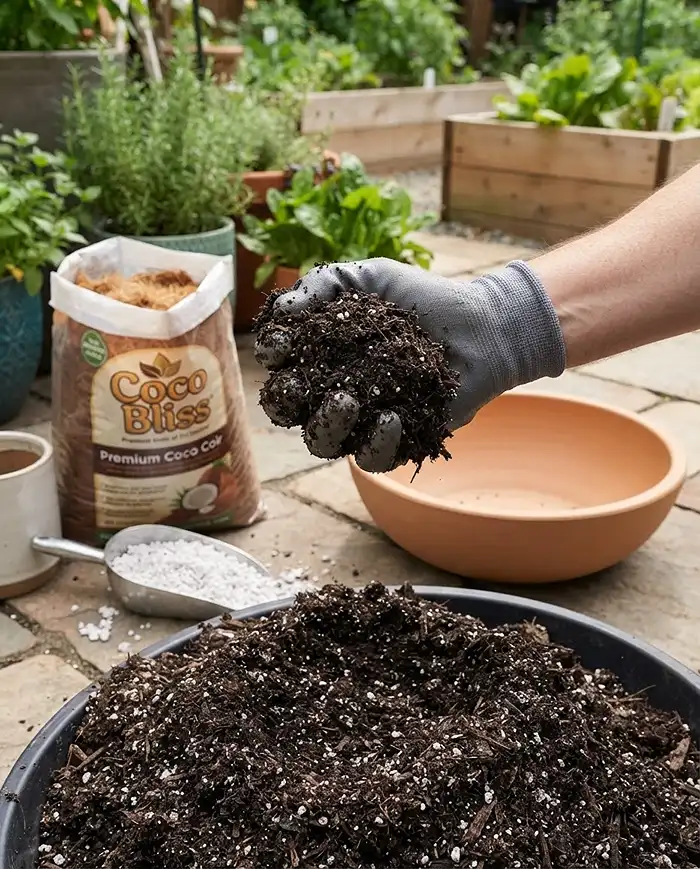
Quick Answer: Blend a premium organic potting soil with 30% coco coir and a handful of perlite. This gives you a spongy mix that holds moisture without waterlogging shallow lettuce roots.
For an 18-inch bowl, that’s roughly 7 quarts of potting soil, 3 quarts of coco coir, and one loose handful of perlite mixed through.
This ratio has kept my lettuce from wilting on 80°F spring afternoons here in Zone 6b, when straight potting soil alone dried out by 2 p.m.
The Best Companion Herbs for Potted Lettuce
These are the cool-weather herbs that match lettuce’s fast growth cycle and moisture needs, while doing double duty as pest deterrents in your container herb garden.
Chives: The Ultimate Aphid Deterrent
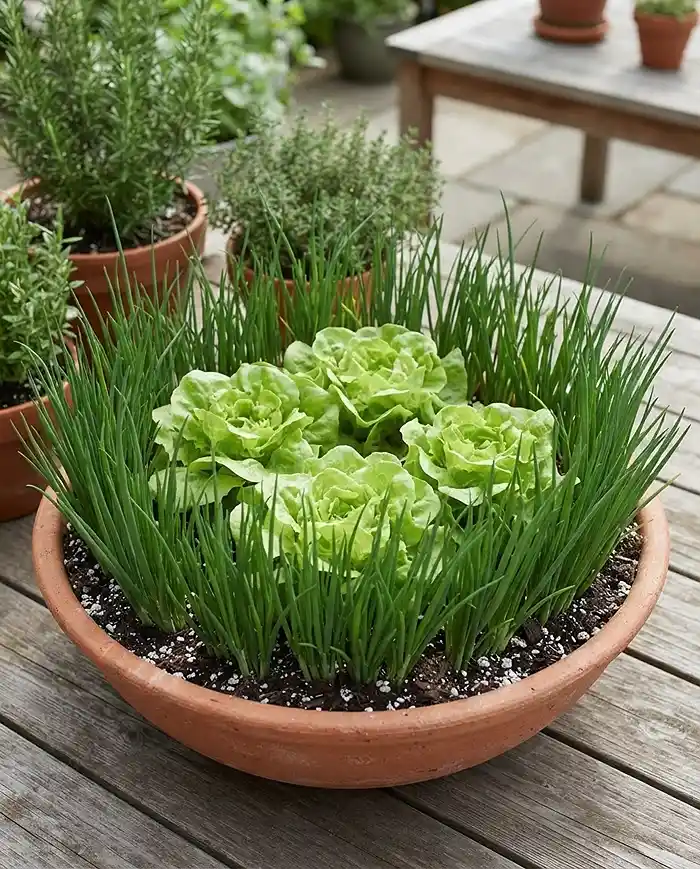
Quick Answer: Chives are the single best perimeter herb for a mixed lettuce bowl. Their sulfurous scent masks lettuce from aphids, and their upright, shallow-rooted growth habit never crowds the center.
| Herb | Best For | Watch Out For |
|---|---|---|
| Chives | Pest-deterrent border | Regular division to prevent clumping |
| Cilantro | Cool-season filler | Bolts fast once it hits 75°F+ |
| Parsley | Longer harvest window | Slow to germinate from seed |
| Creeping Thyme | Living mulch at the rim | Needs slightly drier feet than lettuce |
Real Example: Last April I planted a ring of Grolau chives around a bowl of Buttercrunch lettuce. By week three, the aphid damage that hit my unprotected lettuce pot next door never showed up on this one.
Pro Tip: Snip chives regularly. Frequent cutting keeps the scent fresh and strong, which is what actually confuses pests, not just having chives present.
Cilantro and Parsley: The Cool-Weather Twins
Quick Answer: Cilantro and flat-leaf parsley both thrive in the same cool spring and fall window as lettuce. Plant them together and they’ll bolt or slow down on roughly the same schedule.
Both prefer that same evenly moist soil lettuce needs, which is unusual among herbs since most culinary herbs want drier conditions.
- Cilantro: sow directly, ready to harvest in 3 to 4 weeks
- Flat-leaf parsley (like Giant of Italy): start from nursery plugs, harvests for 8+ weeks
- Both tolerate the same 4-6 hours of partial sun as lettuce
My cilantro bolted the same week my Black-Seeded Simpson lettuce started tasting bitter last June, which told me it was time to pull the whole pot and start a fresh summer round of heat-tolerant greens instead.
Creeping Thyme: A Protective Living Mulch
Quick Answer: Plant cascading creeping thyme at the container’s edge as a living mulch. It shades exposed soil, slows evaporation, and softens the hard line where soil meets pot rim.
Unlike chives and cilantro, thyme actually prefers to dry out slightly between waterings, so give it the driest spot in the bowl, right at the rim, away from the center where you’re keeping lettuce roots moist.
Pro Tip: Let thyme trail over the pot’s edge rather than staying inside the soil line. That keeps its drier preference satisfied while lettuce in the center still gets consistent moisture.
Herbs to Strictly Avoid Planting With Lettuce
Not every herb belongs in this bowl. Some will actively sabotage your lettuce through root competition, chemical warfare, or just stealing all the light.
Sun-Hogging Heavy Feeders and Allelopathic Herbs
Quick Answer: Never plant mint, rosemary, or fennel with lettuce in a shared container. Each one causes a different failure mode, and none of them are fixable once planted together.
- Mint: aggressive runners choke out lettuce roots within weeks
- Rosemary: a deep-rooted Mediterranean herb that wants bone-dry soil, the opposite of lettuce
- Fennel: releases allelopathic compounds that actively stunt neighboring seedlings
I learned the mint lesson the hard way. A single Kentucky Colonel mint start took over an entire 16-inch bowl in five weeks and my lettuce never had a chance.
Step-by-Step Planting Guide for Mixed Edible Bowls
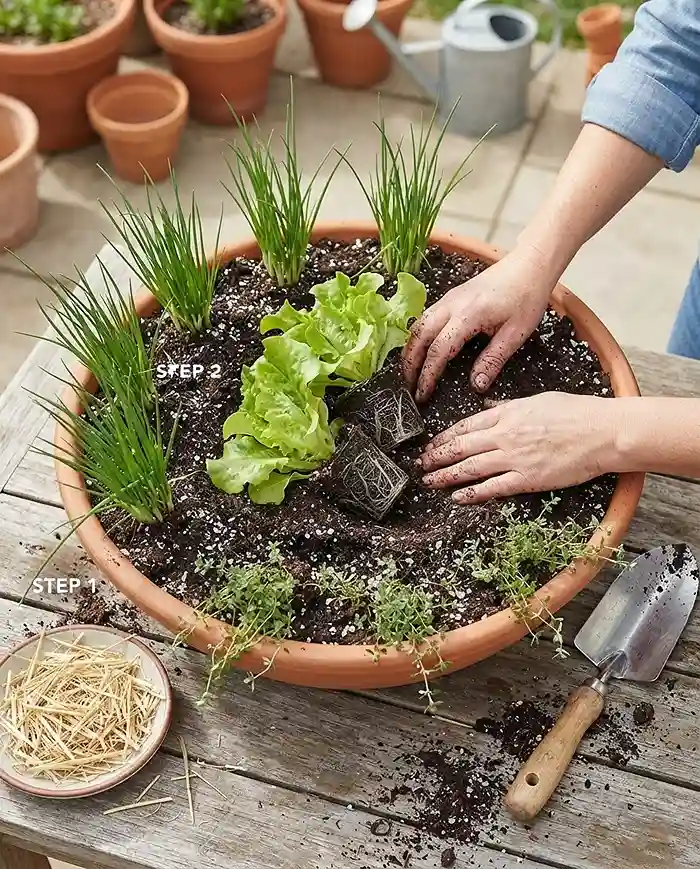
Here’s the exact order I follow every time I set up a new mixed bowl:
- Pre-moisten your soil mix until it holds together when squeezed but doesn’t drip
- Plant upright chive starts around the container perimeter, spaced 3 inches apart
- Place lettuce transplants or seeds in the center, leaving room for mature rosettes
- Tuck trailing creeping thyme into gaps right at the rim, angled to cascade outward
- Top-dress the exposed soil with a thin layer of straw mulch to stop splash-back
Check out this guide on the best salad greens for containers if you want to swap lettuce varieties in this same setup.
Maintenance and Harvesting for High-Density Pots
A densely packed container needs more attention than a single-crop pot, since multiple fast growers are pulling from the same limited soil volume.
Mastering the Cut-and-Come-Again Harvest
Quick Answer: Use sterilized scissors to snip only the outer, oldest leaves about one inch above the crown. This lets the inner rosette keep regenerating for weeks instead of cutting the whole plant at once.
Apply the same logic to your herbs. Snip outer chive blades and parsley stems rather than shearing the whole plant, so everything keeps producing on the same rolling schedule.
Pro Tip: Harvest in the morning right after dew dries. Leaves are crispest then and hold up longer in the fridge.
Precision Watering and Mild Fertilization
Quick Answer: Feed every 14 days with a half-strength water-soluble organic nitrogen fertilizer like fish emulsion. Water only at the soil line, in the morning, to avoid leaf rot on both lettuce and herbs.
A dense mixed pot depletes nutrients fast since you’ve got 3 to 4 species competing for the same soil. Half-strength feeding every two weeks keeps growth steady without pushing bitter, over-fertilized lettuce.
For more combinations that follow this same moisture-and-root-depth logic, see this guide to herbs that grow well together in pots.
Common Problems and Solutions
Densely planted mixed containers hit a couple of predictable snags. Here’s how to catch and fix them fast.
Slugs and Snails Decimating Mixed Greens
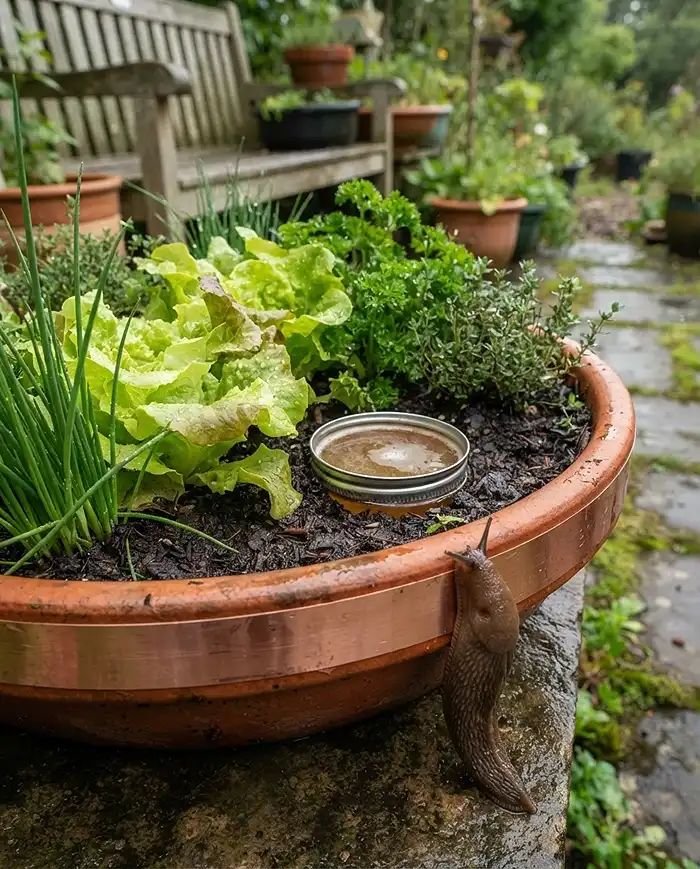
Quick Answer: The cool, damp canopy of a mixed lettuce-and-herb bowl is a magnet for nocturnal slugs. Set shallow beer traps at soil level and wrap copper tape around the pot’s outer rim to stop them cold.
Check traps every morning and empty them before the smell attracts more slugs than it catches. Copper tape works because it gives slugs a mild electric shock on contact, which most won’t cross twice.
I lost half a lettuce crop to slugs before I added copper tape to my bowls. Zero losses since, even during a wet week in October 2025.
Early Bolting and Overcrowding
Quick Answer: Bolting is when a plant suddenly shoots up a tall, bitter flower stalk, usually from heat stress or overcrowding. Thin out any herb shading the lettuce and move the pot somewhere cooler and more shaded.
If your parsley or cilantro has grown tall enough to block afternoon light from reaching the lettuce center, that shade stress alone can trigger bolting even before summer heat arrives.
Want more pest and spacing ideas that apply across your whole container herb garden? This roundup of outdoor herbs for pots and containers covers spacing rules for more aggressive growers.
herbs to grow with lettuce in containers FAQs
Can I plant basil and lettuce in the same container?
Not really. Lettuce needs cool spring and fall temperatures to survive, while basil is cold-sensitive and needs mid-summer heat. Their seasonal needs conflict, so one of them will always be struggling.
How much space should I leave between the herbs and the lettuce?
Leave a minimum of 4 to 6 inches of bare soil between herb root balls and lettuce crowns. That gap keeps airflow moving at the base, which is critical for preventing powdery mildew in a densely planted pot.
Do companion herbs make the lettuce taste different?
No. Growing pungent herbs like chives or thyme next to lettuce does not change the chemical flavor profile of the leaves. What it does do is keep lettuce healthier by naturally deterring sap-sucking insects.
Should I start my mixed container from seeds or nursery transplants?
Use mature nursery transplants for slow-growing herbs like thyme and chives, then directly sow fast-growing lettuce seeds in the center. This staggers the right way and gives you a balanced, simultaneous harvest.
What size container works best for a lettuce and herb pollinator garden?
A 16 to 18 inch wide bowl at 6 to 8 inches deep works well. It’s wide enough for a lettuce cluster, a chive border, and trailing thyme, while staying shallow enough to match everyone’s fibrous root systems.
Conclusion
The right herbs to grow with lettuce in containers come down to matching root depth, moisture needs, and cool-season timing. Chives, cilantro, parsley, and creeping thyme all check those boxes.
Skip mint, rosemary, and fennel, and stick to the 6-8 inch shallow bowl with that coco coir soil blend. For more detail on watering and moisture needs across mixed herb pots, the University of Maryland Extension’s container growing guide is a solid reference.
Set up one bowl this season using the steps above, and you’ll have a working pollinator container garden that also keeps your salad bowl full for weeks.
Key Takeaways
- The best herbs to grow with lettuce in containers are chives, cilantro, parsley, and creeping thyme, since they share the same shallow roots and cool-season timing
- Use a 6 to 8 inch deep bowl, 14 to 18 inches wide, with a soil mix of potting soil, 30% coco coir, and perlite
- Never combine mint, rosemary, or fennel with lettuce in the same pot
- Harvest with the cut-and-come-again method and feed every 14 days with half-strength fish emulsion
- Watch for bolting and slugs, and adjust spacing or add copper tape as soon as you spot trouble