

Balcony and Windowsill Herb Garden Combo Setups
A balcony and windowsill herb garden gives you two microclimates instead of one, so you can grow more herbs successfully than either space allows alone. I run this exact setup on a 4th-floor apartment in zone 6b, and here’s how to make both zones work together.
Table of Contents
Maximizing Your Harvest with an Indoor-Outdoor Herb Combo
My kitchen windowsill and balcony rail are maybe eight feet apart, but they’re practically different countries. The glass blocks wind and buffers temperature, so soft, thirsty herbs get coddled indoors. The balcony gets full sun, gusty wind, and rain, which is exactly what woody Mediterranean herbs want.
Treat this as one system with two zones instead of two separate herb gardens ideas you’re juggling. Once you match each plant to its zone, you stop fighting yellowing basil or leggy, sun-starved rosemary. You get a real small balcony garden that feeds your kitchen year-round, not just in July.
Assessing Your Dual Microclimates: The Window and the Balcony
Before you buy a single pot, spend a week just observing. Indoor glass filters light intensity and blocks wind entirely, while outdoor high-rise buildings create wind tunnels and heat pockets that don’t exist at ground level. Skipping this step is the #1 reason combo setups fail in month one.
Evaluating Indoor Windowsill Light and Drafts
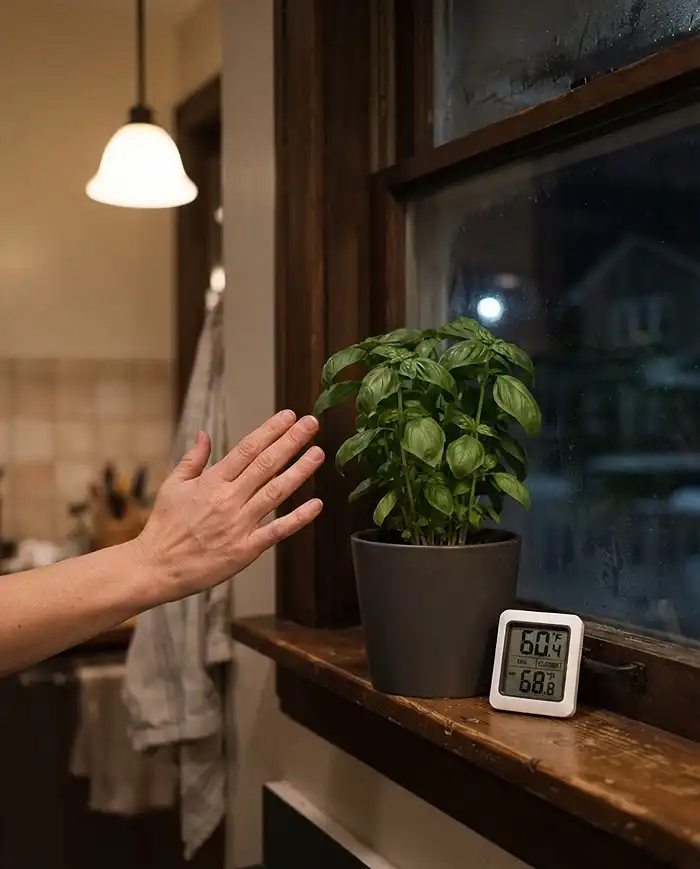
Quick Answer: Pick an unobstructed south-facing window for herbs — it’s the only orientation that reliably delivers 6+ hours of light. East-facing works for a shorter list of shade-tolerant herbs.
Check these two things before committing a windowsill to herbs:
- Hold your hand near the glass on a cold night — if you feel a draft, herbs within 6 inches of that spot will get cold-shocked
- Note any HVAC vents blowing directly on the sill; forced air dries leaves out fast, especially basil and parsley
Real Example: My first winter, I kept basil on an east-facing sill above a baseboard heater. It looked fine for two weeks, then every leaf crisped at the edges within days. I moved it 3 feet away from the vent and it recovered.
Pro Tip: A cheap indoor thermometer with min/max memory tells you the real overnight low at plant height, not the room average.
Mapping Balcony Sun, Wind, and Temperature Swings
Quick Answer: Track your balcony for a full week — note sun hours, wind direction, and how fast pots dry out. High-rise balconies often get more UV and wind than a ground-level yard just a few floors down.
On my south-facing balcony in Denver, afternoon wind gusts regularly hit 15-20 mph between 2 and 5 PM. That single fact decided my entire outdoor herb list — anything with soft, broad leaves gets shredded by 4 PM.
Pro Tip: Corners near the railing usually funnel the strongest wind — reserve those spots for your toughest, most wind-resistant pots.
Categorizing Herbs by Ideal Location
Once you know your conditions, sort your nursery haul by genetic tolerance, not by what looks nice together. A plant’s native climate — dry Mediterranean hillside versus damp forest understory — tells you almost everything about where it belongs.
Best Herbs for the Outdoor Balcony (Rosemary, Thyme, Sage)
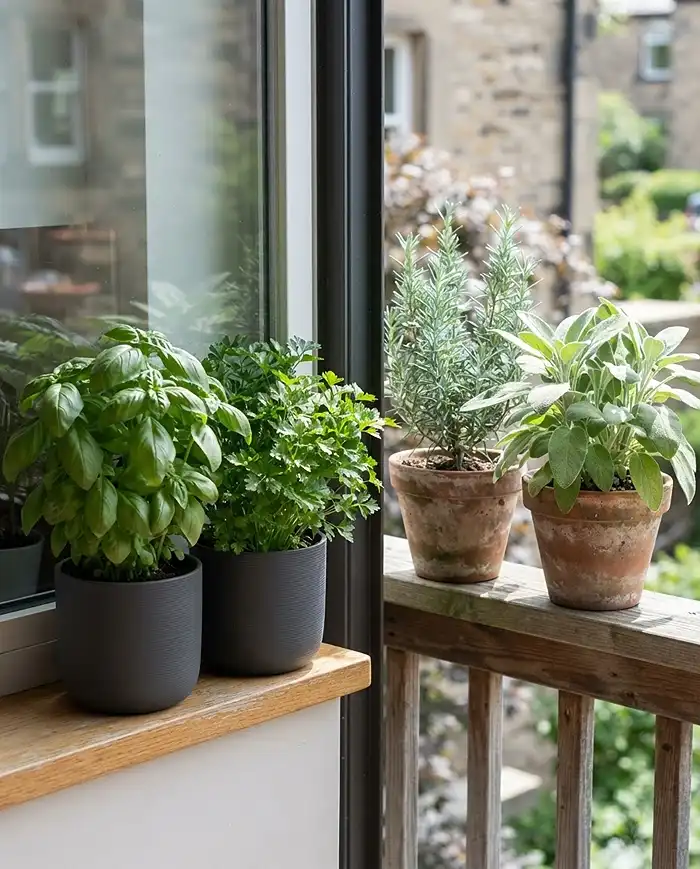
Quick Answer: Woody Mediterranean herbs like rosemary, sage, and creeping thyme are built for your balcony. Their rigid stems resist wind-snapping and their resinous, narrow leaves lose less water in heat and sun.
| Herb | Best For | Watch Out For |
|---|---|---|
| Rosemary (‘Tuscan Blue’) | Full sun, wind-exposed rails | Root rot in poorly drained pots |
| Sage (‘Berggarten’) | Hot, dry corners | Powdery mildew if crowded |
| Creeping thyme | Low, wide containers or rail boxes | Slow to establish first season |
Real Example: My ‘Tuscan Blue’ rosemary has weathered two Denver winters on that balcony down to 15°F, wrapped in burlap, while indoor basil three feet away through the glass would’ve died at 45°F.
Pro Tip: Terracotta pots wick moisture away faster than plastic or resin, which is actually a feature for these drought-tolerant herbs.
Best Herbs for the Indoor Windowsill (Basil, Mint, Parsley)
Quick Answer: Soft-stemmed, moisture-loving herbs like sweet basil, parsley, and mint belong on the windowsill, sheltered from the wind and cold that would stunt them outdoors.
- Sweet basil (‘Genovese’) needs consistent warmth above 50°F and at least 6 hours of light
- Flat-leaf parsley tolerates lower light than basil and stays productive through winter
- Mint should always go in its own pot — it runs aggressively and will choke out neighbors within a season
Real Example: I once potted spearmint with parsley in the same container for my container herbs setup. Within six weeks the mint’s roots had taken over the entire pot and the parsley was gone.
Pro Tip: Rotate windowsill pots a quarter turn every few days so stems don’t lean permanently toward the glass.
“Floater” Herbs to Move Between Spaces
Chives and cilantro are your flexible players. Both do fine indoors during a scorching July, then move out to the balcony once early autumn brings cooler, gentler days. Cilantro especially prefers cooler outdoor air in fall over hot summer windowsill conditions — it bolts (goes to seed) fast in heat either way, so treat it as a short-lived, repeat-sow crop rather than a permanent resident of either zone.
Essential Gear for a Seamless Combo Setup
Managing two zones means your hardware has to pull double duty: functional enough for two different climates, but cohesive enough that your balcony and kitchen don’t look like mismatched garage sales.
Selecting Matching, Mobile Containers and Drip Trays
Quick Answer: Choose lightweight, matching resin or fiberglass pots for a unified look across both spaces, paired with deep, glazed ceramic drip trays indoors to protect your windowsill from water stains.
I standardized on 10-inch charcoal-gray fiberglass pots for every herb, indoor and outdoor. It’s a small styling choice for a small balcony garden, but it makes the whole setup read as intentional rather than accidental.
Pro Tip: Glazed trays (not unglazed terracotta saucers) are what actually stop tannin and mineral stains from soaking into wood or painted sills.
Crafting the Perfect Soil Mix for Indoor-Outdoor Transitions
Quick Answer: Blend a premium organic potting soil with 30% perlite by volume. This drainage boost prevents fungus gnats indoors and root rot during heavy outdoor rainstorms.
| Mix Ratio | Best For | Watch Out For |
|---|---|---|
| 70% potting soil / 30% perlite | All-purpose herb pots, indoor and outdoor | Dries faster, needs more frequent watering |
| 60% potting soil / 40% perlite | Rosemary, sage, thyme (extra drainage) | Too dry for basil or mint |
Pro Tip: Mix perlite in dry, outdoors or over a bucket — the dust is unpleasant to breathe indoors.
Step-by-Step Guide to Setting Up Your Combo Garden
Here’s the order that’s worked for me across three growing seasons:
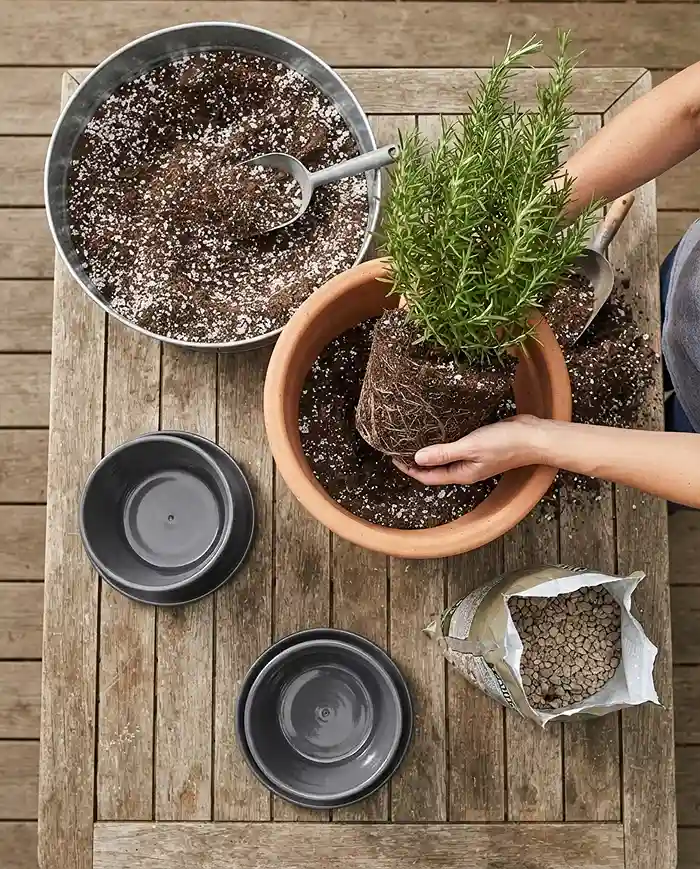
- Mix your aerated soil in a large bin so both indoor and outdoor pots draw from the same batch
- Pot the woody outdoor herbs (rosemary, sage, thyme) into heavier, wind-resistant base pots first — their weight anchors them against gusts
- Pot the delicate windowsill herbs (basil, parsley, chives) into smaller containers with exact-fit saucers underneath
- Top every container with a half-inch layer of decorative gravel — it unifies the look and slows soil splash-back during watering
- Place outdoor pots in their mapped sun/wind zones and indoor pots on their cleared, draft-free sill
Maintenance and Seasonal Transitioning
The riskiest moments in this whole system aren’t day-to-day care — they’re the two transitions each year when plants cross the glass barrier. Rush either one and you risk sunburn, shock, or an aphid infestation in your kitchen.
Hardening Off Herbs Moving Outside in Spring
Quick Answer: Give indoor herbs a mandatory 7-to-10-day hardening off period before their first full day on the balcony. Start with just an hour of outdoor exposure and add time daily.
- Days 1-3: one hour outdoors in filtered, indirect light only
- Days 4-7: gradually extend to a half day, including some direct sun
- Days 8-10: full day outside, bringing pots back in only if a cold snap hits
The University of Maryland Extension’s hardening-off guide covers the underlying plant physiology in more detail if you want the science behind why rushing this causes stem collapse.
Real Example: I skipped hardening off one spring with a windowsill basil plant, set it straight into full balcony sun, and it was bleached and wilted by that afternoon. It never fully recovered that season.
Debugging and Acclimating Herbs Moving Inside for Fall
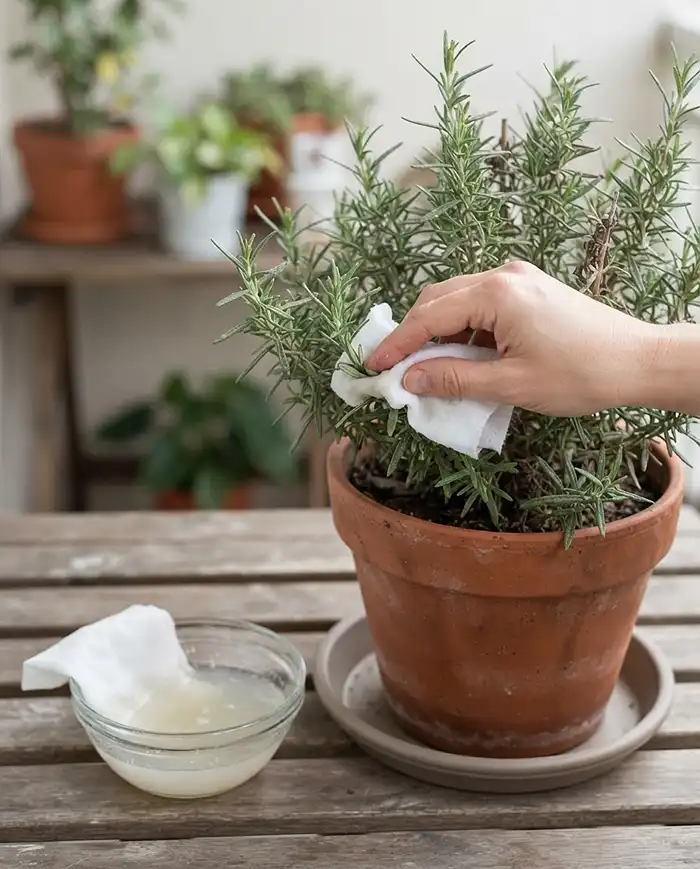
Quick Answer: Quarantine every balcony herb before it comes inside for winter. A thorough Castile soap foliage wash keeps aphids and spider mites out of your home.
Mix a mild solution of Castile soap and water, wipe down every leaf surface (including undersides), and let pots sit isolated from other plants for about a week before integrating them onto the windowsill.
Pro Tip: Check the drainage holes and the underside of the pot itself — slugs and pill bugs hide there just as often as pests hide on the leaves.
Common Problems & Solutions
Two failure modes show up again and again in dual-zone setups: pests hitching a ride between spaces, and watering habits that work for one zone but wreck the other.
Pest Transfer Between Balcony and Windowsill
Quick Answer: Fungus gnats and whiteflies move easily between zones on plant material. Use yellow sticky traps indoors and targeted neem oil sprays outdoors to break the cycle in both directions.
I caught a whitefly outbreak early one October because I’d already hung sticky traps near the windowsill as routine monitoring — they showed up on the traps three days before I saw any on the leaves themselves.
Overwatering Indoor Plants vs. Underwatering Outdoor Plants
Quick Answer: Indoor pots dry out slowly with no wind to speed evaporation, while balcony pots can dry out daily in summer heat. Use the finger test on both — insert a finger 2 inches into soil and only water if it’s dry at that depth.
This single habit fixed both my drowned windowsill basil and my desiccated outdoor thyme in the same season, just by checking before watering instead of following a fixed schedule.
balcony and windowsill herb garden FAQs
Can I grow the exact same herbs both inside and outside?
Yes, you can grow the same herb variety in both locations, but expect differences. Outdoor balcony herbs develop thicker leaves and stronger essential oils due to environmental stress, while indoor herbs stay softer, more tender, and milder in flavor.
How do I keep my windowsill clean when bringing pots in from the balcony?
Wipe down the exterior of the pot with a damp cloth, flush the soil with water in a kitchen sink to push out hiding pests, and set the pot on a fresh waterproof cork mat before placing it on the windowsill.
Do indoor herbs need fertilizer as often as outdoor balcony herbs?
No. Cut indoor fertilizing frequency in half compared to outdoor herbs. Windowsill herbs grow more slowly due to reduced light and can’t process high nitrogen doses as fast as sun-baked balcony plants.
What size container works best for a balcony and windowsill herb garden?
Use at least a 6-inch pot for windowsill herbs like basil and parsley, and 10-to-12-inch pots for balcony herbs like rosemary and sage, since larger outdoor pots hold moisture longer between waterings.
How often should I rotate herbs between the balcony and windowsill?
Only true floater herbs like chives and cilantro should move seasonally. Woody Mediterranean herbs and soft-stemmed herbs are best left in their dedicated zone year-round to avoid repeated transplant stress.
Conclusion
A well-planned balcony and windowsill herb garden turns two small, awkward spaces into one productive kitchen supply line. Match each herb to its zone, respect the hardening-off and quarantine steps at each transition, and you’ll harvest fresh herbs through every season instead of just summer.
Ready to build out your plant list? Check our guides on the best herbs for indoor-outdoor pots, more balcony herb garden ideas, and our full list of best indoor herbs for a windowsill.
Key Takeaways
- A successful balcony and windowsill herb garden matches each plant’s genetic tolerance to its zone — woody herbs outside, soft-stemmed herbs inside
- Audit light, wind, and drafts in both spaces for a full week before potting anything up
- Harden off herbs moving outside over 7-10 days, and quarantine herbs moving inside with a Castile soap wash
- Use the finger test in both zones — indoor pots overwater easily, outdoor pots dry out fast
- A 30% perlite soil mix and matching lightweight containers keep both zones healthy and visually cohesive