
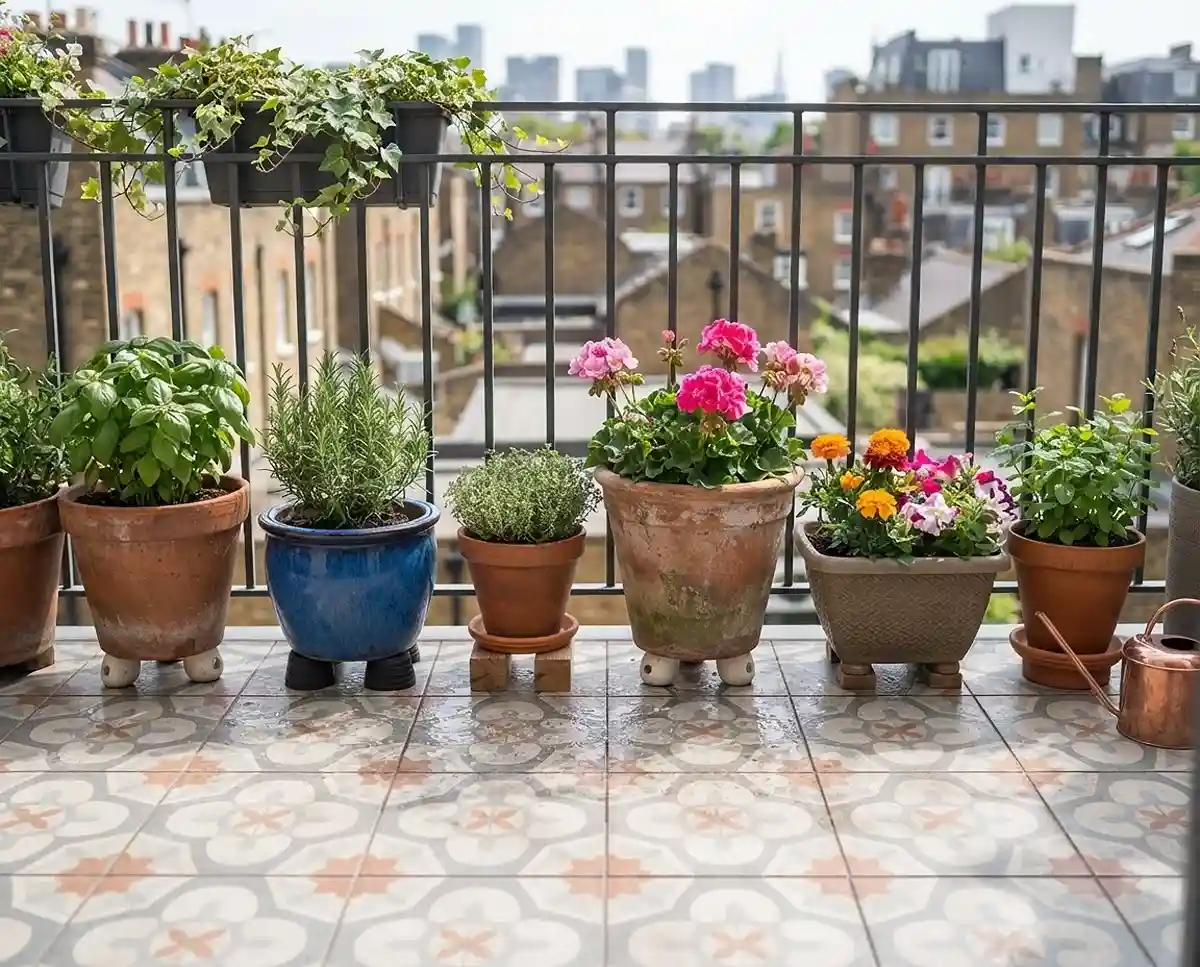
Best Pot Feet for Drainage
Flush containers seal against a balcony floor and block the drainage holes underneath. The best pot feet for drainage break that seal, save your roots, and protect your deposit.
I garden on a 6th-floor balcony in Minneapolis, zone 4b, about 90 square feet of tile and railing. Every pot I own sits on risers now, and that wasn’t always true.
Table of Contents
Why the Best Pot Feet for Drainage Matter for Small Space Gardening
Set a container flush on a flat, sealed balcony floor and you create something close to a suction cup. Water has nowhere to escape, so it backs up into the soil instead of draining through the holes.
Pot feet are just small risers, usually 1 to 2 inches tall, that lift the container off the floor. That gap lets water actually leave the pot instead of pooling under it.
For anyone doing small space gardening on a rented balcony, this is one of the cheapest insurance policies available. A three-pack of rubber risers runs under $15, and it’s far less than a security deposit deduction for a stained deck.
How Plant Risers Prevent Floor Damage and Disease
Lifting a container by even one inch changes the microclimate right at its base. Air moves under the pot instead of sitting trapped between two flat surfaces, and that single change solves two separate problems at once.
The first is cosmetic and financial: staining. The second is biological: what happens to the roots when water can’t leave the soil.
Eliminating Moisture Rings on Wooden and Concrete Decks
Quick Answer: Pot feet stop moisture rings by letting condensation and runoff evaporate instead of sitting trapped against the deck surface, which is what causes concrete staining and wood rot.
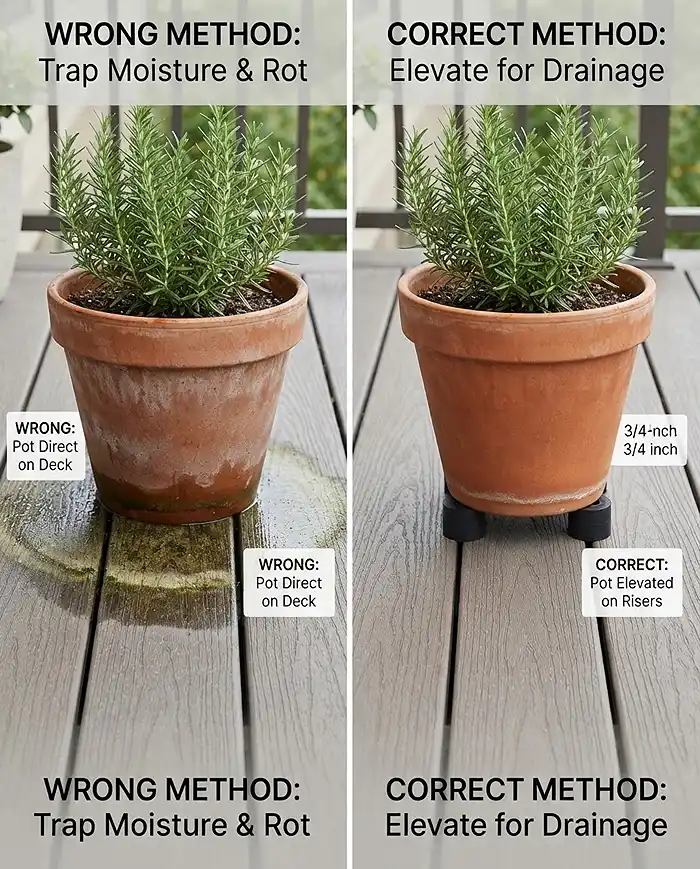
A flat-bottomed pot on composite decking traps condensation underneath it around the clock. On concrete, that trapped moisture wicks in and leaves a permanent grey-white ring. On wood, it’s worse: trapped moisture rots the boards from underneath, where you won’t see it until the wood is soft.
Real Example: I left a 14-inch terracotta pot flush against my composite decking for one Minnesota summer. By September there was a bleached ring I couldn’t scrub out, and I had to buy a replacement deck tile.
Pro Tip: Rotate pots a quarter turn every few weeks even with risers in place, since uneven light exposure alone can leave a faint shadow ring over a full season.
Boosting Aeration to Prevent Anaerobic Soil
Quick Answer: Airflow beneath the drainage holes lets gravity pull excess water out of the soil instead of it sitting saturated at the pot’s base, which is what breeds anaerobic conditions and fungal root rot.
Every container, drainage holes or not, holds a layer of saturated soil at the very bottom. Horticulturists call this the perched water table, and it exists because capillary action fights gravity right at that boundary.
When a pot sits flush on a solid surface, that saturated layer has no outlet and the water table climbs higher into the root zone. Elevating the pot gives gravity somewhere to send that excess water, which keeps the perched water table low and the roots above it aerated.
Oregon State University’s nursery extension program has a solid technical breakdown of how this saturated layer forms in any container, drainage holes or not, if you want the full science: Container Soils are Different, from OSU Extension.
Pro Tip: Skip the old advice about a gravel layer in the pot bottom. It raises the perched water table instead of lowering it, and risers do the actual job that gravel was supposed to.
Assessing Your Balcony’s Planter Weight and Dimensions
Before you buy anything, do a quick audit of what you’re actually elevating. A small balcony garden usually has a mix of pot sizes, and one riser style rarely fits all of them.
Walk your balcony and note each container’s diameter, material, and roughly how heavy it gets once watered. That number determines everything about which risers will actually hold.
Calculating the Weight of Wet Soil and Large Pots
Quick Answer: A fully watered 15-gallon container can weigh 150 to 200 pounds once you add the pot, wet soil, and mature plant, so cheap hollow plastic risers will crack or collapse under that load.
Potting mix holds roughly 1 pound of water per dry quart once fully saturated. Scale that up to a 15-gallon pot growing a tomato or dwarf fruit tree, and you’re carrying serious weight on four tiny contact points.
- Small pots (under 10 inches): typically 15 to 30 pounds watered, safe on almost any riser
- Medium pots (10 to 16 inches): 40 to 90 pounds watered, needs solid rubber or stone feet
- Large pots (18 inches or more): 100 to 200+ pounds watered, needs rated iron or heavy-duty caddies
Real Example: I once set a fully grown Meyer lemon in a 20-inch glazed pot onto decorative ceramic feet rated for lightweight annuals. One of the feet cracked within a week under the real weight.
Pro Tip: Check the riser’s stated weight capacity per unit, then multiply by however many you’re using, since a “200 lb rated” riser usually means per foot, not per set.
Factoring in Balcony Slopes and Wind Exposure
Quick Answer: Modern balconies are built with a slight slope toward the drain, so use adjustable or stackable risers to level tall pots and keep them from tipping in high-rise crosswinds.
Most balconies slope about a quarter inch per foot toward a floor drain, by design. A tall, top-heavy planter set unevenly on that slope becomes a wind hazard several stories up.
Adjustable screw-in risers or stackable pucks let you dial in a level base regardless of the slope underneath. For anyone doing urban gardening above the third floor, this step isn’t optional.
The Best Pot Feet and Risers by Material
Different materials suit different loads and different looks. As of 2026, rubber, terracotta, and powder-coated metal remain the three styles worth buying, and each has a clear best use case.
| Material | Best For | Watch Out For |
|---|---|---|
| Solid EPDM rubber | Heavy pots, modern minimalist look, slick tile | Can look bulky if too tall or too visible |
| Terracotta or ceramic feet | Lightweight annual pots, cottage-style balconies | Cracks under heavy or wet-heavy containers |
| Powder-coated iron or wheeled caddy | Dwarf citrus, massive immovable planters | Higher cost, adds visible bulk under the pot |
Invisible Rubber Risers for Modern Minimalist Pots
Solid EPDM rubber pads are the workhorse choice for a small balcony garden with a clean, modern look. A set of four can hold several hundred pounds combined, and they stay tucked in the shadow under the pot where you barely notice them.
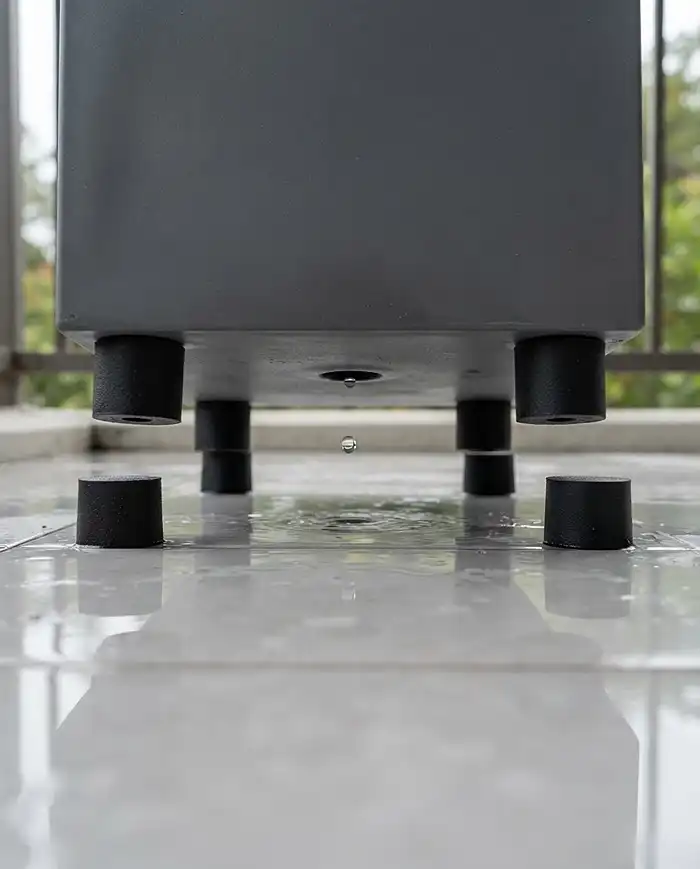
They also grip slick porcelain or polished concrete tile far better than plastic or ceramic feet, which matters more than people expect on a windy high-rise balcony.
Pro Tip: Buy rubber risers in black or dark grey. They disappear visually against almost any pot color, which matters if you want tiny garden ideas that still look intentional and tidy.
Decorative Terracotta and Ceramic Animal Feet
Sculpted terracotta toes or glazed ceramic animal feet give a cottage-garden charm that rubber pucks just can’t match. They’re a great fit for a small collection of lightweight annual flowers in plastic or resin pots.
Reserve these for anything under about 30 pounds watered. I learned that lesson with my lemon tree, and it cost me a cracked foot and a wobbly pot for a season.
Pro Tip: Test a decorative foot’s load rating with a bag of soil before committing your whole collection to matching feet, since ratings vary wildly between brands.
Heavy-Duty Metal Caddies and Iron Stands
Rust-proof, powder-coated iron trivets or wheeled plant caddies exist for the containers you never want to lift by hand: dwarf citrus, mature hydrangeas, anything approaching 100 pounds watered.
Wheeled versions add real convenience too. You can roll a heavy planter to clean underneath it or chase a few extra hours of sun across the balcony rail.
Pro Tip: Lock the caddy wheels before watering, since a fully saturated pot can drift a surprising distance on a sloped balcony floor.
Step-by-Step Guide to Installing Pot Feet Safely
Elevating an already-watered container is a two-person job once it gets past about 40 pounds. Trying to muscle a wet, top-heavy pot alone is how backs and toes get hurt.
- Water the plant the day before, not right before, so it’s not at peak saturated weight
- Have a helper tilt the pot to roughly a 45-degree angle from one side
- Slide the back two risers into place first, under the raised edge
- Gently lower the pot onto the front risers, checking the drainage hole stays clear
- Rock the pot slightly to confirm all contact points are solid before letting go
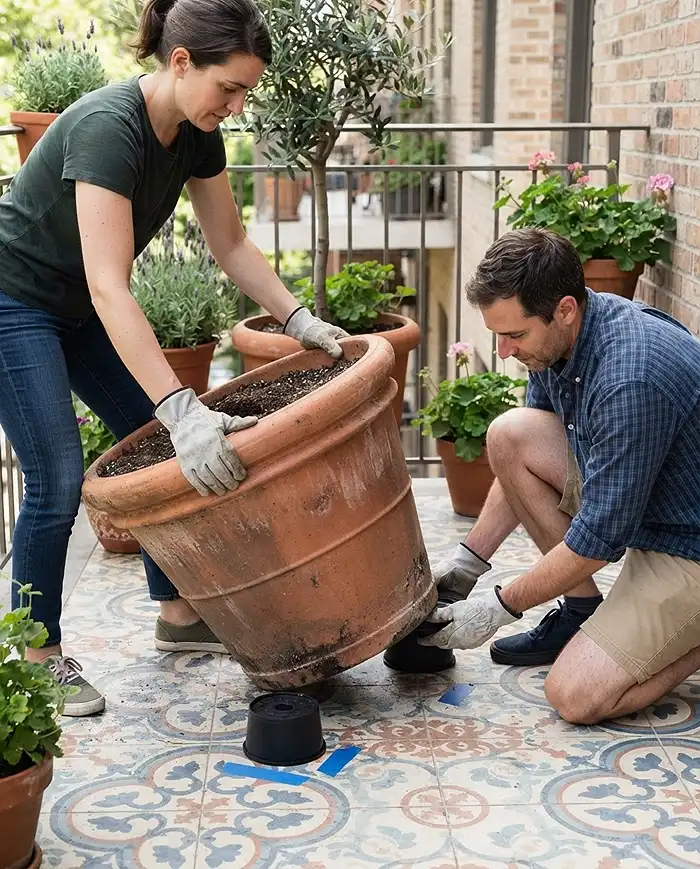
Pro Tip: Mark riser positions with a bit of removable tape before you start lifting, so you’re not fumbling to place them while holding a tilted, wet pot.
Seasonal Maintenance for Elevated Balcony Planters
Pot feet aren’t a one-time purchase and forget situation. A little seasonal upkeep keeps them structurally sound and keeps the gap underneath from becoming its own small problem.
Winterizing Pot Feet to Prevent Frost Heave
Quick Answer: Bring porous terracotta pot feet indoors before the first hard freeze, since trapped moisture inside the material expands and shatters them, and wipe rubber risers clean of fertilizer salt buildup once a year.
Terracotta and unglazed ceramic feet absorb water like the pots they’re made from. Left outside through a hard freeze, that trapped moisture expands and the foot cracks or splits apart.
Rubber risers handle freezing fine, but fertilizer salts build up on their surface over a growing season. An annual wipe-down with a damp cloth keeps them from corroding or staining lighter-colored decking.
Common Problems and Solutions
Two issues come up again and again with elevated containers: pots tipping, and pests moving into the gap underneath. Both have quick fixes.
Planters Tipping Over on Uneven Risers
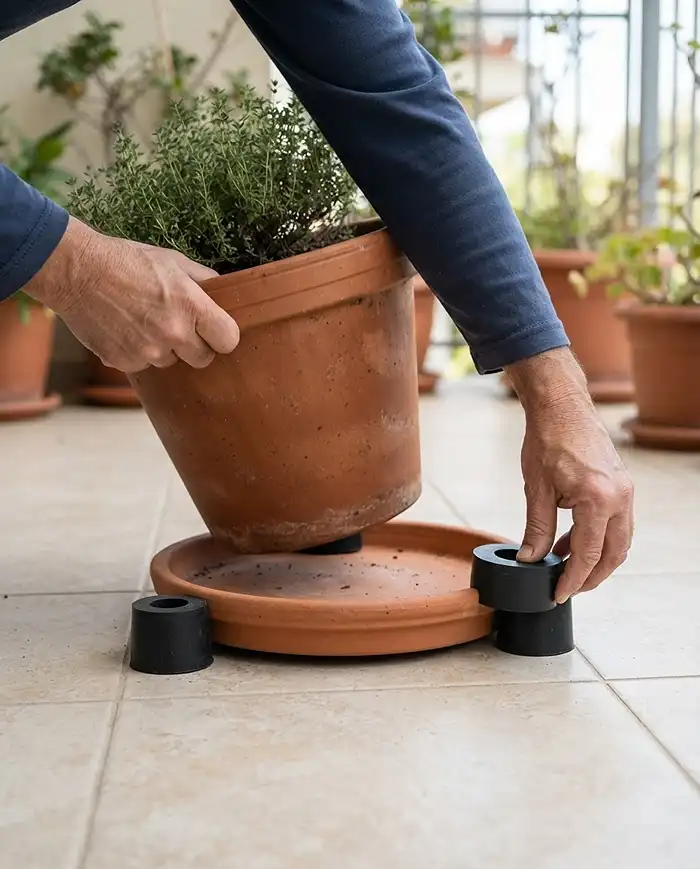
Quick Answer: Fix a wobbly elevated pot by moving the feet closer to the outer rim of the container’s base, spreading three or four contact points evenly so the center of gravity sits balanced.
A pot that rocks usually has risers bunched too close to the middle. Pull each one out toward the edge of the pot’s actual base, not the widest part of the container above it.
Pests Hiding Under Elevated Pots
Quick Answer: The dark, damp gap under elevated pots can attract spiders, slugs, and pillbugs, and a weekly sweep with a stiff broom plus a light dusting of food-grade diatomaceous earth handles it.
This gap is exactly what makes drainage work, so it’s not something to eliminate, just manage. A quick sweep-and-dust routine once a week keeps it from turning into a bug hotel.
best pot feet for drainage FAQs
How many pot feet do I need for a round versus square planter?
Use exactly three evenly spaced pot feet for round containers to create a stable tripod effect that won’t wobble on an uneven surface. Square or rectangular troughs need a minimum of four feet, placed right at the corners of the base for even weight distribution.
Can I use DIY risers like bricks or wood blocks for balcony pots?
Bricks and treated cedar blocks work well as budget-friendly DIY risers for small space gardening. Avoid untreated scrap wood, since it rots quickly, can harbor termites, and stains balcony decking with tannin runoff.
Do I still need a saucer if I use pot feet on my balcony?
Yes, pot feet do not replace a saucer or drip tray. Place the pot feet inside a large, heavy-duty drip tray so the elevated pot still sits above any runoff, keeping the balcony floor protected from muddy water spills.
Conclusion
The best pot feet for drainage are a small, cheap fix for a problem that quietly costs gardeners both plants and deposits. Match the material to the pot’s real watered weight, and you’ll get years of use out of a single set.
Before you shop for risers, it helps to get the container itself right first. Our guide to choosing the right containers for small space gardening covers sizing and material alongside drainage.
If root rot and soggy soil are still a mystery beyond what pot feet solve, our drainage rules every beginner must know fills in the rest. And for balconies where sun exposure is as tight as floor space, see our notes on light and space for small space gardening.
Key Takeaways
- The best pot feet for drainage break the vacuum seal between a flush pot and a flat balcony floor
- Match riser material to your pot’s fully watered weight, not its dry weight
- Rubber risers suit heavy modern pots, terracotta feet suit lightweight annuals only, and iron caddies suit the biggest containers
- Pot feet don’t replace a saucer, and they still need seasonal cleaning and winterizing
- A $15 set of risers is far cheaper than a stained deck or a pot of root rot