
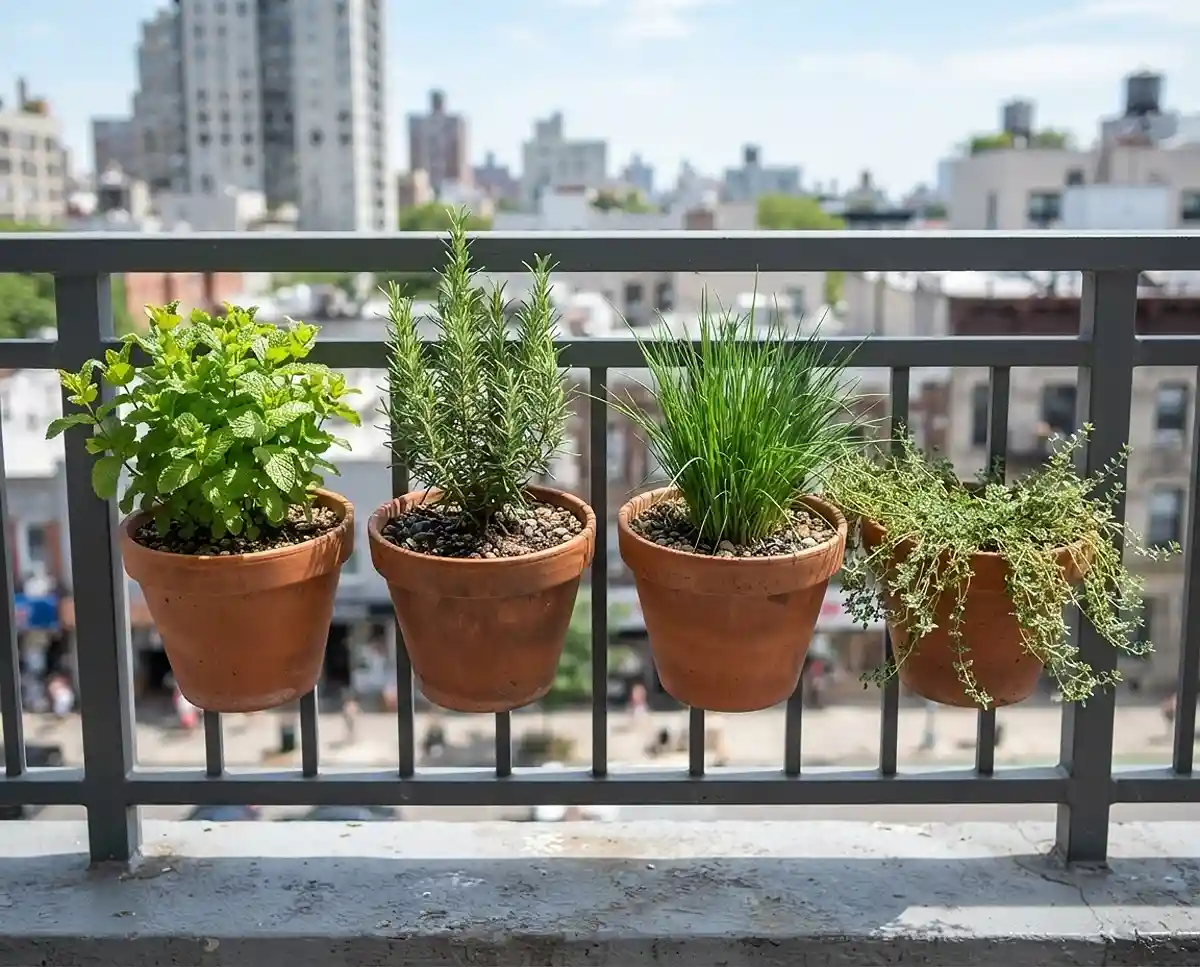
Best Balcony Herbs for Beginners
Tired of wilted grocery store herbs? These are the best balcony herbs for beginners—resilient container herbs that thrive even when you forget to water for a week.
Table of Contents
Why Balcony Herb Gardens Are Perfect for Busy Beginners
I’ve grown herbs on a north-facing balcony in Chicago (zone 6a) for six seasons, and my biggest early mistake was buying whatever looked prettiest at the garden center instead of what actually wanted to live there.
A basil plant that needs daily babying doesn’t belong on a balcony you only think about after work. The best balcony herbs for beginners are the ones with forgiving genetics—plants that evolved on rocky Mediterranean hillsides or spread like weeds given the chance.
Skip the grocery run for a wilted plastic clamshell of basil that costs four dollars and dies in your fridge in three days. A few resilient container herbs on your railing solve that permanently, and they barely need you.
For more inspiration once these four take off, browse these balcony herb garden ideas for expanding your setup.
Assessing Your Balcony Microclimate in Under 5 Minutes
Before you buy a single pot, spend five minutes reading your balcony’s actual conditions. Sun exposure and wind determine most of whether your small balcony garden thrives or turns into a graveyard of brown stems by July.
A Quick Guide to Sunlight Mapping
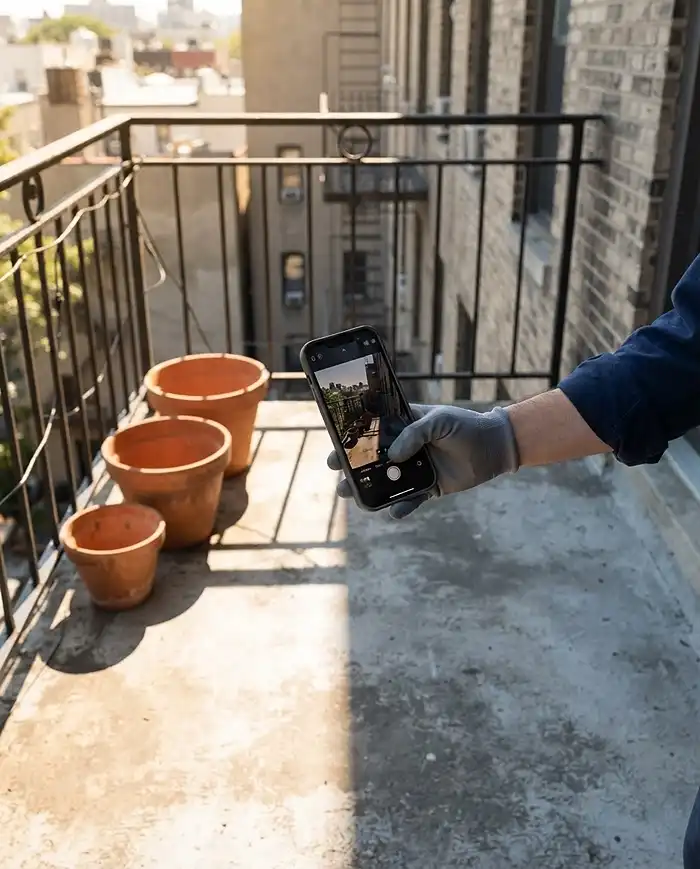
Check your balcony at 9 AM and again around 2 PM. If it’s bathed in direct light both times, you’ve got full sun (6+ hours)—ideal for Mediterranean herbs like rosemary and thyme.
If shadows from the building next door creep in by early afternoon, you’re working with partial shade, which actually suits leafy herbs like mint and chives just as well.
Identifying and Managing High-Rise Wind
Balconies above the third floor often sit in wind corridors that ground-level gardens never deal with. That wind pulls moisture out of soil fast, sometimes drying a pot out in half the time you’d expect.
On my own 9th-floor balcony, a gust once knocked over a top-heavy terra cotta pot and cracked it on the concrete. Now I only use squat, wide-based containers under 14 inches tall for anything exposed to open air.
The Best Balcony Herbs for Beginners: 4 Indestructible Picks
These four culinary herbs handle missed waterings, temperature swings, and general neglect better than almost anything else you can grow. If you’re collecting your first herb garden ideas, start here.
| Herb | Light Needs | Water Needs | Watch Out For |
|---|---|---|---|
| Mint | Partial shade to full sun | Keep evenly moist | Aggressive roots—give it its own pot |
| Rosemary | Full sun (6+ hrs) | Let soil dry out fully | Root rot in soggy soil |
| Chives | Full sun to partial shade | Moderate, forgiving | Needs dividing every 2-3 years |
| Thyme | Full sun | Low, drought-tolerant | Poor drainage kills it fast |
Mint: The Unkillable Balcony Survivor
Mint is borderline indestructible. It handles partial shade or full sun, spotty watering, and rough treatment, then rewards you with fresh leaves for tea or mojitos within weeks of planting.
Here’s the one hard rule: always plant mint in its own container, isolated from everything else. Its roots spread aggressively underground and will choke out neighboring herbs in a single season if you let them share soil.
I learned this the hard way when one mint plant took over a 24-inch trough and strangled the basil next to it by August. Now every mint plant I own gets its own pot, no exceptions.
Rosemary: The Drought-Tolerant Shrub
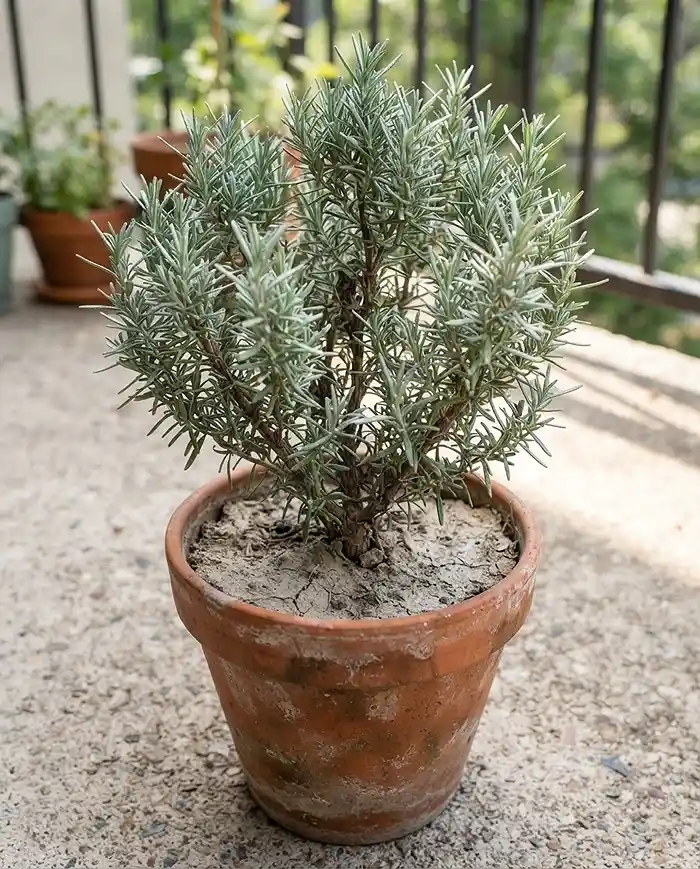
‘Tuscan Blue’ and ‘Arp’ are the two rosemary cultivars I’d actually recommend for a balcony. Both are woody Mediterranean natives that biologically prefer their soil to dry out completely between waterings.
That makes rosemary the ultimate plant-and-forget herb for people with unpredictable schedules. Overwatering, not underwatering, is what kills most beginner rosemary plants.
Mine has survived three separate two-week work trips with zero attention. The soil goes bone dry, I water it deeply once I’m back, and it bounces back within a day.
Chives: The Forgiving, Pest-Repelling Allium
Chives are grass-like, extremely forgiving, and double as a natural pest deterrent—their oniony scent tends to keep aphids off nearby plants. That’s a real perk in any pollinator container garden.
You can shear a whole clump down to the soil line for a recipe and it’ll regrow vigorously within two to three weeks, no babying required.
Let a few flower heads bloom in early summer if you can stand to skip a harvest—bees show up for those purple blooms constantly, and chives self-seed just enough to fill gaps.
Thyme: The Low-Maintenance Spiller
Creeping thyme needs almost no fertilizer and works beautifully as a cascading “spiller” trailing over the edge of a balcony pot or railing planter.
It keeps its potent culinary oils even through scorching summer heatwaves, which is more than you can say for basil, which wilts and turns bitter the second temperatures spike past 90°F.
I’ve grown ‘Coccineus’ creeping thyme in a hanging basket for two summers now, and it’s never once needed extra feeding—just an occasional deep soak.
Time-Saving Gear and Soil Solutions
The right hardware and soil mix upfront automates most of the tedious parts of growing container herbs, cutting your weekly maintenance down to almost nothing.
The Magic of Self-Watering Planters
Sub-irrigated pots have a hidden water reservoir at the bottom, and the soil above wicks moisture up through capillary action as the plant needs it. It’s the single best upgrade I’ve made to my setup.
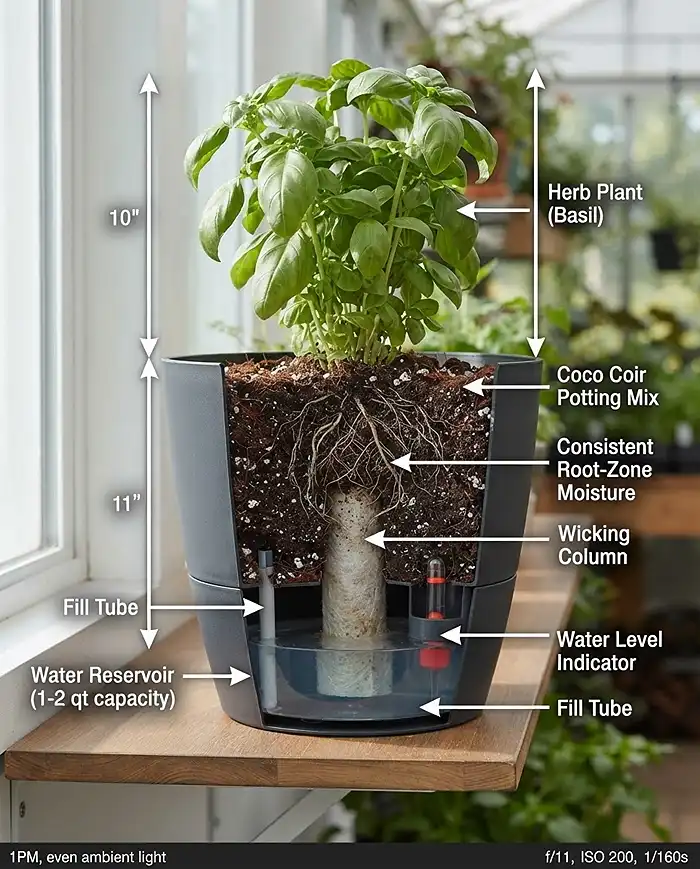
Fill the reservoir once and most herbs can go a week to ten days without you touching a watering can. For the mechanics behind it, the University of Maryland Extension’s self-watering container guide is worth a look before you buy.
Formulating a Moisture-Retentive Soil Recipe
Skip garden soil entirely—it compacts in containers and suffocates roots. Blend a premium organic potting mix with 30% coco coir and a handful of perlite for aeration.
That combination acts like a sponge: it locks in moisture between waterings while still letting oxygen reach the roots, which is exactly what busy-person container herbs need to forgive a missed week.
- 16-20 inch wide, low-profile self-watering resin pot
- Premium organic potting mix (70%) + coco coir (20%) + perlite (10%)
- Slow-release granular organic fertilizer
- Drip tray if your building doesn’t allow water reservoirs
Still furnishing a first rental balcony? These apartment gardening tips cover weight limits, HOA rules, and other things worth checking before you haul pots up the stairs.
The 15-Minute Step-by-Step Planting Guide
This whole process takes about 15 minutes per pot once your supplies are laid out.
- Line the drainage hole with a coffee filter so soil doesn’t leak onto the balcony below.
- Pre-moisten your soil mix in a bucket until it feels like a wrung-out sponge.
- Gently massage the nursery root ball to loosen any roots that have started circling.
- Set the plant at the same depth it sat in its nursery pot, backfill, and water deeply.
The “Lazy” 5-Minute Maintenance Routine
Once a week, walk your balcony with kitchen scissors and just harvest. Snipping herbs for dinner doubles as pruning, and it actively forces the plant to grow bushier instead of leggy.
That’s it. No dedicated pruning session, no aesthetic shaping—just cook with what you cut and check the soil moisture while you’re out there.
Common Problems & Solutions
Two failures account for most beginner disasters, and both are fixable in minutes without any horticulture background.
Wilting Leaves and Hydrophobic Soil
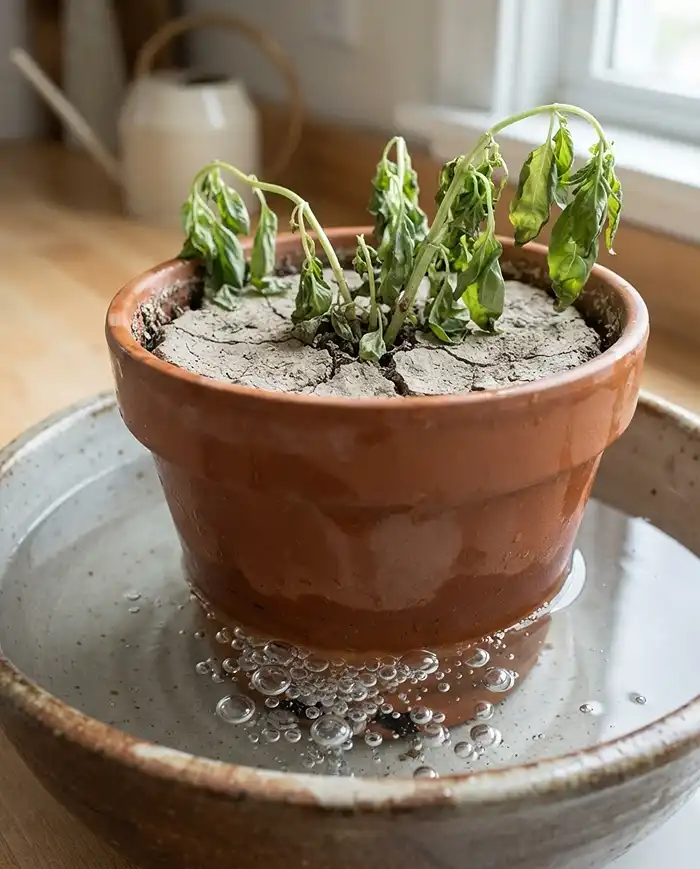
If you forgot to water and the soil has pulled away from the pot edges and gone bone-dry, it’s likely hydrophobic (repelling water instead of absorbing it). Regular top-watering just runs through and out the bottom.
Submerge the bottom half of the pot in a basin of water for 30 minutes instead. The soil rehydrates from below, and most wilted herbs perk back up within a few hours.
Weak, Stretchy Stems (Etiolation)
Pale, leggy stems reaching sideways toward a window mean the plant isn’t getting enough light—a condition called etiolation (stretching in search of light).
Snip off the tall, weak growth (toss it in whatever you’re cooking) and move the pot to your brightest corner. New growth should come in sturdier within two to three weeks. For a full comparison of light needs across other varieties, the best herbs to grow in pots guide is a good next stop.
best balcony herbs for beginners FAQs
Can I plant those living supermarket herbs directly into pots?
Not as-is. Grocery store herb pots typically cram in dozens of seedlings meant for immediate use. Gently pull the root ball apart into three or four smaller clumps and plant each in its own pot to avoid fatal overcrowding within weeks.
How long can I leave my balcony herbs when traveling?
With large self-watering pots, herbs can usually handle 7 to 10 days unsupervised. Group containers tightly in a shaded corner, give them a deep soak right before you leave, and top off the reservoirs if possible.
Do I really need to remember to fertilize them?
No. Mix a handful of slow-release granular organic fertilizer into the soil on planting day and skip weekly liquid feeding entirely. It steadily feeds your herbs for the whole growing season.
Will mint really take over my other container herbs?
Yes, if it shares soil with anything else. Mint spreads through underground runners and will choke out neighboring plants within a single season, so always give it its own dedicated pot.
Which of these herbs are best for a pollinator container garden?
Chives and thyme are the top picks. Both produce small flowers that bees visit regularly if you let a portion of the plant bloom instead of harvesting every stem.
Key Takeaways
- The best balcony herbs for beginners are mint, rosemary, chives, and thyme—all forgiving of missed waterings and inconsistent schedules.
- Map your balcony’s sun and wind before buying a single pot; it prevents most maintenance headaches later.
- Self-watering planters and a coco-coir soil mix stretch your watering chores to once a week or less.
- Weekly harvesting doubles as pruning, so there’s no separate shaping session needed.
- Give mint its own pot, always, to protect the rest of your container herbs.
Very useful information for balcony plants.