
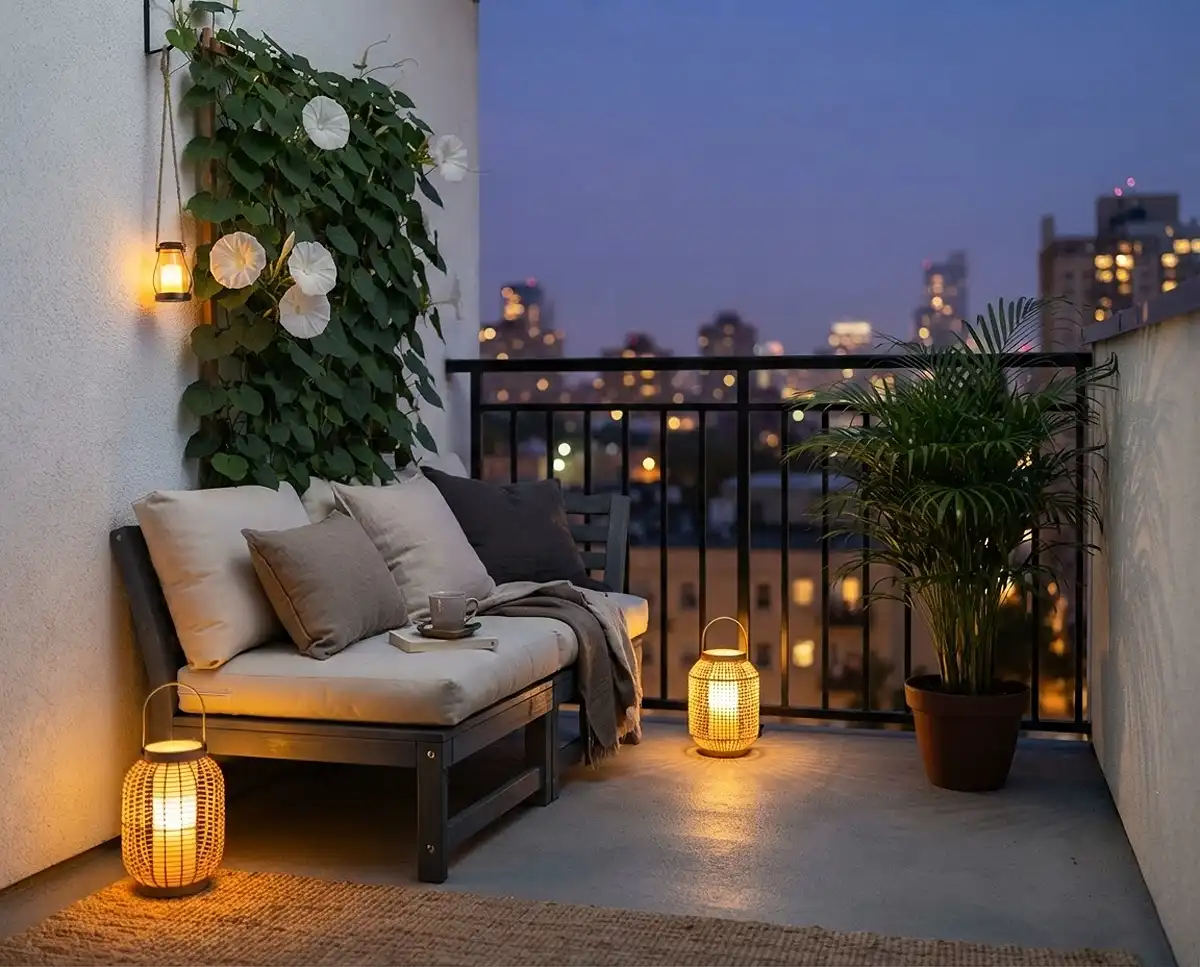
Balcony Garden Lantern Ideas for a Cozy Evening Nook
Balcony garden lantern ideas turn a cramped apartment balcony into a cozy evening retreat, pairing the right small balcony garden plants with safe, weatherproof lighting so you actually want to sit outside after sunset.
I’ve spent the last six summers redesigning my own 5×8-foot balcony in zone 6b Chicago, and the lantern-and-plant combo is hands down the cheapest upgrade that made the space feel like a real room. Nothing fancy, no electrician, just careful choices about what glows and what grows.
Table of Contents
Crafting a Cozy Balcony Garden Nook with Lantern Light
There’s something about soft, flickering light against dark leaves that makes a tiny apartment balcony feel bigger than it is. A single floor lantern and a few well-chosen containers can turn 40 square feet into your favorite room in the house.
The trick is layering: ambient light low, fragrance at nose height, and structural foliage overhead. I learned this the hard way after my first attempt was just one bright battery lantern sitting on a bare concrete floor. It looked like a parking lot, not a nook.
Assessing Your Balcony Space and Lighting Safety
Before you buy a single lantern, walk your balcony space with fresh eyes. Renters especially need to check structural limits, weight allowances, and lease restrictions before committing to any apartment balcony garden ideas involving lights or heavy pots.
Fire Safety and HOA Rules for Apartment Renters
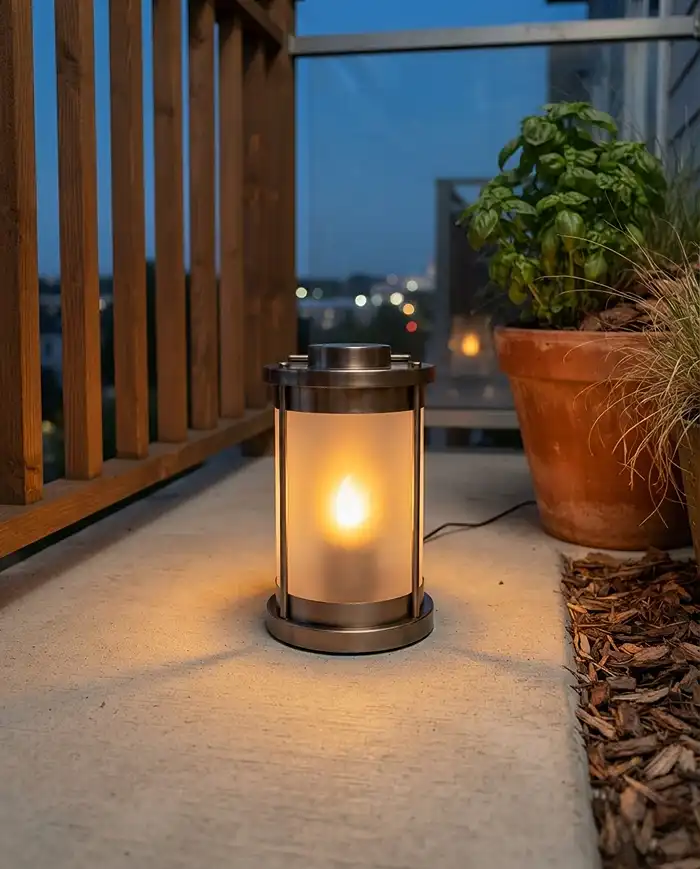
Read your lease before you buy anything. Most apartment buildings and HOAs ban open flames on balconies outright, and for good reason: dry potting soil, mulch, and wood decking ignite fast.
I made this mistake in my second apartment, using real tealights in glass lanterns until a gust knocked one into a pot of dried coco coir. No fire, just a scare, but I switched to enclosed LED lanterns that same week and never looked back.
- Choose flameless LED lanterns with a flicker setting instead of real candles
- Keep any lighting at least 12 inches from mulch, dry leaves, or wooden railings
- Check your lease for specific language about “open flame” or “combustible materials”
Evaluating Balcony Microclimates for Nook Plants
Every balcony has its own microclimate. Spend one evening tracking wind corridors, since a sturdy plant that won’t tip over matters more than a pretty one when it’s sitting next to an expensive glass lantern.
My 14th-floor balcony gets brutal crosswinds after 6pm even in calm weather, so I learned to skip tall, top-heavy plants in favor of squat, wind-tolerant varieties near anything breakable.
Choosing the Right Lanterns for Your Garden Nook
Outdoor-rated lighting needs to survive humidity, splashback from watering, and temperature swings. For more layout inspiration, check out these balcony garden lighting ideas before you shop.
Solar-Powered vs. Battery-Operated LED Lanterns
Quick Answer: Solar lanterns work best on unshaded, south-facing balconies with 4+ hours of direct sun; battery-operated LED lanterns are the better call for deep-shade, north-facing nooks.
| Lantern Type | Best For | Watch Out For |
|---|---|---|
| Solar-powered | South-facing, unshaded balconies | Fails to charge under dense foliage or awnings |
| Battery-operated LED | North-facing or heavily shaded nooks | Batteries need regular swapping or recharging |
| USB-rechargeable LED | Any exposure, most reliable overall | Requires remembering to charge weekly |
My own north-facing balcony gets almost zero direct sun after 3pm, so solar lanterns there died within a week. I switched to USB-rechargeable LED string lights and haven’t had a dark night since.
Material Durability: Brass, Glass, and Woven Rattan
Match materials to your microclimate. Untreated iron rusts fast around damp potting mix, while treated brass, thick tempered glass, and synthetic woven rattan hold up to frequent watering and splash.
- Treated brass: won’t rust, ages into a nice patina over a season or two
- Tempered glass: safer than thin glass, less prone to shattering from temperature shock
- Synthetic rattan: mimics natural rattan but shrugs off humidity and rain
Best Plants to Highlight in a Lantern-Lit Nook
The best small balcony garden plants for a lantern-lit nook either glow under low light or throw dramatic shadows. Look for pale petals, waxy leaves, or intricate foliage that catches and bounces the light back at you.
Night-Blooming and Fragrant Flowers (Moonflower, Jasmine)
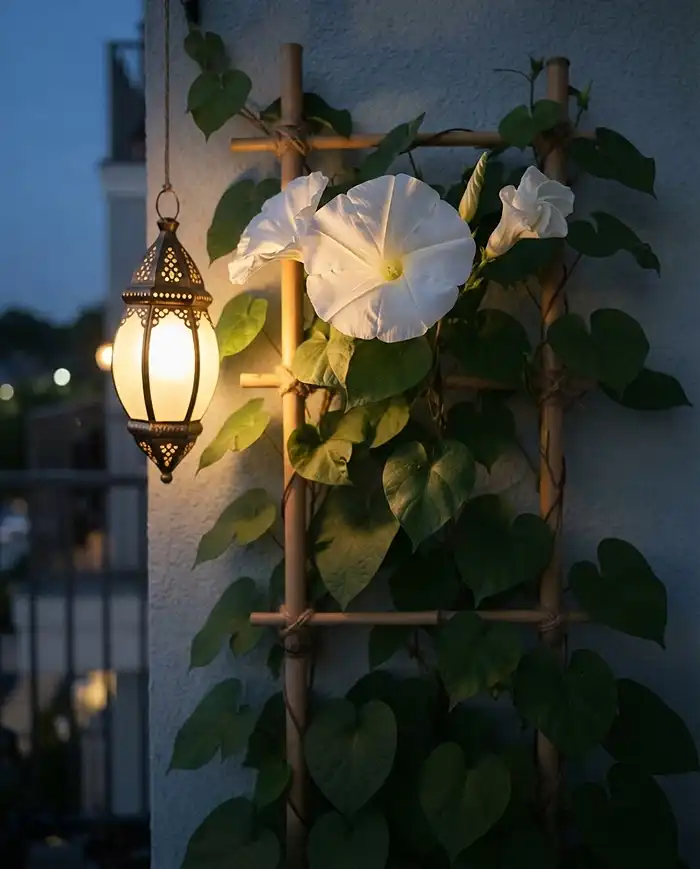
Quick Answer: Moonflower (Ipomoea alba), Evening Primrose, and Star Jasmine are the top picks for a lantern nook because their pale, reflective petals and evening fragrance peak right when your lanterns come on.
Moonflower vines climb fast and unfurl their saucer-sized white blooms right at dusk. I trained mine up a trellis next to a hanging lantern two summers ago, and the way those petals caught the amber glow made the whole corner feel alive.
Star Jasmine works well in a container too, and its scent is strongest after sunset. For details on how it grows, the NC State Extension plant profile on moonflower is a solid reference on care and toxicity notes.
Structural Foliage That Casts Dramatic Shadows (Ferns, Palms)
Quick Answer: Architectural foliage like a Majesty Palm or Japanese Painted Fern casts intricate, moving shadows against balcony walls when backlit by a floor lantern, adding depth without needing more flowers.
I keep a Majesty Palm in a 14-inch pot in the back corner of my nook, positioned so a floor lantern sits directly behind it. On breezy nights, the shadow play across the wall is honestly more captivating than the plant itself.
Step-by-Step Guide to Styling Your Garden Nook
Quick Answer: Start with low-profile seating, add tall structural plants in the corners, anchor the space with large floor lanterns, then finish with smaller hanging lanterns on a trellis for layered light.
- Place low, cozy seating first so you know how much floor space remains
- Position your tallest structural plants (palms, ferns) in the corners
- Anchor the nook with one or two large floor lanterns near seating
- Hang smaller, lightweight lanterns from a trellis or railing for overhead glow
Layering Light at Different Heights
Interior designers layer light for a reason: a single overhead spotlight feels flat and glaring. Mix a large floor lantern, a mid-level tabletop Moroccan-style lamp, and a small hanging lantern overhead for real depth.
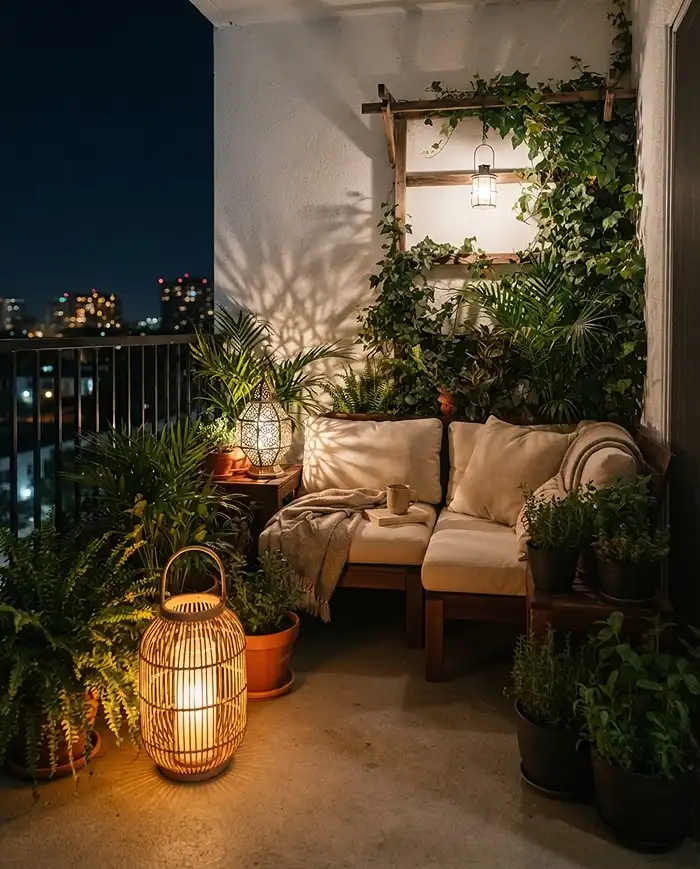
My current setup uses exactly this trio, and it’s the difference between “balcony with a light on it” and an actual evening room. For more seasonal styling, my late-summer balcony garden ideas post covers plant pairings that hold up into September.
Arranging Plants to Hide Cords and Battery Packs
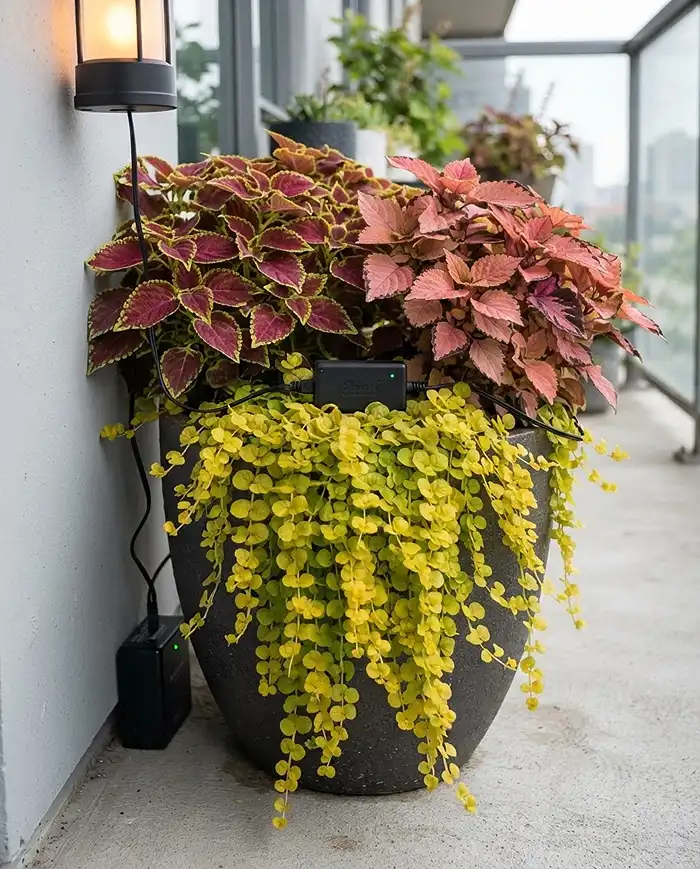
Battery packs and cords are the ugliest part of any balcony garden lantern ideas project. Dense, trailing plants solve this cleanly without any actual cord management skills required.
- Trailing Creeping Jenny spills over pot edges and hides low cords fast
- Bushy Coleus works well as a leafy screen for larger battery boxes
- Sweet Alyssum fills gaps at the base of taller pots within a few weeks
Plant Care and Maintenance Around Artificial Light
Mixing electrical fixtures with a living, watered garden calls for a more cautious routine than a typical balcony setup. A few habit changes prevent most problems before they start.
Do Lanterns Disrupt Plant Sleep Cycles?
Quick Answer: No. Bright, 24-hour grow-lights can interfere with plant respiration, but the soft, low-lumen glow of a decorative evening lantern is far too weak to disrupt a plant’s natural nighttime rest cycle, a process called photoperiodism.
Photoperiodism just means plants track day length to time blooming and dormancy. A few hours of dim lantern light won’t confuse that clock the way an all-night porch floodlight might.
Safe Watering Routines Around Garden Lighting
Quick Answer: Water in the morning only, so foliage and flooring are fully dry by the time you turn on evening lanterns, which prevents electrical shorts, rusted battery compartments, and shattered hot glass.
I water everything by 9am now, a habit I picked up after a cold splash on a warm glass lantern pane left a hairline crack. It’s a small routine change that avoids a genuinely dangerous mess.
Common Problems & Solutions
Two issues come up again and again once you combine outdoor lighting with live plants: solar lanterns losing power, and heat scorch on nearby leaves.
Solar Lanterns Failing to Charge in Shaded Nooks
Quick Answer: Fast summer growth often casts new shadows over solar panels partway through the season, so either prune back the shading foliage regularly or switch that fixture to a USB-rechargeable LED bulb.
By mid-July my Majesty Palm had grown enough to block my solar lantern’s panel completely. I swapped that one fixture to USB-rechargeable rather than fighting the plant’s growth all summer.
Heat Damage from Real Candles or Bulbs
Quick Answer: Crispy, browned leaf tips near a lantern usually mean foliage is touching hot glass. Keep at least a 12-inch buffer between any heat-emitting light source and tender leaves to fix it immediately.
My Japanese Painted Fern got scorched tips after I set it too close to a small brass lantern one August. Moving it back a foot solved it within two weeks of new growth.
balcony garden lantern ideas FAQs
What are the best plants for a shaded balcony nook?
Lush, low-light tolerant varieties like Boston Ferns, Hostas, and trailing Pothos work well in shaded nooks. Their bright green, waxy leaves reflect soft LED lantern light nicely even without colorful blooms.
Can I use indoor decorative lanterns on my balcony?
No, indoor-rated lanterns aren’t built for balcony humidity and morning dew, which can warp untreated wood and short-circuit non-waterproof battery packs. Buy fixtures with an outdoor IP44 waterproof rating instead.
Do lantern lights attract unwanted bugs to the balcony?
Bright, cool-toned white and blue lights attract mosquitoes and moths more than warmer tones do. Choose warm white or amber LED bulbs under 3000 Kelvin to noticeably cut down on insect activity.
Conclusion
A great lantern-lit nook comes down to three things: fixtures rated for the outdoors, plants matched to your actual light and wind, and a morning-only watering habit that keeps everything safe after dark.
Start small, with one lantern and one fragrant plant, and build from there. For a full plant list by season, browse these apartment balcony garden ideas.
- Choose enclosed LED or USB-rechargeable lanterns over open flame, always check your lease first
- Match lantern type to sun exposure: solar for south-facing, battery or USB for shaded nooks
- Night-blooming, pale-petaled plants like moonflower reflect lantern glow best after dusk
- Water in the morning only to keep electrical fixtures safe from splashback
- These balcony garden lantern ideas work in almost any small balcony garden, rented or owned