

Monochromatic Balcony Garden Ideas for Fall
Skip the orange mums. A monochromatic balcony garden in crisp black, white, and green looks sharp, modern, and calm — and it’s easier to pull off than you’d think.
Table of Contents
The Modern Appeal of a Monochromatic Balcony Garden in Early Fall
Walk through any apartment complex in October and you’ll see the same thing on repeat: orange mums, yellow pansies, a plastic pumpkin. It’s fine. It’s also everywhere.
A monochromatic balcony garden flips that script. Black containers, white blooms, layers of green foliage — nothing competing for attention. I switched my own 6×10 balcony to this palette three falls ago and haven’t looked back.
It reads as intentional instead of seasonal clutter, and it actually photographs better in low autumn light. If you’re searching for balcony garden ideas that don’t scream “craft store,” this is it.
Planning Your Black, White, and Green Microclimate
Before you buy a single plant, spend a week just watching your balcony. Early fall light shifts fast, and a spot that got six hours of sun in August might get three by late September.
This matters more on a small balcony garden where you don’t have room to shuffle pots around once things are planted.
Tracking the Shifting Autumn Sun Angles
Quick Answer: Track your balcony’s light for a few days in early fall — the sun sits lower, so spots that were full sun in summer may now be partial shade.
I made this mistake with white autumn mums on my north-facing rail in zone 6b. They stretched and got leggy by week two because I’d planted based on August light, not October light.
White-blooming plants especially need 4 to 6 hours of direct sun to stay compact. Less than that, and stems reach for light instead of filling out. Check your spot at 9 a.m., noon, and 3 p.m. before committing.
Pro Tip: A cheap sundial or even your phone’s compass app (set to track sun position) beats guessing — do this before you buy anything.
Managing Wind and Sudden Temperature Drops
Quick Answer: Group your heaviest black planters along the outer railing to block wind, and keep delicate white or variegated foliage tucked closer to the building wall.
Early fall wind is unpredictable — calm one day, gusty the next. Heavy matte black containers act like a windbreak for anything more fragile behind them.
- Place large black anchor pots (14 inches or wider) along the railing edge
- Keep white pansies and trailing alyssum tucked behind them, closer to the wall
- Move any hanging baskets down to rail height before the first cold snap — hanging plants lose heat faster
Real Example: A sudden wind event in late September once knocked over a lightweight white ceramic pot I’d placed too close to the rail edge. Now everything under 10 pounds sits behind something heavier.
Choosing the Right Containers and Decor
The whole monochromatic look lives or dies on your containers. Get the materials right and the plants do the rest.
Matte Black and Glossy White Planters
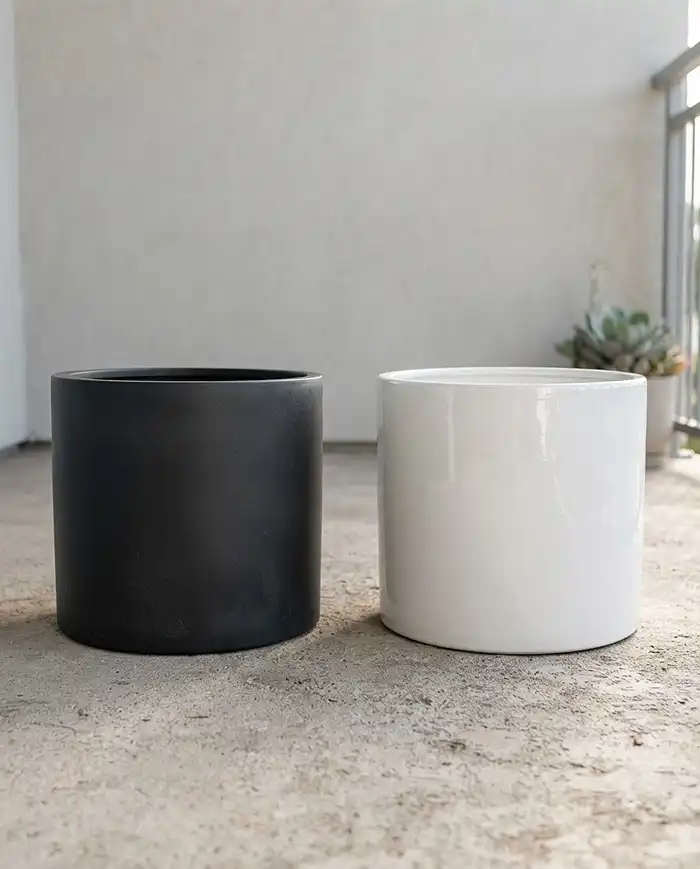
Quick Answer: Pair matte black resin planters, which absorb heat and look contemporary, with glossy white ceramic pots that bounce light into shaded corners.
Matte black resin is lightweight enough for most rental balconies and won’t crack in a light frost the way cheap terracotta will. I run three 16-inch matte black resin pots as my anchors.
Glossy white ceramic works best in the corners that get less direct light — the sheen reflects what little sun reaches them, brightening the whole grouping without adding another light source.
Pro Tip: Mix finishes, not just colors. An all-matte or all-glossy balcony reads flat in photos; contrast between textures is what makes it look designed.
Insulating Materials for Cold Autumn Nights
Quick Answer: Choose thick, double-walled fiberglass or high-density plastic containers — they hold the aesthetic while protecting roots from sudden September and October temperature drops.
Thin plastic pots let cold move straight through to the root ball. Double-walled fiberglass adds an air gap that acts like insulation, which matters once nights start dropping into the 40s.
| Material | Best For | Watch Out For |
|---|---|---|
| Matte black resin | Anchor pots, heat absorption | Can overheat roots in a late warm spell |
| Glossy white ceramic | Shaded corners, light reflection | Heavy — check weight limits on rental balconies |
| Double-walled fiberglass | Root insulation for cold nights | Pricier upfront than plastic |
| High-density plastic | Budget-friendly insulation | Can look cheap without a matte finish |
Selecting Plants for a Monochromatic Fall Palette
This is the fun part. You need plants that are genuinely cold-hardy for early fall, not just pretty for a week.
Deep Green and Black Foliage
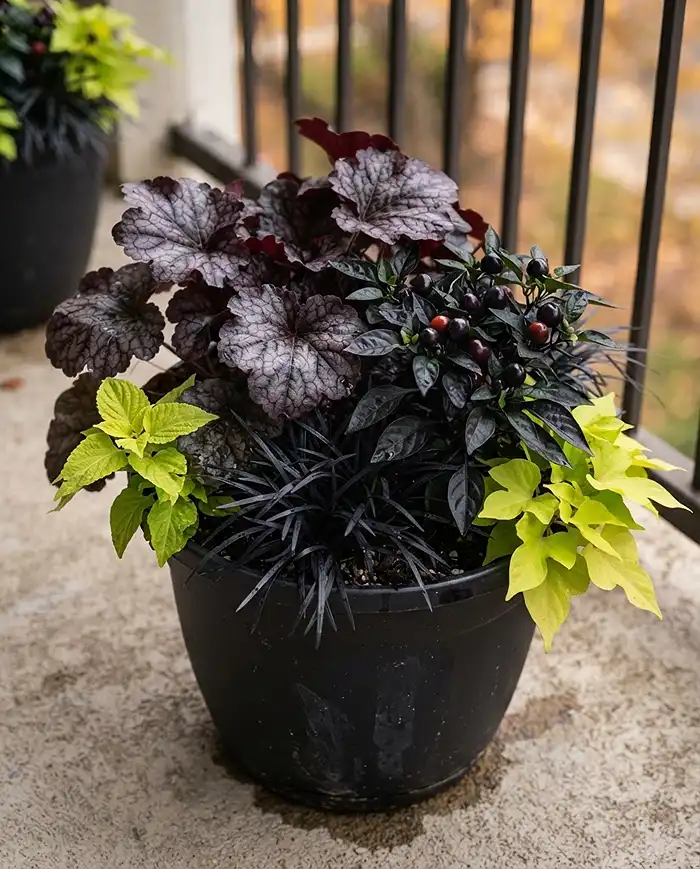
Quick Answer: ‘Obsidian’ Coral Bells, Black Mondo Grass, and ‘Black Pearl’ ornamental peppers give you the moody dark foliage that bridges black containers into bright green companions.
‘Obsidian’ Heuchera holds its near-black leaf color best in the cooler light of fall — in high summer heat it can wash out toward brown. Black Mondo Grass stays low and grassy, great for softening the hard edges of a resin pot.
- ‘Obsidian’ Coral Bells (Heuchera): 12-18 inches, hardy to zone 4
- Black Mondo Grass (Ophiopogon planiscapus ‘Nigrescens’): 6-8 inches, hardy to zone 6
- ‘Black Pearl’ ornamental pepper: glossy black foliage, small purple-black fruit, treat as annual outside zone 9
Real Example: I lost a ‘Black Pearl’ pepper to an early frost in year one because I didn’t bring it in for one cold night in mid-October. Now I check the forecast daily once nights dip below 45°F.
Crisp White Fall Bloomers
Quick Answer: White autumn garden mums, white pansies, and cascading sweet alyssum are the most reliable white bloomers for cool weather, often surviving well past the first light frost.
Garden mums (Chrysanthemum) bred for fall are tougher than the grocery store kind — look for cultivars labeled “hardy” or “garden” mums rather than florist mums, which aren’t built for outdoor cold.
White pansies hold color through light frost and even bounce back after a freeze thaws out. Sweet alyssum trails nicely over a pot’s edge, softening the geometric lines of black containers.
Pro Tip: Deadhead mums weekly — spent white blooms turn brown fast and they’re the first thing to wreck the clean look.
Structural Evergreens for Minimalist Lines
Quick Answer: Clipped boxwood spheres, dwarf Alberta spruce, and upright sedums hold their geometric shape long after the annuals fade, giving the display permanent structure.
These are your bones. Once the mums are done in November, boxwood and spruce keep the balcony looking designed rather than empty. I keep two boxwood spheres as permanent anchors and swap everything else seasonally.
- Boxwood sphere (clipped): hardy to zone 5, slow growing, low maintenance
- Dwarf Alberta spruce: hardy to zone 3, adds vertical height without bulk
- Upright sedum (‘Autumn Joy’ or similar green cultivars): hardy to zone 3, drought-tolerant
Step-by-Step Planting Guide for Your Monochromatic Balcony
Here’s the order I follow every year, and it consistently looks better than planting randomly.
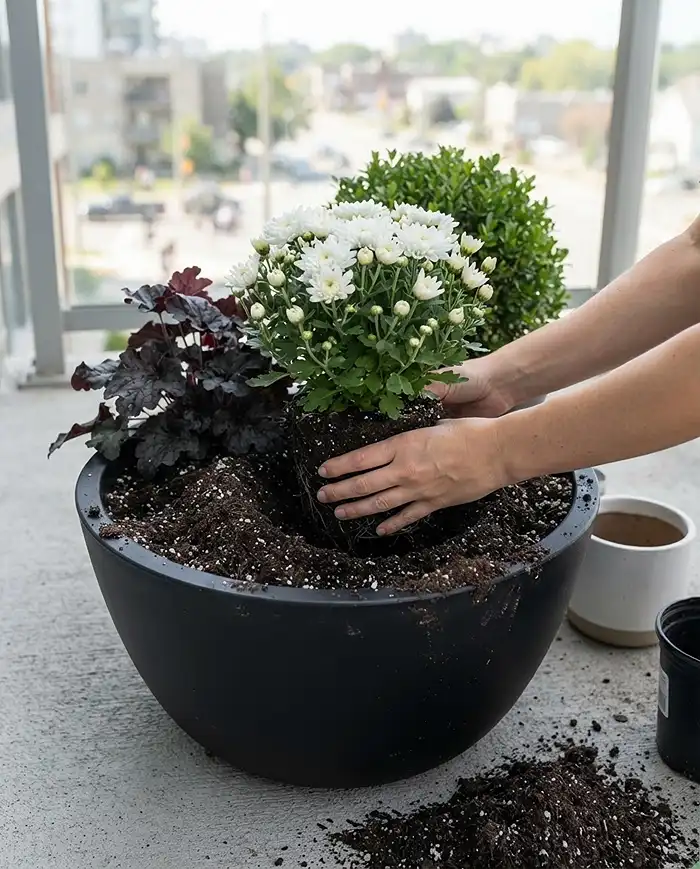
- Place your largest black anchor planters in the corners first — these set the visual weight of the whole layout
- Fill each container with a lightweight, perlite-rich organic potting mix for drainage
- Layer structural green plants (boxwood, sedum) into the center of each pot
- Add dark foliage accents (Heuchera, Black Mondo Grass) around the base
- Stage white flowering plants at the front edges, facing the space you’ll actually see them from
Pro Tip: Plant white bloomers at a slight forward lean toward your main sight line — from a chair or doorway — not just centered in the pot.
Seasonal Maintenance for a Pristine Fall Display
Fall maintenance is different from summer. Get this wrong and the whole look falls apart within two weeks.
Adjusted Watering Strategies for Cooling Soil
Quick Answer: Switch to a finger-test method in fall — push a finger 2 inches into the soil and only water if it’s dry, since cooler temperatures slow evaporation dramatically.
Overwatering is the fastest way to kill a fall container display. Soil that took two days to dry in August might take five in October. I check every container individually rather than watering on a fixed schedule.
Real Example: I kept my summer watering routine into late September one year and lost a Heuchera to root rot within ten days. Now I test soil before every single watering.
Deadheading and Pruning to Maintain the Aesthetic
Quick Answer: Deadhead (remove spent flowers) fading white blooms and prune any yellowing foliage immediately — decaying plant matter ruins the sharp look faster than anything else.
Because this design relies on contrast, one brown mum bloom or yellowing leaf stands out way more than it would in a busy, mixed-color garden. Walk your balcony every two to three days with pruning snips.
Common Problems & Solutions
Two issues show up almost every fall on this kind of setup — here’s how to catch and fix them fast.
Fungal Diseases in Cool, Humid Autumn Air
Quick Answer: Powdery mildew shows up as a white, dusty coating on leaves during cool, humid fall nights — treat it with a potassium bicarbonate spray and improve airflow between pots.
Crowded containers trap moisture and cut off airflow, which is exactly what powdery mildew wants. Leave at least 4-6 inches between pots, even if it means fewer plants.
An organic potassium bicarbonate spray, applied weekly once you spot mildew, usually stops it from spreading without harming beneficial insects.
Soil Splashing on White Containers
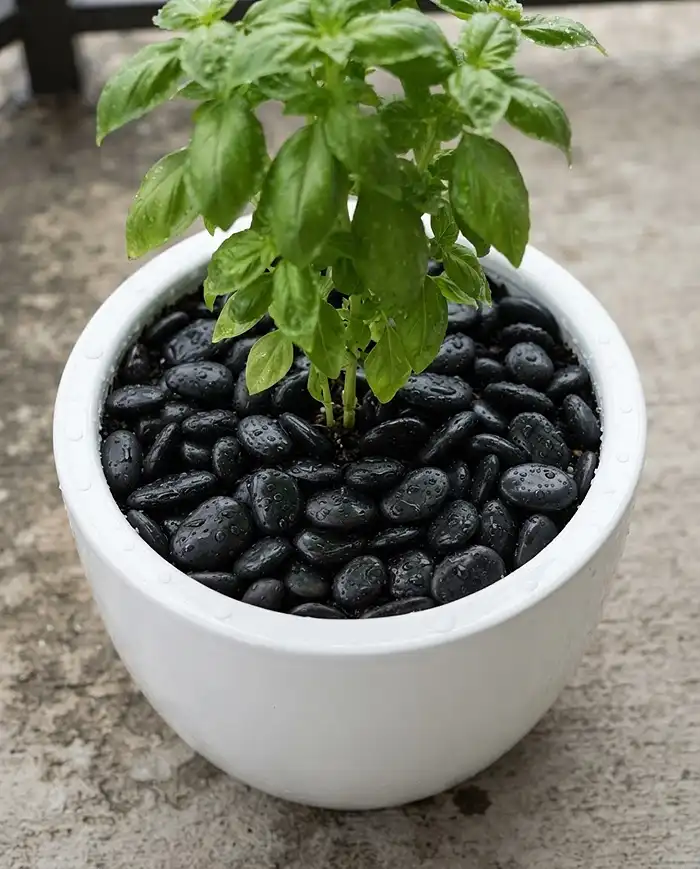
Quick Answer: Prevent muddy splash on white containers by top-dressing soil with black polished river stones or white marble chips, which lock dirt in place during autumn rain.
Rain doesn’t fall gently in early fall — it comes in bursts that splash soil straight up onto pristine white ceramic. A half-inch layer of stone or marble chips solves this in one afternoon and also looks intentional, not like a patch job.
monochromatic balcony garden FAQs
How do black pots affect plant roots in early fall?
While black pots can overheat roots during peak July heatwaves, they’re actually beneficial in early fall. They absorb waning solar energy during the day and keep the root ball insulated through chilly autumn nights.
Can I overwinter Heuchera and evergreen shrubs in balcony pots?
Yes, hardy perennials like Heuchera and boxwood can survive winter in containers down to USDA Zone 5. Cluster the pots against the warmest exterior wall and wrap them in horticultural fleece before the first deep freeze.
What is the best potting mix for cool weather container gardens?
Use a premium, lightweight organic potting mix heavily amended with extra perlite for maximum drainage. Cold, damp autumn roots are highly prone to rot in heavy, water-logged garden topsoil.
How many hours of sun do white fall bloomers need on a balcony?
White-blooming plants like garden mums and pansies need 4 to 6 hours of direct sun daily. Less than that causes leggy, stretched growth as the plant reaches for light.
When should I bring container plants in for the first frost?
Bring in tender plants like ‘Black Pearl’ peppers once nighttime temperatures are forecast to drop below 45°F. Hardy perennials and evergreens can typically stay outside through light frost.
Conclusion
A monochromatic balcony garden isn’t about restriction — it’s about letting black, white, and green do more with less clutter. Start with your containers, build in structural greenery, then layer in seasonal white blooms.
Check your light angles first, watch the soil moisture as temperatures drop, and deadhead often. As of fall 2025, this palette is one of the easiest small balcony garden ideas to keep looking sharp well into November.
For more seasonal container transition tips, or to explore dwarf vegetables for pots to round out your fall container gardening, check the related guides above. You can also confirm your exact growing zone using the official USDA Plant Hardiness Zone Map before choosing perennials.
Key Takeaways
- A monochromatic balcony garden uses black containers, white blooms, and layered green foliage for a modern, low-clutter fall look
- Track sun angles in early fall — shifting light can turn a full-sun spot into partial shade within weeks
- Pair matte black resin with glossy white ceramic, and choose double-walled or high-density containers to insulate roots
- Reliable plant picks: ‘Obsidian’ Heuchera, Black Mondo Grass, hardy garden mums, sweet alyssum, and clipped boxwood
- Switch to finger-test watering and deadhead every 2-3 days to keep the display looking sharp through October