

Best Companion Plants for Peppers and Eggplant in Pots
The right companion plants for peppers and eggplant in pots can cut pest pressure significantly while doubling your harvest from a single container. I grow peppers in containers on a south-facing balcony in zone 6b, and pairing them with the right neighbors changed everything.
Table of Contents
The Science of Companion Planting for Nightshades in Containers
Companion planting isn’t garden folklore — it’s applied ecology. Certain plants release volatile compounds that confuse or repel insects. Others attract beneficial predators, fix nitrogen, or shade the soil to keep roots cool.
In container vegetable gardening, these benefits matter even more. Your plants can’t spread their roots searching for nutrients. Every square inch of pot space needs to work harder, and a well-chosen companion can pull double duty as pest deterrent and living mulch.
Peppers and eggplants are nightshades with near-identical growing needs: full sun, consistent moisture, warm soil, and steady feeding. That overlap makes them ideal candidates for mixed pots — as long as you choose companions that complement rather than compete.
Pre-Planning Your Mixed Container Microclimate
Before you plant anything, you need to match environments. Peppers and eggplants want 8+ hours of direct sun and soil temps above 65°F. Any companion you add must tolerate those same conditions — or at minimum, use the shade cast by the main plant.
You also need to think about root architecture. The deep taproots of a pepper or eggplant need room to anchor. Companions with shallow, fibrous root systems (think herbs and flowers) slot into the same pot without crowding the main plant underground.
For building a productive container garden, this pre-planning step separates a thriving mixed pot from a mess of stunted plants competing for the same inch of soil.
Selecting the Right Pot Size and Material
Use a minimum 15-to-20-gallon container for one nightshade plus companions. Anything smaller and you’ll be fighting root competition and water stress all season.
Fabric grow bags are my first choice. They air-prune roots, which prevents circling, and they breathe — keeping soil temps lower during August heat waves. I’ve burned through two peppers in black plastic pots during heat spikes; I haven’t lost one in a fabric bag since switching in 2022.
Large insulated resin tubs are a solid second option, especially on concrete balconies where reflected heat is brutal. Avoid dark-colored plastic in hot climates — it absorbs heat and can cook roots on a 95°F afternoon.
Check the complete pot size guide for vegetables if you’re unsure which container fits your specific setup and plant count.
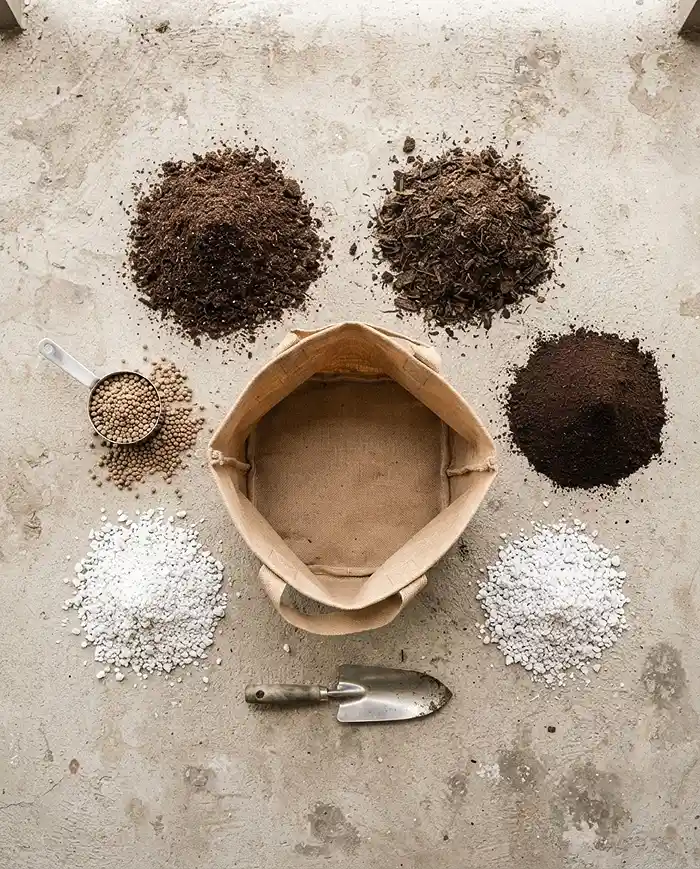
Formulating the Perfect Soil Mix for Heavy Feeders
Standard potting mix won’t cut it for a multi-plant container. You need a rich, moisture-retentive blend that can sustain the feeding demands of fruiting nightshades through months of production.
My go-to mix: 60% quality potting soil, 20% compost, 10% worm castings, 10% perlite. The worm castings provide slow-release micronutrients; the perlite prevents compaction. Mix in a granular slow-release organic fertilizer at planting time — something balanced like a 5-5-5 or 4-6-4.
This foundation matters because vegetables in pots with multiple companions will deplete soil nutrients faster than a single-plant container. Starting rich gives you a buffer before you need to supplement with liquid feeds.
The Best Companion Plants for Peppers and Eggplants
These companions have proven themselves across multiple growing seasons in containers. Each one earns its space by solving a real problem: pest pressure, soil temperature, or moisture retention.
They all share one trait that matters most in a pot: shallow, non-aggressive root systems that won’t strangle your main plant underground.
For more ideas on what thrives in tight spaces, check out this guide to the best vegetables for container gardening.
Aromatic Herbs: Basil, Oregano, and Thyme
Basil is the classic pepper companion, and it earns the reputation. The strong volatile oils it releases — specifically linalool and eugenol — mask the scent of pepper and eggplant foliage from aphids and flea beetles.
Plant ‘Genovese’ or ‘Spicy Globe’ basil around the base of your nightshade. The compact form of ‘Spicy Globe’ is especially useful in pots — it stays tidy and doesn’t shade out the main plant.
Low-growing oregano and thyme act as a living mulch. Their dense, creeping foliage shades the soil surface, which cuts evaporation and keeps roots cooler during heat spikes. In summer 2023, I measured a 9°F difference in soil temp between a bare pot and one planted with thyme groundcover.
Stick to 2-3 herb plants per companion ring. Overcrowding leads to fungal issues at the base of the main stem.
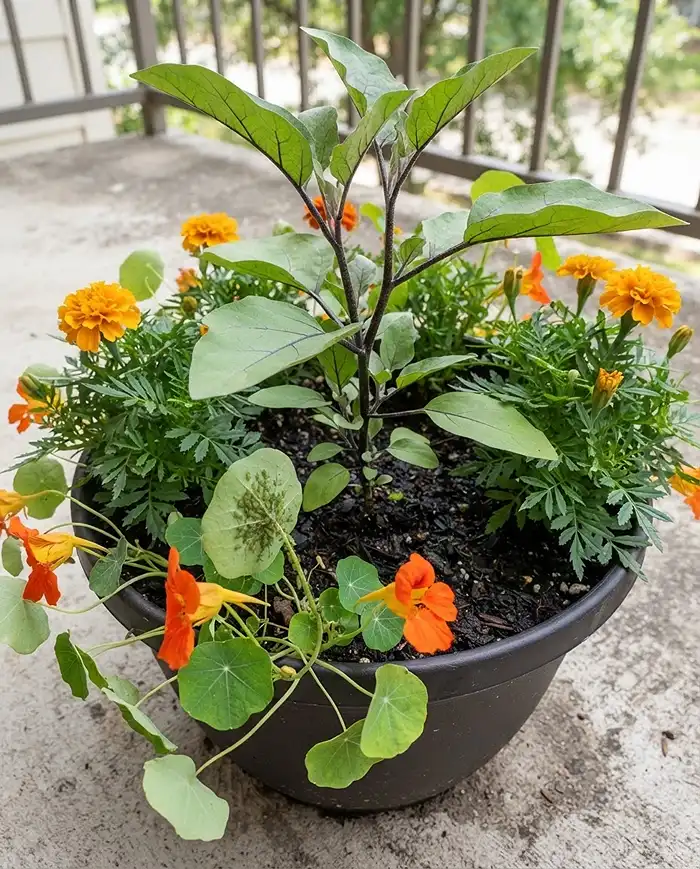
Pest-Repelling Flowers: Marigolds and Nasturtiums
French marigolds (Tagetes patula) are proven nematode deterrents. Their roots secrete alpha-terthienyl, a compound that suppresses root-knot nematode populations in the soil. That’s a serious benefit when you’re reusing potting mix season to season.
Plant one or two ‘Bonanza’ or ‘Disco’ dwarf marigolds at the pot’s edge. They stay under 10 inches tall and won’t block light from your peppers.
Trailing nasturtiums serve a completely different purpose: they’re a trap crop. Aphids adore nasturtiums and will colonize them preferentially, leaving your pepper blossoms alone. Let the aphids build up on the nasturtium, then cut the infested growth and drop it in the trash — not the compost.
I lost an entire pepper crop to aphid pressure in 2021 before I started using nasturtiums as sacrificial plants. Haven’t had the same problem since.
Shallow-Rooted Edibles: Radishes and Spinach
This is where container garden tips get interesting. Fast-maturing cool-season crops can share a pot with peppers and eggplants if you time it right.
Sow radishes and spinach around the pot’s perimeter in late spring, just as you’re transplanting your nightshade seedlings. The main plant is still small, so there’s plenty of light. By the time the pepper or eggplant canopy fills in, the radishes will be ready to harvest.
Spinach handles the transition well because it actually benefits from the filtered shade as summer heats up. That overhead canopy from a maturing eggplant delays bolting by 2-3 weeks in my experience.
- ‘Cherry Belle’ radish — matures in 22 days, roots stay compact and shallow
- ‘Bloomsdale’ spinach — heat-tolerant, handles partial shade well
- ‘Melody’ spinach — upright habit that doesn’t sprawl into the center stem
Plants to Strictly Avoid (Bad Companions)
Not every plant plays nicely in a confined space. Some will outcompete your nightshades for water and nutrients. Others release chemicals that actively stunt their neighbors. In a container, there’s no buffer — the damage happens fast.
Knowing which plants to exclude is just as important as knowing which to add.
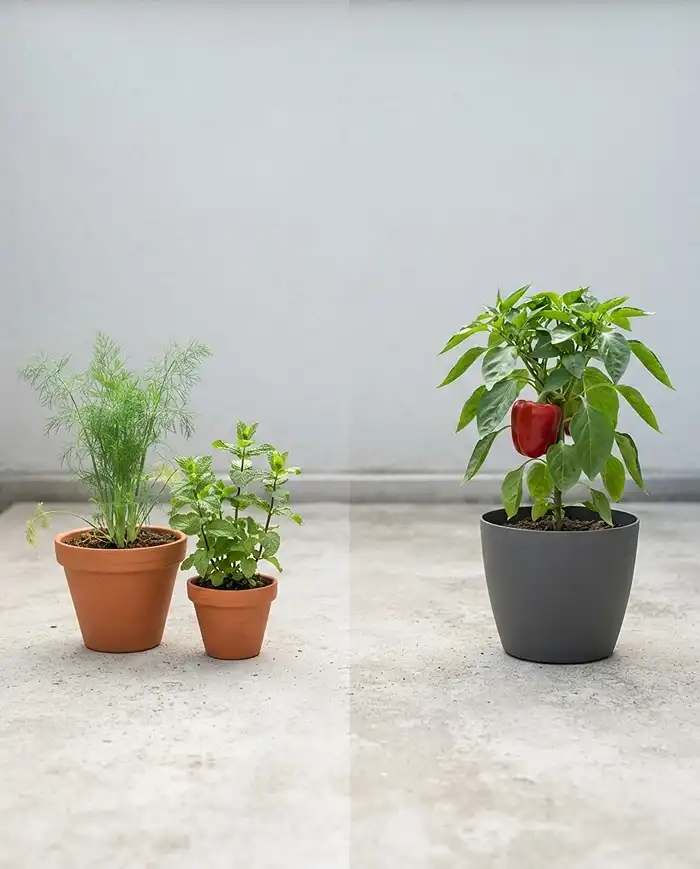
The Fennel, Brassica, and Allium Rule
Never plant fennel in the same container as peppers or eggplants. Fennel releases allelopathic compounds — specifically anethole — that inhibit root development in most vegetable crops. It’s toxic to nearly every garden plant it shares soil with.
Heavy-feeding brassicas like cabbage, broccoli, and kale will aggressively strip the same macro and micronutrients your nightshades depend on. In a pot, there’s simply not enough soil volume to support both.
Mint seems harmless but spreads aggressively through underground runners and will colonize every inch of available root space within weeks. Even in a pot, mint should always be grown in its own container.
- Fennel — allelopathic, stunts pepper root development
- Cabbage, kale, broccoli — heavy feeders that outcompete nightshades
- Mint — invasive runner system overtakes pot space
- Corn — too tall, blocks light, heavy water demand
- Potatoes — same family as peppers; shares diseases
Step-by-Step Guide to Planting Your Companion Pot
Planting sequence matters. Get it wrong and you’ll disturb roots or crowd the center before the main plant establishes.
- Fill your container to within 3 inches of the rim with your enriched potting mix. Water it thoroughly and let it settle for an hour before planting.
- Plant the nightshade first. Bury the pepper or eggplant transplant slightly deeper than its nursery pot — peppers, like tomatoes, develop roots along a buried stem. Set it in the center and stake it immediately; disturbing roots later causes stress.
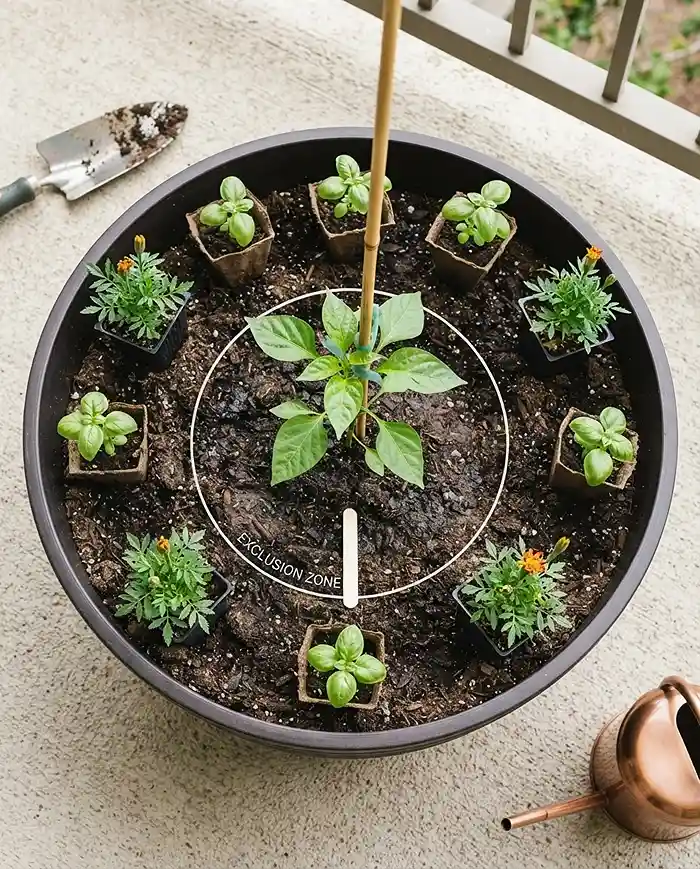
- Mark a 6-to-8-inch exclusion zone around the central stem. No companions go inside that ring. Use a small bamboo skewer as a visual guide.
- Plant companions around the perimeter. Herbs at the edges, marigolds or nasturtiums at the corners of square pots (or spaced evenly in round ones). Sow radish or spinach seeds between the transplanted companions.
- Water in everything with a gentle drench at soil level. Avoid wetting foliage on the first day — let roots settle before foliar exposure.
Ongoing Care and Maintenance for Mixed Containers
A mixed container is a high-demand system. Multiple plants extracting from the same finite soil volume means you need to be more diligent than with single-plant pots. Skipping a watering check on a 90°F day can stress the whole system.
The payoff is worth it — a well-managed mixed pot produces more usable food per square foot than any single-crop container I’ve run.
Watering and Fertilizing Strategies
Check soil moisture daily during July and August. Stick your finger 2 inches into the soil — if it’s dry at that depth, water thoroughly until it drains from the bottom. Shallow watering is worse than no watering; it trains roots upward.
For fertilizing, switch from the slow-release granular you used at planting to a high-phosphorus liquid fertilizer at first flower set. Apply every 10 to 14 days through the fruiting season. I use a 4-18-38 water-soluble blend diluted to half strength for container feeding.
The shared container depletes nutrients faster than a single-plant pot. If you wait for visible deficiency symptoms to start feeding, you’ve already lost two weeks of production. Stay ahead of it with a consistent schedule.
In August especially, the combination of peak evaporation and peak fruit load puts maximum stress on the system. This is when most container gardens fall apart — don’t ease up on feeding or watering during the hottest weeks.
Common Problems and Solutions
Even a well-planned companion pot will run into trouble. Catching problems early is the difference between a minor setback and a lost harvest. Here’s what to watch for.
Nutrient Depletion and Stunted Growth
Yellowing lower leaves usually point to nitrogen deficiency. Purple-tinged stems and undersides of leaves indicate phosphorus stress — both are common in heavy-cropping nightshades under root competition pressure.
Don’t wait to figure out which deficiency it is. Apply a compost tea drench immediately: steep 2 cups of finished compost in a gallon of water for 24 hours, strain, and water directly into the soil. Follow up with liquid kelp the next day.
This one-two punch stabilizes most deficiency symptoms within 4-5 days. If you don’t see improvement in a week, switch to a balanced soluble fertilizer and increase feeding frequency.
Overcrowding and Powdery Mildew
Dense herb foliage at the base of your nightshade blocks airflow, and stagnant air around stems is where powdery mildew takes hold. You’ll notice the white dusty coating first on the lowest eggplant leaves.
The fix is aggressive pruning. Strip all foliage from the bottom 12 inches of the main plant stem — every leaf, every branch. Then cut the companion herbs back by a third to open up airflow around the base.
Spray affected leaves with a diluted neem oil solution (2 tsp per quart of water) every 5-7 days until the mildew clears. It rarely comes back once airflow is restored.
companion plants for peppers and eggplant in pots FAQs
Can I plant peppers and eggplants in the exact same pot together?
It’s not recommended unless your container is over 30 gallons. Both are heavy-feeding nightshades that compete for the exact same nutrients — phosphorus, calcium, and magnesium — and share similar pest and disease vulnerabilities. In a smaller pot, one plant will dominate and the other will stunt. Grow them in separate containers and use the shared space for companions instead.
How close to the main stem can I plant companion herbs?
Leave a minimum of 6 to 8 inches of bare soil around the central pepper or eggplant stem. Companions planted too close restrict basal airflow and create humid conditions at the stem base, which leads to stem rot and fungal blight. Use a small marker stake to maintain this exclusion zone when planting.
Do I need to fertilize more often when companion planting in pots?
Yes. Multiple plants extracting nutrients from a finite volume of potting soil deplete it significantly faster than a single-plant container. Increase feeding to every 10 to 14 days using a diluted liquid organic fertilizer. Don’t wait for deficiency symptoms — by then you’ve already lost production time.
What size fabric grow bag works best for a pepper with companions?
A 20-gallon fabric grow bag is the sweet spot for one pepper or eggplant plus 2 to 3 herb companions. It provides enough root volume for the main plant while leaving room for shallow-rooted companions at the perimeter. Anything under 15 gallons creates too much root competition by midsummer.
When should I remove cool-season companions like spinach and radishes?
Harvest radishes as soon as they reach maturity — usually 22 to 30 days after sowing. Pull spinach before it bolts, typically once daytime temps consistently exceed 80 degrees F. Once removed, you can replace them with a second round of marigolds or simply top-dress the vacated space with compost.
Key Takeaways
- The best companion plants for peppers and eggplant in pots are basil, French marigolds, dwarf nasturtiums, oregano, thyme, radishes, and spinach — all shallow-rooted and pest-deterring.
- Use a 15-to-20-gallon container minimum; fabric grow bags outperform plastic in heat and root health.
- Keep a strict 6-to-8-inch exclusion zone around the main stem to prevent airflow restriction and fungal problems.
- Feed every 10 to 14 days with liquid organic fertilizer — shared pots deplete nutrients twice as fast as single-plant containers.
- Never add fennel, brassicas, or mint to a nightshade pot — they’ll outcompete or chemically stunt your main crop.