

Balcony Storage Bench Ideas for Gardeners
A balcony storage bench solves the two biggest headaches of a small balcony garden: nowhere to sit, and nowhere dry to keep your soil and tools. Here’s how I chose mine.
Table of Contents
The Game-Changing Benefits of a Balcony Storage Bench
I grow tomatoes, herbs, and a stubborn fig tree on a 6×9-foot south-facing balcony in zone 7a. Before I added a storage bench, my bags of potting mix sat in the corner getting rained on, and my trowels rusted by July.
A dual-purpose bench fixes both problems at once. It hides bulky bags of soil and fertilizer from view, keeps rain and UV rays off your metal tools, and gives you a place to sit while you deadhead flowers (that’s just snipping off the spent blooms). For anyone doing apartment gardening, that reclaimed floor space matters more than people expect.
Assessing Your Balcony Space and Structural Limits
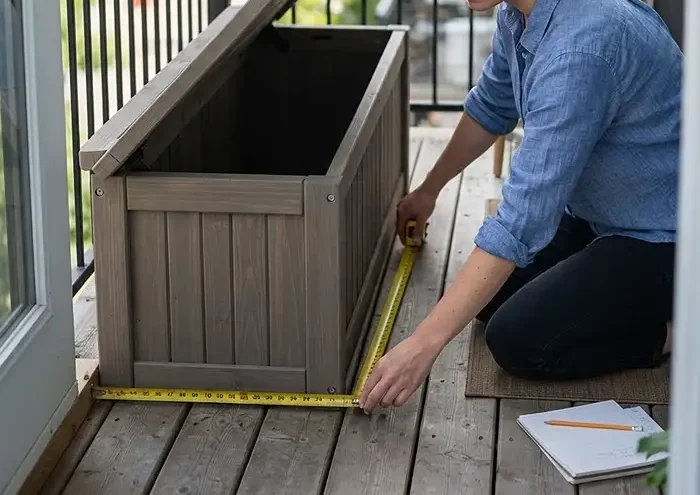
Before you buy anything, walk your balcony with a tape measure. Most balcony storage ideas fall apart because the bench looked fine online but doesn’t actually fit once it’s home.
Quick Answer: Measure your balcony’s floor space, note any slope toward the drain, and confirm your building’s per-square-foot weight limit before choosing a bench.
Measuring Footprint and Clearances
Quick Answer: Leave at least 6 inches of clearance around the bench and enough overhead room for the lid to open fully without hitting a railing or planter box.
On my own balcony, I learned this the hard way. I bought a 48-inch bench that fit the floor space perfectly, but the hinged lid clipped my railing-mounted planter every time I opened it. Now I always check lid swing, not just footprint.
- Measure floor space with a tape measure, not by eye
- Check clearance for the fully open lid, including any overhang
- Confirm the drainage slope won’t pool water under one side
- Leave a walking path of at least 24 inches for safety
Factoring in Weight Capacity and Weather Exposure
Quick Answer: Add the bench’s empty weight, a full load of wet potting soil, and two seated adults, then check that total against your balcony’s structural load rating.
Wet potting mix is heavier than people expect. A single 2-cubic-foot bag can weigh 25-30 pounds once saturated. Multiply that by however many bags you’re storing, then add the bench itself and anyone sitting on it.
Most residential balconies are rated for 50-100 pounds per square foot, but older buildings can be lower. If you’re unsure, ask your building manager before loading up a bench in a small balcony garden.
Top Materials for Outdoor Gardening Benches
The right material depends on your balcony’s microclimate more than your personal taste. A shaded balcony in the Pacific Northwest has different needs than a sun-blasted one in Phoenix.
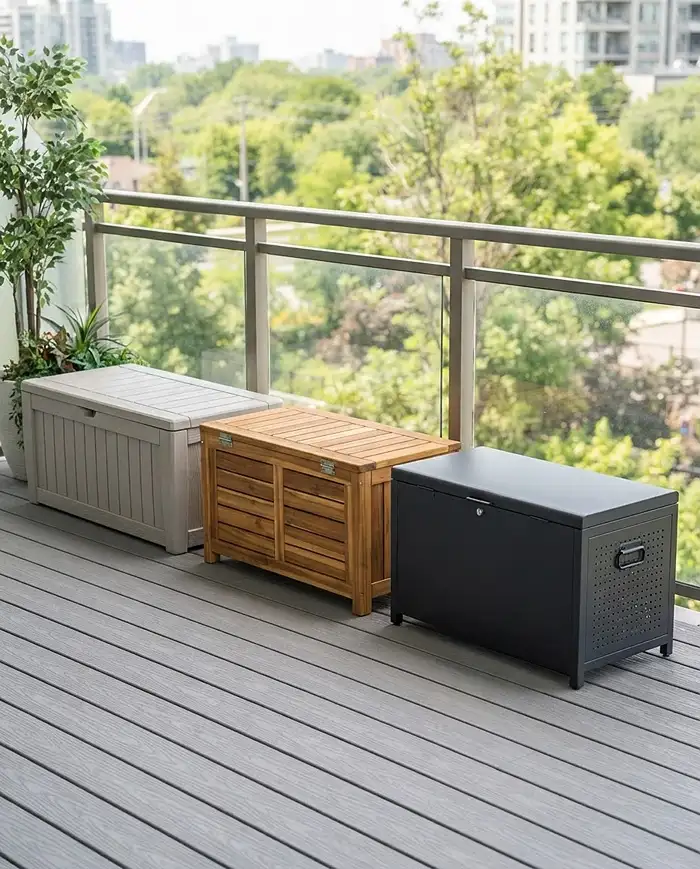
| Material | Best For | Watch Out For |
|---|---|---|
| UV-treated resin | Full-sun, exposed balconies | Can look plasticky if cheaply made |
| Teak or acacia wood | Covered or partially shaded balconies | Needs annual sealing to prevent graying |
| Powder-coated metal | Windy, high-rise balconies | Can get hot to sit on in direct sun |
Resin and High-Density Plastic Benches
Quick Answer: UV-protected resin benches are the lowest-maintenance option for balconies that get direct sun and heavy rain, since the material is fully waterproof and won’t rot.
I switched to a resin bench after my first wooden one warped from a wet Ohio spring. Two years in, my bags of perlite and slow-release fertilizer have stayed bone dry through every thunderstorm, and I’ve never had to sand or refinish it.
Pro Tip: Check that the resin is rated UV-stabilized, not just “outdoor safe,” or it will yellow and go brittle within a season or two.
Naturally Rot-Resistant Woods (Teak and Acacia)
Quick Answer: Teak and acacia are the best wood choices for a covered balcony because their natural oils resist rot, but they still need a sealer applied once a year.
These woods look genuinely beautiful next to plants, which is why they show up so often in balcony garden ideas on design blogs. The oil content that makes them rot-resistant also means they age to a soft silver-gray if left untreated.
Real Example: A friend of mine keeps an acacia bench under a covered balcony in zone 6b. She seals it every April, and five years later it still looks close to new.
Essential Features for Horticultural Storage
Not every storage bench is actually built to protect gardening supplies. Some are just outdoor furniture with a lid, and that distinction matters more than the marketing photos suggest.
Waterproofing vs. Water-Resistance
Quick Answer: A water-resistant slatted bench will still let rain reach your soil bags, while a fully waterproof, gasket-sealed trunk keeps moisture-sensitive fertilizers and organic matter completely dry.
I made this mistake with my first bench. It was labeled “weather-resistant,” which turned out to mean the slats just shed surface water. An open bag of organic potting mix inside went moldy within a month of steady rain.
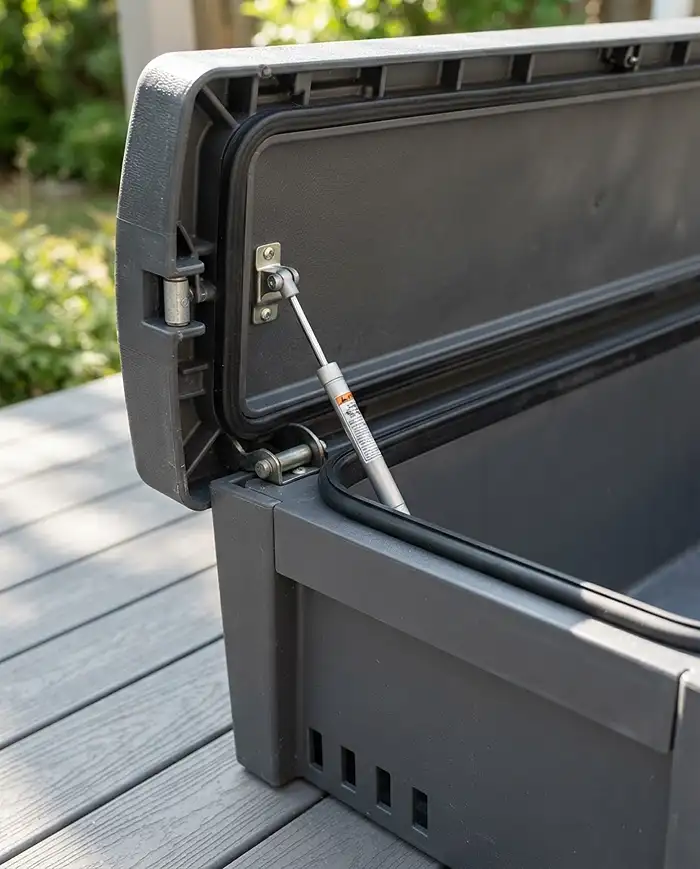
Now I only buy benches with a rubber or foam gasket around the lid seam. If the listing doesn’t mention a gasket, assume it isn’t truly waterproof.
Ventilation and Lockable Lids
Quick Answer: Look for subtle side vents to prevent mold on damp gloves and soil bags, plus pneumatic (gas-strut) hinges so the heavy lid can’t slam shut on your hands.
- Small vent slots near the base to let trapped humidity escape
- Pneumatic or soft-close hinges instead of a plain lid
- A hasp or lock if the balcony is shared or street-facing
- Rounded interior edges so canvas tool rolls don’t snag
Smart Organization: Packing Your Gardening Supplies
A bench is only as useful as what’s inside it. I reorganize mine every spring, and it’s cut my repotting time down considerably because everything has a spot.
Storing Potting Soil to Prevent Mold and Pests
Quick Answer: Roll open bags of potting mix tightly, clip them shut, and place them inside rigid lidded bins before setting them in the bench to block out moisture and fungus gnats.
The University of Maryland Extension’s guide to growing media notes that soilless mixes can repel or absorb water unevenly once opened, which is exactly why a loose bag inside a bench isn’t enough protection on its own.
Real Example: Last summer I left an unclipped bag of coco coir mix in my bench through a humid August. It clumped and grew a faint mildew smell within two weeks. Rigid bins solved it completely.
Organizing Sharp Tools and Liquid Fertilizers
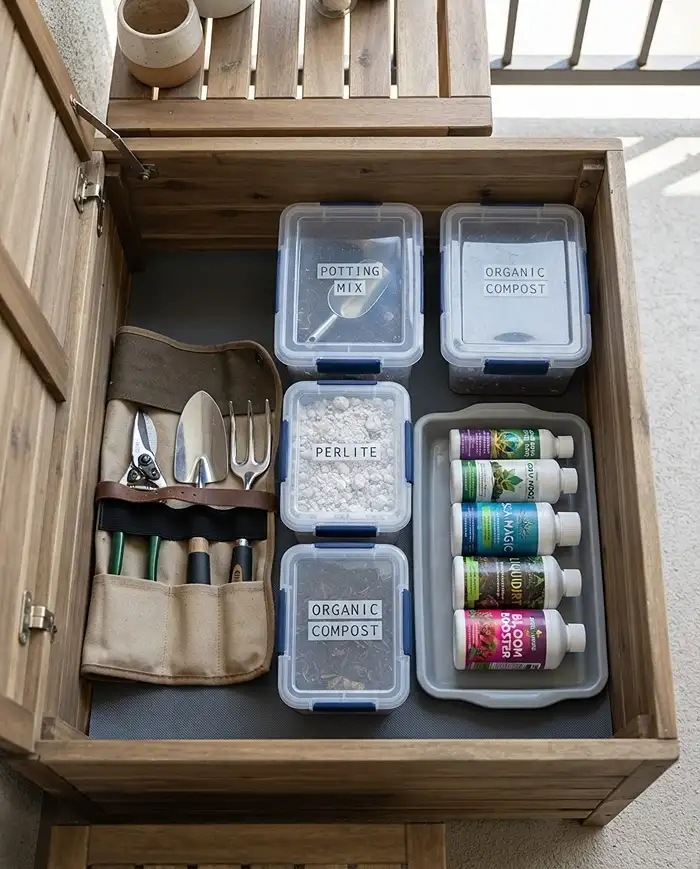
Quick Answer: Use a removable interior caddy or canvas tool roll for pruners and trowels, and keep liquid fertilizers upright in a leak-proof tray so spills never touch your other supplies.
- Canvas tool roll for pruners, trowels, and a hand fork
- Small leak-proof tray for neem oil and liquid fertilizer bottles
- Separate rigid bin just for dry potting mix and amendments
- A cheap silicone mat on the bench floor to catch drips
Pro Tip: Store neem oil bottles upright and slightly apart from metal tools; a slow leak can pit and rust blades faster than rain ever would.
Maintenance Tips for Your Storage Bench
A quick seasonal check keeps a bench working for a decade instead of two or three years. I do mine every spring and fall, and it takes about twenty minutes each time.
Lubricate metal hinges with a rust-inhibiting spray, wipe the interior down with a mild bleach solution before winter storage, and check the gasket seal for cracking. For more first-space setup ideas, see our apartment balcony garden ideas guide.
Common Problems & Solutions
Even a well-built bench runs into two recurring issues on small balconies: condensation and unwanted pests. Both are fixable in an afternoon.
Condensation and Mildew Inside the Bench
Quick Answer: Temperature swings cause condensation inside a closed bench, so drop a few silica gel packets in the bottom and prop the lid open on sunny days to air it out.
This happens most in spring and fall, when nights are cool but afternoons warm up fast. If you notice beads of moisture on the underside of the lid, that’s your cue to vent it for a day.
Pests and Spiders Nesting in Storage
Quick Answer: Check dark corners for spider webs or rodent droppings, spray a peppermint oil deterrent around the seams, and keep all soil amendments sealed in hard plastic bins.
Peppermint oil diluted in water and misted around the hinges and corners works as a mild, pet-safe deterrent. It won’t solve a serious infestation, but it keeps casual nesting from taking hold. For more layout ideas that keep pests away from your plants, check our balcony storage ideas for gardeners post.
balcony storage bench FAQs
Can potting soil be stored in an outdoor bench over winter?
The mineral components of potting soil survive freezing, but extreme cold inside an uninsulated bench can kill beneficial microbes in premium organic mixes. Bring those specific mixes indoors before the first hard frost.
Are wooden or plastic storage benches better for a sunny balcony?
UV-treated resin is generally better for full-sun balconies because it won’t warp, splinter, or need the frequent sanding and re-staining that wood requires under intense UV exposure.
How do I make my slatted outdoor storage bench waterproof?
Line the inside of a slatted wooden bench with a heavy-duty, custom-fit waterproof tarp insert, or store sensitive items in individual watertight, gasket-sealed plastic bins before placing them inside.
Key Takeaways
A good balcony storage bench keeps your tools dry, your soil sealed, and your seating sorted in one footprint.
- Measure floor space and lid clearance before buying, and confirm your balcony’s weight rating
- Choose UV-treated resin for sun-exposed spots, or sealed teak/acacia for covered balconies
- Always use rigid, lidded bins inside the bench for soil, not just the original bags
- Do a seasonal check on hinges, gaskets, and interior mold twice a year
For more ways to layer color and function into a small footprint, browse our balcony color palette ideas next.