

Best Pots for Kitchen Herbs: Top Picks
Snipping fresh basil straight into a simmering sauce is the whole point of a kitchen herb garden. The best pots for kitchen herbs make that possible without soggy counters or root-bound plants.
I’ve kept a windowsill herb garden going in my zone 6b kitchen for eight years now, and the container is always the make-or-break decision. Get it wrong and you’re replacing basil every three weeks. Get it right and you’ve got a real container gardening setup that just works.
Table of Contents
Elevating Your Culinary Game With Kitchen Herb Gardens
There’s a specific kind of kitchen confidence that comes from reaching over and cutting fresh thyme instead of digging through a dusty spice jar. But that only happens if the plant survives past week four.
Most failed kitchen herb attempts trace back to one thing: the container. Pretty pots without drainage, pots too shallow for the roots, or pots made of the wrong material for the herb inside. Fix the container and the rest gets a lot easier.
Crucial Features to Look For in Kitchen Herb Containers
A pot can be gorgeous and still kill your herbs. Drainage, depth, and material matter more than color or finish, because they control root health and soil moisture, not just countertop style.
The Non-Negotiable Need for Drainage Holes
Quick Answer: Every kitchen herb pot needs a bottom drainage hole, no exceptions. Without one, water pools around the roots and causes rot within weeks.
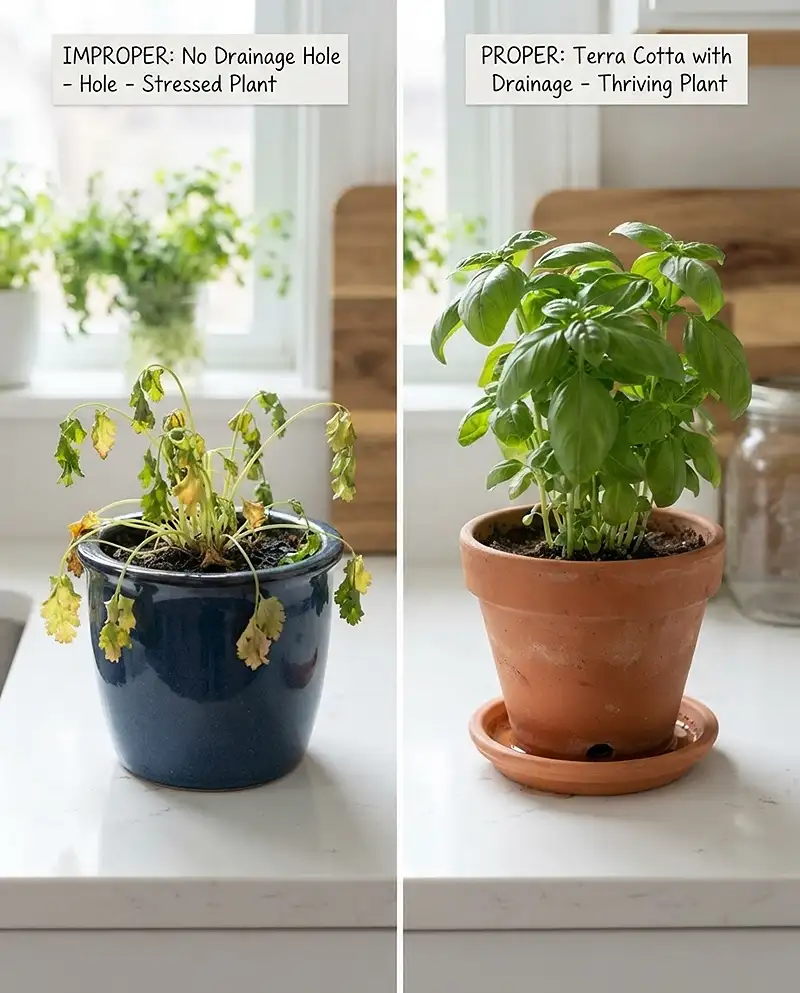
That trendy Pinterest move of planting basil directly into a sealed mason jar or repurposed tin can looks charming for about ten days. Then the roots sit in standing water with nowhere for it to go, and the plant quietly suffocates from the bottom up.
I tried this exact thing with a cilantro seedling in an old jam jar. It looked great on the sill for two weeks, then wilted overnight even though the soil was still wet. That was root rot, not thirst.
Adding gravel to the bottom of a sealed jar doesn’t fix it either. It just raises where the standing water sits, closer to the roots.
Sizing Requirements for Common Culinary Herbs
Quick Answer: Shallow-rooted herbs like chives and creeping thyme are fine in 4-inch pots. Deep-rooted herbs like basil and parsley need at least 8 inches of depth to avoid stunting.
| Herb | Minimum Pot Depth | Root Type |
|---|---|---|
| Chives, creeping thyme | 4 inches | Shallow, fibrous |
| Oregano, marjoram | 6 inches | Moderate, spreading |
| Basil, parsley, cilantro | 8 to 10 inches | Deep taproot |
Cram a basil plant into a 4-inch pot and it’ll bolt (go to seed) early because the roots have nowhere left to grow. I learned this the hard way with a Genovese basil crammed into a leftover 5-inch terracotta pot. It bolted by week five.
Top Container Materials for Indoor Herb Gardening
The material of the pot changes how fast the soil dries out, so matching material to herb type matters as much as size does.
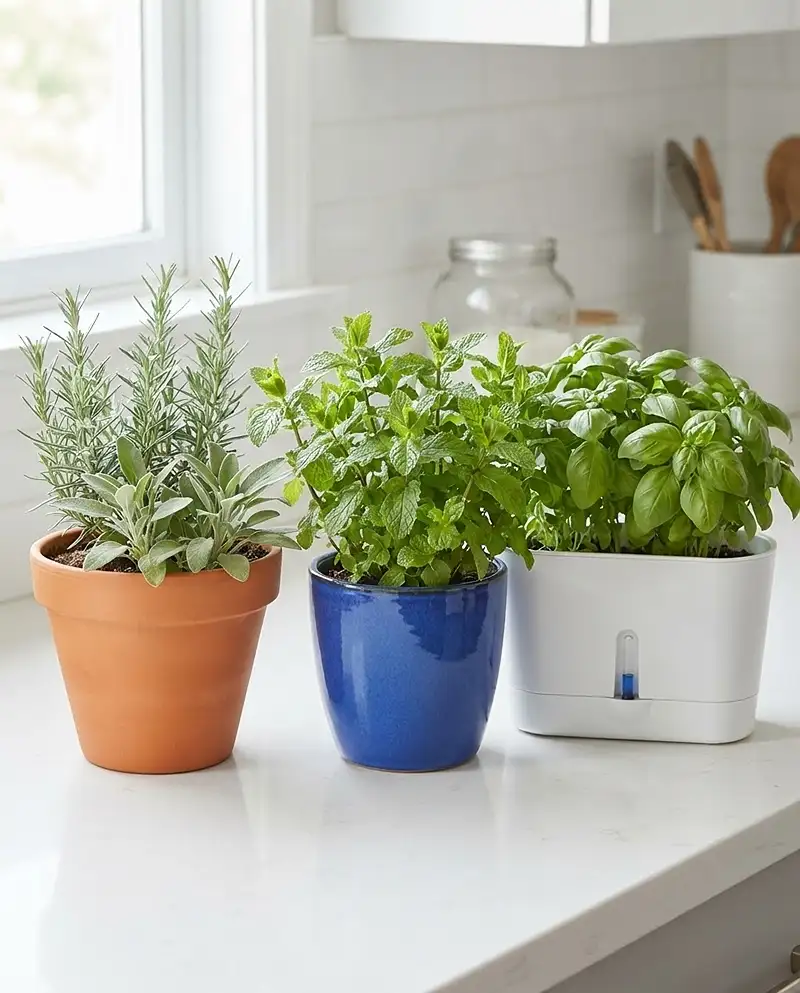
Terracotta and Unglazed Clay: Best for Mediterranean Herbs
Quick Answer: Unglazed terracotta is porous, which lets soil dry fast. That’s ideal for drought-tolerant, woody herbs like rosemary, oregano, and sage.
- Rosemary in terracotta develops more concentrated essential oils because the soil dries between waterings
- Oregano and sage both tolerate neglect better in clay than in glazed containers
- Watch for terracotta cracking in freezing temperatures if the pot ever sits near a drafty window in winter
The University of Maryland Extension notes that bay, marjoram, oregano, sage, and thyme all need to dry out between waterings, which is exactly what terracotta encourages.
Glazed Ceramic and Resin: Best for Moisture-Loving Herbs
Quick Answer: Glazed ceramic and quality resin pots hold moisture longer, which suits thirsty herbs like mint, cilantro, and basil in dry, air-conditioned kitchens.
My mint lives in a glazed ceramic pot year-round because it wilts fast in anything porous. Cilantro is similar. It bolts quickly if the soil dries out even once, so a moisture-retentive pot buys forgiveness on busy weeks.
Watch out for glazed pots without drainage holes drilled through the glaze. Some decorative ceramic pieces are sealed solid and need to be used as a cachepot around a plastic nursery pot instead.
Self-Watering Planters: Best for Busy Cooks
Quick Answer: Self-watering planters use a reservoir and wicking system to pull moisture up through capillary action, keeping soil evenly damp without daily attention.
These work especially well for basil and parsley, both of which sulk fast if they dry out completely. I switched my basil to a self-watering trough two summers ago and stopped losing plants to Monday-morning neglect after a long weekend away.
Refill the reservoir every 5 to 10 days depending on kitchen humidity, and check it monthly for algae buildup in the water chamber.
Space-Saving Container Styles for Cramped Kitchens
Small kitchens don’t have counter space to spare. The container style you pick can free up prep room instead of eating into it.
Window Ledge Troughs and Sill Planters
Quick Answer: Long, narrow troughs fit flush against a sunny sill and let you plant several herbs in one footprint instead of spreading individual pots across the counter.
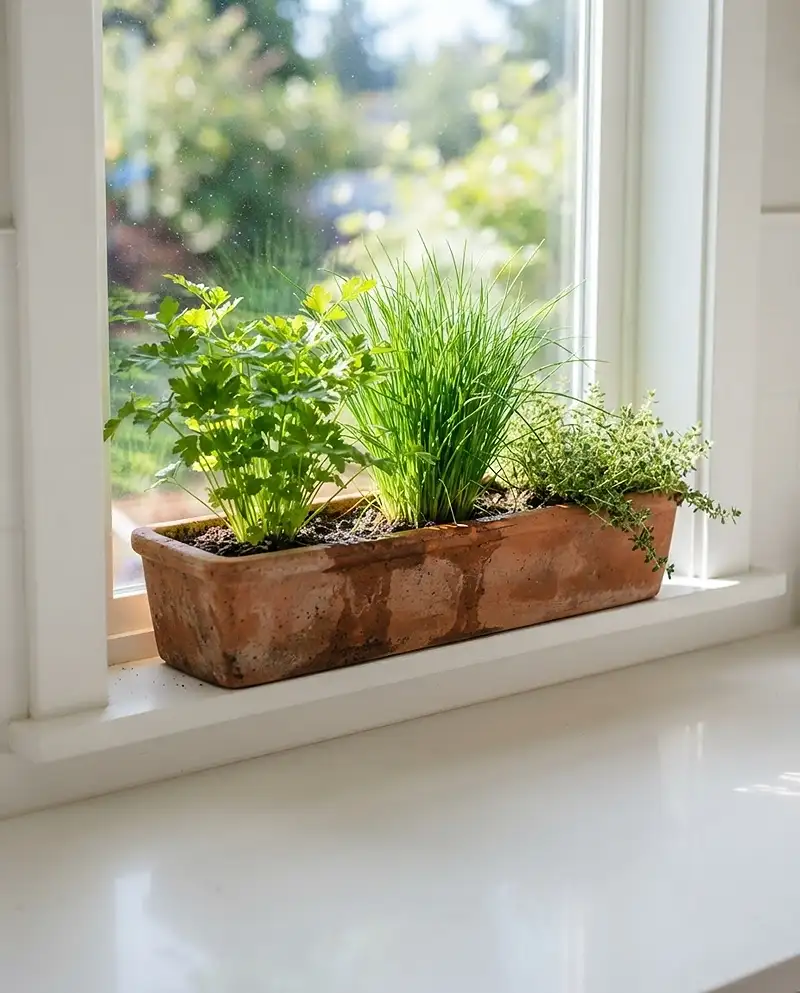
A 24-inch trough on a south-facing sill comfortably holds parsley, chives, and thyme together since they share similar water needs. For more layout ideas, this herb garden layout guide covers spacing that also works for indoor troughs.
Vertical Wall-Mounted Herb Pockets
Quick Answer: Wall-mounted planters or hanging rail systems on the backsplash keep herbs off the counter entirely while drawing light and eye upward.
I installed a three-pocket felt wall planter above my sink two years ago, and it freed up almost a full square foot of prep space. Just make sure the mounting spot still gets direct light.
A backsplash tucked under upper cabinets often doesn’t. For a full walkthrough, check out these hanging herb garden ideas.
If your kitchen window herbs are allowed to flower a little, like chives or oregano, they double as a mini pollinator container garden whenever the window’s cracked open in warmer months. Pairing that idea with a nearby native flower balcony garden gives visiting bees more to work with.
Setting Up Your Kitchen Herb Containers
Once you’ve picked the right pot, setup takes about ten minutes per plant.
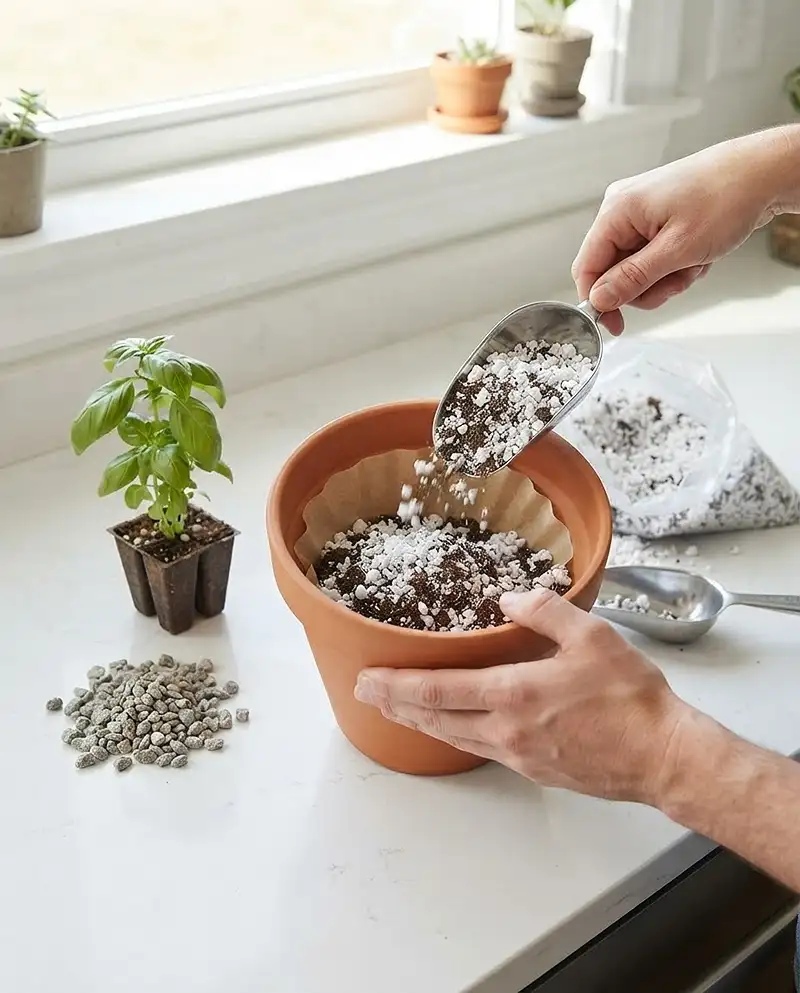
- Use a lightweight, perlite-heavy organic potting mix made for indoor containers, not garden soil
- Lay a small piece of mesh screen or a coffee filter over the drainage hole to stop soil from washing onto the counter
- Top-dress with a thin layer of fine gravel or decorative stone to deter fungus gnats and keep moisture from splashing
- Water thoroughly right after planting until it drains from the bottom, then let the pot settle for a day before placing it on a saucer
Maintaining Your Indoor Culinary Garden
Quick Answer: Rotate pots 90 degrees every few days for even light exposure, and flush the soil in the sink once a month to clear built-up fertilizer salts.
Set a recurring reminder if you tend to forget rotation. Herbs left facing one direction grow noticeably lopsided within two weeks near a bright window.
Once a month, run each pot under lukewarm sink water for a full minute, letting it drain completely before returning it to its saucer. This flushes mineral buildup that causes leaf-tip browning over time.
Common Problems and Solutions
Two issues show up constantly in kitchen containers: fungus gnats and root rot. Both are fixable fast, and both fixes are food-prep safe.
Fungus Gnats in the Kitchen
Quick Answer: Fungus gnats breed in overly wet potting soil. Let the top inch dry out, bottom-water instead of watering from above, and set out a yellow sticky trap.
A diluted hydrogen peroxide solution, about one part 3% peroxide to four parts water, poured into the soil kills larvae on contact without harming the plant or leaving residue near food.
Root Rot and Sour-Smelling Soil
Quick Answer: Smell the drainage hole. A swampy, sour odor means root rot. Repot immediately into dry, fresh mix after trimming away mushy, blackened roots.
I caught this early on a rosemary plant once the soil started smelling off. Trimming the dead roots and moving it into a fast-draining terracotta pot saved it. A plant that far gone in glazed ceramic likely wouldn’t have made it.
best pots for kitchen herbs FAQs
Can I grow herbs in mason jars without drainage holes?
No, this is not recommended. Adding rocks to the bottom of a sealed jar only raises the water table closer to the roots, which causes root rot and bacterial growth within a few weeks.
How deep should a container be for basil and cilantro?
Basil, cilantro, and parsley need containers at least 8 to 10 inches deep to accommodate their taproots. Shallower pots cause premature bolting, meaning the plant flowers and goes to seed early.
What is the best way to protect my counters from water damage?
Use thick, glazed ceramic or heavy plastic drip trays under every pot. Avoid unglazed terracotta saucers, since they sweat and can leave permanent condensation rings on quartz, granite, or butcher-block counters.
Key Takeaways
- The best pots for kitchen herbs always have a drainage hole, no matter how tempting a sealed jar looks
- Match depth to root type: 4 inches for chives and thyme, 8 to 10 inches for basil and parsley
- Match material to water needs: terracotta for woody Mediterranean herbs, glazed ceramic or self-watering for thirsty ones
- Space-saving styles like sill troughs and wall-mounted pockets keep counters clear for actual cooking
- Monthly soil flushing and gnat prevention keep container herbs going well past the usual six-week die-off