

Edible Balcony Garden Ideas for a Cozy Dining Corner
Edible balcony garden ideas turn a cramped concrete slab into a working kitchen garden you can actually eat from. I built mine on a 6×9-foot north-facing balcony in zone 6b, and it changed how I cook dinner.
Table of Contents
Designing Your Edible Balcony Dining Oasis
Picture this: you’re sipping coffee at a two-person bistro table, and you reach over and snip fresh basil for your eggs without leaving your seat. That’s the whole point of an edible balcony garden.
With smart spatial planning, even a tiny balcony can function as both a working kitchen garden and a genuine dining retreat. The trick is treating food plants as part of the decor, not an obstacle to it.
My first attempt crammed a four-top table onto a balcony barely wide enough for two chairs. I couldn’t open the grill lid without moving furniture. Scale down before you plant anything.
For more layout inspiration before you commit to furniture, check out these apartment balcony garden ideas covering small-footprint setups.
Planning the Layout for a Tiny Balcony
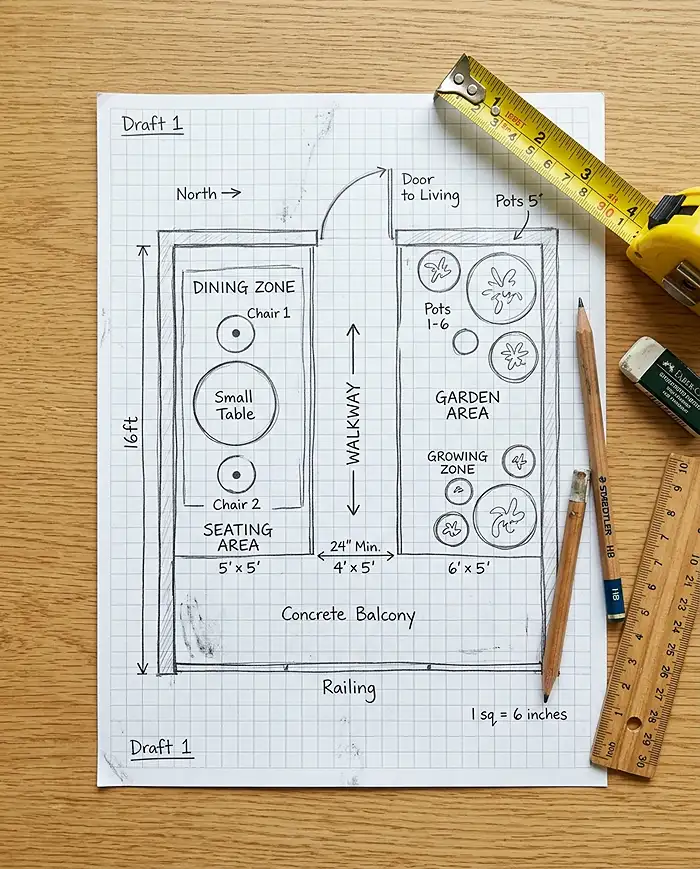
Grab a tape measure before you buy a single pot. Most rental balconies run 4 to 10 feet deep, and every inch matters when you’re carving out both a dining zone and a growing zone.
Sketch two rough rectangles: one for seating, one for containers. Leave at least 24 inches of clear walkway between them so you’re not stepping over root balls to reach your chair. This is the backbone of any small balcony garden that actually gets used.
Choosing Space-Saving Dining Furniture
Quick Answer: Pick furniture that folds, nests, or mounts to the railing so it disappears when you’re not eating.
Collapsible teak bistro sets fold flat against the wall in under a minute. Railing-mounted folding tables skip floor footprint entirely. Corner nesting benches tuck two seats into one L-shaped space.
- Bistro set footprint: aim for 24-28 inches diameter, seats two
- Railing tables: check your railing width first, most clamp to 2-6 inch rails
- Leave 12+ inches around each container for watering access
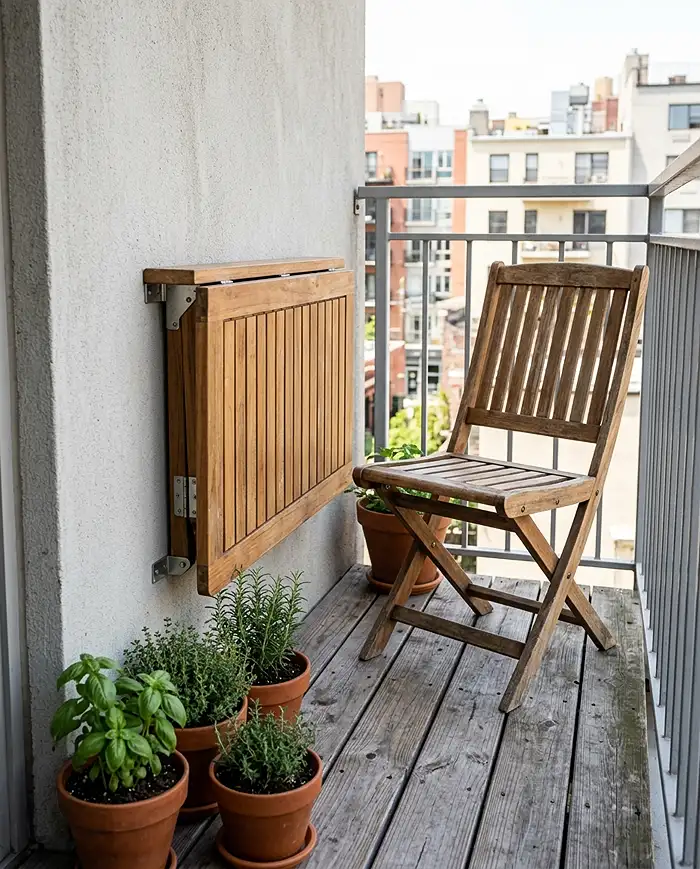
Real Example: I swapped a solid 30-inch table for a wall-mounted 18-inch drop-leaf and gained enough floor space for three 12-inch herb pots I didn’t have room for before.
Pro Tip: Test-fold your furniture in the store aisle before buying. Rusted hinges on a balcony you can’t return to are a real headache.
Mapping Sunlight for Edible Crops
Quick Answer: Track your balcony’s light for one full day before planting. Fruiting vegetables and most culinary herbs need 6 to 8 hours of direct sun to actually produce.
Set a phone reminder every hour from 8 a.m. to 6 p.m. and snap a photo of where sun hits the floor. Map it on paper. My north-facing balcony only gets 4 hours, so I lean on shade-tolerant herbs instead of tomatoes.
Real Example: My first season I planted a ‘Better Boy’ tomato in a spot I assumed was sunny. It produced exactly three fruit all summer. A sun map would’ve saved me the disappointment.
Essential Supplies for an Urban Edible Garden
You don’t need a shed full of tools for apartment gardening on this scale. A short, focused checklist keeps a small footprint from turning into clutter.
- Moisture meter (skip guessing, especially with fast-draining containers)
- Hand trowel and small pruning snips
- Watering can with a narrow spout for tight spacing
- Bamboo stakes or a compact trellis kit for vining crops
- Saucers or trays under every pot
Selecting Food-Safe, Space-Saving Containers
Quick Answer: Go vertical with wall pockets, railing planters, and tiered stands to multiply growing space without eating into your dining floor.
Stick to BPA-free plastics, untreated wood, or glazed ceramics for anything growing food. Unglazed terra cotta dries out fast on windy balconies, and treated lumber can leach chemicals into soil over time.
| Container Type | Best For | Watch Out For |
|---|---|---|
| Railing planters | Herbs, lettuce, strawberries | Weight limits on older railings |
| Wall pockets | Shallow-rooted greens, herbs | Drying out faster than floor pots |
| Tiered stands | Mixed herb collections | Tipping in high wind |
| Deep floor pots | Tomatoes, peppers, dwarf fruit | Heavy once watered, check weight rules |
Pro Tip: Check your lease for balcony weight limits before you load up floor pots. My building caps it at 50 pounds per square foot, which rules out a full row of 5-gallon containers.
The Ideal Potting Mix for High-Yield Container Crops
Quick Answer: Mix 60% organic potting soil, 20% compost, 10% worm castings, and 10% perlite for a lightweight blend that feeds heavy producers like tomatoes and peppers.
Fruiting plants in containers exhaust nutrients fast because there’s no surrounding soil to draw from. The compost and castings replace what a raised bed would provide naturally.
Real Example: Switching my ‘Patio Choice’ tomatoes from straight bagged potting soil to this blend nearly doubled my harvest the following season, from about 4 pounds to just over 7.
Top Edible Plants for a Balcony Dining Corner
The best balcony garden ideas mix plants that look good at eye level with ones that actually feed you. Here’s what earns a spot on my 6×9-foot setup year after year.
Fast-Growing Culinary Herbs for Tabletop Planters
Quick Answer: Bush basil, thyme, and oregano grow low and full in shallow tabletop planters, putting garnish within arm’s reach while dining.
- Bush basil (Genovese Compact): stays under 12 inches, ready to harvest in 6 weeks
- Thyme: drought-tolerant, thrives in the same pot for years
- Oregano: spreads fast, trim it back monthly to keep it tidy
As a bonus, the strong scent of basil and thyme naturally discourages mosquitoes from crashing your dinner. As of this 2026 growing season, that’s still my favorite low-effort pest trick.
Compact Fruiting Vegetables for Small Spaces
Quick Answer: Determinate ‘Patio Choice’ tomatoes, compact ‘Bush Porto Rico’ sweet potatoes, and mini bell peppers all fruit heavily in containers as small as 12 inches deep.
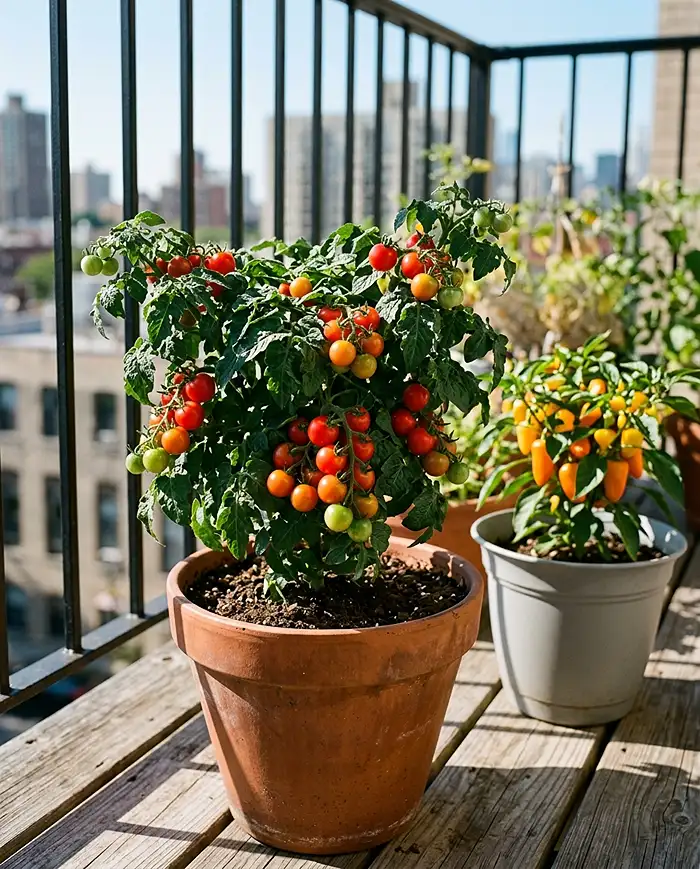
‘Patio Choice’ tomatoes top out around 24 inches and need just a 12-14 inch pot. Mini bell peppers do fine in 10 inches. ‘Bush Porto Rico’ sweet potato vines stay compact enough for a 5-gallon container instead of a full garden bed.
Real Example: I lost my first mini pepper crop to underwatering during a July heat wave. Now I check soil moisture daily once temperatures pass 85°F.
Vertical Vining Edibles for Privacy Screens
Quick Answer: Pole beans, sugar snap peas, and Malabar spinach climb a simple bamboo or string trellis, doubling as a living privacy screen around your dining table.
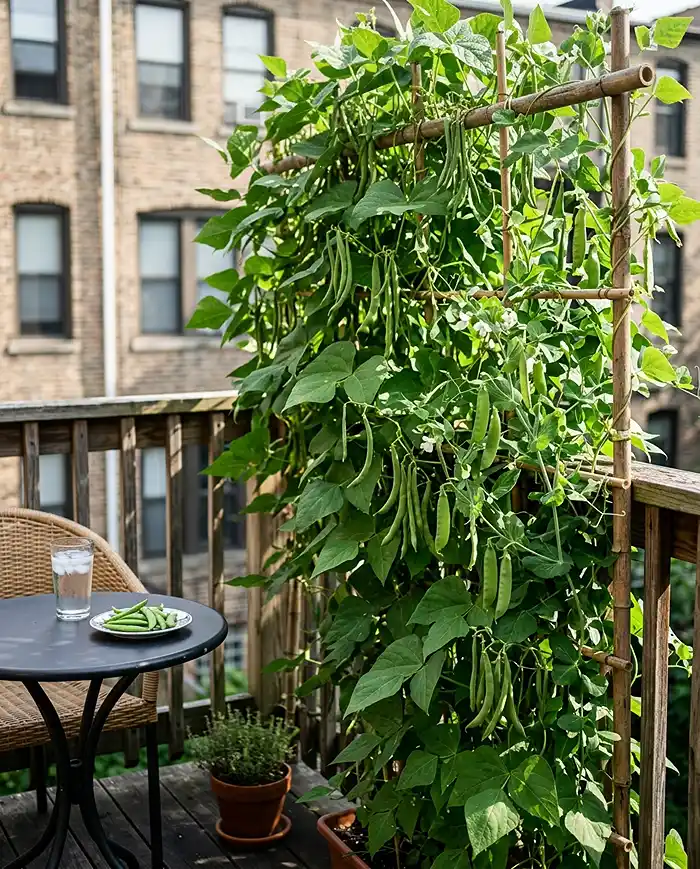
Anchor a trellis to the railing or a tall floor pot, then train young vines onto it weekly until they take over on their own. Malabar spinach handles heat better than lettuce and keeps producing all summer.
For ideas on layering color and texture into a vertical screen like this, see this guide to balcony color palettes with plants.
Step-by-Step Guide to Assembling Your Dining Garden
Order matters here. Doing this out of sequence is how I ended up moving a 40-pound tomato pot three times in one weekend.
- Deep-clean the balcony floor and railing, checking for drainage issues
- Install furniture and any trellises first, since they define your walkways
- Place your largest, heaviest pots in their permanent sun-mapped spots
- Add railing planters and wall pockets around the fixed layout
- Plant your edibles, then water everything thoroughly on day one
This sequence keeps you from planting a spot you’ll need to move furniture around later. Nail it once and you won’t touch it again all season.
Routine Maintenance for a Thriving Edible Balcony
Quick Answer: Water exposed containers daily in summer, harvest and deadhead weekly to push new growth, and feed with an organic liquid fertilizer like fish emulsion every two weeks.
Container soil dries out far faster than garden beds, especially on a wind-exposed balcony. Deadheading, which just means snipping off spent flowers, redirects the plant’s energy into new growth instead of seed production.
| Task | Frequency | Note |
|---|---|---|
| Watering | Daily (summer), every 2-3 days (spring/fall) | Check with a moisture meter first |
| Fertilizing | Every 2 weeks | Fish emulsion or balanced liquid feed |
| Harvesting/deadheading | Weekly | Prevents leggy, unproductive plants |
Common Problems & Solutions
Mixing dining space with active food production brings a couple of predictable headaches. Both have simple, sanitary fixes that won’t put you off your dinner.
Safe Pest Control Near Dining Areas
Quick Answer: Manage fungus gnats and aphids with organic insecticidal soap, sticky traps, and neem oil, applied in the evening after guests have left the table.
Neem oil can irritate eyes and skin on contact, so spray it at dusk and let plants dry overnight before anyone sits nearby the next morning. Sticky traps handle fungus gnats without any spray at all.
Managing Soil Mess and Water Runoff
Quick Answer: Deep saucer drip trays, self-watering pots, and a top layer of straw mulch stop muddy runoff from ruining your dining floor or dripping onto neighbors below.
A thin layer of organic straw mulch over the soil surface stops splashback every time you water. Self-watering pots with a reservoir cut down on drips almost entirely.
Renters especially should double down on drip trays. For more ways to protect a rented balcony floor while gardening, this roundup of renter-friendly patio garden ideas is worth a look.
edible balcony garden ideas FAQs
What are the easiest edible plants to grow on a balcony?
Loose-leaf lettuce, radishes, chives, and mint in its own isolated pot are the most forgiving starter crops. They tolerate less sunlight than fruiting vegetables and bounce back from irregular watering, making them ideal for a first balcony garden.
How do I arrange furniture and plants on a very narrow balcony?
Push all seating flat against the interior wall, use railing planters for herbs, and stick to vertical wall planters or hanging baskets. This keeps the central walkway completely clear so the space still feels usable, not cluttered.
Is it safe to eat plants grown on a city balcony exposed to smog?
Yes, as long as you wash the harvest thoroughly to remove surface particulate matter. Avoid setting pots directly on old lead-painted surfaces, and use quality commercial potting soil rather than dug-up city dirt, which can carry contaminants.
For more background on urban soil safety mentioned above, NC State Extension’s guide to urban soil contaminants is a solid, science-backed read.
Conclusion
A dining corner packed with edible balcony garden ideas doesn’t need square footage, just a plan. Measure your space, map your sun, and pick containers that earn their spot.
Start with three or four forgiving herbs, add a fruiting vegetable once you’ve got your rhythm down, and let the space grow into itself over a season or two.
Key Takeaways
- Successful edible balcony garden ideas start with measuring your footprint and mapping 6-8 hours of direct sun before buying a single plant
- Space-saving furniture like folding bistro sets and railing tables free up floor space for containers
- A custom potting mix of soil, compost, worm castings, and perlite significantly boosts yields in small balcony garden containers
- Start apartment gardening with forgiving crops like herbs and lettuce before moving to fruiting vegetables
- Vertical trellised vines double as privacy screens while adding to your harvest