
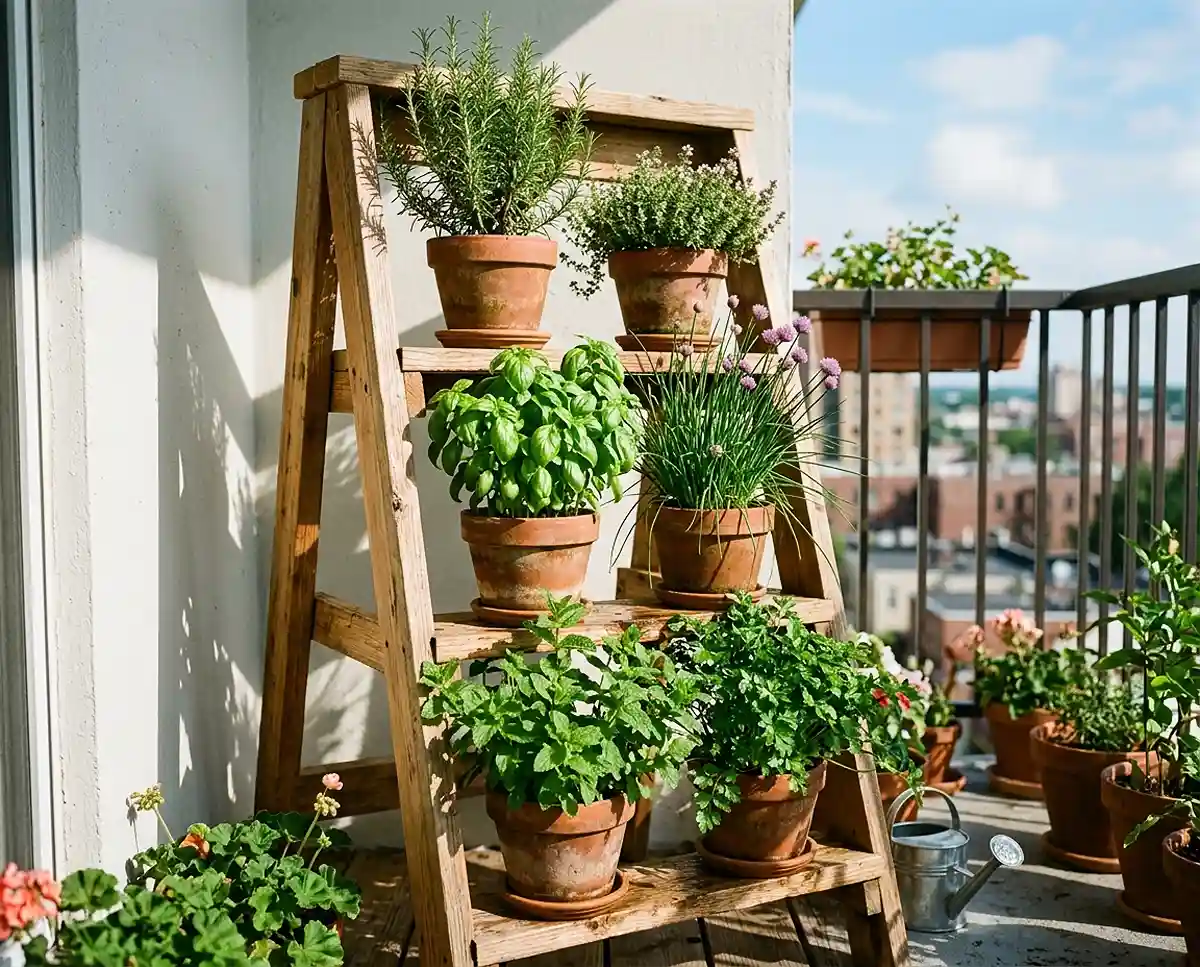
Vertical Herb Ladder for Small Balcony
A vertical herb ladder for small balcony spaces turns a cramped 4×4 foot corner into a real herb garden. I’ve grown mine on a 5-foot-wide Brooklyn balcony, zone 7a, for six seasons now.
Why a Herb Ladder Is the Smartest Vertical Solution for Tiny Balconies
A tiered ladder stacks three to five growing surfaces into the same square footage as one or two floor pots. That’s the whole appeal of vertical gardening on a balcony.
Air moves freely between open shelves, which cuts down on the powdery mildew that plagues crowded basil and mint. My first year, I crammed six pots along the railing and lost two basil plants to mildew by August. Switching to a ladder fixed that almost immediately.
A ladder also just looks better than a row of mismatched buckets. It reads as a designed feature, not clutter, which matters when your balcony doubles as your only outdoor room.
Table of Contents
Assessing Your Balcony Before Choosing a Ladder Style
Measuring Floor Space and Ladder Footprint
Grab a tape measure and check your deepest usable corner, not just the widest wall. Most freestanding wooden ladders need at least 20 to 24 inches of depth to stand without tipping.
If your balcony is under 3 feet deep, a leaning ladder against the railing or wall uses roughly half that footprint. Measure railing height too, since some leaning designs hook over a standard 36-inch rail.
Evaluating Sun Exposure Across Ladder Tiers
A ladder’s top shelf can sit 3 to 4 feet higher than the bottom one, and that height difference changes light exposure more than people expect. Track sun across your balcony for one full day before you commit to a design.
On my south-facing ladder, the top shelf gets six hours of direct sun while the bottom shelf, shaded by the railing, gets maybe three. I plan herb placement around that gap rather than fighting it.
Types of Vertical Herb Ladders for Balconies
Freestanding Wooden Ladder Stands
Classic tiered wooden ladders, usually cedar or pine, hold individual pots on 3 to 5 open shelves. They’re the most stable option because the wide A-frame base resists wind, and they suit balconies at least 30 inches deep.
The tradeoff is footprint. A typical freestanding stand runs 24 to 30 inches deep at the base, which eats into walking space on a truly tiny balcony.
Leaning Wall Ladder Shelves
Leaning ladders rest at an angle against a wall or railing, cutting floor footprint to as little as 12 to 15 inches deep. They work well for narrow balconies under 3 feet wide.
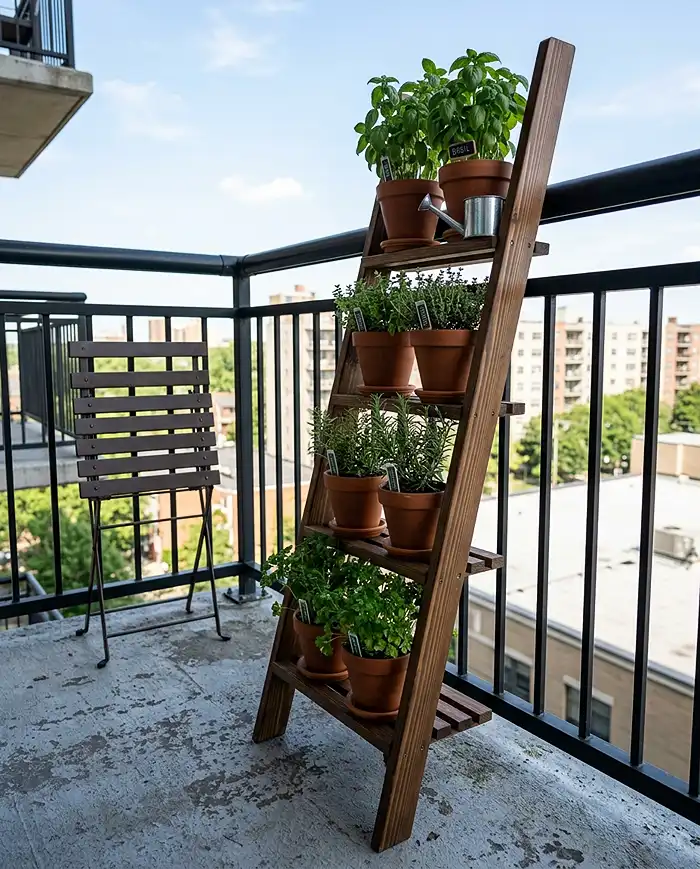
I switched a friend’s 30-inch-deep balcony to a leaning design last spring, and it freed up enough floor space for an actual chair. That’s the real win with this style.
Hanging or Mounted Ladder-Style Pocket Systems
Fabric or felt pocket panels mimic ladder tiers while mounting flat against a railing or wall, using close to zero floor space. A 24 by 36 inch panel can hold 8 to 12 small herbs.
These suit balconies under 20 square feet where even a leaning ladder feels like too much. Check out more vertical garden wall ideas for small patios if this direction appeals to you.
Best Herbs for Each Tier of Your Ladder
Match herbs to the light gradient you measured earlier. This is where most herb garden ideas fall apart, because people plant the same herbs on every shelf regardless of sun.
- Top tier (full sun, 6+ hours): rosemary, thyme, and oregano, which tolerate heat and drying out between waterings
- Middle tier (partial sun, 4-5 hours): basil, chives, and dill, which want consistent moisture and moderate light
- Lower tier (3 hours or less, part shade): mint, parsley, and cilantro, all of which bolt fast in strong afternoon sun
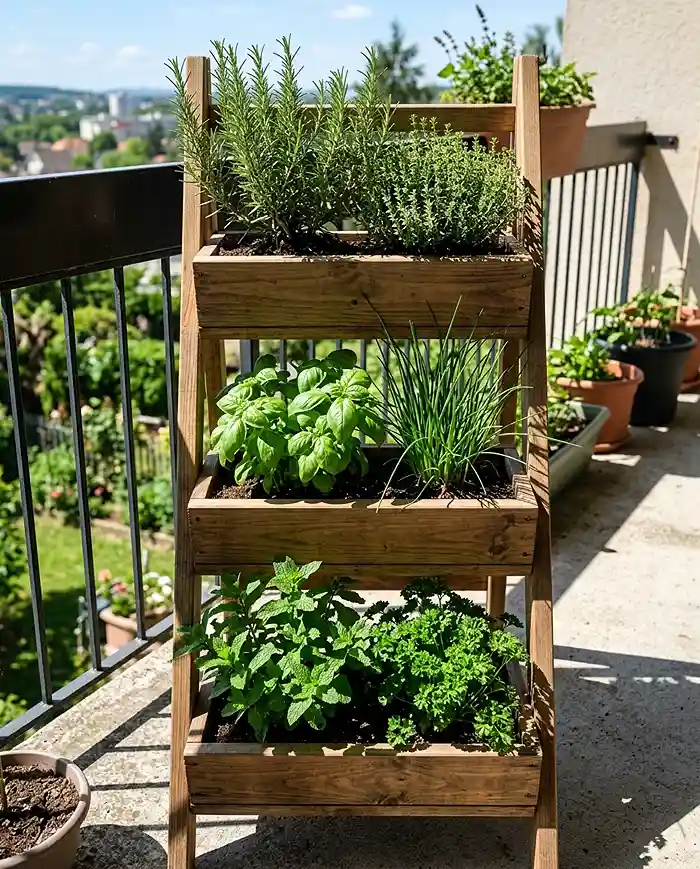
My rosemary ‘Arp’ has lived on the top shelf through two winters wrapped in burlap, while mint on the bottom shelf never dries out enough to need daily watering.
Materials and Tools Needed to Build or Assemble a Herb Ladder
Here’s what I used to build my current cedar ladder, plus what a beginner setup needs.
| Item | Purpose | Notes |
|---|---|---|
| Cedar or pine boards (1×8, 1×2) | Frame and shelves | Cedar resists rot better outdoors |
| Wood screws and L-brackets | Joining shelves to rails | Use exterior-rated stainless screws |
| Exterior sealant or paint | Weatherproofing | Reapply yearly on exposed balconies |
| 4-6 inch pots or planter boxes | Holding individual herbs | Must have drainage holes |
| Potting mix (not garden soil) | Growing medium | Look for a well-draining herb blend |
| Drill and jigsaw | Cutting and assembly | A circular saw works too |
Step-by-Step: Building a DIY Wooden Herb Ladder
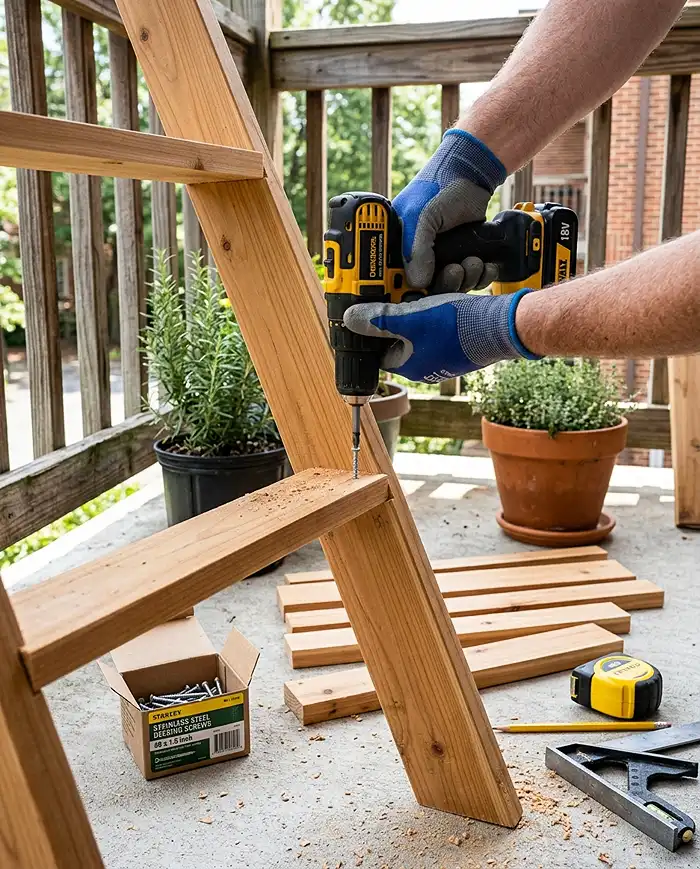
Step 1 – Cut and Assemble the Ladder Frame
Cut two side rails to your target height, typically 48 to 60 inches, then mark shelf positions every 10 to 12 inches at a slight backward angle. Cut shelf supports to match your chosen depth and screw the frame together before adding shelves.
Step 2 – Seal and Weatherproof the Wood
Sand rough edges, then apply two coats of exterior wood sealant or paint, letting each coat dry fully. This step is easy to skip and it’s the one I regret skipping on my first ladder, which warped within a year.
Step 3 – Attach Planter Boxes or Pots to Each Tier
Secure individual pots with L-brackets or build a lip into each shelf edge so pots can’t slide off in wind. Leave at least an inch of gap between pot rims and the shelf above for airflow.
Watering and Drainage Considerations for Tiered Ladders
Water dripping from an upper pot straight onto the plant below is the single biggest complaint I hear about ladder gardens. Two fixes solve most of it.
- Set a saucer under every pot to catch runoff before it hits the shelf below
- Stagger pots so they’re not perfectly stacked, breaking the direct drip line
- Water in the morning so excess moisture evaporates before evening chill sets in
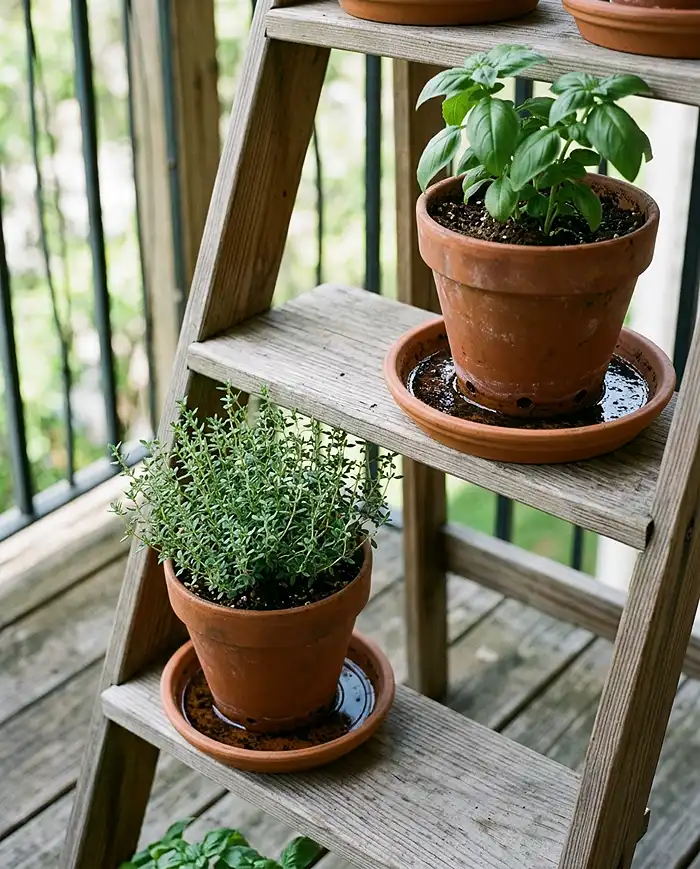
I lost a parsley plant on my bottom shelf to root rot before I started using saucers. Now every tier has one, and it’s a five-minute fix that’s held up for three years.
Seasonal Care and Rotation
Spring Setup and Summer Growth Management
Plant out after your last frost date, mid-May for zone 7a, and rotate pots a quarter turn weekly so growth stays even instead of leaning toward the light.
By July, herbs on the top shelf often outgrow the lower ones. I swap positions occasionally to keep the whole ladder looking full through late summer.
Fall and Winter Ladder Storage or Protection
Tender annuals like basil won’t survive frost, so I pull those in October and compost the spent plants. Perennials like thyme and rosemary can often stay put if wrapped in burlap or moved against a sheltered wall.
Wooden ladders left outdoors all winter need a fresh sealant coat each spring, or the freeze-thaw cycle will crack joints within two or three years.
Regional Considerations for Climate and Wind Exposure
Balconies above the third floor often see wind speeds well beyond what a ground-level garden deals with, and that changes ladder stability needs fast. In windier regions or high-rise units, anchor freestanding ladders to the railing with zip ties or brackets rather than relying on weight alone.
Your USDA hardiness zone also decides which herbs survive as perennials outdoors. In zone 5 and colder, treat rosemary as an annual or bring it inside, since it rarely survives an exposed balcony winter below zone 7.
Common Problems and Solutions
Ladder Tipping or Wobbling in Wind
Add sandbags or brick weights to the base feet, or anchor the top rail to a wall hook with a bracket. This matters most for freestanding ladders on upper floors.
Lower Tiers Not Receiving Enough Light
Rotate pots between tiers every few weeks, or simply reserve the bottom shelf for shade-tolerant herbs like mint and parsley from the start. Fighting the light gradient wastes more effort than working with it.
Wood Rot or Warping from Moisture Exposure
Reapply exterior sealant annually, ideally each spring before the growing season starts. Drip trays under every pot also cut down on the standing water that causes rot at the joints.
Frequently Asked Questions
How much space do I need for a vertical herb ladder?
A compact 3-tier ladder fits in a corner as small as 2×2 feet. Leaning styles need even less floor space, since most of the structure rests against a wall or railing rather than standing freely.
What herbs grow best on a tiered ladder garden?
Basil, thyme, chives, and parsley all do well on ladder tiers. Match sun-loving herbs like thyme to the top shelf and shade-tolerant herbs like parsley to lower, shadier tiers.
Can I build a herb ladder without woodworking experience?
Yes. Pre-made ladder planter kits require only basic assembly, and stacking wooden crates or a simple bookshelf on its side works as a beginner-friendly alternative to building from scratch.
How do I keep water from dripping between ladder tiers?
Place a saucer under each pot to catch runoff, and stagger pots slightly instead of stacking them in a straight line. This breaks the direct drip path between shelves.
Conclusion
A vertical herb ladder for small balcony gardens solves the two biggest problems renters face: not enough floor space and uneven light. Pick the style that matches your depth, plant with the sun gradient in mind, and stay on top of drainage.
For more layout inspiration, browse these vertical herb ladder ideas, or see this herb growing guide from University of Maryland Extension for species-specific care. If floor space is truly nonexistent, a hanging herb garden setup is worth a look too.
Key Takeaways:
- A vertical herb ladder for small balcony spaces triples growing surface without adding floor footprint
- Match herbs to each tier’s actual light exposure rather than planting uniformly across shelves
- Saucers and staggered pot placement solve most tier-to-tier drainage problems
- Leaning and pocket-style ladders suit balconies under 3 feet deep better than freestanding stands
- Annual resealing and wall anchoring keep wooden ladders stable through wind and winter