
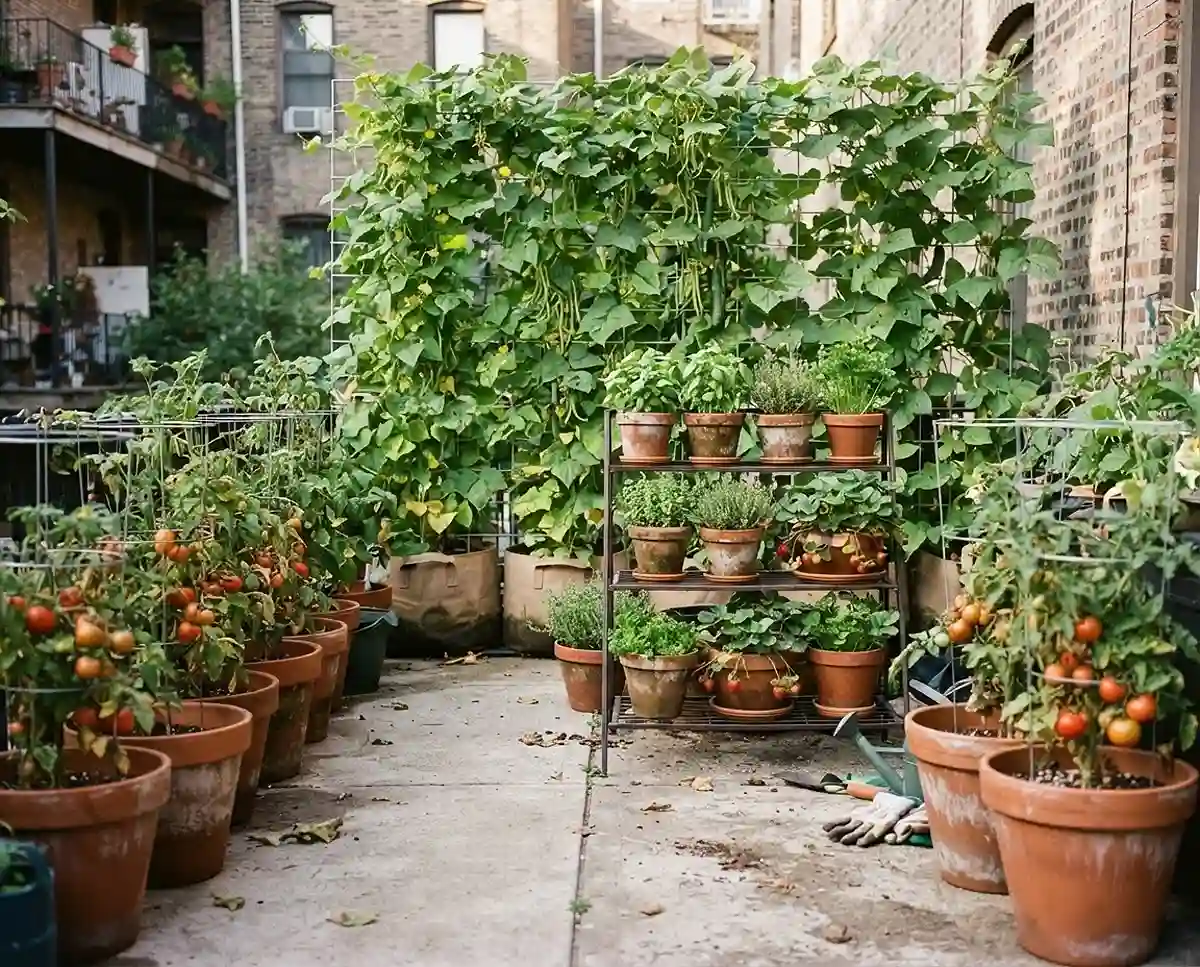
Space Saving Garden Ideas for Tiny Patios
Short on square footage? These space saving garden ideas turn a cramped patio into a productive small patio garden using vertical structures, smart containers, and tight layouts.
I’ve grown vegetables on a 7×9-foot concrete patio in USDA zone 7a for six seasons now, and every trick below has survived a real summer on that slab. This isn’t theory — it’s what actually held up through wind, heat, and one memorable tomato tower collapse.
Table of Contents
Why Small Patios Need a Different Gardening Approach
Traditional garden beds assume you have ground to dig into. A patio gives you none of that — just hardscape that radiates heat back at your plants all afternoon.
You’re also working with railings and floor space that weren’t built to hold hundreds of pounds of wet soil. That’s why small space gardening on a patio means thinking in layers: walls, railings, and vertical air instead of horizontal beds.
Every plant needs to earn its spot, and every container needs to serve more than one purpose whenever possible.
Assessing Your Patio’s Space, Light, and Structural Limits
Measuring Available Square Footage and Sun Patterns
Quick Answer: Walk your patio at 9am, noon, and 4pm for three days, noting which spots get direct sun versus shade. That sun map tells you where tomatoes go versus where lettuce survives.
On my own patio, the back corner near the building gets just 3 hours of sun — that’s where my Bloomsdale spinach lives. The open edge gets 7+ hours, perfect for a dwarf tomato.
- Measure total floor space in square feet, then subtract a 24-inch walking path
- Track sun hours in a notebook or phone note for at least 3 days
- Note reflected heat off brick or concrete, which can add 10-15°F near walls
Pro Tip: A patio that reads as “full sun” often isn’t once you account for afternoon shade from a neighboring building — check late-day light before buying sun-loving cultivars.
Checking Weight Capacity for Railings and Elevated Surfaces
Quick Answer: Most residential balconies and elevated patios are rated for 40-60 lbs per square foot of live load, but always confirm with your building or landlord before adding heavy planters.
A 20-inch container filled with wet potting mix can weigh close to 100 lbs on its own. Multiply that by five or six containers and you’re well into structural territory fast.
If you’re new to renting and small spaces, our apartment gardening for beginners guide covers how to check your lease and building rules before you drill a single anchor.
Real Example: I once lined my railing with six ceramic pots before checking the load rating — my building manager flagged it during a routine inspection. I swapped to lightweight resin pots and never had an issue again.
Pro Tip: For an authoritative breakdown of container weight and stability, the University of Illinois Extension’s container size guide is worth a quick read before you commit to large pots.
Core Space-Saving Strategies for Tiny Patios
These are the moves that actually multiply your growing area without adding a single square foot of floor space.
Going Vertical with Trellises and Wall Planters
Quick Answer: Mount a trellis or wall-mounted pocket planter system to grow upward instead of outward — this is the single biggest space multiplier for tiny garden ideas.
- A 4-foot cattle panel trellis supports 3-4 climbing cucumber or pole bean plants
- Felt pocket planters (like Woolly Pocket systems) hold herbs in a 2-inch soil depth
- Wall-mounted trellis kits attach with anchors, no drilling into railings required
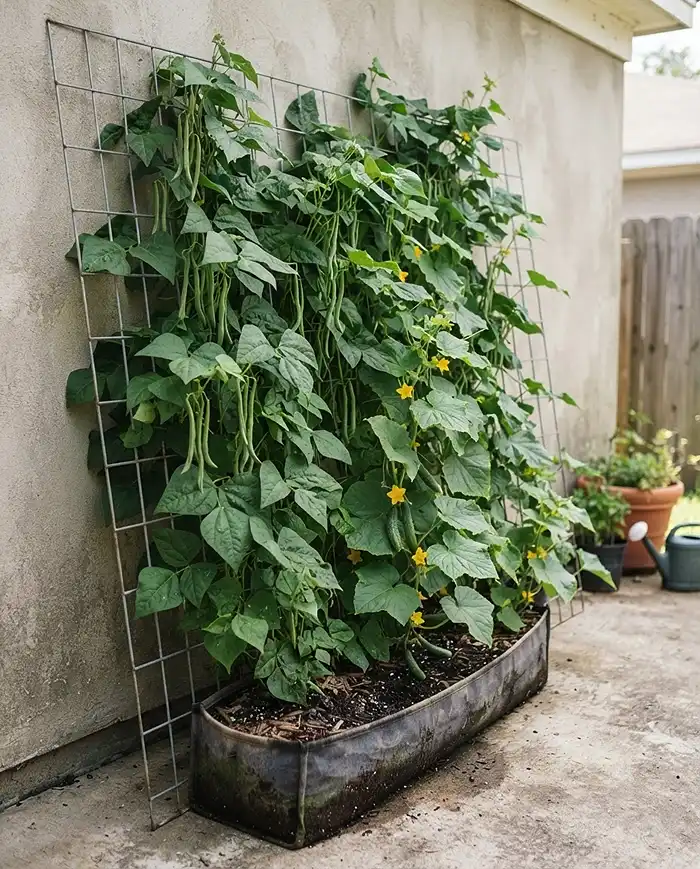
Real Example: I trained a ‘Fortex’ pole bean up a $22 cattle panel trellis last June and harvested more beans from that 18-inch-wide footprint than from a 4-foot row in my old in-ground garden.
Pro Tip: Face trellises at a slight backward lean (10-15 degrees) so wind pushes plants into the structure instead of away from it.
Stacking and Tiered Planter Systems
Quick Answer: Tiered plant stands and stackable garden towers let you grow 4-6 plants in the footprint of a single large pot, ideal for herbs and strawberries.
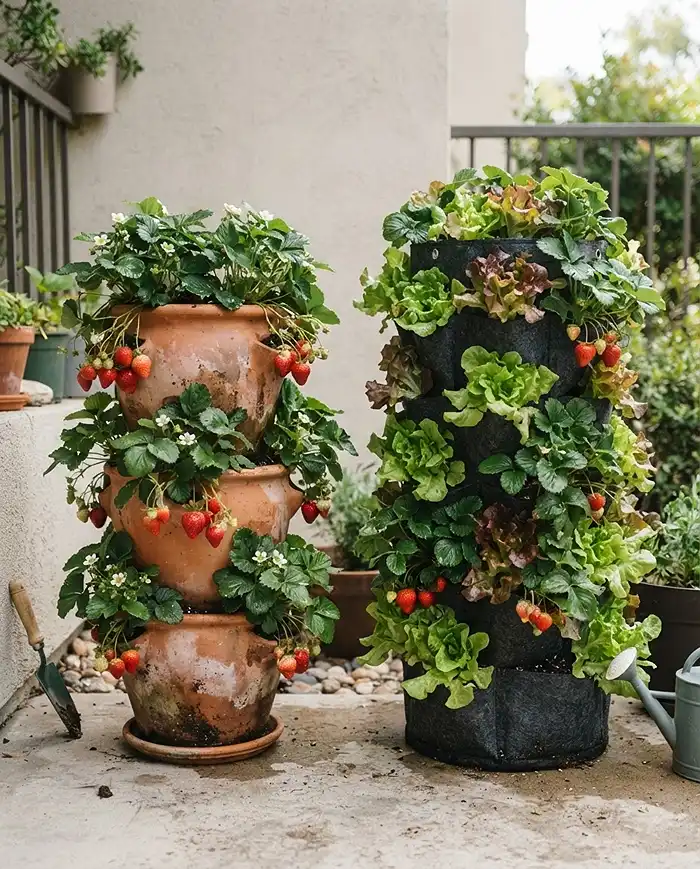
A 3-tier terracotta strawberry pot holds up to 15 plants in about 2 square feet of floor space. Stackable fabric towers work similarly for lettuce and greens.
Pro Tip: Rotate stacked towers a quarter turn every few days so lower tiers don’t get shaded out by the plants above them.
Choosing Multi-Functional Furniture and Planters
Quick Answer: Planter-bench combos and railing-mounted boxes let seating and growing space share the same footprint, which matters most on patios under 60 square feet.
Foldable side tables with a built-in planter tray, or a bench with a soil trough built into the back, save real space compared to separate furniture and pots.
Real Example: I replaced a standalone side table with a planter-bench combo and gained enough floor space for a second tomato tower — a trade I’d make again every time.
Best Plants for Compact Vertical and Container Growing
Not every variety wants to live in a container. These compact and dwarf cultivars are bred for it, and they’re what I actually plant every year on my own patio.
| Plant | Container Size | Light Needs |
|---|---|---|
| Dwarf tomato (‘Tiny Tim’) | 3-5 gallon | 6+ hours sun |
| Bush cucumber (‘Spacemaster’) | 5 gallon | 6+ hours sun |
| Trailing strawberry (‘Tristar’) | 2-3 gallon or hanging basket | 6 hours sun |
| Compact basil (‘Spicy Globe’) | 1 gallon | 4-6 hours sun |
| Bloomsdale spinach | 1-2 gallon or window box | 3-5 hours sun |
Herbs like thyme and dwarf basil are especially forgiving in urban gardening setups where light is inconsistent between buildings.
Materials and Tools Checklist for a Space-Saving Setup
- Trellis panels or cattle panel sections (4-6 feet tall)
- Wall brackets and masonry anchors rated for outdoor use
- A 3-tier plant stand or stackable garden tower
- Railing planter boxes with adjustable clip mounts
- Self-watering containers for anything you can’t check daily
- Lightweight potting mix (avoid garden soil — it’s far heavier when wet)
- A cordless drill and a package of concrete or wood anchors
You don’t need every item on day one — start with a trellis and two or three containers, then build out from there once you know what your light pattern actually supports.
Step-by-Step: Designing Your Tiny Patio Garden Layout
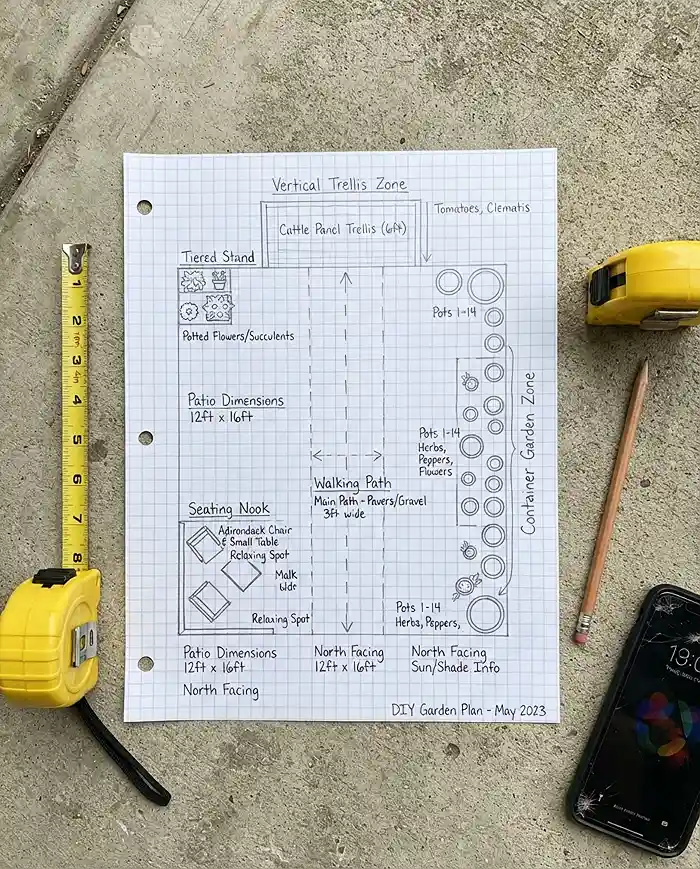
Step 1 – Sketch Zones for Growing, Seating, and Walking Paths
Draw your patio to scale on graph paper first. Reserve a clear 24-30 inch walking path, then mark growing zones along the edges and corners where floor space would otherwise go unused.
For a concrete layout example, our container garden layout with 5 pots post shows exactly how this looks on a real 8×10 patio.
Step 2 – Install Vertical Structures First
Mount trellises and wall planters before you bring in a single floor container. Installing vertical structures last means working around pots you’ve already placed, which almost always leads to crowding.
Step 3 – Layer Plants by Height and Light Need
Put tall vertical growers like pole beans at the back, mid-height containers at eye level where you’ll actually notice if they need water, and trailing plants like strawberries along the edges where they can spill over safely.
Watering and Feeding Efficiency in Compact Layouts
Quick Answer: A simple drip irrigation kit on a timer, or self-watering containers with a built-in reservoir, keeps a dense patio garden alive without daily manual watering.
- Drip irrigation kits with a battery timer run $30-50 and cover 8-10 containers
- Self-watering containers hold a 2-4 day reservoir depending on plant size
- Group plants with similar water needs together to avoid over- or under-watering
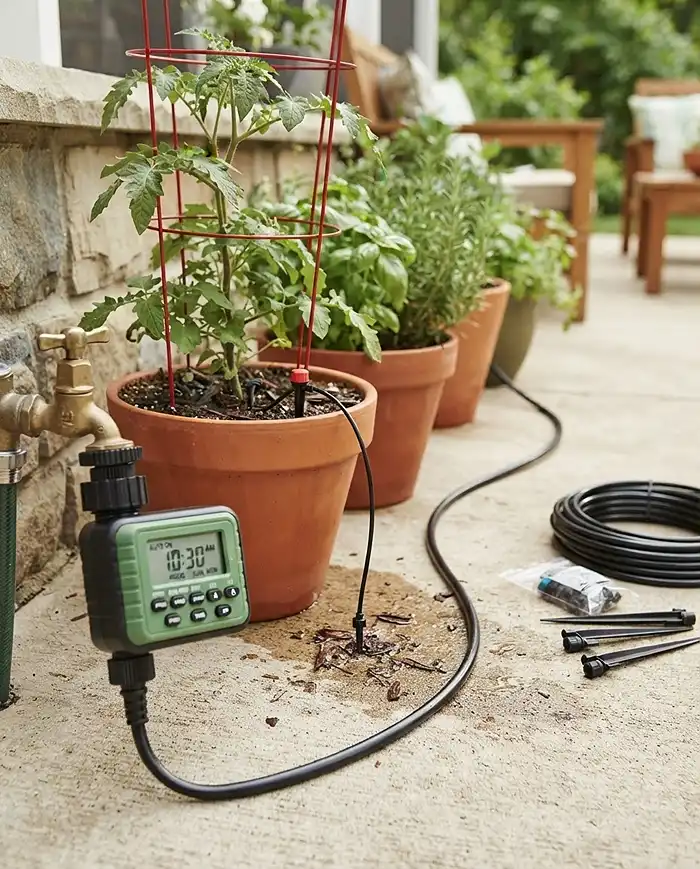
Real Example: Switching to a $35 drip timer was the single change that let me leave for a long weekend in July without losing a single dwarf tomato to heat stress.
Seasonal Rotation for Continuous Small-Space Production
Spring and Summer Planting Priorities
Prioritize fast, heat-loving crops during peak season: bush cucumbers, dwarf tomatoes, and basil all produce heavily in a small footprint between May and August in most zones.
Fall and Winter Space Adjustments
Swap in cold-hardy greens like spinach and mustard once nights drop below 50°F. Fold down or bring in lightweight trellis panels before winter wind and ice add stress to anchors.
Regional Considerations for Climate and Hardiness Zones
Your USDA hardiness zone shapes which cultivars will actually finish their season on a patio, especially for perennial herbs like rosemary that won’t survive a zone 5 winter outdoors.
You can confirm your exact zone using the USDA Plant Hardiness Zone Map before choosing perennials for railing boxes.
Rainfall matters too — in drier climates, terracotta pots dry out faster than plastic or resin, so factor material into your watering plan alongside zone.
Common Problems & Solutions
Overcrowding Leading to Poor Air Circulation
Watch for powdery mildew or clustered aphids — both signal plants are packed too tight. Space containers a few inches apart and prune lower leaves to restore airflow.
Vertical Structures Toppling in Wind
Anchor trellises to railings with weatherproof brackets, or weight freestanding structures with sandbags at the base. This matters most on upper-floor balconies with unobstructed wind.
Uneven Light Distribution Causing Leggy Growth
Rotate containers a quarter turn every few days and angle trellises toward your strongest light source. Leggy, pale stems are the first sign a plant needs more consistent sun.
space saving garden ideas FAQs
What are the best plants for a small patio garden?
Compact and dwarf cultivars work best, including dwarf tomatoes like Tiny Tim, bush cucumbers, trailing strawberries, and compact herbs like Spicy Globe basil. These varieties are bred to stay small while still producing well in containers.
How do I grow vegetables on a tiny patio with no yard?
Use vertical towers, railing planters, and dwarf or bush varieties bred for containers. Combining a trellis with a few self-watering pots can produce a surprising amount of food in under 20 square feet.
How much space do I actually need for a container garden?
Even a 3×3 foot corner can support a productive vertical setup. Adding a trellis and two or three containers in that footprint is enough to grow herbs, greens, and a compact tomato.
Can I use vertical gardening structures on a rented patio?
Yes. Freestanding trellises and railing clip systems require no drilling and can be removed entirely at move-out, making them ideal renter-friendly options for small space gardening.
Key Takeaways
- The best space saving garden ideas prioritize vertical growth over floor space — trellises and wall planters multiply your growing area fastest
- Check your patio’s weight capacity before adding heavy containers, especially on railings and elevated surfaces
- Choose dwarf and bush cultivars bred specifically for container life, not standard garden varieties
- Self-watering containers or a basic drip timer make a dense small patio garden manageable without daily attention
- Start small — one trellis and a few pots — and expand once you understand your patio’s real light and wind patterns
For more layout inspiration, see our full guide to space-saving small garden ideas for other tight-footprint setups.