
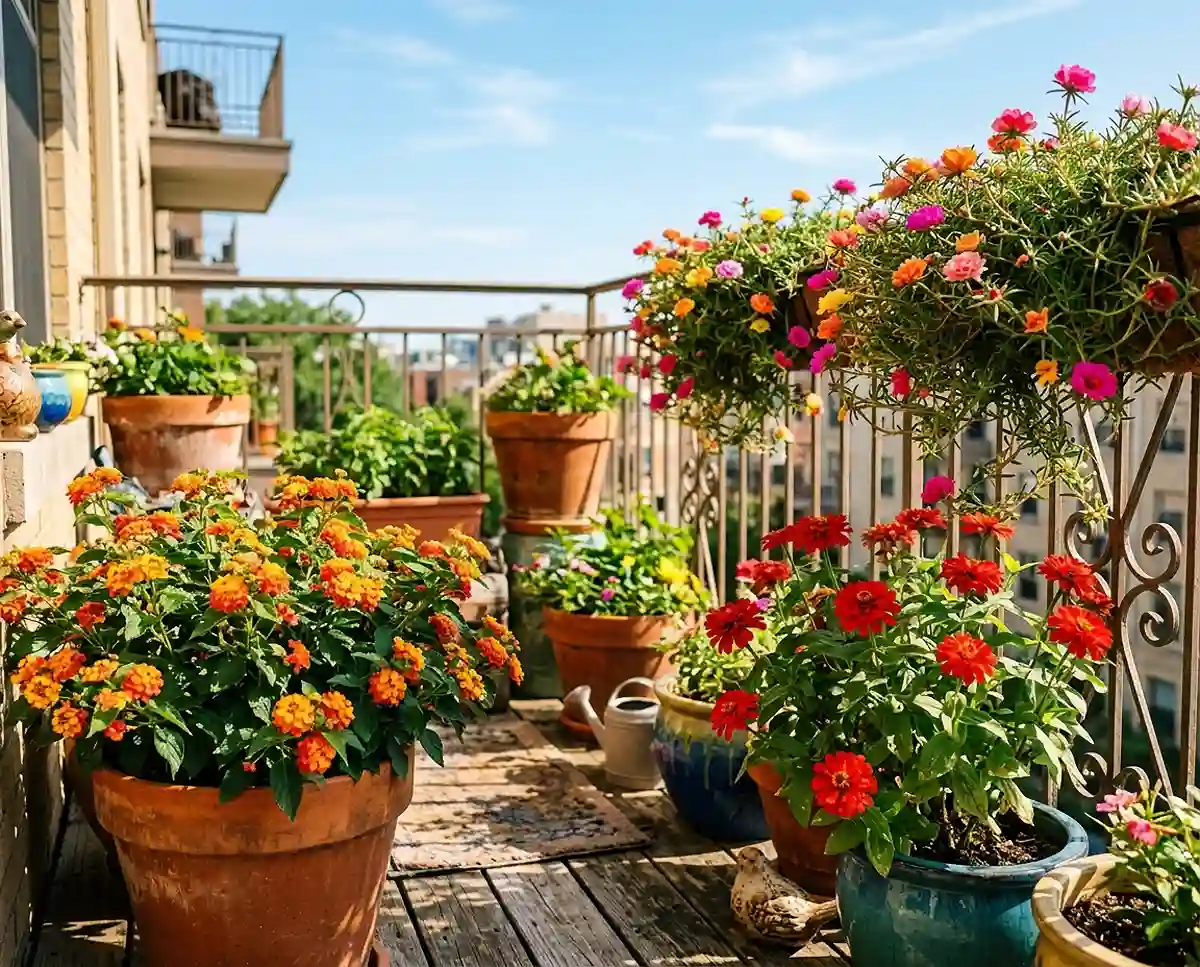
Best Heat Tolerant Flowers for Balcony Pots
Looking for heat tolerant flowers for balcony pots that survive triple-digit days? Here are the varieties that actually keep blooming through a real summer.
I grow containers on a south-facing balcony in Austin, zone 8b, where the railing hits 115°F by 2 p.m. in July. Most “sun-loving” flowers I tried my first year turned to crispy mush by August. The ones below are the survivors, tested over five summers of neglect, heat waves, and one memorable week I forgot to water anything.
Table of Contents
Why Balcony Pots Struggle More in Heat Than Garden Beds
Concrete floors and metal railings radiate stored heat back onto your pots long after sunset, which garden beds never deal with. Container soil also holds a fraction of the volume in-ground plants get, so roots overheat and dry out fast.
A 12-inch pot can lose an inch of moisture a day in July heat. That’s why a plant that thrives in a backyard bed can wilt by noon in a black plastic pot on a west-facing balcony.
What Makes a Flower Truly Heat-Tolerant
Heat tolerant flowers for balcony pots share a few traits you can actually spot before you buy. Look for these signs on the plant tag or in the leaves themselves:
- Thick, waxy, or fuzzy leaves that reduce water loss (think lamb’s ear texture, not thin lettuce-like foliage)
- Deep taproots or dense fibrous root systems that can chase moisture down in the pot
- Native origin in hot regions like Mexico, the Mediterranean, or South Africa
- Succulent or semi-succulent stems that store water for dry stretches
Plants bred for cool, humid climates (impatiens, primrose, most pansies) rarely make this list, no matter what the tag promises.
Top Heat-Tolerant Flowers for Balcony Containers
Lantana
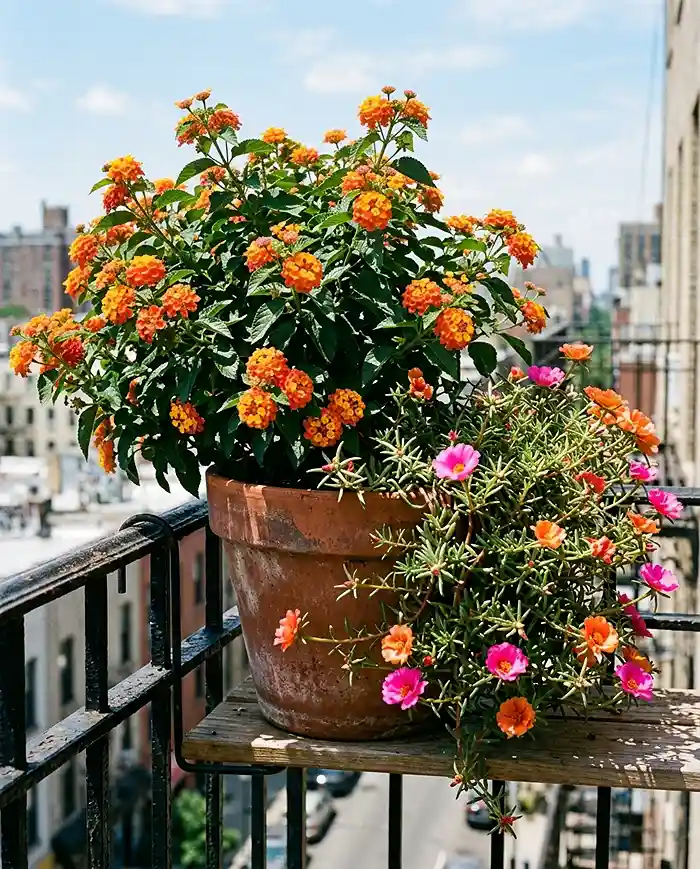
Lantana laughs at full sun and drought once established. Mine blooms non-stop from May through October in a 14-inch terracotta pot, and I water it maybe twice a week even in August.
Varieties like ‘Miss Huff’ or ‘New Gold’ stay compact enough for containers, topping out around 18-24 inches. Pair it with trailing portulaca for a pot that spills over the rail.
Zinnia
Zinnias grow fast from seed and reward deadheading (snipping off spent blooms) with a steady wave of new flowers. They need a genuinely full-sun spot, at least 6 hours direct.
I direct-sowed ‘Profusion Red’ in late April one year and had blooms by mid-June, right through the first heat wave. Skip shady balconies; zinnias sulk and get powdery mildew there.
Portulaca (Moss Rose)
Portulaca has succulent leaves built to survive weeks between waterings. It’s one of the toughest choices for a small balcony garden where you can’t check pots daily.
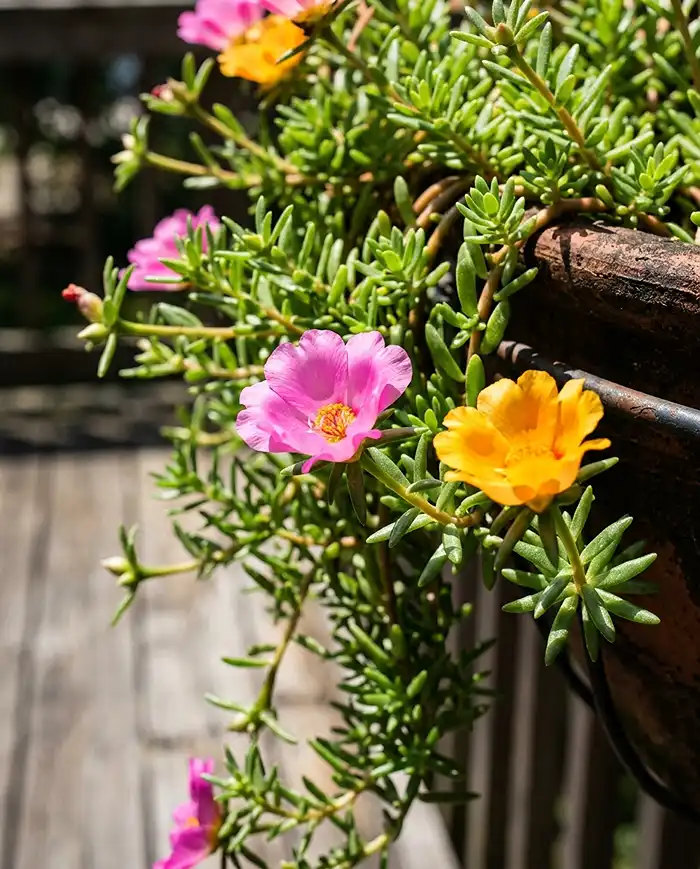
The trailing habit makes it perfect for railing planters and hanging baskets. Flowers close on cloudy days and reopen in full sun, which threw me off my first season until I looked it up.
Vinca (Annual Periwinkle)
Vinca handles both blistering heat and thick humidity better than almost any bedding annual, which matters if you garden in the Southeast. It’s also notably disease-resistant in wet, sticky summers.
Expect a tidy, mounding shape around 12-16 inches. I lost a tray of vinca seedlings to overwatering one spring, ironically, since they hate soggy roots more than dry ones.
Angelonia
Angelonia produces tall spikes of snapdragon-like blooms and shrugs off both heat and humidity without complaint. It needs almost no deadheading, which is a real time-saver during a heat wave.
Give it a container at least 10 inches deep since it develops a decent root system. ‘Serena’ and ‘Angelface’ series both perform well in balcony conditions.
Million Bells (Calibrachoa)
Calibrachoa trails beautifully over pot edges and blooms non-stop, but it’s less forgiving than the others here. It wants consistent light watering, not drought, despite its heat tolerance.
Think of it as heat-tolerant, not thirst-tolerant. In my experience it needs daily water once temps pass 95°F, especially in smaller 8-inch pots that dry out fast.
Gaillardia (Blanket Flower)
Gaillardia handles drought impressively and pulls in bees and butterflies all summer with its red-and-gold daisy blooms. It’s one of the longest bloomers on this list, often flowering into October.
Give it a pot with excellent drainage since it hates wet feet more than heat. If you want more native options like this, my native flower balcony garden guide covers several similar picks.
Choosing the Right Pot and Soil for Heat Resistance
Best Container Materials for Hot Balconies
Pot material changes root temperature more than most gardeners realize. Thin plastic and dark metal absorb heat and can cook roots within a couple of hours of direct afternoon sun.
| Material | Best For | Watch Out For |
|---|---|---|
| Thick ceramic | Heat buffering, stability | Heavy, cracks in freezing weather |
| Self-watering plastic | Consistent moisture, low effort | Reservoir needs weekly refilling in peak heat |
| Thin plastic | Budget, lightweight | Overheats roots, dries out fast |
| Unglazed terracotta | Airflow to roots | Wicks moisture out quickly, needs more water |
Soil Mix Adjustments for Heat and Drought Resistance
Standard potting mix dries out too fast once temperatures climb past 90°F. I add about 20% coco coir to my mix now, which holds moisture without waterlogging roots.
Perlite still matters for drainage, just keep the ratio balanced, roughly one part perlite to three parts coir-amended soil. This combo cut my watering frequency almost in half during peak summer.
Placement and Microclimate Strategies on the Balcony
Where you set a pot matters as much as what’s growing in it. A 30% shade cloth draped over railings during the worst afternoon hours (roughly 1 to 4 p.m.) can drop pot temperature noticeably without blocking enough light to stop blooming.
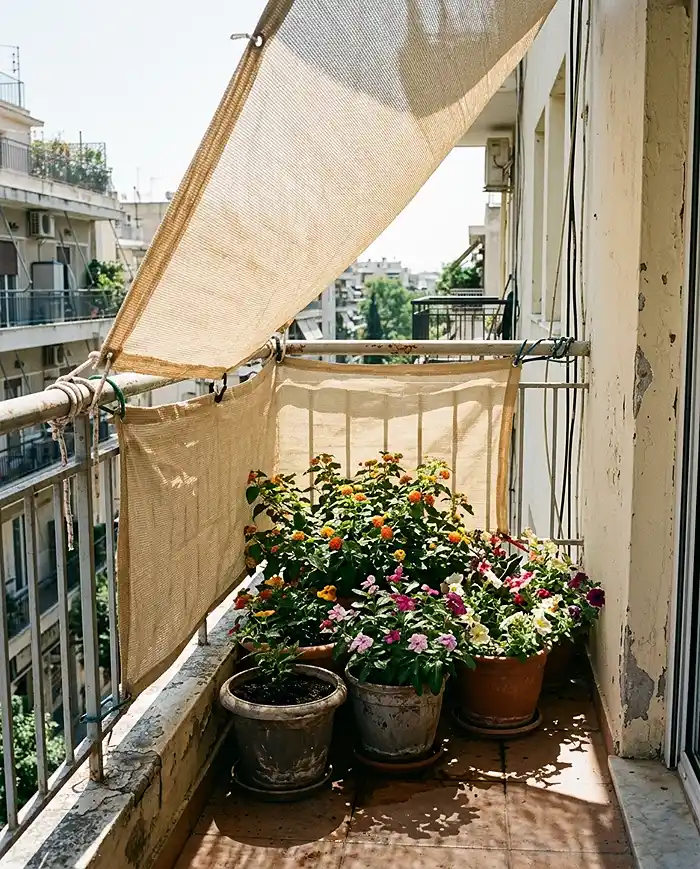
Grouping pots together creates a shared microclimate, since plants shade each other’s soil and slow evaporation. I cluster my lantana and vinca pots against the wall, away from the reflective glass door, and they need less water than the ones out on the open rail.
If you’re planning your whole layout, my apartment balcony garden ideas post walks through spacing and sun-mapping in more detail.
Watering Strategy for Hot Weather Survival
Morning watering, before 8 a.m., beats evening watering because it lets plants take up moisture before the day’s heat hits, and reduces fungal issues overnight.
| Pot Size | Mild Heat (Under 90°F) | Heat Wave (Over 95°F) |
|---|---|---|
| Under 8 inches | Every other day | Once daily |
| 10-14 inches | Every 2-3 days | Once daily, check soil |
| 16 inches or larger | 2-3 times per week | Every other day |
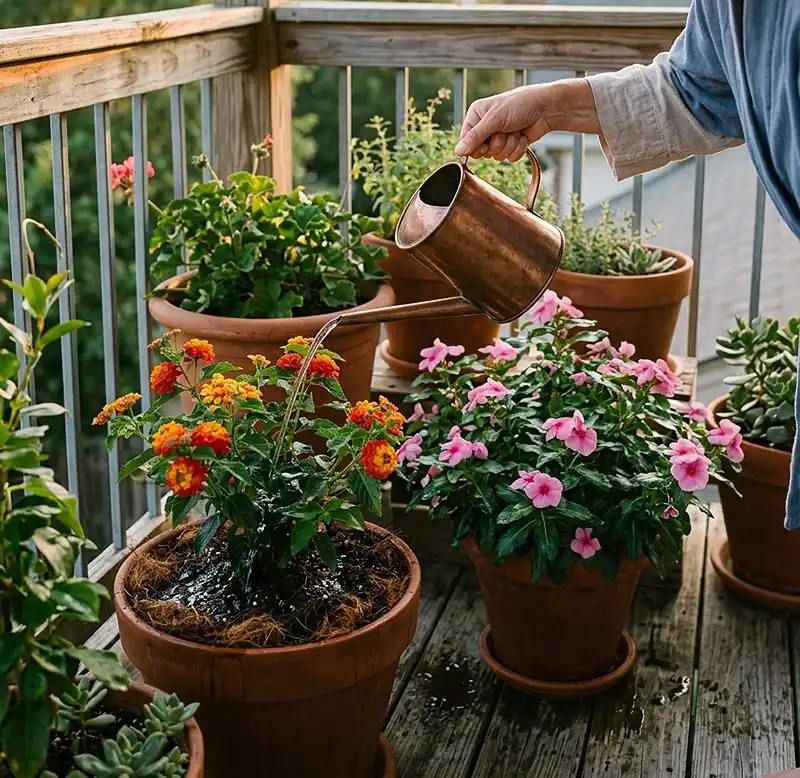
Wilting leaves that perk back up an hour after watering signal normal heat stress, not a real problem. Yellowing leaves plus soggy soil mean overwatering; crispy brown edges mean underwatering.
Feeding and Maintenance During Heat Waves
Cut fertilizer frequency in half once temperatures stay above 90°F for several days straight. Heat-stressed roots can’t absorb nutrients efficiently, and excess fertilizer can actually burn them.
Keep deadheading through the worst heat since it redirects energy toward new blooms instead of seed production. Hold off on heavy pruning, though; cutting back stressed plants during a heat wave slows recovery instead of helping it.
Seasonal Timing for Planting Heat-Tolerant Flowers
Start heat-tolerant annuals 4-6 weeks before your region’s average last frost date so root systems establish before summer peak arrives. In zone 8b, that means seeding zinnias by late March for June blooms.
Transplant nursery starts once nighttime lows stay reliably above 60°F. As of this 2026 growing season, most extension offices still recommend waiting until night temps hold steady before moving tender annuals outdoors permanently.
In fall, gradually reduce watering as temperatures drop rather than cutting off cold. Many of these flowers, especially lantana and gaillardia, will keep blooming into October in warmer zones.
Regional Considerations by Hardiness Zone
Humid Southern zones (8-10) need varieties with strong disease resistance, like vinca and angelonia, since fungal issues spread fast in sticky air. Dry Southwestern zones (7-9) favor true drought specialists like portulaca and gaillardia that tolerate low humidity paired with intense sun.
Watering frequency should adjust too. Humid-zone gardeners can often stretch watering intervals slightly since evaporation is slower, while dry-zone balconies need more frequent checks even with drought-tolerant picks.
Common Problems and Solutions
Wilting Despite Regular Watering
Root-bound pots are usually the culprit here, not lack of water. Roots circling the container’s edge can’t absorb moisture efficiently no matter how often you water.
Repot into a container at least 2 inches wider in diameter, and trim any circling roots first. Temporary afternoon shade for a few days also helps stressed roots recover.
Leaf Scorch and Sun Bleaching
Pale, bleached, or crispy-edged leaves usually mean too much reflected heat, often from a nearby white wall or metal railing. Move the pot a few feet away from the reflective surface.
Adding partial afternoon shade, even from a nearby taller plant, usually resolves scorch within a week or two of new growth.
Reduced Blooming During Peak Heat
Many heat-tolerant flowers pause blooming during the most extreme stretches, redirecting energy into survival instead of flowers. This is normal and temporary, not a sign of a dying plant.
Keep deadheading spent blooms and apply a light, diluted feeding once the worst heat passes. Most varieties on this list resume blooming within one to two weeks.
If you’d like science-based variety lists straight from a horticulture extension office, the NC Cooperative Extension’s heat-tolerant annuals guide is worth bookmarking alongside this one.
Frequently Asked Questions
What flowers can survive full sun and extreme heat in pots?
Lantana, zinnia, portulaca, and gaillardia are proven performers for full sun and extreme heat in containers. All four tolerate drought once established and keep blooming through sustained temperatures above 95 degrees Fahrenheit.
How often should I water balcony flower pots in summer heat?
Water small pots under 8 inches daily and larger pots every other day once temperatures pass 95 degrees Fahrenheit. Check soil moisture with a finger test before watering to avoid overdoing it.
Do heat-tolerant flowers still need fertilizer?
Yes, but at a reduced frequency during extreme heat since stressed roots absorb nutrients less efficiently. Cut fertilizer to half strength or half frequency once temperatures stay above 90 degrees Fahrenheit for several days.
Can I use the same pots year after year for heat-tolerant flowers?
Yes, as long as you refresh the top few inches of soil each season and scrub pots with a diluted vinegar solution to remove mineral buildup and old root debris before replanting.
Conclusion
The right heat tolerant flowers for balcony pots turn a scorching, exposed space into something you actually want to sit on in July. Lantana, zinnia, portulaca, and gaillardia have earned their spot on my balcony through five brutal Texas summers.
Pair your flowers with a smart pot material, a coir-amended soil mix, and a morning watering habit, and most of these varieties basically take care of themselves.
If flowers aren’t enough, plenty of vegetables in pots and herb garden ideas thrive in these same hot, sunny conditions. Consider mixing edibles into your small balcony garden too, alongside your favorite balcony flowers.
Check out my herb garden layout for balcony spaces if you want to expand beyond flowers next season.
Key Takeaways
- The best heat tolerant flowers for balcony pots include lantana, zinnia, portulaca, vinca, angelonia, calibrachoa, and gaillardia, each suited to slightly different watering needs
- Container material and soil mix matter as much as plant choice; thick ceramic or self-watering pots with coir-amended soil hold up best in extreme heat
- Morning watering, grouped pots, and temporary shade cloth during peak afternoon sun reduce heat stress significantly
- Wilting during a heat wave is often normal and temporary, while yellowing with soggy soil signals overwatering, not heat
- Adjust plant choice and watering by hardiness zone, favoring disease resistance in humid zones and true drought tolerance in dry Southwestern climates