
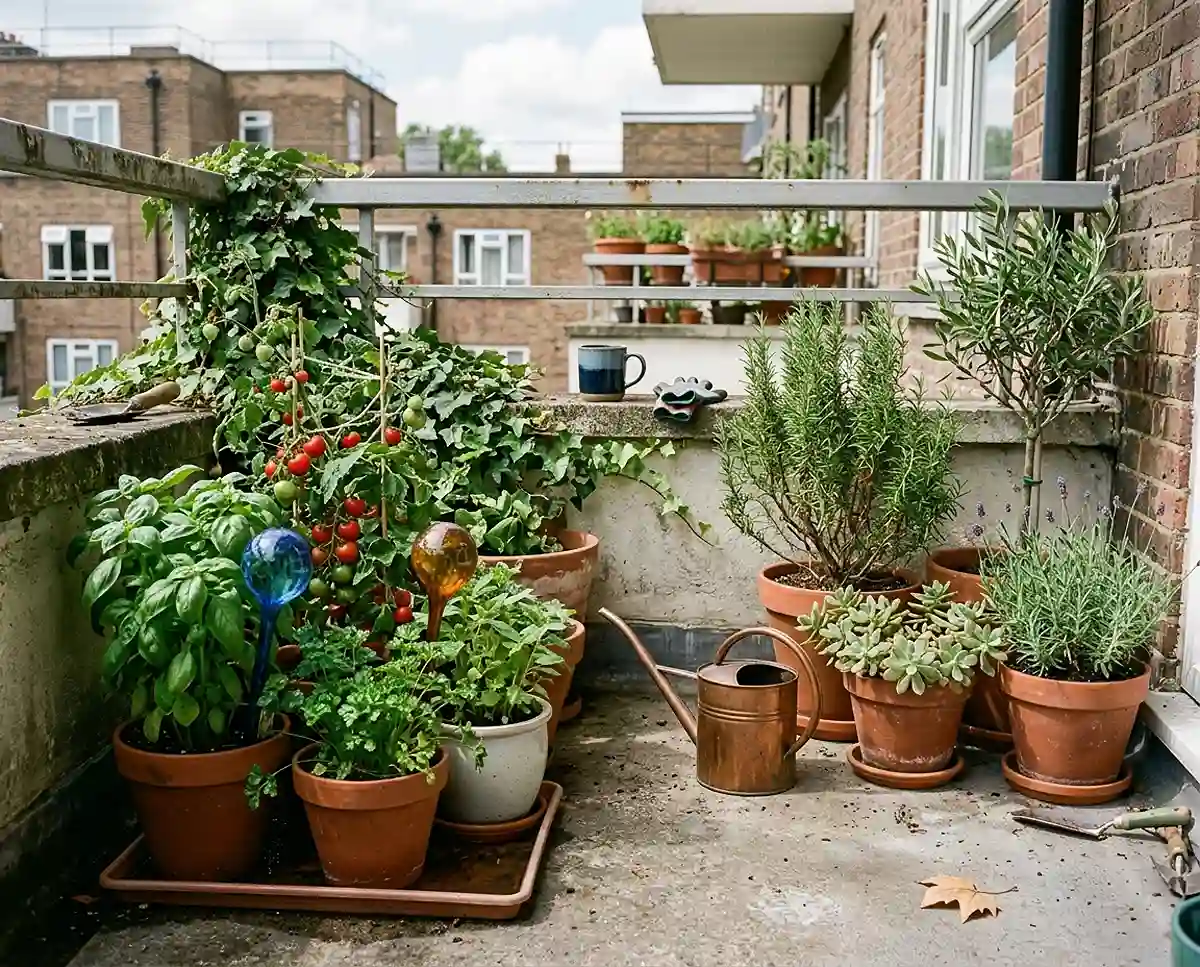
low maintenance small space gardening routine
A low maintenance small space gardening routine is the difference between a thriving balcony garden and a pot graveyard. If you’ve got 15 minutes a week and the right setup, your plants will survive even your most chaotic stretches.
I grow herbs, tomatoes, and native perennials on a 6-foot-wide east-facing balcony in zone 6b. Over the years, I’ve learned that small space gardening lives or dies by your system — not your effort.
Table of Contents
Why a Simple Routine Keeps Small Gardens Thriving
Container plants don’t have the buffer that in-ground gardens do. They dry out faster, run out of nutrients sooner, and have nowhere to send roots when things go wrong.
A consistent routine catches problems before they snowball. A yellowing leaf noticed on Tuesday is a ten-second fix. The same leaf ignored until Saturday is a sick plant.
Urban gardening in tight spaces also means your plants are stacked close together — pests and disease spread fast. Regular, quick check-ins are your early warning system.
The goal isn’t to garden more. It’s to garden smarter, so tiny garden ideas stay achievable even during a packed week.
Set Up Your Garden for Low Maintenance
The best time to reduce your weekly workload is before you plant a single thing. Upfront decisions about containers, plants, and layout pay off every single week afterward.
Choosing Low-Maintenance Plants and Containers
Hardy, drought-tolerant plants are your best friends in a busy life. Think lavender, rosemary, sedums, and cherry tomatoes like ‘Tumbling Tom’ — they forgive missed waterings without drama.
Bigger pots hold more moisture and dry out slower than small ones. Self-watering containers with built-in reservoirs cut active watering sessions significantly.
Check out these native flower balcony garden ideas — native plants are especially forgiving because they’re adapted to your local conditions.
Grouping Plants by Water and Light Needs
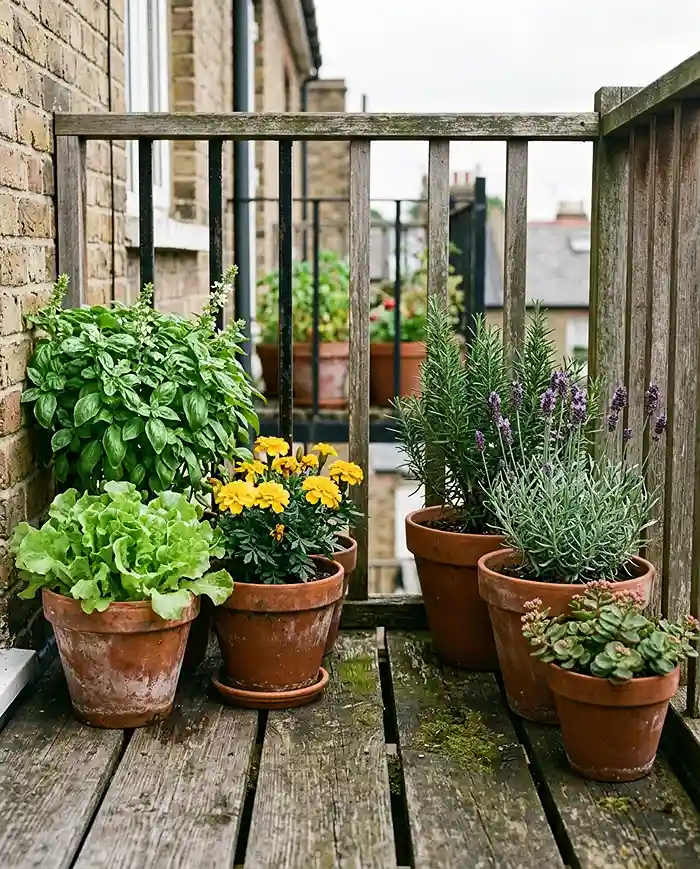
Cluster your thirsty plants — basil, lettuce, marigolds — together in one zone. Keep your drought-tolerant plants — succulents, rosemary, lavender — in another.
This means one focused watering pass per zone instead of pot-by-pot guesswork. It also means sun-lovers are together where light is strongest, reducing leggy growth.
Grouping is the single easiest way to cut your weekly routine time in half. It takes five minutes to reorganize and saves hours over the season.
The Core Weekly Gardening Routine
Here’s the truth: most small-space gardens only need two types of attention — a daily glance and one focused weekly session. That’s it.
Quick Daily Check-Ins (2 Minutes)
You don’t need to carve out special time. Do this while you’re having coffee or stepping outside for air.
- Scan for wilting — drooping leaves usually mean dry soil or root stress
- Check the top inch of soil in your smallest pots with your finger
- Look under a few leaves for early signs of pests like aphids or spider mites
- Remove any obviously dead or yellowing leaves on the spot
That’s genuinely two minutes. The habit builds over a week and becomes automatic.
The 15-Minute Weekly Maintenance Session
Pick one day — Sunday mornings work well — and do this in order:
- Deep water all pots until water drains from the bottom
- Deadhead [remove spent flowers] any blooming plants to encourage new growth
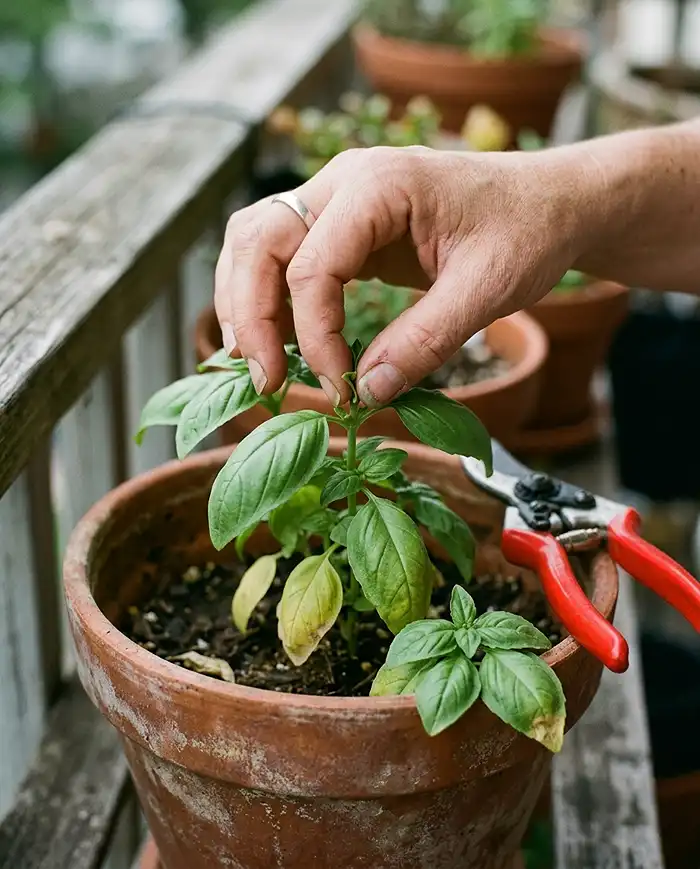
- Pinch back leggy stems on herbs like basil and mint
- Check for pests more thoroughly — look under leaves, at soil level
- Add liquid feed if you’re not using slow-release fertilizer (more on that below)
Fifteen minutes is realistic. I’ve timed myself. Even when I’m adding fertilizer, I’m done before my coffee gets cold.
Time-Saving Watering Strategies
Watering is the task most likely to eat your time — or kill your plants when skipped. The fix is reducing how often you need to do it.
Self-Watering and Drip Systems
Self-watering pots have a reservoir at the base that wicks moisture up to roots as needed. In summer, they can go 3-5 days between refills versus daily watering for standard pots.
Drip kits like the Blumat system or simple gravity-fed drippers connect to a water bottle or reservoir. They’re cheap, reliable, and require zero electricity.
Watering globes — those blown-glass spheres you fill and spike into soil — work well for individual pots. They’re not glamorous, but they genuinely work for a 3-4 day buffer.
Mulching and Moisture Retention Tricks
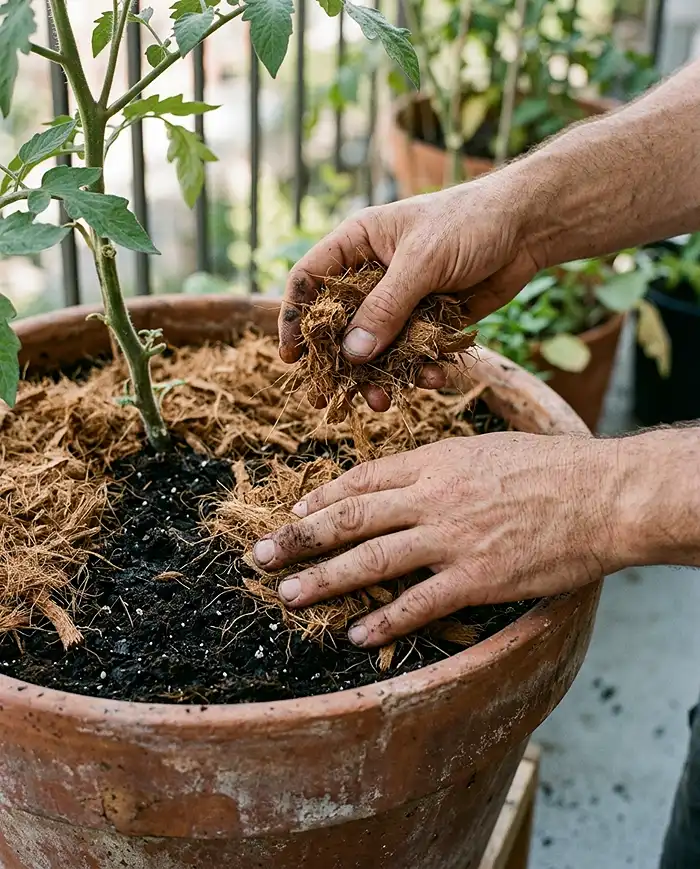
A 1-inch layer of bark mulch or coconut coir on top of container soil cuts evaporation dramatically. I added coir to my tomato pots in summer 2023 and went from watering daily to every other day.
Water-retaining gels mixed into potting soil (like those sold for hanging baskets) also help. Use them sparingly — too much causes root rot in cool weather.
Grouping pots together also creates a microclimate that slows moisture loss from individual containers.
Tools and Supplies for a Fast Routine
You don’t need much. The right tools make each task faster and less annoying.
- Long-spout watering can: Reaches the back of deep containers without awkward tilting
- Bypass pruners: Sharp, clean cuts on stems under 1/2 inch — Fiskars or Felco are reliable
- Drip irrigation kit: A basic gravity-fed setup handles vacation coverage and daily watering
- Moisture meter: Takes guesswork out of watering — useful if you’re still learning your pots
- Slow-release fertilizer granules: One application every 3-4 months replaces weekly feeding
For clever ways to store all of this without cluttering your outdoor space, these balcony storage ideas for gardeners are genuinely practical.
Streamlining Feeding and Pruning
These two tasks feel like work because most gardeners do them too often and too reactively. Build them into a system and they become almost invisible.
Slow-Release Fertilizer Over Frequent Feeding
Liquid fertilizers require weekly or bi-weekly applications during the growing season. That’s 10-15 extra tasks from May to September.
Slow-release granules like Osmocote dissolve gradually over 3-4 months. You mix them in at planting or top-dress them once in spring and you’re done until late summer.
I switched to Osmocote for my balcony containers in spring 2024. I fed once in April and once in August. Every plant performed as well or better than when I was feeding weekly.
Quick Pruning and Deadheading Habits
Deadheading [removing spent blooms] takes 30 seconds per plant when done weekly. Skip it for three weeks and you’re spending 10 minutes cutting back a leggy, overgrown mess.
For herbs, pinch off the top two sets of leaves whenever a stem gets longer than 6 inches. This keeps plants bushy and delays flowering, which means more harvestable leaves.
Do a quick pruning pass during your daily check-in whenever you spot something. Don’t wait for the weekly session — small cuts now prevent big problems later.
Handling Busy Weeks and Time Away
Even with a good routine, life spikes. Work deadlines, travel, illness — your garden needs to survive these stretches without daily attention.
Prepping Your Garden Before a Busy Stretch
If you know a hectic week is coming, do a heavy prep session the day before:
- Deep water everything until water drains freely from the bottom
- Move pots out of direct afternoon sun to reduce moisture loss
- Group pots together — clustering slows individual evaporation
- Set up drip globes or a simple drip kit for anything that dries fast
- Harvest anything close to ready — ripe produce left on plants stresses them
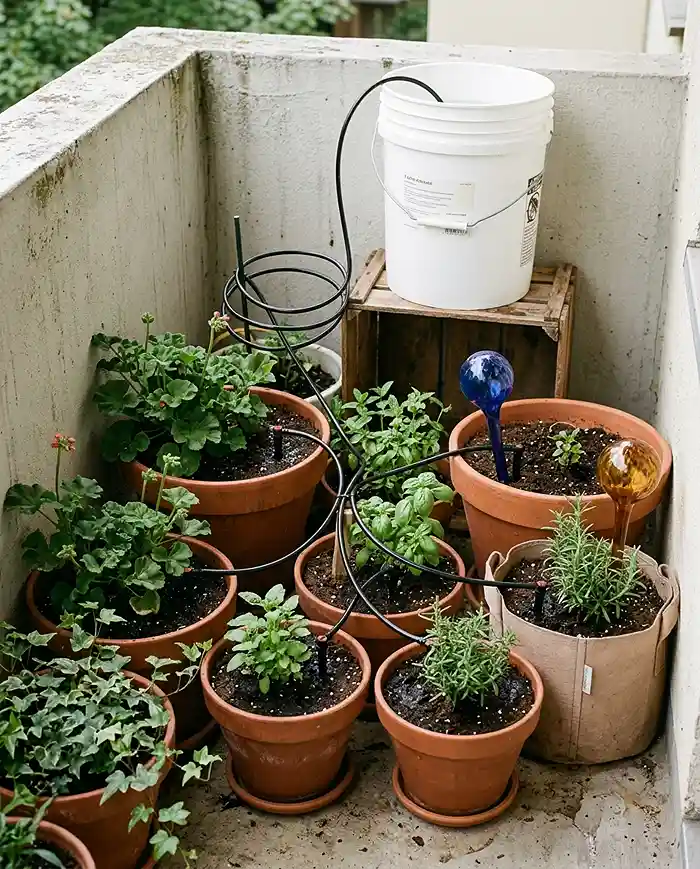
For trips longer than 5 days, a gravity-fed drip system connected to a 5-gallon bucket handles most container gardens reliably.
Planning what to grow during your busiest months helps too — these vegetables to plant in late summer in pots include several low-fuss options that are perfect when your schedule tightens up in fall.
Seasonal Routine Adjustments
Your routine shouldn’t be static. Containers behave very differently in July than in October.
Adjusting Watering and Care by Season
| Season | Watering Frequency | Key Tasks | What to Watch |
|---|---|---|---|
| Spring | Every 2-3 days | Add slow-release fertilizer, repot if needed | Slugs, late frost |
| Summer | Daily or every other day | Mulch pots, set up drip system | Heat stress, spider mites |
| Fall | Every 3-4 days | Harvest, cut back annuals | Fungal issues from wet weather |
| Winter | Every 1-2 weeks | Protect pots from freezing, minimal feeding | Overwatering in cold soil |
In zone 6b, my summer routine is almost double the work of my fall routine. Building in that seasonal scaling prevents both overwatering in cool months and underwatering in peak heat.
Common Problems and Solutions
Even a solid routine has gaps. Here’s what goes wrong most often for busy gardeners — and the fastest fixes.
Plants Wilting From Missed Watering
Quick Answer: Move the pot to shade immediately and water deeply. Most plants recover within an hour if caught before leaves turn crispy.
Prevent repeat episodes by setting up a self-watering pot or adding a drip globe before your next busy stretch.
Pests Going Unnoticed
Quick Answer: Daily check-ins catch infestations when they’re just a few insects, not a colony. Early-stage aphids or spider mites are handled in seconds with a strong water spray or neem oil.
A missed week can turn a small aphid cluster into a plant-wide infestation. The University of California’s Integrated Pest Management program offers solid guidance on organic aphid control for home gardens if you need more targeted help.
Overgrown or Leggy Plants
Quick Answer: Leggy growth means either too little light or too little pruning. Cut back by one-third, move the pot to a brighter spot, and pinch new growth weekly going forward.
Regular quick trims during daily check-ins are far easier than a major rescue pruning session once a plant gets out of hand.
low maintenance small space gardening routine FAQs
How do I maintain a garden with little time?
Focus on three things: choose hardy, drought-tolerant plants; use self-watering containers or drip systems; and commit to a 15-minute weekly maintenance session covering watering, deadheading, and a pest check. That’s genuinely enough for most small-space container gardens.
How often should I water container plants?
Check the top inch of soil — if it’s dry, water deeply until it drains from the bottom. In summer, most containers need water every 1-2 days. Self-watering pots and mulch can extend that to every 3-5 days, significantly reducing hands-on time.
How do I keep plants alive while on vacation?
Deep water everything the day before you leave, move pots out of intense afternoon sun, group them together to slow moisture loss, and set up a gravity-fed drip system or watering globes. For trips over 5 days, a drip kit connected to a large reservoir is the most reliable option.
Key Takeaways
- A low maintenance small space gardening routine only needs two components: a daily 2-minute scan and a focused 15-minute weekly session
- Self-watering containers, slow-release fertilizer, and mulch are the three biggest time-savers in urban gardening
- Group plants by water and light needs so each care pass covers multiple plants at once
- Prep your garden before a busy week — deep water, add drip globes, and move pots to shade — and most plants handle 5+ days without attention
- Adjust your routine by season: summer needs daily check-ins, fall and winter need far less