

Containerized Root Vegetable Cultivation
Your container root veggies are forking, cracking, and staying tiny — and it’s not bad luck. Master containerized root vegetable cultivation with proven fixes for every failure. Read the full guide now.
Let’s be real — most people assume you need a sprawling backyard to grow root vegetables. But here’s the thing: you don’t. A deep pot, the right soil mix, and a few science-backed tricks are genuinely all it takes.
Containerized root vegetable cultivation is one of the most rewarding things you can do as a home grower — and once you understand why things go wrong, fixing them becomes almost second nature.
This guide breaks down the real reasons your container carrots fork, your beets crack, and your radishes stay stubbornly tiny — and more importantly, what you can actually do about it today.
The Core Problems in Containerized Root Vegetable Cultivation (And Why They’re So Common)
Before we fix anything, let’s diagnose what’s actually going wrong. If you’ve ever pulled something ugly out of a pot and wondered where it all went sideways, chances are it was one of these four culprits:
- Small roots → Nutrient imbalance and a root zone that’s too cramped to do its job
- Cracking or splitting → Irregular watering that forces roots to expand too fast, too suddenly
- Slow growth → A nasty combination of temperature stress and nutrient bottlenecks
- Deformed or forked roots → Physical obstructions and poor soil structure redirecting the taproot
Quick Reality Check: Research consistently shows that around 80% of container root crop failures come down to just two things — water inconsistency and a poor substrate. Unlike in-ground growing, containers amplify every stress signal. There’s no buffer of surrounding soil to absorb your mistakes. That’s actually good news, though — it means fixing a couple of root causes (pun intended) solves most of your problems at once.
For a deeper dive into container selection and spacing, check out this excellent guide on how to grow root crops in pots and containers — it covers the foundational stuff that pairs perfectly with everything we’re about to unpack.
The Physiological Mechanics of Containerized Root Vegetable Cultivation
Overcoming the “Root Stress” Bottleneck
Here’s something most beginner guides gloss over: when a root hits the wall of a container, the plant doesn’t just stop growing. It panics. Physiologically, it shifts into survival mode — diverting energy away from root development and toward maintenance. Root circling isn’t just a space problem; it’s a stress signal that changes how the whole plant behaves.
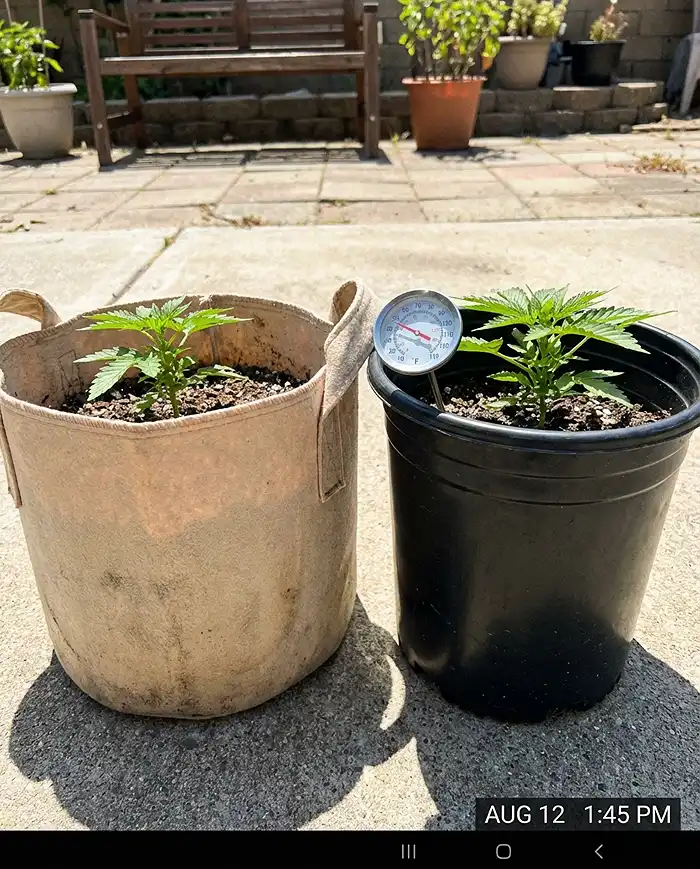
The practical result? Stunted, undersized roots that taste disappointing and look worse. The fix is simpler than you’d think. Always use containers deeper than the stated minimum for whatever you’re growing. Better yet, switch to fabric grow bags or air-pruning pots.
These work by allowing root tips to dehydrate and die back naturally at the container wall — which sounds brutal but is actually brilliant. Instead of circling, the plant responds by producing dense, fibrous lateral roots that are far more efficient at absorbing water and nutrients. It’s like replacing a clogged highway with a network of back roads.
Thermodynamics of the Root Zone
Nobody talks about this enough, but the temperature of your container soil matters enormously. Dark plastic pots sitting in afternoon sun can push root zone temperatures above 85°F (29°C) — and at that point, radishes and beets begin a stress response that causes bolting and dramatically slows root development. That’s the thermal engine behind slow growth in summer containers.
The fix is layered. Swap dark plastic for light-colored or ceramic containers that reflect rather than absorb heat. Add a 2-inch layer of organic mulch to the soil surface to insulate the root zone. If your climate runs hot in the afternoons, position containers where they get morning sun and some afternoon relief. Most root crops need 6 good hours of light — not 8 hours of being slow-cooked.
The Substrate System: The Real Reason Your Roots Look Like They’re Having a Bad Day
The Aeration Deficit and Hypoxia in Containerized Root Vegetable Cultivation
Pulling straight garden soil from your backyard and dumping it into a container is one of the most common mistakes in containerized root vegetable cultivation — and one of the most damaging. In a pot, garden soil compacts under repeated watering pressure. As pore spaces collapse, oxygen disappears from the root zone, creating a hypoxic environment where roots literally can’t breathe. The result is the twisted, forked, deformed roots that drive growers crazy.
The substrate you want feels loose, light, and crumbly — almost like coarse sand you can push your finger through without resistance. The ideal mix for container root crops hits a specific balance:
- ⅓ quality compost for organic matter, nutrients, and microbial activity
- ⅓ topsoil for structural integrity and moisture retention
- ⅓ coarse sand or coco coir for drainage channels and aeration
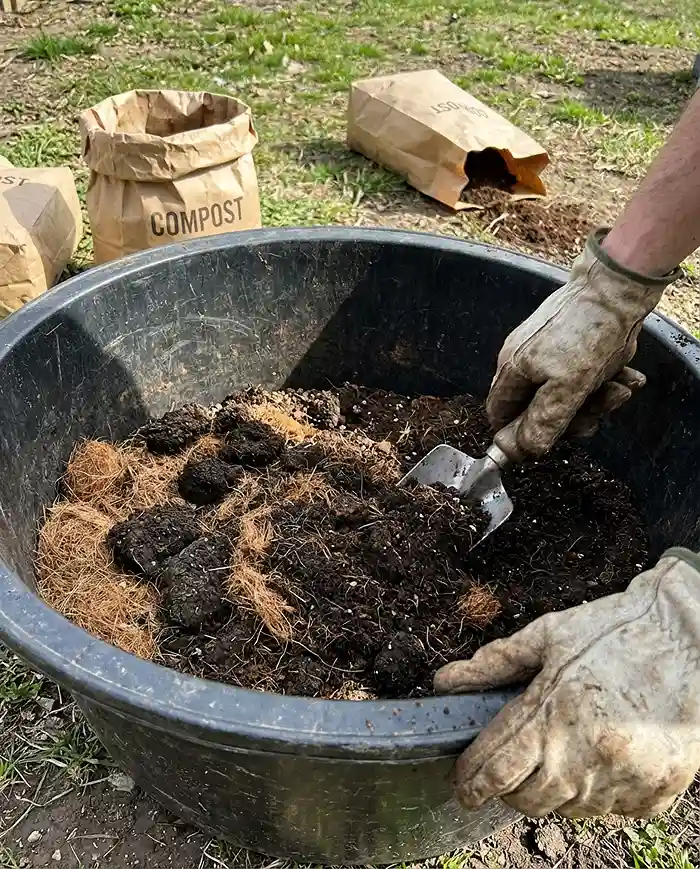
That combination gives roots a clear, unobstructed path downward — and straight, well-formed roots are the payoff.
The “Perched Water Table” Myth — Please Stop Putting Gravel in Your Pots
I need to say this directly: adding gravel or rocks to the bottom of a container does not improve drainage. It actually makes drainage worse, and the science behind it is pretty fascinating.
This is called the perched water table effect. Water moving downward through fine potting mix can’t cross into coarser gravel below until the fine layer above is completely saturated. So the gravel layer effectively raises the saturation zone — creating a waterlogged band of soil sitting directly above the rocks where your roots live. It’s the gardening equivalent of putting a dam at the bottom of your pot.
According to Penn State Extension’s container gardening guidance, the correct approach is to fill your container with a continuous, uniform column of quality potting mix from drainage hole to surface — no layers, no gravel, no breaks in soil texture. If your drainage holes are large, a piece of landscape mesh over the opening holds soil in while letting water flow freely. That’s all you need.
Hydrological and Nutrient Management in Containerized Root Vegetable Cultivation
Preventing Root Splitting and Cracking
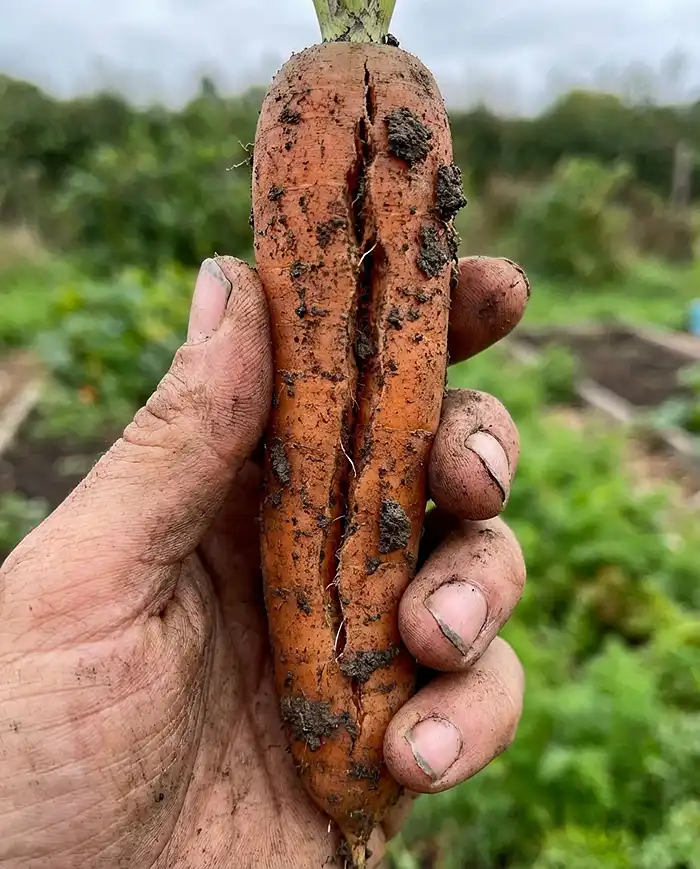
Root cracking follows a very predictable two-step pattern, and once you understand it, preventing it is straightforward.
Step one: inconsistent watering causes the outer skin of the root to dry and harden. Step two: a sudden heavy watering causes the interior to expand rapidly while the hardened skin can’t stretch — so it splits. It’s the same physics as a dry riverbank cracking after a rainstorm.
The solution is maintaining consistent soil moisture throughout the growing cycle. Two tools make this remarkably easy. Sub-Irrigated Planters (SIPs) deliver water from a reservoir beneath the soil, keeping moisture levels naturally even without daily manual watering. Clay olla irrigation — unglazed clay vessels buried in the container that slowly seep water into the surrounding soil — is an ancient technique that works beautifully in modern containers and costs almost nothing to set up.
Why Your Roots Are Small — It’s Probably Your Fertilizer
Here’s a counterintuitive one. If your container roots are coming out small and disappointing, your first instinct might be to feed them more. But the type of nutrient matters far more than the amount — and excess nitrogen is probably your problem.
High nitrogen pushes lush, leafy green growth at the direct expense of root development. All that plant energy goes to the tops, and the roots stay small. Root crops need a completely different nutritional emphasis: phosphorus (P) drives root cell division and elongation, while potassium (K) regulates turgor pressure and moves carbohydrates into the developing root.
The practical fix? Choose a fertilizer with a low first number and high second and third numbers — something like 4-10-10 or 5-10-10 — and apply it consistently every two weeks as a diluted liquid feed. Your roots will absolutely notice the difference.
Fixing Slow Growth — It’s Almost Always Three Things at Once
Slow growth in containerized root vegetable cultivation is rarely caused by just one factor. It’s almost always a convergence of cold or overheated soil, nutrient lockout from pH imbalance or salt buildup, and root restriction working together to suppress the plant’s metabolism.
Address all three systematically. Warm the soil in early spring using black mulch or cloches, then switch to reflective materials once summer heat kicks in. Keep your feeding schedule consistent to prevent nutrient gaps. And make sure spacing is correct — overcrowded plants compound root restriction and amplify every other stress response.
Managing Salt Buildup in Containers
If you notice a white crusty film forming on your soil surface, that’s accumulated mineral salts from fertilizers and tap water — and it’s actively burning your roots. Salt accumulation causes osmotic stress, pulling moisture out of roots rather than allowing absorption in. The result looks like drought stress even when you’re watering regularly.
The fix is simple: a monthly leaching flush. Water your containers heavily until water runs freely from the drainage holes, carrying dissolved salts with it. Do this once a month during the growing season and you’ll prevent salt buildup before it becomes a problem.
Preventing Root Deformities in Containerized Root Vegetable Cultivation
Why Roots Fork or Twist
Every forked or twisted root tells a story. The taproot grew downward, hit an obstacle — a rock, a soil clump, a layer of compacted mix, the container bottom — and divided or redirected around it. The fork you see at harvest is a map of every obstruction the root encountered underground.
Prevention starts with preparation. Use a sifted, fine-textured growing mix with absolutely no clumps, stones, or debris. Never add unfinished compost or bark chunks that create irregular density pockets. And always match your container depth to your crop — a shallow container is itself an obstacle that causes every taproot to bend. The table below makes this easy.
Container Depth Requirements for Containerized Root Vegetable Cultivation
| Crop | Minimum Depth |
|---|---|
| Radishes | 6 inches |
| Beets | 10 inches |
| Carrots | 12–20 inches |
| Potatoes | 14–16 inches |
| Ginger | 12 inches |
Bookmark this. It’ll save you from the single most common container root crop mistake before you even put a seed in the ground.
Crop-Specific Troubleshooting for Containerized Root Vegetable Cultivation
Carrots
Forking in container carrots is almost always a soil structure problem — compact mix, buried clumps, or a container that isn’t deep enough. Use a sifted mix, go at least 12 inches deep, and choose short varieties like Chantenay or Parisian that don’t push the limits of your container. One more thing: carrot germination can take up to 21 days, and the surface must stay consistently moist that entire time. A sheet of damp newspaper over the soil prevents crust formation and holds moisture in beautifully.
Potatoes
Small yields from container potatoes almost always point to one cause: the container’s too shallow. You need 14–16 inches minimum, plus room to hill soil up progressively as the plant grows — because every buried section of stem produces new tubers. That’s where the yield comes from. If you’re seeing rough, corky patches on the skin (called scab), your soil is too alkaline. Keep pH between 5.0 and 6.0 to suppress it.
Radishes
Woody, pithy texture in radishes is almost always a harvest timing issue. These things mature in 22–30 days and go fibrous fast once they’re ready. Check them early. Cracking, as always, is irregular watering — keep moisture even and you’ll pull clean, crisp radishes every time.
Ginger
Root rot in container ginger points directly to poor drainage and a waterlogged soil situation. But the more common problem with ginger is simply a slow start from cold soil. Ginger is tropical and won’t break dormancy until soil temperatures are consistently above 70°F (21°C). Give it warmth first, and then worry about everything else.
Integrated Pest Management for Containerized Root Vegetable Cultivation
Physical Protection
Container growing already gives you a major pest advantage — no surrounding soil to harbor grubs and burrowing insects. For above-ground threats, carrot fly is the most damaging. Since your containers are portable, draping fine mesh insect barriers directly over them provides chemical-free, highly effective protection.
Biological Controls
For aphid pressure on container foliage, introduce ladybugs — they’re voracious and completely natural. For soil-dwelling root pests like fungus gnat larvae, apply beneficial nematodes (specifically Steinernema feltiae) as a soil drench. They target pest larvae in the root zone without harming plants, earthworms, or anything you actually want in your container.
Advanced Yield Strategy: Succession Sowing
If you’re planting everything at once and getting a single overwhelming harvest followed by empty containers, succession sowing will genuinely change your gardening life. Plant new seeds every 2–3 weeks throughout the season. This staggers maturity dates so you’re harvesting continuously rather than all at once. Adjust your timing based on your climate zone — in short-season climates, start earlier indoors and lean on fast-maturing varieties to get the most out of your window.
Frequently Asked Questions About Containerized Root Vegetable Cultivation
Why are my container carrots forking?
Almost certainly physical barriers or a shallow container. The taproot diverts around soil clumps, rocks, or the container floor. Use a minimum 12-inch deep container, a fully sifted soil mix, and make sure the substrate is completely debris-free before planting.
Can I reuse potting soil from last season?
Yes, but only after reconditioning. Flush out accumulated salts with a thorough leaching, remove all old root material, and refresh nutrient content by mixing in fresh compost. Don’t reuse soil from containers that had disease or severe pest problems.
How deep should my containers be for root vegetables?
It varies by crop: radishes need at least 6 inches, beets need 10, carrots need 12–20 inches depending on variety, potatoes need 14–16 inches, and ginger needs at least 12 inches. When in doubt, go deeper — roots always appreciate the extra room.
Key Takeaways
Getting containerized root vegetable cultivation right isn’t complicated — it just requires understanding a handful of science-backed principles and applying them consistently. Keep moisture even to prevent cracking. Use a loose, sifted substrate to prevent deformities. Feed for root development with low nitrogen and high phosphorus and potassium.
Control temperature through container color, mulching, and smart positioning. And skip the gravel — a uniform soil profile with solid drainage holes is all you’ll ever need. Do those five things well, and your containers will produce harvests that will genuinely surprise you.