

How to Start a Garden Without Getting Overwhelmed
Drowning in dying plants? Learn the 5-Plant Rule that stops burnout before it starts and turns your garden into joy, not a chore. Start your 90 days now.
You went in for one basil plant. You came home with eleven pots, a bag of “premium organic blend” you didn’t know you needed, and a creeping sense that you’ve just signed up for something you can’t handle.
If that sounds painfully familiar, stick around — because figuring out how to start a garden without getting overwhelmed has almost nothing to do with your green thumb and everything to do with how you set yourself up from day one.
This isn’t another “top 10 easy plants!” listicle. This is the honest, slightly opinionated guide I wish someone had handed me before I killed $200 worth of nursery plants in a single summer.
Table of Contents
Why Your Brain Sabotages Your Garden Before You Even Start
Let’s call the thing what it is: plant parent burnout. It’s the emotional, physical, and mental exhaustion you feel when your garden stops being a hobby and starts being a second job. And it almost always starts the same way — with too many plants, too fast.
Attention Restoration Theory — The Real Reason Gardens Should Feel Good
Here’s something most gardening blogs won’t tell you. Environmental psychologists Stephen and Rachel Kaplan developed a framework called Attention Restoration Theory (ART), and it explains exactly why your overstuffed plant shelf stresses you out instead of calming you down.
ART splits your interaction with nature into two lanes. Directed attention is the effortful, taxing stuff — remembering watering schedules, checking for spider mites, Googling “why is my fern crunchy” at midnight. Every single plant you add increases this mental load.
Then there’s soft fascination — the effortless, restorative pleasure of simply watching a new leaf unfurl or sitting near something alive and green. This is the lane where gardening actually reduces stress, improves mood, and gives your brain a break.
Here’s the catch, though. When beginners start with too many plants, they get buried in directed attention and never reach soft fascination. The garden becomes a chore list. The mental health benefits everyone talks about? They only show up when soft fascination has room to breathe. And you can’t breathe when you’re panicking over 15 different watering schedules.
The Dopamine Loop — How “Just One More Plant” Becomes Fifteen
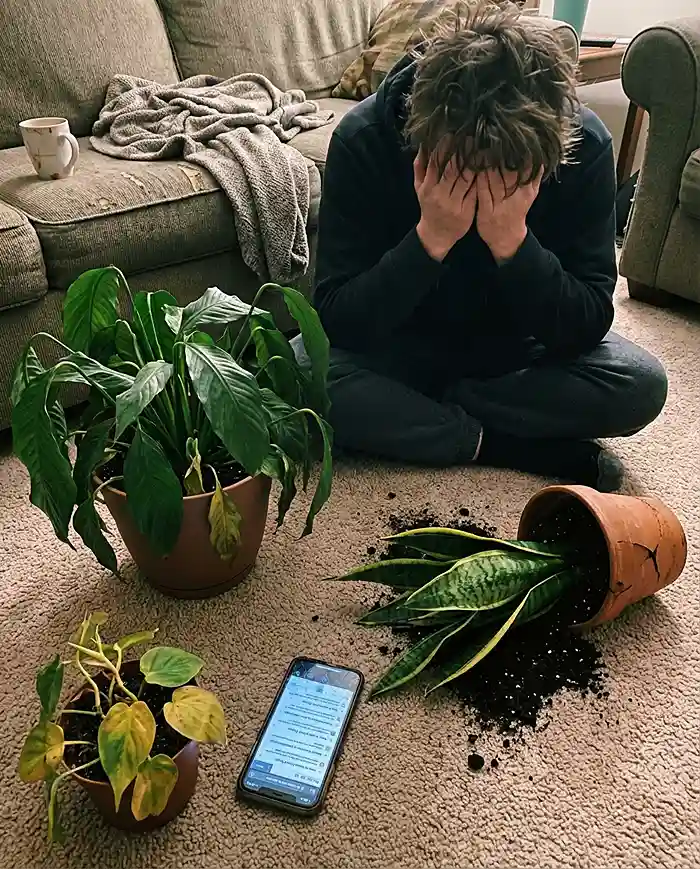
Ever wonder why plant shopping feels so good in the moment and so terrible by Wednesday? There’s a neurological pattern behind it, and once you see it, you can’t unsee it:
- Anticipation — scrolling nursery websites, watching plant haul videos, mentally redesigning your living room.
- Preparation — researching pots, soil mixes, grow light specs. You feel productive. You feel ready.
- Shopping — the peak. Dopamine floods your system the moment you swipe your card.
- Purchase Crash — the spike collapses. You’re home. Fifteen plants stare at you. You have no plan.
By week two, leaves are yellowing, soil is bone-dry in some pots and swampy in others, and guilt has replaced excitement. But here’s the thing most people miss — this was never a skill problem. It was a dopamine-driven decision disguised as a gardening one. And learning how to start a garden without getting overwhelmed means recognizing that impulse before it empties your wallet and your motivation.
Finding “The Number”: How to Know Your Actual Plant Capacity
The “Water Bottle Test” — A Brutally Honest Burnout Check
Psychologist Dr. Diana Hill uses a simple clinical indicator for burnout: if a basic daily task — washing a water bottle, making your bed, watering one single pot — feels like “too much,” you’ve already exceeded your capacity.
Try this right now. No judgment. If the thought of watering your plants tonight makes you sigh instead of smile, you don’t need better discipline. You need fewer plants. Full stop.
Quality Over Quantity — Your “Number” Is Nobody Else’s Business
I call it “The Number” — the exact quantity of plants you can care for while still feeling joy, not obligation.
Your Number is deeply personal. A single parent juggling two jobs might genuinely thrive with three pots on a sunny windowsill. A retiree with a wraparound porch might happily manage twenty. Neither number is more “valid.” The right number is the one that keeps you in the soft fascination zone — where gardening feels like rest, not work.
The 5-Plant Rule for Your First 90 Days

Here’s my framework, and I’m not budging on it: commit to only 5 plants for your first 90 days.
That’s it. Five. I know it feels restrictive. I know your Pinterest board has 47 pins. But in those 90 days, you’ll learn each plant’s specific language — when your pothos droops because it’s thirsty (and perks up two hours after watering, every single time), when your snake plant’s soil needs to dry completely between drinks, when your herbs are telling you they want more sun.
After 90 days, you’ll add plants from knowledge, not impulse. That’s the difference between a garden that grows and one that dies in a guilt spiral.
The Beginner’s Indestructible Starter Kit — Plants That Won’t Gaslight You
Let’s get specific. These are the best plants for beginners — not because some algorithm said so, but because they genuinely forgive the mistakes you’re going to make. And you will make them. That’s fine.
Indoor “Low-Neglect” Champions
- Pothos — Handles low to bright indirect light like a champ. Droops dramatically when thirsty, bounces back within hours. It’s basically the Labrador of houseplants — expressive, forgiving, impossible to truly upset. It teaches you to read plant body language.
- Snake Plant (Dracaena trifasciata) — Tolerates low light and genuinely prefers you forget about it for weeks. This one teaches you that neglect is sometimes the correct care strategy. Revolutionary concept, I know.
- ZZ Plant — Stores water in its chunky rhizomes and survives drought like it was built for it. Grows slowly. Teaches patience. Nearly impossible to kill unless you drown it with love (and water).
- Spider Plant — Throws off baby plants (pups) like confetti, giving you early propagation wins. The instant gratification plant.
- Aloe Vera — Bright light, infrequent water, well-drained soil. That’s the whole care sheet. It teaches you that overwatering kills faster than underwatering — a lesson that applies to 90% of houseplants.
Outdoor “Quick Win” Favorites
Beginners need fast visible results. Waiting four months to see if something’s alive is a motivation killer. These deliver:
- Sunflowers — Germinate in 7–10 days. Bloom in 60–70 days. Watching a sunflower go from seed to six feet tall is the single best confidence builder in gardening.
- Zinnias — Seed to bloom in about 60 days. Cut a flower, and the plant grows two more. They literally reward you for harvesting.
- Cosmos — Thrive in poor soil with almost zero watering. They bloom from midsummer to frost and attract pollinators like crazy.
- Mint — Aggressively easy. Grow it in a contained pot (seriously, contain it, or it’ll annex your entire yard). Harvestable within weeks.
- Thyme — Drought-tolerant, pest-resistant, and useful in the kitchen. Thrives on well-drained soil and benign neglect.
If you’re working with a balcony or a small patio, our Small-Space Gardening Monthly Maintenance Calendar for Beginners breaks down exactly what to do each month so you never have to guess what’s next.
Species to Skip in Your First Season
Not forever. Just not yet.
- Maidenhair Ferns — Need consistently high humidity and evenly moist soil at all times. One missed watering and those delicate fronds crisp up irreversibly. They’re gorgeous and absolutely unforgiving.
- Moth Orchids — Require precise light, specific watering cycles, and bark-based media that feels counterintuitive to new growers. Most beginners overwater them into root rot within a month.
- Fiddle Leaf Figs — Punish every inconsistency. Drafts, light changes, irregular watering — any of these triggers dramatic leaf drop that’ll make you question your life choices.
These are aspirational plants. Earn them after your 90 days.
How to Start a Garden Without Getting Overwhelmed: Logistical Shortcuts That Do the Work for You
Strategy beats effort every time. These shortcuts reduce the mental and physical load of plant care so you can actually enjoy what you’re growing.
Work With Your Energy, Not Against It
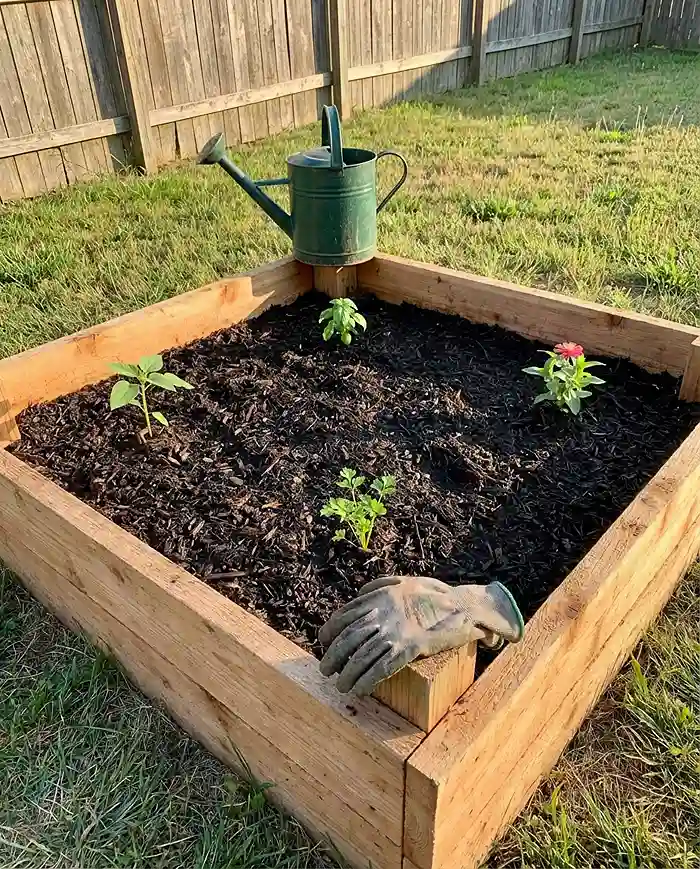
Raised beds and vertical gardening bring the garden up to you. Less bending. Less kneeling. Less “I threw out my back repotting a tomato.”
A 4×4 raised bed is genius for beginners because it’s a built-in boundary. You can’t overplant if the space physically won’t allow it. Fill it with quality soil rich in organic matter, and you’ve got a contained, productive, manageable garden with a hard limit baked right into the design.
The Mulch “Soapbox” (I Will Not Apologize for This)
If you do one single thing beyond planting, mulch your soil. I will preach this until I’m composted.
Spread 2–3 inches of organic mulch — shredded leaves, straw, wood chips — around your plants. This one action suppresses weeds, retains soil moisture, and regulates soil temperature. That’s three recurring tasks eliminated by doing one thing once.
Mulch is the highest-ROI move in beginner gardening, and it’s not even close.
Tech for the Gardener Who’s Already Tired
A few inexpensive tools can absorb directed attention tasks entirely:
- Automated watering stakes — terracotta spikes that wick moisture into soil from a water reservoir. Under $15 for a set. They don’t replace watering entirely, but they buy you grace days.
- Telescoping watering wands — reach hanging baskets and back-row pots without contorting your body into shapes it wasn’t designed for.
- Basic plug-in light timers — set consistent photoperiods for indoor grow lights without remembering to flip a switch twice a day.
Every tool that handles one task automatically is one more moment your brain gets to rest in soft fascination instead of grinding through directed attention. That’s Attention Restoration Theory working in your favor, on purpose.
The “Plant Pause”: How to Scale Back Without Feeling Like a Failure
Already overcommitted? Already staring at a shelf full of “meh” plants you feel weirdly guilty about? This section is yours.
The Art of the Honest Purge
Look at your collection — really look at it. Some plants quietly drain your energy every time you walk past them. They’re not dead. They’re not thriving. They’re just… there, making you feel inadequate. Those are the ones to let go.
Run every plant through this Three-Question Removal Checklist:
- Does it need daily “babysitting” to survive?
- Is it redundant — a third pothos doing nothing the first two don’t already handle?
- Do you genuinely love it, or do you just feel responsible for it?
If a plant fails two of three, rehome it. Give it to a neighbor. Post it on a local plant swap group. Release the guilt — that plant will probably do better with someone who actually wants it.
Propagation Over Purchasing — The Smarter Dopamine Hit
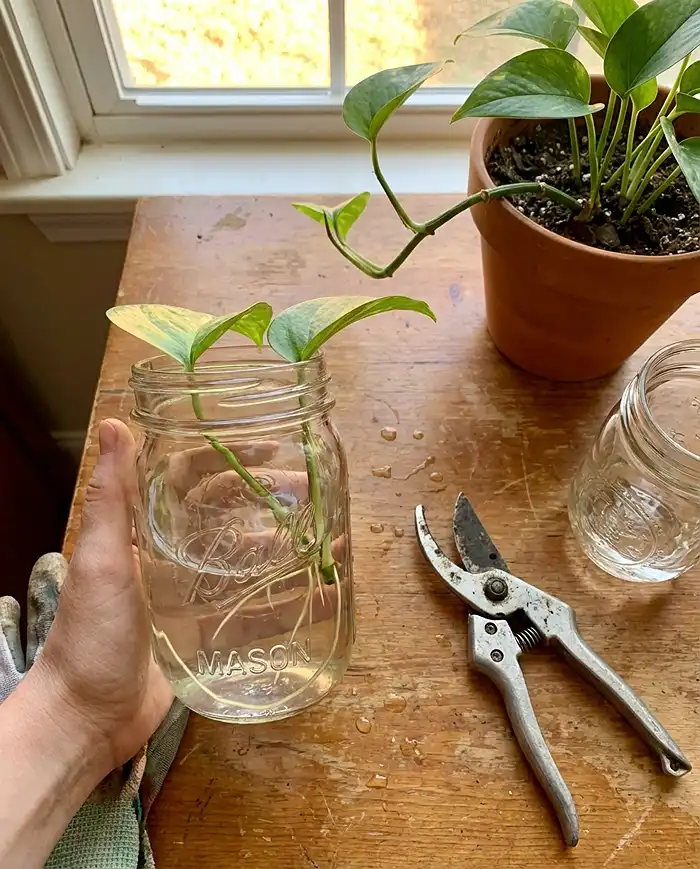
When the urge to buy new plants hits — and it will, because that dopamine loop doesn’t quit — propagate from what you already own instead.
Snip a pothos cutting and root it in water. Separate a spider plant pup. Divide your mint (it’s begging you to, honestly). Propagation deepens your connection to the plants you already have, costs absolutely nothing, and gives you “pre-paid gifts” for friends who compliment your shelf.
Best part? It scratches the same itch — anticipation, effort, reward — without the purchase crash. You get the dopamine. You keep your budget. Everybody wins.
Gardening Is About Progress, Not Perfection
A successful garden isn’t the one with the most plants. It’s the one that fits your actual life — your schedule, your energy, your space, your Tuesday.
Starting small isn’t settling. It’s the strategy. The 5-Plant Rule isn’t a ceiling; it’s a foundation you build from once you genuinely know your capacity. And on the low-energy days — the days where you don’t water, don’t prune, don’t do anything at all — just sitting near your plants still counts. That’s soft fascination. That’s Attention Restoration Theory doing its job. That’s the whole reason people garden.
The goal was never 50 plants. The goal was joy.
Start with 5. Give yourself 90 days. Then decide.
FAQ: How to Start a Garden Without Getting Overwhelmed
What is plant parent burnout?
Plant parent burnout is the emotional and mental exhaustion caused by taking on more plant care than your time and energy can realistically support. It turns gardening from a restorative hobby into another source of stress — and it’s far more common than people admit.
How many plants should a beginner start with?
Five. Start with 5 plants for your first 90 days. This gives you enough variety to stay engaged while keeping the care demands manageable enough to actually learn each plant’s specific needs.
What are the best plants for beginners who kill everything?
Indoors, go with Pothos, Snake Plant, ZZ Plant, Spider Plant, or Aloe Vera. Outdoors, Sunflowers, Zinnias, Cosmos, Mint, and Thyme are nearly foolproof. All of these tolerate inconsistency and teach fundamentals without punishing you for learning.
How do I know if I have too many plants?
Use the Water Bottle Test: if a simple daily task like watering one pot feels like a burden rather than a pleasant pause, you’ve exceeded your capacity. Scale back until plant care feels like rest, not work.
What is a “plant pause” and should I take one?
A plant pause is an intentional break from buying new plants. You focus on what you have, rehome what drains you, and propagate instead of purchase. If your garden feels like a chore, a plant pause is exactly what you need.