

Windowsill Herb Gardens
The secret to endless fresh herbs? Your kitchen window. This complete windowsill herb gardens guide shows exactly how—no green thumb required. Try it today!
A windowsill herb garden is exactly what it sounds like: a mini growing space perched on your window ledge where culinary herbs soak up sunlight and thrive indoors. And here’s the thing—this complete guide for growing herbs on your window will show you that it’s way easier than you’d think to pull off.
Why does growing herbs on your windowsill work so ridiculously well? Your window ledge creates this perfect little microclimate—natural light streaming in, stable indoor temps, and zero competition from outdoor pests.
Plus (and this surprised me too), indoor-grown herbs often pack more flavor punch than outdoor ones because they develop higher essential oil concentrations. Who knew?
Whether you’re dipping your toes into indoor gardening for small spaces, living in an apartment with zero outdoor real estate, or just tired of watching expensive herb packages rot in your fridge—this guide’s got you covered.
Table of Contents
The Science of the Windowsill Microclimate
Okay, I promise not to get too nerdy here, but understanding why your windowsill herb garden succeeds (or struggles) comes down to three things: light, temperature, and humidity. Nail these, and you’re golden.
Light Direction & Solar Orientation (This Is the Big One)
Here’s the deal—which direction your window faces basically determines your herb garden’s destiny. Dramatic? Maybe. True? Absolutely.
| Window Direction | Daily Light Hours | Suitable Herbs | Success Level |
|---|---|---|---|
| South-facing | 6–8+ hours | Basil, Rosemary | Excellent |
| East-facing | 4–6 hours | Parsley, Chives | Good |
| West-facing | 4–6 hours (intense) | Oregano, Thyme | Moderate |
| North-facing | 2–4 hours | Mint only (slow) | Limited |
South-facing windows are the MVP for any windowsill herb garden. They deliver that long, consistent sunlight that Mediterranean herbs absolutely crave. If you’ve got one, congratulations—you’ve basically won the herb-growing lottery.
North-facing windows? I won’t sugarcoat it—they’re tough. Mint can hang in there (barely), but most herbs will sulk. You’ll probably need grow lights, which we’ll talk about shortly.
Here’s something most guides skip: seasonal daylight changes mess with everyone. Winter sunlight can drop by 50% compared to summer, so that south-facing window that rocked in July might struggle in December.
Pro tip: Keep your pots at least 12 inches from the glass during winter. Cold windowpanes can literally freeze-damage your basil overnight. Ask me how I learned that one.
Photobiological Optimization (Fancy Words, Simple Concept)
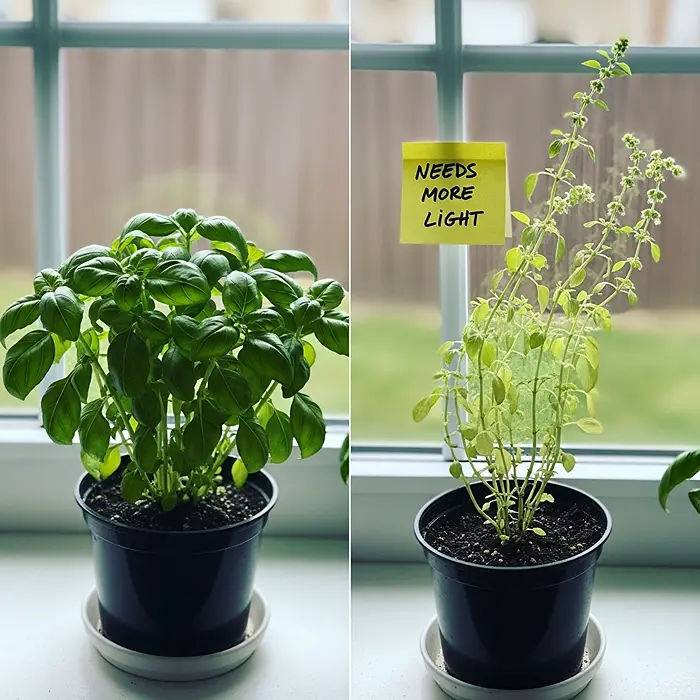
Stay with me here—PAR (Photosynthetically Active Radiation) is just the specific light wavelengths plants actually use to grow. Unlike lumens (which measure how bright light looks to us), PAR measures what plants actually absorb.
When your windowsill herb garden doesn’t get enough PAR, you’ll notice etiolation—basically, your herbs get tall, skinny, and pale as they desperately stretch toward any light source. It’s like watching plants do yoga, except sad.
Signs your herbs are light-starved:
- Stems stretching with huge gaps between leaves
- Leaves turning pale or yellowish
- Plants leaning dramatically like they’re trying to escape
- Growth that’s slower than your morning coffee brewing
When natural light isn’t cutting it, LED grow lights for herbs save the day. Modern ones run cool, use minimal electricity, and actually work. Position them 12–24 inches above your plants, run them 12–14 hours daily, and watch your herbs perk right up.
According to Gardener’s Supply Company, full-spectrum LEDs between 5000–6500 Kelvin mimic natural sunlight best for herbs and leafy greens.
Temperature & Draft Management
Herbs are basically Goldilocks—they want temperatures that are just right. Aim for 65–70°F (18–21°C), and your windowsill herb garden will thank you.
The sneaky window-chill problem: Even in a toasty house, cold winter glass radiates frigid temps onto nearby plants. Your herbs can get frost damage while you’re sleeping in a 70°F room. Unfair, right?
Things that’ll stress your herbs out:
- Heating vents blasting hot, dry air directly on leaves
- Drafty, poorly-sealed windows
- AC units creating temperature roller coasters
- Being too close to stovetops (tempting, but risky)
Humidity hack: Group your pots together! As plants transpire, they create a little humid bubble around themselves. It’s like a tiny plant support group.
Container Physics & Substrate Engineering
Alright, let’s talk pots and dirt. I know—not the sexiest topic. But honestly, your container and soil choices can make or break your windowsill herb garden faster than anything else.
Choosing the Right Pots (Material Actually Matters)
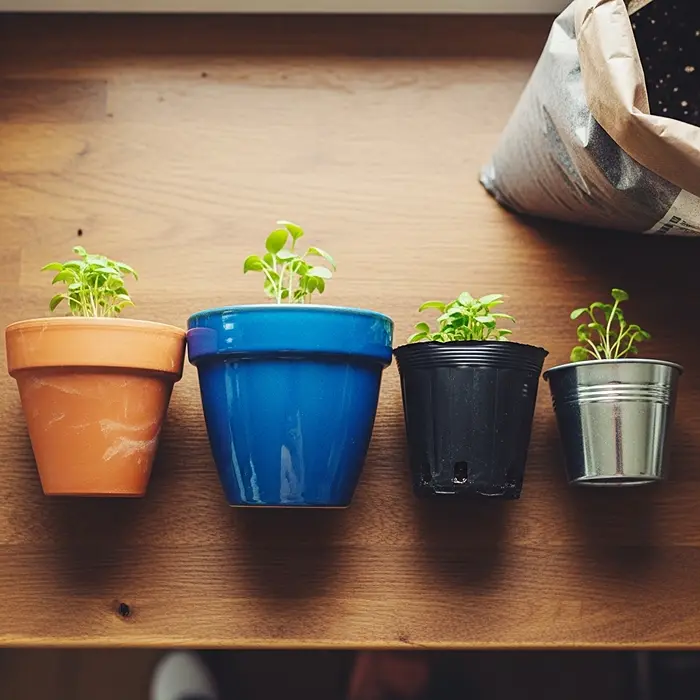
Different pot materials behave differently with water and air—and herbs have opinions about this.
| Material | Drainage | Breathability | Best For |
|---|---|---|---|
| Terra cotta | High | High | Mediterranean herbs |
| Glazed ceramic | Moderate | Low | Mint, Parsley |
| Plastic | Moderate | Low | Beginners |
| Metal | Low | None | Decorative only (line it first!) |
Drainage holes are non-negotiable. I cannot stress this enough. No drainage = soggy roots = dead herbs = sadness. Every single container needs at least one hole in the bottom. No exceptions. Not even that adorable vintage teacup. (Okay, maybe the teacup if you drill a hole first.)
Size matters: Shoot for 4–6 inch diameter pots minimum per herb. Tiny pots dry out constantly and cramp roots; giant pots stay too wet.
The mint situation: Here’s the thing about mint—it’s a bully. Those underground rhizomes spread like gossip, and before you know it, mint has colonized your entire herb container. Always, always give mint its own pot. Consider it the herb equivalent of that friend who needs their own hotel room.
The Right Soil (Garden Dirt Is NOT It)
I get it—scooping free dirt from your backyard seems smart. It’s not. Here’s why using garden soil in your windowsill herb garden is a recipe for disappointment:
- It compacts into a brick inside containers
- Stays way too wet without proper aeration
- Often carries pests, diseases, and weed seeds (surprise!)
- Drains terribly in pots
What you actually want is a soilless potting mix containing:
- Peat moss or coco coir: Holds moisture without drowning roots
- Perlite: Those white crunchy bits that create air pockets
- Compost: Slow-release nutrients and beneficial microbes
For rosemary and thyme lovers: These Mediterranean herbs evolved in rocky, fast-draining hillsides. Mix in extra perlite (about 2:1 ratio) to prevent “wet feet”—chronic moisture that makes these drought-adapted plants miserable.
Best Herbs for Windowsill Gardens (Botanical Profiles)
Not all herbs play well with every window. Match your herbs to your light situation, and you’ll look like a gardening genius.
Sun-Loving Herbs (South/West Windows)
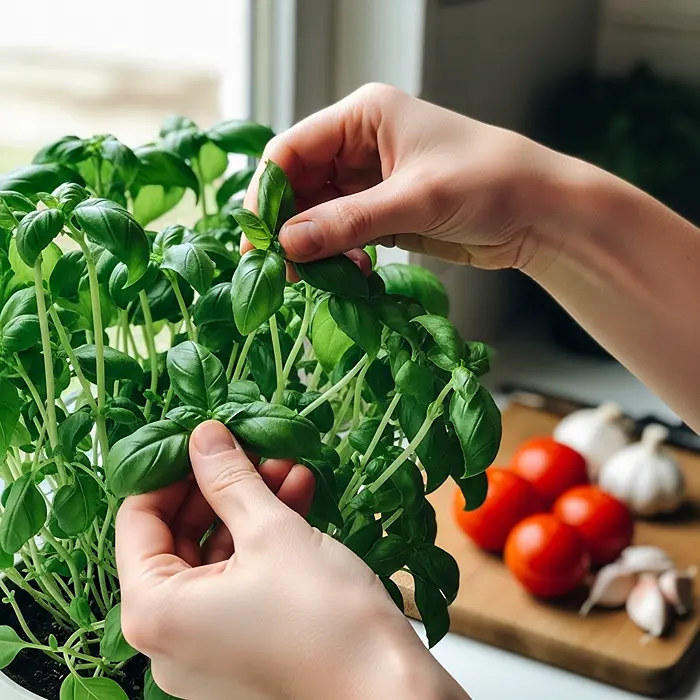
Basil is the diva of the windowsill herb garden—it demands 6–8 hours of direct sun and throws a fit below 50°F. But keep it happy, and it rewards you with enough pesto to last all summer. The secret? Harvest frequently. Every time you pinch off stems, basil branches out bushier.
Rosemary needs bright light and excellent drainage, period. This woody Mediterranean native despises wet roots more than anything. When in doubt, underwater it. Seriously—rosemary forgives drought way easier than overwatering.
Oregano and thyme share rosemary’s tough-love preferences. Both evolved in rocky, dry terrain and genuinely prefer being slightly neglected. If you’re the forgetful type, these are your herbs.
Shade-Tolerant & Beginner-Friendly Herbs
Mint is basically the cockroach of herbs (in a good way?). It tolerates lower light, laughs at inconsistent watering, and grows so aggressively you’ll be begging friends to take some. Perfect for beginners, terrible for mixed containers. Isolation required.
Chives develop cute grass-like clumps, tolerate partial sun, and keep producing as long as you keep cutting. They’re genuinely hard to kill, which—let’s be real—is exactly what some of us need.
Parsley handles east-facing windows that would stress sun-lovers. Fair warning: starting from seed takes forever (2–4 weeks to germinate). Buy a starter plant unless patience is your superpower.
Herb Comparison Table
| Herb | Light Need | Watering | Difficulty | Special Note |
|---|---|---|---|---|
| Basil | High | Moderate | Easy | Cold-sensitive drama queen |
| Mint | Medium | High | Very Easy | Must be isolated (spreads!) |
| Rosemary | High | Low | Moderate | Hates wet feet |
| Parsley | Medium | Moderate | Easy | Slow germination |
| Chives | Medium | Low | Very Easy | Cut-and-come-again magic |
Windowsill Herb Gardens Step-by-Step Setup Guide
Ready to actually build this thing? Let’s walk through setting up your windowsill herb garden from scratch.
Seeds vs. Starters vs. Cuttings
Seeds are cheapest but require patience—expect 4–8 weeks before harvesting anything. Great if you enjoy the full journey.
Starter plants cost a few bucks more but deliver instant gratification. You can literally harvest dinner tonight. For anyone new to indoor gardening for small spaces, starters eliminate the guesswork.
Cuttings are basically free plants. Basil and mint root ridiculously easily—just stick 4-inch stems in water, change it every few days, and transplant once roots hit 2 inches. Magic.
Planting Protocol
- Fill your container with soilless potting mix, leaving about an inch of space at the top.
- Double-check those drainage holes aren’t blocked.
- Plant at the right depth—match the original soil level for transplants, barely cover seeds.
- Water gently until it drains out the bottom.
- Place in your optimal light zone and… wait.
Watering Strategy (Where Most People Mess Up)
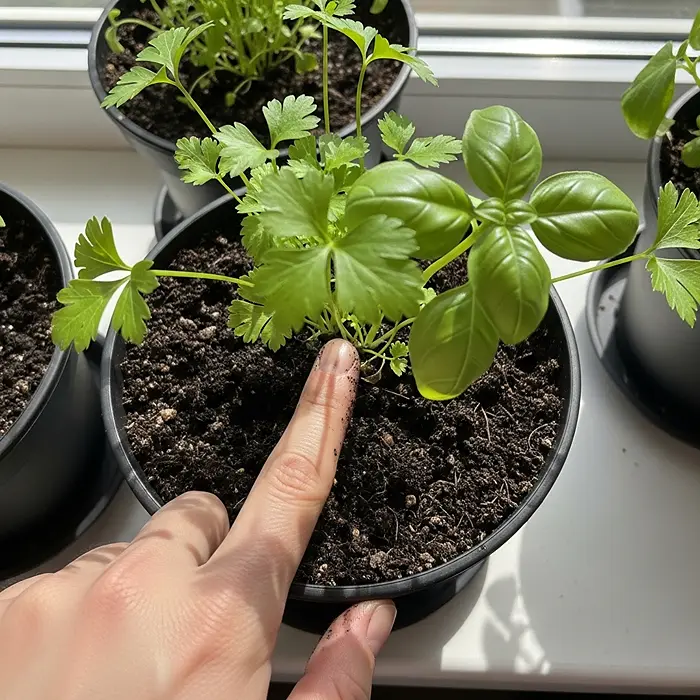
The finger test: Stick your finger one inch into the soil. Dry? Water. Moist? Wait. Simple, effective, free.
Bottom-watering method: This is a game-changer for your windowsill herb garden. Set pots in a shallow tray of water for 20–30 minutes, let soil absorb moisture from below, then remove. Prevents fungus gnats and keeps soil surfaces dry.
The top-inch rule: Never water until that top inch dries out. Constantly wet soil invites root rot, fungus gnats, and general plant depression.
Fertilizing Indoors
Container herbs need feeding since nutrients wash out with every watering. Apply half-strength liquid fertilizer every 3–4 weeks during active growth.
Skip the high-nitrogen stuff—it makes herbs grow fast but taste bland. You want concentrated flavors, not jungle plants.
The One-Third Harvest Rule
Never hack off more than one-third of your plant at once. I know it’s tempting when you’re making a giant batch of pesto, but over-harvesting stresses plants and slows recovery.
Regular pinching actually helps, though. It prevents apical dominance (where plants focus all energy on one central stem) and encourages bushy, productive growth. More branches = more harvests.
Common Problems & Quick Fixes
Even seasoned gardeners hit snags. Here’s how to troubleshoot your windowsill herb garden when things go sideways.
Yellow Leaves
Usually means: Overwatering (the #1 killer), poor drainage, or nutrient deficiency.
Fix it: Check that drainage holes aren’t clogged, cut back on watering frequency, and make sure pots aren’t sitting in collected water. If drainage’s fine, try a balanced fertilizer.
Weak / Leggy Growth
Usually means: Not enough light. Your herbs are literally stretching desperately toward whatever light they can find.
Fix it: Move to a brighter window immediately, or add LED grow lights for herbs. Rotating pots 90 degrees every few days also promotes even growth instead of that dramatic lean.
Fungus Gnats
Usually means: Your soil surface stays too wet. These annoying tiny flies breed in damp conditions.
Fix it: Switch to bottom watering, sprinkle a thin sand layer on the soil surface, and let that top inch dry completely between waterings. They’ll disappear.
Integrated Pest Management (IPM) Indoors
Here’s a universal truth: preventing pests beats fighting infestations every single time. Build good habits for your windowsill herb garden, and you’ll rarely deal with critters.
Common indoor troublemakers: Aphids, whiteflies, and fungus gnats show up most often.
Natural weapons:
- Castile soap spray: 1 tablespoon per quart of water, sprayed on affected leaves
- Neem oil: Dilute per package directions for gentle, organic pest control
- Yellow sticky traps: Catch flying pests before populations explode
Check your herbs weekly—especially leaf undersides where pests love hiding. Catch problems early, solve them easily.
DIY Windowsill Planters & Small Space Solutions
Limited space? No budget for fancy containers? No problem. Creative solutions abound for your windowsill herb garden.
Upcycled Planters
Mason jars work with a drainage workaround—add 2 inches of gravel before soil since drilling glass is tricky.
Coffee mugs become legit planters if you drill drainage holes with a ceramic bit. Suddenly that chipped mug has purpose again.
Milk cartons are free, waterproof containers after cleaning and hole-punching. Not glamorous, but effective.
Vertical & Apartment Solutions
Tiered shelving multiplies your growing space within a single window’s light zone. Stack three levels where you previously had one.
Hanging planters use overhead space, freeing your windowsill for more pots. Great for trailing herbs like oregano.
Mini herb walls with mounted pocket planters create living kitchen art while producing actual harvests. Form meets function.
For more creative approaches to maximizing limited growing areas, check out our guide to indoor gardening for small spaces.
Cost Efficiency & Self-Sufficiency
Let’s talk money—because a windowsill herb garden actually makes financial sense beyond just tasting good.
The math: Fresh store-bought herbs run $2–4 per package and wilt within days. One $3–5 basil plant produces equivalent harvests for an entire season. The savings compound fast.
Annual impact: Growing just basil, mint, and parsley can save $100+ yearly for households that regularly buy fresh herbs. That’s real money.
Zero waste: Harvest only what you need, when you need it. No more discovering liquified cilantro in your fridge’s vegetable drawer. (We’ve all been there.)
Peak freshness: Your windowsill herb garden delivers maximum flavor and nutrition the moment your recipe needs it. No wilted sadness, just vibrant herbs.
Biophilic Design & Mental Wellness
Beyond cooking benefits, your windowsill herb garden genuinely improves how your space feels—and potentially how you feel in it.
Research consistently shows that indoor plants reduce stress. Something about tending living things and having greenery in your sightline measurably lowers cortisol levels. Science says so.
Kitchen productivity often improves when the space feels pleasant and inviting. A little windowsill herb garden creates that welcoming vibe that makes cooking feel less like a chore.
And honestly? There’s real satisfaction in nurturing something from seed to harvest. It’s a small daily win in a world that doesn’t always provide them.
FAQ Section
Which herbs grow best on a windowsill?
For a successful windowsill herb garden, start with basil, mint, chives, parsley, oregano, and thyme. Match sun-lovers to south windows and shade-tolerant varieties to east-facing spots for best results.
How much sunlight do windowsill herbs need?
Most herbs in a windowsill herb garden need 6–8 hours of direct sunlight daily—south-facing windows are ideal. Shade-tolerant herbs like mint and parsley can manage with 4–6 hours.
Can I use garden soil for indoor herbs?
Nope—garden soil compacts in containers, drains poorly, and may carry pests or diseases. Your windowsill herb garden needs soilless potting mix formulated specifically for containers.
How do I prevent fungus gnats?
Keep your windowsill herb garden gnat-free by bottom watering, ensuring proper drainage, and letting the top inch of soil dry between waterings. Consistently wet soil surfaces invite these pests.
When should I add grow lights?
Supplement your windowsill herb garden with LED grow lights for herbs when plants show leggy, stretched growth, during short winter days, or if you’re stuck with north-facing windows.
How often should I harvest from my windowsill herb garden?
Harvest regularly—but never more than one-third at a time. Frequent light harvesting encourages bushier growth and bigger yields from your windowsill herb garden over time.
Ready to transform your kitchen window? Start your windowsill herb garden this weekend—your future self (and your taste buds) will thank you.