

Why Herbs Stop Growing in Fall
Confused why your once-thriving container herb garden suddenly stalled? Here’s why herbs stop growing in fall, and exactly what to do to save your harvest.
Table of Contents
Understanding the Autumn Herb Stall in Container Gardens
I grow herbs in containers on a west-facing balcony in Chicago, zone 6a, and every September I get the same panicked feeling. The basil that grew four inches a week in July just… stops.
If your small balcony garden looks the same way, take a breath. This isn’t something you broke. It’s a natural biological shift, and your herbs are responding to the season exactly the way they’re supposed to.
The Biological Triggers for Fall Dormancy
Herbs read the environment, not the calendar. As light and temperature shift in autumn, plants flip an internal switch that trades leaf production for survival. Two cues drive this: daylight and soil temperature.
Shorter Daylight Hours and Photosynthesis
This is photoperiodism: plants track day length to sense the season. By late September in most of the U.S., you’ve lost close to two hours of daylight compared to the summer solstice.
Lower sun angles also mean weaker light even during the hours it is out. Less light means less photosynthesis, which means less energy for new leaves. Your herbs aren’t dying, they’re conserving fuel for winter.
I noticed this hard in my own autumn balcony garden setup, where my east-facing pots stalled a full two weeks before a friend’s south-facing ones a mile away.
Dropping Soil Temperatures in Containers
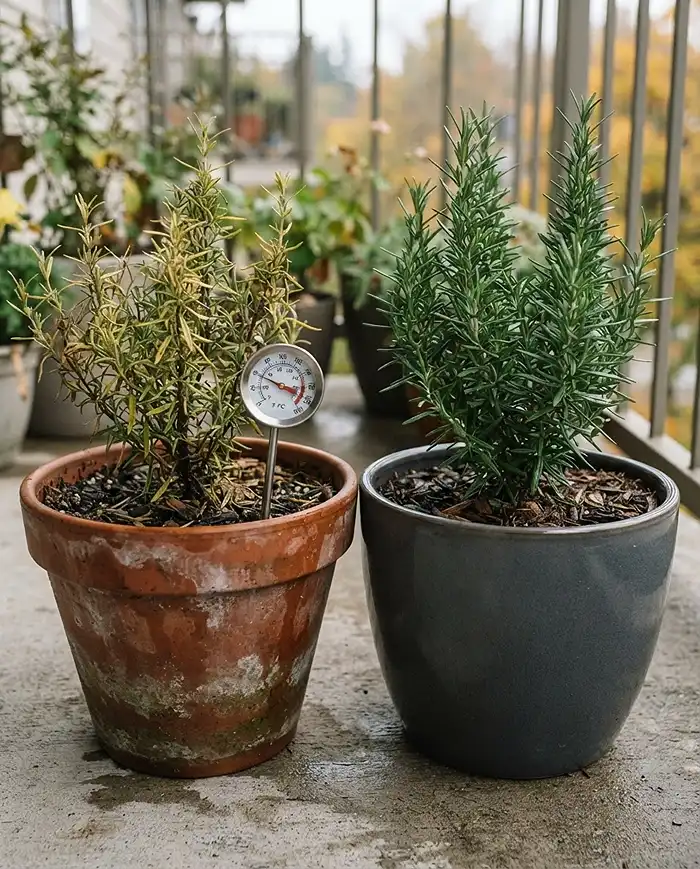
In-ground herbs have the earth’s thermal mass to buffer temperature swings. Pots don’t. A 10-inch terracotta container can drop 10 to 15 degrees colder than garden soil overnight once fall arrives.
Cold roots slow their uptake of water and nutrients, especially nitrogen and phosphorus, dramatically. That’s why fertilizing a stalled fall herb usually does nothing. The roots simply aren’t pulling it in fast enough to matter.
My rosemary in an unglazed clay pot went nearly dormant by mid-October one year, while the same variety in a thicker glazed ceramic pot three feet away kept ticking along for another three weeks.
Diagnosing Environmental Stress vs. Natural Dormancy
Before you panic, run a quick triage. Is your plant going to sleep for winter, or is it actively dying from a fixable mistake? The answer usually comes down to two things: what kind of herb it is, and how you’ve been watering it.
Annuals vs. Perennials: Knowing Your Herb’s Lifespan
Tender annuals like basil, cilantro, and dill are genetically programmed to complete their life cycle in one season and die at first frost, full stop. Hardy perennials like rosemary, thyme, and sage just power down for winter.
| Herb Type | Examples | What Happens in Fall |
|---|---|---|
| Tender annual | Basil, cilantro, dill | Dies completely at first frost; harvest before then |
| Hardy perennial | Thyme, sage, chives, mint | Enters dormancy; regrows in spring |
| Tender perennial | Rosemary, bay laurel | Needs indoor protection below 30°F (zone 7 and colder) |
Any small balcony garden ideas list worth reading will tell you to plan your fall herb bench around this split, since annuals and perennials need completely different endgames once the weather turns.
Overwatering and Autumn Root Rot
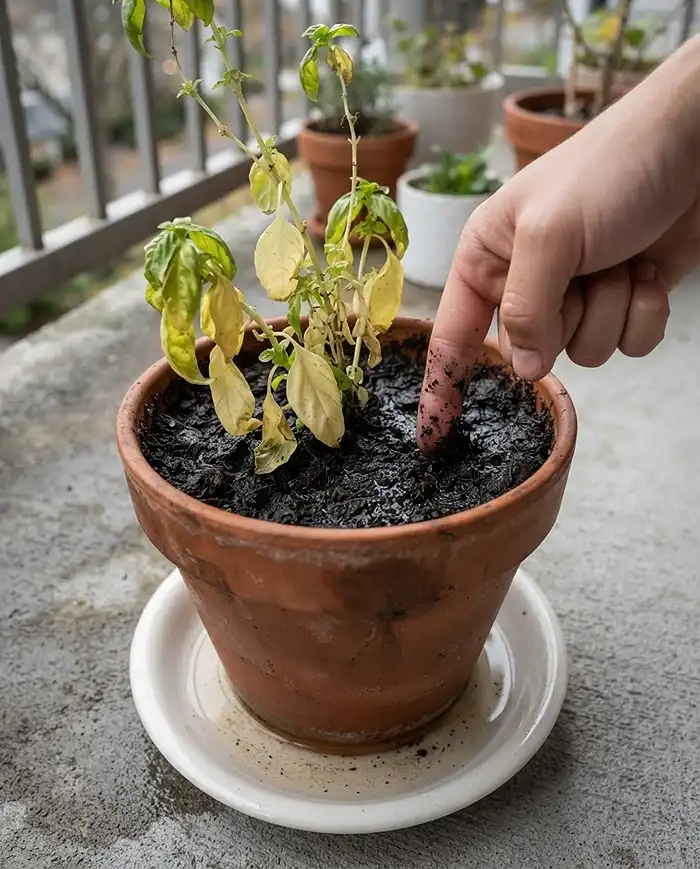
The single most common mistake I see, and one I’ve made myself, is watering a fall container herb garden like it’s still July. Cooler air means slower evaporation, so soil that felt dry in summer now stays soggy for days.
Waterlogged, cold soil suffocates roots and causes root rot, which looks a lot like dormancy: yellowing leaves, drooping stems, and halted growth. I lost an entire pot of parsley this way in October 2023 by sticking to my summer schedule.
Step-by-Step Action Plan for Stalled Balcony Herbs
Once you know what you’re dealing with, the fix is mostly about timing. Here’s the order I follow every fall to protect what’s salvageable and set up next year’s growth.
Harvesting and Preserving Dying Annuals
Harvest every leaf of your tender annuals before the first hard frost. Don’t ration them. Once night temperatures dip into the low 40s Fahrenheit, that basil is on borrowed time.
- Freeze basil pureed with olive oil in ice cube trays for instant pesto starters
- Air-dry cilantro and dill stems upside down in a paper bag for two weeks
- Chop and freeze parsley flat on a tray before bagging, so leaves don’t clump
Pruning and Prepping Perennials for Winter
Give perennials a light, structural trim, removing only dead, damaged, or diseased stems. Do not hard prune. Cutting back hard exposes the crown, the base where stems meet roots, to fatal frost damage.
I made this mistake on a sage plant in my second year of gardening, cutting it back by two-thirds in October. It never came back the following spring. Now I limit fall pruning to under 20 percent of the plant.
Essential Gear for Extending the Herb Season
A little equipment buys you weeks of extra harvest. You don’t need much, but the right pieces make a real difference for a container herb garden on an exposed balcony.
Frost Blankets and Container Insulation
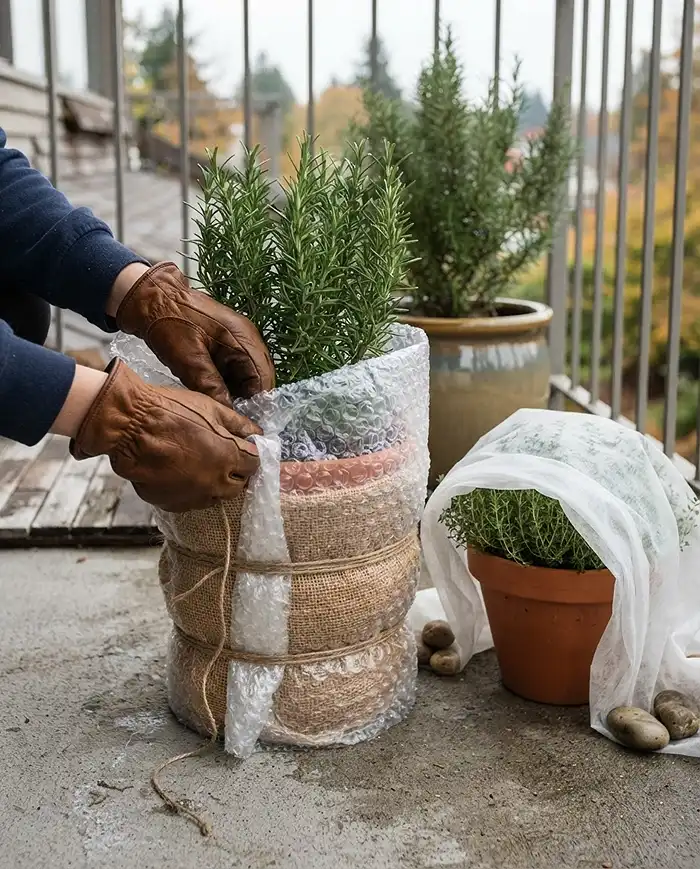
Wrap pots in bubble wrap or burlap to insulate exposed roots, which get far colder than in-ground roots. Then drape a horticultural frost blanket over the plants overnight whenever frost is forecast.
This combination has stretched my parsley and thyme harvest by three to four weeks most years. Pull the blanket off each morning once temperatures climb back above freezing so the plants still get light.
Grow Lights for Transitioning Indoors
A winter windowsill almost never provides enough light on its own. Most apartments get a fraction of the daily light hours herbs need, so plants moved indoors without help turn pale and leggy fast.
A basic full-spectrum LED grow light, run for 12 to 14 hours a day, fixes this. I keep one clipped above my kitchen window herbs from November through March and see zero legginess compared to years I skipped it.
Adjusting Fall Maintenance Routines
Sticking with summer habits into autumn is one of the fastest ways to kill container herbs. The rules change once temperatures drop, even if the plant still looks green and healthy.
Cutting Back on Water and Fertilizer
Switch to the two-inch finger test: push a finger two inches into the soil, and only water if it’s dry at that depth. In fall, this often means watering half as often as you did in summer.
Stop nitrogen fertilizer entirely. Nitrogen pushes soft, tender new growth, and that new growth has no time to harden off before frost hits. Weak, watery tissue freezes and kills the whole plant almost instantly.
Common Problems and Solutions
Cool nights combined with lingering daytime humidity create two recurring headaches for fall herb growers. Both are manageable if you catch them early.
Powdery Mildew on Stagnant Autumn Leaves
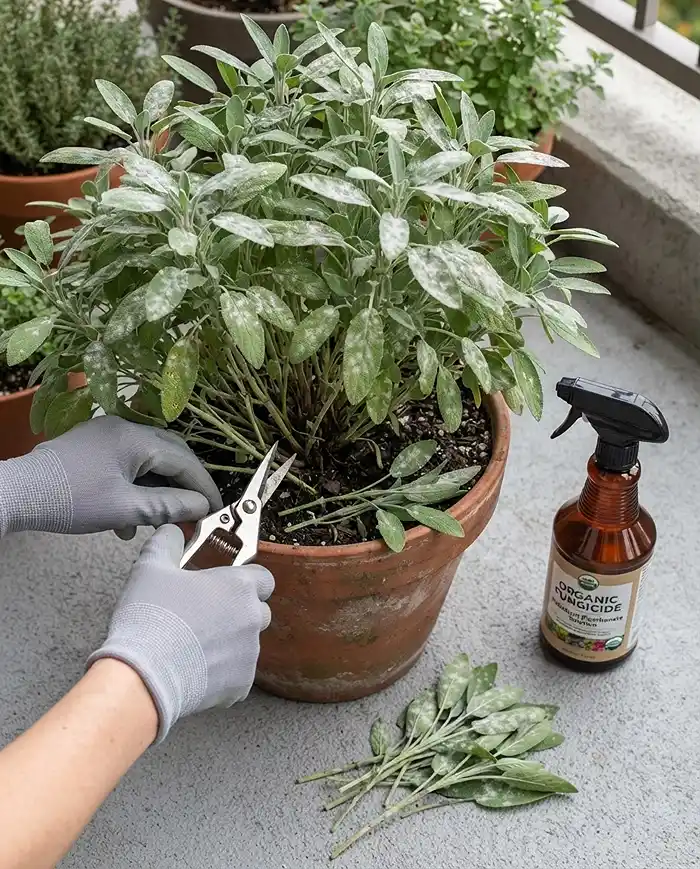
That white, dusty coating on leaves is powdery mildew, a fungus that thrives when air sits still and humidity lingers. Slowed growth means less airflow through the canopy, which makes fall containers especially vulnerable.
Mix one tablespoon of potassium bicarbonate with a gallon of water and spray affected leaves weekly. Thin out the densest inner growth on the plant to restore airflow, and avoid watering the foliage itself.
Pests Seeking Warmth in Potted Herbs
As outdoor temperatures fall, aphids and spider mites retreat deep into dense herb foliage looking for warmth, often clustering on the undersides of leaves where you won’t spot them right away.
- Hang yellow sticky traps near pots to catch and monitor flying aphids
- Spray insecticidal soap directly on pest clusters at dusk, when beneficial insects are less active
- Rinse leaves with a strong hose spray before bringing any plant indoors for winter
If you’re planning ahead for next year, pairing herbs with a few fall pollinator planters nearby can help keep beneficial insect populations up and pest pressure down.
why herbs stop growing in fall FAQs
Should I bring my balcony herbs indoors for the winter?
Bring tender herbs like basil indoors before nighttime temperatures drop below 50 degrees Fahrenheit (10 degrees Celsius). Cold-hardy Mediterranean herbs like thyme and mint actually need a period of cold dormancy and are better left outside in insulated pots.
Why is my basil turning black and dropping leaves in September?
Basil is extremely cold-sensitive and suffers cellular damage the moment nighttime temperatures dip into the low 40s Fahrenheit, which shows up as blackened, dropping leaves. This is a signal to harvest everything immediately before the plant rots.
Do I need to fertilize my herbs to force them to keep growing?
No. Fertilizing in fall interrupts a plant’s natural preparation for winter dormancy and forces weak, watery new growth that freezes and dies at the first frost, often taking the rest of the plant down with it.
Key Takeaways
Understanding why herbs stop growing in fall comes down to two forces: shrinking daylight and cooling container soil. Neither means your plants are failing.
- Sort your herbs into annuals (harvest everything before frost) and perennials (prune lightly, insulate, and let them rest)
- Cut watering frequency using the two-inch finger test, and stop nitrogen fertilizer completely
- Use frost blankets and insulation to stretch outdoor harvests, and add a grow light for anything moving indoors
- Watch for powdery mildew and pests seeking warmth as growth slows and airflow drops
For more on adapting your space this season, check out our guides to cool weather herbs for pots and building out fall container vegetables alongside your herb bench. For hardiness-specific pruning timing, NC State Extension’s guide to winterizing the herb garden is a solid reference.