

Fall Salad Container Garden: Best Crops for October
A fall salad container garden turns October into a second spring, growing sweet, crisp greens right on your balcony while summer crops fade. Here’s exactly what to plant and how.
I grow salad greens in containers on a north-facing balcony in zone 6b, and October is honestly my favorite month to do it. No squash bugs, no bolting, no wilting by 2pm. Just steady, cool growth that makes everything taste better.
Table of Contents
The Joy of October Salad Bowl Gardening
Think of October as a reset button. The pests that hammered your summer container vegetable gardening efforts are dying off, the sun is gentler, and cool-season greens actually prefer these conditions over the heat of July.
Last October I planted a 14-inch bowl with mesclun mix and had my first cutting in 21 days, something that never happens in August heat. The flavor was sweeter too, no bitterness at all.
Assessing Your Fall Balcony Microclimate
Before you plant anything, walk your space at different times of day. October light behaves differently than summer light, and where your containers sat in July often isn’t where they should sit now.
Tracking the Shifting Autumn Sun
Quick Answer: The autumn sun sits lower in the sky, so spots that were shaded in summer often get more direct light in October, and vice versa.
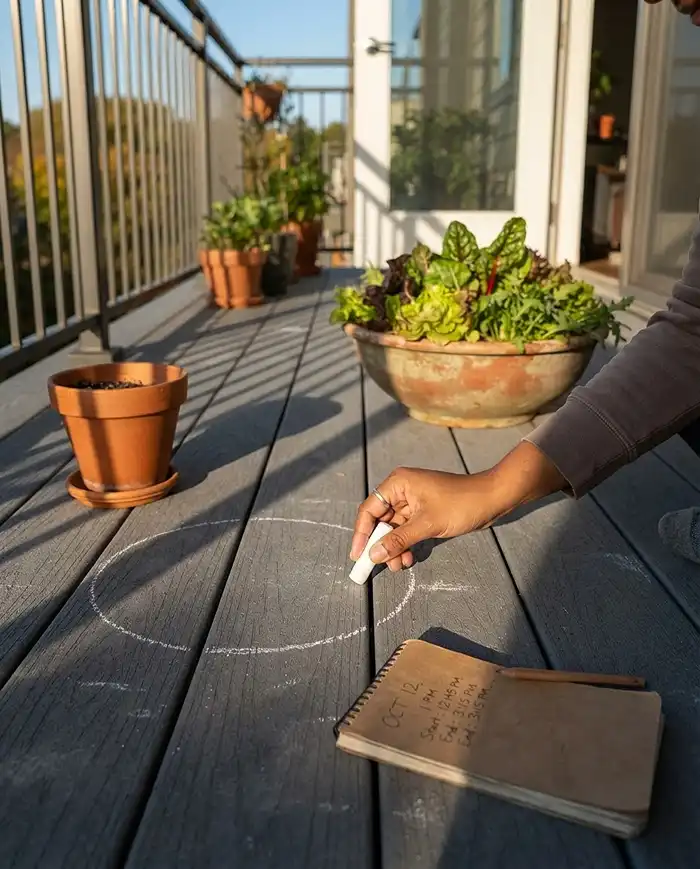
Spend one day tracking shadows on your balcony or patio, morning, noon, and late afternoon. Corners that baked your lettuce in July might now be your sunniest real estate.
- Aim for 4-6 hours of direct light for leafy greens in fall
- South and west exposures usually gain the most light as the season shifts
- Move containers weekly if needed as the sun angle keeps dropping through November
Pro Tip: Chalk-mark your container’s best spot on the railing or floor so you’re not guessing every week as the sun keeps shifting.
Frost Dates and Cold-Hardiness Zones
Quick Answer: Find your USDA hardiness zone and average first frost date first. This single piece of information determines whether you sow seeds directly or buy transplants for your October bowls.
If you’re in zone 7 or warmer, you likely have 6-8 more weeks of growing season and can direct-sow with confidence. In zone 5 or colder, transplants are your safer bet by mid-October.
| Zone | Approx. First Frost | October Strategy |
|---|---|---|
| 3-4 | Mid-September | Use mature transplants, protect nightly |
| 5-6 | Early-mid October | Transplants preferred; seeds only if sown by Oct 1 |
| 7-8 | Late October-November | Direct sow through mid-October |
| 9-10 | Rare or none | Direct sow anytime, greens grow all fall |
For a more detailed regional breakdown, check the guide to fall container vegetables before you buy seed.
Choosing the Best Containers and Soil
Leafy greens grow fast, but their roots stay shallow and fibrous. That changes what “the right pot” means compared to tomatoes or peppers.
Wide, Shallow Bowls for Fibrous Roots
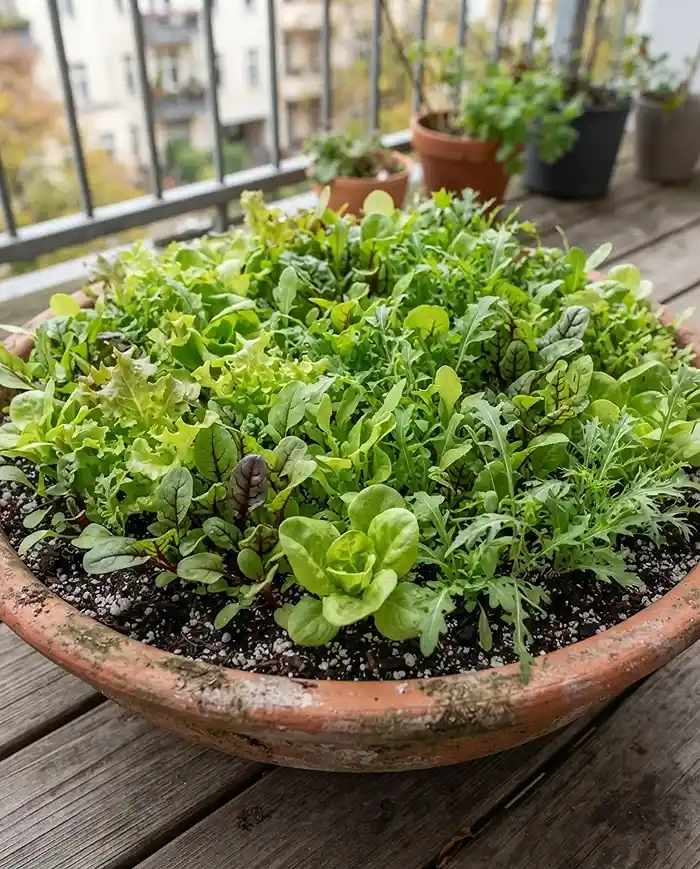
Quick Answer: Pick wide, 6-to-8-inch deep bowl planters or rectangular window boxes. Salad greens need horizontal surface area far more than depth.
I switched from tall 16-inch pots to a shallow 20-inch bowl two seasons ago and got nearly double the harvest per container, simply because I could fit three times as many plants across the surface.
- Minimum depth: 6 inches for most lettuces and mesclun
- Minimum depth: 8 inches for spinach and chard, which root slightly deeper
- Drainage holes are non-negotiable; fall rain plus overwatering drowns roots fast
Pro Tip: Unglazed terracotta dries out faster and helps prevent the soggy soil that causes fall root rot; glazed or plastic bowls hold moisture longer, which matters once nights turn cold.
The Ideal Moisture-Retentive Fall Soil Mix
Quick Answer: Blend premium organic potting soil with 30% perlite and a generous handful of worm castings per gallon of mix. This keeps soil fluffy and well-drained without going bone dry.
Straight potting soil compacts under fall rain and stays cold and wet, which invites root rot. The perlite keeps air pockets open even after a soaking.
| Component | Ratio | Why It Matters |
|---|---|---|
| Organic potting soil | 65% | Base nutrients and structure |
| Perlite | 30% | Drainage, prevents waterlogging |
| Worm castings | 5% | Slow nutrient release for greens |
Pro Tip: Skip peat-heavy mixes in fall; they hold too much water once daytime evaporation slows down in October and November.
Top Cool-Season Greens for October Pots
Not every green handles cool weather the same way. Some actually improve, some stall, and a few just melt at the first frost. Here’s what I’d actually plant.
Cut-and-Come-Again Lettuces and Mesclun
Quick Answer: Loose-leaf types like oakleaf, butterhead, and mesclun blends are the easiest salad greens in containers because they don’t need to form a full head to be harvestable.
Densely sow ‘Black-Seeded Simpson’ or a mesclun mix across the whole bowl surface rather than in rows. These fast growers thrive shoulder-to-shoulder in cramped bowls, unlike heading lettuces that sulk when crowded.
I tried heading romaine in a container two Octobers ago and it never fully formed before frost hit. Loose-leaf varieties, by contrast, gave me continuous cuttings for six weeks from the same bowl.
Pro Tip: Mesclun blends with mizuna already mixed in germinate faster in cooling soil than pure lettuce blends.
Cold-Sweetened Spinach and Swiss Chard
Quick Answer: ‘Bloomsdale’ spinach and ‘Bright Lights’ Swiss chard are both frost-hardy and actually get sweeter as October nights get colder.
Cold nights trigger these plants to convert stored starches into sugars, a natural antifreeze response that happens to make the leaves taste noticeably less bitter.
- ‘Bloomsdale’ spinach tolerates light frost down to 28°F without damage
- ‘Bright Lights’ chard adds red and gold stems for visual interest in a mixed bowl
- Both hold in the container far longer than lettuce once temperatures drop
Real Example: My ‘Bright Lights’ chard from last October actually looked better in November than September, the cold gave the stems deeper color and the leaves lost their slight bitterness.
Peppery Arugula and Spicy Asian Mustards
Quick Answer: Arugula, mizuna, and tatsoi are fast, spicy brassicas that mellow out considerably when grown in cool October weather instead of summer heat.
Summer-grown arugula turns hot and woody within days. The same plant grown in fall stays tender and only mildly peppery for weeks longer.
These are also some of the fastest salad greens in containers, often ready to cut in 25-30 days from seed, which matters if you’re sowing later in the month.
Pro Tip: Tatsoi’s flat rosette shape makes it a great edge plant around taller chard in a mixed bowl. Explore more combinations in the fall salad greens guide.
Step-by-Step Guide to Planting Your Fall Salad Bowl
Quick Answer: Pre-moisten your soil mix, broadcast seed across the whole surface, cover with a quarter-inch of fine soil, and mist gently. Density is the goal here, not spacing.
- Moisten the soil mix thoroughly before filling containers; dry mix repels water and creates dry pockets
- Fill the bowl to within an inch of the rim, firming gently without compacting
- Broadcast seed across the entire surface, not in rows, to create a dense “living mulch” effect
- Dust with a quarter-inch of fine soil or vermiculite, just enough to cover seed
- Water gently with a spray bottle or fine rose can to avoid displacing seed
- Keep evenly moist until germination, usually 5-10 days in October’s cooler soil
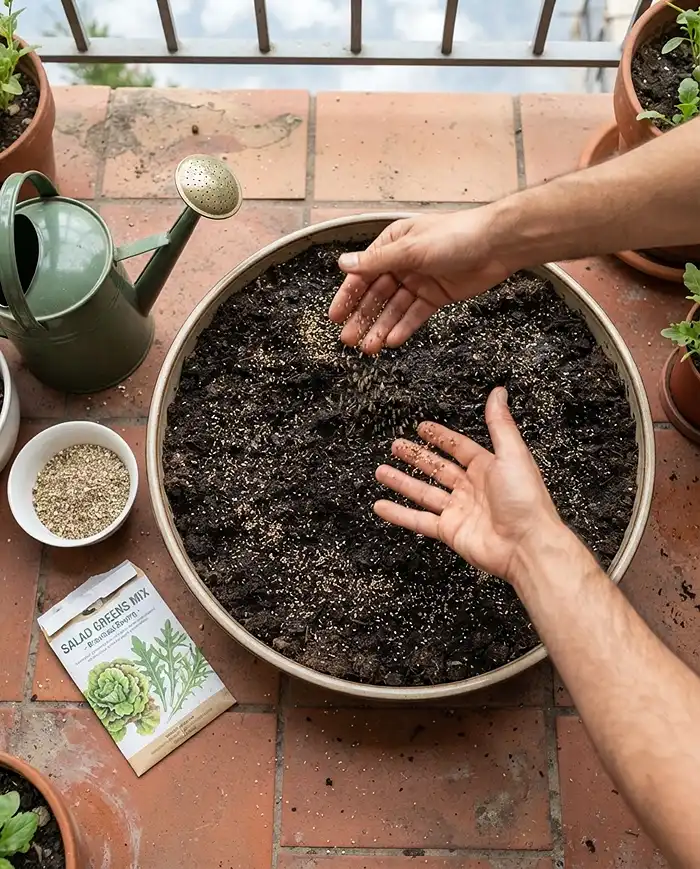
Real Example: The first time I broadcast-sowed instead of rowing, I got nearly triple the seedling density and a genuinely edible cutting a week earlier.
Care and Harvesting for Continuous Autumn Yields
October care looks different from July care. Slower evaporation and shorter days mean your routine needs to shift, not just your plant choices.
Adjusting Fall Watering Schedules
Quick Answer: Switch from daily summer watering to a finger-test method, checking soil moisture before watering and only doing so on mild mornings.
Wet foliage going into a cold night is an invitation for fungal disease and frost damage. Morning watering gives leaves all day to dry before temperatures drop.
- Test soil an inch deep before watering; water only if dry
- Water in the morning, never in the evening, once nights approach 40°F
- Expect to water roughly half as often as you did in August
Pro Tip: A soil moisture meter is worth the eight dollars if you tend to overwater on cool, cloudy October days when it’s easy to misjudge dryness by eye.
The “Cut-and-Come-Again” Harvesting Technique
Quick Answer: Use sterilized scissors to snip only the outer, mature leaves about one inch above the soil crown, leaving the inner rosette intact to keep producing.
This technique is what makes container vegetable gardening with greens so productive. One bowl can yield multiple harvests over 6-8 weeks instead of a single one-time cutting.
Pro Tip: Sterilize scissors with rubbing alcohol between harvests; damp fall conditions make it easy to spread fungal spores from plant to plant.
Common Problems and Solutions
Cool, damp October conditions bring their own headaches. Here’s how I’ve handled the two most common ones.
Slugs and Snails in Damp Fall Weather
Quick Answer: Wrap copper tape around the container rim and set shallow beer traps nearby to control slugs, which thrive in October’s cool, damp balcony conditions.
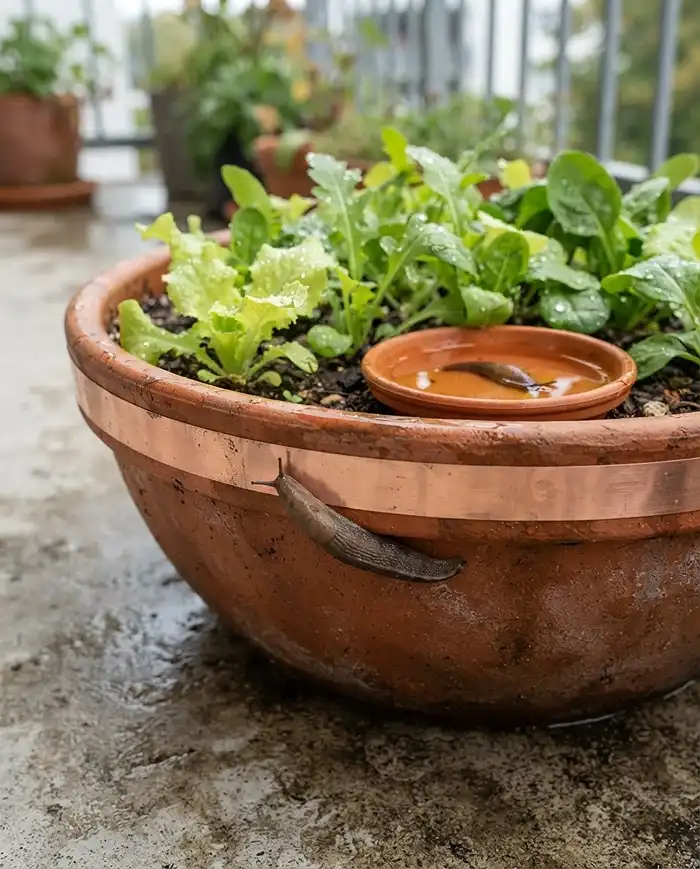
I lost an entire mesclun bowl to slugs in one week before I started wrapping copper tape around the rim. The mild electric charge they get from copper stops them cold.
- Copper tape around the container’s outer rim, applied before slugs arrive
- Shallow dish of beer sunk to soil level nearby, changed every 2-3 days
- Hand-pick at dusk when slugs are most active, especially after rain
Pro Tip: Check under the pot’s drainage saucer too; slugs hide there during the day and re-emerge at night.
Slow Germination in Chilling Soil
Quick Answer: Start seeded bowls indoors near a sunny window or on a heat mat, then move them outside once seedlings sprout, since seeds need warmth even though mature plants love cold.
Soil temperature below 50°F slows germination dramatically, sometimes to two or three weeks instead of five days. A heat mat set to 65-70°F speeds this up considerably.
Real Example: A bowl I seeded outdoors in late October took 18 days to germinate. The same seed started on a heat mat indoors sprouted in 6.
For more on layering herbs into these bowls once greens are established, see the cool weather herbs for pots guide. And for an authoritative frost-damage reference, NC State Extension’s frost and freeze protection guide is worth bookmarking.
fall salad container garden FAQs
Can my potted salad greens survive a hard frost?
Established greens like spinach and kale can survive light frosts between 28°F and 32°F without damage. For a deep, hard freeze, cover bowls at night with a floating row cover or horticultural fleece to protect more delicate lettuce.
Do I need to fertilize fall lettuce in containers?
Yes, apply a half-strength, water-soluble nitrogen fertilizer like liquid kelp or fish emulsion every two to three weeks. Short autumn days mean plants need a targeted nutrient boost to keep producing before winter dormancy sets in.
How late in October can I sow salad seeds?
Ideally sow 4 to 6 weeks before your first hard frost. If it’s already late October in a northern zone, buy mature nursery plugs instead of seed to guarantee a viable harvest before the season ends.
What size container works best for a fall salad container garden?
A wide bowl or window box 6 to 8 inches deep works best, since salad greens have shallow, fibrous roots that need surface area more than depth. A 16 to 20 inch diameter bowl comfortably holds a mixed mesclun planting.
Can I mix different salad greens in the same container?
Yes, mixing lettuce, spinach, arugula, and mustard greens in one bowl works well since they share similar watering and light needs. Just broadcast seed densely across the whole surface rather than sectioning it off.
Conclusion
A fall salad container garden rewards you fast, often with your first cutting in three weeks and continuous harvests through November or later. The formula is simple: right container, right soil, right greens for the cold.
As of fall 2026, seed companies are stocking cold-hardy mesclun blends earlier than ever, so don’t wait until October is half over to get started.
Key Takeaways
- A fall salad container garden thrives on wide, shallow bowls, 6-8 inches deep, with a perlite-heavy soil mix
- Cut-and-come-again lettuces, cold-sweetened spinach and chard, and mellowed arugula are the most reliable October picks
- Broadcast-sow densely, water only on mild mornings, and harvest outer leaves an inch above the crown
- Track your USDA zone and first frost date before deciding between seeds and transplants
- Protect established greens with row cover during hard frosts rather than pulling them at the first cold snap