

Grow Bag Sizes for Vegetables: Choose the Right Size
Picking the wrong grow bag sizes for vegetables stunts roots before summer even starts, and it’s the single mistake I see new container gardeners make over and over.
I’ve been growing vegetables in fabric grow bags for eight seasons now, mostly on a sun-baked concrete patio in zone 7a. I’ve killed more than one pepper plant by grabbing whatever bag was on sale instead of checking the gallon size against the crop’s actual root system.
This guide skips the vague “medium pot” advice. You’ll get exact gallon capacities, minimum depths, and real crop-by-crop numbers so you can shop once and get it right.
Table of Contents
The Science of Air Pruning and Why Grow Bag Size Matters
Fabric grow bags work because of “air pruning.” When a root tip hits the breathable fabric wall and touches open air, it stops growing longer and instead branches into a dense mat of fine feeder roots. In a solid plastic pot, that same root just keeps circling the inside wall until the plant is root-bound.
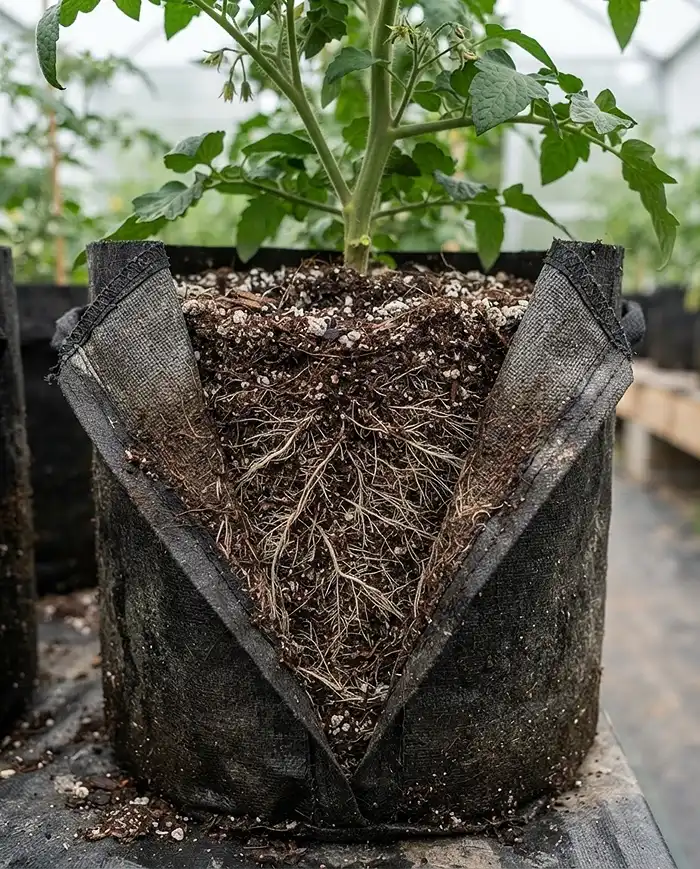
That’s the whole case for grow bags for vegetables over hard-sided containers. But air pruning only helps if there’s enough room for that branching to happen in the first place. Undersize the bag and you get a small, tangled root ball no matter how breathable the fabric is.
The University of Maryland Extension’s research on container root systems backs this up: matching bag volume to a crop’s mature root architecture is what actually drives yield, not the fabric material itself.
Understanding Grow Bag Dimensions vs. Gallon Capacity
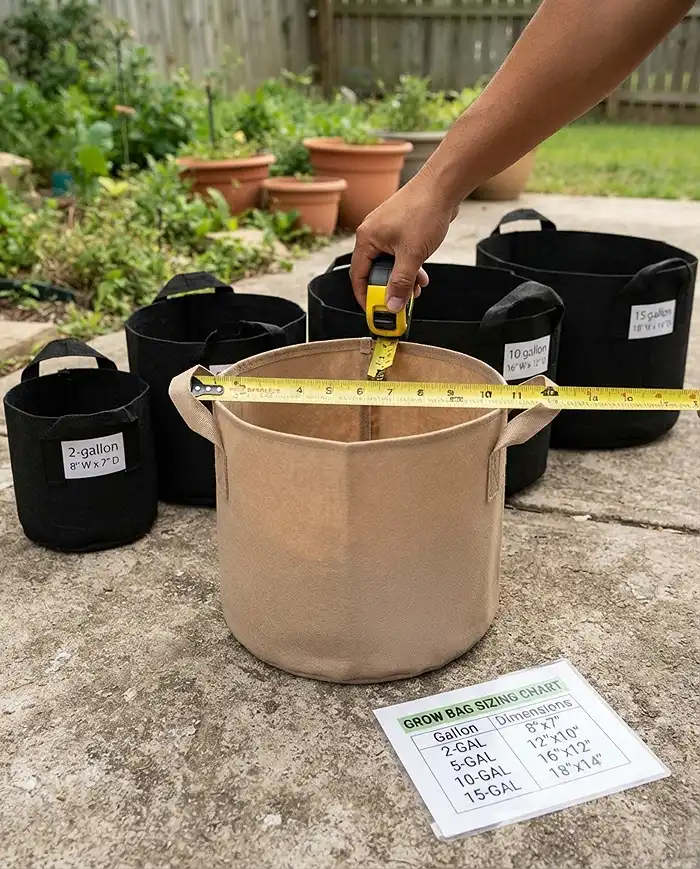
Nursery gallon labels are notoriously unreliable, and it trips up a lot of first-time container vegetable gardening shoppers. A “5-gallon” bag from one brand can hold noticeably less soil than a “5-gallon” bag from another.
Before you buy, always check the physical inch measurements listed in the product description, not just the gallon number on the label.
True Gallons vs. Nursery Trade Gallons
Here’s the catch most articles skip: a horticultural “trade gallon” isn’t a real gallon. It’s roughly 0.71 of a true liquid gallon, a sizing convention left over from decades-old nursery standards.
| Label Type | Actual Volume | What This Means for You |
|---|---|---|
| Liquid gallon | 231 cubic inches | The true, physical measurement |
| Nursery trade gallon | ~164 cubic inches | Roughly 29% smaller than labeled |
A bag marketed as “10-gallon” could easily be a trade-gallon bag holding closer to 7 true gallons of soil. Always cross-check the listed diameter and depth in inches before you check out.
The Importance of Soil Depth vs. Width
Root shape should decide bag shape, not the other way around. Taproot crops need vertical room. Fibrous-rooted crops need horizontal room.
- Taproot crops (carrots, beets, parsnips) need tall, narrow bags for straight downward growth
- Fibrous-rooted crops (spinach, lettuce, chard) do better in wide, shallow bags
- A short, wide carrot bag will produce stubby, forked roots every time
- A deep, narrow bag wastes soil and dries out faster for shallow greens
The Ultimate Grow Bag Size Guide by Crop
Here’s my go-to cheat sheet after years of trial and error with vegetables in pots. It sorts common crops into four gallon tiers so you can shop by plant, not by guesswork.
| Gallon Tier | Minimum Depth | Best For |
|---|---|---|
| 1-3 gallons | 6-8 inches | Herbs, radishes, leafy greens |
| 5-7 gallons | 10-12 inches | Peppers, bush beans, carrots |
| 10-15 gallons | 18+ inches | Tomatoes, eggplants, cucumbers |
| 20-30 gallons | 18-24 inches | Potatoes, squash, dwarf fruit trees |
1 to 3 Gallons: Herbs, Radishes, and Leafy Greens
Fast-growing, shallow-rooted crops only need 6 to 8 inches of soil depth. Cut-and-come-again lettuce, spinach, bush beans, radishes, and culinary herbs like basil and thyme all fit comfortably in lightweight 1-to-3-gallon bags.
I grow ‘Bloomsdale’ spinach and ‘Genovese’ basil in 2-gallon bags lined up along my balcony rail every spring. The trade-off: these small bags dry out fast, sometimes needing water twice a day once temperatures climb past 85°F.
If leafy crops are your main focus, our guide to the best vegetables for container gardening breaks down which varieties handle small bags best.
5 to 7 Gallons: Peppers, Bush Beans, and Carrots
Move up to 5-to-7-gallon bags with a minimum depth of 10 to 12 inches for anything that gets structurally heavier or sends roots straight down. Pepper plants need the extra bag weight and volume to stay upright once they’re loaded with fruit.
Standard carrot varieties like ‘Danvers Half Long’ and beet varieties need that same 10-to-12-inch depth to develop straight, unforked roots. Shorter ‘Little Finger’ or ‘Paris Market’ carrot varieties can get by in the shallow end of this range.
For anything root-shaped, check our full breakdown of the best root vegetables for container gardening.
10 to 15 Gallons: Tomatoes, Eggplants, and Cucumbers
Heavy-feeding, indeterminate vining crops absolutely require 10-to-15-gallon bags with a minimum depth of 18 inches. Anything smaller and you’re setting up a mid-summer nutrient collapse right when the plant needs the most energy for fruiting.
Two seasons ago I grew a ‘Cherokee Purple’ tomato in a leftover 5-gallon bucket, thinking it would be fine for one season. It stalled out at four feet tall with yellowing lower leaves by mid-July.
The following year, the same variety in a 15-gallon fabric bag topped seven feet and kept producing into October. Same soil mix, same sun exposure — the volume made the entire difference.
20+ Gallons: Potatoes, Squash, and Dwarf Fruit Trees
Sprawling cucurbits like winter squash, the “hilling” method for potatoes, and dwarf citrus trees all need extra-large 20-to-30-gallon bags. ‘Yukon Gold’ potatoes specifically benefit from that much depth since you’ll be adding soil in layers as the plants grow.
These massive volumes also buffer root temperature swings during unpredictable spring and fall weather, which matters more than most gardeners realize for perennial or long-season crops.
Step-by-Step Guide to Prepping and Planting Grow Bags
Getting the bag itself right is only half the job. Here’s how I prep and plant every bag before a single seedling goes in:
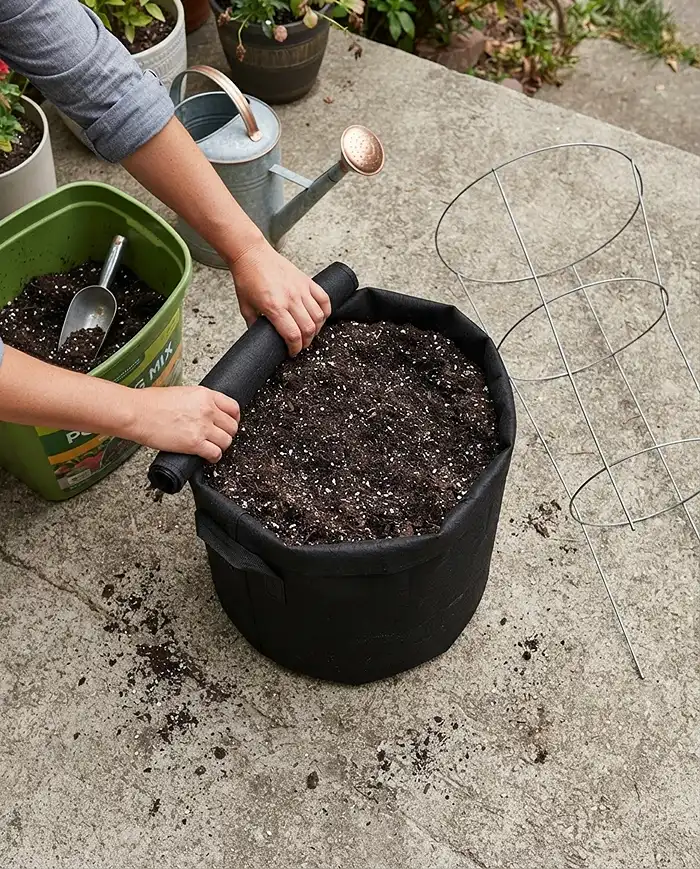
- Pre-moisten a perlite-heavy, moisture-retentive organic potting mix in a wheelbarrow or tub before filling the bag
- Roll down the top few inches of fabric to create a sturdy, self-standing lip
- Leave a two-inch gap between the soil line and the bag’s rim for watering room
- Stake or cage heavy plants like tomatoes immediately at planting to avoid disturbing roots later
Maintenance, Watering, and Feeding in Fabric Pots
Breathable grow bags dry out and lose nutrients far faster than plastic pots. That means a more proactive maintenance schedule if you want this style of container garden tips to actually pay off in yield.
Mastering the High-Evaporation Watering Schedule
Fabric walls evaporate moisture from all sides, not just the soil surface. I set every bag on a deep plastic saucer now and bottom-water instead of watering from the top.
A 2-inch layer of straw mulch on the soil surface cuts evaporation noticeably. During August heat waves in my zone, I check soil moisture by hand twice a day, morning and late afternoon.
Fertilization Needs for Air-Pruned Roots
Porous fabric flushes nutrients out with every watering, so a rigorous feeding schedule matters more here than in plastic containers. I apply a diluted liquid organic fertilizer, usually fish emulsion or kelp extract, once a week from transplant through peak fruiting.
Skipping even two weeks during fruit set is usually when I see pale leaves and slowed production.
Common Problems & Solutions
Fabric containers come with their own quirks. Here’s how to fix the two I run into most.
Hydrophobic Soil and Rapid Dehydration
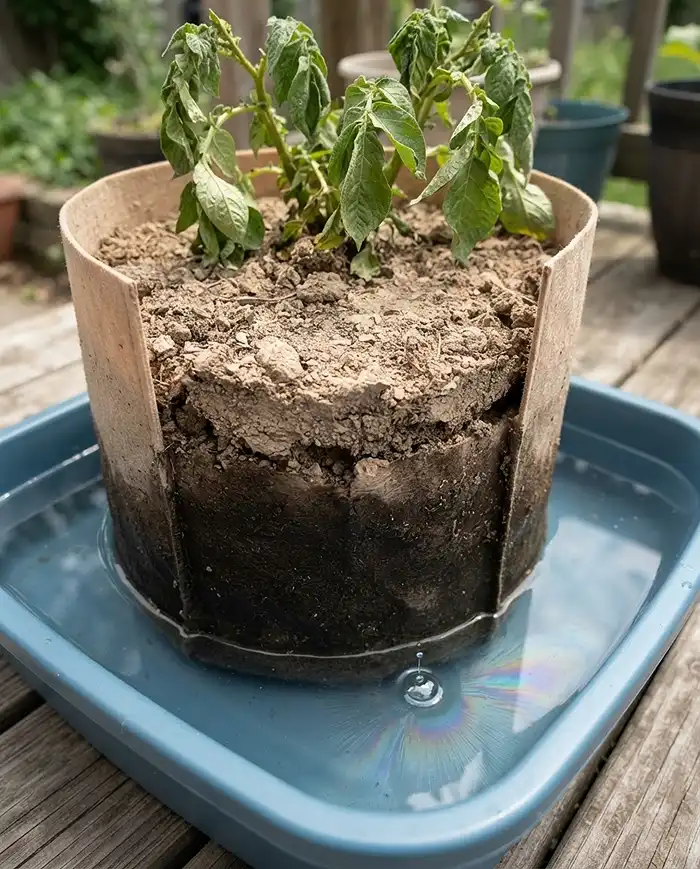
Two summers ago I let a 15-gallon bag of potatoes dry out completely during a stretch of 95°F days. The peat-based mix turned hydrophobic, meaning water just ran straight down the sides instead of soaking in.
The fix: submerge the bottom third of the bag in a basin of water mixed with one drop of organic dish soap. The soap breaks the surface tension and lets the peat rehydrate properly within about 20 minutes.
White Algae or Salt Crust on the Fabric Exterior
A powdery white or greenish film on the outside of your bags is almost always harmless. It’s a buildup of hard water minerals, fertilizer salts, or benign algae, not a sign of disease.
Scrub it off with a mix of equal parts white vinegar and water and a stiff brush. Do this at the end of each season before storing bags for winter.
grow bag sizes for vegetables FAQs
Can I reuse the soil in my grow bags next year?
Yes, as long as the previous crop was disease-free. Sift out the old root mass first, then heavily amend the remaining soil with fresh compost and a slow-release organic fertilizer to replenish the nutrients that leached out over the season.
Do I need to punch drainage holes in fabric grow bags?
No. Never puncture or cut a fabric grow bag. The entire surface is a porous, non-woven geotextile fabric that already acts as a full-surface drainage system, so root-drowning is virtually impossible without extra holes.
How long do fabric grow bags last outside?
High-quality, heavy-duty (300 gsm) non-woven fabric bags typically last 3 to 5 growing seasons. Extend that lifespan by emptying and scrubbing bags clean at season’s end and storing them indoors, away from UV sunlight and winter snow.
Can I plant multiple crops in one large grow bag?
Yes, companion planting works well in 20-to-30-gallon bags. Pair one deep-rooted heavy feeder, like a tomato, with shallow-rooted companions like basil and marigolds to use the cubic footage fully without triggering root competition.
Key Takeaways
As of the 2026 growing season, here’s what actually matters when you’re choosing grow bag sizes for vegetables:
- Match gallon capacity and depth to root type, not just plant size — taproots need depth, fibrous roots need width
- Always verify physical inch measurements, since nursery trade gallons run about 29% smaller than true liquid gallons
- Leafy greens and herbs work in 1-3 gallons, but tomatoes and eggplants need 10-15 gallons minimum to avoid mid-season nutrient collapse
- Fabric’s air pruning only helps if there’s enough volume for roots to branch into in the first place
- Budget for weekly liquid feeding and more frequent watering than you would with plastic pots