
Fall Vertical Herb Garden Ideas for Small Balconies
A fall vertical herb garden ideas turns a few square feet of railing or wall into a cold-hardy, aromatic focal point. I’ve run one on my north-facing balcony in Zone 6b for four autumns now, and it’s easily my favorite seasonal project.
Table of Contents
Elevating Your Balcony with a Fall Vertical Herb Garden
Once summer tomatoes come down, that floor space usually sits empty until spring. A vertical herb garden fixes that by using wall and railing space instead of the ground.
Stack pockets or modular planters against a sunny wall and you get an actual harvest through October and into November, plus a display that looks intentional instead of abandoned. It’s the single best upgrade I’ve made to my small balcony garden setup.
Assessing Your Autumn Balcony Microclimate
Before you buy a single planter, walk your balcony at different times of day. Elevated, vertical spots catch wind and lose heat faster than pots sitting on the floor, so what worked for your summer container herb garden won’t automatically work once temperatures drop.
Tracking Lower Autumn Sun Angles
The sun sits much lower on the horizon by late September, and that changes everything about where shade falls on a vertical wall.
A railing that got full sun all summer might now spend half the day shaded by your building’s overhang. Spend one clear afternoon tracking which pockets stay lit longest, then reserve those top and middle rows for sun-hungry herbs like rosemary and thyme.
I learned this the hard way in my second year: my top row went into permanent shadow by October 1st, and I didn’t notice until my rosemary started dropping needles.
Managing Freezing Wind Drafts on Elevated Roots
City balconies often sit inside wind corridors created by neighboring buildings, and elevated planters catch that wind on all sides instead of just the top.
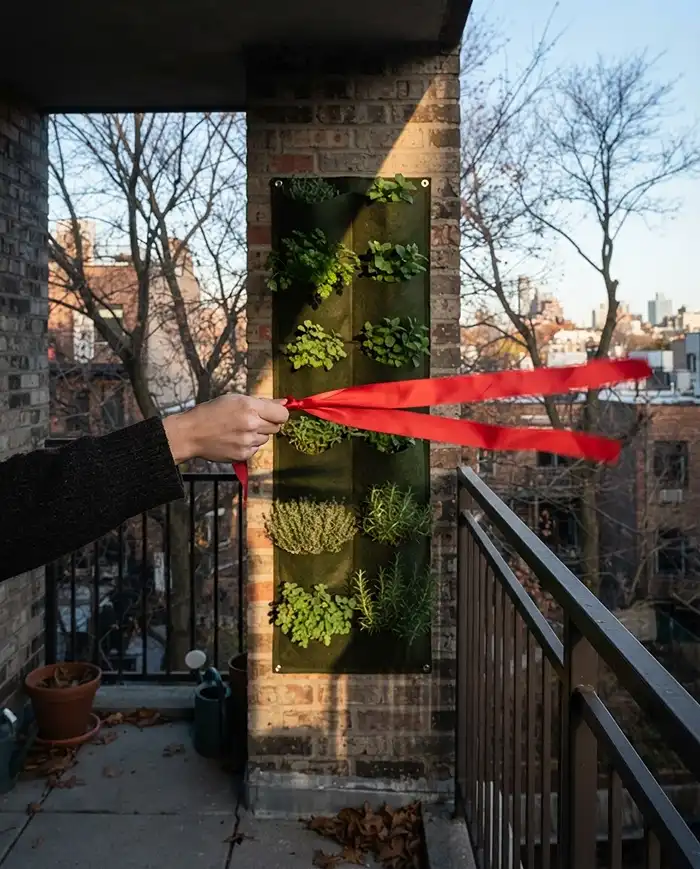
Cold gusts pull moisture out of leaves fast and can freeze shallow root balls overnight, even when the air temperature alone wouldn’t kill the plant. Walk your balcony on a breezy day and note where laundry or leaves swirl. That’s your danger zone.
- Corner units between two buildings usually funnel the strongest gusts
- Open railings without a solid backing board expose roots on two sides at once
- Top-tier pockets dry out fastest since wind hits them first
Selecting Hardware and Soil for Cool Weather
Your summer setup probably prioritized drainage and light weight. For fall, you need insulation and cold protection built into both the hardware and the soil mix itself.
Frost-Proof Vertical Planter Options
Not all vertical planters handle cold the same way. Here’s how the two most common styles compare for late-season use:
| Planter Type | Best For | Watch Out For |
|---|---|---|
| Rigid double-walled plastic | Late fall and early frost protection | Heavier; needs sturdy wall anchors |
| Breathable felt pockets | Early autumn, mild climates | Dries out fast in wind; poor insulation below 40°F |
I switched from felt pockets to rigid double-walled plastic modules two Octobers ago after a felt-pocket sage plant froze solid overnight during an early cold snap in Zone 6b. The rigid units held soil temperature noticeably better through the same conditions this year.
Formulating an Insulating, Fast-Draining Soil Mix
Cool weather slows evaporation dramatically, so soil that drained fine in July can stay soggy for days in October. Soggy plus cold is what actually kills roots, not cold alone.
My go-to fall mix: 70% premium organic potting mix, 30% perlite, and a generous handful of worm castings per gallon of soil. The perlite keeps air pockets open even when watering slows down, and the castings add a slow nutrient trickle without pushing tender new growth.
Best Cold-Hardy Herbs for a Vertical Autumn Display
Not every herb belongs on a fall wall. Stick to varieties that actually prefer cooler air, and structure the display around their natural roles.
Aromatic Evergreens: Thyme, Sage, and Rosemary
These Mediterranean natives anchor the whole design. They tolerate light frost, hold their structure through wind, and bring in color you won’t get from summer annuals.
- Rosemary ‘Arp’ — hardy to Zone 6, silvery-green needles, best in the sunniest top pocket
- Sage ‘Berggarten’ — dusty blue-green leaves, tolerates light frost down to about 20°F once established
- Thyme ‘Elfin’ — low, trailing habit, ideal for edge pockets where it can spill over
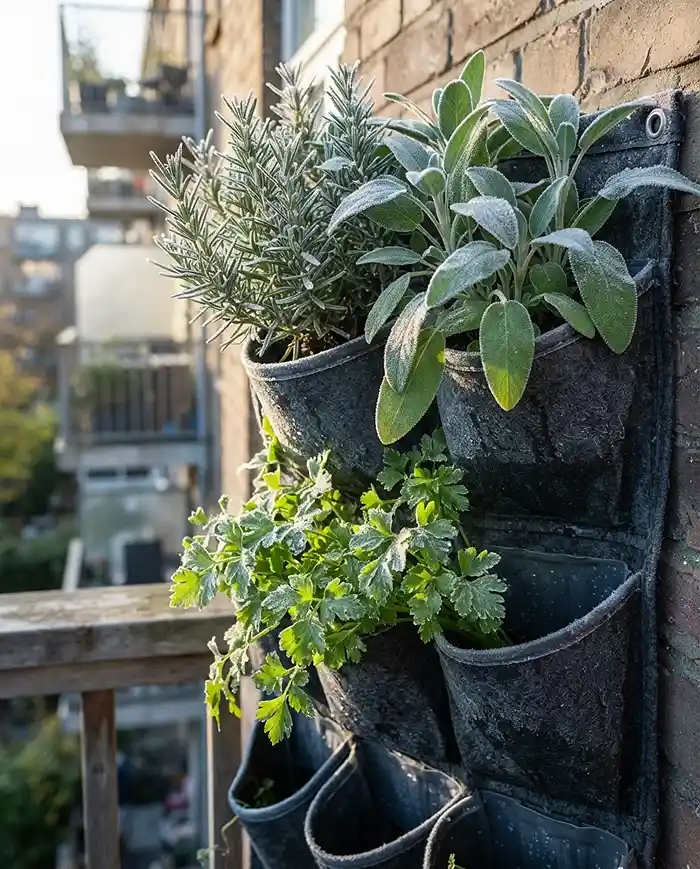
This trio is what makes my vertical gardening for small spaces setup look good even in November light, when most annuals have already gone brown.
Cool-Season Leafy Herbs: Parsley, Cilantro, and Chives
Flat-leaf parsley and cilantro actually perform better in crisp fall air than in summer heat. Both tend to bolt (shoot up and go to seed) once temperatures climb past 75°F, so autumn removes that stress entirely.
Tuck parsley and chives into the middle pockets where they get decent light without full afternoon sun, and expect steady, non-bolting growth right up until a hard freeze.
Styling Your Vertical Wall with Autumn Aesthetics
A working herb wall doesn’t have to look purely functional. Small styling choices make it feel like a designed autumn balcony garden idea instead of a random collection of pots.
Adding Rustic Textures and Trailing Foliage
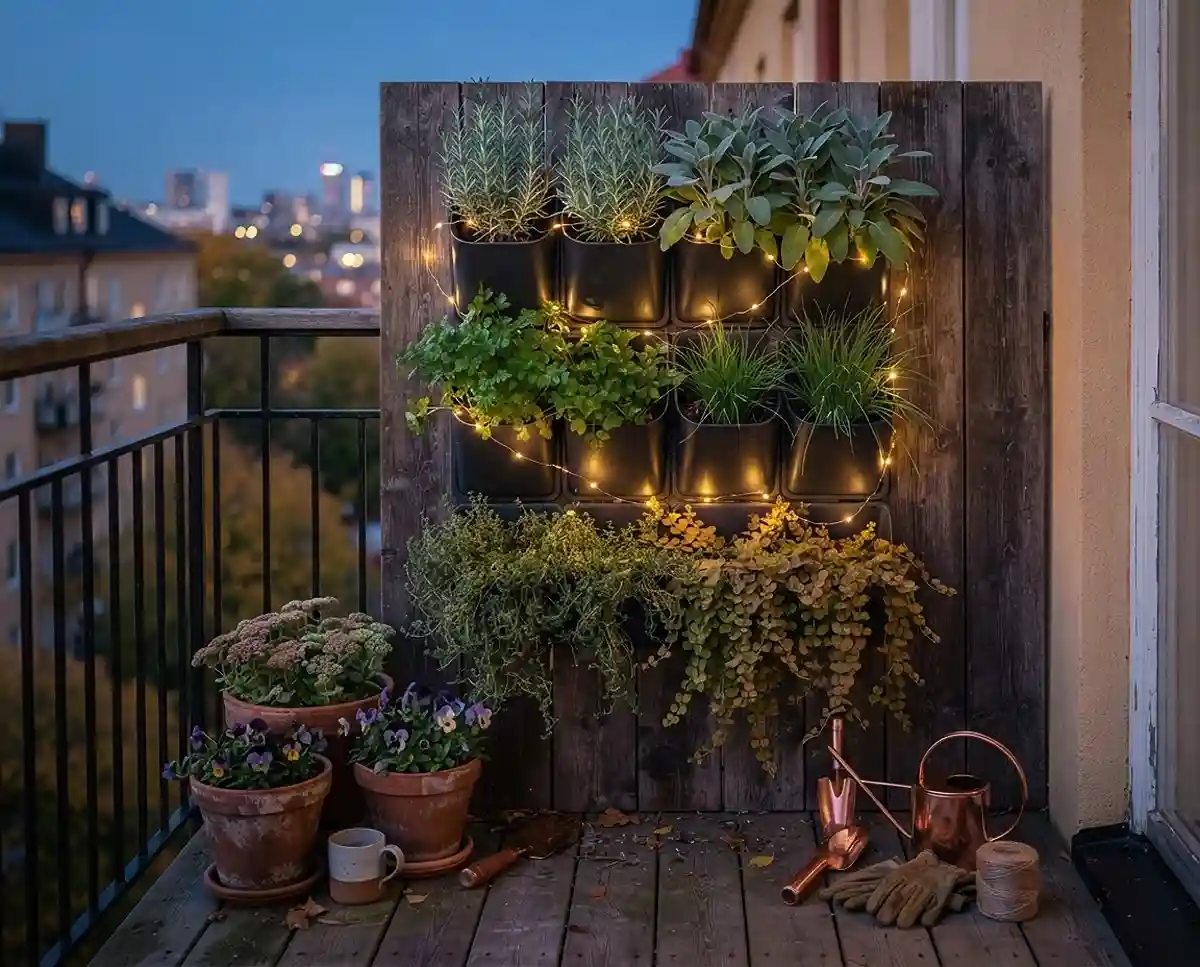
Swap bright ceramic summer pots for copper, aged terracotta, or dark stained wood accents nearby. The warmer tones read as “autumn” instantly, even next to green herbs.
For the lower pockets, I mix in bronze Heuchera or trailing Creeping Jenny among the herbs. Neither is edible, but they add deep color and soften the hard edges of a planter grid.
Ambient Lighting for Early Sunsets
Sunset creeps earlier fast once October hits, and a herb wall that’s invisible by 6:30 pm loses half its charm. Weave waterproof, warm-white LED copper wire lights vertically through the planter grid.
Run them along the frame rather than draping over the foliage directly, so the light glows through the leaves instead of just sitting on top. It reads as cozy rather than decorative overkill.
Step-by-Step Autumn Installation Guide
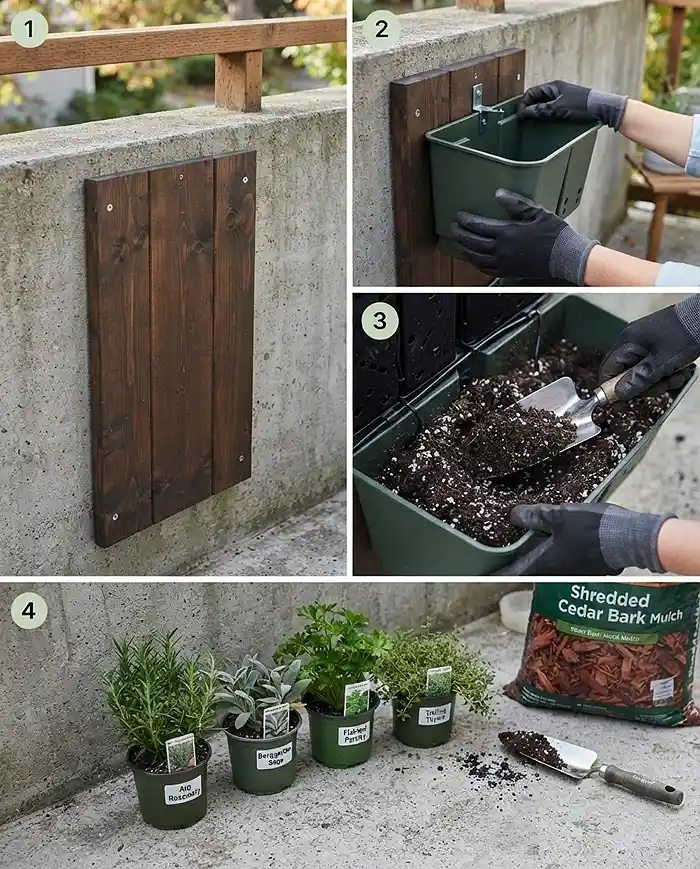
Once you’ve mapped your sun and wind exposure, installation itself takes an afternoon. Here’s the order that’s worked best for me:
- Anchor a waterproof backing board to the wall or railing first, to protect siding from moisture and to give planters a flat mounting surface
- Mount the modular planter units, working from the sturdiest anchor points up
- Fill each pocket with your perlite-amended soil mix, leaving about an inch of headspace
- Densely pack herbs by role: evergreens up top, leafy herbs in the middle, trailing foliage at the bottom
- Top-dress every pocket with a half-inch of bark mulch to slow moisture loss and buffer overnight temperature swings
Fall Maintenance for Elevated Herb Gardens
As growth slows down with the cooler weather, your care routine needs to shift too. What worked in July will overwater and overstress plants by late October.
Adjusting Watering for Slow Evaporation
Drop the daily summer soaking habit entirely. Instead, use the finger test: push a finger an inch into the soil, and only water if it comes out dry.
Water on mild mornings only, ideally above 50°F, so the soil has time to drain before overnight temperatures drop. Watering into a cold evening is one of the fastest ways to get frozen, waterlogged roots.
Harvesting Techniques to Maintain Fullness
When you’re pulling herbs for soups and stews, don’t just snip the top leaf or two. Pinch back entire growth nodes at a stem junction instead.
This forces the plant to branch sideways rather than shoot straight up into a thin, leggy stem. My sage and thyme both stay noticeably bushier through November when I harvest this way instead of just topping leaves.
Common Problems and Solutions
Two issues show up again and again on vertical autumn setups: frozen roots and mildew. Both are preventable once you know what to watch for.
Root Freeze in Shallow Wall Pockets
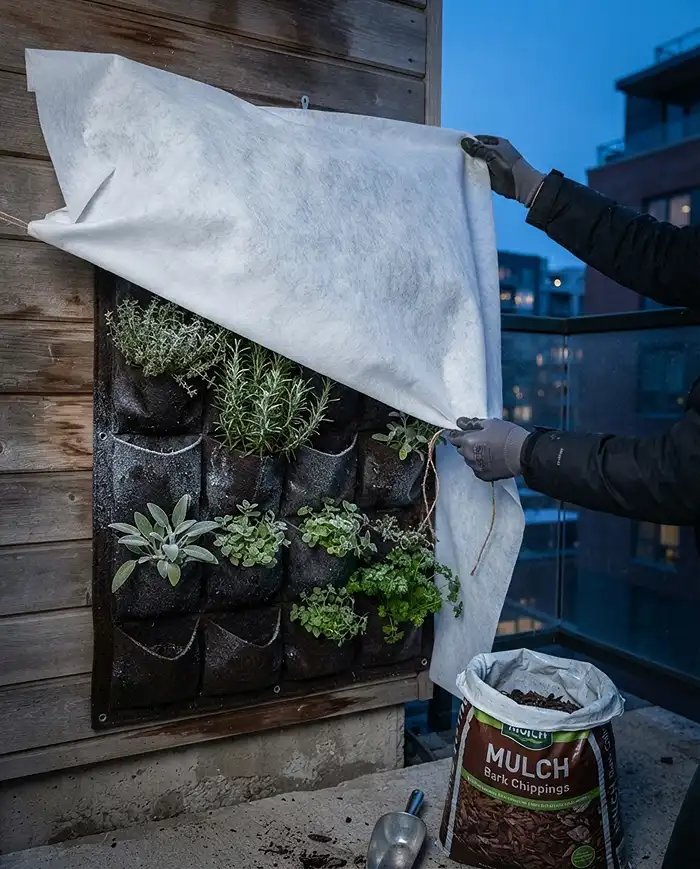
Vertical pockets hold far less soil mass than a ground bed, so they freeze faster and harder overnight. If a hard frost is forecast, add an extra layer of mulch to each pocket that afternoon.
For a genuine freeze warning, drape a horticultural fleece blanket over the entire wall before dark and remove it once temperatures climb back above freezing the next morning.
Powdery Mildew in Damp Autumn Air
Cool temperatures, tiered shading from the row above, and seasonal rain combine into ideal mildew conditions on a vertical wall. You’ll spot it as a gray-white dusting on leaves.
Thin overlapping foliage aggressively to restore airflow between pockets, and treat existing mildew with a potassium bicarbonate spray, reapplying weekly until it clears. For background on the temperature ranges each herb tolerates, the USDA Plant Hardiness Zone Map is worth bookmarking before you buy perennial herbs.
fall vertical herb garden ideas FAQs
Do I need to fertilize my fall herb wall?
Skip fast-acting, high-nitrogen liquid fertilizers once temperatures drop below 60°F. They push tender, watery new growth that gets damaged by the first frost. The compost and worm castings mixed in at planting are enough to carry herbs through autumn.
Can my vertical herb garden stay outside all winter?
Only reliably in USDA Zone 8 or warmer. Below that, shallow vertical pockets freeze solid and kill even cold-hardy perennials like rosemary and sage. Elsewhere, plan to dismantle the wall before deep winter or treat everything as a temporary autumn annual.
How much sunlight does a fall herb wall need?
Culinary herbs still need 4 to 6 hours of direct sunlight daily, even in cooler weather, to photosynthesize properly. That means your vertical wall should face south or west; a north-facing setup like mine works, but yields noticeably less than a sunnier exposure.
Conclusion
A fall vertical herb garden rewards a bit of upfront planning with weeks of fresh harvest and real curb appeal. Map your sun and wind first, then build the hardware and soil around those specifics.
Start small this season. Try our fall vertical ladder garden setup if you want a simpler frame to begin with, browse our cool-weather herbs for pots guide for more variety picks, and check out more autumn balcony garden ideas once your wall is up.
Key Takeaways
- A fall vertical herb garden works best when you map sun angles and wind exposure before installing anything
- Rigid double-walled planters and a perlite-heavy soil mix handle cold far better than felt pockets alone
- Anchor evergreens like rosemary, sage, and thyme up top; leafy herbs like parsley and chives in the middle
- Switch to finger-test watering on mild mornings and pinch back growth nodes when harvesting to keep the wall full through November