
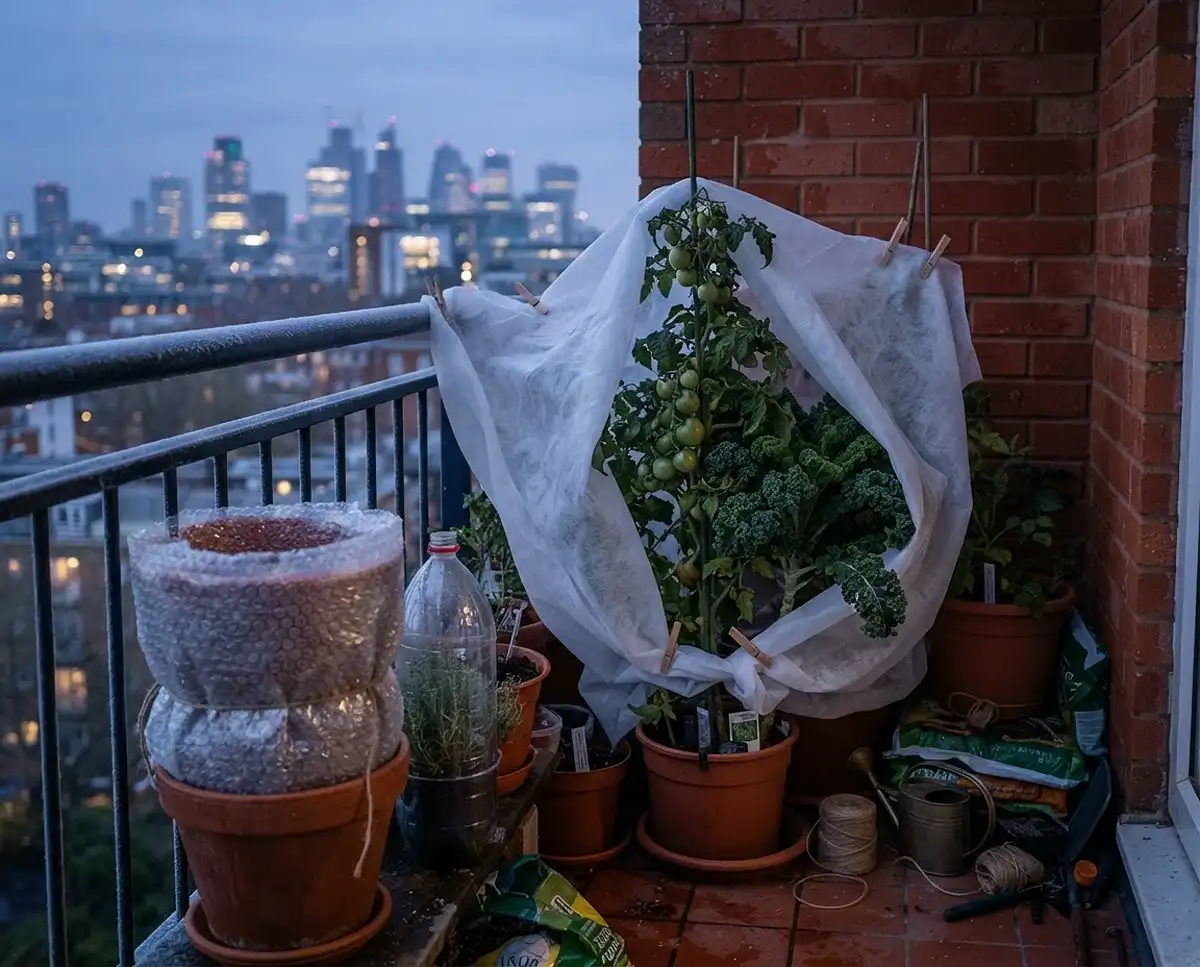
Extend Growing Season on Balcony
A single overnight frost doesn’t have to end your container garden. Learning how to extend growing season on balcony with cheap covers can buy you 4 to 6 more weeks of harvest before winter really sets in.
I grow tomatoes, kale, and a rotating cast of herbs on a west-facing 6th-floor balcony in zone 6b, and every October I go through the same ritual: watching the forecast, dragging pots against the wall, and draping fleece over anything still setting fruit. Simple covers work because they trap the heat your plants and containers give off, slowing the ice crystal formation that ruptures plant cells and turns leaves to mush. On a small balcony garden, that trapped heat matters even more, since you don’t have the buffer of open ground soil.
Table of Contents
Understanding Frost and Your Balcony Microclimate
Before you buy a single cover, spend one evening auditing your space. Cold air is denser than warm air, so it pools in corners and against railings, while walls that soaked up sun all day release that heat slowly after dark.
This is the core idea behind small space gardening in cold weather: you’re not fighting the whole season, just managing pockets of warmth and cold that already exist on your specific balcony.
The Difference Between a Light Frost and a Hard Freeze
Quick Answer: A light frost (28°F to 32°F) briefly forms ice crystals on leaf surfaces and is easy to survive with a basic cover. A hard freeze (below 28°F) can freeze the entire root ball solid and needs real insulation, not just a sheet.
At light frost temperatures, the damage is usually cosmetic: a little leaf tip burn, nothing fatal for hardy herbs or greens. Below 28°F, though, water inside plant cells and inside the soil itself starts to freeze and expand, which is what actually kills roots. That’s the line where a $6 frost blanket stops being enough on its own.
Utilizing Radiant Heat from Apartment Walls
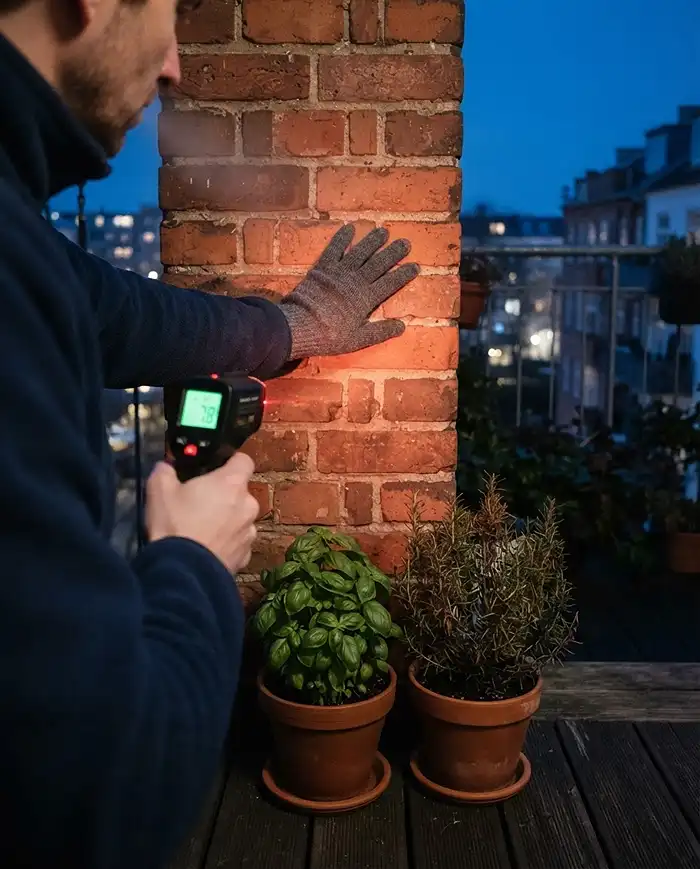
Quick Answer: Push your containers directly against a brick, concrete, or stucco exterior wall. That wall absorbs sun during the day and radiates it back out overnight, often raising the air right next to your pots by several degrees.
This is free thermal mass, and it’s the single easiest microclimate hack for tiny garden ideas on apartment balconies. I lost a pot of basil in my first October in this apartment simply because it sat two feet from the wall instead of touching it. The following year, same basil variety, pushed flush against the brick: it lasted three extra weeks.
Best Temporary Covers for Balcony Containers
Renters need options that don’t involve drilling, gluing, or anything permanent. These three cover types cover almost every situation you’ll run into on a balcony from October through the first hard freeze.
Horticultural Fleece and Frost Blankets
Quick Answer: Horticultural fleece is a lightweight, breathable spun fabric you drape loosely over the plant canopy and secure at the base. It traps rising heat without crushing leaves or blocking daytime light.
- Drape it loosely, never pulled tight against foliage, to leave an insulating air pocket
- Secure the edges with clothespins, chip clips, or small stones so wind can’t lift it
- Standard 17g fleece protects to roughly 30°F; heavier 30g fleece protects a few degrees lower
- Leave it on during the day if it’s a thin, breathable weight, since light still passes through
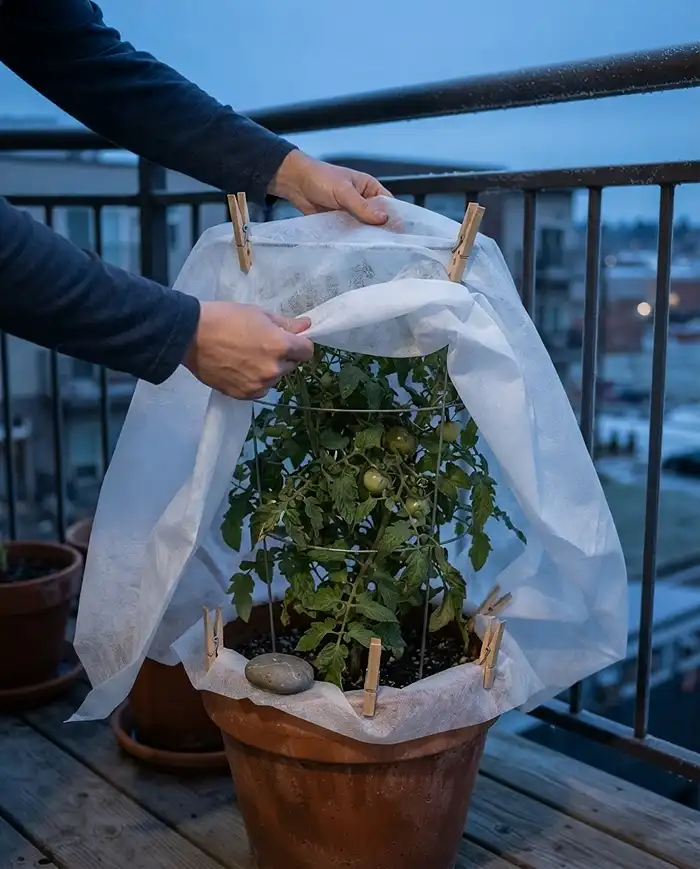
Real Example: Last November on my balcony, I fleeced a pot of ‘Genovese’ basil and a pot of ‘Cherokee Purple’ tomato the same night. The basil still browned by morning, since it hates anything below 40°F, but the tomato pulled through a 29°F dip and gave me two more weeks of fruit.
Pro Tip: Buy fleece in the widest roll you can store flat; you’ll almost always need more coverage than you think once you start grouping pots together.
Miniature Cloches and Plastic Bottles
Quick Answer: Cut the bottom off a clear 2-liter soda bottle and press it into the soil over a small herb or seedling. It creates a free, zero-waste mini greenhouse that traps humidity and warmth around one plant.
This is my go-to for cool-weather herbs in small pots. I keep a stash of rinsed bottles under the sink specifically for this. It’s not elegant, but it’s free, and it works well for anything under about 8 inches tall.
Pro Tip: Leave the cap off during the day so heat doesn’t build up and cook the seedling once the sun hits the plastic.
Why You Should Never Use Plastic Garbage Bags
Quick Answer: Standard plastic tarps or garbage bags trap condensation directly against the leaves overnight, and that moisture freezes solid before morning. Then the same non-breathable plastic turns into an oven the second the sun rises.
This is the most common beginner mistake I see in urban gardening forums every fall. Plastic feels intuitive, since it blocks wind, but without airflow it does more harm than no cover at all in a lot of cases. Save the plastic for over-the-top emergency use on top of fleece, not touching leaves directly.
Space-Saving Cold Frames and Mini Greenhouses
If you want to overwinter hardy crops or seriously stretch the life of tender vegetables, it’s worth investing in slightly sturdier hardware. These options take up more room but do more work for you on cold nights.
Tiered Zip-Up Plastic Greenhouses
Quick Answer: A vertical, 4-tier wire shelving unit enclosed in a clear PVC zip-up cover protects dozens of small pots at once in a footprint of about 2 feet by 1.5 feet. It’s one of the best small balcony garden setups for cold-weather herbs and greens.
| Cover Type | Best For | Watch Out For |
|---|---|---|
| Fleece blanket | Single plants or small groups, short cold spells | Not enough alone below 28°F |
| Plastic bottle cloche | Seedlings and small herbs under 8 inches | Overheating if left sealed on sunny days |
| Tiered zip greenhouse | Multiple pots, extended cold protection | Humidity buildup if never vented |
| Bubble wrap on pots | Insulating roots in large containers | Only protects roots, not foliage |
Pro Tip: Unzip the front panel for a few hours on any day above 40°F, even if it’s cloudy, or you’ll be dealing with mildew by December.
Insulating the Container Roots (Bubble Wrap and Burlap)
Quick Answer: Wrap the exterior of large pots in heavy-duty bubble wrap or thick burlap to keep the soil from freezing solid. Covers protect leaves, but on a balcony the roots are exposed to freezing wind on every side.
I learned this the hard way with a rosemary in a 12-inch terracotta pot. The top survived fine under fleece, but the exposed pot froze through and the roots never recovered. Now every pot over 10 inches gets a bubble wrap jacket by mid-November.
Step-by-Step Guide to Deploying Overnight Frost Protection
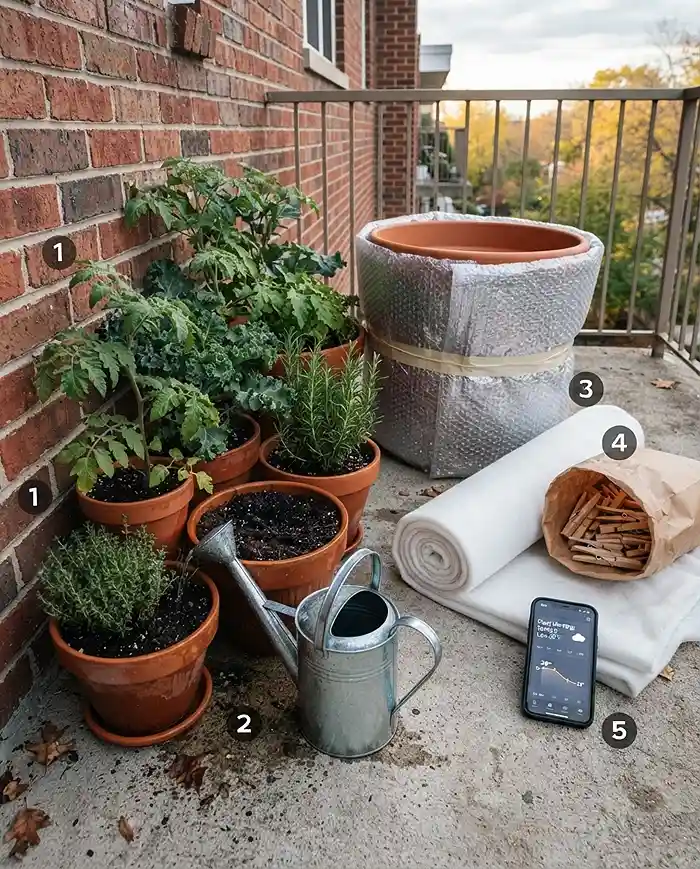
Quick Answer: When frost is forecast, check the evening weather, group pots tightly for shared warmth, water deeply, wrap the containers, and cover the canopy before sunset. Doing these in order takes about 15 minutes.
- Check a real-time forecast app in the late afternoon, not just the morning report
- Push pots together and against a heated wall to share warmth and cut exposed surface area
- Water the soil thoroughly if it’s dry, since moist soil holds heat far better than dry soil
- Wrap large containers in bubble wrap or burlap before the sun goes down
- Drape fleece or set cloches over the canopy, securing edges against wind
Fall Maintenance and Watering Hacks for Covered Plants
Plants living under covers or inside a mini greenhouse need a different daily routine than the same plants in open summer air. Two habits matter most here.
The Counterintuitive Rule of Watering Before a Freeze
Quick Answer: Water your containers thoroughly on the morning before a forecasted overnight frost. Moist soil holds and releases heat far better than dry, air-filled soil, which helps insulate the root zone overnight.
It feels backwards to water right before a freeze, but dry soil actually loses heat faster because air is a poor heat reservoir compared to water.
Venting and Airflow to Prevent Winter Rot
Quick Answer: Remove frost blankets or unzip mini greenhouses on any sunny, mild day above 40°F. Trapped humid air around covered plants is a near-guarantee for powdery mildew and fungal rot.
I check my zip greenhouse every single morning on the way out the door. If it’s a bright day, the door stays cracked open until at least mid-afternoon.
Common Problems & Solutions
Even with good habits, cold protection sometimes goes wrong. Here’s how to read the damage and fix it fast.
Treating Frost-Nipped and Blackened Foliage
Quick Answer: Frost-damaged leaves turn blackened, mushy, and water-soaked looking. Leave that damaged foliage in place until spring, since it insulates the still-living tissue underneath from further cold.
My instinct is always to trim off the ugly leaves right away. Resist it. I pruned a damaged pepper plant too early one year and lost the whole thing to the next cold snap two nights later.
Condensation Freezing Inside Mini Greenhouses
Quick Answer: Wild temperature swings cause condensation to build up inside unvented plastic covers, and that moisture can drip onto leaves and freeze overnight. Wipe down the interior walls daily and prop the door open with a stick.
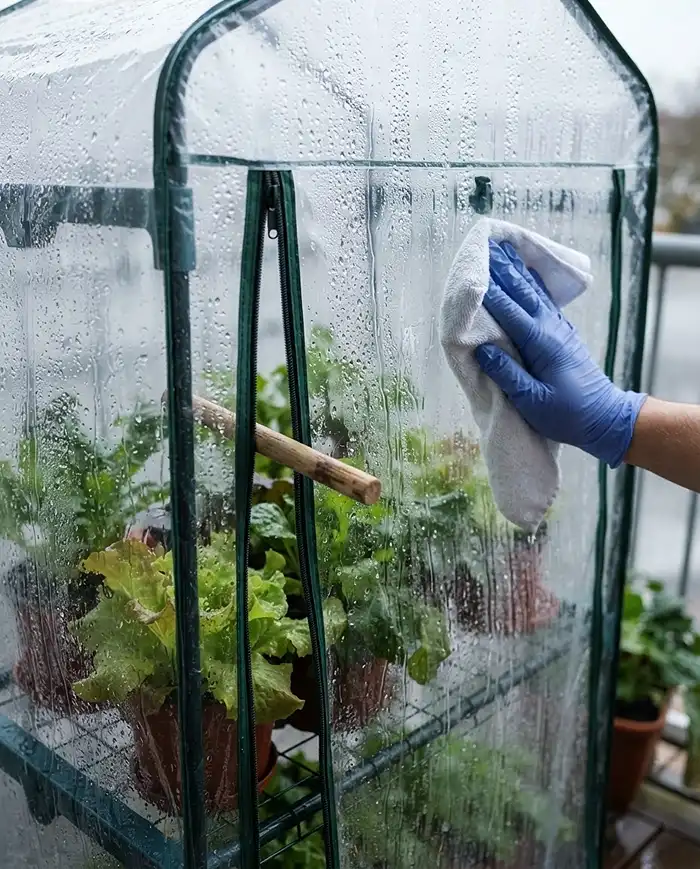
A dry stick or a small block of wood wedged in the zipper track is all it takes to keep air moving without losing all your trapped heat.
Extend Growing Season on Balcony FAQs
How late into the year can I extend my balcony harvest?
Frost blankets can add 4 to 6 weeks of life to tender crops like tomatoes and basil. Cold-hardy crops such as spinach, kale, and radishes can survive straight through the darkest months of deep winter inside a zip-up balcony greenhouse.
Can I use old bed sheets or towels to cover my plants?
Yes, heavy cotton bed sheets or light blankets work well as an emergency overnight cover. They must come off completely the moment the sun rises, since they block virtually all photosynthetic light during the day.
Should I keep fertilizing my plants if I cover them for fall?
No, stop nitrogen fertilizing once cool weather sets in. Pushing tender new growth late in the season makes plants far more susceptible to frost kill, even under a protective cover.
What temperature should trigger me to cover my balcony plants?
Start covering once overnight lows are forecast to dip below 34°F, giving yourself a buffer before the 32°F frost line. Waiting until the morning of a frost is usually too late.
Do covers work on windy, high-rise balconies?
Yes, but secure every edge with clips or weights, since wind can rip fleece off or blow cold air straight underneath it. On very exposed balconies, a wrapped tiered greenhouse holds up better than loose fleece.
Conclusion
As of this fall, the gear hasn’t changed much: fleece, bottles, bubble wrap, and a bit of timing still do most of the work. Learning how to extend the growing season on a balcony really comes down to reading your microclimate and reacting to the forecast before, not after, the first cold night.
For more ways to stretch your harvest, check out these cool-weather herbs for pots and these fall balcony ideas for renters. For research-backed background on frost mechanics, Ohio State University Extension’s frost protection resources are a solid reference.
Key Takeaways
- A light frost (28-32°F) is survivable with fleece; a hard freeze under 28°F needs real insulation on the roots too
- Pushing pots against a sun-warmed wall is the cheapest microclimate trick for small space gardening
- Water containers deeply before a forecasted frost, since moist soil holds heat better than dry soil
- Vent covers on any mild day above 40°F to avoid mildew and rot
- With the right covers, you can extend the growing season on a balcony by weeks or, for hardy greens, straight through winter