

Fall Balcony Herbs: Best Varieties for Cool, Rainy Weather
Fall balcony herbs don’t just survive heavy autumn rain, some actually prefer it. If your summer basil turned to mush, here’s what to plant instead and how to keep roots from rotting.
Table of Contents
Conquering the Autumn Balcony: Herbs That Love the Rain
I grow herbs on a north-facing balcony in Portland, zone 8b, where October brings weeks of steady drizzle. My basil gave up by mid-September, soggy and black at the stems.
But that same damp, cool stretch turned out to be exactly what a handful of tough culinary herbs wanted. No daily watering, no wilting in the heat, just steady growth through the gray.
This is the sweet spot for a small balcony garden that basically runs itself once you get the setup right.
Assessing Your Autumn Balcony and Soil Drainage
Quick Answer: Surviving heavy fall rain has almost nothing to do with the herb’s leaves and everything to do with whether your pot’s soil can shed water faster than the sky dumps it.
A container that drained fine in July can turn into a swamp in October, because cooler air slows evaporation to a crawl. The fix starts at the pot, not the plant.
The Dangers of “Wet Feet” and Cold Root Rot
Quick Answer: “Wet feet” means roots sitting in saturated soil, and in cold weather that soil can stay soggy for days instead of hours, literally suffocating roots.
In summer, a soaked pot dries out in an afternoon. Come November, with temps in the 40s and 50s°F, that same pot might stay wet for 4 to 5 days straight.
Roots need oxygen. Waterlogged soil pushes it out, and the roots start to rot within days rather than weeks.
Real Example: I lost a whole pot of cilantro this way last November. It looked fine on Monday and was black-stemmed mush by Friday, three days after a rainstorm. I hadn’t touched the pot at all, and that was the problem.
Elevating Pots and Checking Drainage Holes
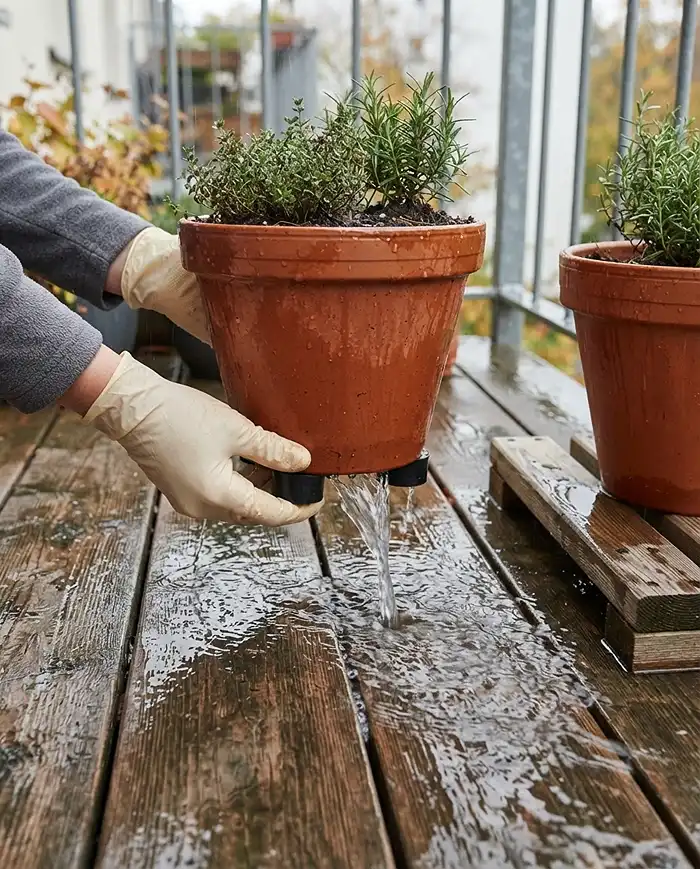
Quick Answer: Lift every container off the balcony floor with rubber pot feet or wooden slats so water can actually exit the drainage holes instead of pooling underneath.
A pot sitting flush against concrete or wood creates a vacuum seal. Water can’t escape even with holes at the bottom, because there’s nowhere for it to go.
- Use 1-inch rubber pot feet (about $6 for a set of 4) under every container
- Or set pots on cedar slats to raise them off the deck by at least half an inch
- Check that drainage holes aren’t clogged with roots or compacted soil before the rainy season starts
Pro Tip: Tilt pots very slightly toward the drainage holes if your balcony floor is perfectly flat. That tiny slope moves water out fast.
The Best Beginner Herbs for Cool, Rainy Balconies
Quick Answer: Chives, flat-leaf parsley, cilantro, and mint are nearly indestructible in cool, wet fall weather, and they’re genetically wired to prefer moisture over heat.
These four cover most kitchen needs and forgive the kind of neglect that autumn weather practically demands.
Chives: The Unstoppable Cool-Weather Allium
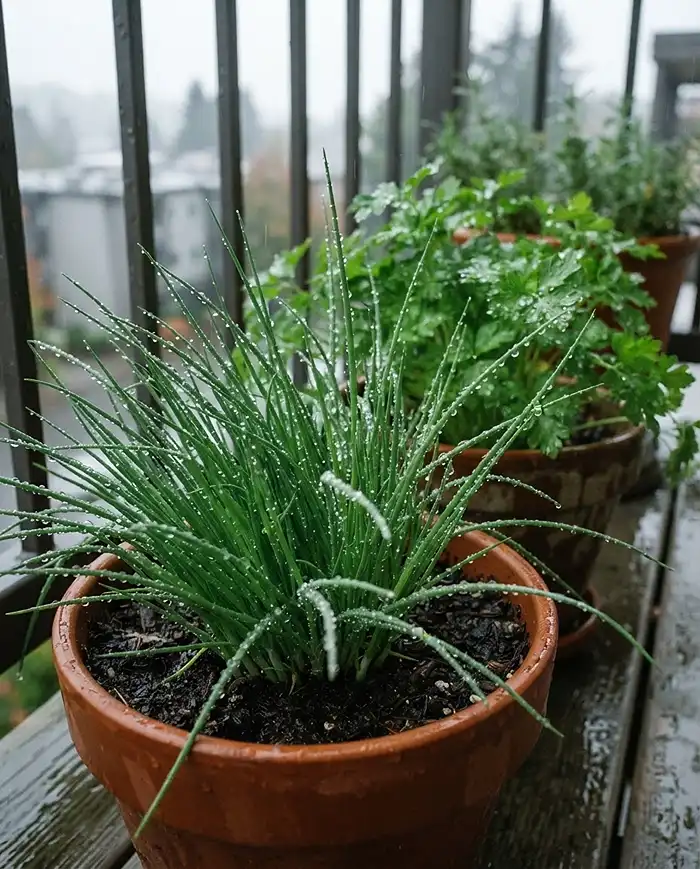
Quick Answer: Chives are one of the toughest herb garden ideas for fall, thriving in damp soil down to about 30°F and bouncing back fast after a hard cut.
These grass-like perennials actually pick up growth as summer fades. I’ve sheared mine to 2 inches for a batch of potato soup and had fresh growth back within 10 days.
Real Example: My chive pot sat through three weeks of near-daily Portland rain last October with zero issues. Meanwhile my rosemary two feet away turned black at the base.
Pro Tip: Chives also seem to discourage aphids on nearby plants, so I keep a pot next to my parsley on purpose.
Flat-Leaf Parsley and Cilantro: The Autumn Twins
Quick Answer: Plant flat-leaf parsley and cilantro side by side, since both actually prefer 50°F to 60°F weather and damp soil over hot, dry summer conditions.
Summer heat sends cilantro straight to bolting (flowering, which ruins the leaf flavor) within weeks. Cool fall weather removes that pressure completely.
| Herb | Ideal Temp Range | Common Autumn Issue |
|---|---|---|
| Flat-leaf parsley | 50°F–70°F | Slow germination, otherwise trouble-free |
| Cilantro | 50°F–65°F | Still bolts if a warm snap hits |
Real Example: I planted ‘Giant of Italy’ parsley and ‘Slow Bolt’ cilantro in the same 14-inch container in late September, zone 8b. Both stayed productive through Thanksgiving without a single bolt.
Pro Tip: Direct-sow cilantro rather than transplanting; it hates having its roots disturbed and sulks for a week if you do.
Mint: The Vigorously Thirsty Survivor
Quick Answer: Peppermint or spearmint will happily drink up excess autumn rain, but keep it strictly isolated in its own pot or it will take over every neighboring container.
Mint’s root system is aggressive enough to punch through drainage holes and invade the pot next to it. On a small balcony garden, that’s a real problem.
Pro Tip: Give mint a container with no other herbs in it, full stop, even if that feels wasteful on a tight balcony.
Designing a Rain-Proof Potting Soil Mix
Quick Answer: Blend standard potting soil with 30% to 40% coarse perlite or horticultural pumice to build permanent air pockets that let rainwater pass straight through.
This mix is your insurance policy against weeks of continuous rain, since it physically can’t hold water the way dense, bagged potting soil does.
The Importance of Perlite, Pumice, and Sand
Quick Answer: Mix roughly 3 parts bagged potting soil to 1 to 1.5 parts coarse perlite, or swap in horticultural pumice for a heavier, longer-lasting option.
Perlite and pumice are inorganic, so they don’t break down and compact the way peat or coir does after a season of soaking.
- 3 parts potting soil to 1.5 parts coarse perlite for lightweight containers
- Swap perlite for pumice on windy balconies since it adds weight and won’t float to the surface
- Avoid fine sand, which can clog pore spaces instead of opening them
Pro Tip: Buy “coarse” or “horticultural” grade perlite specifically, the fine seed-starting grade breaks down too fast under repeated rain.
Step-by-Step Planting Guide for Fall Rain Survival
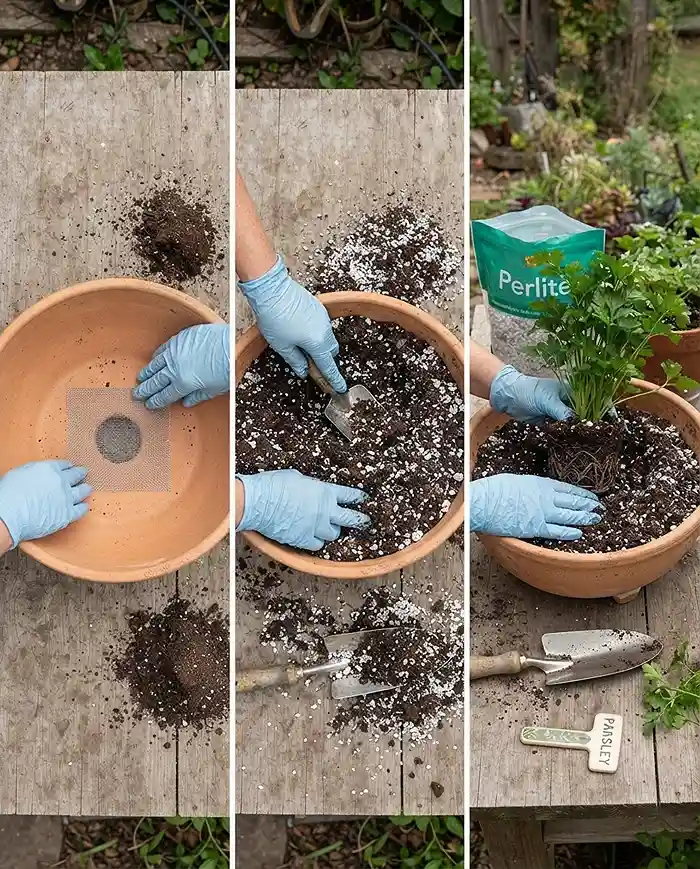
Start with wide, shallow pots rather than deep, water-trapping cylinders. A 12-inch-wide by 8-inch-deep pot drains far better than a tall, narrow one holding the same volume.
Cover each drainage hole with a small square of window screen or landscape fabric mesh. This stops soil from washing out during heavy downpours while still letting water flow freely.
Fill with your perlite-amended mix, then plant so the herb’s crown, where stem meets root, sits just slightly above the soil line. A buried crown is a rotting crown in wet weather.
Water in once at planting, then let the rain take over. Check the internal link on cool-weather herbs for pots for more container size guidance.
Autumn Maintenance for a Damp Herb Garden
Quick Answer: Switch to a hands-off watering approach and stop fertilizing entirely once nighttime temps drop into the 40s°F, since both encourage disease in cold, wet soil.
The Finger-Test and Halting Fertilization
Quick Answer: Push a finger 2 inches into the soil before watering at all; if it’s damp, skip it, and stop liquid fertilizer completely once fall rain becomes regular.
High-nitrogen feed pushes soft, tender new growth exactly when cold and damp conditions are primed to rot it. This is one of the most common beginner mistakes I see.
Pro Tip: If you want to feed at all in fall, use a diluted, low-nitrogen fertilizer at half strength, and only on herbs that still look vigorous.
Common Problems & Solutions
Wet, cool container setups tend to produce the same handful of issues. Here’s how to spot and fix them fast.
Powdery Mildew and Fungal Leaf Spots
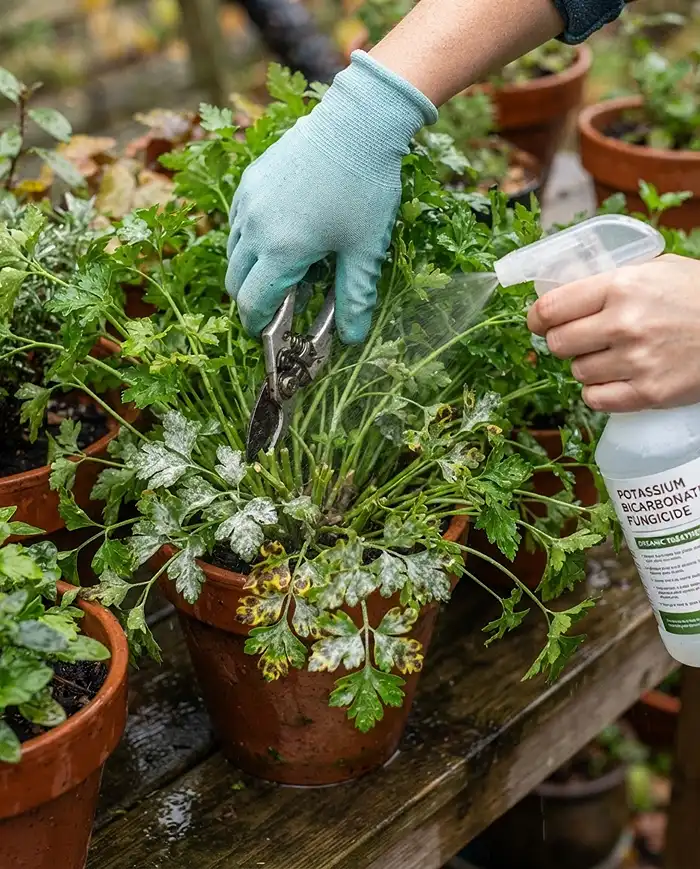
Quick Answer: White, dusty spores signal powdery mildew, while black spots on parsley usually mean a fungal leaf spot; both respond well to a potassium bicarbonate spray.
Thin out the inner canopy of leaves too. Poor airflow is usually what let the fungus take hold in the first place.
Pro Tip: Spray in the morning so leaves dry fully before evening, since damp leaves overnight invite the problem right back.
Soil Splashing and Muddy Leaves
Quick Answer: Heavy autumn rain blasts mud onto low leaves, ruining them for cooking; top-dress the soil with a half-inch layer of fine gravel or horticultural sand to stop it.
This is a five-minute fix per pot and makes a real difference in how clean your harvest looks by November. For more autumn balcony garden ideas beyond herbs, see our guide on autumn balcony garden ideas.
Frequently Asked Questions
Can Mediterranean herbs like rosemary survive heavy autumn rain?
Rosemary, thyme, and oregano are very cold-hardy but genetically dislike wet soil. Left unprotected during continuous fall rain, they rapidly develop root rot and turn black at the base.
Should I move my pots under a balcony overhang when it rains?
Yes. Temporarily pulling pots under an overhang or flush against the wall during multi-day downpours is an easy way to control soil moisture and keep delicate herbs from drowning.
How do I harvest wet herbs for cooking?
Harvest in late morning after rain has stopped but before the afternoon chill sets in. Shake stems gently to remove excess water, then use a salad spinner indoors to dry leaves before storing or chopping.
How often should I water a fall container herb garden?
Often not at all during active rain. Use the two-inch finger test before every watering, and skip it if the soil still feels damp.
What size pot is best for a small balcony garden in fall?
Choose wide, shallow pots around 12 inches wide by 8 inches deep rather than tall, narrow containers, since shallow pots drain excess rainwater far more efficiently.
Conclusion
Fall balcony herbs reward the right setup: elevated pots, a gritty soil mix, and herbs that actually want the cold and damp. Chives, parsley, cilantro, and mint check every box.
Get the drainage right and this container herb garden practically runs itself through the rainy season, as of this fall 2026 growing window.
For pollinator-friendly companion planting ideas nearby, check our fall pollinator planters guide. For more on drainage science and root rot prevention, the University of Maryland Extension herb care guide is a solid reference.
Key Takeaways
- Fall balcony herbs like chives, parsley, cilantro, and mint genuinely prefer cool, damp conditions over summer heat
- Elevate every container and amend soil with 30-40% perlite or pumice to prevent wet feet and root rot
- Switch to the two-inch finger test and stop fertilizing once temperatures drop into the 40s°F
- Isolate mint in its own pot, and top-dress soil with gravel to stop mud splashing onto leaves
- Wide, shallow pots drain far better than deep, narrow ones during weeks of continuous rain