

Fall Balcony Herb Garden
A fall balcony herb garden turns a cold railing into a fresh-cut spice rack for stews and roasts. Here’s how to build a shelf that survives autumn weather and still looks good.
I grow a five-tier galvanized shelf on a north-facing balcony in zone 6b, and October is honestly my favorite month out there. The basil’s long gone, but the rosemary and thyme are just hitting their stride.
Table of Contents
Embracing the Fall Balcony Herb Garden
A container herb garden doesn’t retire when summer ends. Vertical shelving turns a narrow balcony into a working spice rack you can reach from the kitchen door in ten seconds flat.
Fall light hits at a lower angle and stays cooler, which changes what you can grow and how you arrange it. Pair that crisp outdoor look with what’s actually happening in your kitchen: braises, soups, roasted root vegetables. This is where a small balcony garden earns its keep.
Why Autumn Is Ideal for Container Herbs
Quick Answer: Cooler fall temperatures slow plant growth just enough to concentrate essential oils, giving herbs like rosemary and thyme a stronger, more complex flavor than their summer-grown counterparts.
Here’s the mechanism: heat stress pushes plants to grow fast and thin, diluting flavor compounds. Once nights drop into the 50s Fahrenheit (10-15°C), that growth slows and oil concentration goes up.
You’ll also water less. My pots that needed daily water in July are down to twice a week by mid-October. Less stress, less maintenance, better flavor — autumn is genuinely the sleeper season for container herbs.
Planning Your Balcony Herb Shelf Setup
Before you buy a single plant, figure out where the shelf goes and what it’s made of. Fall brings rain, wind, and eventually frost, so your setup needs to handle weather your summer arrangement never saw.
Walk your balcony at three different times of day for a week. Note where sun lands, where wind funnels through, and where rain pools. That fifteen minutes of observation will save you from a shelf that tips over in November.
Choosing Weather-Resistant Shelving and Tools
Quick Answer: The best shelving for a fall balcony herb garden is galvanized steel, powder-coated metal, or weather-treated cedar — all three resist rust and rot when pots get heavy with autumn rain.
- Galvanized steel shelves: rust-resistant, handle wet terracotta well, budget-friendly around $60-120 for a 4-tier unit
- Powder-coated metal: more color options, slightly less weather-hardy in coastal salt air
- Weather-treated cedar: warmest look, needs a fresh oil coat every season or two
- Skip untreated wood and thin plastic shelving — both warp or crack once temperatures swing below freezing
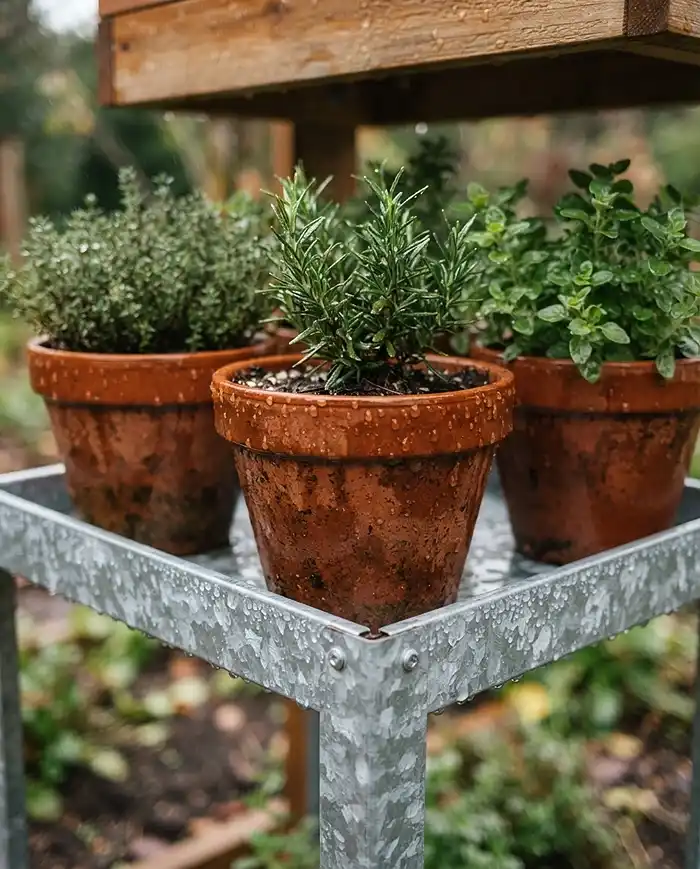
Real Example: My first fall shelf was a cheap plastic rack from a big-box store. By late November it had cracked at two joints under the weight of wet 8-inch terracotta pots. I replaced it with galvanized steel and haven’t touched it in three years.
Pro Tip: Check the weight rating per shelf, not just the total unit — wet potting mix in a 10-inch pot can weigh 15-20 pounds, and most cheap shelves list only the combined capacity.
Tracking Sun Exposure as the Season Changes
Quick Answer: As autumn progresses, the sun sits lower in the sky, so herbs that got full sun in August may end up shaded by a railing or neighboring building by October.
Reassess your balcony’s microclimate [the specific temperature and light pattern of your exact spot] every few weeks through fall. Move sun-loving Mediterranean herbs like rosemary to the highest, most exposed shelf tier.
Chilly wind is the other variable. If your balcony faces a wind tunnel between buildings, angle the shelf so a wall or railing breaks the worst of it, especially for tender-leafed herbs like parsley.
Top Culinary Herbs for Autumn Kitchens
Not every herb wants to keep growing once temperatures drop. The trick is splitting your shelf between cold-hardy perennials that shrug off light frost and fast annuals that love the cooler air.
Planting Hardy Perennials: Rosemary, Thyme, Sage
Quick Answer: Rosemary, thyme, and sage are Mediterranean perennials that tolerate light frost down to about 25-30°F (-4 to -1°C) in containers, provided their soil drains fast and doesn’t sit wet.
| Herb | Container Size | Cold Tolerance | Sun Needs |
|---|---|---|---|
| Rosemary (‘Tuscan Blue’) | 12-inch minimum | To 25°F (-4°C) | Full sun, 6+ hours |
| Thyme (‘Argenteus’) | 8-inch | To 20°F (-6°C) | Full sun |
| Sage (‘Berggarten’) | 10-inch | To 15°F (-9°C) | Full sun to part shade |
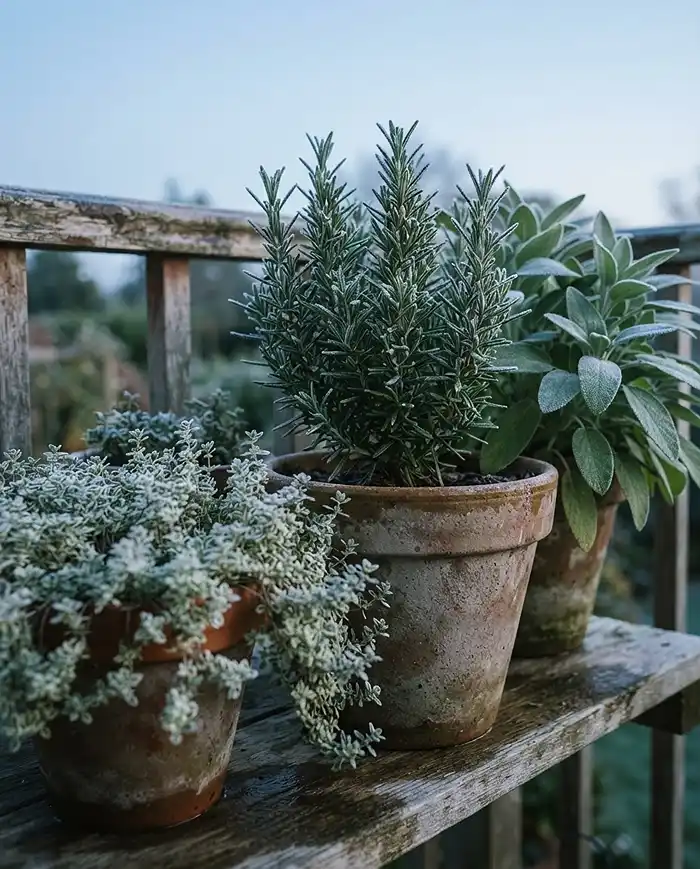
Real Example: I overwintered a ‘Tuscan Blue’ rosemary in a 14-inch terracotta pot two years running by moving it against the warmest wall once nights hit the low 30s. It’s now nearly three feet tall.
Pro Tip: Terracotta breathes and drains better than glazed ceramic, but it can crack in a hard freeze if soil stays saturated — always use pot feet in fall.
Growing Cool-Season Annuals: Cilantro, Parsley, Chives
Quick Answer: Cilantro, parsley, and chives are cool-season annuals that bolt [go to seed and turn bitter] in summer heat but produce abundant, tender leaves once temperatures settle into the 50s and 60s Fahrenheit.
- Cilantro (‘Calypso’): sow directly from seed in early fall, ready to harvest in 3-4 weeks
- Parsley (‘Giant of Italy’): transplant seedlings for a head start, tolerates light frost once established
- Chives: perennial but slows dramatically in cold, harvest heavily before the first hard freeze
These three fill in beautifully once your summer basil gives out. I check my guide to cool-weather herbs for pots every September to plan which seedlings to start indoors first.
Styling and Planting Your Autumn Shelf
A working herb shelf can still look like an intentional piece of your fall decor. Mixing planters and adding a few companion plants goes a long way for very little effort.
Using Rustic Planters and Fall Companion Plants
Quick Answer: Breathable terracotta pots and galvanized zinc buckets paired with cold-tolerant companions like ornamental kale or trailing ivy create a cohesive autumn look without sacrificing drainage.
I mix unglazed terracotta for the perennial herbs with a couple of galvanized buckets holding trailing ivy on the end shelves. The metal-and-clay combination reads as intentional, not mismatched.
Ornamental kale and pansies add color once herb foliage turns muted green-gray. Both tolerate light frost, so they won’t die back the first cold snap in October. For more layout inspiration, my autumn balcony garden ideas post has full shelf photos.
Preparing Well-Draining Soil for Cool, Wet Weather
Quick Answer: Blend a standard potting mix with perlite and coarse sand at roughly a 3:1:1 ratio, and always use pot feet, to keep roots from sitting in cold, waterlogged soil.
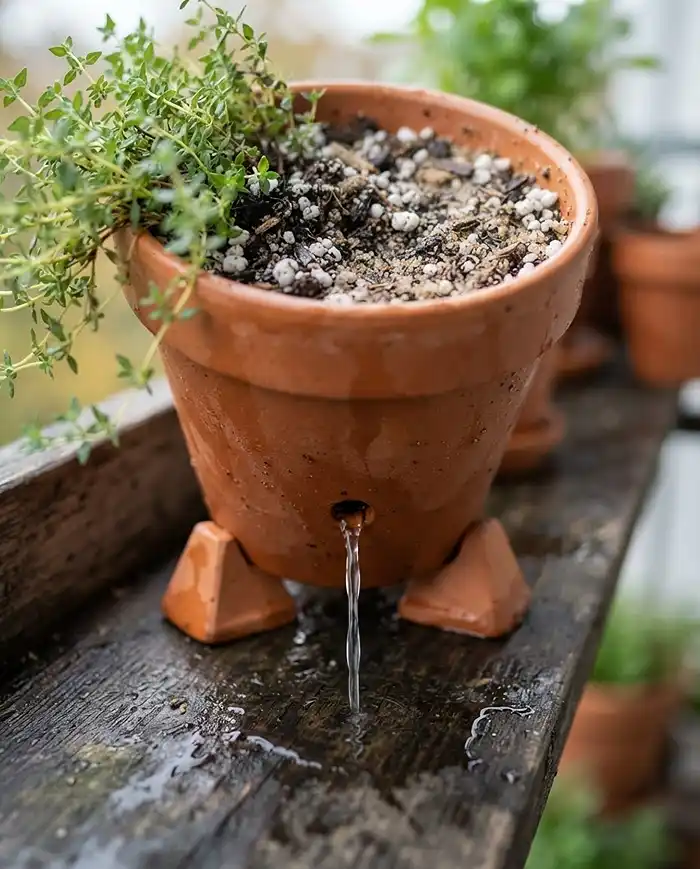
Damp autumn weeks are exactly when root rot shows up. Perlite creates air pockets that let excess water drain instead of pooling around roots.
Pot feet [small risers under a container] lift the drainage holes off the shelf surface so water actually exits instead of backing up. It’s a two-dollar fix that prevents a season of soggy soil.
Fall Maintenance and Frost Protection
Once your shelf is planted and styled, the job shifts to keeping plants healthy as days shorten and temperatures drop toward freezing.
Adapting Your Watering Routine for Cooler Days
Quick Answer: Use the finger test — stick a finger two inches into the soil, and only water if it’s dry — since container herbs transpire much slower in fall and need deep, infrequent morning watering rather than daily summer soaking.
I made the mistake of keeping my summer watering schedule into October one year and lost a sage plant to root rot. Now I check soil moisture before I water anything, no exceptions.
Water in the morning so foliage dries before evening chill sets in. Wet leaves overnight in cold air are an open invitation for fungal problems.
Common Problems and Solutions
Damp fall air and dropping temperatures bring two recurring issues to balcony herb shelves: fungal growth and sudden frost damage. Both are manageable if you catch them early.
Powdery Mildew in Damp Fall Air
Quick Answer: Powdery mildew shows up as a white, dusty coating on leaves, caused by poor air circulation combined with cool, damp conditions typical of fall balconies.
Space pots so air moves between them, and prune back dense growth on sage or mint that blocks airflow. If mildew appears, spray affected leaves with diluted neem oil every 5-7 days until it clears.
Pro Tip: Remove and discard infected leaves rather than composting them — mildew spores can survive and spread from garden compost.
Early Frost Damage on Tender Leaves
Quick Answer: After an unexpected freeze, prune away any blackened, mushy foliage right away and wrap the shelf in horticultural fleece to insulate root systems for the rest of the season.
Blackened leaves won’t recover, and leaving them on invites rot to spread into healthy stems. Cut back to firm, green growth.
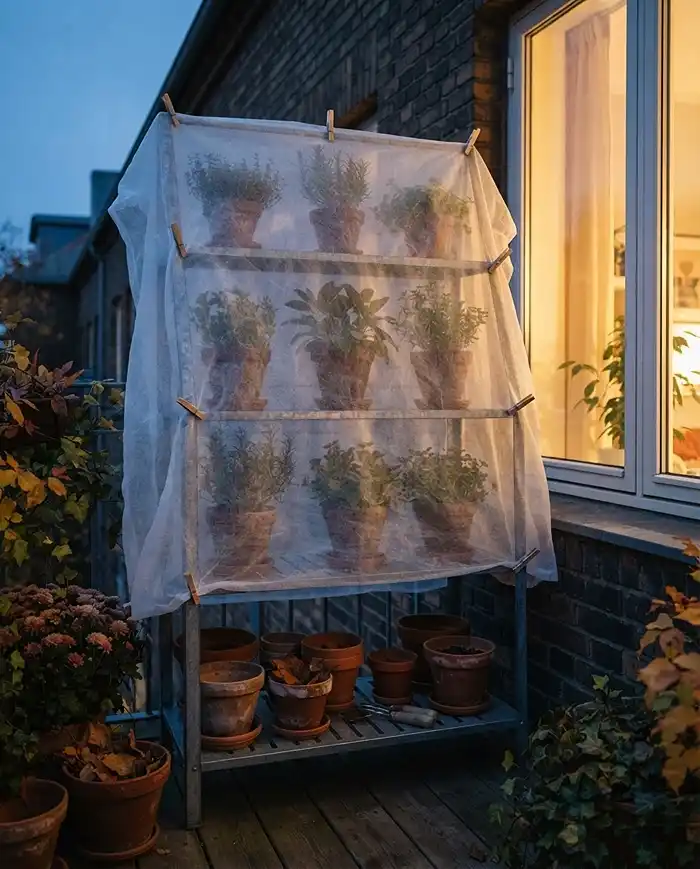
Horticultural fleece [a lightweight, breathable frost cloth] draped loosely over the whole shelf overnight can buy your herbs another few weeks before you need to move anything indoors.
If your balcony sits in deep shade through fall, pair hardy herbs with the combinations in my cool-season shade container combos guide.
Frequently Asked Questions
How do I transition my summer herb shelf to autumn?
Pull out spent, heat-loving annuals like basil once they stop producing. Refresh the depleted potting soil with fresh compost, then rotate in cold-hardy replacements like parsley and chives into the sunniest remaining spots on the shelf.
Can my potted herbs survive a winter freeze outside?
Some, like thyme, survive hard freezes when planted in the ground, but container roots are far more exposed to cold. Wrap pots in bubble wrap or move them indoors once temperatures consistently drop below 28°F (-2°C).
Should I fertilize my balcony herbs in the fall?
Stop using nitrogen-heavy fertilizers by mid-autumn. Growth naturally slows with shorter daylight, and pushing tender new growth late in the season makes it far more susceptible to frost damage.
What’s the best location for a balcony herb shelf in fall?
Choose the spot that gets the most direct sun as the season progresses, usually against a south- or west-facing wall, and shielded from wind tunnels between buildings.
How much sunlight do fall herbs actually need?
Mediterranean perennials like rosemary, thyme, and sage need at least 6 hours of direct sun daily. Cool-season annuals like cilantro and parsley tolerate as little as 4 hours and often prefer some afternoon shade.
Conclusion
A fall balcony herb garden rewards you with better flavor and less maintenance than its summer version. Check your USDA hardiness zone on the official USDA Plant Hardiness Zone Map before choosing which perennials to overwinter outdoors.
- Autumn’s cooler temperatures concentrate flavor in herbs like rosemary, thyme, and sage
- Choose galvanized steel or treated cedar shelving to survive fall rain and wind
- Split your shelf between hardy perennials and fast-growing cool-season annuals like cilantro and parsley
- Well-draining soil and pot feet prevent root rot during damp autumn weeks
- A well-planned fall balcony herb garden keeps fresh herbs within reach through the first frosts