
Japandi Balcony Ideas
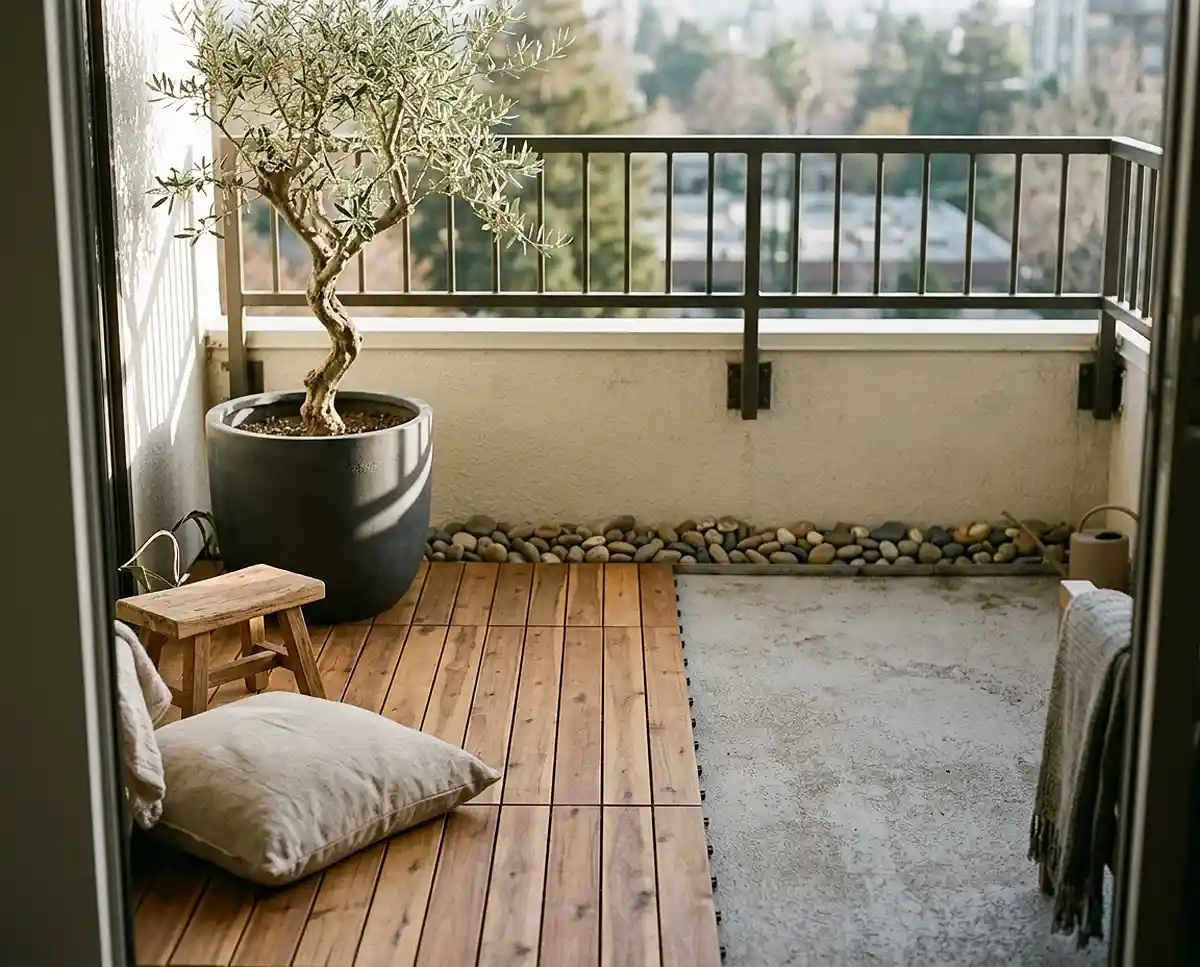
These Japandi balcony ideas turn a bare concrete slab into a calm retreat using wood deck tiles and one olive tree in a pot. Here’s the layout I’d copy first.
I garden on a south-facing, sixth-floor balcony in USDA zone 9b, and I’ve rebuilt it three times. The current version is the first one that feels quiet. It’s also the cheapest, which still surprises me.
Table of Contents
The Essence of Japandi Balcony Design
Japandi blends Japanese wabi-sabi (finding beauty in imperfection) with Scandinavian hygge (cozy, unfussy comfort). On a Japandi balcony, that means fewer things, better materials, and a lot of empty floor.
The recipe is simple: warm wood underfoot, one sculptural tree, a few raw textures, and nothing else. A single olive does the work of ten plants. This is a minimalist garden, so restraint is the whole point.
As of 2026, it also suits the no-drill, renter-friendly approach most apartment patio and balcony dwellers need.
Idea 1: Layouts That Maximize Zen Minimalism
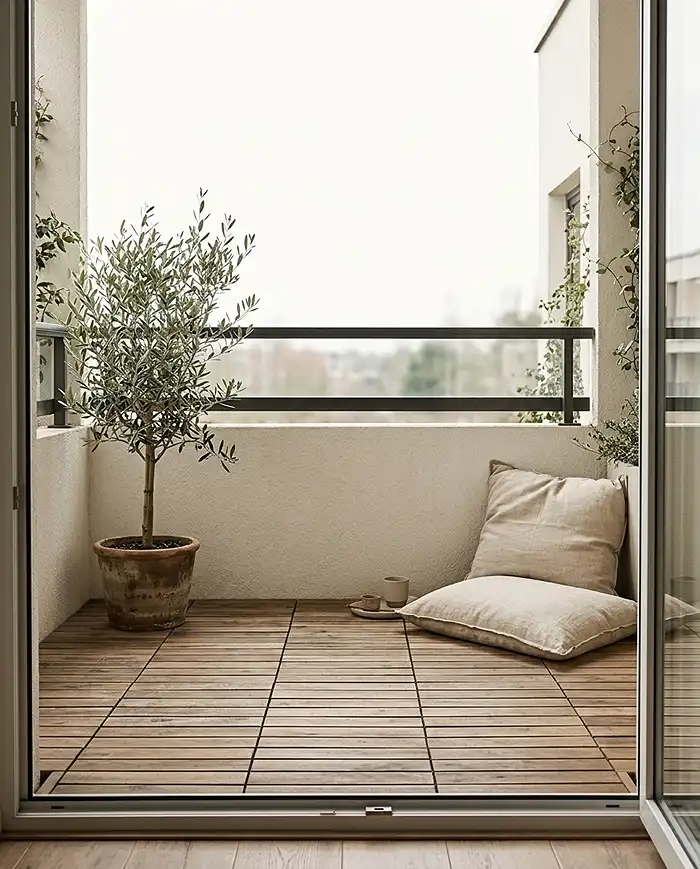
Plan the empty space first, then add objects. Leave roughly half your floor clear and keep sightlines open from the door to the railing. Clutter is the fastest way to break the mood.
Short on floor space? Our vertical balcony garden ideas show how to grow upward instead.
| Layout | Best For | Watch Out For |
|---|---|---|
| Asymmetrical corner | Narrow or small balconies | Tree in too little sun |
| Symmetrical floating bench | Wider balconies with a clear railing | Bench blocking the door swing |
The Asymmetrical Corner Oasis
Quick Answer: Put the olive tree in one far corner and balance it with low seating on the opposite side. The imbalance is intentional, and it’s what makes the space feel Japanese rather than staged.
Offset the pot about 8 inches from both walls so the trunk reads as a silhouette. Then place one low bench or two floor cushions diagonally across. Leave the middle open.
Real Example: On my 5-by-10-foot balcony, a centered tree looked like a lobby plant. Sliding it into the southeast corner fixed the whole space in ten minutes.
The Symmetrical Floating Bench Setup
Prefer calm over tension? Center a slim wooden bench on the railing. A “floating” bench sits on thin legs or a recessed base, so you can see floor beneath it.
Put the olive tree at one end of the bench. Balance the other end with a low stone lantern or a pot of dwarf bamboo. The tree frames the seat without crowding it.
Pro Tip: Choose a freestanding bench. It keeps the look clean and your deposit safe.
Idea 2: Styling With Interlocking Wood Tiles
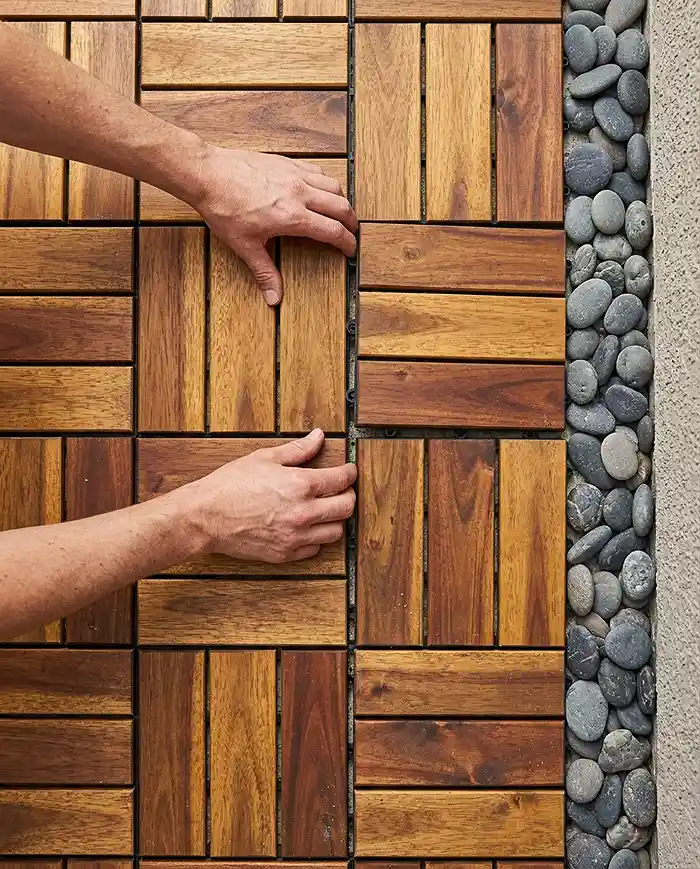
Interlocking wood deck tiles are the easiest balcony flooring upgrade for renters. They click together over concrete with no glue or drilling. Styling them well comes down to grain direction and edges.
Creating Geometric Checkerboard Patterns
Most tiles are 12 by 12 inches with slats running one direction. Rotate every other tile 90 degrees as you lay them. The light catches the grain differently, so you get a checkerboard without mixing colors.
- Start in the corner farthest from the door.
- Alternate slat direction on every tile, across rows and down columns.
- Check the pattern every third row before pressing tiles tight.
I laid 50 square feet of acacia tiles in about 40 minutes. Halfway through, I lost the pattern and had to unclick eleven tiles. Check as you go.
Mixing Wood Tones With River Rock Borders
Leave a 2-inch gap between the tiles and the balcony wall. Fill it with smooth black or white river stones, about 1 to 2 inches wide. It mimics a Zen garden edge and hides uneven wall lines.
Keep stones away from floor drains, since they can clog. Rock is heavy, so use a thin one-inch layer rather than a deep bed.
Idea 3: Making the Potted Olive Tree the Star
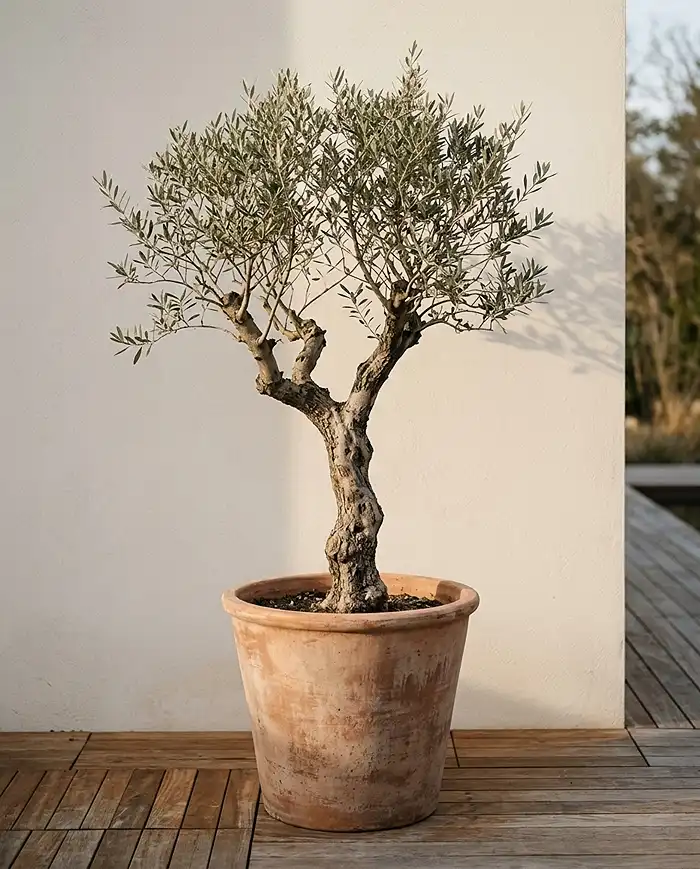
An olive tree in a pot is the whole show here. Its silver-green leaves and gnarled trunk are living wabi-sabi. Pick the right container, prune for light, and it carries the design alone.
‘Arbequina’ and ‘Frantoio’ are two cultivars (named varieties) that handle container life well.
Choosing Wabi-Sabi Planters (Raw Terracotta and Concrete)
Quick Answer: Choose unglazed terracotta, matte charcoal concrete, or muted fiberglass. Rough, imperfect finishes suit wabi-sabi, and porous terracotta also helps olives dry out between waterings.
| Material | Best For | Watch Out For |
|---|---|---|
| Raw terracotta | Fast drying, aged patina | Cracking in hard freezes |
| Matte charcoal concrete | Windy, high-floor balconies | Serious weight |
| Muted fiberglass | Weight-limited balconies | Holds moisture longer |
Size matters too. Aim for a 15- to 20-gallon pot, roughly 18 inches wide, with real drainage holes.
Pro Tip: A 15-gallon pot of damp soil can top 100 pounds. Check your lease and building rules before you haul one up.
Structural Pruning for an Airy, Architectural Canopy
Quick Answer: Prune in late winter or early spring, before new growth. Remove crossing branches, inward-facing shoots, and up to a third of the crowded canopy so light reaches the trunk.
An old Mediterranean rule says a swallow should be able to fly through the canopy. Cut just above an outward-facing bud, and stop at a third per season.
My ‘Arbequina’ arrived dense as a lollipop. I thinned it over two springs, never removing more than a third at once. By the second year, the twisting trunk finally showed.
Idea 4: Layering Japandi Textures and Decor
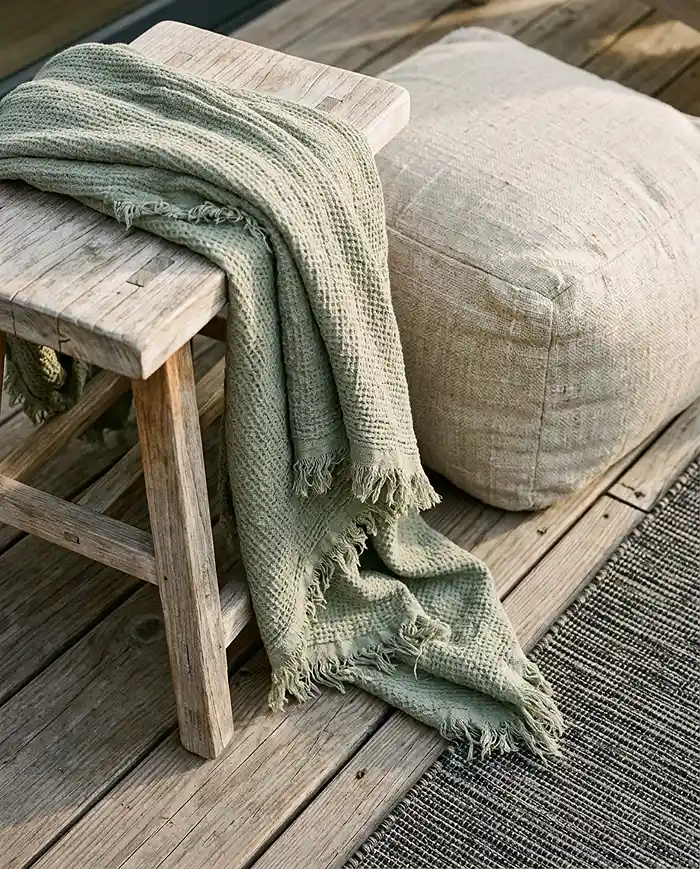
Choose decor that adds warmth without clutter. Stick to three materials: wood, stone, and linen-look fabric. If an item fits none of them, leave it off the balcony.
Love layered color instead? Our boho balcony ideas take the opposite approach.
Low-Profile Seating (Floor Cushions and Teak Stools)
Furniture that sits low draws the eye down and makes the ceiling feel higher. Try a teak stool 12 to 14 inches tall, plus outdoor floor cushions or a linen-look pouf.
Teak weathers to a soft silver, which is pure wabi-sabi. Two stools also double as side tables, keeping your modern outdoor setup uncluttered.
Muted Earth-Tone Textiles
Use weather-resistant outdoor fabric in a strict palette. Solution-dyed acrylic (the color runs through the fiber) resists fading far better than printed polyester.
- Oatmeal: cushions and pouf covers.
- Sage: one throw, folded, not draped.
- Charcoal: the pot and a small outdoor rug.
- Warm rust: a single accent, used once.
These tones bridge indoor hygge and outdoor nature, so the balcony feels like an extension of your living room.
Idea 5: Minimalist Ambient Lighting Concepts
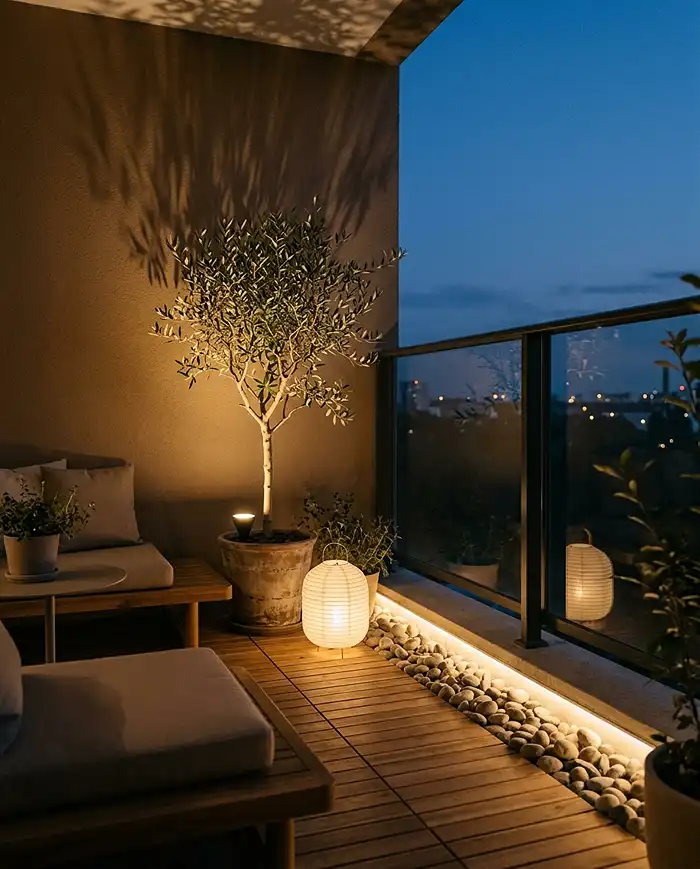
Skip overhead glare. Warm light at 2700K or lower keeps the mood calm and makes the olive’s silver leaves glow. Use three light sources at most, all below eye level.
Hidden LED Strips Under Wood Decking
Run waterproof LED strips (IP65 or higher) along the tile edge, tucked in the gap above the river rock. The light washes the stones and makes the floor appear to float.
Use a plug-in, low-voltage kit, so there’s no wiring. My first strip was rated for indoor use only. It died after one rainy November week, so check the rating.
Paper Lanterns and Warm Solar Uplighting
Hang weatherproof nylon “paper” lanterns at two different heights for the Japanese touch. Then push one warm-white solar uplight into the olive’s pot.
The uplight throws branch shadows on the wall, and that shadow play is the best decoration here. In winter, solar output drops, so park it where it gets full sun by day.
Essential Care for Your Japandi Elements
The design only stays calm if it’s maintained. Two chores matter most: giving the olive its sun and keeping the wood tiles clean and sealed.
Balancing Sunlight for the Olive Tree vs. Decor
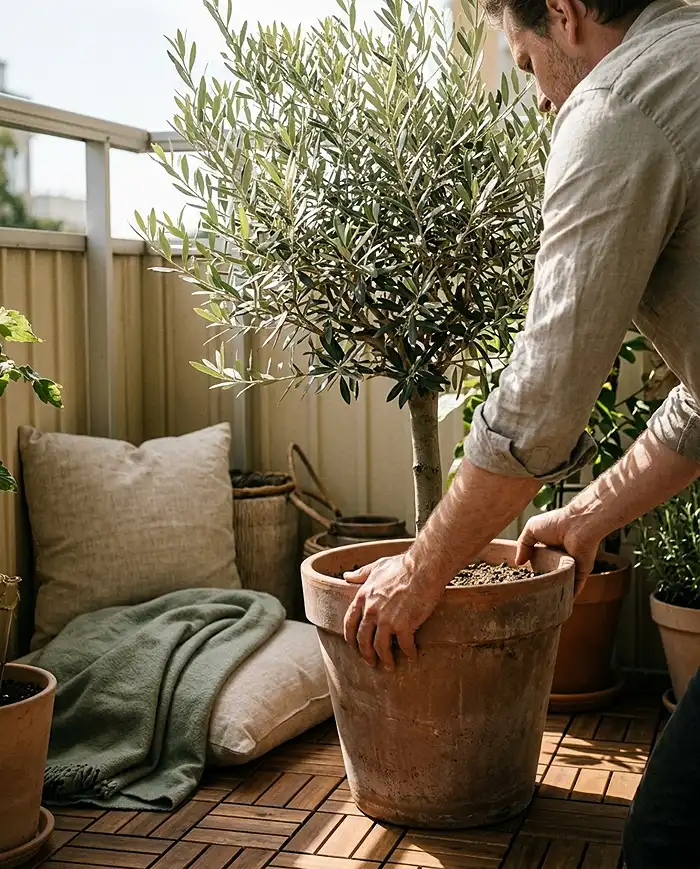
Mediterranean olives need 6 to 8 hours of direct sun, which matches what NC State Extension’s olive profile says about hot, dry summers. Give the tree your sunniest spot.
Keep textiles in shade to prevent fading. Rotate the pot a quarter turn every two weeks so the canopy grows evenly.
My first rust cushions sat in full sun and faded to peach in one summer. Sunny corner for the tree, shady corner for fabric. Growing herbs too? See our balcony vegetable garden guide for sun-sharing tips.
Oiling and Cleaning Wood Decking Annually
- Monthly: sweep dirt out of the tile grooves with a stiff brush.
- Every spring: wash with mild soap, let the tiles dry for 48 hours, then wipe on a thin coat of teak or linseed oil.
- Every fall: lift a few tiles and check the subfloor.
If your tiles came pre-finished, follow the maker’s care sheet before oiling.
Common Problems & Solutions
Two problems show up on almost every balcony like this: a sulking olive and damp tiles. Both come from water with nowhere to go.
Olive Tree Leaf Drop
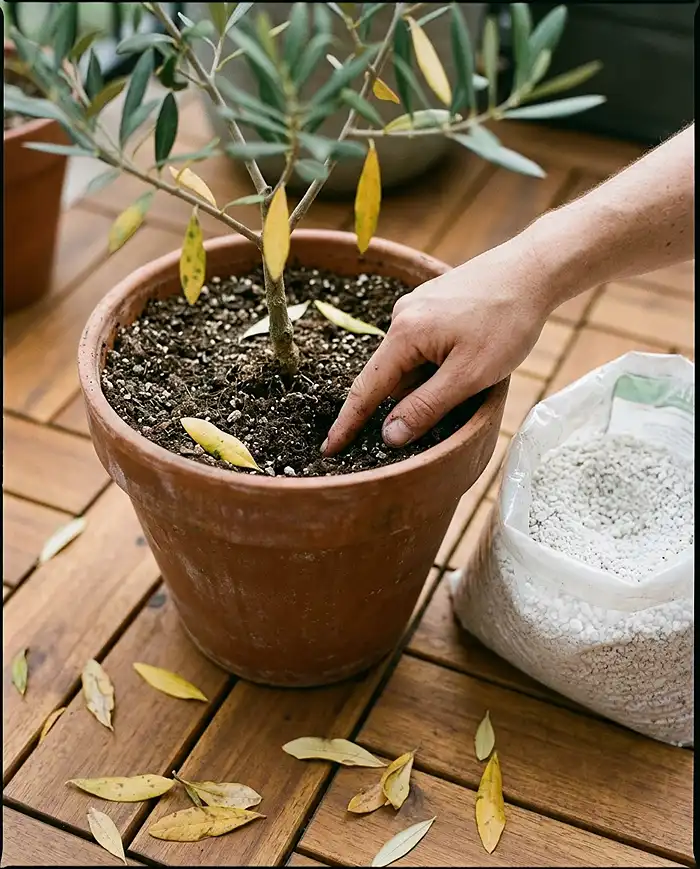
Heavy leaf drop usually means overwatering in a pot that doesn’t drain. Repot into a mix with about one-third perlite, and let the top 2 to 3 inches dry fully between waterings.
I drowned my first ‘Frantoio’ this way and lost half its leaves in two weeks. It recovered after I repotted and cut watering to roughly every 10 days.
Mildew Trapped Under Wood Tiles
Trapped moisture breeds green algae on the concrete below. Each month, lift a few tiles and flush the subfloor with one part white vinegar to three parts water.
Rinse lightly, let everything dry, and relay the tiles. Rotate which tiles you lift so the whole floor gets checked each season.
Frequently Asked Questions
What are the best companion plants for an olive tree in a Japandi design?
Choose one or two textured, shade-tolerant plants, such as clumping dwarf bamboo (Fargesia) or an understated fern, in a matte pot that matches the olive’s. Tuck them into the tree’s afternoon shade. They add contrast without clutter.
Can an olive tree survive winter on an apartment balcony?
Yes, olive trees handle brief frosts. If temperatures stay below 20°F (-6°C), wrap the tree in horticultural fleece or move it indoors to a bright spot. Cold-climate gardeners in zone 7 or colder should plan to bring the pot inside.
Can I cut interlocking wood tiles to fit an angled balcony?
Yes, the plastic backing cuts with a jigsaw. A simpler, renter-friendly option is to leave the angled gaps open and fill them with decorative river stones, which also matches the Zen border look.
How often should I water an olive tree in a pot?
Water deeply when the top 2 to 3 inches of soil are dry, usually every 7 to 10 days in summer and less in winter. Always let excess water drain fully from the pot.
Do wood deck tiles damage a rented balcony?
Interlocking tiles float over concrete with no glue or drilling, so they’re easy to remove. Lift a few every month to prevent trapped moisture, and check your lease for balcony flooring rules.
Key Takeaways
- The best Japandi balcony ideas start with empty space, then add one tree, warm wood, and raw textures.
- Rotate every other interlocking tile 90 degrees for a subtle checkerboard, and edge it with river stones.
- Give the potted olive 6 to 8 hours of sun, a draining pot, and a spring pruning.
- Oil the wood each spring, and lift tiles monthly to stop mildew.