
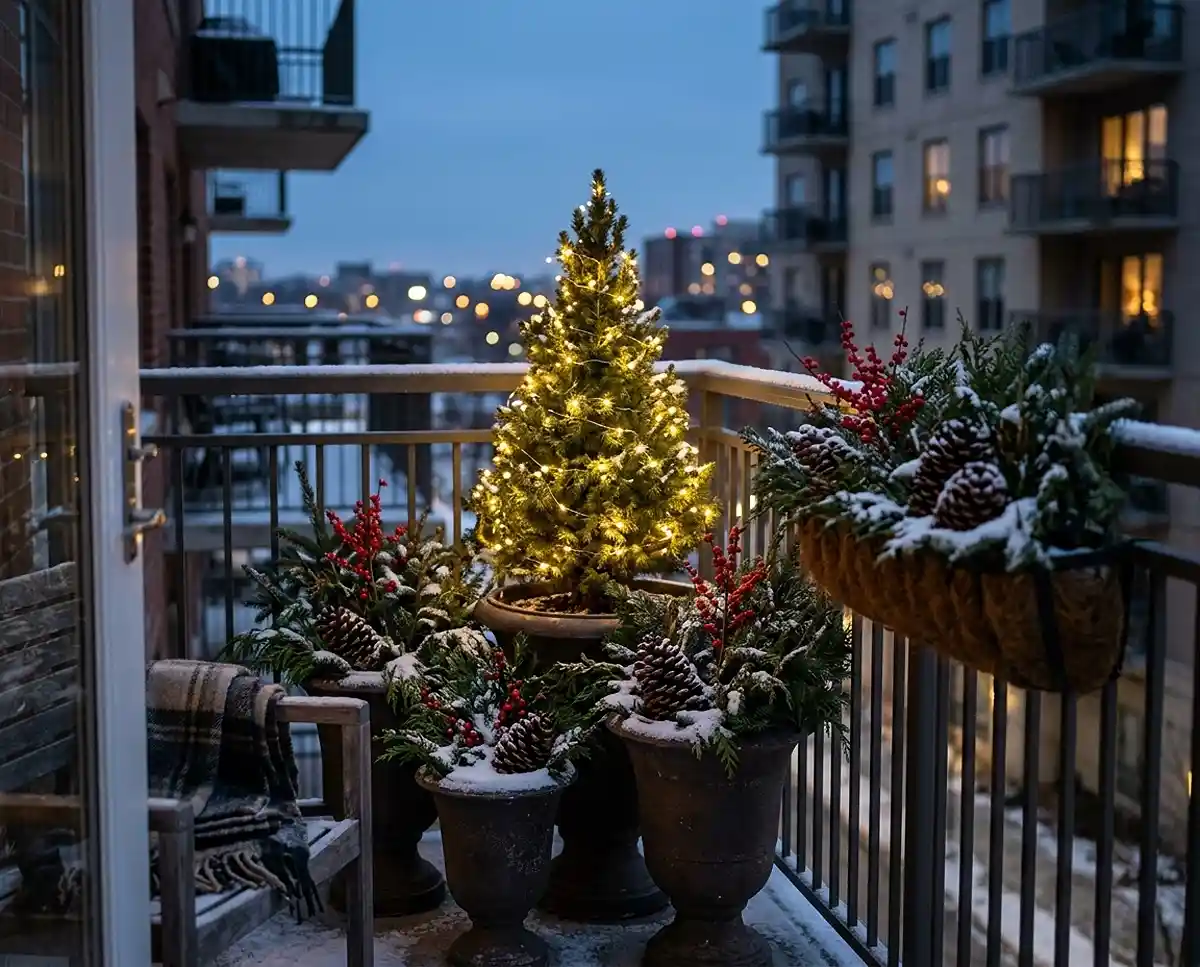
17 Christmas Balcony Planters
Your balcony looks bare in December, and you’re afraid to stab dormant roots. These Christmas balcony planters bring holiday balcony garden cheer safely.
I’m a former community-garden coordinator, and I grow on a sunny rooftop terrace in zone 7a. My setup holds a dozen containers: 14-inch fiberglass urns, 5-gallon grow bags, and two 30-inch railing troughs. Winter lows hit 0 to 5°F up there.
Below you’ll find 17 planter recipes, a simple toolkit, and fixes for mistakes I’ve already made so you don’t have to. Want the bigger picture? Browse these seasonal balcony garden ideas.
Table of Contents
Planning a Festive Balcony That Protects Your Existing Plants
Short Answer: Treat your autumn balcony as the foundation, not a blank slate. Leave dormant perennials, evergreen shrubs, and healthy root balls exactly where they are, then layer cut boughs, lights, and berries around them. You’ll get a festive holiday balcony garden without losing a single plant.
Think of your pots as three groups. Dormant perennials sleep under bare soil. Evergreen shrubs keep working all winter. Empty pots are your open canvas. Each group gets different treatment, and I’ll show you how.
Auditing Dormant Root Balls, Hardiness Zones, and Wind-Tunnel Safety
Short Answer: Map every pot before you add decor. Probe gently with a chopstick to find dormant crowns [the base of a perennial where spring shoots emerge]. Choose live evergreens rated two zones colder than yours, because pots freeze harder than ground. Anchor tall pieces with weight before December gusts arrive.
Roots go quiet once soil stays below about 40°F, but crowns are alive under that bare dirt. Mark each one with a plant tag so nobody pokes it later.
Roots in pots feel cold air from every side, so I shop two zones colder than mine. In zone 7a, that means zone 5 plants. Find yours on the USDA Plant Hardiness Zone Map.
Plant-Safe Holiday Lighting: Why Cool LEDs Beat Incandescent Bulbs
Short Answer: Use warm-white, outdoor-rated LED micro-lights or solar strings on living conifers and boxwoods. LEDs run cool, so they won’t scorch resinous needles or wake branches from winter dormancy. Old glass incandescent bulbs give off real heat against foliage, and plants notice that on frozen nights.
In December 2020, I wrapped my 24-inch tub of dwarf Alberta spruce ‘Conica’ in vintage C9 bulbs. By January 8, a hand-sized patch of needles had browned. I swapped in LED micro-lights, and that spruce has stayed fully green for two winters.
As of winter 2026, outdoor LED strings are easy to find. Just check the box for an outdoor or wet-location rating.
Essential Materials, Frost-Proof Containers, and Greenery Prep Tools
Short Answer: You need frost-proof pots, a few insulating extras, and basic floristry tools. Fiberglass urns, coco-lined troughs, and rubber pot feet handle freezes. Sharp pruners, floral picks, paddle wire, and a leaf-coating spray keep cut greens fresh through New Year’s Day. Everything here is cheap and reusable.
Frost-Proof Urns, Railing Hayracks, and Breathable Root-Zone Insulation
Short Answer: Choose freeze-proof fiberglass urns and heavy-duty coco-lined railing troughs, and lift every pot on rubber feet. Then tuck cut evergreen boughs around existing nursery pots like a blanket. The boughs trap air, soften temperature swings, and keep roots from freezing and thawing repeatedly.
- Fiberglass or resin urns, 14 to 18 inches wide, with drainage holes
- Coco-lined railing troughs, about 30 inches long, with secure rail brackets
- Rubber pot feet, so meltwater drains and bases don’t freeze to the deck
- Burlap and loose cut boughs for wrapping nursery pots
| Container | Typical size | Best for |
|---|---|---|
| Fiberglass urn | 14 to 18 inches | Dwarf conifers, Ideas 1 and 7 |
| Coco-lined railing trough | 30 inches long | Ideas 3, 14, and 16 |
| Wire hanging basket | 12 to 14 inches | Idea 15 kissing balls |
| Lined wooden crate | 18 x 12 inches | Idea 13 |
The Holiday Gardener’s Toolkit: Pruning Shears, Floral Picks, and Anti-Desiccant Spray
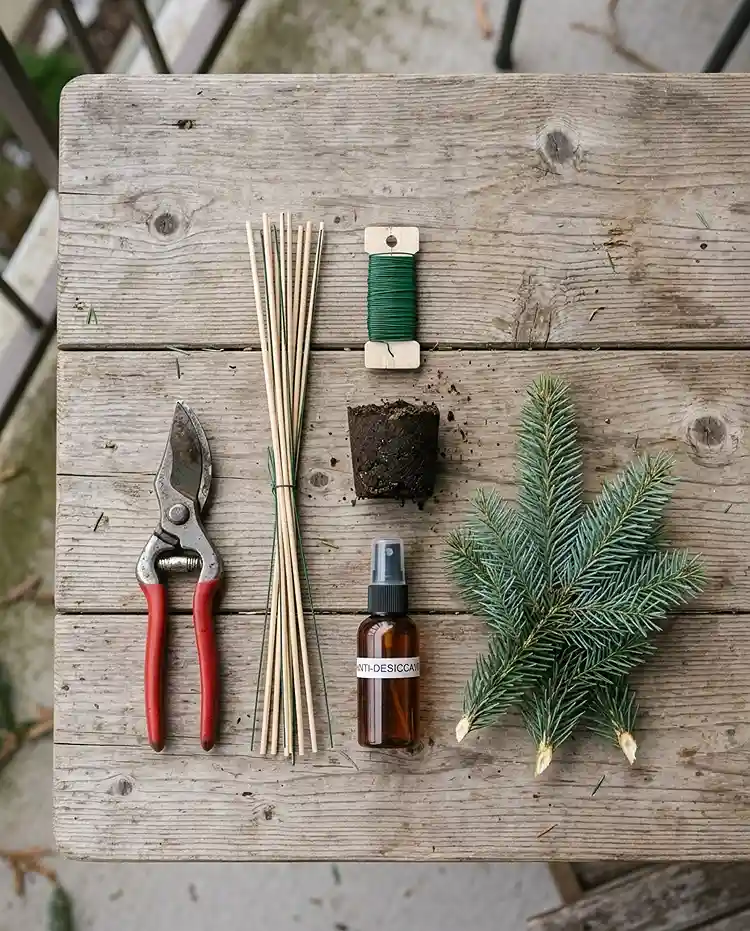
Short Answer: A small kit does most of the work. Bypass pruners [shears whose blades slide past each other] make clean cuts. Wilt-Pruf [an anti-desiccant, a spray that slows moisture loss] protects needles. Picks, wire, and soil blocks do the rest, keeping greens fresh through New Year’s Day.
- Bypass pruners for clean 45-degree cuts
- Wooden wired floral picks for berries, cones, and ornaments
- Green paddle wire to bind swags and secure cones
- Moisture-retaining soil blocks for cut-only pots
- Pine-oil Wilt-Pruf spray for needles and boxwood
Last season, I sprayed half my cut noble fir boughs with Wilt-Pruf on November 28 and left half bare. The sprayed ones stayed green until January 30, about nine weeks. The bare ones crisped up by December 20.
17 Christmas Balcony Planters That Work With Your Existing Plants
Short Answer: These 17 Christmas balcony planters mix living winter plants, cut boughs, dried botanicals, and gentle lighting. Each recipe works with pots you already own and leaves dormant roots alone. Pick two or three that suit your light, wind, and zone, then repeat them for a tidy look.
Ideas 3, 6, and 14 are my favorite winter railing planter decor picks. They sit up and out of the way of your floor pots.
Idea 1: Living Dwarf Alberta Spruce “Potted Christmas Tree” with Creeping Wintergreen
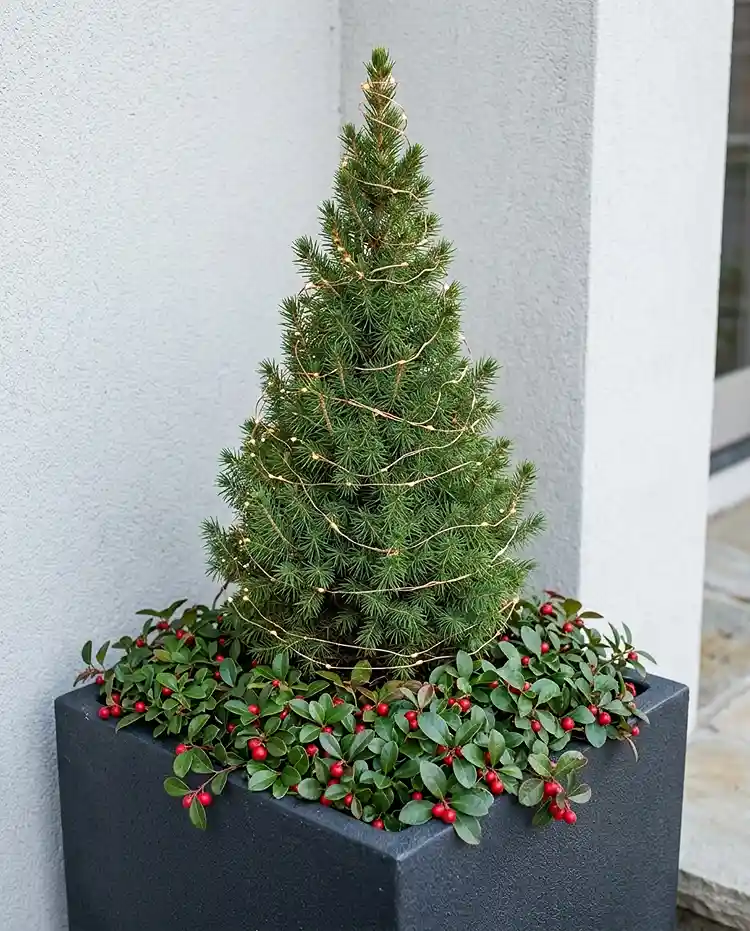
Dress a conical Picea glauca ‘Conica’ (zones 2 to 8) in an 18-inch corner planter like a tiny tree. Tuck scarlet-berried wintergreen (Gaultheria procumbens) at its base. Wrap featherweight copper fairy lights loosely from tip to base. Skip heavy ornaments, since wet snow bends the branches.
Idea 2: Red-Twig Dogwood and Cut Noble Fir “Interplanted” Dormant Pot
Slide cut noble fir and cedar boughs along the outer rim of a pot holding a dormant perennial. Push three or four crimson Cornus sericea stems into the back edge for height. The boughs insulate the soil while the stems add drama. Keep everything away from the central crown.
Idea 3: Festive Railing Box of Living Boxwoods, Skimmia Japonica, and Pinecones
Fill an over-the-rail box with dwarf Buxus globes and ruby-budded Skimmia japonica ‘Rubella.’ Wire clustered pinecones to floral picks and set them between plants. Skimmia likes zones 7 to 9, so in zone 7a, hang this box on the sheltered side of the building.
Idea 4: Christmas Rose (Helleborus Niger) and Silver Dusty Miller Frost Bowl
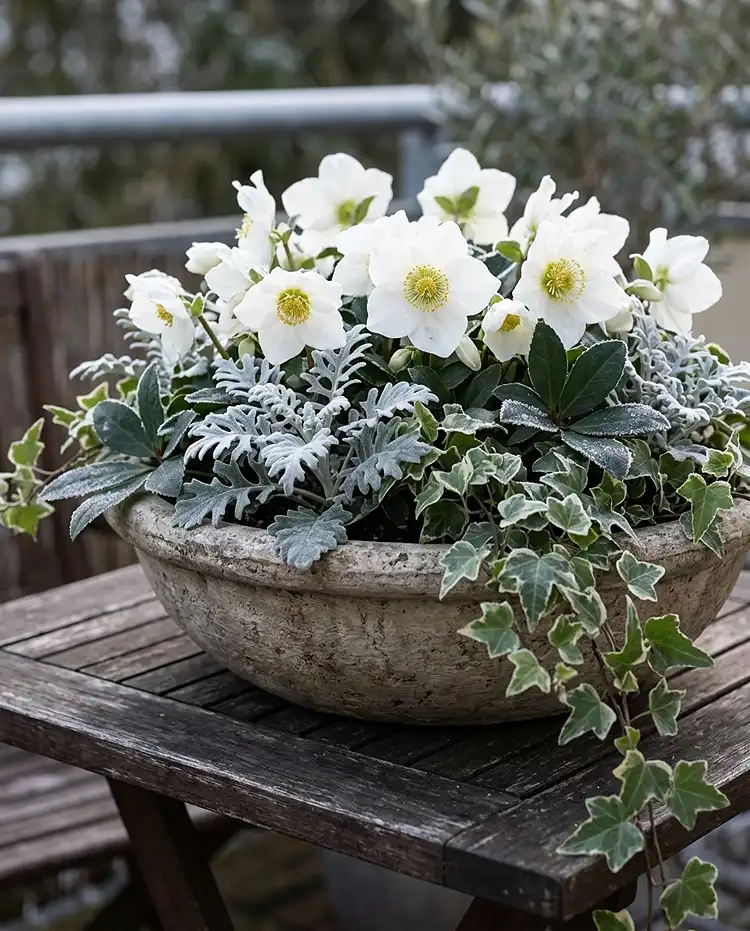
Plant white Christmas rose (Helleborus niger) in a shallow 14-inch bowl with silver dusty miller (Jacobaea maritima). Let variegated English ivy spill over the rim. This shade-tolerant tabletop planter opens white blooms in December. Dusty miller stops at about 20°F, so cover it during hard freezes.
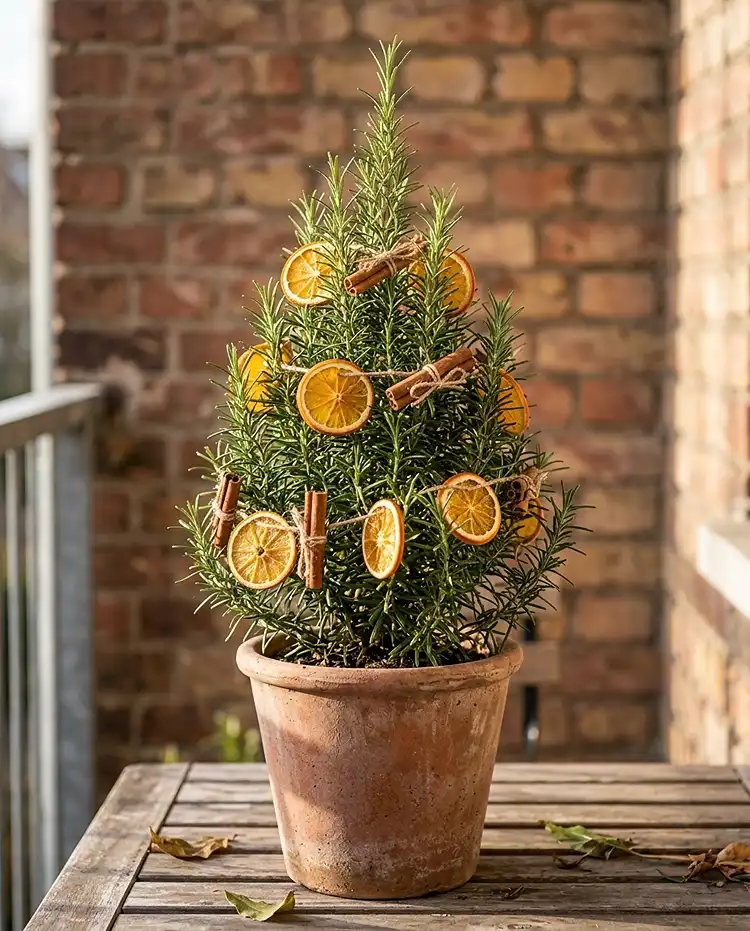
Idea 5: Aromatic Rosemary “Tabletop Christmas Tree” with Dried Orange Slices
Sunny balconies in zones 7 to 10 can style an upright rosemary like ‘Arp’ as a tabletop tree. Prune it into a loose cone, then add cinnamon sticks and dehydrated orange-slice garlands. It smells wonderful every time you brush past. Slide it against a wall before a hard freeze.
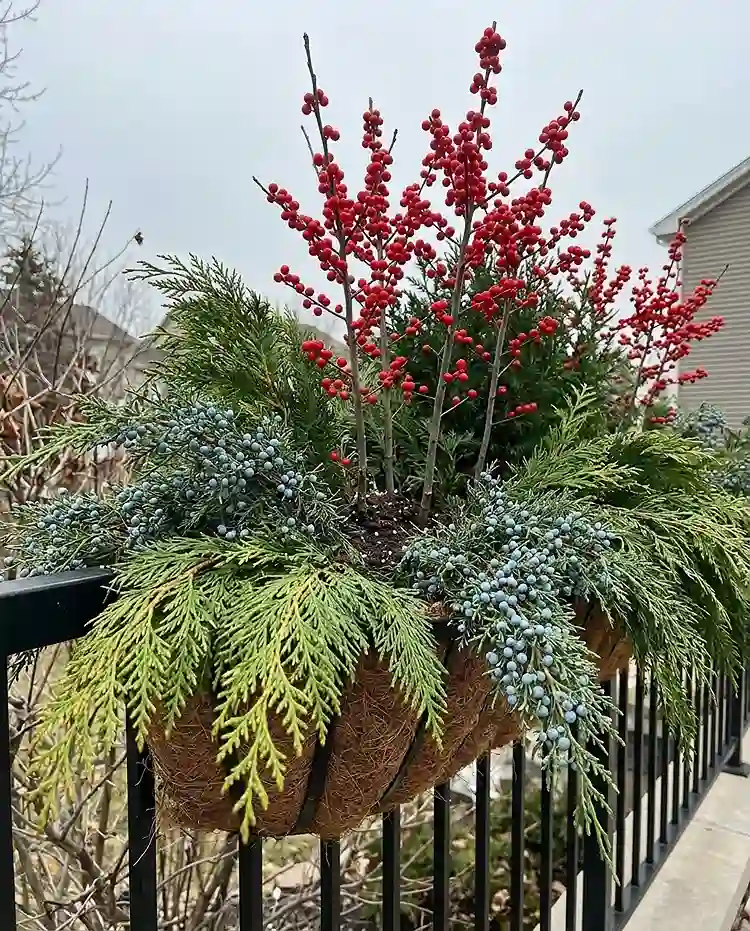
Idea 6: Cascading Incense Cedar, Juniper Berries, and Red Winterberry Railing Swag
Weave fresh-cut incense cedar (Calocedrus decurrens) and blue-berried juniper branches through an empty railing planter. Anchor the swag with bright red winterberry (Ilex verticillata) stems pushed deep into the soil. Cut ends should sit in damp soil, not dry foam. Red against blue looks wild under gray skies.
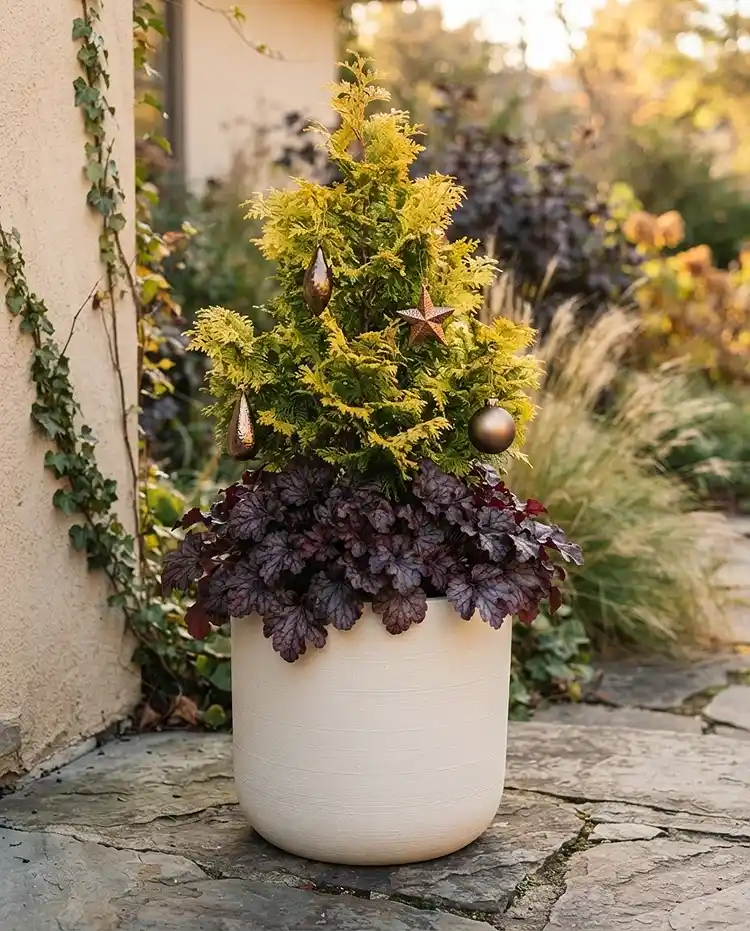
Idea 7: Golden Hinoki Cypress and Burgundy Heuchera Jewel-Toned Holiday Urn
Pair golden hinoki cypress (Chamaecyparis obtusa ‘Nana Lutea’) with ruffled plum Heuchera in a 16-inch urn. Hang bronze metallic ornaments from the cypress fans. Skip red and green for once. This jewel-toned palette feels modern and still festive. Both plants are hardy to zone 4.
Idea 8: Nordic Birch Pole, White Pine, and Dried Hydrangea Snowscape Pot
Group white birch logs and soft eastern white pine boughs in a heavy pot. Lightly mist dried autumn hydrangea blooms with linseed oil so they shed rain, then tuck them between the logs. Wedge river rocks around the base for stability. The pale palette reads as a snowscape.
Idea 9: Holly Fern, Variegated Aucuba, and Red Cyclamen Shady Corner Grouping
Group glossy holly fern (Cyrtomium falcatum), gold-flecked spotted laurel (Aucuba japonica), and crimson Cyclamen persicum in a sheltered north-facing corner. This works best in zones 7 to 10. Cyclamen handles light frost but not hard freezes, so slide it under an overhang when nights drop into the 20s.
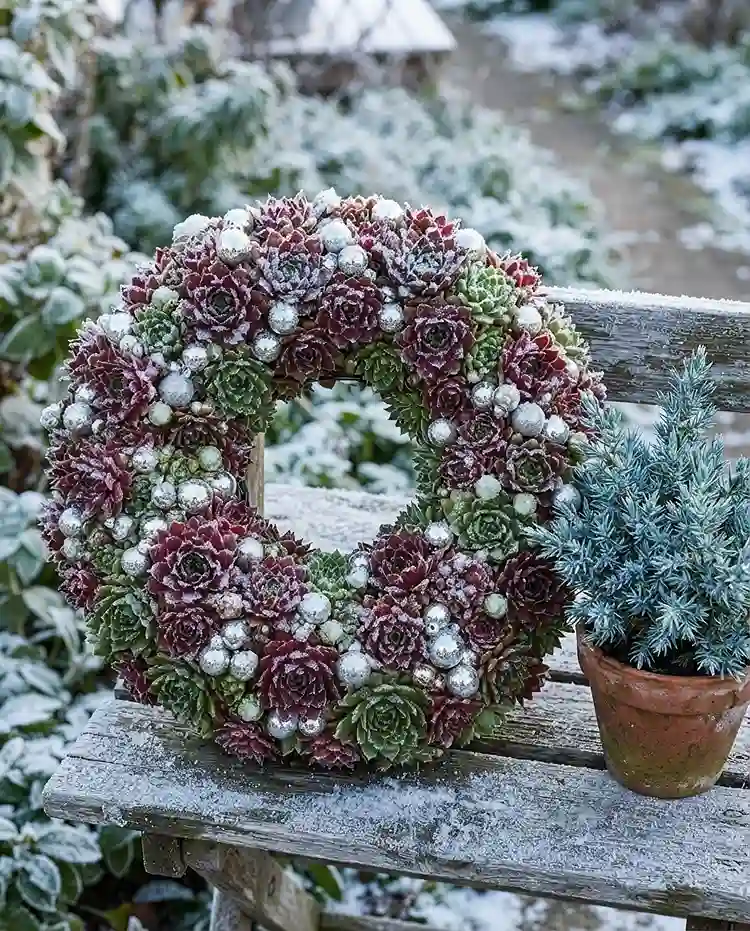
Idea 10: Cold-Hardy Sempervivum “Succulent Wreath” and Blue Star Juniper Planter
Plant hens and chicks (Sempervivum) in a wreath-shaped frame beside steely-blue ‘Blue Star’ juniper (Juniperus squamata). December cold turns the rosettes deep cranberry. Nestle mini silver baubles between them. Sempervivum hates wet roots, so use gritty cactus mix and good drainage holes.
Idea 11: Illuminated Ornamental Grass Plumes and Copper Wire Star Obelisk
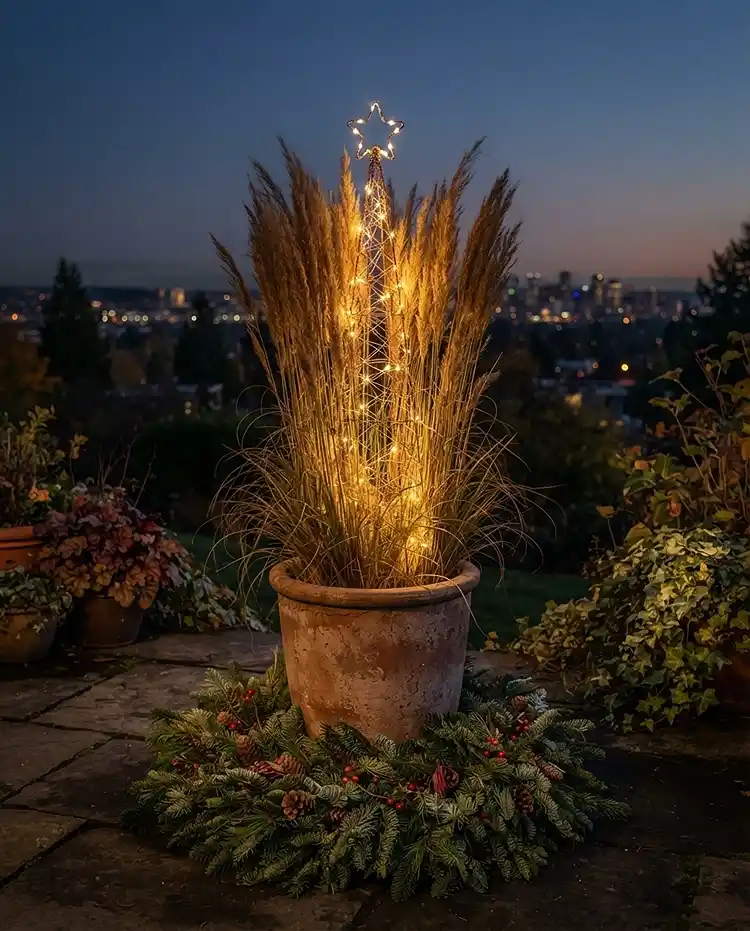
Leave tall, tawny plumes of Calamagrostis ‘Karl Foerster’ or Miscanthus uncut in their pots all winter. Crown them with a woven willow or copper wire star obelisk. Tuck evergreen boughs around the base like a skirt. Add warm-white LEDs inside the obelisk, and the plumes glow at dusk.
Idea 12: Yuletide Camellia and Trailing Creeping Jenny Sanctuary (Zones 7-9)
Plant red-blooming, yellow-centered Camellia sasanqua ‘Yuletide’ in a large 20-inch tub. Underplant with chartreuse Creeping Jenny (Lysimachia nummularia), which turns bronze in the cold. In zone 7a, park the tub against a wall to dodge icy wind. The blooms usually open right around Christmas.
Idea 13: Upcycled Wooden Crate of Blue Spruce, Magnolia Leaves, and Lanterns
Line a vintage wooden crate with burlap and nestle small nursery pots of blue spruce (Picea pungens) inside. Fill gaps with glossy, brown-backed Magnolia grandiflora leaves. Add flameless LED pillar lanterns for evening glow. Drill drainage holes in the crate first so meltwater doesn’t pool.
Idea 14: Winter Heath (Erica Carnea) and Silver Thyme Holiday Window Box
Fill a 30-inch window box with winter heath (Erica carnea), which blooms pink and white in the cold. Add silver-edged culinary thyme and a handful of miniature pinecones. It’s the rare planter with real winter blossoms. Bees even visit on mild afternoons.
Idea 15: Hanging Basket “Kissing Balls” Using Dormant Moss Baskets and Cut Greens
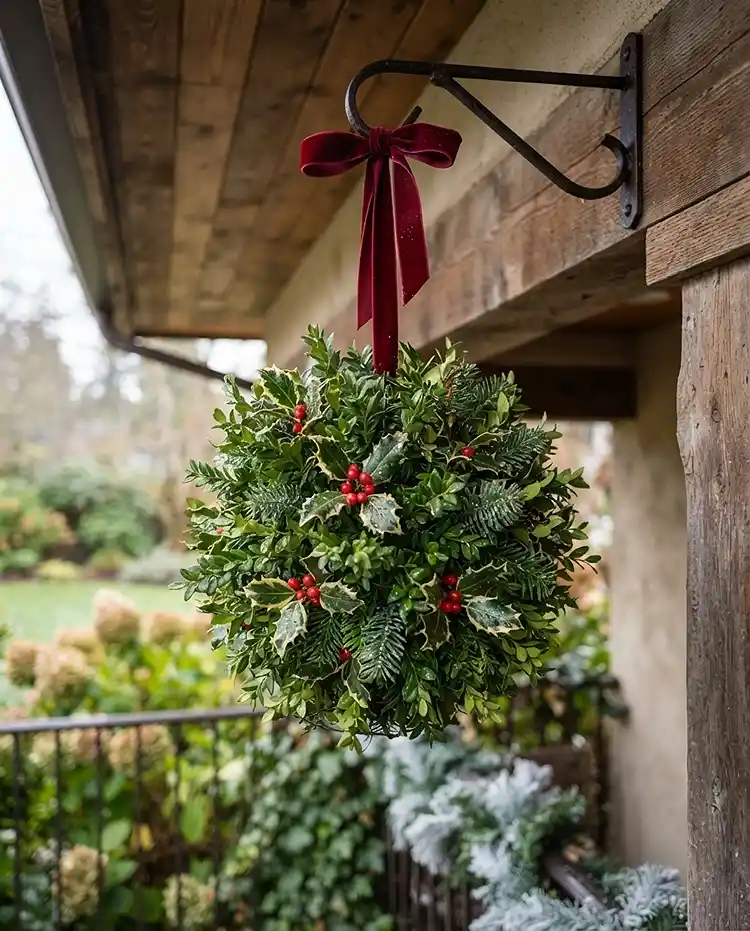
Turn empty summer wire baskets into kissing balls [round clusters of greens]. Soak the sphagnum moss liner overnight. Push short sprigs of boxwood, variegated holly, and fir through the moss, packing them tightly. Hang from a sturdy hook, and mist on thaw days.
Idea 16: Black Mondo Grass, Silver Conifers, and White Berry Modern Minimalist Trough
Contrast jet-black Ophiopogon planiscapus ‘Nigrescens’ with silvery Chamaecyparis pisifera ‘Boulevard’ in a slim modern trough. Add faux or real snowberry twigs for white accents. ‘Boulevard’ hates winter wind, so place it where the building blocks gusts.
Idea 17: Edible Holiday Cheer with Ornamental Kale, Curly Parsley, and Bright Red Cranberries
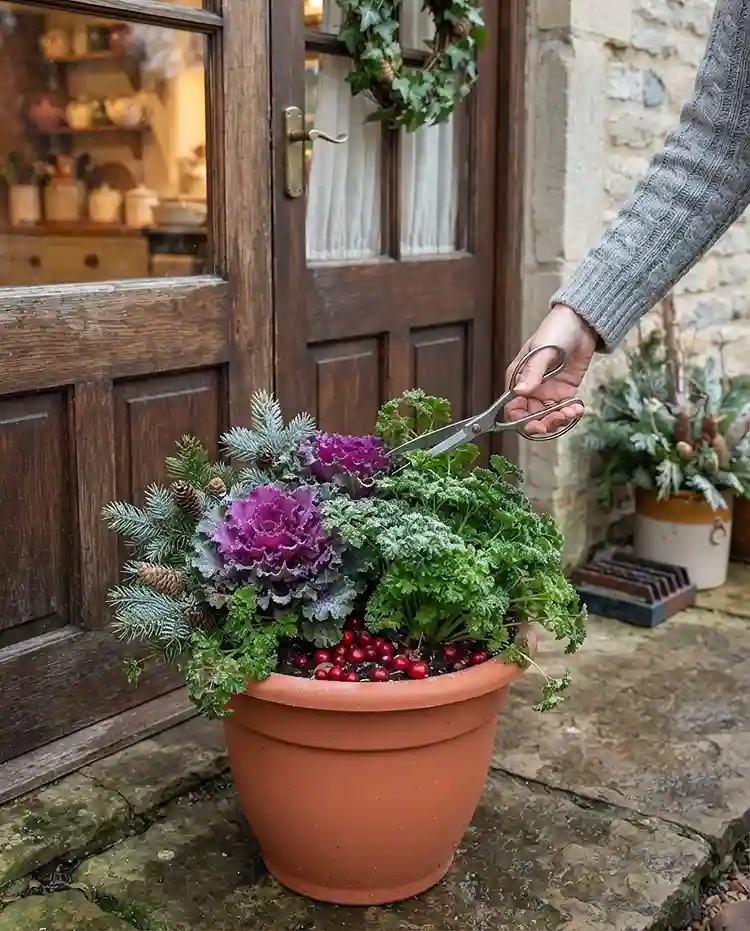
Combine frost-sweetened magenta ornamental kale with emerald curly parsley in a 14-inch kitchen-door planter. Top-dress with fresh bog cranberries and noble fir tips. Buy parsley starts, since seed takes about 70 days to harvest. Skip anti-desiccant sprays on anything you plan to eat.
Step-by-Step Assembly and Winter Maintenance for Holiday Planters
Short Answer: Soak cut ends overnight, strip the lower needles, and slide each bough down the inside wall of the pot. Do this before the soil freezes solid. Water only on thawed days above 40°F (4.4°C). Remove everything in February, once spring bulbs start poking through.
How to Insert Cut Boughs and Picks Without Damaging Live Root Systems
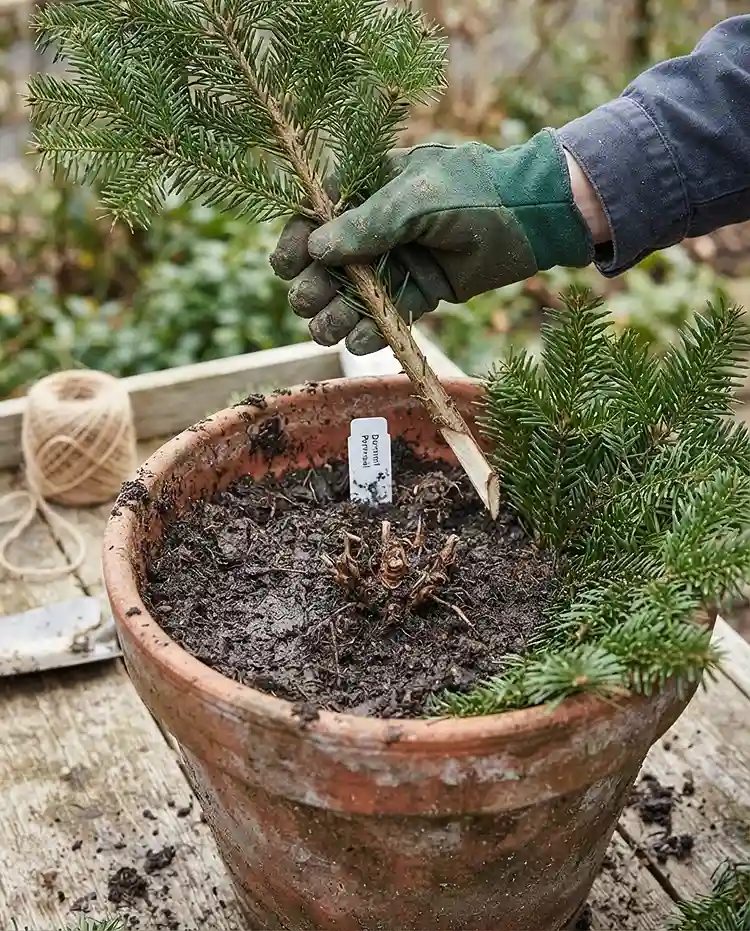
Short Answer: Slide angled stems down the inside wall of the pot, never straight into the center. Strip the lower needles first, and soak the cut ends in water overnight. This perimeter-tucking technique anchors boughs without touching dormant crowns, buried bulbs, or the main root mass.
I learned this the hard way. In December 2021, I jammed wired picks into a 14-inch pot of sedum ‘Autumn Joy.’ Come April, only 2 of 5 shoots returned. After I switched to perimeter tucking, that pot sent up 9 shoots the next spring.
Winter Watering Timing Chart and Post-Holiday Transition into Spring
Short Answer: Water only when midday temperatures reach 40°F (4.4°C) and the top two inches of soil feel dry. Skip frozen soil entirely. In February, lift boughs and picks out gently once you see bulb tips, so emerging spring growth isn’t snapped.
| Weather | What to do |
|---|---|
| Midday thaw at 40°F (4.4°C) or warmer, top 2 inches dry | Water slowly in late morning |
| Soil frozen solid | Don’t water; the ice holds your boughs in place |
| Hard freeze forecast tonight | Water the day before, not that evening |
| Several days of rain or snow | Skip watering |
| Late February, bulb tips visible | Remove boughs and picks gently |
In my pots, cut boughs stay green about twice as long in frozen, moist soil. For what to plant once the decor comes down, try these year-round balcony planting ideas.
Common Problems & Solutions
Short Answer: Three problems ruin most holiday planters: crispy cut greens, tipping tall branches, and digging squirrels. Recut stems, weight the base, and cover the soil with wire. Each fix takes under ten minutes, costs almost nothing, and works on any balcony.
Premature Needle Drop and Crispy Brown Cut Evergreens
Short Answer: Sunny, windy balconies dry out cut white pine and spruce within days. Recut each stem at a 45-degree angle, mist foliage on above-freezing days, and apply Wilt-Pruf before hanging lights. Those three steps slow moisture loss and keep needles on the branch.
Move the driest pieces to a shadier corner too.
Top-Heavy Birch Poles and Branches Blowing Over in December Winds
Short Answer: Fluffy, unfrozen potting mix can’t anchor tall branches in December gusts. Wedge heavy river rocks around the base of birch poles and tall stems. For cut-only pots, pour a cup of water around the base so it freezes solid and locks everything upright.
Squirrels and Birds Stripping Berries and Digging Up Holiday Pots
Short Answer: Squirrels and birds strip winterberry and dig up buried bulbs. Pin chicken wire under the moss top-dressing, then dust non-edible berries with cayenne pepper spray. Squirrels hate the heat. Birds barely notice it, so leave them a few berries elsewhere.
In January 2023, squirrels dug out 12 of my 20 ‘Tête-à-Tête’ daffodil bulbs. The next fall I pinned chicken wire under the moss, and all 20 bulbs bloomed by mid-March.
Frequently Asked Questions
Can I stick cut Christmas branches into pots that already have live plants or bulbs?
Yes. Push cut boughs 3 to 4 inches into the outer edge of the pot before the soil freezes solid. Avoid the central root crown and buried bulb noses. The boughs actually help insulate them.
How long do fresh-cut Christmas greens last in outdoor balcony planters?
In cold climates (zones 3 to 7), fresh-cut noble fir, cedar, and pine stuck into damp soil easily last 8 to 10 weeks, from late November through February. Keep them out of hot afternoon sun. A coat of anti-desiccant spray helps too.
Will wrapping string lights around my balcony evergreens kill them?
Cool-burning LED outdoor string lights won’t harm living conifers or boxwoods. Traditional glass incandescent C7 and C9 bulbs give off enough heat to scorch needles and wake branches from winter dormancy. Choose warm-white LEDs with an outdoor rating.
What can I do with a living potted Christmas tree after the holidays?
Keep dwarf conifers like dwarf Alberta spruce or hinoki cypress on the balcony all year as a structural focal plant. Simply remove the ornaments and lights in January. Up-pot [move to a larger container] them every two springs.
How do I keep Christmas balcony planters from blowing over?
Add weight low in the pot. Wedge river rocks around the base, set pots on rubber feet against a wall, and tie tall branches to the railing with soft twine. For cut-only pots, pour a cup of water around the base on a freezing night.
What are the best plants for winter railing planter decor?
Dwarf boxwood, Skimmia japonica, winter heath, and silver thyme handle railing boxes well. Choose plants rated two zones colder than yours, since railing boxes freeze fast. Add cut boughs and pinecones for instant color.
Quick Recap
- Map your pots first, and keep picks and boughs away from dormant crowns.
- Choose live evergreens rated two zones colder than your own.
- Use cool, outdoor-rated LED lights on living conifers and boxwoods.
- Recut stems at 45 degrees and spray cut greens before decorating.
- Plan your Christmas balcony planters around wind, weight, and thaw-day watering, then dismantle them in February.