
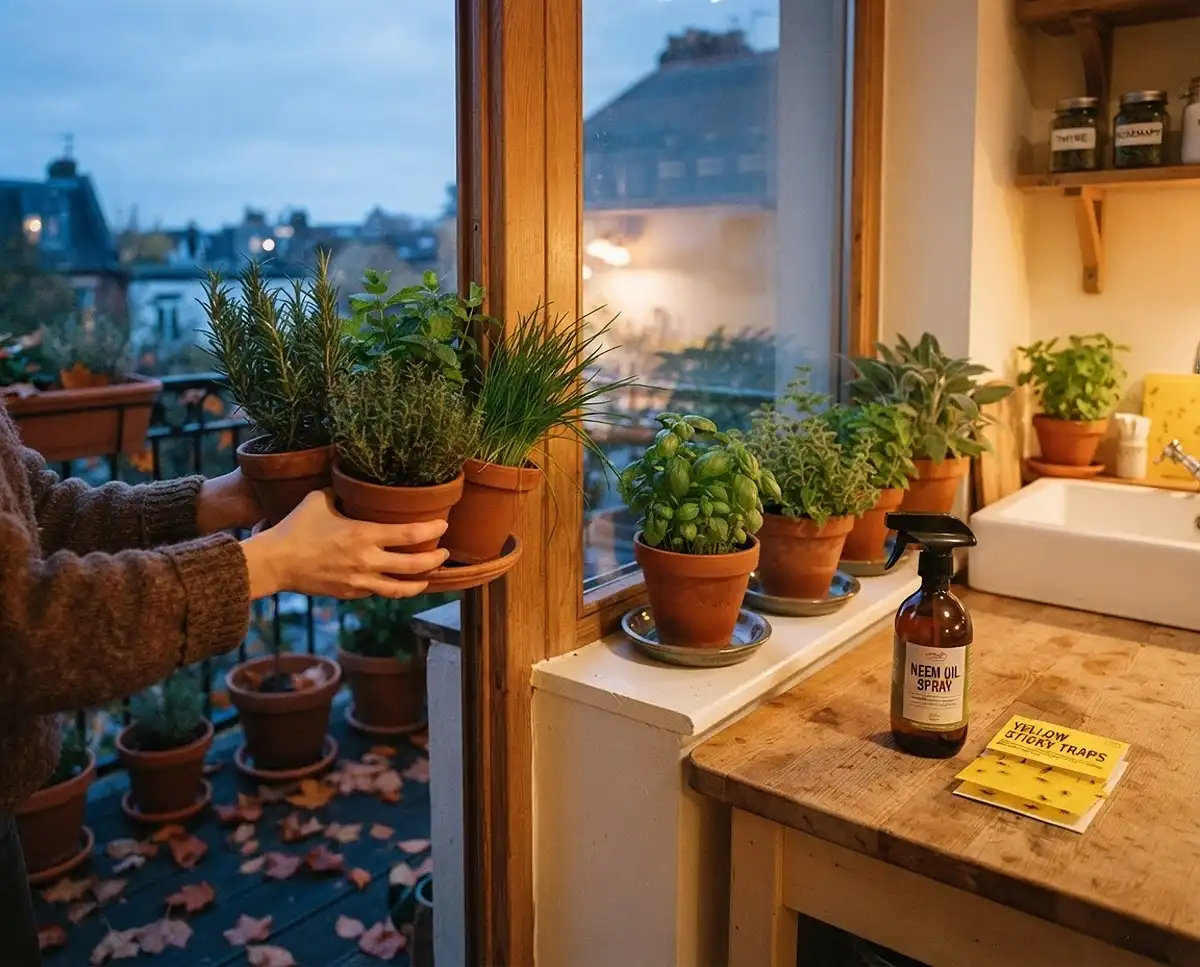
Bringing Herbs Indoors for Winter
Bringing herbs indoors for winter in October is the difference between a thriving windowsill herb garden all season and watching $40 rosemary plants die in the first frost. Here’s exactly how to do it right — no transplant shock, no pest hitchhikers.
Table of Contents
The October Migration: Saving Your Balcony Herbs Before the Freeze
I grow about a dozen herbs on a west-facing balcony in zone 6b, and I’ve learned the hard way that waiting until the first frost warning to act is already too late. By then, plants are stressed and the pest population has exploded.
October is your sweet spot. Nights are cooling but haven’t hit killing temps yet, which gives your plants time to adjust gradually rather than going into shock overnight.
A mature rosemary or thyme plant that’s been growing in a container herb garden all summer represents real money and real time. Bringing it inside successfully means you’re harvesting fresh herbs in January instead of buying sad supermarket bundles.
The payoff is a continuous indoor culinary harvest that costs you nothing but a bit of October prep work. Check out these autumn balcony garden ideas for additional fall transition inspiration.
Pre-Migration Triage: Deciding Which Herbs to Move
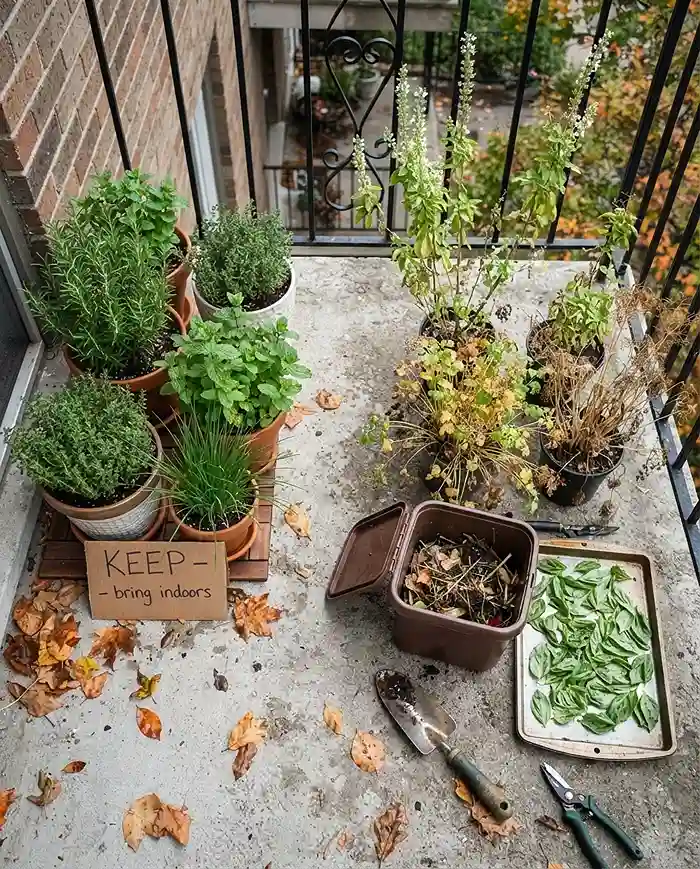
Not every herb on your balcony deserves a windowsill spot. Some are biologically programmed to die no matter what you do. Before you haul everything inside, spend 10 minutes sorting your container herb garden into two piles: movers and composters.
The rule of thumb: if it’s a woody perennial, it moves. If it’s a tender annual, harvest it and let it go.
Perennials to Save: Rosemary, Thyme, Mint, and Chives
These four are your priorities for any small balcony garden migration. They’re tough, adaptable, and will bounce back vigorously come spring.
Rosemary (‘Tuscan Blue’ is my favorite cultivar — compact and upright) adapts well to lower indoor light levels. Thyme, especially English thyme, handles the transition smoothly. Chives may yellow and look rough for a few weeks, but they recover. Don’t panic.
Mint is practically unkillable indoors. I’ve had ‘Mojito’ mint thrive on a north-facing kitchen sill with almost no direct sun. It slows down but keeps producing.
These perennials share one key trait: they tolerate root disturbance, reduced light, and lower humidity without completely falling apart. That resilience is exactly what you need for a successful cool-weather herbs in pots setup indoors.
Annuals to Harvest and Compost: Basil, Cilantro, and Dill
Here’s the honest truth most articles skip: basil, cilantro, and dill are going to die. Bringing them inside just delays the inevitable and wastes your best window space.
Sweet basil (‘Genovese’ is the classic) is triggered by shortening daylength and cooler temps to bolt and die. You can fight this for a few weeks indoors, but you won’t win. Cilantro bolts at the first sign of stress. Dill is a biennial that’s basically done by October.
Instead, spend an hour doing a hard harvest before migration day. Strip every basil leaf and freeze them flat on a baking sheet, then bag them. Dry your dill by hanging bunches upside down for two weeks. Blend and freeze cilantro in ice cube trays with a splash of olive oil.
You’ll have better-quality herbs all winter than any struggling indoor annual could give you, and your windowsill stays reserved for plants that will actually thrive.
Gathering Essential Supplies for Indoor Herb Gardening
Indoor soil and light dynamics are completely different from your balcony setup. Outdoor potting mix compacts under the slower evaporation rate of indoor conditions and suffocates roots within weeks.
Grab these supplies before migration day so you’re not improvising:
- 6-to-8-inch unglazed terracotta pots (one per herb)
- Glazed ceramic drip saucers sized to fit exactly
- Sterile commercial indoor potting mix (not outdoor garden soil)
- Perlite (a full bag — you’ll use it)
- Coarse horticultural sand
- Sterilized pruning shears or scissors
- Organic neem oil concentrate
- Castile soap (unscented)
- Yellow sticky traps (get these now, not after you see gnats)
Selecting Proper Containers and Deep Drip Trays
Quick Answer: Use 6-to-8-inch unglazed terracotta pots with exact-fit glazed saucers. Terracotta breathes, which prevents the root rot that kills most indoor herbs. Glazed saucers protect your windowsill from water damage.
Resist the urge to size up “so the plant has room to grow.” Oversized pots hold excess moisture that has nowhere to go indoors, and that wet soil is exactly what fungus gnats need to breed.
I ruined a beautiful 3-year-old rosemary one November by moving it into a pot that was two inches too wide. Root rot set in by December. A snug terracotta pot with good drainage holes would have saved it.
Pro Tip: Glaze the inside of terracotta saucers with a coat of clear sealant so they’re truly waterproof — unglazed clay absorbs water and stains wooden sills permanently.
Formulating a Sterile, Fast-Draining Indoor Soil Mix
Quick Answer: Mix 70% sterile commercial indoor potting mix with 30% perlite and a small handful of coarse sand per pot. This drains fast enough to prevent root rot indoors while still holding the moisture herbs need.
Never bring outdoor garden soil or used balcony potting mix inside. That soil harbors dormant pest eggs, fungal spores, and weed seeds that will explode in the warmth of your home.
The exact recipe I use for my windowsill herb garden:
- 3 parts sterile potting mix (I use Espoma Organic)
- 1 part perlite
- A small handful of coarse horticultural sand per 6-inch pot
- No slow-release fertilizer pellets in the mix — dormant plants don’t need feeding
This blend drains in seconds when you water, which is what you want when indoor evaporation is slow and you’re watering infrequently.
The Step-by-Step October Herb Migration Process
Start this process when outdoor nighttime temperatures consistently hit 50°F (10°C) — usually early-to-mid October in zones 5-6, mid-to-late October in zones 7-8. That temperature threshold is when Mediterranean herbs like rosemary and thyme begin to suffer.
The full process takes about 10-14 days from start to finish. Don’t rush it.
The Mandatory Pest Quarantine and Foliage Wash
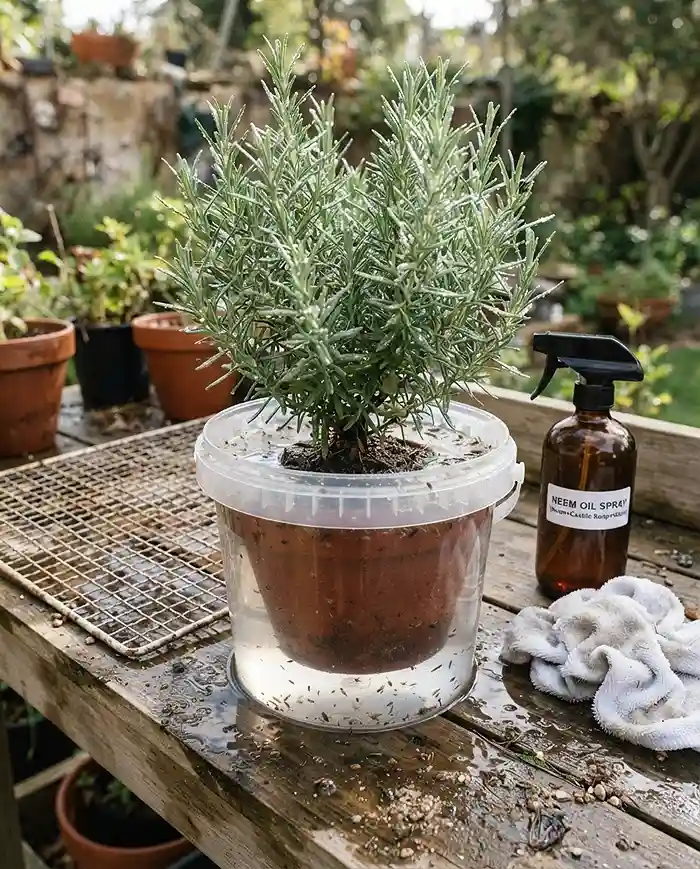
Quick Answer: Before any plant crosses your threshold, spray every leaf surface with diluted neem oil and Castile soap, then dunk the root ball in water to evict hidden insects. Skip this step and you’ll have aphids in your kitchen within two weeks.
Mix 2 teaspoons of organic neem oil concentrate with a few drops of Castile soap in a liter of lukewarm water. Shake well. Spray every leaf — top and bottom. Let it sit for 5 minutes, then gently wipe each leaf with a damp cloth.
Next, submerge the entire pot in a bucket of water for 15-20 minutes. This drives out any soil-dwelling insects, slugs, or pill bugs that are hiding in the root zone.
After the dunk, let the plant drain for an hour in the shade. Then, critically, quarantine it in a garage or spare room away from your other houseplants for 7 days before final placement. Check daily for any signs of aphids, spider mites, or fungus gnat larvae.
This step feels tedious. Do it anyway. One aphid colony can spread to every plant in your home in days.
Root Pruning and Repotting for Windowsill Space
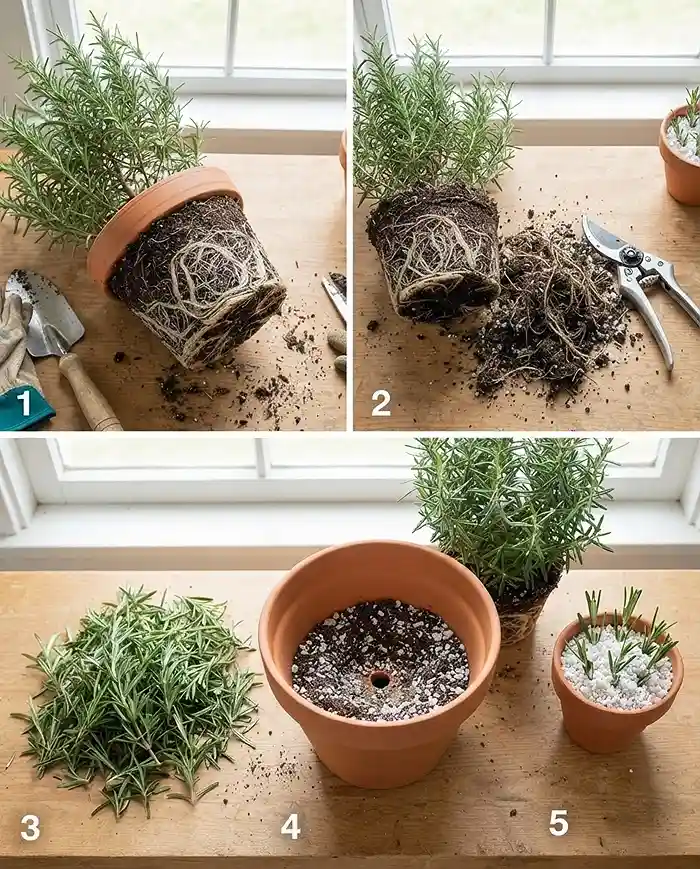
Quick Answer: Remove one-third of the root mass and trim the top growth to match, then repot into a smaller container with fresh sterile mix. This balances the plant’s needs so it can survive in a compact indoor pot.
After your quarantine period, tip the herb out of its summer pot. You’ll likely find a dense, pot-bound root ball. Using sterilized shears (wipe blades with rubbing alcohol first), trim away the outer third of the root mass all around.
Then trim the top foliage by a matching third. This isn’t being cruel — it’s biologically balancing the plant. Fewer roots means less capacity to support foliage, so you have to reduce both to prevent wilting and die-back.
Repot into your fresh sterile mix in a terracotta pot sized just slightly larger than the pruned root ball. Water once with plain water and then leave it alone for a week.
Pro Tip: Save a few cuttings from your rosemary and thyme when you root-prune. Stick them in a small pot of moist perlite on the same sill — you’ll have backup plants rooted by December.
“Reverse Hardening Off” to Prevent Transplant Shock
Quick Answer: Move plants from full sun to balcony shade to indoors over 7-10 days, allowing their leaf chloroplasts to restructure for lower indoor light levels. Skipping this causes sudden leaf drop that can set a plant back by months.
Here’s the schedule I follow every October:
| Days | Location | Light Conditions |
|---|---|---|
| Days 1-3 | Balcony, afternoon shade | Morning sun only |
| Days 4-6 | Balcony, full shade | Indirect outdoor light |
| Days 7-8 | Indoors, near window | Bright indirect light |
| Days 9-10 | Final windowsill spot | Permanent indoor position |
The reason this works: leaf chloroplasts physically restructure when light levels change gradually. A plant moved from full outdoor sun directly indoors will drop leaves dramatically as those sun-adapted chloroplasts fail in the new conditions.
Gradual transition gives the plant time to grow shade-adapted chloroplasts before the sun-adapted ones die off. The result is a plant that looks almost as good indoors as it did outside.
Mastering Winter Windowsill Maintenance
Once your herbs are settled indoors, everything about your care routine needs to change. These plants are now operating at a significantly slower metabolic rate than they were on a sunny summer balcony. What kept them thriving outdoors will kill them inside.
The two biggest adjustments: water far less, and manage the heat your apartment’s HVAC system creates.
Adjusting Watering for Slow Indoor Evaporation
Quick Answer: Water only when the top inch of soil is dry to the touch. Indoors, without wind or strong sun, soil stays moist two to three times longer than it does outside — overwatering is the primary cause of indoor herb death in winter.
Ditch any outdoor watering schedule you had. Instead, push your finger an inch into the soil every 2-3 days. If it’s damp, walk away. If it’s dry, water thoroughly until it drains from the bottom, then don’t water again until the soil passes the finger test again.
I check my windowsill herb garden every Monday and Thursday in winter. Most weeks, only one or two of my five plants actually need water. The mint almost always does. The rosemary almost never does.
Pro Tip: Lift the pot after watering versus when dry — you’ll quickly develop a feel for the weight difference, making the finger test even faster.
Managing Indoor Heating Drafts and Humidity
Quick Answer: Never place herbs directly above a baseboard heater or below a forced-air vent. Group plants on a pebble tray filled with water to create a humidity microclimate, counteracting the drying effect of central heating.
Central heating drops indoor humidity to 20-30% in winter — desert conditions for herbs that prefer 50-60%. The leaves of rosemary and thyme will dry and brown at the tips within weeks if you don’t address this.
Fill a shallow tray with pebbles, add water to just below the pebble surface, and set your pots on top. As the water evaporates, it creates a humid microclimate around the foliage. Refill the tray every few days.
Also keep herbs at least 18 inches from any heat source. Radiant heat from a baseboard causes rapid soil drying and stresses roots even when the air temperature seems fine. A south- or west-facing windowsill that gets direct winter sun but sits away from vents is the ideal spot. For more fall balcony planning, see these fall pollinator planter ideas for what works outdoors while your herbs settle in inside.
Common Problems and Solutions
Even a well-executed migration will hit a few bumps. These are the two most common issues and how to handle them.
Sudden Yellowing and Massive Leaf Drop
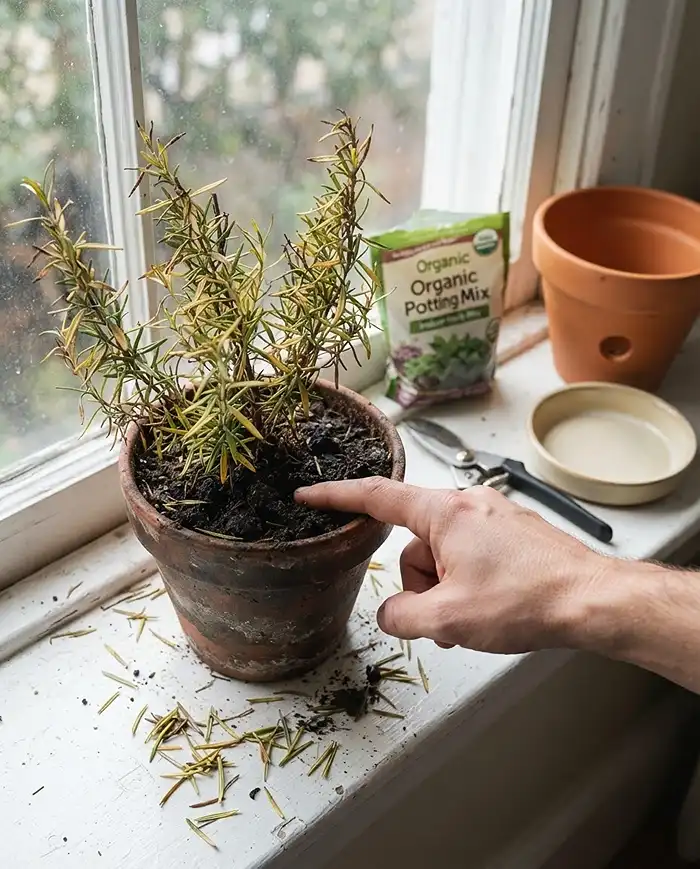
Quick Answer: Losing up to 20% of leaves after moving indoors is normal — it’s the plant shedding sun-adapted foliage. Reduce watering and wait. If leaves turn mushy or yellowing exceeds 30%, root rot is likely.
When I moved my ‘Arp’ rosemary inside last October, it dropped about 15% of its needles in the first two weeks. I panicked and watered it more, which made things worse. Pulled back entirely and it stabilized within a week.
If yellowing is combined with mushy stems at the base or a sour smell from the soil, the plant has root rot from overwatering. Unpot immediately, cut away any blackened roots, repot in fresh dry mix, and don’t water for 10 days.
Fungus Gnat Invasions in the Kitchen
Quick Answer: Fungus gnats lay eggs in warm, moist topsoil. Yellow sticky traps catch adults while Bacillus thuringiensis israelensis (BTI) mosquito dunk tea, used as your watering solution, kills larvae in the soil safely.
To make BTI tea: soak one mosquito dunk in a gallon of water overnight. Use this as your regular watering solution for 3-4 weeks. The BTI bacteria kill gnat larvae specifically, without harming the plant, pets, or people.
Hang or lay yellow sticky traps near the pots to catch adults before they can lay more eggs. The University of Maryland Extension’s fungus gnat guide confirms that combining BTI with traps is the most effective non-chemical approach available.
The best prevention: don’t bring in outdoor soil, and never let pots sit in standing water. Both are conditions fungus gnats actively seek out to breed.
bringing herbs indoors for winter FAQs
Should I fertilize my herbs once I bring them inside?
No. Do not fertilize indoor herbs during winter. Plants in low-light, cool indoor conditions are effectively dormant or semi-dormant. Applying nitrogen forces weak, leggy growth that depletes the plant’s energy reserves and makes it more vulnerable to pests. Wait until March, when day length increases noticeably, then resume with a half-strength liquid feed.
Do I absolutely need an LED grow light for winter herbs?
If your only window faces north or is heavily shaded by adjacent buildings, yes — a full-spectrum LED grow light on a 12-hour timer is mandatory for Mediterranean herbs like rosemary, thyme, and basil. Without 6+ hours of light daily, they will slowly decline and die. A basic 20W clip-on grow light from any garden center costs under $30 and is worth every cent.
Can I leave some herbs outside on the balcony all winter?
Yes, with protection. Chives, mint, and thyme are cold-hardy perennials that survive outdoors in USDA Zones 5 and above if their pots are pushed against a heated apartment wall and wrapped in bubble wrap or burlap to prevent the root zone from freezing solid. The plant tops may die back, but roots survive and regrow in spring.
How long does transplant shock last after bringing herbs inside?
Expect 2-3 weeks of adjustment, especially if you completed the reverse hardening-off process. Leaf drop and slowed growth are normal. A plant that looks rough in week two often looks completely stable by week four. Reduce watering and resist the urge to fertilize or repot again during this window.
What is the best windowsill direction for indoor herbs in winter?
South-facing is best, delivering the longest window of direct winter sun. West-facing works well for most herbs. East-facing is marginal — adequate for mint and chives, too dim for rosemary and thyme without supplemental light. North-facing requires a grow light for any herb to survive winter indoors.
Key Takeaways
- Bringing herbs indoors for winter works best when you start the process in early October, before nighttime temps consistently drop below 50°F (10°C).
- Only move woody perennials — rosemary, thyme, mint, and chives. Harvest and compost tender annuals like basil, cilantro, and dill instead of wasting windowsill space.
- Mandatory pest quarantine (neem oil spray + root ball dunk) before anything crosses your threshold prevents aphid and fungus gnat infestations all winter.
- Use a sterile indoor mix of 70% potting soil and 30% perlite — never outdoor garden dirt — to prevent compaction and root rot in your windowsill herb garden.
- The finger-test watering method and a pebble humidity tray are the two maintenance habits that determine whether your small balcony garden transplants thrive or slowly die indoors.