
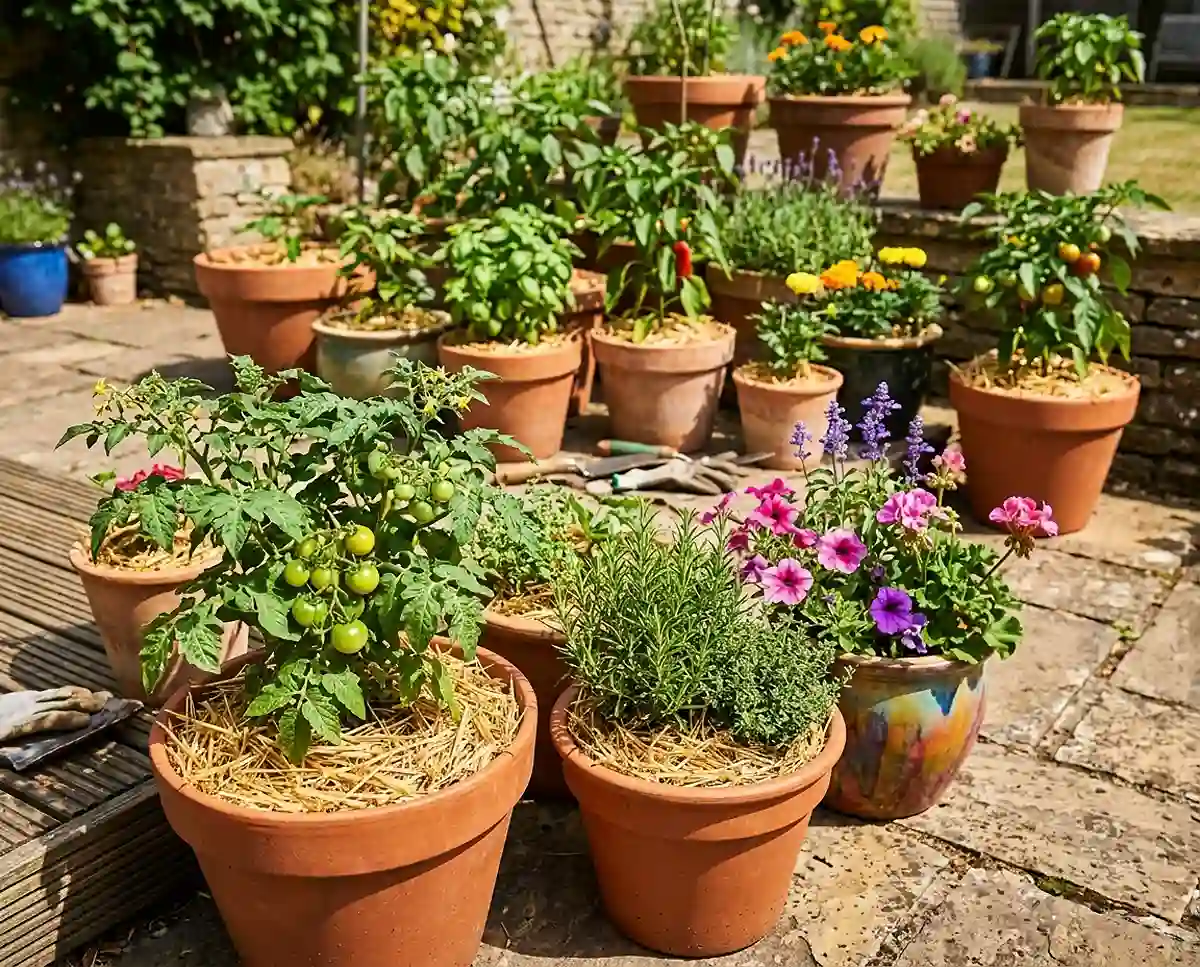
Best Mulch for Pots in Hot Weather
Looking for the best mulch for pots in hot weather? The right layer can drop soil temps, slow evaporation, and save your summer container gardening from daily wilt. Here’s what actually works and what to skip.
I’ve killed more potted plants to July heat than I’d like to admit. Mulch fixed most of it. Below is everything I’ve learned over a decade of growing food and flowers in containers on hot patios and balconies.
Table of Contents
Why Mulching Pots Matters in Hot Weather
Quick Answer: Mulch is a shade blanket for soil. It blocks direct sun, slows water loss, and keeps roots from cooking inside pots that heat up way faster than the ground.
Container soil can swing 20 degrees hotter than a garden bed on the same day. A thin mulch layer breaks that heat at the surface before it reaches the roots.
According to a University of Florida study on mulch and evaporation, mulch cut soil water loss by about 33 percent. In a pot, that means fewer panicked midday waterings.
Pro Tip: Mulch matters most on dark plastic and metal pots, which absorb sun and bake roots from the sides too.
How Heat Affects Potted Plants
Quick Answer: Heat hits containers from every direction at once. The soil dries, roots overheat, and plants wilt long before a garden bed would even notice the stress.
Understanding the why makes the mulch choice obvious. Pots aren’t just small gardens. They’re exposed, fast-draining, and have nowhere to hide from the sun.
Why Containers Overheat Faster Than Ground Soil
Quick Answer: Pot walls sit in full sun, soil volume is tiny, and dark materials soak up heat. There’s no surrounding earth to buffer the temperature.
- Exposed walls: Sun hits the sides, not just the top, so heat enters from all angles.
- Low soil volume: Less soil means it warms and dries in a fraction of the time.
- Heat-absorbing materials: Black plastic and metal can hit 120°F surface temps.
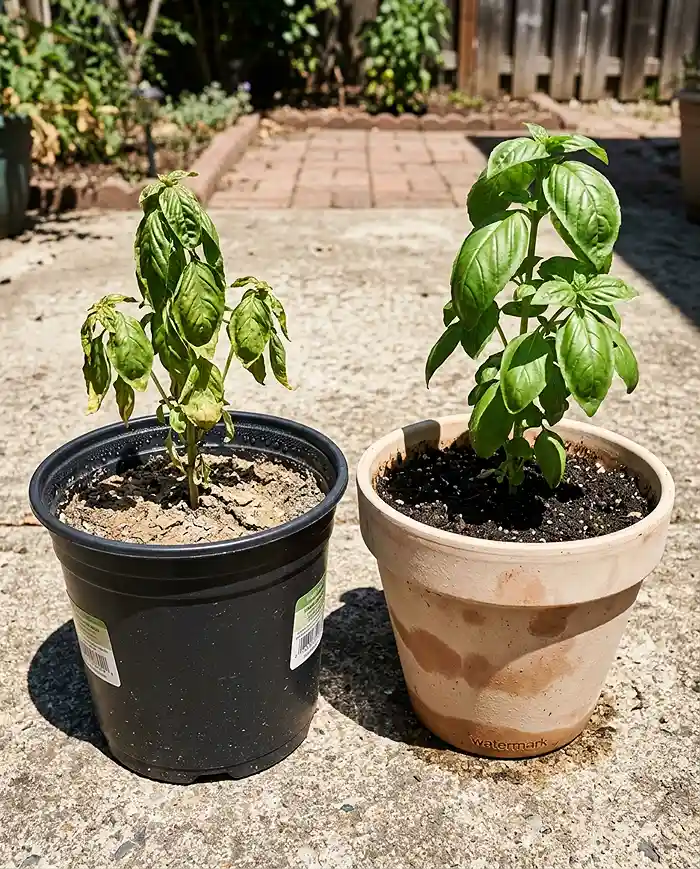
Real Example: My black nursery pots of basil hit the touch-test “too hot to hold” by noon in late June. Same soil in a light terracotta pot stayed comfortable.
Signs Your Potted Plants Are Heat-Stressed
Quick Answer: Watch for midday wilting, crusty dry soil, and scorched leaf edges. These tell you the roots are running out of water and cooling power.
- Wilting at midday that recovers by evening (early warning sign).
- Dry, crusted topsoil that repels water instead of soaking it in.
- Brown, crispy leaf edges, called leaf scorch [heat or drought burn].
Pro Tip: If a pot feels surprisingly light when you lift it, the roots are already too dry, water before you mulch.
What Makes a Good Mulch for Hot-Weather Pots
Quick Answer: The best mulch for pots in hot weather holds moisture, lets air through, and doesn’t trap heat or rot against stems. Balance beats any single feature.
Once you know the qualities to look for, you can judge any material yourself, even random stuff from the garage.
Moisture Retention vs. Breathability
Quick Answer: You want mulch that slows evaporation but still breathes. Too dense traps heat and rot, too loose lets water escape fast.
- Straw and bark hold moisture while staying airy, ideal for most pots.
- Avoid fine, matting materials like fresh grass clippings that seal the surface.
- Keep any mulch off the stem to prevent crown rot.
Pro Tip: Coarser mulch breathes better in humid climates, finer mulch locks in water better in dry ones.
Reflective vs. Insulating Materials
Quick Answer: Light-colored mulch reflects heat away. Organic mulch insulates and feeds soil. In brutal heat, reflective wins for cooling.
- Reflective: Light gravel, pumice, or pale straw bounce sunlight off the surface.
- Insulating: Bark, compost, and cocoa hulls buffer temperature and improve soil.
- Edibles: Lean organic so the mulch enriches soil as it breaks down.
Real Example: Pale wheat straw on my tomato pots stayed noticeably cooler underneath than dark bark in the same row.
Best Types of Mulch for Pots in Hot Weather
Quick Answer: The top picks are straw, bark, and compost for edibles, plus pumice or light gravel for ornamentals and cacti. Match the mulch to the plant.
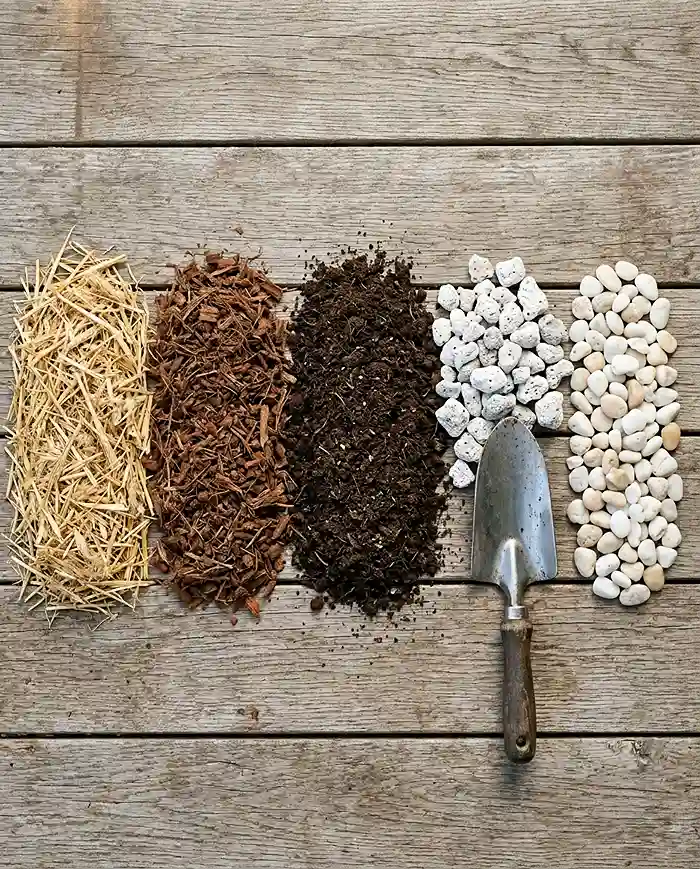
Organic Mulches (Bark, Straw, Compost, Cocoa Hulls)
Quick Answer: Organic mulches cool soil and feed it as they decompose. They’re the best choice for container vegetable gardening and most edibles.
- Straw: Light, reflective, breathable. Apply 1–2 inches. Perfect for tomatoes and peppers.
- Bark fines: Slow to break down, tidy, great for perennials and shrubs in pots.
- Compost: Feeds soil but dries faster, top with straw for best results.
- Cocoa hulls: Pretty and aromatic, but toxic to dogs, skip if pets roam.
Iowa State’s guide notes cocoa hulls work well on large containers and vegetable gardens at a 1 to 2 inch depth.
Pro Tip: Dry grass clippings before using them, fresh ones mat down and turn slimy in heat.
Inorganic Mulches (Gravel, Pebbles, LECA, Pumice)
Quick Answer: Inorganic mulches last for years and boost drainage. Light-colored ones reflect heat, making them great for cacti, succulents, and ornamentals.
- Pumice: Lightweight, holds some moisture, excellent for succulents and herbs.
- LECA: Clay pebbles that wick water and add air gaps at the surface.
- Light gravel/pebbles: Durable and reflective, but dark rock traps heat, avoid it.
Real Example: White pumice on my rosemary pot kept the surface cool and stopped the soil from crusting all summer.
Living Mulch and Ground Covers
Quick Answer: Living mulch uses low, trailing plants to shade the soil. It cuts evaporation and looks gorgeous spilling over the pot rim.
- Creeping thyme, sweet alyssum, or trailing oregano shade soil naturally.
- They reduce evaporation while adding flowers or edible leaves.
- Choose shallow-rooted covers so they don’t compete with the main plant.
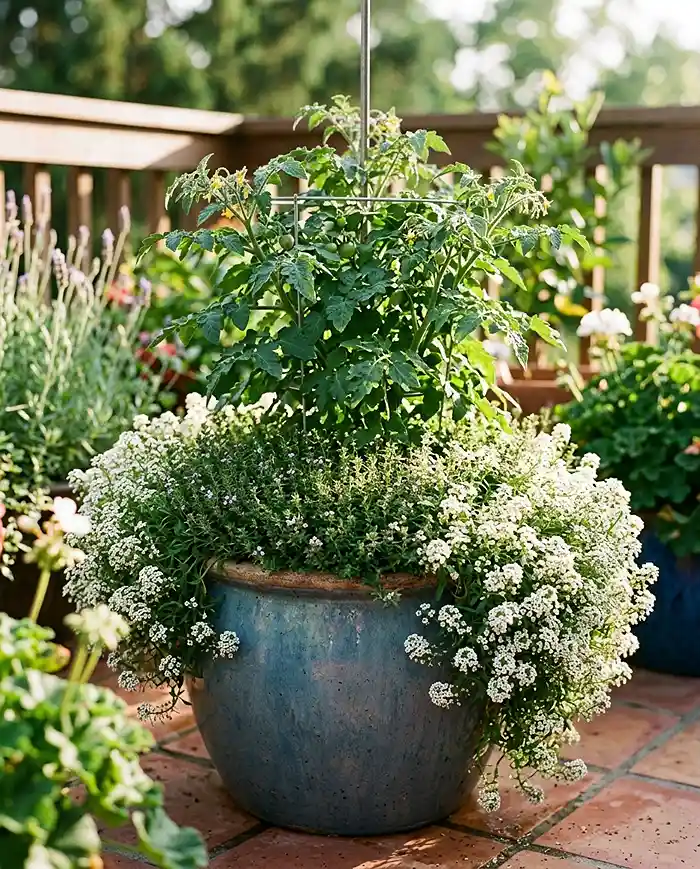
Pro Tip: Pair edible living mulch like thyme with veggies for double duty, shade plus harvest.
Mulch Comparison Chart
Quick Answer: Here’s a fast cheat sheet rating each mulch on cooling power, moisture retention, cost, and best use.
| Mulch | Cooling | Moisture | Cost | Best For |
|---|---|---|---|---|
| Straw | High | High | Low | Vegetables, tomatoes |
| Bark fines | Medium | Medium | Low | Perennials, shrubs |
| Compost | Medium | Medium | Low | Edibles (top-dress) |
| Pumice | High | Medium | Medium | Succulents, herbs |
| Light gravel | High | Low | Medium | Cacti, ornamentals |
| Living mulch | High | High | Low | Decorative pots |
Tools and Materials You’ll Need
Quick Answer: You need very little, your chosen mulch, gloves, a trowel, and a watering can. That’s the whole kit for summer container gardening success.
- Mulch: 1–2 inches worth per pot, matched to your plant type.
- Gloves: Especially for straw and rough bark.
- Trowel or hand scoop: For even spreading around stems.
- Watering can: To soak soil before and after mulching.
Pro Tip: Buy mulch in small bags for pots, a single bag covers far more containers than you’d expect.
How to Mulch Potted Plants Step by Step
Quick Answer: Water deeply first, clear debris, then spread 1–2 inches of mulch evenly while keeping it off the stems. Five minutes per pot, tops.
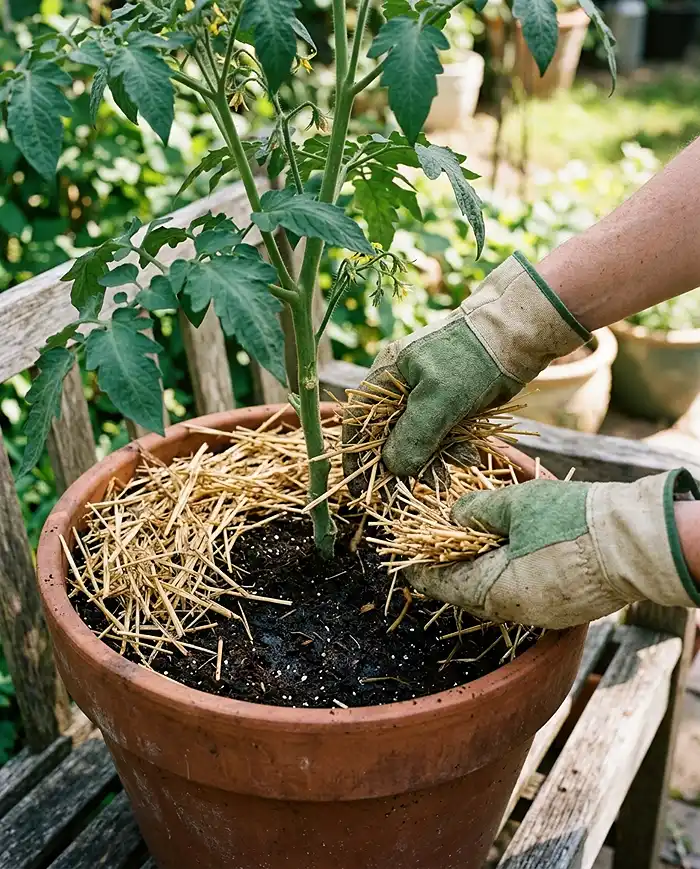
Preparing the Pot and Soil
Quick Answer: Always water deeply before mulching. Mulch over dry soil just locks the dryness in and starves the roots.
- Water until it drains from the bottom, fully saturating the soil.
- Clear old leaves, weeds, and debris from the surface.
- Leave a 1-inch gap around each stem to prevent rot.
Real Example: The first time I mulched over bone-dry pots, the plants stayed thirsty for days. Soak first, every time.
Applying the Right Mulch Depth
Quick Answer: For pots, 1–2 inches is the sweet spot. Garden-bed depths of 3–4 inches will smother small containers.
Spread the mulch evenly across the surface, right up to the pot edge but a finger’s width from the stem.
- Depth: 1–2 inches for pots, never more.
- Coverage: Even layer, no bare hot spots.
- Stem gap: Keep mulch off stems to avoid crown rot.
Pro Tip: Too much mulch in a pot blocks oxygen and traps moisture against roots, less is genuinely more here.
Maintenance and Watering With Mulch
Quick Answer: Mulch stretches your watering schedule, but you still check moisture under it. Top up organic mulch as it breaks down through the season.
How Mulch Changes Your Watering Schedule
Quick Answer: You’ll water less often, but never on a fixed timer. Always finger-test the soil beneath the mulch first.
- Push a finger 2 inches under the mulch, water only if it’s dry.
- Mulched pots often need watering every 2–3 days instead of daily.
- Don’t overwater, trapped moisture under mulch can rot roots.
For more on holding moisture in summer, see this guide on how to keep pots moist in summer.
Refreshing and Replacing Mulch
Quick Answer: Organic mulch decomposes, so top it up mid-season. Inorganic mulch just needs a rinse to clear dust and debris.
- Add a fresh handful of straw or bark when the layer thins out.
- Rinse gravel or pumice seasonally to remove algae and crust.
- Replace any mulch that smells sour or looks moldy.
Pro Tip: Stir organic mulch lightly every few weeks so it doesn’t form a water-repelling crust.
Regional and Climate Considerations
Quick Answer: Dry climates favor moisture-locking mulch like straw or compost. Humid climates need breathable, rot-resistant mulch to dodge fungus.
Dry, Arid Climates vs. Humid Hot Climates
Quick Answer: In arid zones, prioritize moisture retention. In humid zones, prioritize airflow so the surface dries out between waterings.
Same plant, same heat, but the right mulch flips depending on humidity. Get this wrong and you trade dry soil for fungal soil.
| Climate | Best Mulch | Avoid |
|---|---|---|
| Dry / arid (zones 8–10) | Straw, compost, pumice | Thin gravel layers |
| Humid / hot (zones 8–11) | Bark fines, light gravel | Dense compost, cocoa hulls |
Real Example: In humid summers, my thick compost mulch grew white mold fast. Switching to bark fines fixed the airflow problem overnight.
Common Problems & Solutions
Quick Answer: Most mulch trouble comes from too much moisture, wrong material, or piling it on stems. Each fix is quick and cheap.
Mold or Fungus Growing on Mulch
Quick Answer: Mold means too much moisture and poor airflow. Switch to breathable mulch and space pots apart for better circulation.
Scrape off the moldy layer, let the surface dry, then re-mulch with something coarser like bark fines.
Mulch Drying Out or Blowing Away
Quick Answer: Lightweight mulch blows off in wind or heat. Use heavier material, the right depth, and pre-wet it to settle it down.
Pre-soaking straw and keeping a full 1–2 inch layer keeps it anchored on breezy balconies.
Pests Hiding in Mulch
Quick Answer: Slugs and earwigs love damp mulch near stems. Pull mulch back from the base, inspect often, and pick pest-resistant materials.
Gravel and pumice harbor far fewer pests than thick organic layers, swap if bugs persist.
Frequently Asked Questions
What is the best mulch for potted plants in hot weather?
Straw is the best organic pick for edibles because it reflects heat and breathes well. For succulents and ornamentals, light-colored pumice or pale gravel is the top inorganic choice. Match the mulch to your plant type for best results.
How thick should mulch be in containers?
Aim for 1 to 2 inches in pots. Garden-bed depths of 3 to 4 inches are too much for small containers and can block oxygen, trap moisture, and rot roots in the limited soil volume.
Can I use rocks as mulch for pots in summer?
Yes, but only light-colored gravel or pumice, which reflect heat and improve drainage. Avoid dark rock like lava stone or river rock, which absorbs sun and bakes the soil hotter instead of cooling it.
Does mulch reduce how often I water pots?
Yes. Mulch can cut watering frequency from daily to every two or three days by slowing evaporation. Always finger-test the soil under the mulch first instead of watering on a fixed schedule.
Can mulch cause root rot in containers?
It can if piled too thick or pressed against stems. Keep it at 1 to 2 inches, leave a gap around the stem, and use breathable mulch in humid climates to prevent rot.
Key Takeaways
- The best mulch for pots in hot weather is straw for edibles and light pumice or gravel for ornamentals.
- Keep mulch at 1–2 inches in containers, never the 3–4 inches used in garden beds.
- Water deeply before mulching, then finger-test under the mulch before watering again.
- Match mulch to climate: moisture-locking in arid zones, breathable in humid ones.
- Always leave a gap around stems to prevent rot and pest hideouts.
Want to grow more in tight spaces? Check out these vertical garden shelf ideas and this guide on how to grow more food in less space for your edible balcony.