
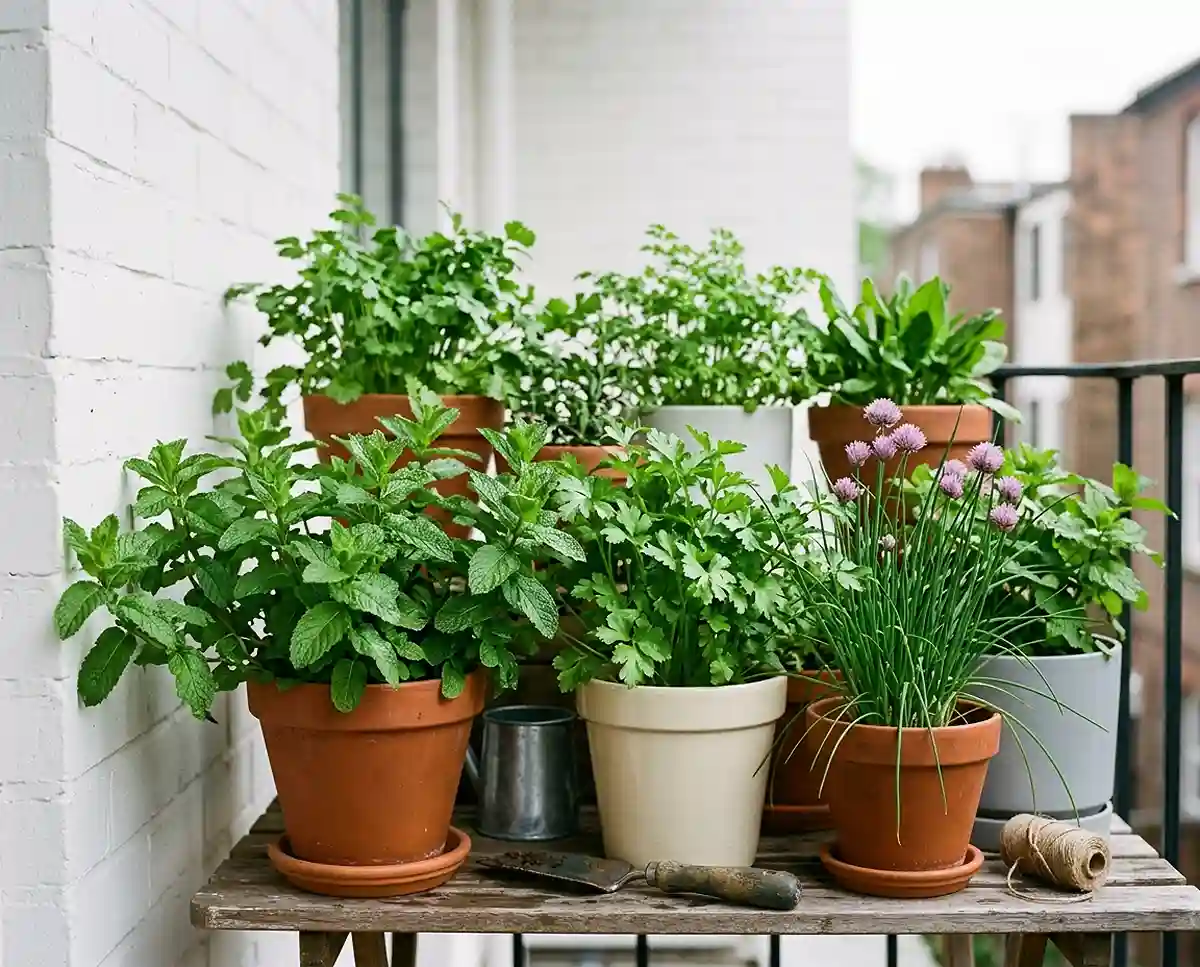
herbs that grow in shade
Want herbs that grow in shade? Good news — you don’t need a sun-drenched garden. These shade-tolerant picks thrive in dim spots and work perfectly for container herb garden setups on patios, balconies, and tight urban spaces.
Table of Contents
Yes, You Can Grow Herbs in the Shade
Most gardening advice assumes you’ve got six-plus hours of direct sun. But many herbs that grow in shade actually prefer cooler, lower-light conditions — and some bolt or turn bitter when they get too much sun.
Mint, parsley, chives, lemon balm, and cilantro are your best bets. They’re productive, low-maintenance, and ideal for small space gardening in spots other plants ignore.
The trick is matching the right herb to your actual light level. Get that right, and you’ll be snipping fresh herbs all season from a shady corner most gardeners waste.
Understanding Shade: How Much Light Herbs Really Need
Not all shade is equal. Before picking herbs, figure out what you’re actually working with. A “shady” balcony in July might get more usable light than you think — or less.
Shade-tolerant doesn’t mean shade-dependent. Most herbs that grow in shade still want some indirect brightness. Deep, dark corners are a different challenge entirely.
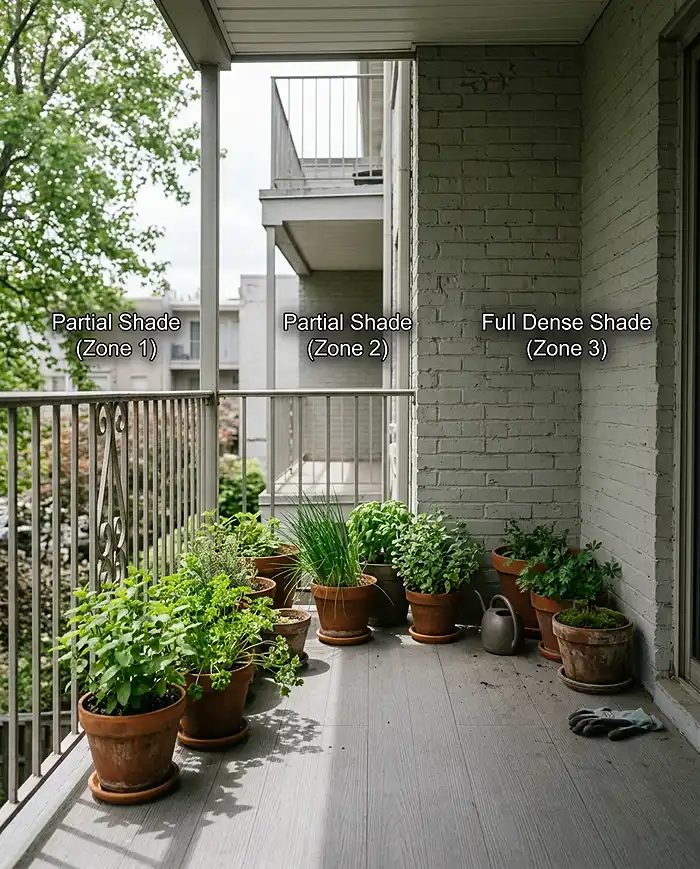
Types of Shade: Full, Partial, and Dappled
Quick Answer: Full shade means under 2 hours of direct sun. Partial shade is 2–4 hours. Dappled light is filtered sun through a canopy — and it’s often ideal for herb garden ideas involving softer, leafy herbs.
| Shade Type | Daily Direct Sun | Best Herbs |
|---|---|---|
| Full Shade | 0–2 hours | Mint, sweet cicely |
| Partial Shade | 2–4 hours | Parsley, chives, cilantro, lemon balm |
| Dappled Light | Filtered all day | Most leafy herbs, oregano |
Pro Tip: North-facing walls give consistent soft light all day — that’s often better for leafy herbs than harsh afternoon sun on a south wall.
How to Measure Light in Your Space
Quick Answer: Check your space every two hours from 8 a.m. to 6 p.m. and note where sun hits. Count the hours of direct light. That gives you your actual shade category — no guessing.
- Use a free light meter app or a basic lux meter for accuracy
- Check in summer and again in spring — seasonal angles shift significantly
- Walls, fences, and buildings create microclimates that your weather app can’t predict
- Reflected light from white walls adds usable brightness even in shade
Real Example: My east-facing balcony only gets direct sun until 11 a.m., but parsley and chives thrived there all summer because reflected light from the pale wall added a few extra hours of brightness.
Best Shade-Tolerant Herbs for Small Spaces
These are the herbs that grow in shade reliably — not just survive but actually produce usable leaves through the season. All of them suit a container herb garden, and several double as a pollinator container garden when they flower.
| Herb | Min. Light | Container Size | Harvest Time |
|---|---|---|---|
| Mint | 2 hrs | 8–10 inch | 6–8 weeks from planting |
| Parsley | 3 hrs | 8 inch | 70–90 days from seed |
| Cilantro | 3 hrs | 8–10 inch | 45–70 days from seed |
| Chives | 3 hrs | 6–8 inch | 30 days from transplant |
| Lemon Balm | 2 hrs | 10–12 inch | 60–70 days from seed |
| Oregano | 4 hrs | 6–8 inch | 80 days from seed |
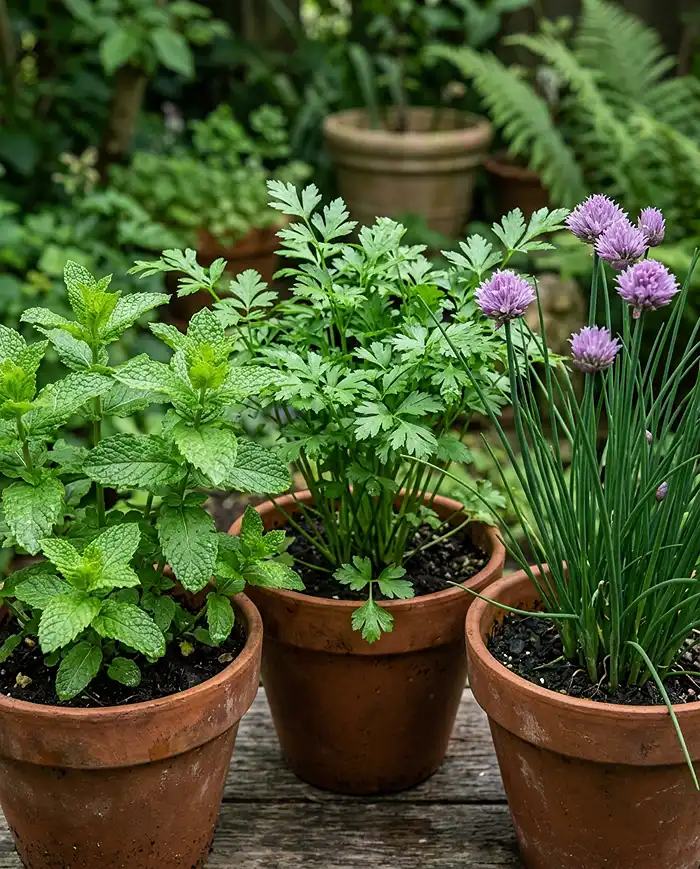
Leafy Herbs That Love Shade (Mint, Parsley, Cilantro)
Quick Answer: Mint, parsley, and cilantro are the strongest performers for herbs that grow in shade. They prefer cooler temps and actually do better without harsh afternoon sun.
- Mint: Thrives in as little as 2 hours of sun. Keep it in its own pot — it spreads aggressively and will crowd everything else out.
- Parsley: Slow to start but patient. Give it 3 hours and it’ll produce steadily for months. Flat-leaf varieties handle shade better than curly.
- Cilantro: Bolts fast in heat and full sun. Partial shade actually extends your harvest window by keeping temps lower.
Real Example: I grew cilantro in a north-facing window box in June. Full sun spots bolted by week three. My shaded pot kept producing for six weeks.
Pro Tip: Succession-sow cilantro every 3 weeks in partial shade for a continuous harvest instead of one big flush that bolts all at once.
Hardy Herbs That Tolerate Partial Shade (Chives, Lemon Balm, Oregano)
Quick Answer: Chives, lemon balm, and oregano handle 2–4 hours of sun with minimal fuss. They’re great for small space gardening because they’re forgiving and come back reliably year after year.
- Chives: One of the easiest herbs that grow in shade. Purple flowers attract pollinators, making them a bonus in any pollinator container garden setup.
- Lemon Balm: Loves cool, partly shaded spots. Can get leggy in deep shade — pinch it back to keep it bushy and productive.
- Oregano: Technically prefers full sun but tolerates partial shade well. Flavor is a bit milder, which some cooks prefer for fresh use.
Pro Tip: Let chives flower before cutting them back — the blossoms are edible, mildly onion-flavored, and genuinely good on salads.
Containers and Setup for Shade Herbs
Choosing the right container matters more in shade than in sun. Shady spots stay cooler and wetter, so your pot and soil need to work with those conditions — not against them.
For a container herb garden in low light, go for lighter-colored pots. Dark pots absorb heat in sun, but in shade they can make already cool soil even colder, which slows root development.
Terracotta breathes well and prevents waterlogging. For creative container arrangements in small spaces, tiered planters work especially well — they let you stagger herbs by light tolerance.
Soil and Drainage for Cooler, Shady Spots
Quick Answer: Shade keeps soil wet longer, so your mix needs to drain fast. A standard potting mix with added perlite (1 part perlite to 3 parts mix) prevents the root rot that kills shade herbs more than anything else.
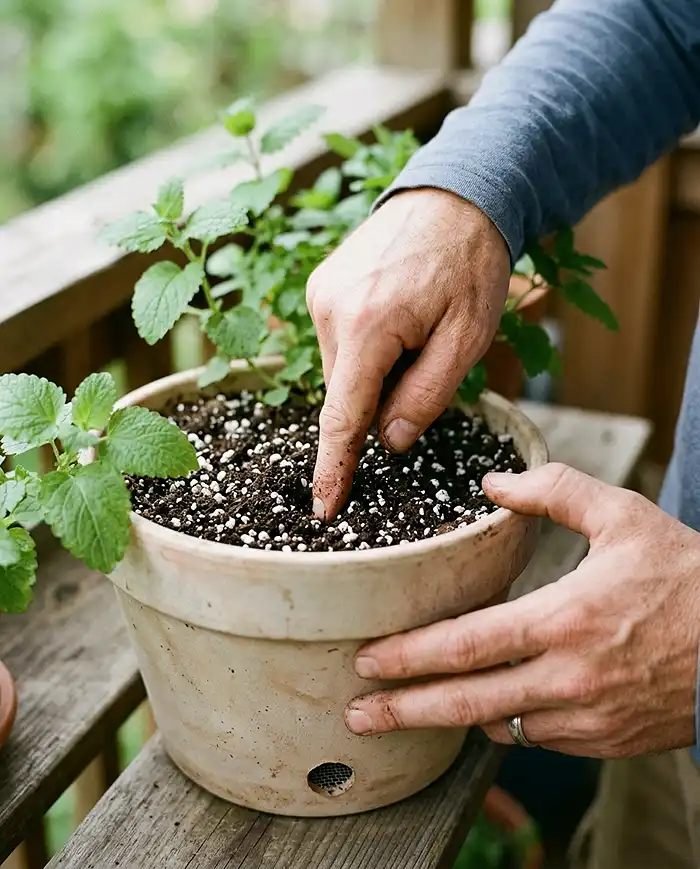
- Add 20–25% perlite or coarse sand to any standard potting mix
- Make sure every pot has at least one drainage hole — never let herbs sit in standing water
- Avoid heavy, moisture-retaining mixes marketed for moisture-loving plants
- Raise pots slightly off the ground so water drains freely
Pro Tip: Press a finger 2 inches into the soil before watering. In shade, the top may look dry while the root zone is still wet — always check deeper.
Tools and Materials Checklist
You don’t need much to start a shade herb garden. Here’s what actually earns its place:
- Pots: 6–12 inch diameter depending on herb (see table above)
- Potting mix: Quality peat- or coco-based mix with added perlite
- Watering can with a narrow spout for precise watering in tight spaces
- Sharp pruning snips or herb scissors for harvesting without tearing stems
- Slow-release granular fertilizer (balanced NPK, e.g., 10-10-10)
- Optional: small clip-on grow light for deep shade spots or winter growing
- Optional: light-colored pot saucers to reflect ambient light upward
Step-by-Step: Planting Your Shade Herb Garden
Once you know your light level and have your containers, planting is straightforward. The order of steps matters — especially placement, which is easier to sort out before you’re hauling heavy pots around.
- Map your light first. Track sun from 8 a.m. to 6 p.m. and mark the best-lit spots.
- Choose herbs to match your light level using the table in the section above.
- Fill pots to 1 inch below the rim with your perlite-amended potting mix.
- Plant transplants at the same depth they were in their nursery pot.
- Water thoroughly until water drains from the bottom, then let it dry slightly before the next watering.
- Arrange containers with tallest plants toward the back so shorter herbs aren’t shaded out further.
For more ideas on getting the most from a small footprint, check out these proven techniques for growing more food in less space.
Positioning Herbs to Maximize Available Light
Quick Answer: Place herbs where they’ll catch the most reflected and ambient light. Light-colored walls, mirrors, and aluminum foil pinned to fences can dramatically boost usable brightness in shady spots.
- Position pots close to light-colored walls or fences to gain reflected brightness
- Rotate containers a quarter turn every 1–2 weeks for even, upright growth
- Keep taller herbs toward the north side so they don’t cast shadow on smaller pots
- White or silver pot saucers beneath containers bounce extra light up onto lower leaves
Pro Tip: A strip of white-painted board leaned against a north wall behind your pots can add surprisingly effective reflected light — I’ve used this trick for years.
Caring for Herbs in Low-Light Conditions
Shade herbs are lower-maintenance than sun herbs in most ways. They grow slower, need less water, and rarely bolt. But that slower pace requires patience — and a lighter hand with watering and feeding.
Don’t expect the same leaf volume you’d get from full-sun growing. Shade herbs produce well, just more gradually. Harvest little and often — it keeps plants bushy and productive.
Watering Carefully in Shade
Quick Answer: Water shade herbs about half as often as sun-grown herbs. Shade slows evaporation dramatically, so overwatering is the biggest risk — not drought.
- Check soil moisture 2 inches deep before every watering — wait until it feels barely dry
- In cool weather, water every 5–7 days rather than 2–3
- Water in the morning so any splashed foliage dries before nighttime, reducing mold risk
- Reduce watering further in autumn — herbs in shade need even less as days shorten
Real Example: I learned this the hard way with mint in a shaded corner — watering on my usual schedule killed two plants before I figured out the soil stayed wet for nearly a week between sessions.
Boosting Light With Grow Lights and Reflective Tricks
If your spot is on the darker end — under 2 hours of indirect light — you’ve got options beyond hoping for the best.
Grow lights: A simple clip-on LED grow light (2000–3000 lumens, full spectrum) placed 6–12 inches above plants can compensate for 2–3 hours of missing natural light. Run it for 12–14 hours daily.
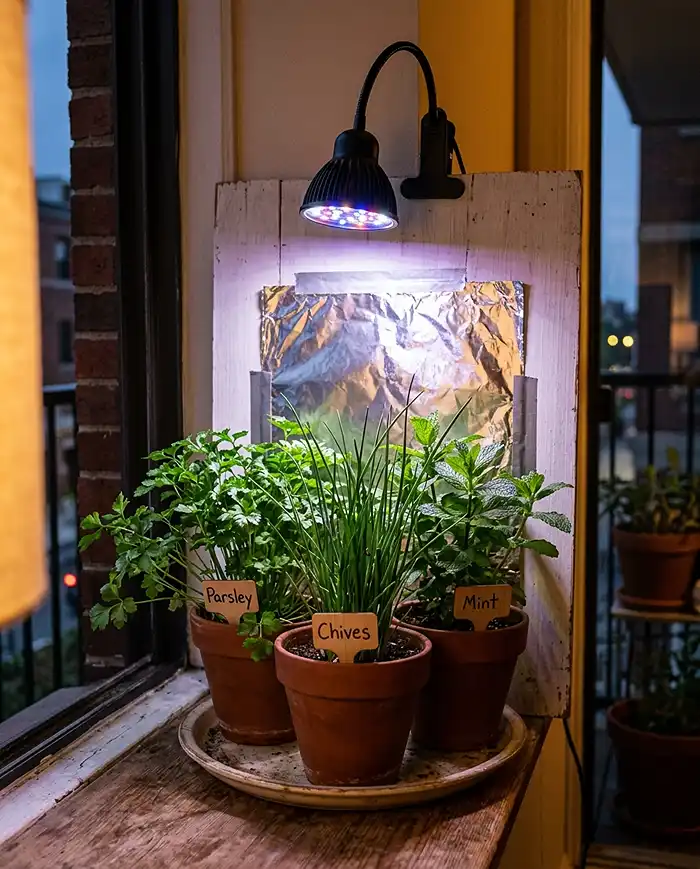
Reflective surfaces: White walls, mirrors, and aluminum foil panels redirect existing ambient light. They’re free, low-effort, and genuinely effective for boosting light on herbs in partial shade.
- Paint a nearby wall or fence white to increase reflected light by up to 80%
- Use a clip-on plant grow light for herbs in spots with under 2 hours of indirect light
- Mylar sheets or aluminum foil panels pinned behind pots work surprisingly well
- The RHS herb growing guide has detailed notes on light compensation techniques
Seasonal Care for Shade Herbs
Shade herbs behave differently through the seasons. Knowing what to expect saves frustration and helps you plan for year-round harvests where your climate allows.
- Spring: Growth picks up as days lengthen. This is the best time to repot into fresh mix and add slow-release fertilizer.
- Summer: Shade actually helps heat-sensitive herbs like cilantro and parsley avoid bolting. Keep watering consistent.
- Autumn: Growth slows. Cut back lemon balm and oregano by half to encourage fresh growth. Reduce watering and feeding.
- Winter (USDA Zones 5–9): Chives and lemon balm die back but re-emerge in spring. Bring mint and parsley indoors or under cover in colder zones.
Mint and lemon balm are particularly winter-hardy and will surprise you with early spring regrowth even after a hard frost.
Common Problems and Solutions
Leggy, Stretched Herbs Reaching for Light
Quick Answer: Leggy growth means your herbs aren’t getting enough light. Stems stretch toward available brightness, which weakens the plant and reduces flavor.
- Move the pot to a brighter spot, even if it’s just a few feet closer to a window or wall gap
- Add a grow light on a timer set for 12–14 hours daily
- Pinch back leggy stems to just above a leaf node to encourage bushier side growth
Pro Tip: If stems are more than twice as tall as the plant is wide, it’s a light problem — not a water or nutrient issue.
Slow or Stunted Growth
Quick Answer: Some slow growth is normal in shade. But if plants look pale or stop producing altogether, check light first, then nutrients.
- Shade reduces photosynthesis, so plants need less fertilizer — overfeed and you get leggy growth, not more leaves
- Use a diluted liquid feed (half-strength) every 4–6 weeks during the growing season
- Pale, yellowing leaves usually mean more light is needed, not more fertilizer
Damp Soil and Root Rot in Shade
Quick Answer: Root rot in shade containers almost always comes from overwatering or poor drainage. Fix the drainage first, then adjust your watering schedule.
- Remove the plant, trim any blackened or mushy roots with clean scissors, and repot in fresh, well-draining mix
- Add 25% perlite to the new mix and ensure the pot has adequate drainage holes
- Wait until the top 2 inches of soil are dry before watering again
Frequently Asked Questions
What herbs grow best in shade?
Mint, parsley, cilantro, chives, and lemon balm are the top performers. Mint and lemon balm tolerate the deepest shade — down to 2 hours of indirect light. Parsley and chives need around 3 hours. Avoid sun-lovers like basil, rosemary, and thyme in shady spots — they won’t produce well and often die back.
Can herbs grow without direct sunlight?
Yes — several herbs that grow in shade thrive on indirect or filtered light alone. Mint, lemon balm, and sweet cicely are the most shade-tolerant. That said, ‘no direct sun’ is different from ‘no light.’ Even shade-tolerant herbs need bright ambient light. A dark corner with zero natural light will require a grow light.
How many hours of sun do herbs need?
Sun-loving herbs like basil, rosemary, and thyme need 6–8 hours of direct sun. Shade-tolerant herbs like mint, parsley, and chives do fine with 2–4 hours. Less than 2 hours and you’ll need to supplement with grow lights or choose only the most shade-hardy options like mint or sweet cicely.
Do shade herbs need grow lights?
Not always. Herbs getting 2–4 hours of indirect light usually don’t need supplemental lighting in spring and summer. If you’re growing indoors under 2 hours of natural light, or through winter when days shorten significantly, a basic LED grow light running 12–14 hours a day makes a real difference.
Can I mix shade herbs with other container plants?
Absolutely. Shade herbs pair well with shade-tolerant flowers like impatiens or begonias in a pollinator container garden setup. Just make sure all plants in one pot share the same water needs. Mint is the exception — always give it its own pot since it spreads and dominates neighboring plants quickly.
Key Takeaways
- Herbs that grow in shade — especially mint, parsley, chives, and lemon balm — are ideal for balconies, north-facing patios, and other low-light spots.
- Measure your actual light hours before choosing herbs. The difference between 2 and 4 hours of sun determines which plants will thrive.
- Good drainage is non-negotiable. Shade keeps soil wet, so amend with perlite and never let pots sit in standing water.
- Reflected light from white walls, foil panels, or pale saucers can boost usable brightness significantly without any cost.
- For more ways to maximize a compact growing space, explore small space food gardening strategies and ideas for tiered container setups that stack your herb garden vertically.